A single damaged or incompatible glass connector can delay an installation, stop production, and create avoidable safety risks. Procurement teams and maintenance engineers often struggle to identify the correct replacement. Suppliers may list different sizes, materials, finishes, thread types, and glass compatibility requirements. This glass connector spare part inventory guide explains how to match replacements, check availability, review specifications, compare pricing, and request quotes confidently.
1. What Glass Connector Spare Parts Do and Why They Matter
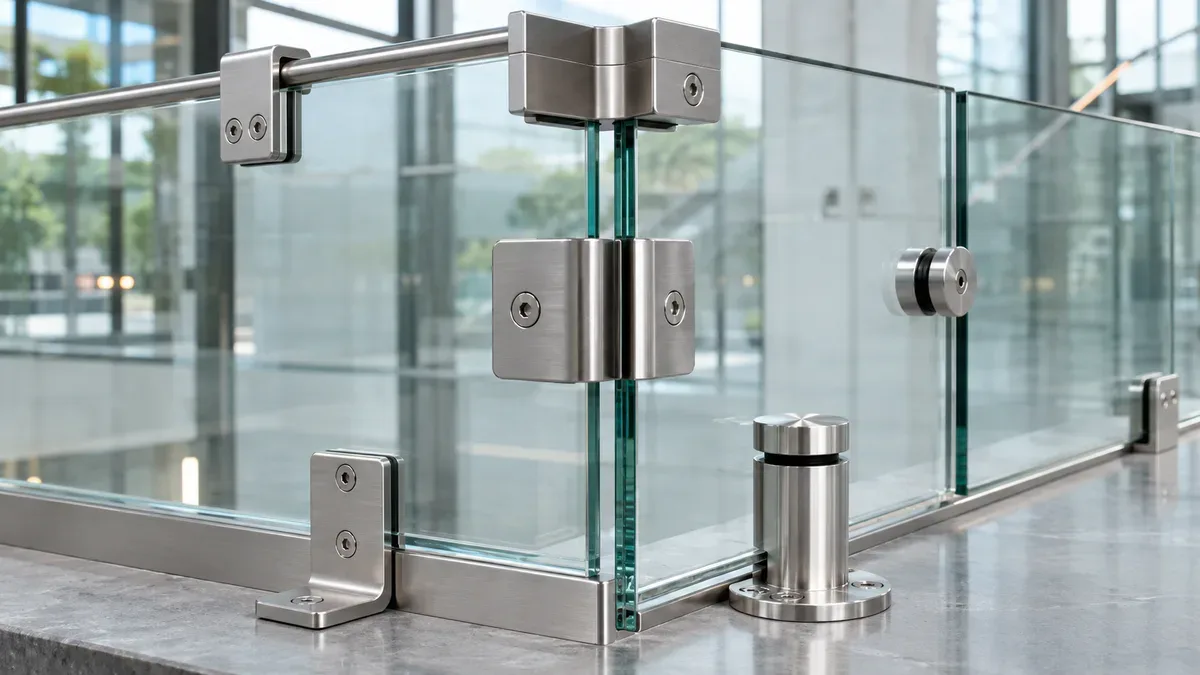
Glass connector spare parts are hardware components that secure, join, support, or position glass panels. They appear in architectural, industrial, commercial, and equipment applications. For example, a connector may hold a shower panel, support a railing, or join two frameless glass sections.
Supporting Glass in Different Installations
Glass connectors support glass-to-glass, glass-to-wall, and glass-to-floor assemblies. They also appear in railings, partitions, shower enclosures, displays, shopfronts, and specialist equipment. Therefore, the correct connector must suit both the glass panel and the surrounding structure.
Compatible replacement parts help restore safety, alignment, appearance, and operational continuity. However, a visually similar fitting may not provide the same load capacity or glass protection. A small difference in hole position or gasket profile can create serious installation problems.
Common Reasons for Replacement
Replacement work often begins after corrosion, damaged threads, worn seals, or loose fittings appear. Cracked covers, stripped mounting holes, and obsolete hardware also create regular demand for spare parts. Additionally, refurbishment projects may require a matching finish across older and newer fittings.
Before ordering, match the original connector geometry, glass thickness, load requirements, mounting surface, material, and finish. Specifically, confirm whether the fitting supports the panel directly or simply provides decorative coverage. This distinction affects the part’s design, certification, and installation method.
2. Glass Connector Spare Part Inventory by Type and Application
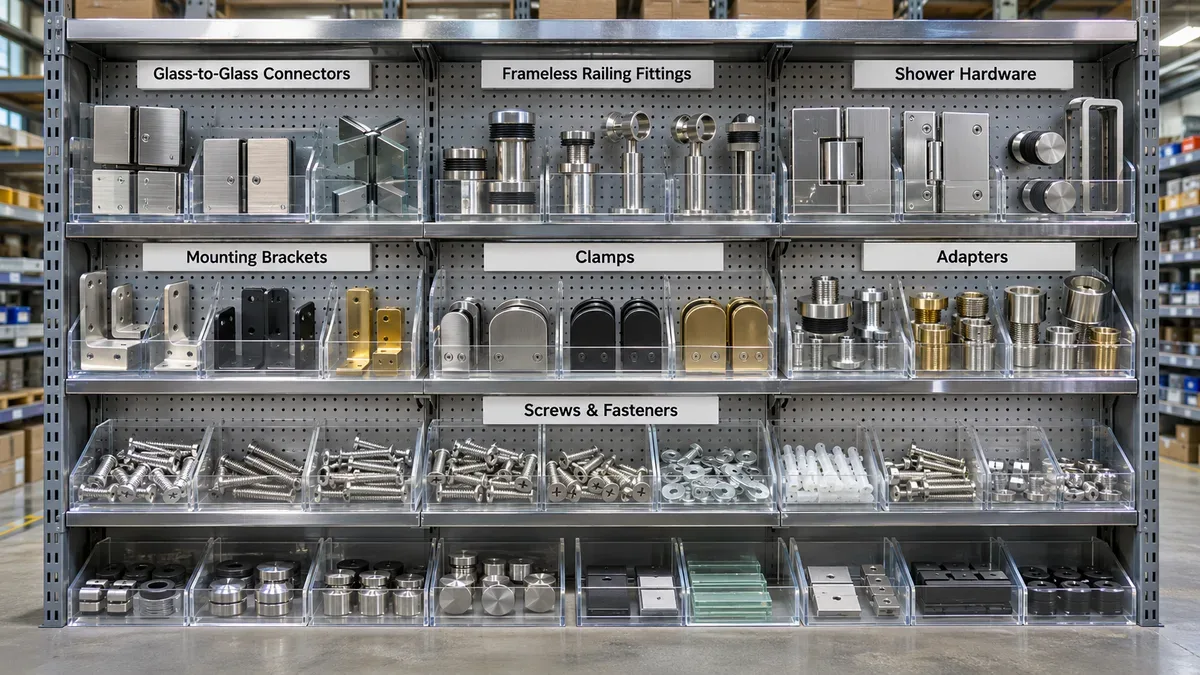
A useful inventory groups connectors by application rather than appearance alone. This approach helps buyers find compatible parts faster. Moreover, it makes stock control easier when several projects use similar fittings with different glass thicknesses.
Glass-to-Glass Connectors
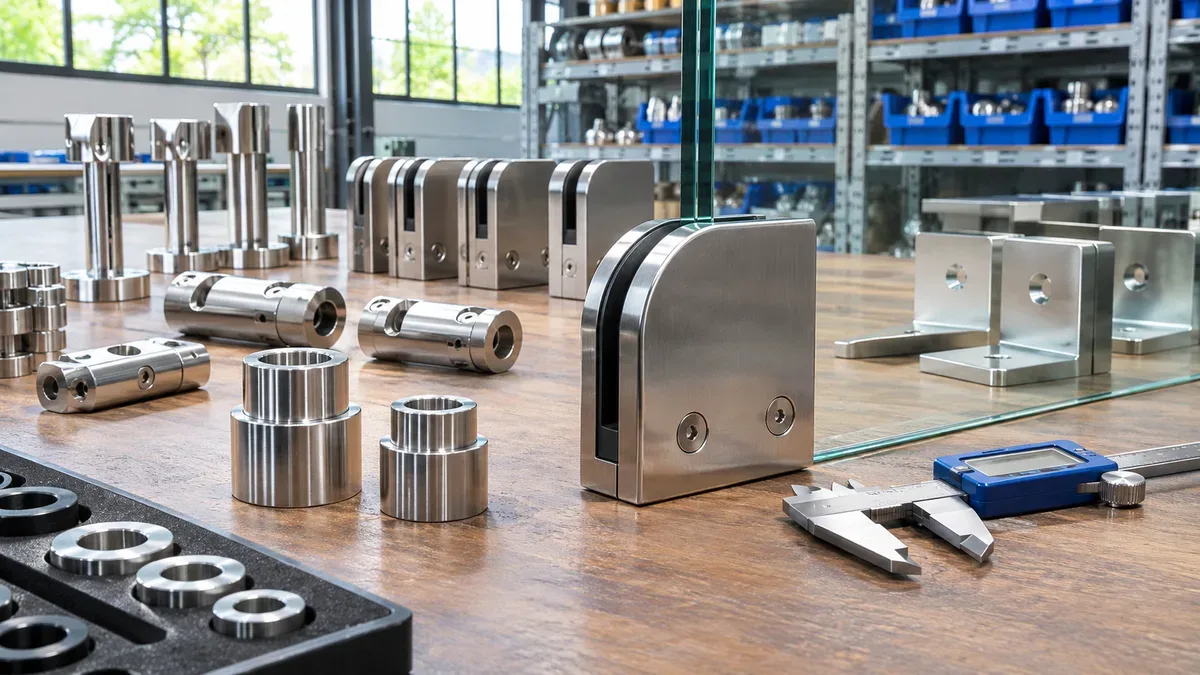
Glass-to-glass hardware joins panels at specific angles or along shared edges. Common options include cover patch fittings, 90-degree connectors, 135-degree connectors, 180-degree connectors, inline clamps, and corner fittings. These parts suit frameless partitions, display cases, architectural screens, and specialist glazing.
However, the angle alone does not confirm compatibility. Check the glass thickness, drilled-hole pattern, connector depth, and gasket arrangement. A 90-degree fitting for one system may not suit another system with different hole spacing.
Glass-to-Wall and Glass-to-Floor Connectors
Wall-mounted brackets, standoffs, base-mounted supports, side-fixed clamps, and floor anchors connect glass to solid structures. These fittings commonly support partitions, screens, balustrades, signage, and architectural glazing. Therefore, the wall or floor substrate matters as much as the glass.
For example, a connector fixed into concrete requires different anchors from one installed into steel or timber. Confirm the mounting surface, anchor type, fixing depth, and available clearance before selecting a replacement.
Glass Railing Connectors
Glass railing spare parts may include handrail brackets, balustrade clamps, spigots, posts, channel accessories, end caps, and replacement fasteners. Some systems use the glass as an infill panel. Others rely on the glass as part of the structural barrier.
As a result, never replace a structural railing fitting with a decorative clamp. The required load rating, fixing design, glass type, and engineering documentation may differ significantly.
Shower Glass Connectors
Shower glass systems use hinges, clips, U-channels, knobs, pull handles, seals, brackets, and wall-to-glass fittings. Frameless shower doors require careful attention to glass thickness and hinge capacity. Additionally, wet environments demand suitable corrosion resistance and compatible seals.
Australian glazing guidance identifies frameless shower panels as safety-critical installations. You can review the Australian Glass and Window Association glazing guide for broader safety information.
Structural and Industrial Fittings
Industrial applications may require heavy-duty clamps, point-fixing components, support brackets, threaded adapters, vibration-resistant hardware, and equipment-specific glass fittings. These parts often face heat, vibration, chemicals, moisture, or continuous movement.
Therefore, industrial replacement parts need more than a dimensional match. Confirm the operating environment, expected loads, movement, temperature range, and maintenance requirements.
Useful Inventory Fields
A practical glass connector spare part inventory should record clear information for every item. Useful fields include:
- Part number and connector type
- Application and compatible glass thickness
- Material and surface finish
- Mounting configuration and thread type
- Stock status and minimum order quantity
- Estimated production and delivery lead time
Suppliers may classify stock as ready to ship, limited stock, made to order, OEM-only, or custom production. Meanwhile, reserve stock may exist for approved customers or scheduled projects. Ask whether the quoted quantity is physically available or only planned for production.
Pay close attention to size descriptions. A listed dimension might refer to glass thickness, body diameter, hole diameter, thread size, or overall projection. Therefore, never assume that “18 mm” identifies the same measurement across different suppliers.
3. Materials, Finishes, Sizes, and 14mm to 18mm Adapter Compatibility
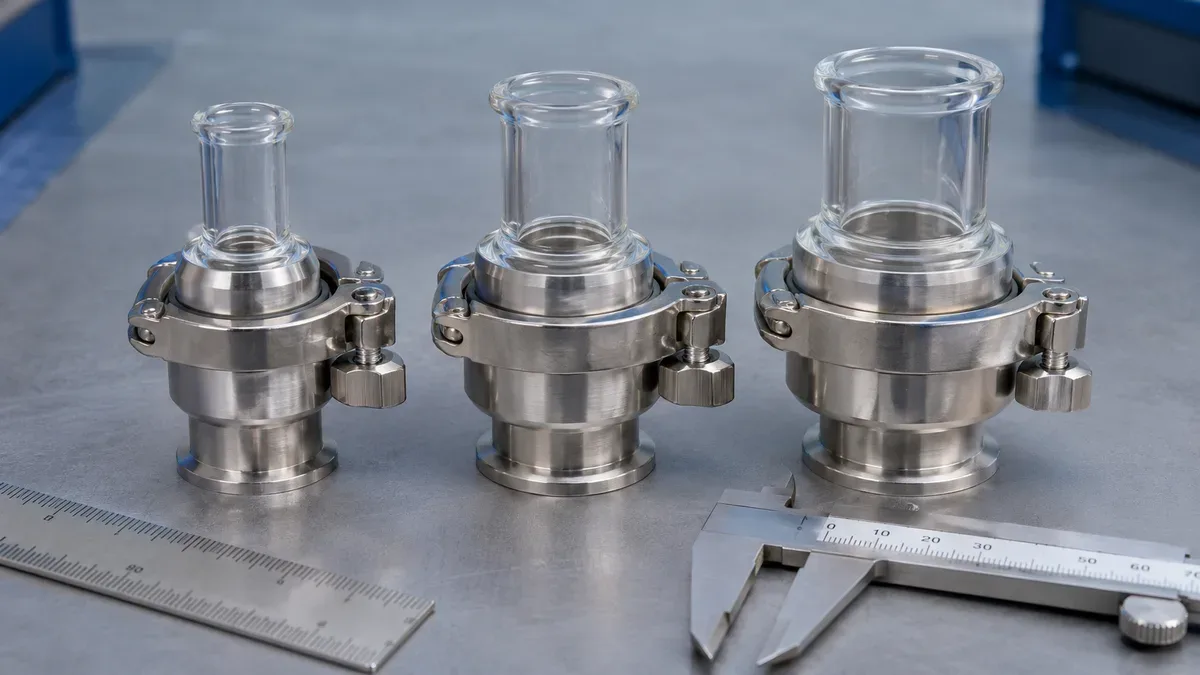
Connector materials affect strength, weight, appearance, corrosion resistance, and service life. Stainless steel suits demanding environments because it combines strength with good corrosion resistance. Aluminium offers a lighter option, while brass often suits decorative hardware.
Additionally, corrosion-resistant alloys may suit coastal, humid, chemical, or industrial locations. However, material selection should match the environment rather than appearance alone. A polished finish may look attractive but still require regular cleaning in a harsh location.
Finishes and Appearance
Common finishes include polished stainless steel, satin stainless steel, brushed metal, matte black, chrome, titanium-coloured coatings, and brass tones. Project-specific finishes may also match existing frames, rails, handles, or architectural details.
When ordering, confirm whether the finish applies to the entire connector or only its visible cover. Also check whether the finish changes the part number, price, or production lead time.
Dimensional Checks
Record the glass thickness, connector body dimensions, hole diameter, edge distance, projection, screw length, thread type, and mounting plate dimensions. These measurements help distinguish similar-looking parts. Specifically, measure the installed connector rather than relying on a catalogue image.
Understanding 14mm to 18mm Adapter Sizing
14mm to 18mm glass adapter sizing affects fit, clamping pressure, gasket selection, and connector stability. An adapter designed for 14mm glass may not safely accommodate an 18mm panel. The difference can change the compression of the gasket and the position of the fixing hardware.
Therefore, select adapters according to the actual glass thickness and the manufacturer’s approved range. Do not choose an adapter by nominal size alone. Confirm whether the stated dimension refers to the glass, sleeve, bore, or connector opening.
Adapters must also suit tempered glass, laminated glass, insulated panels where applicable, frameless systems, railings, partitions, shower enclosures, or architectural installations. Each application can require a different gasket profile or contact surface.
Small Components Matter
Seals, gaskets, sleeves, washers, and isolators may need replacement with the connector body. These components protect the glass from direct metal contact and help maintain even pressure. Moreover, old seals may harden, flatten, split, or lose their original dimensions.
Confirm whether the connector uses metric or imperial threads. Then check the replacement fastener’s grade, length, head style, and corrosion resistance. A correct body with the wrong fastener can still create an unsafe or unreliable installation.
4. How to Identify the Correct Replacement Glass Connector
Start by collecting every available detail about the original fitting. Useful information includes the part number, manufacturer or OEM name, equipment model, installation date, connector location, quantity required, and service environment.
For example, note whether the connector sits indoors, outdoors, near saltwater, inside a wet room, or beside heated equipment. This detail helps suppliers recommend an appropriate material and finish.
Measurements to Record
Measure the glass thickness, connector width and height, hole spacing, hole diameter, thread size, mounting angle, projection, and distance from the glass edge. Use accurate tools and record each measurement in millimetres or inches.
Additionally, identify whether the connector mounts through the glass, around the glass edge, against a wall, or into a channel. The mounting method often narrows the replacement options more effectively than the external shape.
Photographs and Technical Evidence
Take clear photographs from multiple angles. Include close-ups of markings, the mounting surface, the fasteners, and the connector installed on the glass. A wider photograph can also show the panel configuration and surrounding hardware.
Next, compare the existing part with technical drawings, dimensional diagrams, catalogue images, and supplier specification sheets. Do not rely on photographs alone because perspective can hide differences in depth or hole position.
Compatibility Checks
Check the glass type, panel configuration, mounting orientation, load requirements, corrosion exposure, and required finish. Also confirm whether the connector suits the panel’s edge treatment and drilled holes.
Apparently similar connectors should not be substituted when they have different load ratings, hole patterns, gasket profiles, or glass-contact geometry. In contrast, an approved adapter may solve a sizing difference when the manufacturer confirms compatibility.
Quote-Request Checklist
Send the supplier a complete request containing:
- Original part number and manufacturer, if available
- Technical drawings and accurate measurements
- Clear photographs from several angles
- Application, glass type, thickness, and mounting method
- Required quantity, finish, and delivery location
- Target delivery date and preferred replacement option
5. Stock Availability, Quality, Load Ratings, and Safety Requirements
Buyers should evaluate stock availability beyond a simple “in stock” label. Ask for the ready-stock quantity, replenishment schedule, production lead time, and any reserved inventory. Therefore, you can plan around genuine availability rather than an uncertain estimate.
Lead times usually fall into several categories:
- In-stock dispatch for standard parts
- Short replenishment for temporarily reduced stock
- Standard production for regular catalogue items
- Custom finishing for project-specific appearances
- OEM replacement for controlled or discontinued systems
Load Capacity and Safety
Check the load capacity, safety factors, allowable panel size, mounting substrate, and installation orientation. Decorative fittings may support appearance only, while structural fittings carry defined loads. This difference must remain clear throughout purchasing and installation.
Tempered and laminated glass systems require approved connector designs, correct edge distances, suitable gaskets, and controlled installation practices. Furthermore, local building codes and project specifications may impose additional requirements.
For Australian projects, verify the relevant requirements for safety glass, architectural glazing, railings, shower screens, and structural fittings. The Australian Glass and Window Association explains that glass selection and installation depend on the application, glass type, and applicable standards.
Documentation and Quality Indicators
For critical applications, request material certificates, dimensional inspection records, corrosion testing information, load-test documentation, and traceability details. These documents support project records and future replacement planning.
Quality indicators include consistent machining, clean threads, smooth contact surfaces, accurate dimensions, secure packaging, and clear installation instructions. Also inspect supplied parts for burrs, sharp edges, coating damage, or missing components before installation.
Price and Lead-Time Factors
Glass connector pricing depends on material, finish, load rating, customisation, certification, order quantity, packaging, and shipping method. A low unit price may not represent the lowest total cost if the part needs special finishing or expedited delivery.
Moreover, ask whether the price includes gaskets, sleeves, washers, fasteners, protective packaging, and technical support. These details prevent unexpected costs after the order arrives.
6. Ordering, Installation, Maintenance, and Spare-Part Planning
A reliable ordering process begins with complete specifications and photographs. First, submit the application details and measurements. Then confirm compatibility, review the quotation, verify stock and lead time, approve samples if needed, and confirm delivery details.
Ask about minimum order quantities, bulk glass hardware pricing, OEM compatibility, volume discounts, payment terms, warranty coverage, returns, and replacement-part support. Additionally, confirm how the supplier handles incorrect or damaged deliveries.
Installation and Maintenance
Follow the approved instructions and use the correct tools and torque settings. Protect glass edges during handling, fit compatible gaskets, inspect fasteners, and avoid over-tightening. Excessive pressure can damage glass or distort the connector.
Clean connectors with non-abrasive products and remove moisture, salt, dust, and chemical residue. Furthermore, separate dissimilar metals where required to reduce galvanic corrosion. Select finishes that suit the exposure conditions rather than choosing only by colour.
Routine checks should look for movement, loosening, discoloration, pitting, damaged threads, gasket compression, panel misalignment, and unusual stress around holes or edges. Record findings so maintenance teams can identify gradual changes before failure occurs.
Planning a Spare-Part Inventory
Classify parts by criticality and keep fast-moving sizes on hand. Record supplier lead times, store parts in dry labelled packaging, and maintain an approved substitute list. This approach reduces emergency purchasing and helps maintenance teams respond quickly.
Industrial glass spare parts deserve particular attention when equipment downtime affects production. Holding the right connector, gasket, sleeve, and fastener can shorten repairs and prevent a complete system shutdown.
Before placing an order, check current stock and request a written quotation. Send the part number, measurements, photographs, application details, required quantity, finish, and delivery location.
Conclusion
Choosing the right glass connector spare part requires more than matching appearance. Buyers should confirm the connector type, glass thickness, 14mm to 18mm adapter sizing where relevant, material, finish, thread configuration, load requirements, installation method, stock status, and lead time.
Careful identification reduces delays, protects glass panels, and supports safer installations. Check current glass hardware inventory or request a quotation today by sending the connector part number, measurements, photographs, glass type, required quantity, and delivery location.
Sweet Puff Australia brings together product information and accessories for Australian customers. Visit the website for available collections, purchasing information, and further product details.