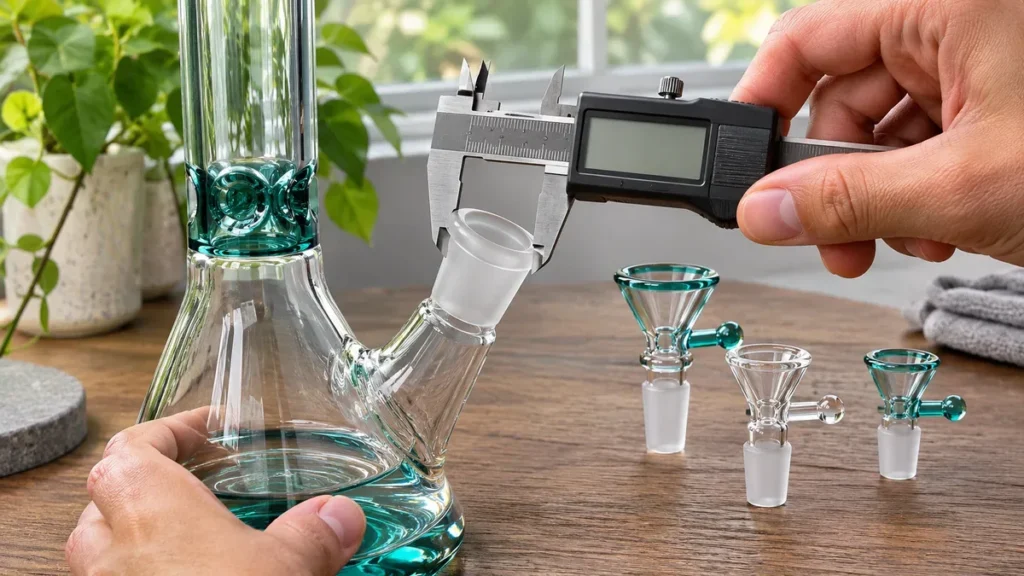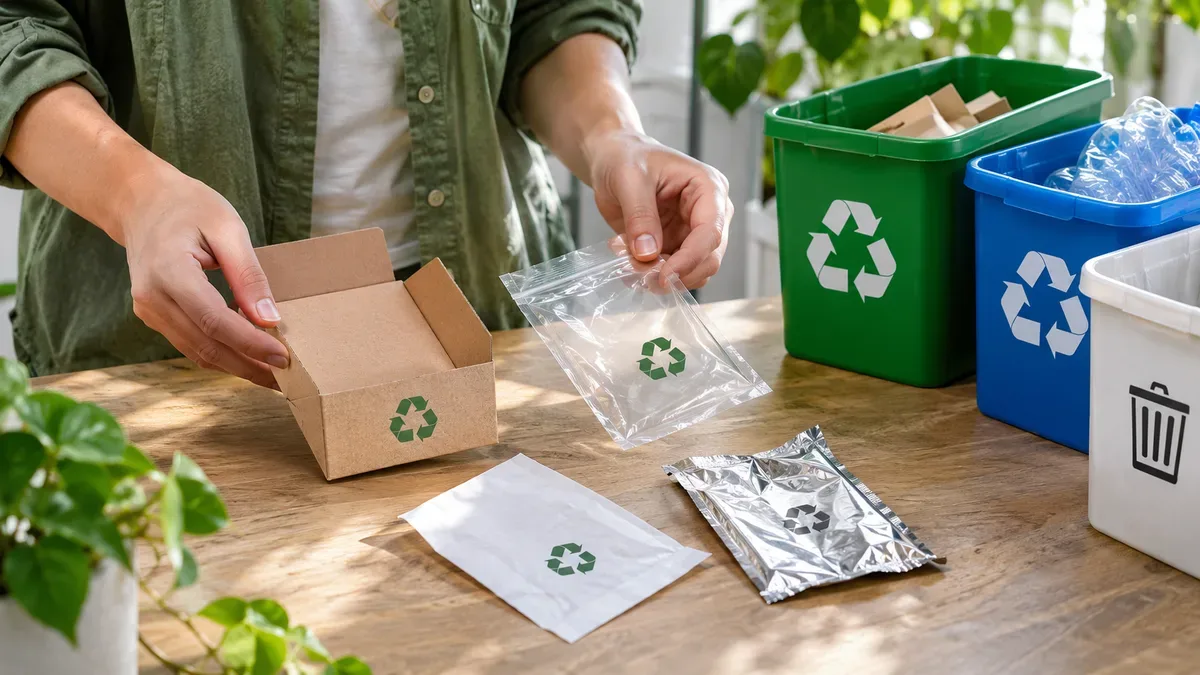
Not sure whether your Sweet Puff pipe packaging belongs in the recycling bin, general waste, or a specialist collection point? The Sweet Puff pipe packaging recyclability guide helps you identify each material, separate the parts, and follow Australian disposal rules. Packaging can combine plastic, cardboard, paper, foil, labels, and adhesives. Therefore, the correct disposal method depends on the material, its condition, and your local recycling service.
1. Sweet Puff Pipe Packaging Recyclability Guide: What to Check
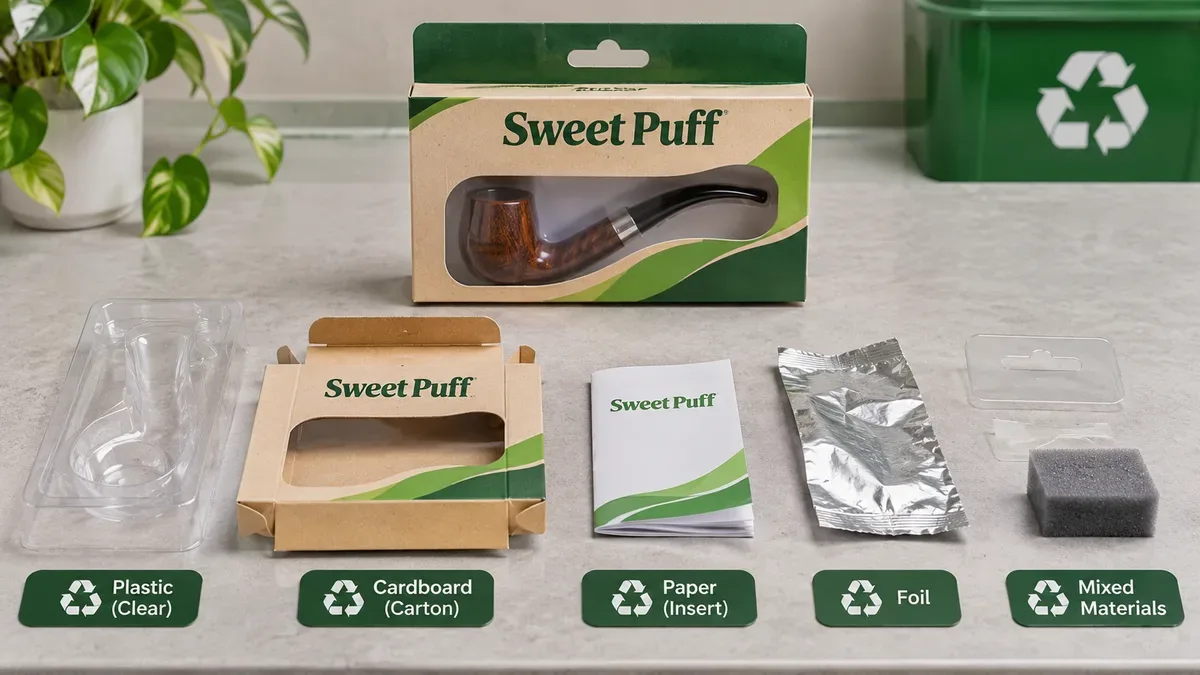
Packaging recyclability matters to consumers, retailers, and environmentally conscious buyers. A package may look recyclable, yet its coating, residue, or mixed construction can prevent normal processing. Therefore, inspect the actual packaging before placing anything in a kerbside bin.
Is Sweet Puff pipe packaging recyclable? Sometimes, but there is no single answer for every product format. A clean cardboard sleeve may suit household recycling, while a foil-lined pouch may need general waste or specialist collection.
Additionally, local councils accept different materials. One council may accept certain rigid plastics, while another may reject the same item. Recycling facilities also use different sorting equipment and processing contracts.
Start with the packaging components
Sweet Puff pipe packaging may include several separate parts. You might find a rigid plastic container, cardboard sleeve, paper insert, foil seal, adhesive label, protective film, or mixed-material section.
- Plastic containers: Rigid tubs, caps, trays, and protective covers.
- Cardboard packaging: Printed boxes, sleeves, cartons, and display pieces.
- Paper components: Instruction sheets, leaflets, dividers, and tissue inserts.
- Foil materials: Seals, wrappers, liners, and foil-backed paper.
- Adhesive parts: Stickers, labels, tapes, and bonded panels.
Inspect each piece separately rather than relying on general assumptions about paper or plastic. A plastic code identifies the resin type, but it does not guarantee kerbside acceptance.
Moreover, moisture, product residue, oils, coatings, and adhesives can affect recycling outcomes. A clean and dry material usually has a better chance of acceptance than a contaminated one.
In Australia, the Australasian Recycling Label guidance can help you understand packaging instructions. However, your local council’s rules still take priority.
2. Common Sweet Puff Packaging Materials and Their Recycling Potential
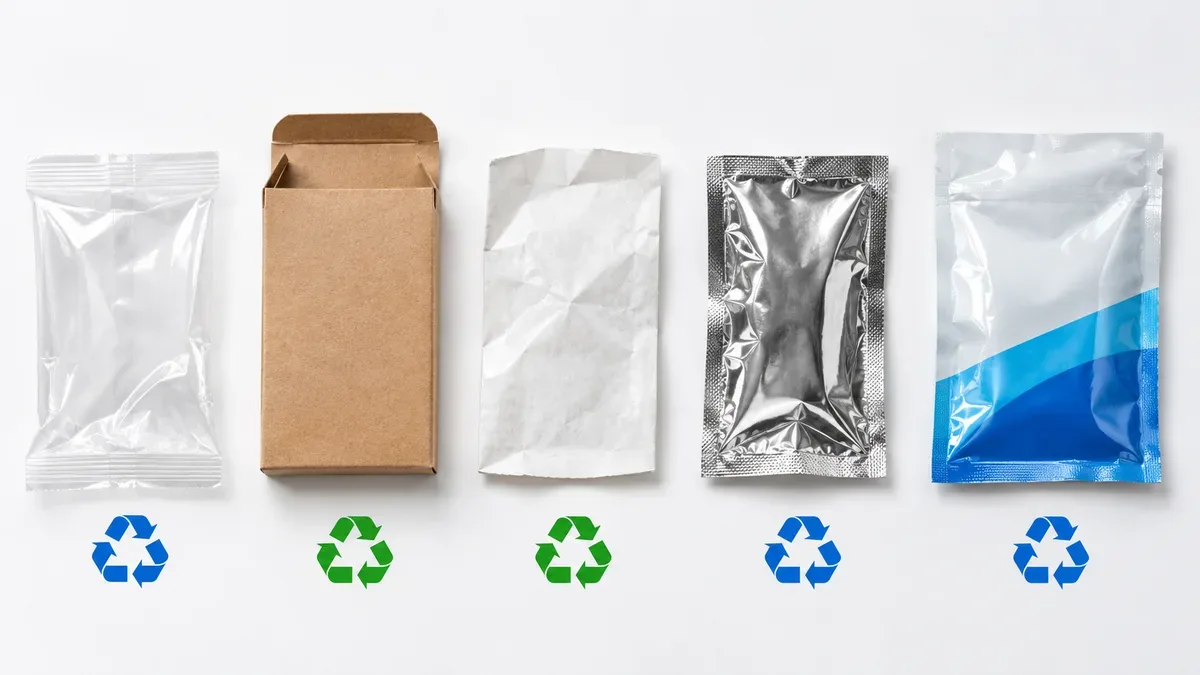
Different packaging materials behave differently during collection and processing. Therefore, identifying the material correctly helps you choose the safest disposal option.
Plastic pipe packaging
Plastic packaging may include rigid containers, lids, trays, caps, and flexible protective films. Look for a resin identification code from 1 to 7, usually moulded into the base or printed near an edge.
However, the number does not automatically mean the item belongs in your yellow-lid bin. It identifies the plastic type, while your council decides which formats it accepts.
Rigid plastic containers often have better recycling prospects than thin films or soft pouches. Even so, check the container’s size, shape, cleanliness, and local instructions before sorting it.
Cardboard boxes and sleeves
Clean, dry cardboard boxes and sleeves are commonly accepted through Australian household recycling services. Remove plastic windows, foam pieces, metallic panels, and other attached materials where possible.
Furthermore, heavy coatings can make cardboard unsuitable for standard paper processing. A glossy finish does not always prevent recycling, but plastic or foil layers can create problems.
Flatten boxes and sleeves before collection. This saves space and helps prevent large pieces from blocking sorting equipment.
Paper inserts and dividers
Plain instruction sheets, folded leaflets, and uncoated paper dividers can often enter paper recycling. First, remove plastic films, metal staples, foam pads, and heavily laminated sections.
Meanwhile, damp, oily, or product-stained paper usually belongs in general waste. Contaminated fibres can reduce the quality of other recovered paper.
Foil seals and foil-lined materials
Thin foil seals may appear recyclable, but their acceptance varies widely. Pure aluminium and foil bonded to plastic or paper require different processing methods.
Foil-lined packaging can be difficult to separate once the layers bond together. Therefore, do not place laminated foil into kerbside recycling unless the package or council specifically allows it.
Labels, stickers, and adhesives
Small labels often remain attached to rigid containers because recycling facilities can remove them during processing. Large laminated labels may create complications, especially when they cover most of the container.
Additionally, adhesive-backed pieces can become loose and contaminate paper or plastic streams. Follow the package instructions, then check your local recycling directory if the label appears unusual.
Mixed-material packaging
Bonded plastic-paper, foil-plastic, foam, and multilayer packaging can be difficult for standard equipment to process. These materials may need specialist collection or general waste disposal.
Sustainable smoking product packaging can improve through lightweight design, recycled content, fewer inserts, and mono-material construction. Clear disposal labelling also helps households sort each part correctly.
3. How to Identify Recyclable Parts Using Symbols and Labels
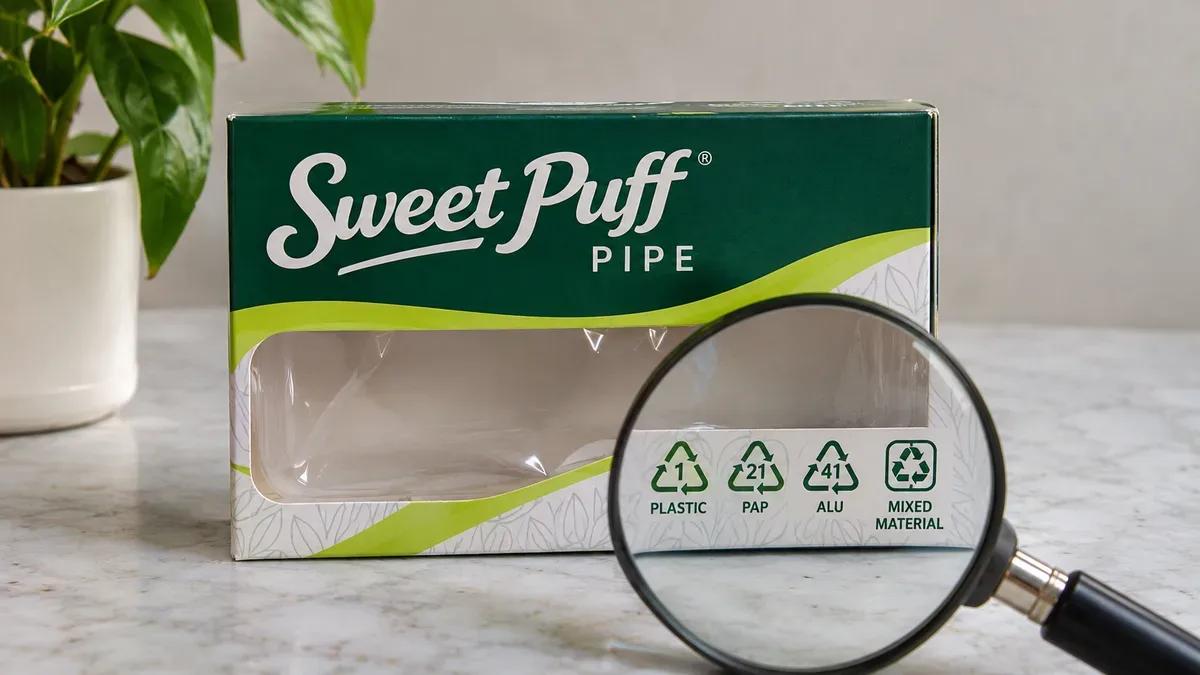
Packaging symbols provide useful clues, but they require careful interpretation. Follow this simple inspection method before choosing a bin.
- Empty the package. Check every surface, including the base, underside, inner flap, side seam, and removable insert.
- Find the instructions. Look for a recycling symbol, resin code, material description, disposal statement, or manufacturer guidance.
- Match the symbol to the material. Do not assume every triangle means kerbside recycling.
- Read the wording. Look for terms such as “widely recycled”, “check locally”, “store drop-off”, “compostable”, or “not recyclable”.
Recycling symbols may appear on a moulded plastic base, printed cardboard panel, adhesive label, or small internal component. Some packaging displays separate instructions for every piece.
Moreover, colour and transparency can provide helpful clues. A clear plastic tub differs from a metallic pouch, while a coated paper sleeve differs from plain cardboard.
However, appearance should not replace the printed material code. Transparent plastic may still be rejected, and a shiny cardboard finish may conceal a plastic layer.
Retailers can confirm details through packaging specifications, supplier documentation, and commercial waste contractors. This approach helps businesses sort larger quantities consistently.
If a symbol remains unclear, photograph it before disposal. Then check your council website, waste provider, or a recognised Australian recycling directory.
4. Step-by-Step Method for Preparing and Sorting the Packaging
Correct preparation reduces contamination and makes each material easier to process. Use the following method for a typical Sweet Puff pipe package.
- Remove the pipe and contents. Take out the pipe, accessories, product residue, and loose packaging pieces.
- Separate detachable parts. Remove lids, sleeves, inserts, foil seals, protective films, and cardboard dividers.
- Empty the container. Shake out loose material and remove visible residue carefully.
- Wipe or lightly rinse. Clean recyclable containers when local guidance allows it and no safety risk exists.
- Dry every component. Moisture can damage paper fibres and contaminate other recycling.
- Flatten cardboard. Fold boxes and sleeves so they fit loosely inside the recycling bin.
- Keep paper clean. Remove pieces affected by tobacco, oils, liquids, or other product residue.
- Sort by material stream. Place each component into the correct bin or collection point.
Do not wash packaging if cleaning creates a safety risk. Also, follow local instructions if your council specifically advises against rinsing certain containers.
Small pieces require extra attention. Some facilities advise keeping small caps or loose components attached, while others request separate sorting. Therefore, check the instructions before placing tiny items into recycling.
Simple waste sorting guide
| Packaging type | Likely option | What to check |
|---|---|---|
| Clean cardboard box | Kerbside recycling | Remove plastic, foil, foam, and heavy contamination. |
| Plain paper insert | Paper recycling | Keep it dry and free from residue. |
| Rigid plastic container | Kerbside or specialist collection | Check the plastic type, shape, and local acceptance. |
| Plastic film or flexible pouch | Specialist collection or general waste | Do not place it in kerbside recycling unless instructed. |
| Foil laminate | Specialist collection or general waste | Check whether it combines foil with plastic or paper. |
| Contaminated packaging | General waste | Do not mix heavily stained materials with recycling. |
5. Curbside Recycling, Specialist Collection, and Non-Recyclable Parts
Clean cardboard and plain paper often suit household recycling. Nevertheless, every Australian council sets its own rules, so verify acceptance locally.
Plastic components belong in household recycling only when the local programme accepts that specific plastic type and format. A resin code alone does not provide enough information.
Plastic film, flexible pouches, foam, foil laminates, and composite packaging may require store drop-off or specialist collection. These materials can wrap around machinery or confuse sorting systems.
When mixed-material packaging cannot separate without damage, keep it together. Check whether a specialist service accepts it. If no suitable service exists, place the item in general waste.
Responsible disposal still matters for non-recyclable plastic, contaminated paper, foil seals, laminated inserts, and small adhesive-backed pieces. Keep sharp or contaminated items contained rather than loose in any recycling bin.
Never burn packaging, flush it, litter it, or bury it. Burning can release harmful fumes, while litter creates risks for wildlife and public spaces.
Retailers may have more options than households. Commercial recycling contracts, packaging recovery schemes, supplier-led collections, and take-back programmes can support larger volumes.
Furthermore, local recycling rules vary by city, municipality, state, country, and processing facility. If instructions conflict, follow the official local authority or waste contractor guidance.
Check the package manufacturer, local council, waste hauler, recycling directory, or specialist drop-off point before making a difficult decision. When uncertain, keep questionable items out of kerbside recycling.
6. Reuse, Waste Reduction, and More Sustainable Packaging Choices
Reusing sturdy boxes, containers, or dividers can extend their useful life. For example, a clean cardboard sleeve may organise non-sensitive household items.
However, avoid reuse involving food, medication, children, pets, or anything affected by product residue. Only reuse packaging when you can clean and inspect it safely.
Consumers can reduce waste by choosing products with minimal packaging, clear instructions, recyclable mono-material components, and recycled content where available.
Retailers can remove unnecessary wrapping, avoid bonded material combinations, and choose packaging designed for established local recycling streams. Clear labels also reduce sorting mistakes.
Recycling helps conserve raw materials, reduce landfill or incineration, and support material recovery. Nevertheless, reduction and safe reuse generally come before recycling in the waste hierarchy.
Store recyclable packaging clean and dry until collection day. A closed container or paper box can prevent moisture and accidental contamination.
Quick recycling checklist
- Empty the package completely.
- Separate removable materials.
- Inspect every surface and symbol.
- Clean only when appropriate.
- Dry all recyclable parts.
- Flatten cardboard and sleeves.
- Sort each component correctly.
- Verify locally before collection day.
7. Frequently Asked Questions About Sweet Puff Packaging Recycling
Is Sweet Puff pipe packaging recyclable?
It depends on the material, condition, separability, and local collection rules. Clean cardboard and paper often have better options than mixed laminates.
What materials are used in Sweet Puff pipe packaging?
Possible materials include plastic, cardboard, paper, foil, adhesive labels, protective films, and bonded combinations.
Should the packaging be cleaned before recycling?
Empty it first, then wipe or lightly rinse suitable containers. Dry everything completely before sorting.
Can plastic components enter household recycling?
Only if your local programme accepts that plastic type, size, and format. Check the council instructions rather than relying on the resin code.
Can cardboard or paper inserts be recycled?
Clean, dry, uncoated paper and cardboard are commonly accepted. Remove foil, plastic, foam, and heavy contamination first.
What should I do with mixed-material packaging?
Separate removable parts, then check whether the bonded remainder requires specialist collection or general waste.
Are labels, stickers, or foil seals recyclable?
Small labels may remain attached to containers. Foil laminates and heavily coated items often need different handling.
Where can I find the recycling symbol?
Check the underside, base, inner flap, side seam, label, and printed disposal instructions.
Can Sweet Puff pipe packaging be reused?
Yes, for suitable low-risk storage or organisation. Avoid food, medication, children, pets, and uses involving possible residue.
What are the most sustainable disposal options?
Prioritise reduction, safe reuse, verified recycling, specialist collection, and responsible residual-waste disposal.
Conclusion
Sweet Puff pipe packaging should be emptied, inspected, separated, cleaned when appropriate, dried, and sorted according to its material. Cardboard and paper may be recyclable, while some plastics, foil laminates, labels, and mixed-material components need specialist collection or residual waste.
Before disposing of your next package, follow the checklist and verify the material codes with your local recycling authority or waste provider. For more information about water pipes, glass designs, and smoking accessories, visit Sweet Puff Australia or browse its product categories.
You can also explore the Sweet Puff online shop and visit the Sweet Puff blog for further product and care information.