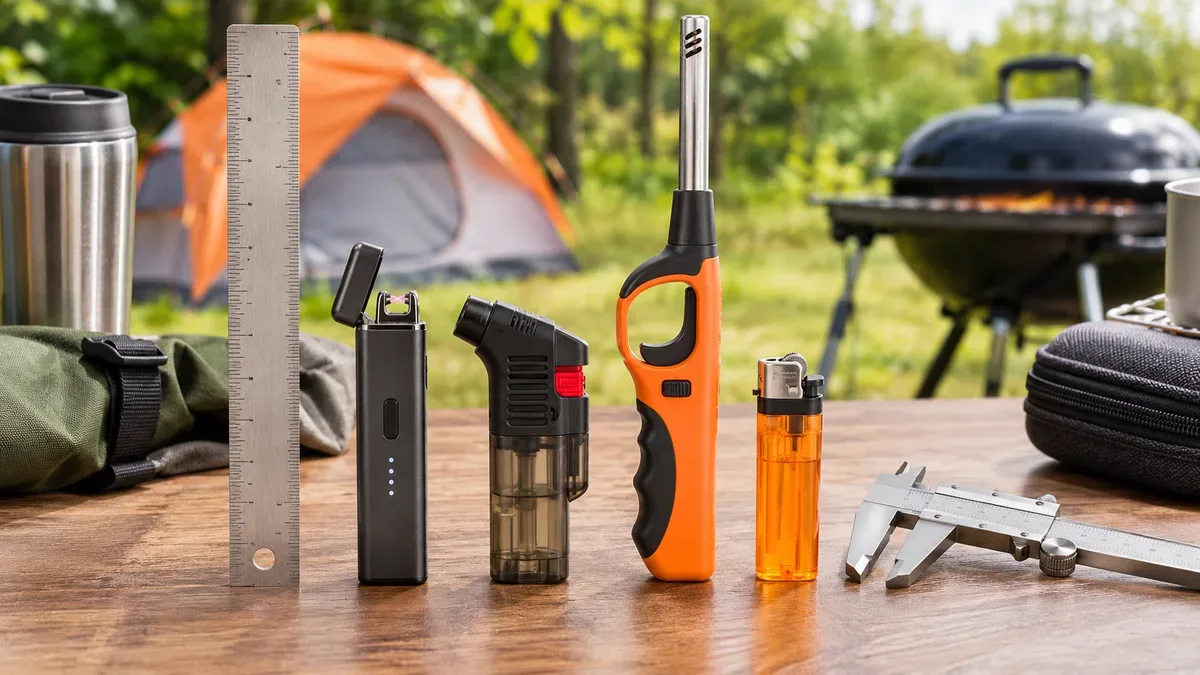
Will a compact utility lighter sit comfortably in your pocket while still reaching a candle, grill, campfire or fireplace? A compact utility lighter dimensions comparison helps answer that question before you buy. Product descriptions often mix body size with total length, nozzle reach and handle height. Therefore, a lighter can look small but still feel bulky, heavy or awkward to store.
This guide compares typical dimensions, weight, reach, fuel capacity, portability and safety features. It covers electric arc, butane torch, soft-flame and disposable utility lighters. Use these ranges as practical guides, then confirm the manufacturer’s measurements before purchasing.
Compact Utility Lighter Dimensions Comparison: What Counts as Compact?
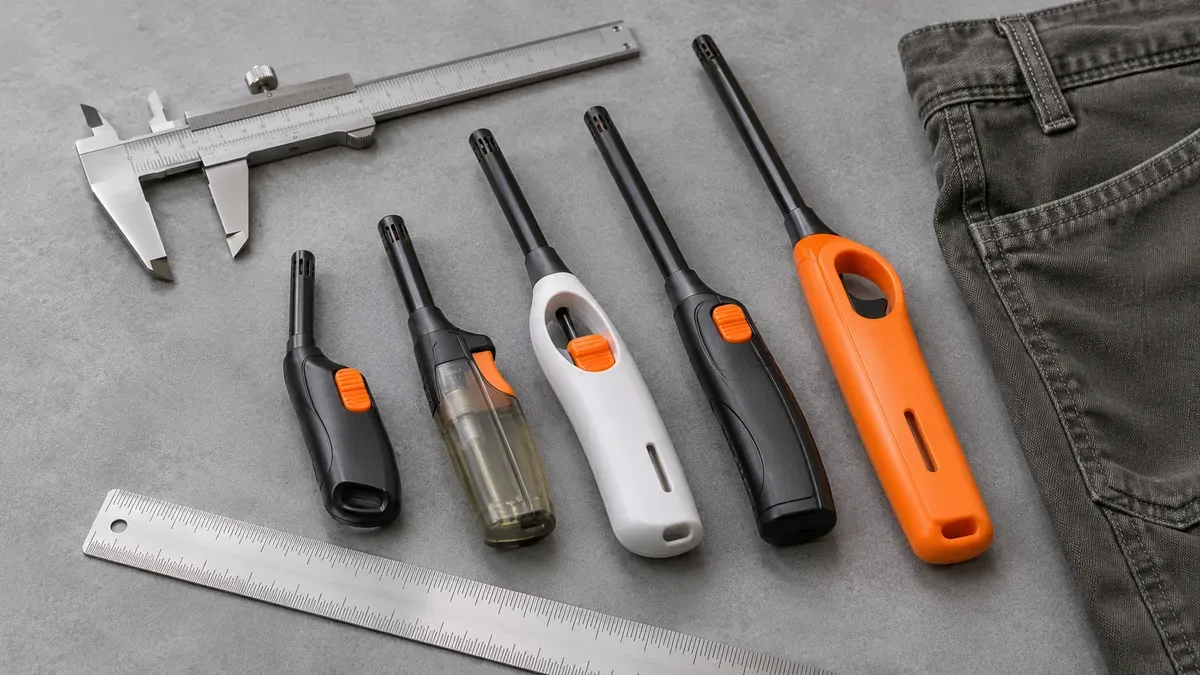
A compact utility lighter has a reduced body or shortened profile. However, it still provides useful reach for lighting household, cooking or outdoor items. It usually sits between a pocket lighter and a full-length fireplace lighter.
Size descriptions become confusing when brands measure different parts. Body dimensions may exclude the nozzle, cap, trigger guard, folding head or adjustable components. Meanwhile, total assembled length includes every fixed part in the stored position.
Understanding the Main Measurements
- Body length: The main handle or fuel reservoir length.
- Body width: The broadest side-to-side measurement.
- Body height: The thickest front-to-back measurement.
- Nozzle reach: The distance from the handle to the ignition point.
- Handle length: The section your hand grips during operation.
- Trigger area: The space required for safe finger movement.
- Protective cap: A cover that may increase the stored length.
- Total extended length: The full measurement when a head folds, slides or telescopes out.
Length affects whether the lighter fits vertically in a pocket or horizontally in a pouch. Width and height influence pocket bulge, grip security and storage space. Additionally, weight affects comfort during daily carry and stability during tabletop use.
Dimensions vary because designs use different fuel systems, batteries, housings and safety mechanisms. A metal lighter may weigh more than a plastic model with similar measurements. Similarly, a dual-arc lighter may need extra internal space for electronics and a larger battery.
Throughout this guide, the main comparison points include total length, body width, body height, weight, reach, fuel or battery capacity, rechargeability and intended use. These are typical ranges rather than universal standards. Product categories overlap, so always check the exact specification sheet.
Typical Dimensions and Weight by Utility Lighter Type
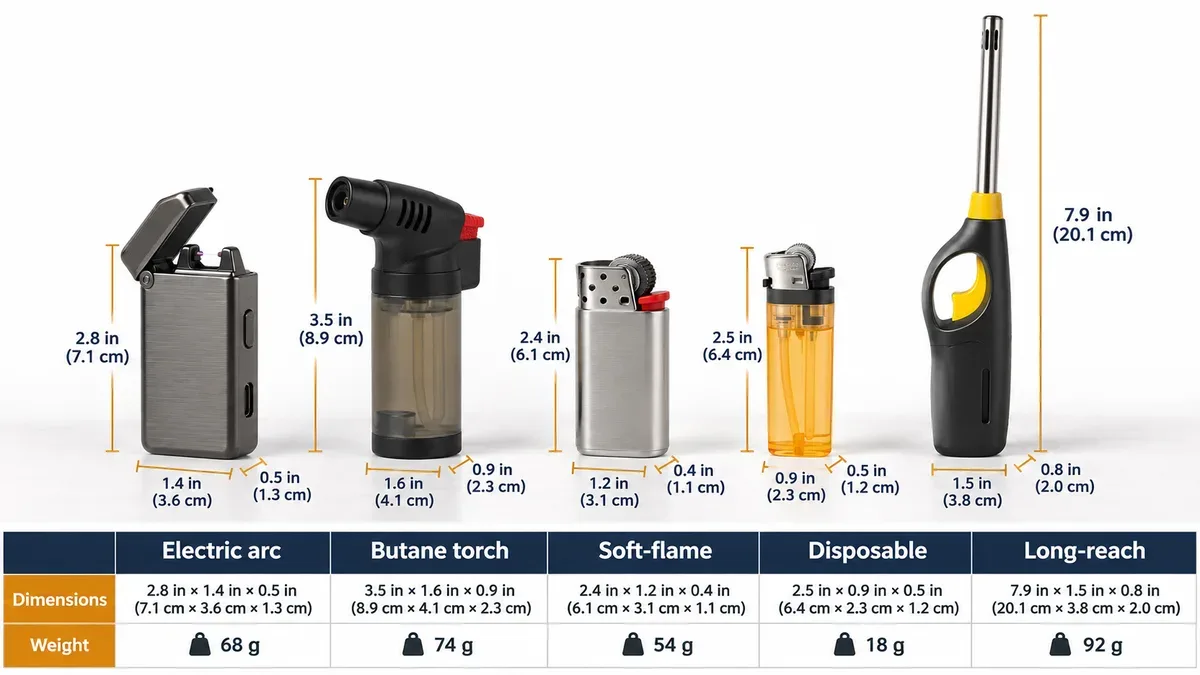
Different lighter systems create different size priorities. Electric models need batteries and charging components. Butane models need fuel reservoirs, valves and ignition assemblies.
Electric Arc Lighters
Compact electric arc lighters usually have narrow handles and a covered ignition head. Their internal battery and charging port add weight, even when the outer body remains slim. Dual-arc designs often require a wider head than single-arc models.
Protective covers may also increase the stored height. In return, rechargeable operation removes the need for disposable fuel cartridges. However, runtime depends on battery capacity and how often you activate the arc.
Butane Torch Lighters
Compact butane torch lighters use a pressurised fuel reservoir inside the body. Flame guards, piezo ignition parts and adjustment wheels can increase width or height. Some models remain short because they concentrate the flame near the top.
Fuel capacity usually affects body thickness more than reach. A larger reservoir can extend operating time but may create more pocket bulk. Therefore, a small torch often suits occasional use, while a thicker model suits repeated outdoor lighting.
Soft-Flame Utility Lighters
Soft-flame utility lighters commonly use a longer neck and trigger mechanism. This design places your hand farther from candles, fireplaces and cooking surfaces. However, the longer handle increases total length inside a drawer, tool bag or travel pouch.
Many soft-flame models include a fuel tank, flame guard and child-resistant trigger. Those features can improve control, yet they also add height and weight. Their broad grip may feel more comfortable during longer lighting tasks.
Disposable Utility Lighters
Disposable utility lighters often use simple plastic bodies and limited controls. As a result, they can weigh less than rechargeable or metal alternatives. Their compact bodies suit occasional candle lighting, emergency storage or basic household use.
However, a small disposable design may offer less reach and lower fuel capacity. Some models also provide less grip support around gloves or windy outdoor conditions. Check the neck length carefully rather than judging size from the handle alone.
| Lighter type | Typical total length | Typical width | Typical height or thickness | Approximate weight |
|---|---|---|---|---|
| Mini electric lighter | 7–10 cm 2.8–3.9 in |
2–3 cm 0.8–1.2 in |
1.2–2 cm 0.5–0.8 in |
45–75 g 1.6–2.6 oz |
| Compact electric arc lighter | 15–20 cm 5.9–7.9 in |
2–3.5 cm 0.8–1.4 in |
1.5–2.5 cm 0.6–1 in |
70–130 g 2.5–4.6 oz |
| Pocket butane lighter | 6–9 cm 2.4–3.5 in |
2–3.5 cm 0.8–1.4 in |
1.5–3 cm 0.6–1.2 in |
35–90 g 1.2–3.2 oz |
| Mini torch lighter | 6–10 cm 2.4–3.9 in |
2.5–4 cm 1–1.6 in |
2–3.5 cm 0.8–1.4 in |
45–110 g 1.6–3.9 oz |
| Compact soft-flame lighter | 15–22 cm 5.9–8.7 in |
2–4 cm 0.8–1.6 in |
2–3.5 cm 0.8–1.4 in |
60–140 g 2.1–4.9 oz |
| Disposable utility lighter | 12–20 cm 4.7–7.9 in |
2–4 cm 0.8–1.6 in |
1.5–3 cm 0.6–1.2 in |
25–80 g 0.9–2.8 oz |
| Long-reach utility lighter | 20–30 cm 7.9–11.8 in |
2–4 cm 0.8–1.6 in |
2–4 cm 0.8–1.6 in |
70–180 g 2.5–6.3 oz |
These measurements should distinguish body-only size from total assembled length. They should also state whether the cap, guard or extended nozzle is included. Batteries, metal housings, child locks, fuel volume and protective covers can all increase weight.
For example, two lighters may share a 20-centimetre total length. One may have a short body and long nozzle, while the other uses a larger handle and short head. Therefore, verify actual dimensions on the product page before buying.
How Length, Width, Height, and Reach Affect Portability
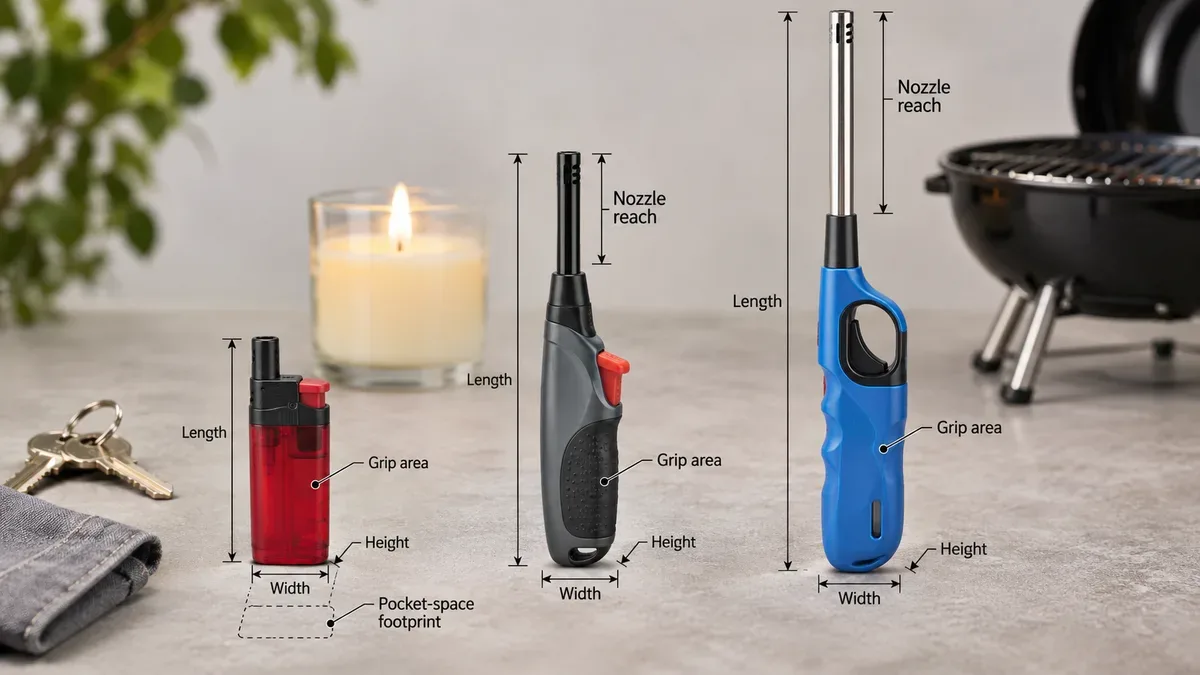
Overall length determines how a lighter fits in a pocket, pouch, glove compartment or emergency kit. A short lighter may sit horizontally beside keys. A longer model may fit better vertically inside a kitchen drawer or camping organiser.
Narrow bodies usually create less pocket bulk and fit smaller cases. However, a very narrow grip may feel less secure during activation. Wider bodies often improve balance and control, especially when wearing work or camping gloves.
Height and thickness matter when stacking gear. A thick lighter can stop a pouch from closing or create a noticeable bulge beside a phone. Additionally, a squared body may occupy more space than a rounded design with similar measurements.
Body Length Versus Reach
Body length describes the main handle or fuel tank. Reach describes the distance between your hand and the ignition point. Folding and telescoping lighters can have a short stored length but a much longer operating length.
This difference matters around candles, fireplaces and grills. A compact body may fit easily in a drawer, yet its extended nozzle may provide useful hand clearance. Always compare both stored and operating dimensions.
Smaller bodies often hold less fuel or use smaller batteries. Consequently, they may offer shorter runtime between refills or charges. They may also feel less stable on a table, particularly when the nozzle extends far beyond the handle.
Ergonomics create another trade-off. Very small lighters can be harder to grip, refill or activate with gloves. A compact trigger may also feel cramped when you need repeated operation.
Matching Reach to the Task
- Candles: A medium neck usually provides enough hand clearance without excessive storage length.
- Fireplaces: A longer neck and protective shield can reduce heat exposure near the hand.
- Grills: Reach, grip comfort and wind protection matter more than minimum pocket size.
- Camp stoves: A narrow, controlled nozzle can reach recessed burners.
- Outdoor fires: A longer handle, stable grip and weather-resistant controls provide better control.
Wind guards, flame shields, trigger guards, child locks and protective caps can increase dimensions. These features may make a lighter less pocket-friendly, but they can reduce accidental activation risks. The smallest practical format depends on whether you prioritise daily carry, emergency storage or safer long-reach operation.
Electric, Butane, Torch, and Disposable Lighter Size Differences
Electric arc lighters usually need space for a rechargeable battery, charging port and electronic controls. Their wind-resistant arc can suit outdoor use, although the protective head cover may add bulk. Battery size also affects weight and charging intervals.
Butane lighter dimensions depend on reservoir volume, flame adjustment hardware and refill access. A short pocket torch may have a thick body because it stores fuel in a compact tank. Meanwhile, a refillable soft-flame lighter may use a longer body for safer hand clearance.
Torch designs concentrate heat through a compact head. This can make the nozzle relatively short, but the fuel reservoir may increase width. Soft-flame designs often use longer necks because the flame sits farther from the trigger hand.
Disposable utility lighters remain lightweight and straightforward. They can suit occasional use and backup storage, but they may sacrifice refillability, durability or long-term operating cost. Their exact reach varies widely between pocket and long-neck formats.
| Type | Portability advantages | Potential drawbacks |
|---|---|---|
| Electric arc | Rechargeable, wind-resistant and clean to store | Needs charging and may weigh more than expected |
| Butane torch | Compact flame head and adjustable output | Needs fuel, refill care and protection from accidental activation |
| Soft-flame | Longer reach and comfortable trigger operation | Often longer and less convenient for small pockets |
| Disposable | Lightweight, simple and easy to store as a backup | Limited refillability, reach or durability on some models |
No category is always the shortest, narrowest or lightest. A mini torch can be shorter than an electric lighter, while a compact electric model may be slimmer than a fuel-based design. Compare the actual measurements, battery capacity, refill capacity and ignition system.
Smaller designs may also have fewer controls and weaker wind protection. However, they can be easier to carry and store. The best choice balances size with reliable ignition, maintenance needs, operating cost and comfortable handling.
Choosing the Best Lighter Dimensions for Camping, Grilling, Travel, and Daily Carry
Pocket and Everyday Carry
Daily carry favours low weight, slim width and rounded edges. A secure activation control helps prevent accidental operation inside a pocket. Additionally, the body should provide enough grip without creating unnecessary bulk beside your phone or keys.
A short electric or pocket butane design may suit occasional household use. Choose a wider handle if you often operate the lighter outdoors or with gloves. For frequent use, consider whether the battery or fuel capacity justifies the extra weight.
Candles and Fireplaces
Candle lighting usually benefits from a medium or long neck. It improves hand clearance while remaining easy to store in a drawer. Fireplaces may require more reach, a heat shield and a trigger that remains comfortable during longer activation.
A folding head can offer a useful compromise. It stores compactly but extends when needed. Check whether the folding joint feels secure and whether the lighter remains balanced while extended.
Grilling and Outdoor Cooking
Grilling requires reach, wind resistance and a stable grip. A very short lighter may force your hand close to a hot cooking surface. Therefore, a longer handle and protective nozzle can matter more than pocket portability.
Look for controls that remain easy to use around gloves or outdoor conditions. A wider body can improve balance, while a fuel reservoir with useful capacity reduces interruptions during repeated lighting.
Camping and Emergency Kits
Camping storage rewards compact dimensions, but capacity still matters. A small rechargeable lighter needs enough battery life for your intended trip. A butane model needs a secure fuel system and suitable storage away from heat.
Glove-friendly controls, weather resistance and dependable ignition deserve equal attention. For an emergency pouch, choose a model that fits without crushing the trigger or damaging the protective cover.
Travel and Small Bags
Travel introduces restrictions beyond physical size. Protective covers, leak prevention and accidental activation controls become especially important. Airline rules can vary by lighter type, fuel state, destination and carrier.
In Australia, the Civil Aviation Safety Authority provides guidance on dangerous goods and lighter transport. Review the CASA dangerous goods guidance before packing. Also check your airline’s current rules, including whether the lighter must remain on your person.
- Smallest possible option: Choose a slim mini electric or pocket lighter for occasional nearby tasks.
- Candle lighting: Select a compact body with a medium or folding neck.
- Grill use: Prioritise longer reach, wind protection and a secure grip.
- Campfires: Choose dependable ignition, glove-friendly controls and useful capacity.
- Emergency storage: Select a protected model that fits your pouch without trigger pressure.
Storage space should guide the final dimensions. A kitchen drawer allows more length than a pocket. A glove compartment may accept a broad lighter, while a small camping organiser usually favours slim, protected designs.
How to Measure Utility Lighter Dimensions and Use the Buying Checklist
Measure the lighter on a flat surface with a ruler or digital caliper. Record total length, maximum width and maximum height. Measure body-only dimensions separately from the nozzle, cap and trigger guard.
For folding, sliding or telescoping designs, record both stored and operating measurements. Measure adjustable heads at their shortest and longest positions. Also check whether a removable cap changes the length during storage.
Weight deserves similar care. A refillable butane lighter may weigh differently when empty and full. Record the manufacturer’s stated weight, then consider whether the listed figure includes fuel, batteries or accessories.
Compact Utility Lighter Buying Checklist
- Does the stored length fit your pocket, pouch, drawer or organiser?
- Does the maximum width create uncomfortable bulk?
- Is the height suitable for stacking or case storage?
- Does the weight feel reasonable for daily carry?
- Does the reach suit candles, grills, fireplaces or campfires?
- Does the grip remain secure during repeated use?
- Is the fuel or battery capacity sufficient for your routine?
- Does the model support reliable recharging or refilling?
- Are the housing, cap and nozzle durable enough for storage?
- Does it include safe activation controls, guards or child-resistant features?
- Can you store it without pressing the trigger or damaging the head?
Manufacturer specifications provide the starting point. However, user reviews can reveal pocket comfort, balance, trigger feel and real-world portability. Look for comments about actual handling rather than unsupported claims about performance.
Finally, ask whether the lighter offers the right balance of compact size, useful reach, reliable ignition, comfortable grip and intended-use performance. The best decision rule is simple: choose the smallest model that still provides the reach, capacity, safety and ergonomics you need.
Conclusion
Compact utility lighters can differ substantially in body size, total length, reach, weight, fuel capacity and operating design. The smallest option is not always the most practical choice. Pocket comfort must work alongside grip security, safety controls, durability, rechargeability and reliable ignition.
Accurate measurements should separate the lighter body from the nozzle, handle, cap and extended components. Therefore, compare stored and operating dimensions before choosing a model for candles, fireplaces, grilling, camping, travel or emergency storage.
Sweet Puff Australia brings together smoking accessories and related product information for adult customers across Australia. Visit the Sweet Puff Australia website to explore available collections and product details.
Compare the dimensions and weight of your preferred lighter types, then verify manufacturer measurements and current travel rules. Choose the smallest model that comfortably meets your reach, safety and capacity requirements.