Have you ever fitted a new glass accessory, only to find the angle feels wrong or the seal keeps leaking? Glass joint angle adapter styles can solve those problems when you choose the correct angle, joint size, gender, material, and dimensions. However, one small mismatch can leave your setup unstable, awkward, or difficult to clean. This guide compares 45-degree and 90-degree designs, 14mm and 18mm sizes, joint types, airflow paths, construction quality, and practical buying tips.
What Is a Glass Joint Angle Adapter?
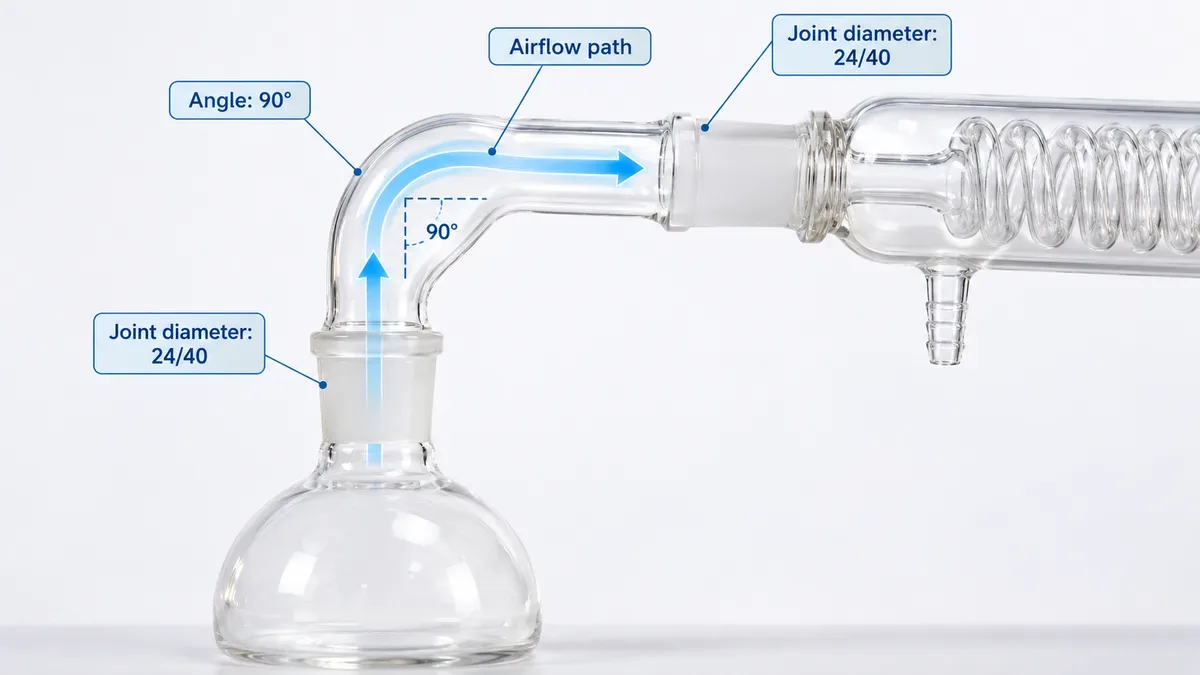
A glass joint angle adapter is a connector that changes the direction, position, height, or joint size of compatible glassware. It usually sits between two glass-on-glass components. Therefore, it can help reposition an attachment without replacing the main piece.
These adapters commonly connect with water pipes, glass attachments, reclaim catchers, downstems, and other compatible accessories. For example, an angled connector can move an accessory away from the side of a water pipe. This creates extra clearance and may make the setup easier to handle.
How Directional Adapters Work
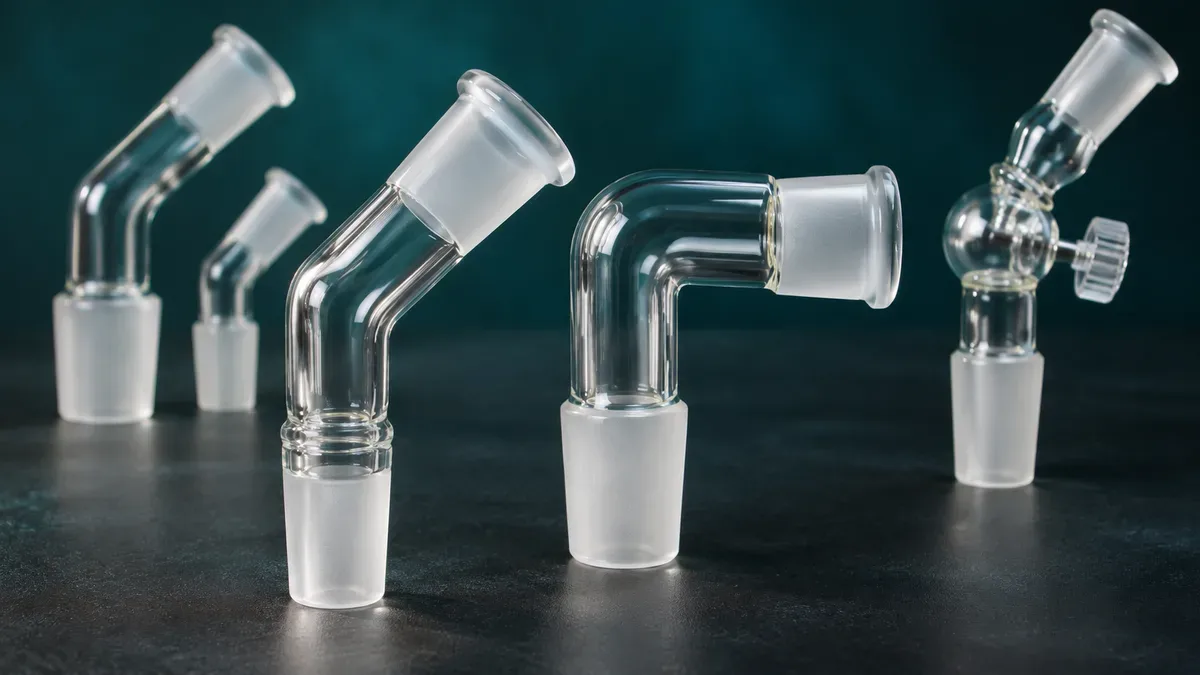
A directional adapter changes the path between two connection points. Fixed 45-degree and 90-degree models are the most familiar options. Meanwhile, rotating designs allow you to adjust the orientation after fitting the adapter.
A size-conversion adapter performs a different job. It connects two components with different nominal joint sizes, such as 14mm and 18mm. However, it must also match the correct joint gender and connection style.
Multi-connection adapters may provide several openings for different compatible components. These designs can add flexibility, but they also need more careful planning. Additionally, extra openings can increase cleaning time and overall size.
Why Accurate Dimensions Matter
Glass joints need accurate dimensions to create a stable, airtight connection. The outside diameter, inside diameter, ground joint finish, insertion depth, and alignment all matter. Even a small mismatch can cause wobbling, air leaks, or excessive stress.
Nominal sizes do not always guarantee identical tolerances between manufacturers. Therefore, check the product drawings and measurements before ordering. A 14mm label may still fit differently across brands, especially when the joint finish or depth varies.
If you are comparing accessories, browse the Sweet Puff Australia shop for product details and available glassware options. Always compare the listed specifications with your existing components before purchase.
Glass Joint Angle Adapter Styles: 45-Degree, 90-Degree, and Adjustable Designs
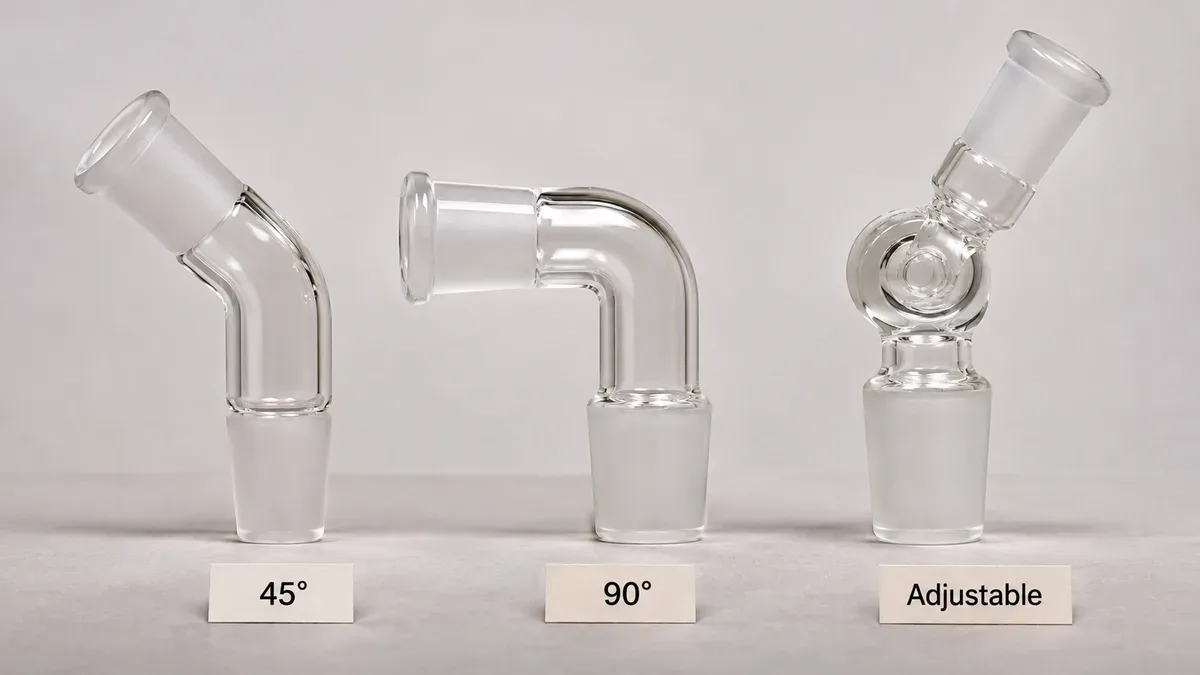
The angle of an adapter affects clearance, balance, comfort, and accessory placement. Therefore, choosing the correct style involves more than selecting the first connector that matches your joint size.
45-Degree Glass Adapters
A 45-degree glass adapter creates a gradual directional change between two connections. This angle often suits setups that need a gentle repositioning rather than a sharp turn. Additionally, its sloped shape can keep an accessory closer to the main piece.
These adapters work well when you need moderate clearance around a water pipe or side-mounted attachment. They may also reduce the chance of an accessory extending too far sideways. However, the diagonal profile can still require careful measurement around nearby surfaces.
A 45-degree model can suit reclaim catcher placement when the catcher needs slight repositioning. It may also help align an attachment with a comfortable handling position. However, the final fit depends on the adapter’s total height, width, and joint orientation.
90-Degree Glass Adapters
A 90-degree glass adapter creates a sharper turn between connection points. Therefore, it suits tight clearances, vertical alignment changes, or side-mounted accessories. The sharper bend can keep the connected component more compact in one direction.
However, a 90-degree bend may create a more complex airflow path than a gradual bend. Internal diameter, bend radius, and bore alignment become especially important. A narrow or poorly finished bend may increase draw resistance or collect residue more quickly.
Adjustable and Rotating Designs
Adjustable and rotating adapters allow you to change the orientation after installation. This flexibility can help align an accessory with a particular setup or storage position. Meanwhile, moving parts may add seals, joins, and cleaning points.
Fixed adapters usually offer greater simplicity and stability. Rotating models offer more positioning options, but they may require occasional inspection. Therefore, choose flexibility only when it solves a genuine clearance or alignment problem.
| Adapter style | Typical advantages | Possible limitations | Ideal applications |
|---|---|---|---|
| 45-degree fixed | Gradual direction change and compact positioning | May not create enough clearance for every setup | Angled attachments and moderate repositioning |
| 90-degree fixed | Sharp turn and useful side clearance | Can create a more complex airflow path | Tight spaces and vertical-to-horizontal changes |
| Rotating | Adjustable orientation after fitting | More moving parts and maintenance needs | Setups requiring frequent repositioning |
| Multi-connection | Supports several compatible connection points | Larger footprint and more cleaning work | Specialised setups with several attachments |
Adapter geometry can also affect user comfort and stability. For instance, a long side-mounted accessory may create extra leverage on the main joint. As a result, the setup may become easier to knock over.
Furthermore, sharper bends can increase turbulence when the internal bore narrows or changes direction abruptly. Compare the angle with the internal diameter, bore finish, and bend radius. A simple open-bore design may provide a more direct path than a compact chambered model.
Joint Types, Sizes, and Compatibility Explained
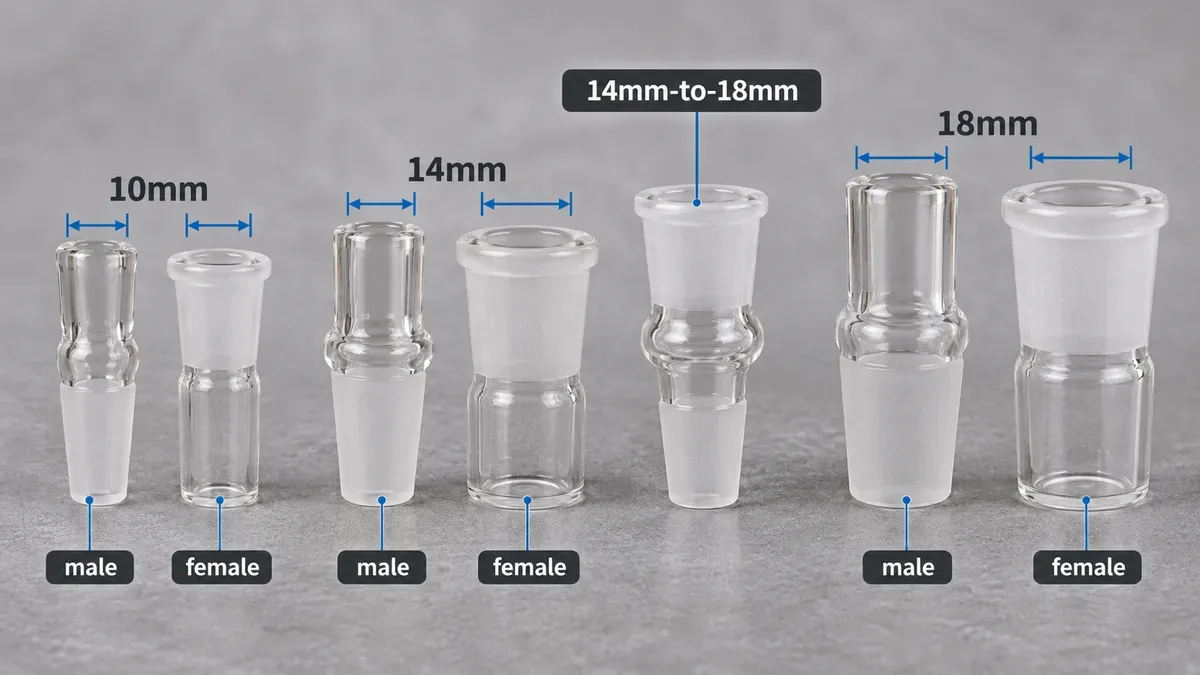
Joint type determines how the adapter connects to another component. The most common options include male joints, female joints, and dual-ended configurations. Therefore, identify both connection points before choosing an adapter.
Male and Female Glass Joints
A male glass joint fits inside a compatible female joint. A female joint receives the outside of a matching male joint. These terms describe the physical connection, not the brand or overall adapter shape.
Dual-ended adapters may use one male and one female connection. Other designs may use two male or two female ends. However, the exact configuration varies between products, so read the specifications carefully.
Common Glass Joint Sizes
Common glass joint sizes include 10mm, 14mm, and 18mm. Smaller 10mm joints suit compact glassware, while 14mm and 18mm options appear frequently across larger accessories. Consequently, buyers often compare 14mm and 18mm glass adapters.
A 14mm to 18mm glass adapter connects components with different nominal sizes. Depending on the configuration, it may act as a reducer, expander, or size-conversion connector. However, the joint gender must still match both components.
For example, a 14mm male joint cannot connect directly to another 14mm male joint. You may need a female-to-female connector or another compatible configuration. Therefore, size alone never confirms compatibility.
Practical Glass Adapter Fitting Guide
Start by checking the existing joint under bright, even lighting. Clean away residue before measuring, because buildup can make the opening appear smaller or distort the fit.
- Measure the joint diameter or confirm the manufacturer’s stated size.
- Identify whether the existing connection is male or female.
- Check the adapter’s matching joint gender and connection type.
- Measure insertion depth and confirm that the joint can seat fully.
- Check the adapter’s height, width, and surrounding clearance.
- Compare the manufacturer’s tolerance notes or technical drawing.
Additionally, check whether the connection uses a ground glass joint or another fitting standard. Two products may use the same nominal size while differing in taper, depth, or finishing quality.
An adapter can connect different sizes when its ends are designed for that conversion. Otherwise, you may need a separate reducer, expander, or matching connector. Never assume that a standard 14mm piece automatically fits an 18mm opening.
Are Adapters Interchangeable Between Brands?
Some adapters work across brands when their dimensions and joint standards match. However, brand names alone cannot confirm a reliable fit. Manufacturing tolerances, joint depth, glass thickness, and ground finish may vary.
Therefore, compare actual measurements rather than relying only on product photographs. If specifications remain unclear, contact the seller before ordering. A clear return policy also helps when compatibility cannot be confirmed in advance.
For broader product browsing, you can explore Sweet Puff Australia’s product categories. Use category pages as a starting point, then verify each product’s individual measurements.
Materials, Construction Quality, and Airflow Design
Borosilicate glass is commonly used for glass adapters because it offers heat resistance, chemical stability, and good clarity. It also handles temperature changes better than ordinary soda-lime glass. You can read more about its properties through this borosilicate glass reference.
However, borosilicate does not make an adapter unbreakable. Rapid temperature changes, drops, chips, and uneven stress can still damage the glass. Therefore, handle every adapter carefully, regardless of its advertised material.
Signs of Better Construction
Look for consistent wall thickness, smooth joint finishing, clean welds, and carefully aligned openings. The joint should appear even around its circumference. Additionally, the internal bore should look open and free from obvious restrictions.
- Smooth, evenly ground connection surfaces.
- Uniform glass thickness around bends and joints.
- Clean welds without sharp ridges or visible debris.
- Aligned openings with no obvious offset.
- Clear glass without cloudy stress areas.
Warning signs include rough edges, thin weak sections, visible stress marks, cloudy patches, and misaligned openings. Furthermore, a joint that looks uneven may struggle to form a dependable seal.
Airflow and Internal Geometry
Internal diameter and bend radius influence the adapter’s airflow design. A narrow bore can increase draw resistance, especially where the path changes direction. Meanwhile, a smoother bend may reduce abrupt turbulence and make cleaning easier.
Simple open-bore adapters usually offer a direct airflow path. Other models include percolation features, reclaim collection, or additional chambers. These features may provide a specific function, but they also add surface area and cleaning requirements.
Fixed geometry can provide excellent stability because it has fewer moving parts. In contrast, rotating designs may include seals or joints that collect residue. Therefore, consider cleaning access before choosing an adjustable model.
How to Choose the Right Glass Joint Angle Adapter
Begin with the intended setup rather than the adapter’s appearance. A water pipe glass adapter may need extra clearance for a side attachment. Meanwhile, a reclaim catcher may need a particular height or angle for comfortable placement.
Choose a 45-degree design when you need a gradual positioning change. Select a 90-degree design when you need a sharper turn or compact side connection. However, confirm the adapter’s external dimensions before assuming the angle will fit.
Next, match the joint gender of both components. A male, female, or dual-ended adapter only works when each connection matches the component beside it. Additionally, check whether the joint seats fully without excessive force.
Size deserves special attention when comparing 14mm glass joint adapters with 18mm glass joint adapters. Confirm the size at both ends, especially when the adapter performs a conversion. A product labelled “14mm to 18mm” may still require a specific male-to-female arrangement.
Measure More Than the Joint
Measure insertion depth, total height, width, and nearby clearance. For example, an adapter may fit the joint but collide with a base, mouthpiece, downstem, or table surface. Therefore, sketching the connection or measuring the surrounding area can prevent surprises.
Also assess the seal, joint smoothness, and stability. The adapter should sit securely without twisting, rocking, or requiring excessive pressure. If alignment feels forced, stop and recheck the measurements.
Buyer Checklist
- Correct angle for the intended direction.
- Matching male, female, or dual-ended configuration.
- Exact joint size, including any size conversion.
- Borosilicate or clearly stated glass construction.
- Smooth joints and consistent wall thickness.
- Suitable internal diameter and airflow path.
- Enough height, width, and surrounding clearance.
- Easy cleaning access around bends and chambers.
- Appropriate design for occasional or frequent use.
- Clear manufacturer specifications and return terms.
When compatibility remains uncertain, review product photos and technical drawings together. Customer measurements can offer useful context, but they should not replace manufacturer specifications. Most importantly, choose a seller that explains dimensions clearly and provides a practical return policy.
You can also visit the Sweet Puff Australia blog for additional glassware buying guidance. Use trusted product information to compare fit, design, maintenance, and intended application.
Cleaning, Maintenance, and Troubleshooting Fit Problems
Clean a glass angle adapter with a suitable glassware cleaning solution, warm water, and non-abrasive tools. Follow the cleaner’s instructions and rinse thoroughly afterwards. Avoid harsh scraping, sudden temperature changes, and tools that can chip the joint.
Pay particular attention to narrow bends and reclaim-prone areas. Residue can restrict airflow, affect the seal, and make the adapter harder to remove. Therefore, regular cleaning usually requires less effort than removing heavy buildup later.
Safe Handling and Storage
Allow the adapter to cool before washing or moving it. Thermal shock can damage glass, even when the piece uses borosilicate material. Additionally, dry the adapter fully before storing it in a padded, stable location.
Inspect the joint under good lighting after cleaning. Look for chips, cracks, cloudy stress marks, and new scratches. Stop using the component if you notice structural damage.
Why the Fit Feels Loose
An adapter may fit loosely because the joint size is incorrect or the genders do not match. Worn components, manufacturing tolerances, and residue can also affect the connection. Furthermore, a damaged ground joint may no longer sit evenly.
If the adapter feels loose, confirm both measurements first. Then clean both connection points and inspect them carefully. Test the alignment without forcing the pieces together.
Why the Seal Fails
An airtight seal may fail because of chips, scratches, uneven ground joints, misalignment, or insufficient insertion. Incompatible joint standards can create the same problem. Therefore, do not compensate for a poor fit by applying excessive pressure.
- Confirm the joint sizes and genders.
- Clean both connection points thoroughly.
- Inspect each joint under bright lighting.
- Check alignment and insertion depth.
- Replace damaged or incompatible components.
- Contact the seller when specifications remain unclear.
Never force mismatched glass joints together. Stop using any component with a crack, chip, or visible stress damage. If the fit remains uncertain, verify the manufacturer’s specifications before using the setup.
Conclusion
The best glass joint angle adapter depends on the correct angle, joint gender, size, dimensions, material, airflow design, and intended application. Compare 45-degree and 90-degree styles carefully. Additionally, verify 14mm or 18mm compatibility instead of relying on nominal labels alone.
Inspect borosilicate construction, smooth joint finishing, internal bore design, clearance, and cleaning access before ordering. Measure your existing joints, compare the adapter styles, and choose the model that provides the right fit, seal, stability, and airflow for your setup.
Sweet Puff Australia brings together glassware and accessories for adults who want clearer product information before buying. Explore the available collections, compare specifications, and make your final choice with measurements in hand.