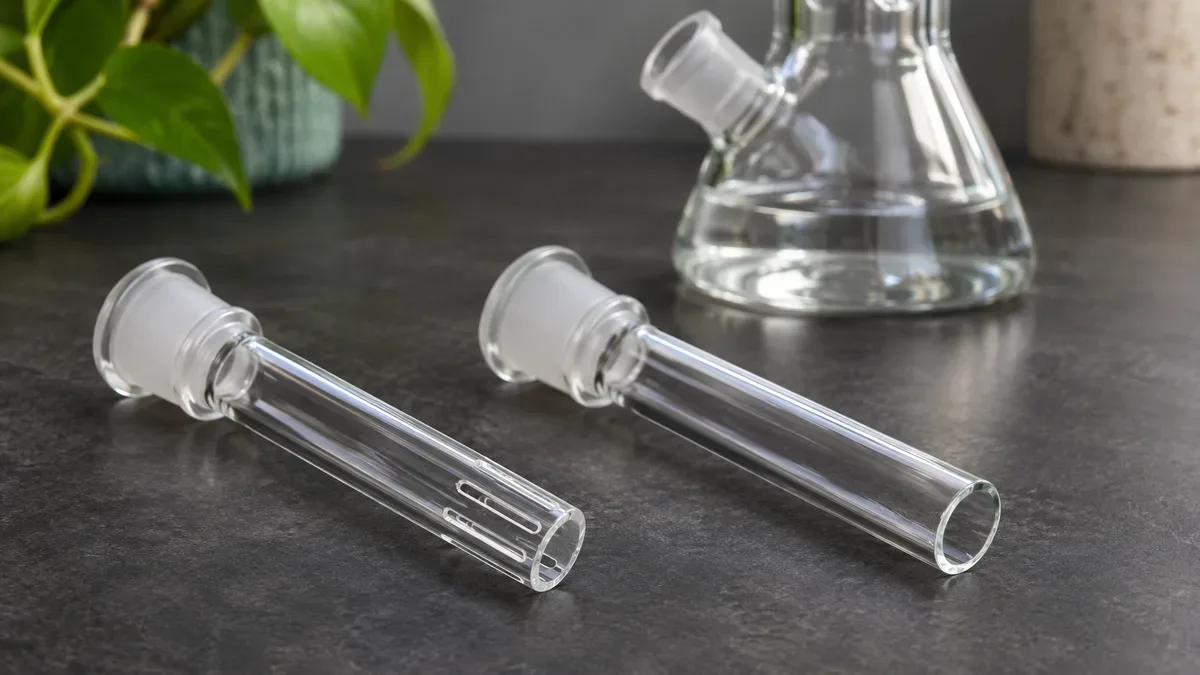
Choosing between a slotted downstem and an open-end downstem can change your bong’s bubbles, airflow, smoothness, and cleaning routine. Many water-pipe users replace a broken or clogged downstem without considering these design differences. This guide compares both options, including filtration, drag, water level, compatibility, maintenance, and hit feel. Therefore, you can choose a properly sized downstem for your glass bong or water pipe with greater confidence.
1. What Is a Downstem and Why Does It Matter?
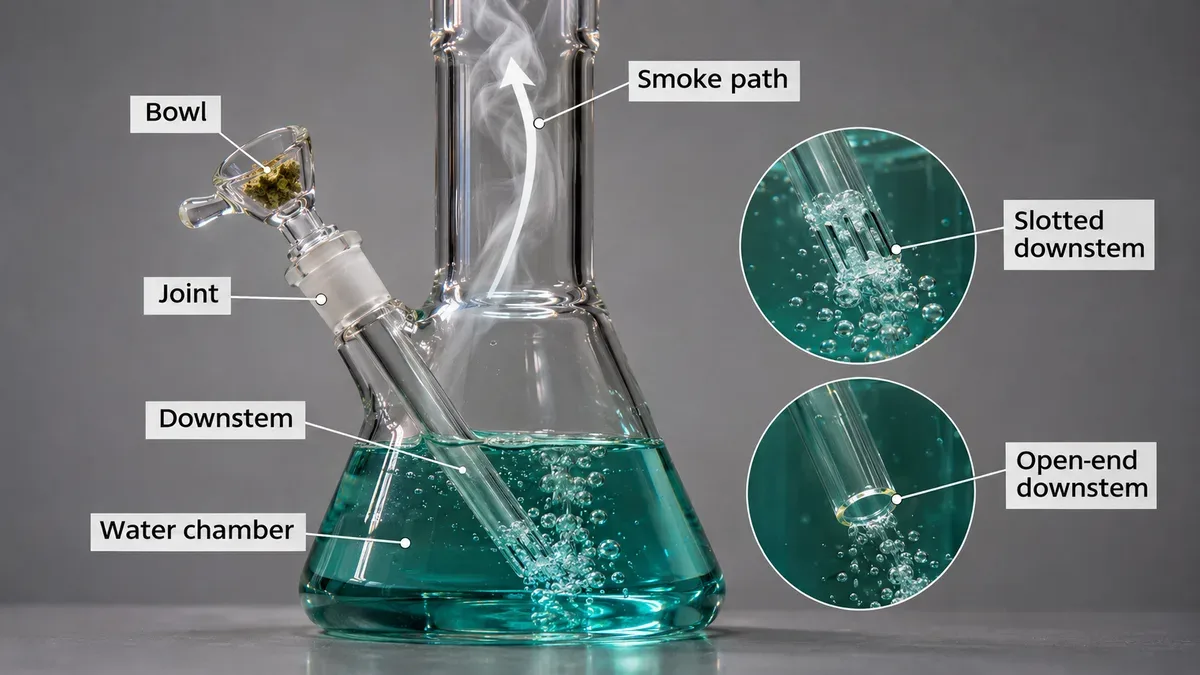
A downstem is the glass tube that carries smoke from the bowl or joint into the bong’s water chamber. It usually sits below the waterline, allowing smoke to travel through water before reaching the main chamber. In simple terms, the downstem connects the bowl to the filtration system.
Additionally, the downstem helps create bubbling, smoke cooling, moisture capture, and airflow. Its outlet determines how smoke enters the water. Therefore, its design can affect how the bong feels during each draw.
Most downstems use either an open-end outlet or several narrow slots near the submerged tip. Open-end models release smoke through one larger opening. Slotted designs divide the smoke into multiple streams before it enters the water.
However, a downstem is not the same as a downstem percolator. A standard downstem usually provides the first stage of diffusion. A percolator uses a more complex chamber, disc, tree, showerhead, or honeycomb structure.
The bong’s water depth also matters. The water must cover the outlet or slots, but excessive water can increase drag and splashback. Furthermore, the joint position, tube length, chamber shape, and draw speed all influence the final result.
More bubbles do not automatically mean better filtration. Smaller bubbles can increase smoke-to-water contact, yet bubble volume alone cannot measure performance. In fact, a poorly matched downstem can feel restrictive, splash water, or create weak filtration.
For a broader overview of bong anatomy and water filtration, see this bong reference guide. It explains how the downstem directs smoke below the waterline.
How the Downstem Affects the Whole Bong
A downstem influences the pressure needed to draw smoke through the water. A longer tube may place the outlet deeper, while a shorter tube may reduce water contact. Therefore, the correct length matters as much as the outlet style.
For example, a small bong with a narrow chamber may work best with a simple downstem. Meanwhile, a larger water pipe may benefit from more diffusion, provided the airflow remains comfortable. The ideal setup balances filtration, cooling, drag, and ease of maintenance.
2. Slotted Downstem Versus Open End Downstem: How Each Design Works

How a Slotted Downstem Works
A slotted downstem has narrow cuts or slits near its submerged end. These openings divide the smoke into several smaller streams. As a result, the smoke usually forms more bubbles across the water chamber.
Manufacturers may describe this design as slitted, diffused, or multi-slit. The names can vary, but the basic principle remains similar. Smoke exits through several openings instead of one large outlet.
Additionally, the number and width of the slots can change the draw. More slots may spread the smoke across a wider area. Narrower slots can produce smaller bubbles, although they may also collect residue more easily.
Glass geometry also affects the result. The tube diameter, slot placement, slot depth, and submerged position all influence how smoke moves. Therefore, two slotted downstems can perform differently, even when they appear similar.
How an Open-End Downstem Works
An open-end downstem has one larger outlet at the submerged tip. Smoke travels through the tube and exits as a broader stream. This design provides less forced diffusion than a slotted alternative.
However, less forced diffusion does not mean no filtration. The smoke still bubbles through water when the outlet sits below the surface. The main difference involves bubble size, airflow resistance, and total smoke-to-water contact.
An open-end design often creates larger bubbles with a quicker, more direct draw. Meanwhile, a slotted design usually creates more visible bubbling and a busier water chamber.
Comparing Bubble Behaviour
Slotted downstems commonly create smaller bubbles and greater bubble spread. This can increase the apparent bubbling intensity during a draw. In contrast, open-end downstems often produce fewer, larger bubbles.
Nevertheless, bubble appearance can mislead you. Water level, draw speed, chamber width, and smoke volume affect bubbling just as much as slot count. Therefore, a louder or more active chamber does not always provide a smoother experience.
- Slotted outlet: several smoke streams, smaller bubbles, and stronger visible diffusion.
- Open-end outlet: one broad stream, larger bubbles, and more direct airflow.
- Both designs: require correct water depth and a secure, airtight fit.
3. Filtration, Smoothness, Airflow, and Hit Feel Compared

Slotted downstems generally provide more smoke diffusion than open-end models. Their smaller openings divide the smoke before it travels through the water. Consequently, they can increase smoke-to-water contact during a draw.
When correctly installed, this extra diffusion may create a cooler and smoother-feeling hit. The water breaks the smoke into smaller streams, which can improve cooling and moisture capture. However, water filtration does not remove every irritant or eliminate the risks associated with inhaling smoke.
Open-end downstems usually offer more direct airflow. Their larger outlet can reduce resistance, especially in a bong with a narrow joint or compact chamber. Therefore, the draw may feel faster, stronger, and less restricted.
Some users prefer this direct hit because it preserves more flavour and intensity. In contrast, heavier diffusion may soften the flavour slightly. It can also reduce the sharp impact that some experienced users expect.
Which Design Feels Smoother?
Slotted downstems often feel smoother when the bong has enough water and a comfortable draw speed. However, smoothness depends on more than the downstem outlet. Chamber size, smoke temperature, water depth, and personal sensitivity also matter.
For example, a slotted downstem submerged too deeply may create excessive drag. A user may pull harder, causing water to splash or travel towards the mouthpiece. Meanwhile, a correctly tuned open-end downstem can feel surprisingly comfortable in a well-designed bong.
Additionally, a small chamber may not need aggressive diffusion. Too much bubbling can make the draw noisy and restrictive. Therefore, the best choice depends on the entire water-pipe setup.
Airflow, Flavour, and Hit Intensity
Open-end downstems usually suit users who value strong airflow and a direct hit. Their simple outlet places fewer restrictions between the bowl and water chamber. As a result, they may work well with compact bongs and high-airflow setups.
Slotted downstems suit users who prioritise extra diffusion and a cooler-feeling draw. However, the added openings can increase drag when resin or mineral deposits build up. Regular cleaning becomes more important as the design becomes more detailed.
Neither option guarantees a particular flavour profile. Clean glass, fresh water, suitable heat, and the material being used all influence taste. Furthermore, more diffusion may slightly soften the strongest flavours.
Are Slotted Downstems Louder?
Slotted downstems can sound louder because they often create more bubbles. Nevertheless, noise depends heavily on water depth, draw speed, slot design, and chamber shape. An open-end downstem can also become loud when the draw moves a large volume of water.
Therefore, bubbling noise should not decide the purchase by itself. If quiet operation matters, test different water levels and draw speeds. A smaller, gentler draw may reduce noise with either design.
Which Option Provides More Filtration?
In general, slotted downstems provide more forced diffusion than open-end downstems. They may suit users seeking stronger bong filtration and cooler-feeling hits. However, the improvement depends on proper water coverage and a clean outlet.
Open-end downstems may suit users who want lower drag, stronger airflow, and a more immediate experience. Both options can reduce the heat and dryness of direct smoke exposure. However, neither design makes smoking risk-free or removes the need for responsible, lawful use.
4. Cleaning, Clogging, Durability, and Long-Term Maintenance
Slotted downstems can collect resin inside their narrow openings. Sticky residue may reduce airflow and stop some slots from working evenly. Therefore, these downstems usually need more detailed cleaning than open-end models.
Open-end downstems are generally easier to rinse and brush. Their larger outlet gives cleaning solution and water more room to pass through. As a result, they often suit users who prefer simple maintenance.
However, clogging depends on more than the outlet design. Plant material, dirty water, hard-water minerals, frequent use, and irregular cleaning can affect either downstem. A neglected open-end tube can still become heavily blocked.
Practical Cleaning Advice
Rinse the downstem soon after use, before residue dries inside the tube. Use a glass-safe cleaning solution designed for water pipes. Additionally, follow the cleaner’s instructions and rinse the glass thoroughly afterwards.
- Change the bong water regularly to reduce residue and mineral buildup.
- Soak slotted sections long enough to soften deposits inside the narrow openings.
- Use soft brushes or suitable cleaning tools without forcing them through slots.
- Avoid abrasive objects that can scratch or weaken the glass.
- Check the outlet before use and confirm that air can pass through freely.
Never force a blocked slot with a sharp metal object. That approach can chip the glass or enlarge the opening unevenly. Instead, repeat a suitable soak and use gentle pressure with a soft cleaning tool.
Durability and Handling
Downstem durability depends on glass thickness, joint design, tube length, and handling. Slotted sections can become more vulnerable to impact because the cuts remove some glass from the tube wall.
Thermal shock can also damage glass. Avoid moving a hot bong onto a cold surface or rinsing hot glass with very cold water. Meanwhile, open-end downstems often have simpler geometry and fewer delicate sections.
Frequent cleaners may prefer an open-end model because it is easier to inspect and unblock. Heavy users may still choose a slotted design, provided they accept the extra cleaning routine. Ultimately, glass quality and careful handling matter more than outlet style alone.
5. Compatibility, Water Level, and Replacement Downstem Fit
A replacement downstem must match the bong’s joint size, joint gender, length, and internal clearance. Common glass bong connections include 14mm and 18mm sizes. Some smaller pieces use 10mm joints, while unusual designs may require a specific adapter.
Measure the joint opening carefully before purchasing. Also, confirm whether the bong uses a male or female joint. A removable downstem usually slides into the bong’s joint, while a fixed design may require a different replacement approach.
How to Measure Downstem Length
Measure from the joint opening to the point where the downstem should finish inside the chamber. The outlet should sit below the planned waterline without touching the base. Therefore, length affects both filtration and splashback.
If the original downstem remains intact, measure it directly. Otherwise, use the bong’s joint position and chamber depth as reference points. Remember to allow space between the glass outlet and the chamber floor.
Additionally, check the downstem’s outer diameter. A tube may have the correct joint size but still fit poorly if its outer width clashes with the bong’s internal shape.
Setting the Correct Water Level
The water should cover the open outlet or all slots. Too little water reduces smoke contact and weakens filtration. In contrast, too much water increases drag and may send droplets towards the mouthpiece.
Slotted downstems often need enough water to cover every opening evenly. If the waterline sits below the upper slots, some smoke may bypass the intended diffusion. Open-end downstems usually offer more flexibility, but they still need full outlet coverage.
Start with a modest amount of water and test the draw gently. Add small amounts until the bubbling feels active without excessive resistance. Meanwhile, keep the bong upright to prevent accidental splashback.
Can You Replace an Open-End Downstem With a Slotted One?
Yes, you can usually replace an open-end downstem with a slotted model when the key measurements match. The joint size, gender, tube length, outer diameter, and internal clearance must all suit the bong.
However, the replacement may change the draw resistance and ideal water level. Therefore, test the new downstem with clean water before regular use. Never assume that a visually similar piece will fit safely.
Downstem Replacement Checklist
- Confirm the bong’s joint size, such as 14mm or 18mm.
- Check the joint gender and whether the downstem is removable.
- Measure the required length from the joint opening.
- Confirm the outlet clears the chamber floor.
- Check for cracks, chips, loose joints, and damaged seals.
- Fill with water and test for leaks before use.
- Check that the bowl sits securely and the draw feels comfortable.
- Stop using the bong if you notice excessive pull resistance or unstable glass.
6. Which Downstem Is Best for Your Bong or Water Pipe?
| Feature | Slotted Downstem | Open-End Downstem |
|---|---|---|
| Filtration | Generally stronger diffusion | Moderate, more direct filtration |
| Bubble production | More bubbles and smaller streams | Fewer, larger bubbles |
| Airflow | May feel more restricted | Usually more open |
| Drag | Moderate to higher, depending on slots | Generally lower |
| Smoothness | Often cooler-feeling when tuned correctly | Can feel stronger and more direct |
| Flavour | May soften flavour slightly | Often preserves a sharper profile |
| Noise | May create louder bubbling | Often quieter, but setup matters |
| Cleaning | Requires attention around slots | Usually simpler to rinse |
| Clogging risk | Higher when slots collect residue | Usually lower |
| Durability | Depends on slot geometry and glass thickness | Simple geometry can be easier to protect |
| Price | Often slightly higher for added diffusion | Often more affordable and straightforward |
Slotted downstems suit users who want more diffusion, smaller bubbles, and a cooler-feeling draw. They work especially well in larger chambers with enough space for bubbling. However, users must maintain the slots and tune the water level carefully.
Open-end downstems suit users who prefer direct airflow, easier cleaning, and stronger hit intensity. They can work well in compact bongs, simple glass water pipes, and high-airflow setups. Therefore, beginners may appreciate their straightforward installation and maintenance.
Experienced users may prefer slotted designs because they can adjust water depth and draw speed more precisely. Meanwhile, frequent cleaners and users who dislike clogging may prefer open-end models.
Most importantly, choose according to your priorities rather than bubble count alone. Confirm the joint size, length, gender, outer diameter, and chamber clearance before ordering. You can browse compatible water-pipe and glass accessory categories when comparing suitable designs.
Sweet Puff Australia brings together water pipes, glass designs, and smoking accessories for adult customers seeking practical options. Explore the Sweet Puff Australia website for product information and available collections.
Conclusion
Slotted downstems generally offer more diffusion, smaller bubbles, and potentially smoother, cooler-feeling hits. Open-end downstems usually provide simpler maintenance, stronger airflow, lower clogging risk, and a more direct experience.
However, the outlet design represents only one part of the setup. Joint size, downstem length, water depth, cleaning habits, chamber shape, and glass quality matter just as much.
Measure your bong’s joint and downstem length before buying. Then decide whether you prioritise smoothness or airflow. Finally, choose a compatible slotted or open-end replacement that matches your cleaning routine and water-pipe setup.