A water pipe that tips over can damage glass, waste contents, and create an avoidable safety hazard. Shoppers often compare height, design, and price without checking stability. Wide base water pipe tip resistance depends on base width, weight distribution, water level, and construction quality. This guide explains the key design features, testing methods, materials, and buying checks that support a safer, more balanced choice.
What Wide Base Water Pipe Tip Resistance Means
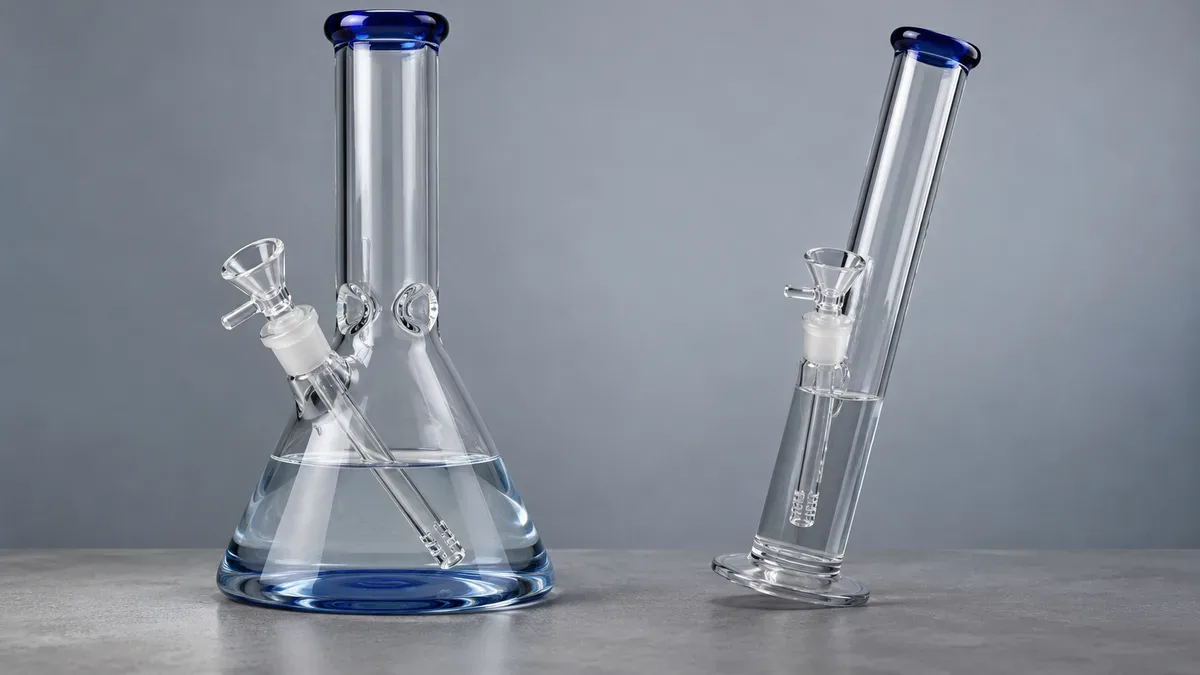
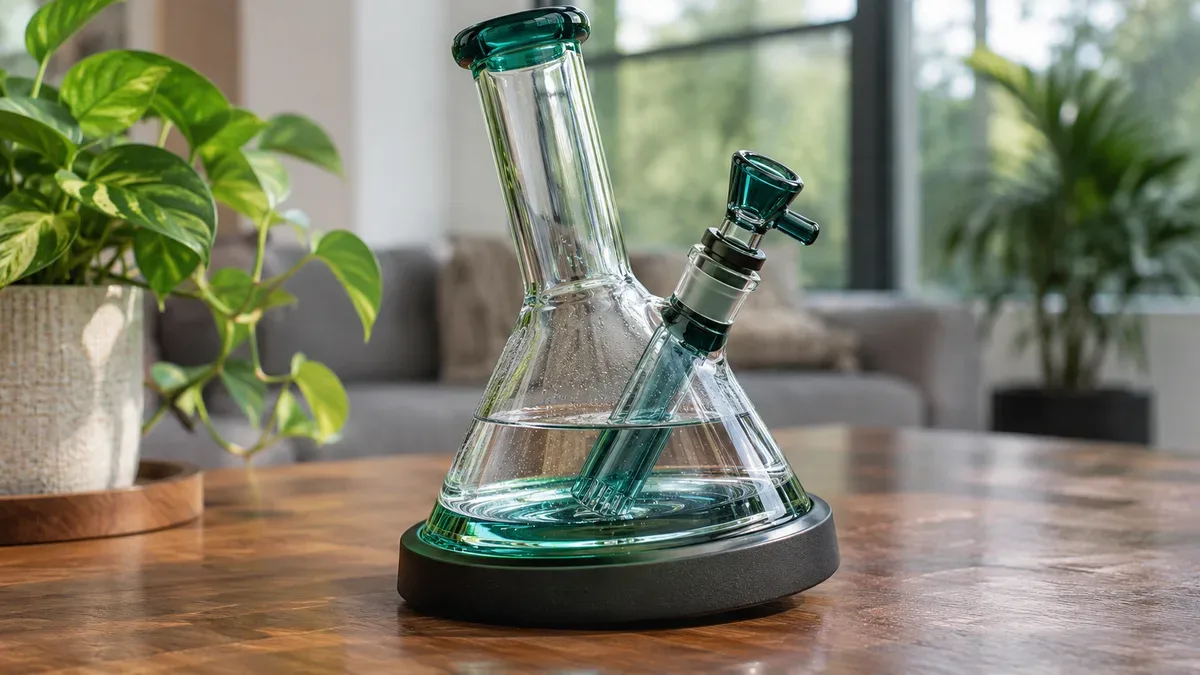
A wide base water pipe has a broader bottom footprint than a narrow, upright design. That wider contact area spreads the product’s weight across more surface. As a result, accidental sideways pressure usually needs more force to move the product beyond its balance point.
Water pipe tip resistance describes how well a design resists tilting, sliding, wobbling, and complete tip-over. However, tip resistance does not mean the product cannot fall. A sharp impact, unstable shelf, or poorly fitted accessory can still create a dangerous movement.
Water pipe stability, durability, and impact resistance also describe different qualities. Stability concerns balance during normal placement and use. Durability concerns how well the product withstands repeated handling, cleaning, and general wear.
Impact resistance focuses on how well materials tolerate knocks or drops. For example, a silicone body may tolerate certain impacts better than glass. Nevertheless, a soft material can still have poor stability if its base remains narrow or top-heavy.
Why Water Pipes Tip Over
Several everyday factors can make a water pipe unstable. Accidental contact remains common, especially on crowded tables or shared surfaces. Additionally, uneven benches, excessive height, loose accessories, and poor weight distribution can shift the balance point.
- A narrow base provides less support against sideways force.
- A tall neck can raise the centre of gravity.
- Heavy bowls or adapters can pull weight away from the centre.
- Uneven feet can create rocking or incomplete contact.
- Moisture and residue can reduce grip on smooth surfaces.
Tip resistance matters to adult consumers, product researchers, households, and shoppers seeking a stable water pipe. Beginners may appreciate forgiving designs during setup. Meanwhile, frequent users may prefer a structure that stays steady through regular cleaning and handling.
The basic relationship is straightforward. A broad contact area gives the product more room to remain balanced. A lower centre of gravity also makes the product harder to rotate around the edge of its base.
For a simple explanation of how mass placement affects balance, see this overview of the centre of mass. Therefore, wide-base designs often suit buyers prioritising stability over compact storage.
How Base Width, Weight, and Centre of Gravity Improve Stability
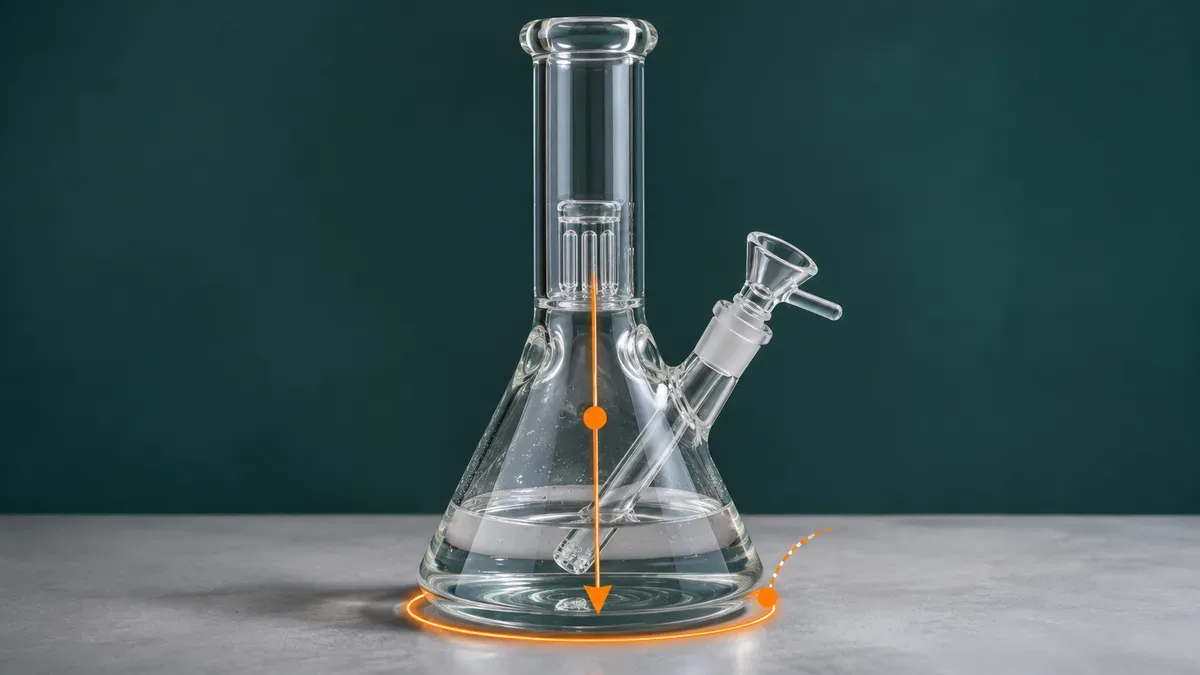
Base width directly affects the support area beneath a water pipe. A broader footprint spreads downward force across a larger surface. Therefore, sideways pressure usually has to travel further before the centre of gravity moves beyond the supporting edge.
Base weight can improve stability because it adds mass closer to the surface. However, weight alone does not guarantee a steady design. A heavy product with most of its mass high above the base may still feel awkward or top-heavy.
A tall water pipe can remain stable when its base is wide, level, and appropriately weighted. In contrast, a short design with a narrow footprint may wobble more easily. The complete shape matters more than height alone.
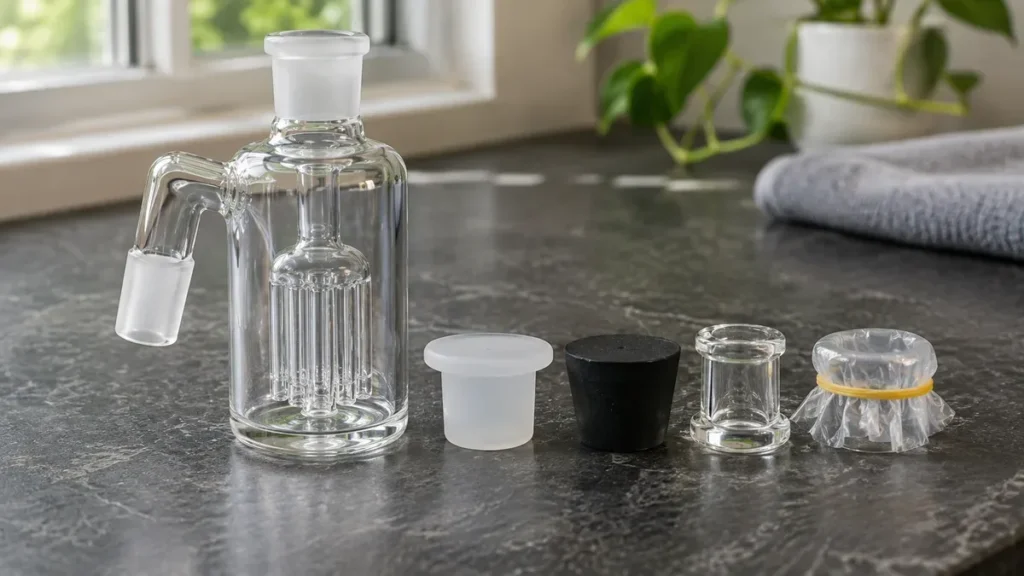
Accessories can also shift the balance point. A large bowl, ash catcher, reclaimer, adapter, or extended mouthpiece may add weight above the base. Additionally, a long downstem can create uneven loading inside the chamber.
Base thickness supports stability by resisting flexing and distortion. Reinforced joints can reduce movement between the chamber and neck. Meanwhile, a level bottom surface helps the entire footprint make consistent contact with the table.
Silicone feet, textured bases, and non-slip contact surfaces can reduce sliding on polished benches. Nevertheless, these features cannot compensate for a severely top-heavy shape. Always consider grip alongside footprint and weight distribution.
| Feature | What to check | Expected stability effect |
|---|---|---|
| Base width | Broad, proportionate footprint | Improves resistance to sideways movement |
| Base weight | Mass concentrated near the bottom | Can lower the centre of gravity |
| Centre of gravity | Low and close to the central axis | Reduces top-heavy behaviour |
| Footprint | Level, complete contact with the surface | Limits rocking and uneven loading |
| Portability | Manageable size and product weight | Improves handling but may reduce stability |
There is no universal base measurement that guarantees tip resistance. A suitable width depends on total height, chamber shape, product weight, and intended accessories. Therefore, compare the complete design instead of judging diameter alone.
Materials and Construction Features That Support Water Pipe Durability
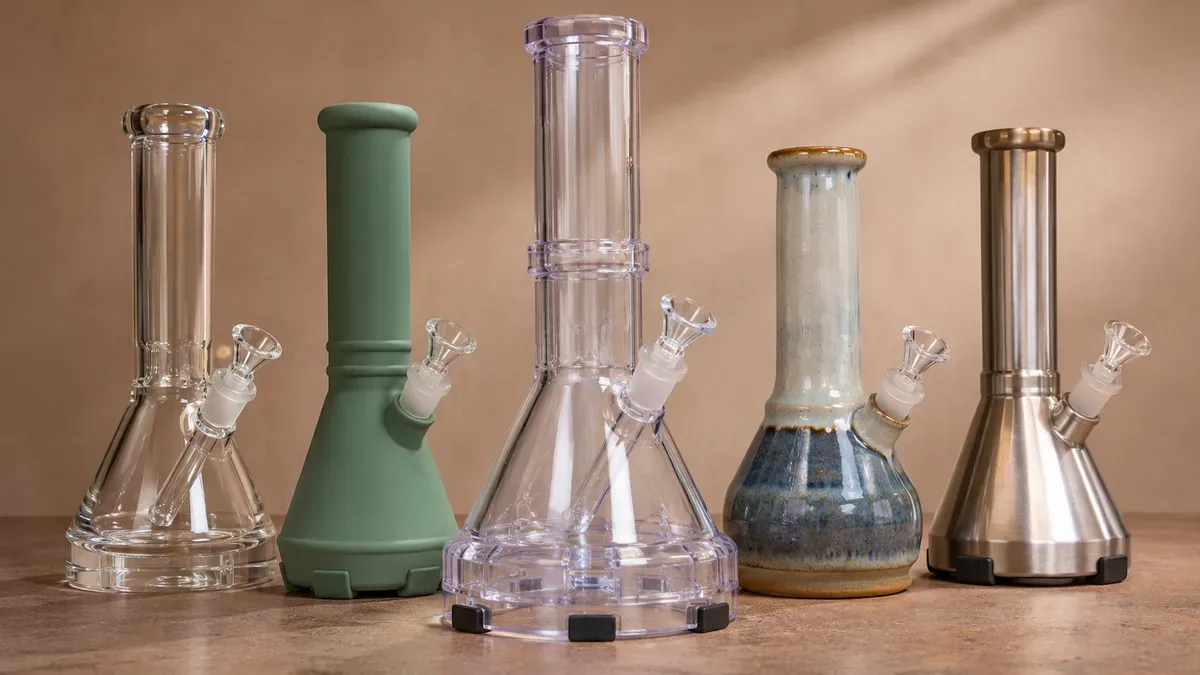
Common water pipe materials include borosilicate glass, silicone, acrylic, ceramic, and metal components. Each option offers different benefits for durability, cleaning, portability, appearance, and price. Therefore, material choice should match the way you plan to store and handle the product.
Thick borosilicate glass can provide strong heat resistance and a premium appearance. However, glass can still break when dropped or struck against a hard surface. A narrow base may also make a thick glass product unstable despite its structural strength.
Silicone bases, protective sleeves, and reinforced sections can improve impact tolerance. Additionally, silicone can provide extra grip on smooth surfaces. Buyers who value portability often consider silicone or acrylic designs because they generally carry less breakage risk than glass.
Acrylic can offer a lightweight and practical option for travel or shared storage. In contrast, silicone usually provides greater flexibility and impact tolerance. Both materials may have a different appearance and cleaning experience from premium glass designs.
Ceramic and metal designs can add useful weight near the bottom. Nevertheless, ceramic may require careful handling around edges and joins. Metal components can also introduce cleaning, heat, or corrosion considerations, depending on the material and finish.
Construction Details Worth Inspecting
Base thickness, joint quality, seals, welds, glass clarity, and manufacturing consistency reveal more than product weight alone. Look for even edges, clean joins, and a base that sits flat. Furthermore, check whether removable sections fit securely without forcing or wobbling.
A heavy water pipe is not automatically stable. If the neck, bowl, or upper chamber carries most of its weight, the product may remain top-heavy. Therefore, inspect where the mass sits rather than relying on the listed total weight.
Durable construction supports long-term stability by reducing cracks, warped feet, loose joints, and uneven contact surfaces. Regular cleaning can also help preserve secure connections. However, abrasive tools or unsuitable chemicals may damage some materials.
Material selection affects maintenance, portability, price, and expected service life. Glass may offer clarity and easy visual inspection, while silicone may simplify transport. Meanwhile, ceramic and metal can provide distinctive designs with different care requirements.
To compare available styles, browse Sweet Puff Australia’s water pipe and smoking accessory selection. Always check the individual product information before comparing construction claims.
How Water Pipe Tip-Over Resistance Is Tested
Manufacturers and reviewers may assess stability through controlled tilt testing, impact testing, load testing, and surface-condition checks. These methods can reveal useful design differences. However, they do not guarantee safety in every household environment.
Tilt testing gradually applies sideways force until the base lifts, slides, or reaches an unsafe angle. A consistent setup makes comparisons more meaningful. Record the starting position, surface type, water level, and direction of force.
Impact testing uses a controlled, repeatable bump to simulate accidental contact. The test should use the same contact point and force each time. Nevertheless, a controlled bump cannot represent every real-world collision or fall.
Load testing examines how added accessories, filled contents, or external weight affect the centre of gravity. For example, a design may appear stable alone but become less steady with a large ash catcher. Therefore, test the product in its intended setup.
Surface testing can include smooth, textured, uneven, and slightly inclined areas. These conditions reveal differences in grip and contact area. Additionally, a product that feels stable on rubber may slide on polished stone.
For meaningful comparisons, record the following details:
- Water volume and recommended fill level.
- Attached bowls, adapters, ash catchers, and mouthpieces.
- Surface material, texture, and angle.
- Applied force, test direction, and failure point.
- Whether the product slid, rocked, lifted, or tipped.
Consumer reviews deserve careful interpretation because informal tests often use inconsistent force and angles. One reviewer may test an empty product, while another uses several accessories. Therefore, compare methods before comparing conclusions.
Before buying, inspect product photos for base dimensions, underside construction, feet, and overall proportions. Additionally, check the listed weight, warranty, and available maintenance information. Independent demonstrations can help when they show the complete product setup clearly.
Marketing phrases such as “anti-tip” or “stable water pipe” should have supporting details. Look for measurements, construction information, test conditions, or clear photographs. If a claim lacks evidence, treat it as a general description rather than a guarantee.
Water Level, Accessories, and Everyday Placement Factors
Water volume changes the total weight and may shift the centre of gravity. The effect depends on the internal chamber shape and where the water sits. Therefore, adding more water does not always improve stability.
Extra water can make a product heavier, messier, and harder to move safely. It may also increase the force placed on joints during handling. Always follow the manufacturer’s recommended water level for the intended design.
Bowls, ash catchers, adapters, reclaimers, and extended mouthpieces can add weight above the base. As a result, accessories may increase leverage during an accidental bump. Choose compatible parts that fit securely and remain proportionate to the original design.
A broad base cannot fully offset an oversized attachment. In contrast, a balanced accessory can preserve the product’s original centre of gravity. Check for loose joints, unusual leaning, and excessive movement after fitting each component.
Place a water pipe on a level, stable, dry, and uncluttered surface. Keep it away from table edges, busy walkways, heat sources, and areas where cords may catch. Additionally, avoid shelves that flex or vibrate during normal household activity.
Support the base when moving the product, especially when it contains water. Empty the chamber before transport to reduce weight and prevent spills. Meanwhile, carry removable accessories separately whenever possible.
Regular cleaning can preserve stability by preventing residue buildup, clogged components, sticky joints, and uneven attachments. However, use cleaning methods suited to the material. Harsh treatment can weaken finishes, seals, or silicone parts over time.
During routine maintenance, check for cracks, chips, warped feet, loose seals, worn silicone, and a rocking base. Stop using a damaged product until you assess the issue properly. A small defect can become more serious during repeated handling.
For storage, use a padded case and keep the product upright. Separate removable accessories to prevent knocks inside the case. Furthermore, avoid unstable shelves and choose a dry location away from direct heat.
Wide-Base Water Pipe Buying Guide and Comparison Checklist
Wide-base and narrow-base water pipes suit different priorities. Wide designs usually offer stronger stability and easier resistance to accidental bumps. Narrow designs may provide better portability, compact storage, and a lighter overall feel.
| Priority | Wide-base design | Narrow-base design |
|---|---|---|
| Stability | Usually stronger support and grip | More sensitive to bumps and uneven placement |
| Portability | Often heavier and bulkier | Usually easier to carry |
| Storage | Needs more shelf or case space | Fits smaller spaces more easily |
| Durability | May protect balance through stronger construction | Depends heavily on materials and joint quality |
| Appearance | Often looks grounded and substantial | May offer a slimmer, taller profile |
| Price | Can cost more when reinforced or weighted | May offer simpler budget options |
Prioritise a wide base if you share a household, use several accessories, or worry about accidental bumps. It can also help where table space is limited but the surface remains stable. However, a wide base still needs careful placement.
Compare base diameter, total height, product weight, chamber shape, feet, underside grip, and centre-of-gravity placement. Then check whether the product remains balanced at its recommended water level. Also consider the intended accessories, not just the bare product.
Review the construction materials, base thickness, joint quality, replacement-part availability, warranty coverage, and cleaning access. Moreover, credible product information should explain dimensions and materials clearly. Avoid relying on dramatic stability claims without supporting details.
Use this checklist before choosing:
- Broad, level base with complete surface contact.
- Stable underside with suitable grip or feet.
- Low or centred weight distribution.
- Secure joints and compatible accessories.
- Durable materials suited to your handling needs.
- Easy cleaning access and practical maintenance.
- Clear specifications, warranty details, and credible information.
Warning signs include a rocking base, very narrow footprint, top-heavy neck, thin unsupported glass, and loose attachments. Unclear specifications and exaggerated stability claims also deserve caution. Therefore, compare several designs before making a final decision.
For maximum stability, choose a broad and weighted design with a low centre of gravity. For portability, consider a lighter silicone or acrylic option with a stable underside. Meanwhile, durability-focused buyers should prioritise material quality, reinforced joints, and accessible replacement parts.
Budget shoppers should compare practical construction rather than paying for height alone. Premium buyers may prefer carefully finished glass, stronger bases, and better-supported components. Ultimately, choose a design whose base, weight distribution, materials, and accessories work together.
Sweet Puff Australia brings together water pipes, glass designs, and smoking accessories for adult shoppers comparing different formats. Explore the Sweet Puff Australia website for product information and available collections.
Conclusion
Wide base water pipe tip resistance depends on more than base width. A stable design combines a broad, level footprint, suitable base weight, low centre of gravity, durable materials, secure construction, and non-slip contact points.
Water level, accessories, placement, handling, and maintenance also influence real-world stability. Therefore, compare base dimensions, construction materials, weight distribution, testing information, and buyer reviews before choosing a wide-base water pipe.
Choose the design that matches your stability and durability priorities. Size alone cannot guarantee balance, but a coordinated design can make everyday handling more secure and predictable.