Why can two showerhead percolators with similar shapes create completely different bubbling, airflow, and filtration? The answer often sits inside the glass. Showerhead percolator slot construction, water level, glass quality, and manufacturing accuracy work together to shape performance. This guide explains how diffusion slots function, how major perc designs compare, and which construction details matter during inspection, cleaning, and purchase decisions.
What Is a Showerhead Percolator?
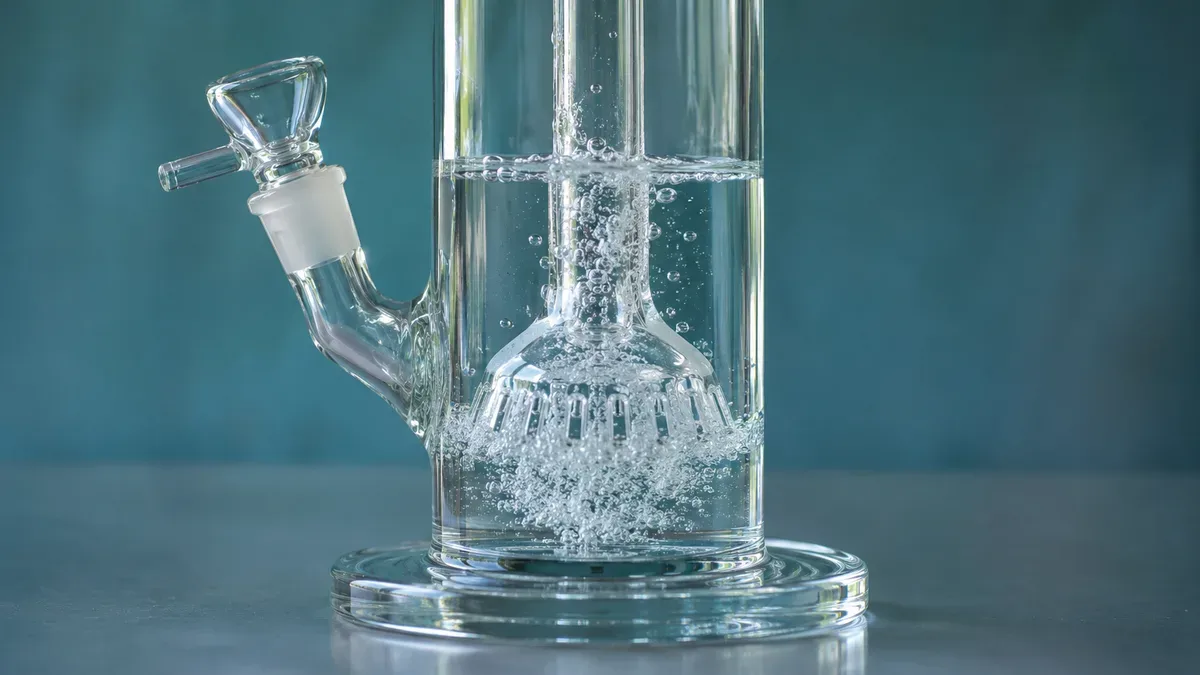
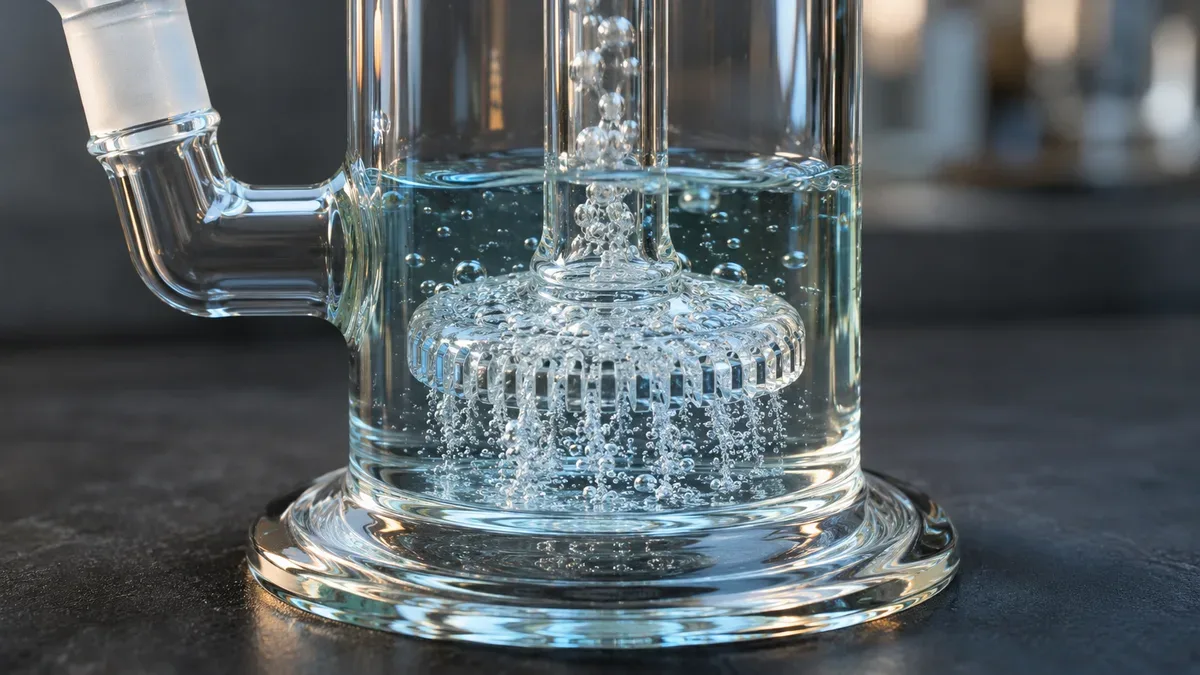
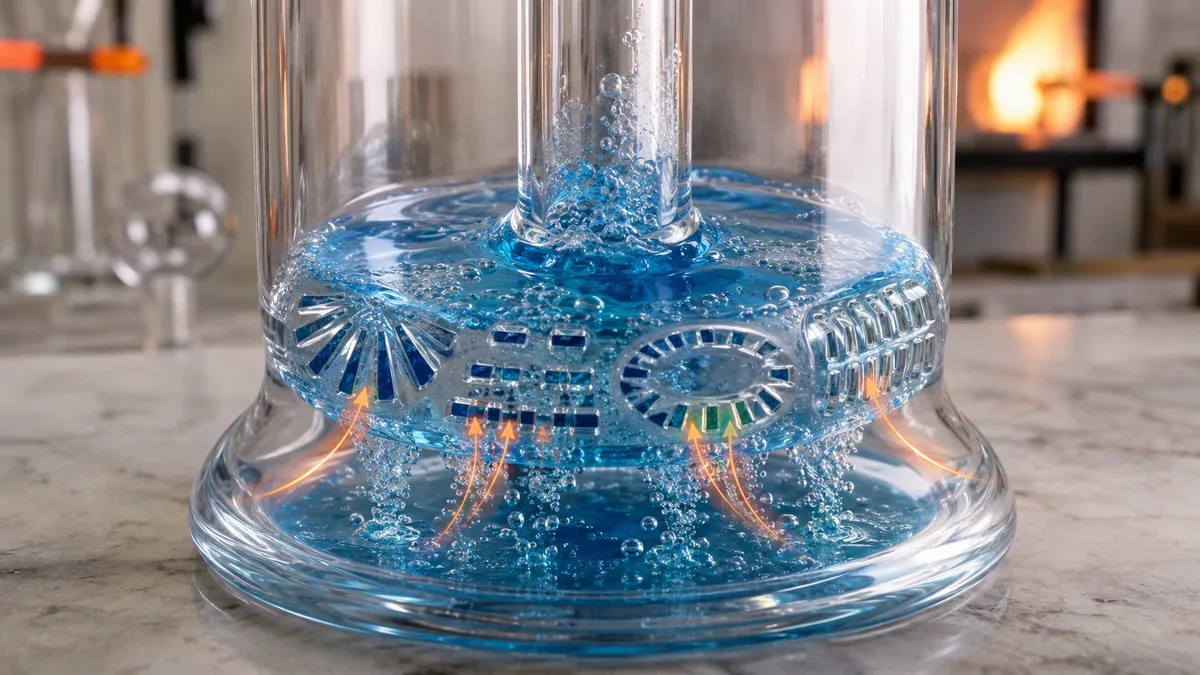
A showerhead percolator is a slotted diffusion chamber used inside glass bongs and other water pipes. It usually features a central tube that widens into a flared, showerhead-shaped section. Small openings around that lower section divide incoming smoke into multiple streams.
As smoke passes through those openings, it enters the surrounding water and forms bubbles. The bubbles increase contact between smoke and water. Therefore, the water can cool the smoke and capture some particulate matter before the smoke reaches the mouthpiece.
However, water filtration does not make smoke harmless. It does not remove every irritant, contaminant, or health risk. Always consider heat, inhalation risks, local laws, and responsible use when handling any smoking accessory.
The main components usually include a central tube, flared showerhead section, water chamber, diffusion slots, joint connection, and outlet path. Each component must work within the same internal geometry. A small alignment error can change water coverage and airflow.
Typically, smoke enters through a joint or fixed stem. It travels down the central tube, exits through the lower slots, and bubbles through the surrounding water. The cooled smoke then moves into the upper chamber and exits through the mouthpiece.
A fixed-stem percolator forms part of the main glass structure. In contrast, a removable showerhead perc may attach through a joint and allow separate cleaning or replacement. Integrated designs often offer greater structural simplicity, while removable designs can provide easier access.
For buyers comparing water pipe categories, the perc should match the chamber size and intended draw. A large diffuser inside a small chamber can create unnecessary drag and splashback.
Showerhead Percolator Slot Construction and Airflow
Core construction principles
Glassblowers usually form the central tube and flared lower section from borosilicate tubing. Heat softens the glass, allowing the maker to pull, expand, shape, and join individual components. The final geometry depends on tooling, timing, heat control, and hand skill.
Slot openings may receive flame-worked shaping, precision cutting, or a combination of both methods. Each approach must leave smooth edges and clear internal passages. Partially closed openings can restrict airflow and create uneven bubbling.
The percolator must align with the joint, chamber, and intended water level. Therefore, the maker must consider the complete water path before finishing the diffusion section. A centred tube helps distribute smoke evenly around the lower chamber.
Joint size and gender also influence compatibility. The joint must form a stable seal without forcing the glass into an awkward angle. Meanwhile, the chamber needs enough height to contain bubbles without sending water towards the mouthpiece.
How the slots create diffusion
When smoke reaches several small openings, each opening creates a separate flow path. Those paths break one larger stream into many smaller streams. As a result, the water receives a broader spread of bubbles.
Slot number, width, depth, spacing, and orientation determine the total open area. They also influence how evenly the smoke exits the showerhead. A symmetrical pattern usually supports more predictable bubbling than a heavily concentrated pattern.
Slots near the bottom of the showerhead section should remain submerged during normal operation. Otherwise, smoke may escape directly into the chamber without forming useful bubbles. The correct water level therefore supports both diffusion and stable airflow.
A continuous ring of slots creates an even circular discharge. Staggered rows spread openings across different heights. Radial slots direct flow outward, while multi-slit patterns can create dense bubbling across a compact section.
Each pattern has a different balance. A ring may rinse easily and distribute bubbles widely. Staggered rows can increase contact area, but they may also trap resin if the openings become too narrow.
Airflow behaviour
Open area affects pressure drop through the percolator. Larger total open area usually lowers resistance, while smaller openings create greater resistance at the same airflow rate. However, slot geometry matters more than slot count alone.
More slots do not automatically produce better performance. Oversized openings may allow air to pass with limited bubble breakup. Poor distribution can also create strong bubbling on one side and weak bubbling elsewhere.
Well-matched slots create steady airflow and consistent bubbling. They should support filtration without making the draw unnecessarily tight. For broader product comparisons, browse the available glass water pipe range and inspect the perc design closely.
How Slot Size, Number, and Placement Affect Performance
Slot dimensions
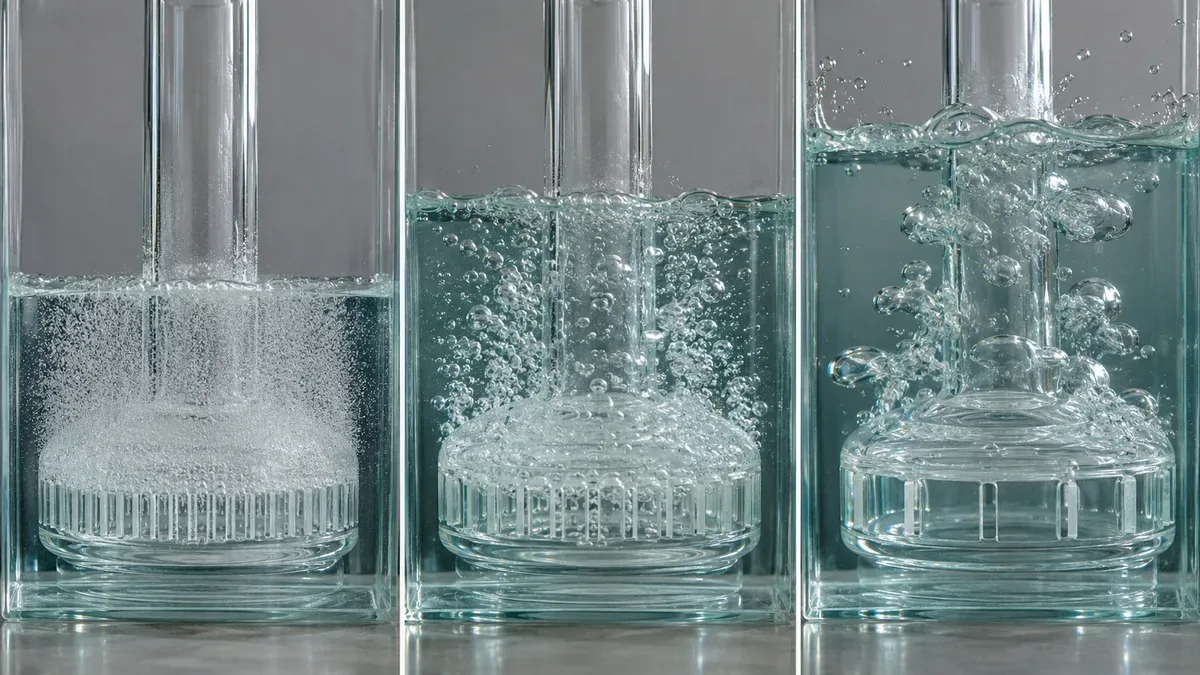
Narrow slots can produce smaller bubbles and stronger gas–water contact. However, they also increase drag and may collect resin, ash, or mineral deposits more quickly. This makes cleaning frequency especially important.
Wider slots generally support easier airflow. Nevertheless, they often create larger bubbles with less uniform contact across the chamber. Wider openings may suit users who prioritise an open draw over maximum diffusion.
Slot depth also matters. Deeper slots can influence how the glass directs flow and how easily residue remains inside. Smooth edges reduce turbulence and make rinsing safer.
Consistent opening size indicates better manufacturing control. If one slot appears noticeably smaller, that area may produce uneven discharge. Sharp edges, chipped openings, or partially sealed slits deserve careful attention.
Slot count and spacing
There is no universal ideal number of showerhead perc slots. The correct count depends on chamber diameter, water depth, slot dimensions, glass thickness, and intended draw.
A low-slot design may provide an open draw and simpler cleaning. However, it can produce larger bubbles and less complete coverage. A high-slot design may create denser bubbling, though it can increase drag and clogging risk.
Multi-row patterns distribute openings over a larger surface. They can improve bubble coverage when the chamber provides enough space. Conversely, closely packed rows may hold moisture and residue between openings.
Even spacing helps balance local pressure. Therefore, smoke reaches more parts of the water chamber instead of favouring one outlet region. Balanced spacing can also reduce sharp turbulence and uneven splash formation.
- Low-slot designs: easier airflow, larger bubbles, and simpler maintenance.
- High-slot designs: denser bubbling, stronger diffusion, and greater clogging risk.
- Multi-row designs: broad coverage, potentially higher drag, and more detailed cleaning needs.
Water level and lower-slot placement
Manufacturers place showerhead slots near the bottom because submerged openings create bubbles. If the water sits below the slots, smoke can pass directly into the chamber. That weakens diffusion and reduces cooling contact.
Too much water creates the opposite problem. It increases the distance smoke must travel and raises draw resistance. Excess water can also cause splashback, moisture carryover, or water pull-through into the mouthpiece.
To find a usable level, begin with enough water to cover the slots. Then test whether bubbling remains stable without excessive drag. Check for water movement towards the mouthpiece and adjust gradually.
Water-line visibility helps during inspection. A well-designed chamber should show clear slot coverage without requiring an unusually deep fill. Always follow the manufacturer’s guidance where available.
Showerhead Percs Compared With Other Percolator Designs
Design comparisons
Showerhead percs concentrate diffusion around a flared lower section. Their airflow path stays relatively direct, with smoke moving down, outward through slots, and upward through the chamber.
Honeycomb percs use a dense perforated disc. Matrix percs combine multiple patterned surfaces or channels. Both designs can create fine bubbling, but their openings often cover a broader flat area.
Tree percs use branching arms with several outlet points. This creates multiple vertical paths and can increase diffusion. However, the branches may be harder to clean and more vulnerable to impact.
Inline percs use a horizontal tube with side openings or slits. They create lateral diffusion across the water chamber. Disc percolators use a broad perforated surface, while showerhead designs concentrate openings around a lower flare.
| Design | Typical airflow path | Main strengths | Common trade-offs |
|---|---|---|---|
| Showerhead | Downward, outward, then upward | Balanced bubbling and direct construction | Slots may clog or create drag |
| Honeycomb | Across a dense flat disc | Fine bubbles and broad diffusion | Can restrict airflow and trap residue |
| Tree | Through branching arms | Multiple diffusion paths | More fragile and harder to clean |
| Inline | Horizontally through slits | Open airflow and simple structure | May produce less vertical diffusion |
| Disc | Through a wide perforated surface | Strong coverage across the chamber | Potential splashback and maintenance demands |
Performance trade-offs
A well-matched showerhead perc can produce smooth bubbling without extreme draw resistance. Its performance depends on slot size, water coverage, chamber volume, and outlet height.
Honeycomb and matrix designs often prioritise dense diffusion. Meanwhile, inline and simpler showerhead designs may offer a more open draw. Tree designs can cool effectively, but their branching paths often complicate rinsing.
Lower-diffusion designs may suit users who prefer easier maintenance. They can also reduce splashback and moisture carryover. Therefore, the best percolator design depends on airflow preference, filtration intensity, chamber size, and cleaning tolerance.
Materials, Manufacturing Quality, and Common Defects
Materials and compatibility
Borosilicate glass remains common because it offers heat resistance, chemical stability, and relatively low thermal expansion. SCHOTT explains that borosilicate glass provides strong resistance to thermal shock and temperature fluctuations through its low expansion rate.
Read more about borosilicate glass properties before comparing different glass water pipe constructions. However, borosilicate glass can still crack under impact or sudden temperature changes.
Glass thickness affects both durability and weight. Thicker walls can improve impact tolerance, but they may increase cost and make the piece heavier. Joint size, joint gender, fixed-stem compatibility, and chamber proportions also require careful checking.
Quality indicators
Accurate construction usually shows a symmetrical flare, consistent slot dimensions, smooth edges, and a centred central tube. Strong joints should appear clean, even, and free from visible stress marks.
Slot alignment affects bubble distribution. A tilted or off-centre perc may reduce usable water volume and create uneven airflow. It can also place one side of the diffusion chamber closer to the wall.
Common defects include uneven slots, partially closed openings, sharp edges, weak welds, cracks, stress marks, and poor alignment. Small visual flaws may affect function when they occur near joints or narrow diffusion passages.
Manufacturing variation changes pressure drop and bubbling behaviour. Therefore, visual inspection should accompany a careful leak and function check when appropriate. Never use glass that shows cracks, chips, unstable joints, or structural damage.
Excessive diffusion can also create problems. Dense bubbling may increase drag, moisture carryover, and splashback. A visually impressive perc still needs balanced airflow and practical maintenance.
Cleaning, Clog Prevention, and Evaluating a Showerhead Perc
Clogging and maintenance
Resin buildup, hard-water deposits, ash, plant material, and stagnant dirty water can clog showerhead slots. Narrow openings collect residue faster because their passages offer less clearance.
Start routine cleaning with warm water and a suitable glass-safe cleaning solution. Agitate gently, rinse thoroughly, and allow every component to dry completely before storage.
Additionally, change the water regularly and avoid debris that can lodge inside small openings. Abrasive tools and forceful scraping may chip edges or weaken delicate glasswork.
For stubborn deposits, repeat soaking and gentle agitation rather than applying sudden force. Always handle wet glass carefully because slippery components are easier to drop.
Purchase and performance checklist
Use the following checklist when comparing a showerhead percolator:
- Check slot uniformity, edge smoothness, and unobstructed openings.
- Inspect glass clarity, wall thickness, and visible stress marks.
- Confirm the joint fits correctly and matches the intended stem or accessory.
- Check that the perc sits centrally within the chamber.
- Look for clear water-line visibility and sufficient slot coverage.
- Consider whether the perc allows easy access for rinsing and cleaning.
During a function check, look for consistent bubbling across the diffuser. Airflow should remain stable without excessive drag, harsh turbulence, or immediate water movement towards the mouthpiece.
Desirable performance includes even bubbling, predictable airflow, limited splashback, minimal trapped water, and straightforward rinsing. These qualities usually indicate a better balance between slot geometry and chamber design.
Most importantly, inspect the glass before every use. Avoid thermal shock, including sudden changes between very hot and cold conditions. Replace any compromised glass rather than attempting to repair a structural defect.
Conclusion
Showerhead percolator performance depends on the relationship between slot geometry, total open area, water level, chamber design, glass quality, and manufacturing precision. Effective designs balance fine bubbling and filtration with manageable drag, low splashback, durability, and easy cleaning.
Use the construction and inspection checklist to compare showerhead percolators carefully. Then choose a slot pattern and airflow profile that match your preferred balance of diffusion, draw resistance, and maintenance.
Sweet Puff Australia brings together water pipes, glass designs, and smoking accessories for adults exploring different construction styles. Visit the Sweet Puff Australia website to explore available collections and product information.