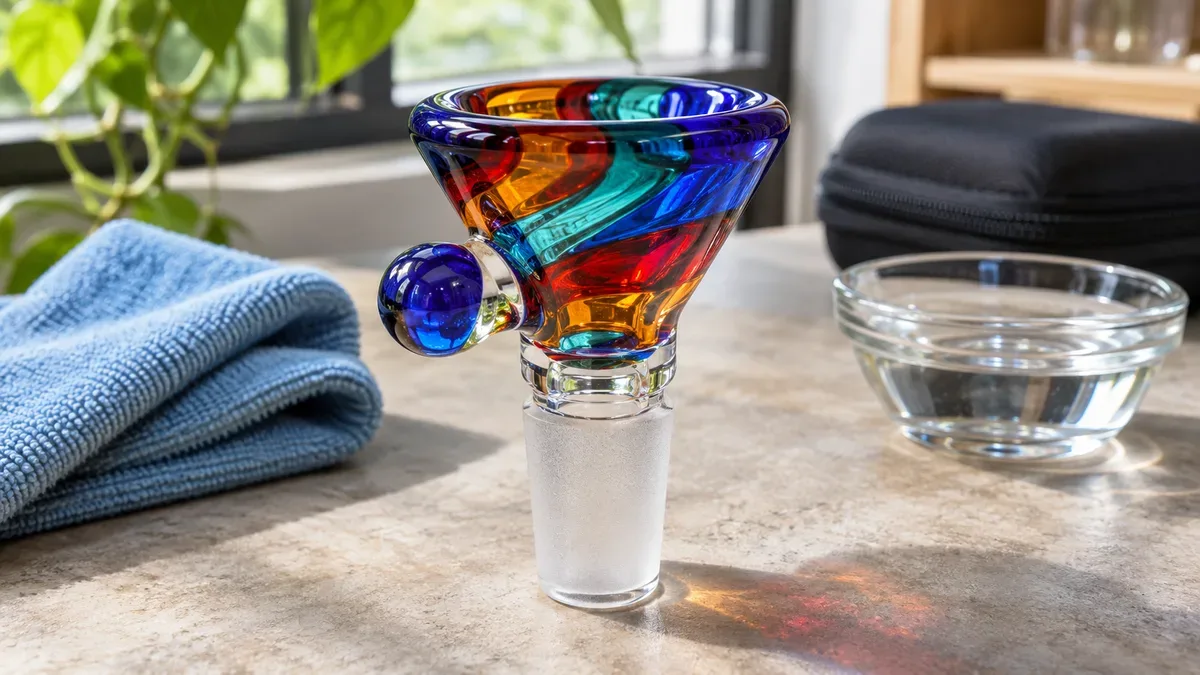
Will the vibrant colour on a glass cone piece stay attractive after repeated heating, cleaning, and everyday handling? Coloured glass cone piece finish durability depends on more than appearance. Buyers must distinguish colour fused into the glass from cheaper painted or coated finishes. This guide covers materials, heat, cleaning, storage, craftsmanship, warning signs, lifespan expectations, and practical buying checks.
What Determines Coloured Glass Cone Piece Finish Durability?
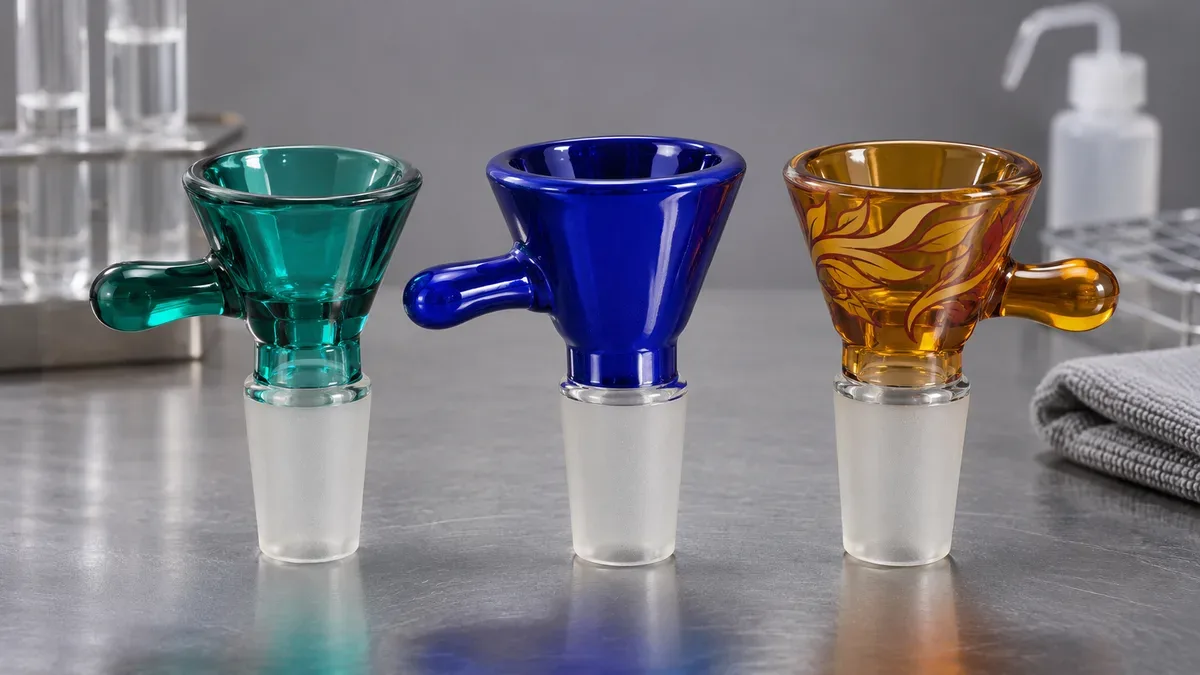
Finish durability describes how well a coloured surface keeps its appearance during normal handling, heating, cleaning, and storage. However, a beautiful colour does not automatically indicate a long-lasting finish. The way that colour enters or sits on the glass matters greatly.
Colour can form part of the glass itself, sit between fused glass layers, or cover the outside surface. Manufacturers may also use paint, spray coatings, decals, powder coatings, or decorative external details. Therefore, two cone pieces with similar colours may perform very differently over time.
Why The Colouring Method Matters
Integrated colour usually remains more resistant to fading, peeling, and flaking. The colour becomes part of the glass structure rather than a thin layer on top. As a result, normal rubbing and careful cleaning have less effect on the visible finish.
Fused layers and coloured glass rods can also create durable patterns. Handmade pieces may use frit, colour rods, twists, or layered sections during lampworking. These methods often produce strong visual depth, although raised details may still need gentle handling.
Painted and coated surfaces face more risks. Scratches, solvents, rough storage, direct heat, and repeated friction can damage the outer layer. In contrast, integrated glass colour generally keeps its appearance for longer, provided the piece avoids impact and thermal shock.
Finish Strength Versus Glass Strength
A durable finish only describes the appearance. It does not make the cone piece unbreakable. Glass thickness, wall consistency, joints, edges, openings, and overall construction determine structural strength.
For example, a well-coloured piece may still break if a joint feels thin or uneven. Sharp edges can also indicate poor finishing or damage. Meanwhile, stress around a joint may create a weak point even when the colour looks perfect.
Cosmetic wear includes fading, dullness, scratches, and peeling. Structural damage includes cracks, chips, distortion, and loosened joints. Never use a cone piece after finding visible damage, regardless of how attractive the finish remains.
Embedded Colour vs Painted and Coated Glass Finishes
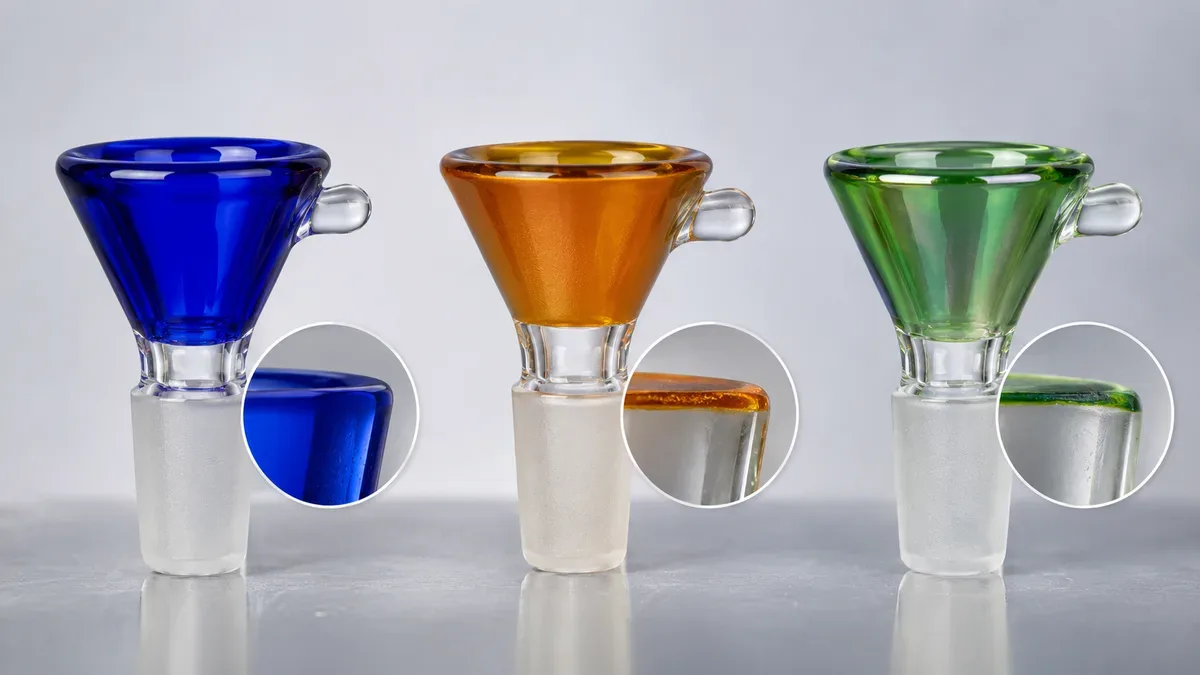
Embedded colour normally offers the strongest long-term appearance because it forms within the glass body. Painted or sprayed finishes sit on the exterior, so they face direct contact with hands, storage surfaces, cleaning tools, and heat.
| Finish type | Durability | Heat resistance | Maintenance needs | Common failure points |
|---|---|---|---|---|
| Colour integrated into glass | Generally high | Usually strong during normal use | Standard gentle glass care | Impact, chips, thermal shock |
| Fused glass layers | High when well-made | Good, depending on construction | Avoid rough tools and impacts | Layer stress, cracks, raised details |
| Painted finish | Moderate to low | May discolour with direct heat | Use gentle, approved cleaners | Scratching, peeling, solvent damage |
| Sprayed or dipped coating | Moderate | Varies by coating formula | Limit rubbing and harsh chemicals | Flaking, bubbling, exposed glass |
| Decals and external decorations | Low to moderate | Often less tolerant of heat | Hand wash carefully | Lifting edges, fading, rubbing |
Paint and coatings may also react to solvents. Isopropyl alcohol, strong cleaners, and prolonged soaking can soften or cloud some decorative layers. Therefore, always follow the manufacturer’s cleaning instructions before using a product on a coloured surface.
Heat can create another problem. Direct flame, hot ash, or repeated heating may discolour painted areas. Uneven heating can also cause small cracks in decorative layers or stress around fused sections.
How Handmade Coloured Glass Gets Its Finish
Handmade coloured glass may include opaque rods, transparent colour, frit, stripes, dots, or layered sections. The maker heats these materials together and shapes them into the final form. Proper temperature control and annealing help reduce internal stress.
Decorative surface details can look striking, but raised elements may catch on cloth or storage cases. Additionally, textured sections can hold residue and require more careful cleaning. A smooth, integrated finish usually needs less special treatment.
How To Identify The Finish
Start by reading the product description. Look for terms such as coloured borosilicate, colourwork, fused glass, or colour integrated into the glass. In contrast, words such as painted, printed, sprayed, coated, or decorative overlay suggest a surface finish.
Check the edges and openings visually, but do not scrape the product. A subtle change in texture may suggest an external layer, although photographs can mislead. When uncertain, ask the seller for the manufacturing method and approved cleaning products.
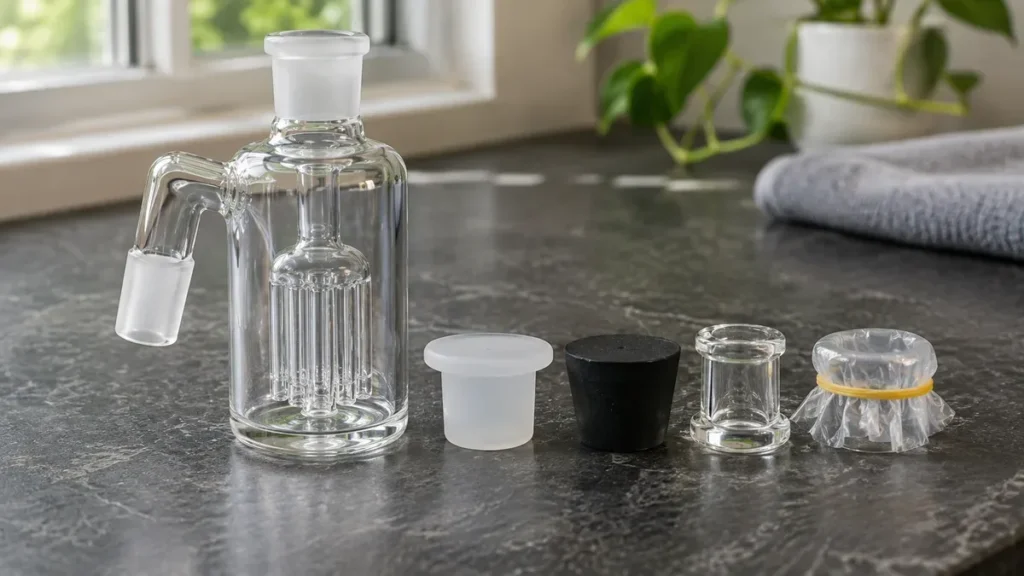
The same principle applies to a coloured glass bong bowl, a 14mm cone piece, and other glass smoking accessories. Smaller pieces may experience more handling, while bowls often receive concentrated heat. Therefore, finish type and construction matter more than colour alone.
Borosilicate Glass, Heat Exposure, and Thermal Shock
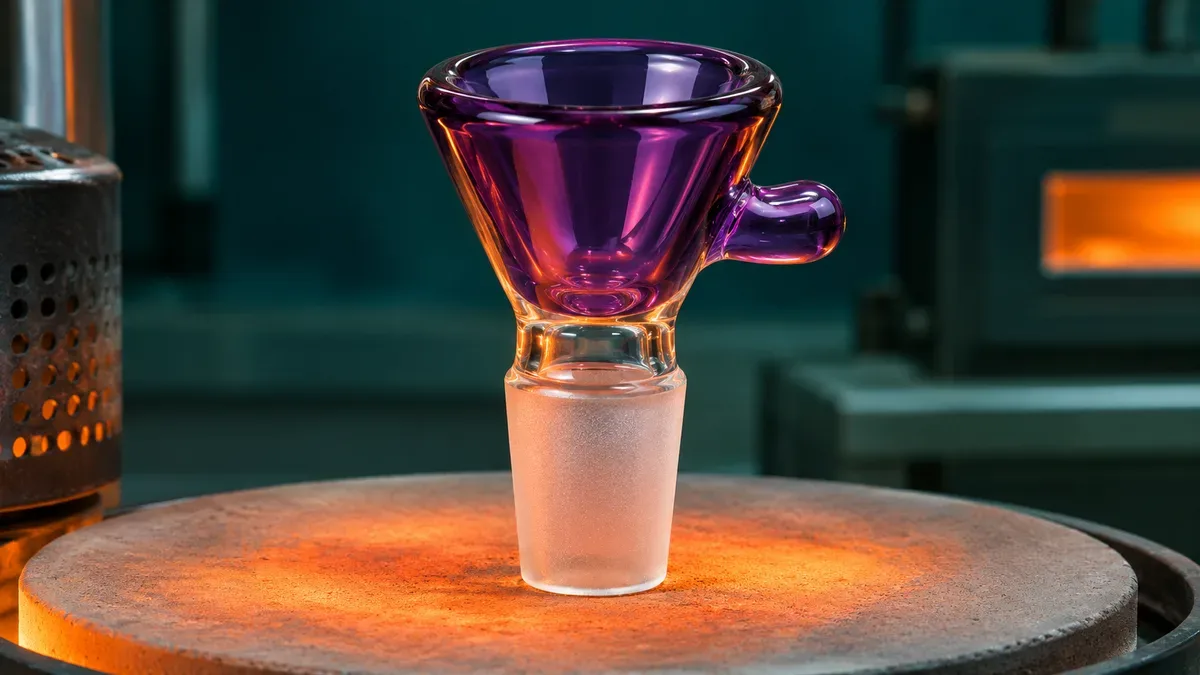
Borosilicate glass is commonly preferred for cone pieces because it expands less than ordinary soda-lime glass. Its lower thermal expansion helps reduce stress during normal temperature changes. You can read more about its properties in this borosilicate glass reference.
However, coloured borosilicate glass is not automatically stronger than every ordinary glass product. The base material, thickness, craftsmanship, joint design, and annealing quality all influence durability. A poorly made borosilicate piece can still crack or shatter.
Direct flame and repeated heating place stress on the glass. Hot ash can create concentrated heat, especially around a bowl opening. Meanwhile, uneven heating may affect external decorations faster than integrated colour.
Understanding Thermal Shock
Thermal shock occurs when one part of the glass changes temperature much faster than another. For example, placing hot glass on a cold bench can create a sudden temperature difference. Rinsing a hot piece with cold water may produce a similar risk.
Therefore, allow the cone piece to cool naturally before cleaning or storing it. Use warm water rather than extreme-temperature water. Borosilicate glass handles heat changes better, but it can still crack under rapid or uneven temperature shifts.
Integrated glass colour normally tolerates ordinary use better than paint or coating. Nevertheless, extreme heat can damage the whole piece. The colour may survive while the glass itself develops a crack.
Why Annealing And Consistency Matter
Annealing allows heated glass to cool gradually and release internal stress. Professional makers use controlled cooling to improve stability. Poor annealing may leave hidden stress within the finished cone piece.
Check the walls for consistent thickness and inspect joints for smooth transitions. Thin spots, sharp edges, bubbles, and uneven openings deserve caution. Additionally, avoid overheating or using any piece that already shows damage.
Fading, Scratches, Cloudiness, and Finish Discoloration
Integrated coloured glass usually resists fading better than paint or external coatings. The colour remains within the glass, so ordinary cleaning does not remove it. However, the piece may still look dull because of residue, deposits, scratches, or heat damage.
Resin buildup can create a dark, sticky film over the surface. Hard water may leave white mineral marks after repeated rinsing. Chemical residue can also make the glass appear cloudy, especially when the piece does not receive a thorough final rinse.
Micro-scratches create another source of dullness. Metal picks, abrasive powders, rough sponges, grit, and contact with other glass objects can mark the surface. These scratches may remain visible even after the piece is clean.
Removable Residue Versus Permanent Damage
Removable residue usually feels sticky, looks uneven, or changes after careful cleaning. Mineral deposits may appear as pale rings or cloudy patches. In contrast, etched glass keeps its dull appearance after cleaning and often feels permanently rough.
Burnt-on deposits may require several gentle cleaning cycles. Avoid forcing them away with sharp tools. Coating failure may appear as peeling, bubbling, exposed glass, or patches with a different sheen.
- Resin buildup often looks dark, sticky, and uneven.
- Mineral deposits usually appear pale, chalky, or cloudy.
- Micro-scratches create fine lines under bright light.
- Peeling indicates a failing external finish.
- Heat damage may cause permanent colour changes or surface marks.
Warning Signs Of A Deteriorating Finish
Watch for uneven colour, bubbling, flaking, sticky patches, unexpected fading, or exposed base material. These signs suggest the finish may not withstand further cleaning or heating. Additionally, strong odours after cleaning can indicate trapped residue or a coating reaction.
Frequent cleaning does not normally damage integrated colour when you use suitable products. Still, repeated heating, direct sunlight, rough storage, and poor handling can affect appearance. Glass colour may remain stable for years, while the piece itself remains vulnerable to impact.
How To Clean, Handle, and Store a Coloured Glass Cone Piece
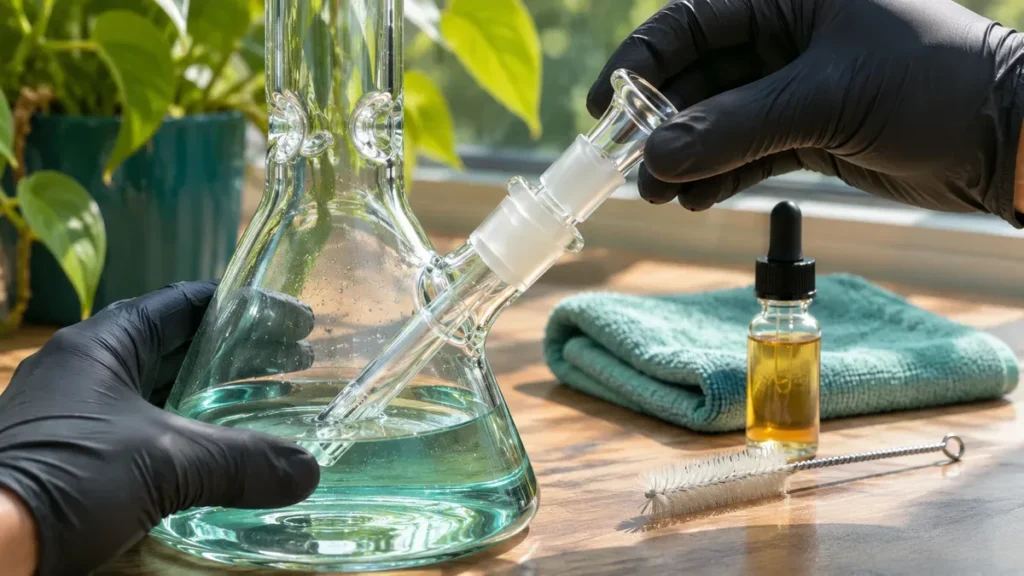
Begin by allowing the cone piece to cool completely. Remove loose residue gently, then use a manufacturer-approved glass cleaner. Where appropriate, a suitable isopropyl alcohol solution may help dissolve stubborn buildup.
- Cool the piece naturally before handling it.
- Remove loose material with a soft, non-abrasive tool.
- Apply the approved cleaner according to its instructions.
- Use a soft brush or cotton swab around openings and joints.
- Rinse thoroughly with warm water.
- Dry the piece fully before storage or reuse.
Use warm water rather than boiling water or icy rinses. Sudden temperature changes can stress the glass. Therefore, never move a hot cone piece directly into cold water.
Choose Gentle Cleaning Tools
Soft brushes, cotton swabs, and flexible cleaning tools reduce the risk of scratches. Metal picks, scouring pads, abrasive powders, and rough cloths can damage both glass and surface decorations. Additionally, avoid forcing stuck parts apart.
Cleaning products may affect painted, coated, or decorated surfaces. A product suitable for plain glass may still soften an external finish. Test nothing by scraping or aggressive rubbing; ask the manufacturer if the instructions seem unclear.
Is A Coloured Cone Piece Dishwasher-Safe?
Hand washing is generally the safer choice unless the manufacturer explicitly approves dishwasher use. Dishwashers combine heat, strong detergents, pressure, and contact with other items. These conditions may damage coatings or create impact marks.
After rinsing, inspect the finish under good lighting. Check for chips, cracks, peeling, cloudy areas, and sharp edges. If you notice structural damage, stop using the piece and replace it.
Safe Storage And Handling
Store the cone piece in a padded, stable location away from other glass. Keep it away from hard surfaces, direct heat, children, and pets. A separate soft case can reduce contact damage during transport.
Always allow the piece to cool naturally before putting it away. Avoid stacking accessories where they can knock together. Most importantly, never use a cracked or chipped piece, even if the damage appears minor.
Buying Criteria, Lifespan Expectations, and FAQs
Look for borosilicate glass, even walls, smooth joints, clean openings, and consistent colour. Professional finishing should leave no sharp edges or rough transitions. Product photographs can help, but detailed manufacturing information provides stronger evidence.
Review the stated manufacturing method, annealing information, seller reputation, warranty, and customer feedback. Additionally, confirm whether the piece suits your setup. For example, check whether the opening fits a 14mm connection.
- Is the colour integrated into the glass?
- Is the piece made from borosilicate glass?
- Has the piece been properly annealed?
- Which cleaning products does the maker approve?
- Is it suitable for a 14mm setup?
- Does the finish require special handling?
A well-made coloured glass cone piece may retain its appearance for many years with careful use. Cheaper painted or coated alternatives may show wear sooner. However, handling, cleaning, storage, and heat exposure often determine the real lifespan.
When Should You Replace It?
Replace the piece when you find visible cracks, chips, sharp edges, structural weakness, or severe clouding. Peeling finish also deserves attention, especially around areas handled frequently. A damaged accessory can cut skin or fail during use.
Frequently Asked Questions
Can heat damage the colour? Yes. Integrated colour usually tolerates normal heating well, while paint and coatings may fade, discolour, or peel. Extreme heat can still damage the glass itself.
Can cleaning cause fading? Gentle cleaning should not fade integrated colour. However, harsh solvents, abrasive tools, and prolonged soaking may damage painted or coated finishes.
Is coloured glass easy to scratch? Glass resists ordinary rubbing, but grit, metal tools, rough storage, and contact with other glass can create scratches. Therefore, keep the piece clean and separately padded.
What causes dullness? Resin, mineral deposits, chemical residue, micro-scratches, etched glass, and heat damage can all reduce clarity. Clean the piece gently before assuming the colour has faded.
Does manufacturing quality affect durability? Yes. Wall consistency, smooth joints, clean openings, proper annealing, and careful finishing all influence long-term performance.
Can sudden temperature changes crack the glass? Yes. Even borosilicate glass can crack from rapid or uneven temperature changes. Let the piece cool naturally and use warm water during cleaning.
Conclusion
A coloured glass cone piece can retain its appearance for a long time when its colour is integrated into quality borosilicate glass. Proper annealing, careful cleaning, protective storage, and gradual cooling all support better durability.
Painted and externally coated finishes usually need more careful handling and may fail sooner. Even the strongest finish cannot prevent breakage from impact, cracks, chips, thermal shock, or misuse.
Before buying, compare reputable coloured glass accessories, verify the material and finish type, and read maintenance instructions carefully. You can also explore relevant product categories and review available information through helpful glassware guides.
Sweet Puff Australia brings together water pipes, glass designs, and accessories for adult customers across Australia. Explore the Sweet Puff Australia website to compare available collections and product details. Replace any accessory that shows structural damage, peeling, sharp edges, or serious clouding.