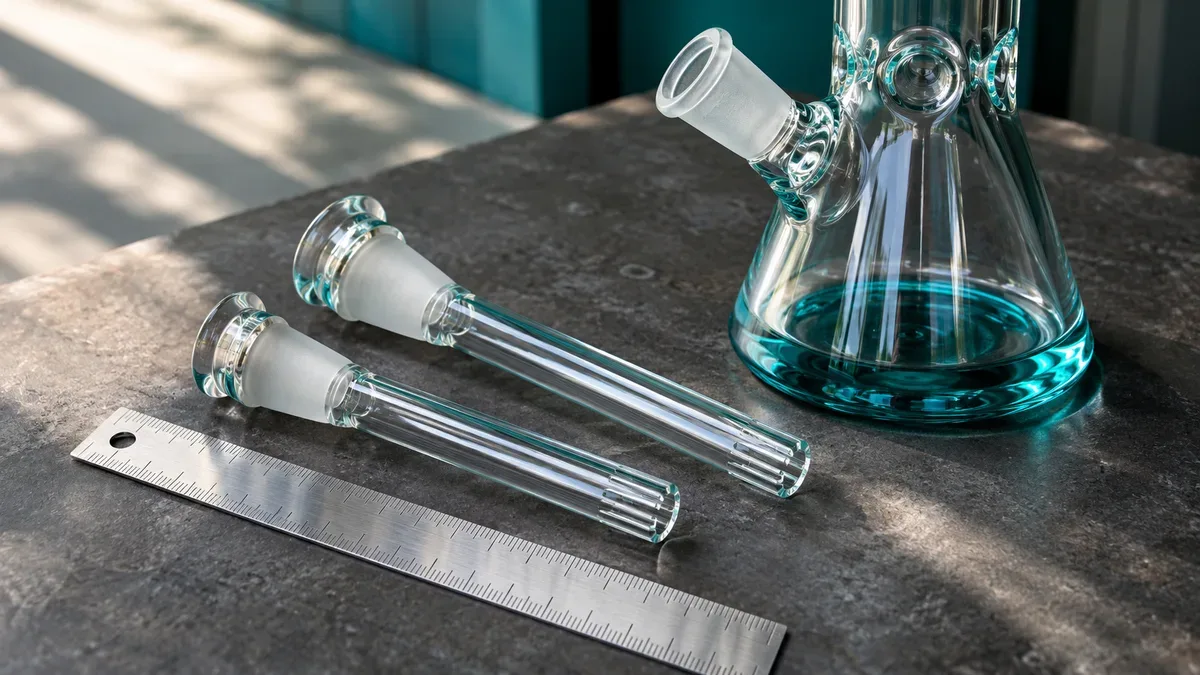
A downstem that is only 2 cm longer can change whether your bong works smoothly or fails to fit at all. Many shoppers assume a 10 cm or 12 cm downstem will fit based on length alone. However, joint size, joint gender, diameter, chamber depth, and measurement methods also affect compatibility. This downstem length 10cm vs 12cm compatibility guide explains how to measure correctly and choose a suitable replacement diffused downstem.
Downstem Length 10cm vs 12cm Compatibility: Key Differences
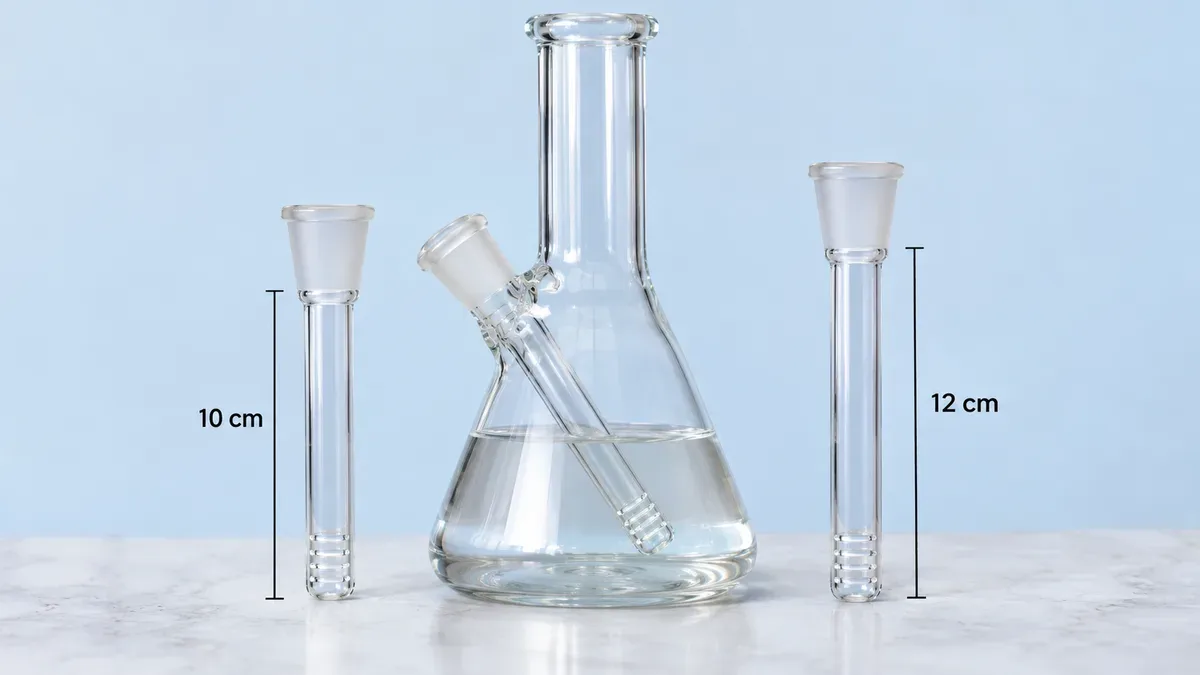
The main difference between a 10 cm and 12 cm downstem is the tube length. This length controls how far the diffuser reaches into the bong’s water chamber. Therefore, even a small size change can alter water contact, airflow, and installation.
A 10 cm downstem often suits compact glass pieces with shallow chambers. Meanwhile, a 12 cm downstem may suit taller bongs or designs with a joint positioned higher above the base. The correct option depends on the bong’s internal shape, not its overall height alone.
Importantly, 10 cm and 12 cm downstems are not automatically interchangeable. A longer tube can touch the bong’s base, while a shorter tube may sit above the water. Both situations can reduce performance or create an unsafe fit.
| Length | Best suited glass | Likely benefits | Common fitment risks | Buying considerations |
|---|---|---|---|---|
| 10 cm | Compact bongs and shallow chambers | Less chance of base contact and lower overall profile | May not reach the water correctly | Check the diffuser position and full measurement |
| 12 cm | Taller bongs and deeper joint placement | Better reach for deeper water chambers | May touch the base or create excess drag | Confirm chamber clearance before ordering |
What Else Determines Compatibility?
Downstem fit also depends on joint size, joint gender, outside diameter, and diffuser shape. Additionally, the bong may use a removable downstem or a fixed glass design. These details matter just as much as the listed tube length.
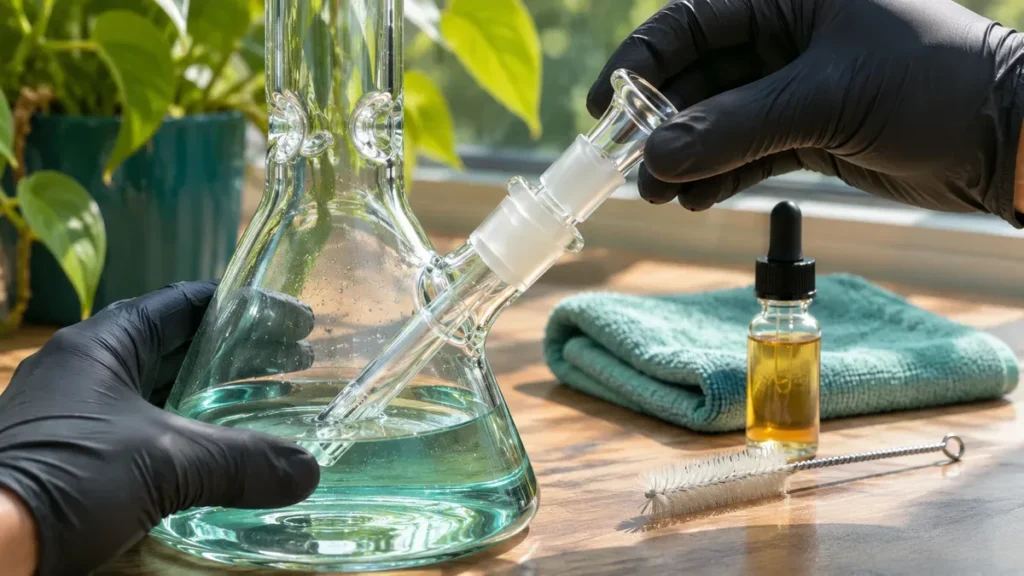
A glass bong downstem is the tube that carries smoke from the bowl into the water chamber. A female joint downstem usually accepts a bowl or another male glass connection. However, sellers may use different terms, so always check the product diagram.
A removable diffused downstem slides into the bong’s joint and can usually be replaced separately. In contrast, a fixed downstem forms part of the bong itself. That design may require replacing the entire glass piece if the stem breaks.
For general background, Wikipedia’s bong overview explains how the downstem directs smoke below the water surface. This helps clarify why length and diffuser placement affect the overall setup.
How to Measure a Downstem and Bong for the Correct Fit
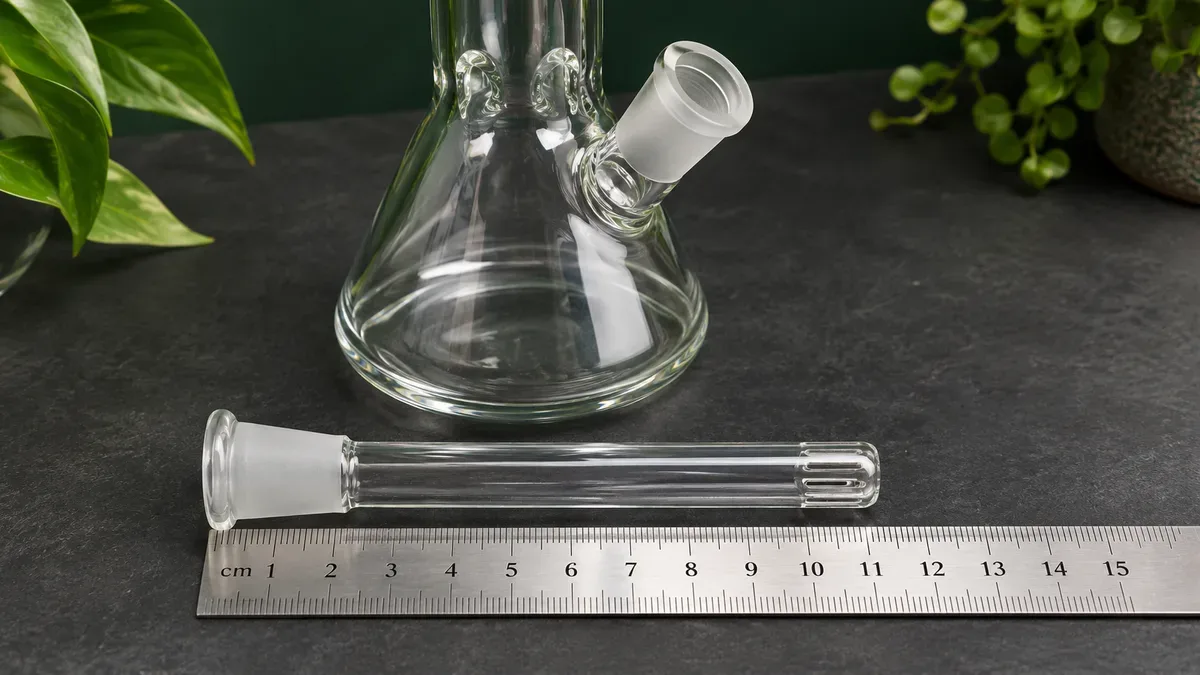
Accurate measurement prevents most replacement mistakes. Before ordering, remove the existing downstem if possible. Then place it on a flat surface and measure from the sealing point to the end of the tube.
Measure the Existing Downstem
Start at the joint shoulder, stopper lip, or sealing point. Measure along the tube to the lowest end of the diffuser. Do not automatically include the bowl joint or outer lip unless the seller lists full length.
Some sellers list only the insertion length. Others list the complete downstem, including the part that remains outside the bong. Therefore, a listed 10 cm downstem may not match another seller’s 10 cm measurement.
Use a ruler for a straight tube. Alternatively, use flexible measuring tape around curved glass. If the original part still fits properly, use it as your most reliable reference.
Measure the Bong’s Internal Space
Next, measure from the outside joint opening to the point where you want the diffuser to sit. The diffuser should sit below the water surface without touching the base. This measurement shows the maximum practical insertion length.
Remember that the joint itself has thickness. A stopper lip, O-ring, or outer collar may prevent the tube from entering as far as expected. Additionally, part of the downstem may remain outside the bong after installation.
- Remove the bowl and existing downstem carefully.
- Measure the original part from its sealing point to the diffuser end.
- Measure the bong from the joint opening to the chamber floor.
- Measure the joint opening to confirm the required size.
- Compare both measurements with the seller’s product diagram.
- Allow a small clearance above the base before choosing a replacement.
For example, suppose the bong measures 11.5 cm from the joint seal to the chamber floor. A listed 12 cm tube may touch the base once installed. In that case, a 10 cm option may provide safer clearance.
Measurement tolerance also matters. Handmade glass can vary slightly, even between similar pieces. Therefore, avoid any replacement that fits only when forced or leaves almost no clearance.
Before comparing 10 cm and 12 cm options, check the product diagram and measurement notes. A clear diagram often shows whether the seller measures the tube alone or the complete replacement downstem.
Joint Size, Gender, and Diameter: Compatibility Checks Beyond Length
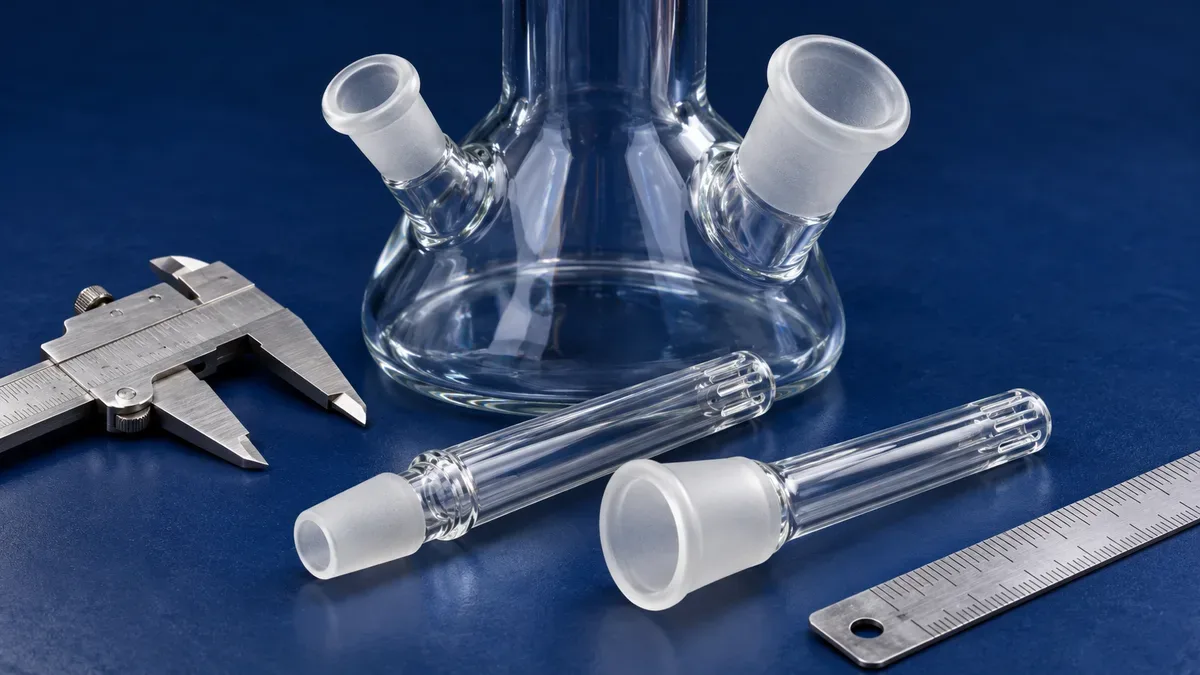
Joint size is one of the most important checks after length. Common bong downstem sizes include 14 mm and 18 mm. However, some glass pieces use less common sizes or proprietary fittings.
A male joint fits into a female joint. A female downstem accepts a matching male connection. Therefore, the replacement must match the bong’s joint configuration, or it will not seal correctly.
How to Confirm Joint Size
You can check the original downstem if its joint still fits securely. You can also measure the glass opening with callipers or review the bong’s original specifications. Avoid guessing from the bowl size alone.
Joint size and outside diameter are related, but they are not identical. The downstem must pass through the bong’s opening while still creating a stable seal. A tube that is too wide may jam, while a narrow tube may wobble or leak.
Diameter also affects the available space inside the chamber. A wide diffuser with multiple slits may need more clearance than a narrow tube with a single opening. Meanwhile, multi-hole designs can change airflow and water movement.
Diffuser styles include slits, holes, showerhead openings, and other percolation patterns. These features may extend beyond the main tube. Therefore, measure the widest part of the diffuser, not just the straight glass stem.
Removable Versus Fixed Designs
Removable downstems usually use a separate joint and seal. This makes replacement easier when the part becomes blocked, chipped, or broken. However, the new stem must match the bong’s length, joint, diameter, and diffuser position.
Fixed downstems form part of the bong’s permanent glass structure. You generally cannot replace them with a standard removable piece. If the fixed section breaks, replacing the entire bong may be safer and more practical.
- Confirm the tube length and measurement method.
- Match the joint size, such as 14 mm or 18 mm.
- Match male or female joint gender.
- Check the downstem’s outside diameter.
- Compare the diffuser style and widest point.
- Confirm chamber clearance and removable construction.
How Far Should a Downstem Extend Into the Water?
The diffuser should sit below the water surface far enough to create effective bubbling. However, it should not touch the bong’s base. A small gap protects the glass and allows water to move around the diffuser.
A downstem that is too short may produce weak filtration. It may also create harsh airflow, reduced bubbling, and limited smoke-water contact. Therefore, the diffuser must reach the water without sitting too high.
On the other hand, a downstem that is too long can cause several problems. It may contact the base, increase drag, restrict airflow, splash water, or place stress on the glass joint.
What If the Downstem Touches the Bottom?
Stop forcing the downstem immediately if it touches the base. Remove it gently and check whether a shorter replacement will provide better clearance. Do not rely on pressure to make an unsuitable part fit.
You may reduce the water level if the diffuser still sits below the surface. However, lowering the water will not solve physical contact with the base. In that situation, choose a shorter compatible downstem.
Ideal water depth depends on diffuser design, chamber geometry, and personal preference. Additionally, the glass manufacturer may provide a recommended fill level. Follow that guidance whenever it is available.
Length can influence filtration and airflow, but length alone does not determine performance. The diffuser design, joint seal, water depth, and chamber width work together.
- Install the downstem gently without twisting aggressively.
- Check that the diffuser does not touch the base.
- Add a modest amount of water above the diffuser.
- Check for bubbling and comfortable airflow.
- Adjust the water level only after confirming safe clearance.
Will a 10cm or 12cm Downstem Fit Your Bong?
A 10 cm downstem may suit a small bong or shallow chamber. However, it will fit only when the joint, diameter, gender, and diffuser position match the glass.
A 12 cm downstem may suit taller glass or a joint placed deeper inside the chamber. Nevertheless, it can be too long for compact bongs with limited base clearance.
Common Fitment Scenarios
- Compact straight tube: A 10 cm stem often provides suitable reach without touching the base.
- Small beaker bong: Either length may work, depending on the joint height and chamber depth.
- Tall water pipe: A 12 cm stem may reach the water more effectively.
- Recessed joint: Measure the usable insertion length, not the bong’s outer height.
- Shallow chamber: A 12 cm stem may create base contact and excess drag.
The two lengths may be interchangeable when the bong has enough clearance and both stems share the same joint specifications. They are not interchangeable when the diffuser position changes the water contact or causes physical contact.
If you are choosing between sizes, measure the original part first. Then prioritise safe clearance and correct diffuser placement. Choosing the longer option simply because it appears more substantial can create unnecessary problems.
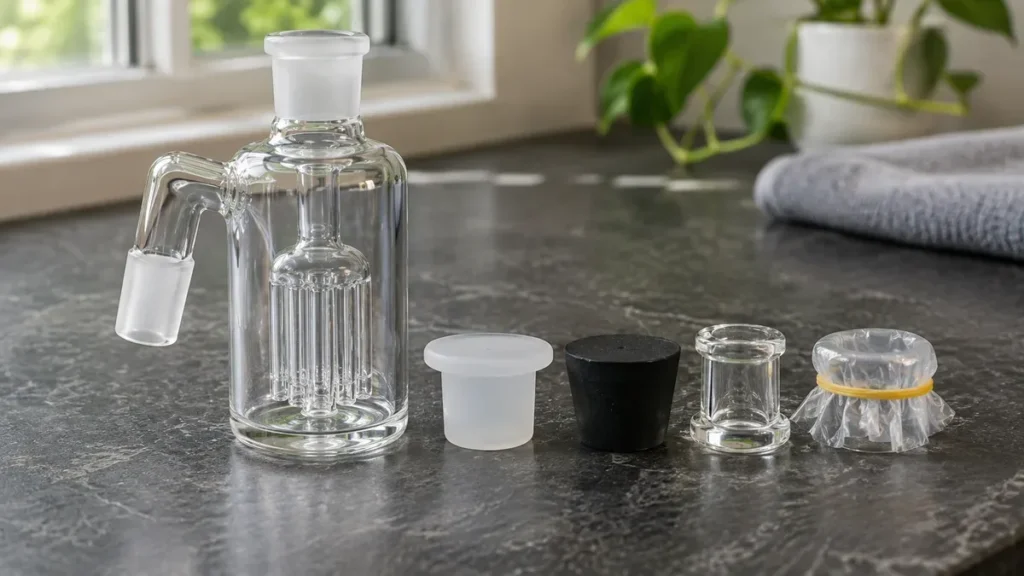
An adapter may help when joint sizes or configurations differ. However, an adapter can increase the total length and change the required clearance. Therefore, remeasure the complete setup before using one.
Before ordering, confirm the exact measurements and compatibility notes. Also check the seller’s return policy, especially when buying handmade or unusual glass fittings.
Never force a downstem into the joint. Avoid excessive pressure, twisting, or operating glass with a cracked, unstable, or chipped part. Small defects can worsen when the glass heats, cools, or receives pressure.
Buying, Installing, and Maintaining a Replacement Downstem
Use this final checklist before choosing a replacement downstem. It keeps the decision practical and reduces the risk of buying a part that looks correct but fails during installation.
- Tube length and full-length measurement method
- Joint size and joint gender
- Outside diameter and diffuser width
- Diffuser type, holes, or slits
- Chamber clearance above the base
- Removable or fixed construction
Install a removable downstem gently and check that the joint seals without wobbling. Furthermore, test airflow and water level before regular use. Confirm that the diffuser remains clear of the bong’s base.
Clean the downstem regularly to prevent resin buildup from restricting airflow. Inspect the downstem, joint, and bong for chips, cracks, stress marks, or damaged seals.
An adapter can suit a temporary configuration when the added length remains safe. However, a correctly sized replacement is usually simpler and more reliable. For more glass and accessory options, browse the Sweet Puff Australia shop or explore the relevant product categories.
Conclusion
A 10 cm downstem generally suits compact or shallow glass, while a 12 cm option may suit taller bongs or deeper joint placement. Neither length works universally. Proper downstem fitment requires matching the tube length, joint size, joint gender, diameter, diffuser design, and internal chamber clearance.
The diffuser should sit below the water without touching the bong’s base. Therefore, measure your existing part or bong carefully, compare the seller’s exact specifications, and choose the 10 cm or 12 cm replacement that matches every compatibility point.
Sweet Puff Australia brings together water pipes, glass designs, and smoking accessories for adult customers across Australia. Visit the Sweet Puff Australia website for more information about available collections and product details.