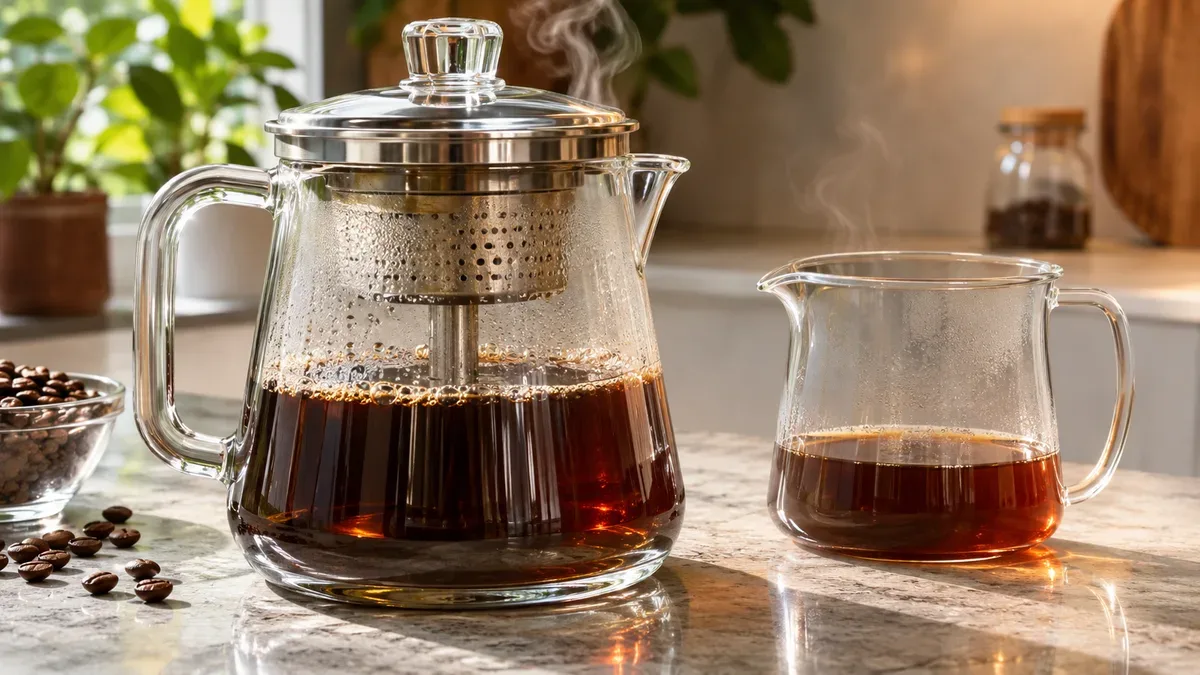
A glass percolator can look sturdy, then crack during an ordinary brew or rinse. Many shoppers assume thicker glass always means safer glass. However, percolator glass thickness versus fragility depends on much more than wall thickness. Glass type, manufacturing quality, thermal shock, shape, heat-source compatibility and daily handling all matter. This guide explains what to compare before buying and how to use a glass percolator more safely.
Percolator Glass Thickness Versus Fragility: What Is the Difference?
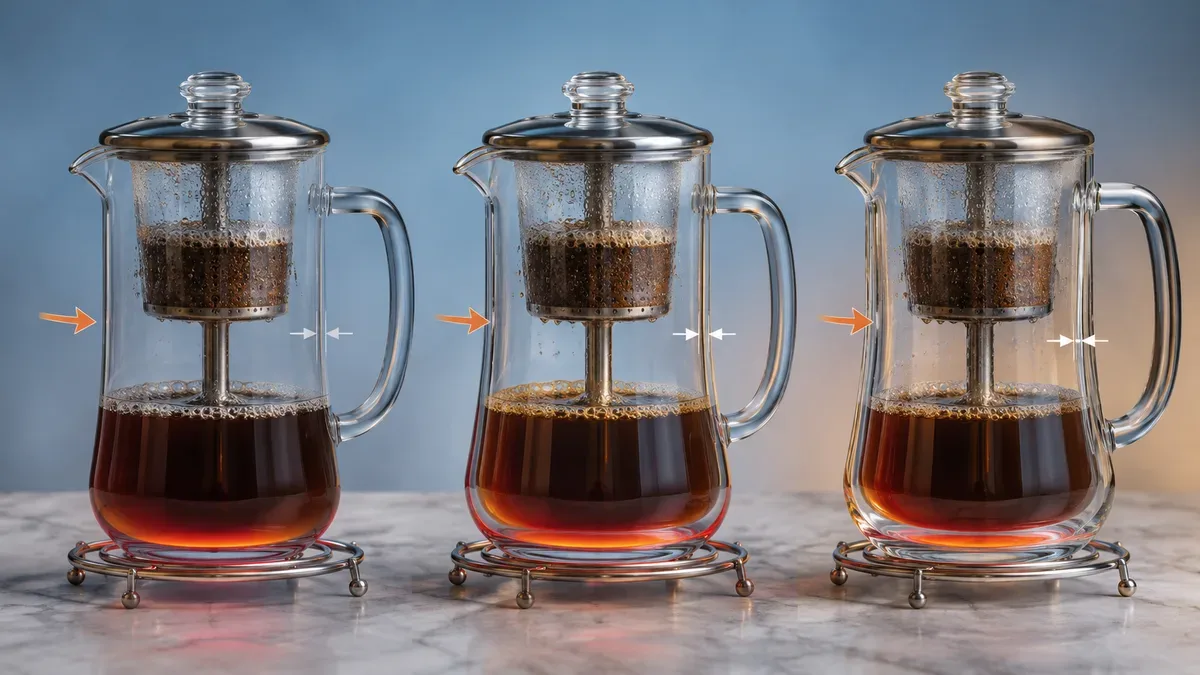
Thicker glass can resist minor knocks, taps and handling damage better than very thin glass. It also feels more substantial in your hand. However, greater thickness adds weight and can reduce flexibility during sudden temperature changes.
Does thicker glass always mean stronger glass?
Not necessarily. Thick ordinary glass may still crack when a hot percolator meets a cold bench. Meanwhile, well-made thinner borosilicate glass may handle normal brewing changes more reliably.
Thickness can improve resistance to small impacts, but it cannot remove internal stress. Glass composition, even wall thickness and proper annealing often matter more. A poorly made thick vessel can remain vulnerable around its base, rim, spout or handle.
Thicker walls also transfer heat differently. They usually warm more slowly and hold heat for longer. However, this does not automatically improve extraction, strength or coffee flavour.
Thin, medium and thick glass compared
| Construction | Typical advantages | Common drawbacks |
|---|---|---|
| Thin glass | Lightweight, quick heat transfer and easy visibility | More vulnerable to knocks, chips and handling damage |
| Medium-weight glass | Balanced weight, visibility, heating and everyday durability | Still needs careful temperature control |
| Thick glass | More resistance to minor impacts and a stable feel | Heavier, slower to heat and not automatically thermal-shock resistant |
Therefore, thicker glass can make a percolator less fragile during ordinary handling. The result depends on the glass type, vessel shape, annealing quality and intended heat source.
For example, a thick glass percolator with a narrow base may develop concentrated hot spots. A medium-weight borosilicate model with a wide base may heat more evenly and suffer less stress.
Visible brewing also does not prove superior quality. A clear vessel helps you monitor bubbling and coffee colour. Similarly, heavy construction can feel reassuring without offering better thermal performance.
When comparing models, consider thickness as one feature among several. Look for consistent walls, a stable base, smooth edges, clear instructions and a stated heat-source rating.
Why Glass Type Often Matters More Than Thickness
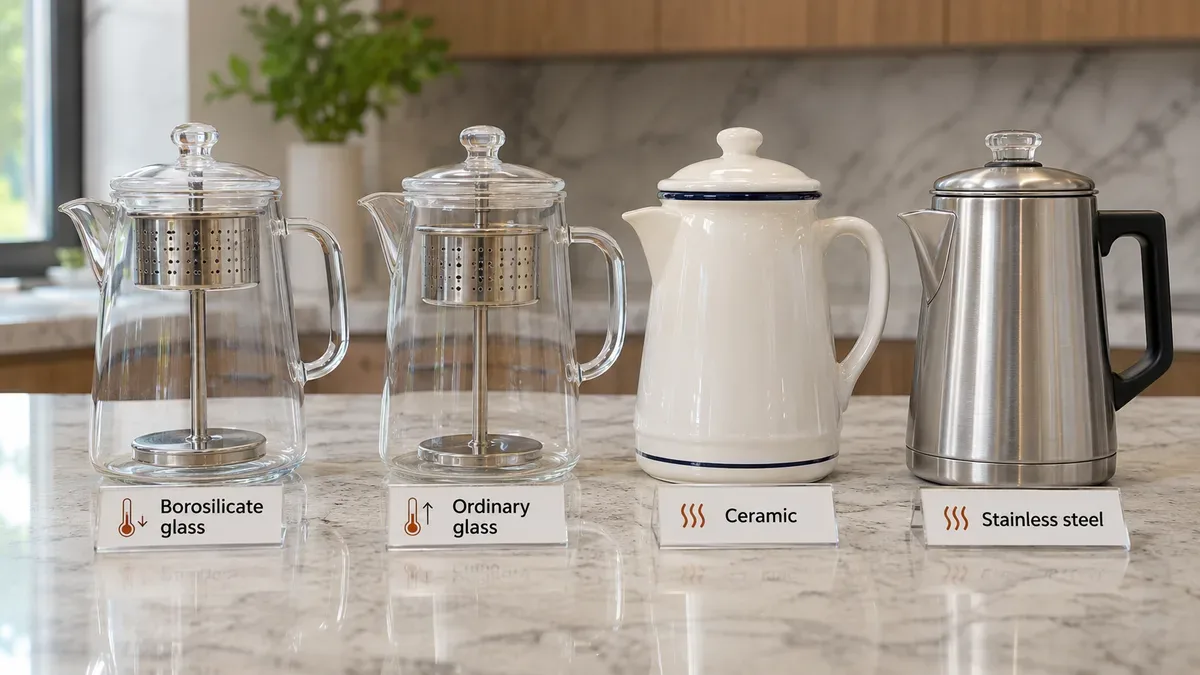
Borosilicate glass contains boron oxide and silica. This composition gives it a lower thermal expansion rate than ordinary soda-lime glass. As a result, it usually tolerates normal temperature changes better.
SCHOTT’s overview of borosilicate glass explains its low expansion, chemical durability and thermal resistance. However, even borosilicate glass can break from severe thermal shock, impact damage or manufacturing defects.
| Material | Strengths | Limitations |
|---|---|---|
| Borosilicate glass | Clear, taste-neutral, heat-resistant and relatively light | Can still chip, crack or break suddenly |
| Ordinary soda-lime glass | Affordable, clear and widely available | Less tolerant of rapid temperature changes |
| Ceramic | Good heat retention, solid feel and attractive designs | Heavy, opaque and vulnerable to impacts or hidden cracks |
| Stainless steel | Excellent impact resistance, portability and heat-source flexibility | Less visible and may retain flavours if poorly cleaned |
What makes heat-resistant glass reliable?
Glass strength depends on purity, uniform composition, wall consistency and controlled forming. Proper annealing also matters because it reduces stresses created during cooling.
In fact, even two products labelled borosilicate can perform differently. Manufacturers may use different raw materials, forming methods and quality controls. DWK’s glass-heating guidance highlights the importance of consistent thickness and gradual heating.
Design features can also reduce accidental damage. Reinforced handles, rounded corners, protective bases and well-fitted lids help spread force. Silicone feet can prevent direct contact with a cold stone bench.
What should shoppers look for?
If you want a thick glass coffee percolator, check the glass type first. A heat-resistant glass percolator should clearly state its intended heat source. Avoid relying on vague phrases such as “extra strong” without supporting care instructions.
- Look for borosilicate glass when the model supports heated brewing.
- Check whether the vessel suits gas, electric, induction or campfire use.
- Inspect the base for even contact and stable support.
- Choose handles that stay clear of direct heat.
- Confirm replacement glass and spare parts availability.
Therefore, a medium-weight borosilicate percolator may offer a better balance than heavy ordinary glass. It can provide visibility and lower weight while handling normal brewing temperature changes more effectively.
Thermal Shock: Why Glass Percolators Break Suddenly
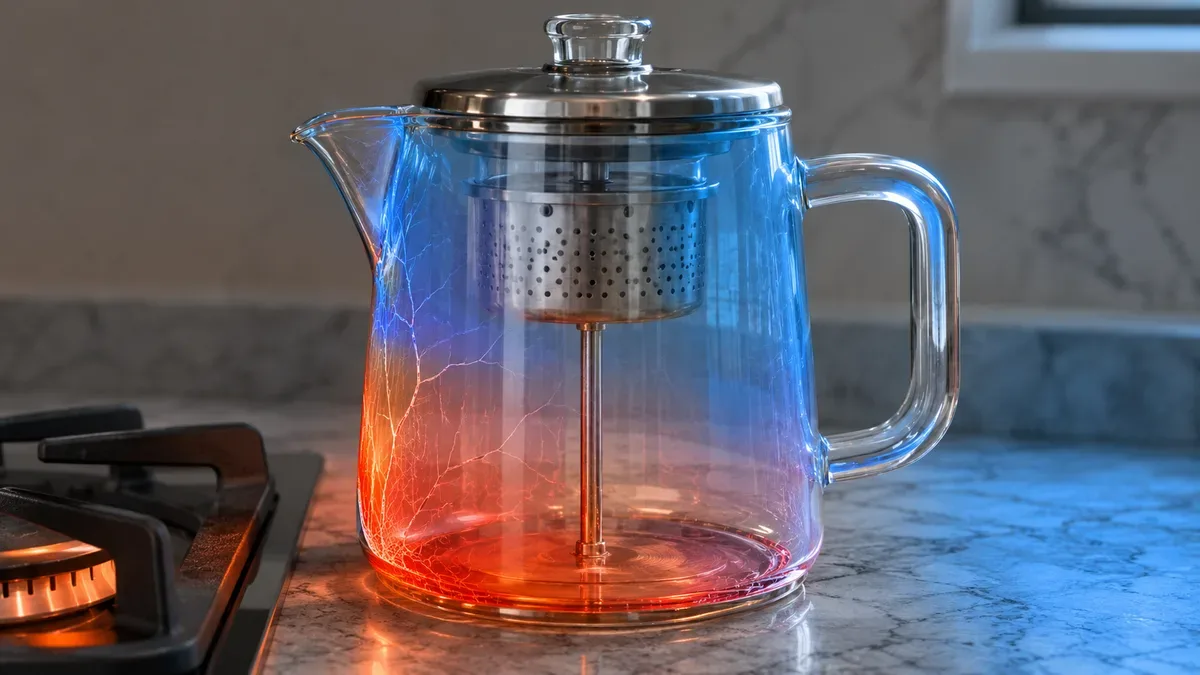
Thermal shock occurs when glass experiences a rapid or uneven temperature change. One area expands or contracts faster than another. That difference creates internal stress across the glass wall.
For example, placing a hot percolator on a cold stone surface can cool the base quickly. Rinsing hot glass under cold water creates a similar temperature difference. Adding cold water to a heated vessel can also trigger sudden stress.
Common causes of thermal shock
- Placing hot glass on a cold bench, sink or stone surface.
- Rinsing a hot percolator with cold tap water.
- Adding chilled water to a heated vessel.
- Moving the percolator between very hot and cold environments.
- Heating an empty vessel or allowing the water level to fall too low.
Direct heat can create additional problems. Uneven burners, electric coils and campfires may heat one section faster than another. Concentrated flames can form hot spots around the base or lower wall.
Therefore, never assume that a thick glass percolator can withstand direct heat. The answer depends on its design, heat-source rating and manufacturer instructions.
Borosilicate glass offers better thermal-shock resistance than many ordinary glasses. However, abrupt changes, concentrated flames and a damaged base can still cause cracking.
Clicking sounds may signal movement within stressed glass. Fine hairline cracks, cloudy stress marks and unexplained leaks also deserve immediate attention.
Stop using any percolator with cracks, chips, deep scratches or unexplained leakage. Do not test it with more heat. Replace the glass or contact the manufacturer for advice.
Manufacturing Quality, Scratches, and Design Features That Affect Breakage
Manufacturing quality often determines whether a percolator survives everyday use. Uniform walls distribute stress more evenly. Proper annealing reduces internal tension after the glass cools.
Smooth rims, strong joints and defect-free moulding also improve reliability. Meanwhile, bubbles, inclusions, sharp corners, uneven bases and poorly fitted lids can create weak points.
Can scratches make a glass percolator more fragile?
Yes, deep scratches and chips can concentrate stress. A small edge chip may grow when the glass expands during heating. Metal utensils can create damage that looks minor but weakens the vessel.
However, harmless surface clouding does not always indicate structural damage. Mineral deposits may appear white or hazy after repeated brewing. They usually differ from sharp cracks, impact marks and branching stress fractures.
Clean the surface gently before judging its condition. If a mark remains sharp, catches a fingernail or forms a line through the wall, stop using the percolator.
How shape affects durability
Rounded profiles generally reduce sharp stress points. Wide, stable bases can spread heat more evenly and reduce tipping. However, narrow necks, spouts, handles and exposed glass sections need extra care.
Protective sleeves, silicone feet and metal frames can shield vulnerable sections. Reinforced handles also reduce the chance of dropping the vessel during pouring.
Replacement glass is another important design feature. A replaceable inner vessel can extend the product’s useful life after accidental damage. Without replacement parts, a minor failure may require replacing the entire set.
Quick inspection checklist
- Hold the glass against bright light and look for cracks or inclusions.
- Run a clean fingertip around the rim and base.
- Check for chips around the spout, handle and lid opening.
- Confirm that the base sits flat without rocking.
- Check that the lid fits securely without forcing the glass.
- Inspect used models for stains hiding scratches or stress marks.
Safe Use, Cleaning, Storage, and Handling Practices
Always match the percolator to its approved heat source. A model designed for a stovetop may not suit an electric coil, campfire or open flame.
Additionally, some glass percolators require a diffuser or protective wire support. Follow the supplied instructions instead of guessing from the vessel’s appearance.
Reducing breakage during brewing
- Start with room-temperature water and glass whenever possible.
- Use adequate water and prevent the vessel from heating empty.
- Begin with low-to-moderate heat rather than maximum power.
- Keep flames below the base and away from handles.
- Place hot glass on a dry, heat-resistant surface.
- Allow the vessel to cool naturally before cleaning.
Gradual heating reduces the temperature difference across the glass wall. Moreover, stable heat helps prevent localised hot spots near the base.
Cleaning without creating damage
Let the percolator cool before washing it. Use warm water rather than icy water, especially after brewing.
A soft sponge usually removes coffee residue without marking the surface. Avoid abrasive pads, harsh scraping and metal utensils inside the glass.
Mineral buildup may require a manufacturer-approved cleaning method. Do not use aggressive chemicals unless the care instructions specifically allow them.
Take extra care around sinks, stone benches and crowded cupboards. A short drop onto a hard surface can cause damage that appears later during heating.
Storage and transport
Store the percolator with its lid, stem and removable parts separated where practical. This prevents components from knocking together.
For transport, wrap the glass in padding and protect the spout, handle and base. Use a secure box with no empty space around the vessel. Never allow metal parts to press directly against exposed glass.
When should you replace it?
Stop using the percolator if it develops a crack, chip, deep scratch, leak or spreading clouded mark. Do not attempt household repairs with glue or sealant.
Instead, check for replacement glass, warranty support or manufacturer service. Replacement also makes sense after repeated thermal stress, loose fittings or unavailable safety parts.
There may not be a fixed service interval for every model. Therefore, inspect the vessel regularly and replace it when its condition becomes uncertain.
How to Choose a Durable Glass Percolator
Start with the way you plan to brew. A home stovetop user may prioritise visibility and stable heating. A camper may value impact resistance, portability and flexible heat-source compatibility.
Practical buying checklist
- Choose clearly identified borosilicate glass where appropriate.
- Look for even construction rather than maximum wall thickness.
- Confirm compatibility with your exact heat source.
- Choose a stable base with protective feet or a frame.
- Check for a reinforced handle and secure lid.
- Review temperature limits and care instructions.
- Confirm replacement glass and spare parts availability.
- Check warranty coverage and retailer support.
Evaluate glass quality rather than choosing solely by weight. Heavy glass can resist minor knocks, but it may remain vulnerable to thermal shock. Medium-weight borosilicate glass can offer a useful balance for daily brewing.
| Priority | Material or feature to consider |
|---|---|
| Maximum brewing visibility | Clear borosilicate glass with an unobstructed body |
| Impact resistance | Stainless steel or glass with a protective frame |
| Low weight | Medium-weight borosilicate glass |
| Heat-source flexibility | A model with clearly stated multi-source compatibility |
| Easy replacement | A design with available glass inserts and spare parts |
Glass, stainless steel or ceramic?
Glass provides excellent visibility and usually keeps coffee taste neutral. It also lets you watch bubbling, colour and liquid levels. However, it demands careful handling.
Stainless steel offers stronger impact resistance and easier transport. In contrast, it hides the brewing process and may require more careful cleaning around seams.
Ceramic retains heat well and feels solid. However, it can be heavy, opaque and vulnerable to chips or hidden fractures.
Therefore, the best material depends on your handling habits. Choose glass for visibility, steel for rugged portability and ceramic for heat retention with careful handling.
Sweet Puff Australia brings together glass designs and practical accessories for adults comparing different materials and construction styles. Explore the Sweet Puff Australia website for broader product information and collection details.
Conclusion
Glass thickness affects impact resistance, weight, heat transfer and handling. However, thickness alone does not determine durability. Borosilicate composition, thermal-shock resistance, manufacturing quality and protective design matter just as much.
Before buying, compare the glass type, wall consistency, base design, heat-source rating and replacement support. Then use gradual heating, safe cooling and gentle cleaning practices.
Use the buying checklist to compare percolators carefully. Confirm heat-source compatibility and choose a model with quality glass, reliable protection, replacement parts and clear manufacturer safety instructions.