Does your refillable lighter flame keep changing even though the gas tank is full? Lighter flame adjustment wheel parts may solve the problem when the wheel slips, jams, or no longer controls fuel flow properly. This guide explains compatibility, replacement options, safe installation, troubleshooting, and when replacing the entire lighter makes more sense.
1. What Are Lighter Flame Adjustment Wheel Parts?
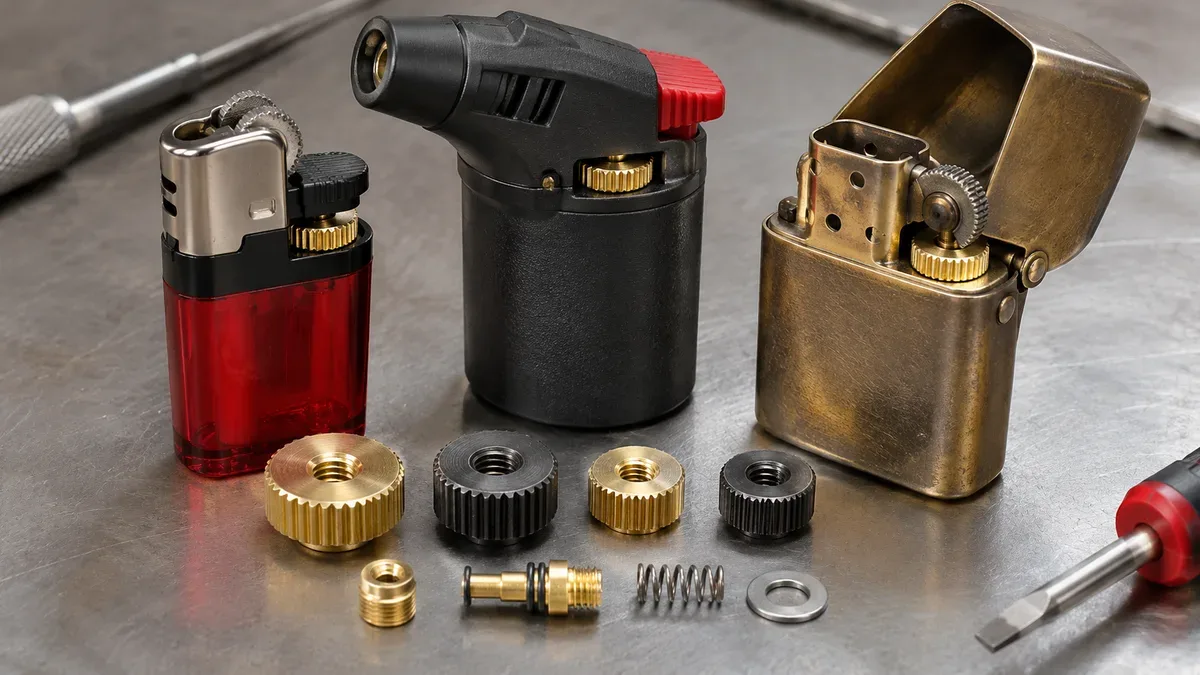
A lighter flame adjustment wheel controls how much fuel reaches the burner. Turning the wheel usually opens or restricts a small gas valve inside the lighter. Therefore, the wheel directly affects flame height, fuel flow, and ignition performance.
Most adjustable lighters connect the wheel to a valve stem, gear, axle, or notched control mechanism. As the wheel turns, that mechanism changes the valve opening. The fuel then travels through the internal passage before reaching the nozzle or burner.
How the adjustment system works
The wheel works alongside several other lighter parts. The gas valve controls fuel release, while the nozzle directs fuel towards the ignition point. Meanwhile, the burner design determines whether the lighter produces a soft yellow flame or a focused torch flame.
A standard lighter flame control wheel often changes a simple fuel opening. In contrast, a torch lighter gas adjustment wheel may control a pressurised jet system. Torch lighters need more precise movement because their flame depends on gas pressure and nozzle performance.
Adjustment wheels commonly appear in refillable butane lighters, torch lighters, utility lighters, and adjustable flame lighters. Vintage lighters may also use wheels, although their mechanisms often differ from modern designs. Some older models combine the wheel with a unique valve, spring, or internal lever.
- Refillable butane lighters: Often use a small wheel connected to a fuel valve.
- Torch lighters: Usually require a precise wheel and matching gas-control mechanism.
- Utility lighters: May use a larger wheel or slider for longer flame control.
- Vintage lighters: Can require model-specific parts and specialist repair.
Common replacement options include original manufacturer parts, universal adjustment wheels, metal wheels, plastic wheels, and complete lighter repair kits. Original parts usually offer the best fit. However, a universal wheel can work when its diameter, thickness, axle opening, and mounting method match the original component.
2. Signs You Need a Lighter Adjustment Wheel Replacement
Mechanical warning signs
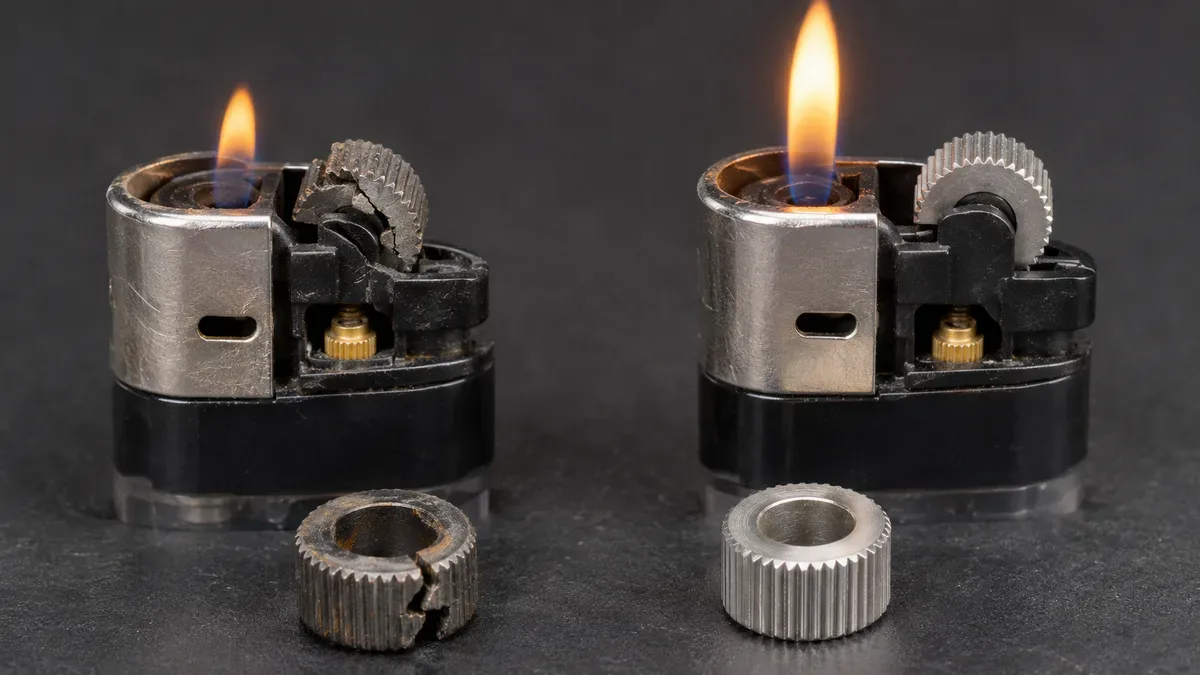
A slipping wheel is one of the clearest signs of wear. You may turn the wheel, yet the flame height stays unchanged. Additionally, the wheel may feel loose, wobble sideways, or move without engaging the internal valve.
Look closely for broken teeth, cracked plastic, worn grooves, or a bent axle. Rough rotation may indicate debris, corrosion, overtightened hardware, or damage inside the mounting bracket. A wheel that jams can also point to a distorted frame or a damaged gas-control mechanism.
Some wheels do not stay in position after adjustment. They may move inside a pocket, during ignition, or when the lighter receives a light impact. Therefore, the lighter can change from a small flame to a larger flame without deliberate adjustment.
Flame-performance warning signs
A damaged wheel can cause inconsistent flame height even when the lighter contains enough fuel. You may notice a weak flame, excessive flame, difficult ignition, or a flame that goes out unexpectedly. In fact, the wheel may prevent the gas valve from opening or closing correctly.
Flame changes without adjustment deserve careful attention. A wheel that moves freely can alter fuel flow at the wrong time. Furthermore, a worn gear or axle may leave the valve partly open after you release the control.
A damaged wheel can contribute to gas problems, but it may not cause the leak itself. Check the valve, seals, fuel inlet, tank, and connecting points before blaming the wheel. A cracked seal or faulty valve can leak even when the adjustment wheel looks perfect.
Stop using the lighter immediately if you smell gas, hear hissing, see visible cracks, or notice an uncontrolled flame. Move away from ignition sources and avoid testing the lighter repeatedly. The US Consumer Product Safety Commission lighter guidance discusses flame control, structural integrity, and related safety concerns.
3. How to Identify the Correct Replacement Lighter Part
Compatibility checks
Start with the lighter brand and model. Then identify whether it uses a refillable butane system, a liquid-fuel system, a soft flame burner, or a torch burner. Standard refillable lighter parts may not fit torch lighter replacement parts or vintage mechanisms.
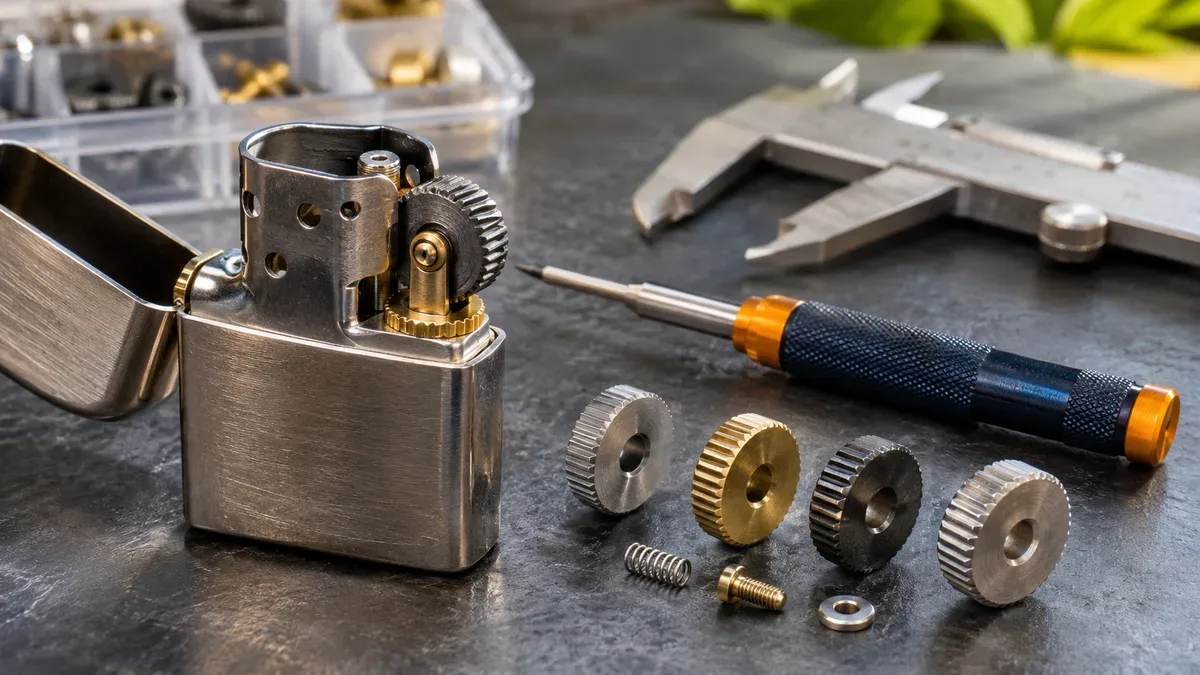
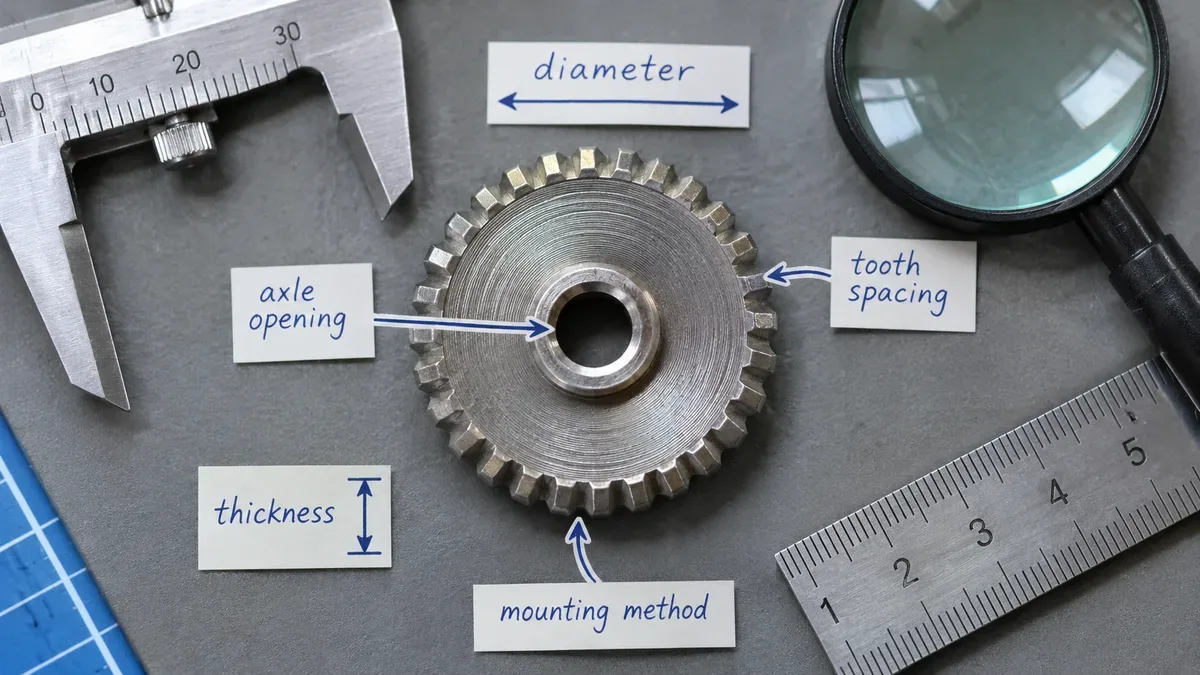
Next, compare the wheel diameter, thickness, axle opening, and mounting method. Also inspect the gear or notch pattern. Two wheels can look similar but use different teeth, grooves, or central openings.
- Press-fit wheels: Push onto an axle or valve stem without visible screws.
- Screw-mounted wheels: Use a small screw, washer, or threaded retainer.
- Pinned wheels: Attach with a small pin that may require a punch.
- Toothed wheels: Engage with a gear or notched valve mechanism.
- Integrated controls: Combine the wheel with the gas valve or lighter frame.
Do not assume every small metal wheel has the same function. A soft-flame wheel may rotate a simple valve stem. However, a torch lighter adjustment wheel may engage a pressure-control assembly with a different travel range.
Measuring and inspecting the original part
Photograph the original wheel before removing anything. Take clear images from the front, side, and underside. These photos can reveal the wheel orientation, retaining hardware, axle position, and surrounding bracket.
Record the wheel diameter and thickness with calipers. Measure the axle opening and note whether it is round, flat-sided, slotted, or keyed. Additionally, count the teeth or grooves around the wheel when the design uses them.
Inspect the axle, spring, washer, clip, and valve connection. A replacement wheel will not solve the problem if the axle has bent or the bracket has cracked. Therefore, check the complete adjustment assembly before ordering a single component.
Look for the model number on the base, rear, underside, or fuel cover. Then compare it with manufacturer diagrams, repair manuals, and detailed replacement listings. Photos should show the actual part rather than a generic stock image.
Original manufacturer parts usually provide the most reliable fit and adjustment range. Universal parts may cost less, but they require accurate measurements. Compare the material, finish, wheel travel, durability, and mounting details before choosing the cheaper option.
Finally, confirm what the listing includes. Some sellers supply only the wheel. Others include an axle, spring, retaining clip, washer, gas valve, or complete lighter repair kit.
4. Where to Buy Lighter Flame Adjustment Wheel Parts
You can find replacement parts through lighter-part specialists, manufacturer distributors, repair shops, marketplace sellers, vintage lighter suppliers, and specialty hardware retailers. Each source offers different benefits. For example, a repair shop may provide better compatibility advice, while a marketplace may offer more universal options.
Check the supplier’s product description carefully. It should identify supported lighter models, dimensions, mounting style, material, and included hardware. Additionally, look for clear photographs that show the wheel from multiple angles.
Customer reviews can reveal problems with loose fits, incorrect dimensions, poor machining, or weak plastic. However, reviews cannot replace compatibility checks. A part that suits one lighter may fail in another model.
Before ordering, confirm stock availability and the return policy. A return option matters when the listing uses unclear measurements or broad compatibility claims. Also check shipping costs, especially for small parts ordered from overseas.
Useful search phrases include:
- lighter adjustment wheel replacement
- replacement lighter parts
- butane lighter parts
- lighter spare parts
- vintage lighter parts
- buy lighter adjustment wheel
Low-cost universal wheels suit simple repairs when measurements match exactly. Mid-range replacement components may offer stronger materials and better machining. Meanwhile, original manufacturer parts often cost more because they provide model-specific fit and finish.
Material, machining quality, brand, rarity, repair-kit contents, and shipping all affect the final price. A rare vintage wheel may cost more than a modern universal part. Therefore, compare the complete purchase rather than the wheel price alone.
Choose a model-specific part whenever one exists. Select a universal option only after confirming its dimensions and mounting details.
- Exact lighter brand and model
- Wheel diameter, thickness, and axle opening
- Mounting style and gear pattern
- Included springs, clips, washers, or axles
- Material and expected durability
- Seller reputation and product photographs
- Return eligibility and safety information
5. Can You Replace a Lighter Flame Adjustment Wheel Yourself?
A DIY replacement may suit an empty, simple refillable lighter with a visibly broken external wheel. The repair becomes less suitable when the wheel connects directly to a sealed gas valve. Similarly, pressurised torch mechanisms can create additional risks during disassembly.
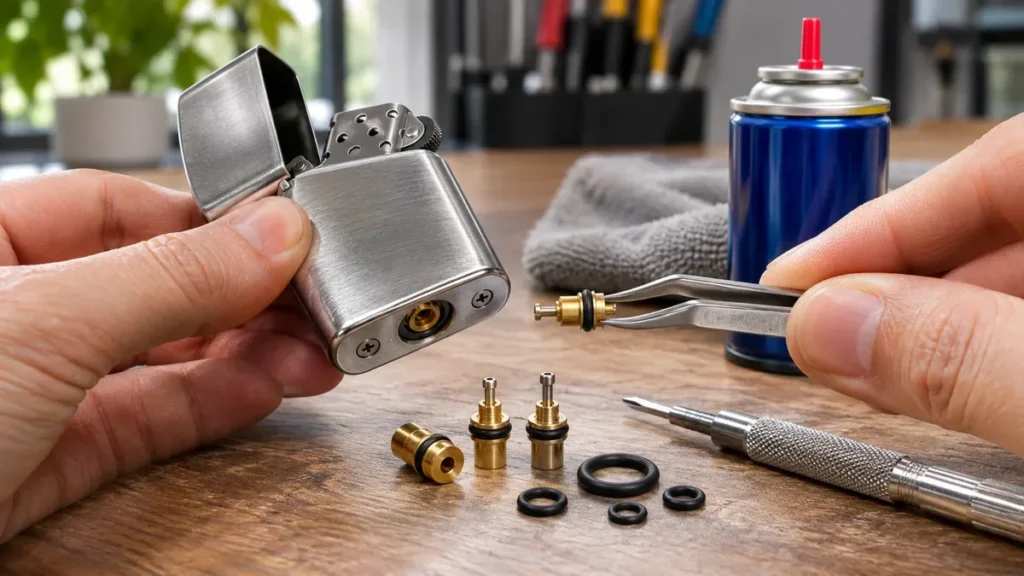
Gather suitable tools before starting. Precision screwdrivers, small pliers, tweezers, a pin punch, calipers, and a flashlight can help. Protective gloves and a clean tray also prevent lost parts and minor hand injuries.
General installation steps
- Empty the lighter completely. Follow the manufacturer’s fuel-release instructions and confirm that no pressure remains.
- Choose a safe workspace. Work outdoors or in strong ventilation, away from flames, sparks, heaters, and electrical ignition sources.
- Document the assembly. Photograph each side before removing covers, clips, screws, or springs.
- Remove the retaining hardware. Lift covers carefully and keep every small part in the tray.
- Inspect the mechanism. Check the axle, bracket, valve stem, teeth, spring, and washer for damage.
- Fit the replacement wheel. Match the original orientation and ensure the wheel engages correctly.
- Replace the hardware. Reinstall the axle, clip, spring, washer, or screw without forcing any component.
- Reassemble carefully. Confirm that the wheel turns freely and does not rub against the frame.
- Test only after inspection. Check for cracks, leaks, loose parts, and incorrect movement before refilling or igniting.
Never work near a flame or spark, and never puncture or heat a fuel container. Avoid inhaling released butane, and protect your eyes and hands during inspection. Follow the lighter and fuel manufacturer’s instructions whenever they differ from general advice.
Some mechanisms are sealed, spring-loaded, pressurised, or integrated with the gas valve. Do not disassemble these systems at home unless the manufacturer provides a safe repair procedure. A small error can affect fuel control, ignition, or sealing.
Replacing the entire lighter may be safer when the fuel tank is damaged, the valve leaks, or the frame has corrosion. It may also cost less when replacement parts are rare or repair labour approaches the price of a new lighter.
Choose professional repair for rare vintage lighters, complex torch mechanisms, or any lighter that continues leaking after wheel replacement. Do not keep testing a lighter that smells of gas or produces an uncontrolled flame.
6. Troubleshooting and Maintaining Replacement Lighter Wheels
Post-installation troubleshooting
If the wheel does not turn smoothly, check its alignment first. The hardware may be overtightened, the axle may be the wrong size, or debris may sit inside the bracket. Additionally, inspect the teeth and confirm that the washer or spring has not been omitted.
A weak flame after installation can have several causes. Low fuel, a clogged burner, a blocked nozzle, an incorrect wheel position, or poor part fit may restrict fuel flow. A faulty gas valve can also produce the same symptoms.
An excessive flame may indicate the wrong wheel orientation or an open gas valve. Damaged seals can allow too much fuel through. Furthermore, an incompatible component may hold the valve open beyond its intended adjustment range.
Jet lighter nozzle cleaning may help when the flame looks uneven, sputters, turns yellow, or loses height. Visible debris can also affect the jet pattern. However, never force a wire into a delicate nozzle, because this can damage the opening permanently.
Maintenance practices
Keep the wheel free from pocket lint, dust, oil, and spilled butane. Wipe the exterior gently with a dry, lint-free cloth. Avoid flooding the adjustment area with cleaning products.
Turn the wheel gently and stop when it reaches its adjustment limit. Excessive force can break plastic teeth, bend an axle, or damage the valve stem. Meanwhile, store the lighter away from heat, direct sunlight, and moisture.
Inspect the wheel and fuel connections during each refill. Look for looseness, corrosion, unusual odours, hissing, or a changing flame. Periodic checks help identify wear before it becomes a larger safety problem.
Use this decision guide when the lighter develops a problem:
- Repair the wheel: The lighter is empty, undamaged, and uses a simple replaceable wheel.
- Replace the complete mechanism: The wheel, axle, valve, or mounting bracket has several damaged parts.
- Buy a new lighter: The tank leaks, corrosion is extensive, compatible parts are unavailable, or repair costs approach replacement cost.
- Seek professional help: The lighter is rare, vintage, pressurised, or still leaks after repair.
Conclusion
The correct lighter flame adjustment wheel depends on the lighter’s brand, model, fuel system, dimensions, and mounting mechanism. Careful identification prevents poor fits and unreliable flame control. Reputable sourcing, safe installation, and post-repair testing remain essential.
If the lighter leaks, has extensive damage, or uses a complex vintage or torch mechanism, replacing it may be safest. Otherwise, measure the original wheel and compare its mounting details before ordering.
Check your lighter model and measure the original wheel before buying. Compare compatible lighter flame adjustment wheel parts, included hardware, seller reviews, and return policies. For related smoking accessories and product information, visit the Sweet Puff Australia shop or explore the Sweet Puff Australia website.