Introduction
Does your bong hit feel harsh, leave dirty water behind, or quickly build up ash and resin? Showerhead ash catcher diffuser details matter because the wrong size, joint gender, angle, or water level can create leaks and splashback. A poor fit may also restrict airflow and weaken filtration. This guide explains how showerhead ash catchers work, how to choose one, and how to maintain it safely.
Showerhead Ash Catcher Diffuser Details: What It Is
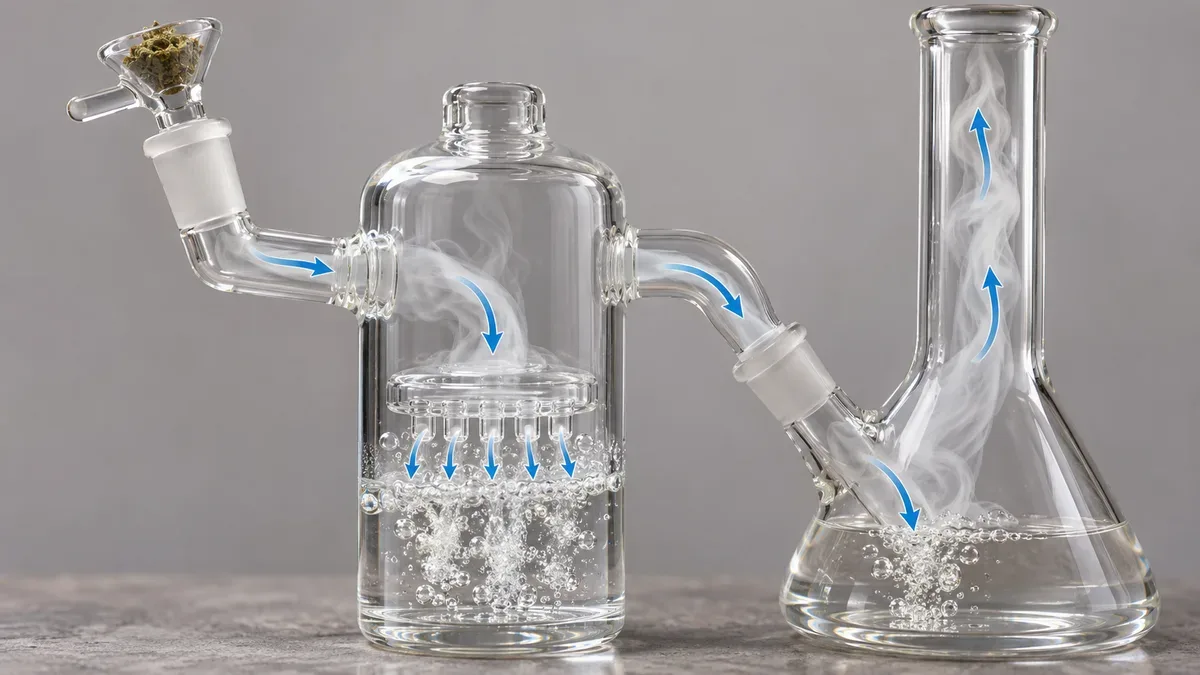
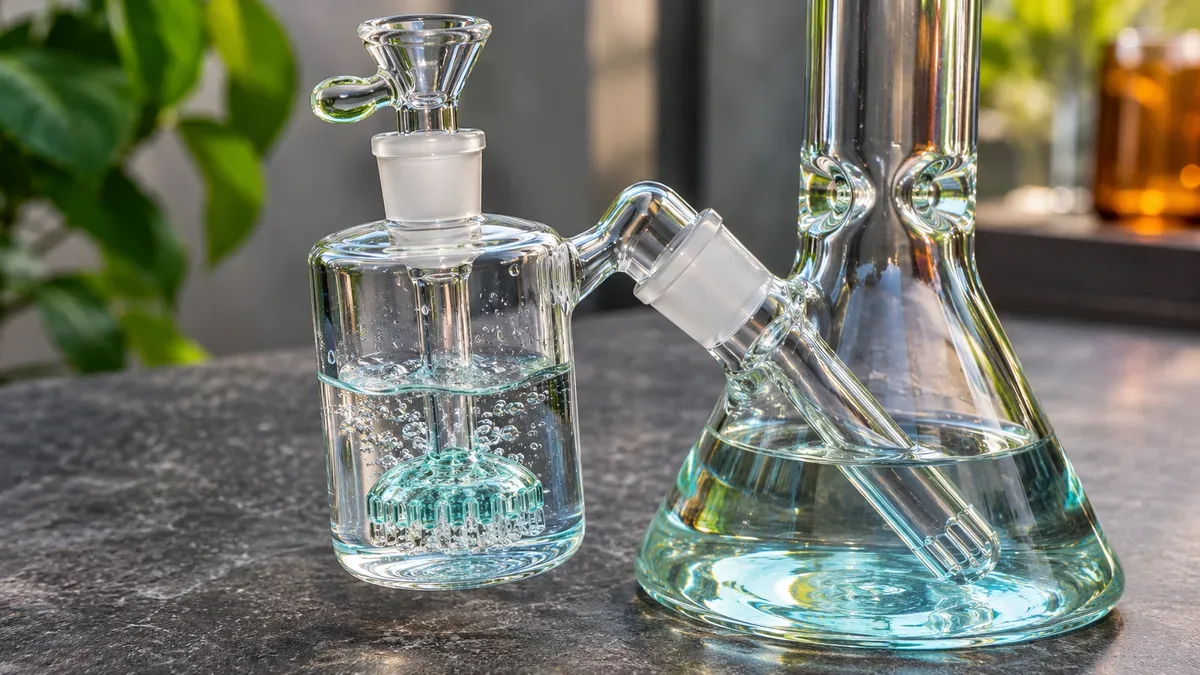
A showerhead ash catcher diffuser is a glass bong accessory that adds a separate filtration chamber to a water pipe. It usually combines an ash-catching chamber with a showerhead-style percolator. Therefore, smoke receives another water-filtration stage before entering the main bong.
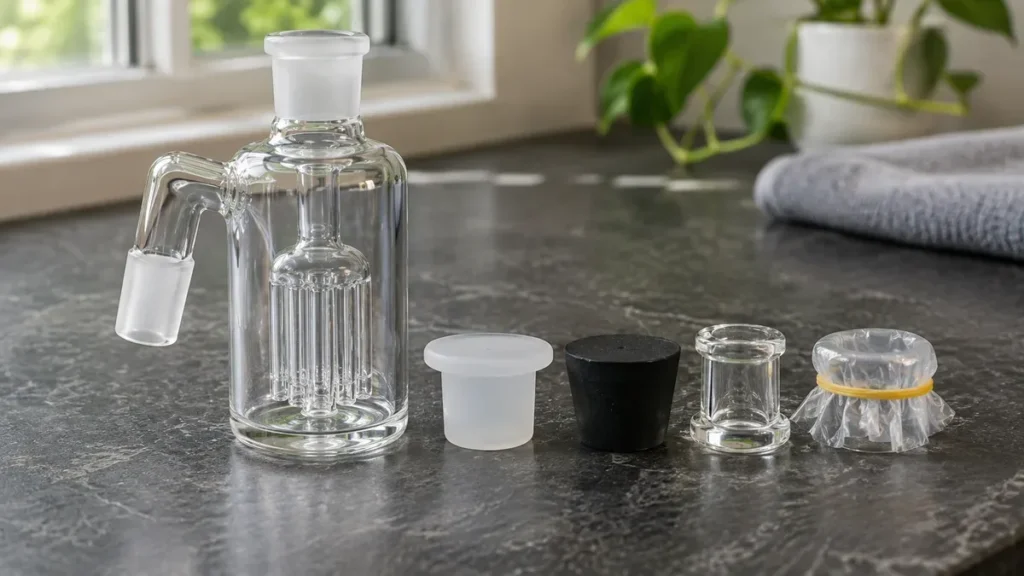
The accessory typically includes a borosilicate glass body, joint connection, downstem, diffuser, water chamber, and bowl connection. Some designs also include a splash guard or reclaim area. Additionally, the outlet connects to the bong’s female or male joint, depending on the model.
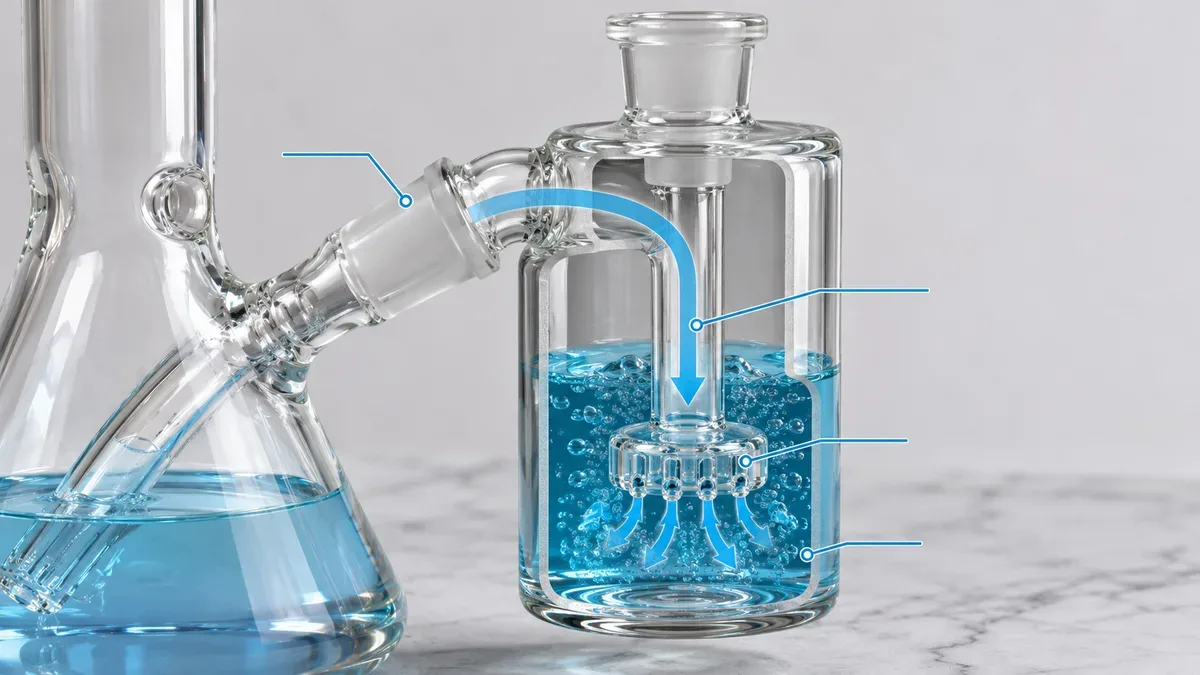
Smoke travels from the bowl into the ash catcher chamber first. It then moves through the downstem and showerhead diffuser, where small openings break the smoke into bubbles. Finally, the filtered smoke travels into the bong’s main chamber for another draw through the mouthpiece.
A standard ash catcher may only provide a separate chamber that collects loose ash. A diffused ash catcher adds a basic diffuser for extra bubbling. In contrast, a showerhead percolator ash catcher uses a wider glass disc or dome with multiple openings.
Those openings spread smoke across a broader area. As a result, the smoke contacts more water before reaching the bong. However, the exact effect depends on opening size, chamber volume, water depth, and the quality of the glasswork.
Glass Construction and Durability
Most quality models use borosilicate glass because it handles temperature changes better than ordinary glass. However, no glass accessory becomes unbreakable through that material alone. Wall thickness, clean welds, joint alignment, and smooth seals all influence durability.
Look closely at the joint connection and the diffuser’s welded points. Uneven joins, stress marks, sharp edges, or crooked fittings can create weak spots. Additionally, a stable base and well-balanced chamber reduce the chance of accidental tipping.
These accessories generally suit smoke from dry herb bowls. Always use them only where lawful, follow local regulations, and consider the health risks associated with inhaling smoke. Healthdirect explains cannabis-related health risks for Australian readers.
For compatible glass water pipes and related accessories, you can also browse the available product categories at Sweet Puff Australia.
How a Showerhead Ash Catcher Works With a Bong
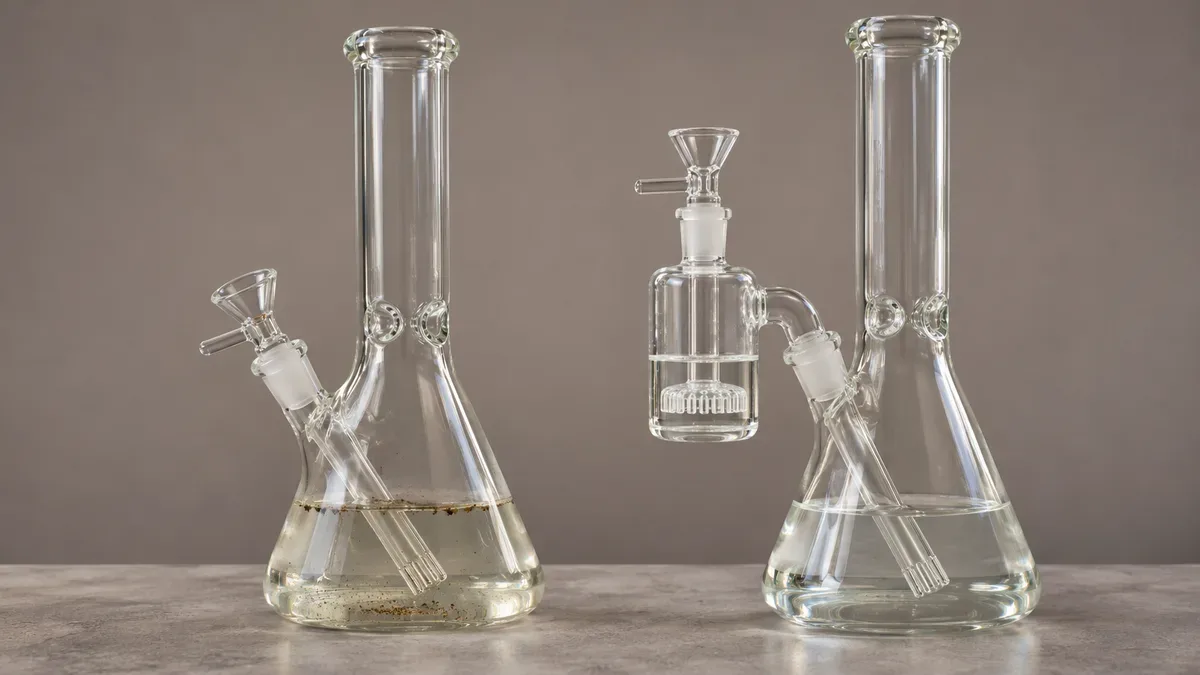
A showerhead diffuser forces smoke through several openings beneath or around a glass disc. These openings divide one smoke stream into many smaller streams. Therefore, the smoke forms bubbles and gains more contact with the water.
Greater smoke-to-water contact can create a cooler-feeling draw. It may also trap some ash and particulate matter before those materials reach the bong. However, water filtration does not remove every irritant or residue from smoke.
The ash catcher’s first practical benefit involves protecting the primary water chamber. Loose ash, burnt fragments, and some resin collect in the accessory instead. As a result, the main bong often stays clearer for longer and becomes easier to inspect.
Nevertheless, residue still travels through the system. Sticky smoke compounds can coat the downstem, diffuser openings, and bong chamber. Regular cleaning remains essential, even when the accessory visibly catches ash.
Diffusion, Airflow, and Draw Resistance
Does a showerhead diffuser make bong hits smoother? Often, it can make the draw feel cooler and less abrasive. However, results depend on water depth, diffuser design, smoke volume, and your personal tolerance.
More diffusion usually means more bubbles and greater water contact. Yet additional bubbling can also increase draw resistance. A narrow joint, dense diffuser openings, or an overfilled chamber may make the pull feel noticeably tighter.
Start with a gentle test draw before using the bowl. Listen for steady bubbling rather than aggressive chugging. Meanwhile, keep the bong on a flat surface and hold the setup securely during testing.
To reduce splashback, inhale gradually instead of pulling sharply. Keep the water below the recommended level and avoid tilting the bong. If water reaches the connection, remove some immediately and retest the airflow.
Benefits and Trade-Offs of Using an Ash Catcher
A showerhead ash catcher adds another water-filtration stage between the bowl and bong. Therefore, many users notice a smoother-feeling draw compared with using the bong alone. The effect feels most balanced when the diffuser receives enough water without flooding.
The accessory can also reduce ash entering the main bong chamber. This keeps the primary water cleaner and may reduce visible residue around the downstem. Additionally, a cleaner chamber makes it easier to see water movement and identify airflow problems.
Less residue in the bong can simplify maintenance over time. Instead of cleaning the entire water pipe after every session, you can focus attention on the accessory first. However, the bong still needs regular cleaning because smoke continues to pass through it.
Clean glass and correctly adjusted water can preserve the character of a dry herb draw. In contrast, excessive filtration may soften flavour and make the draw feel less direct. Personal preference therefore matters as much as the diffuser’s technical design.
| Feature | Bong alone | With a showerhead ash catcher |
|---|---|---|
| Filtration | Uses the bong’s existing chamber | Adds a separate diffusion stage |
| Cleanliness | More ash may enter the main chamber | Captures some ash before the bong |
| Airflow | Often feels more direct | May feel tighter with dense diffusion |
| Size | Lower overall height | Adds height, weight, and clearance needs |
The main drawbacks include extra height, breakability, weight, splashback, and compatibility issues. Furthermore, an unstable ash catcher may make the whole bong easier to knock over. A highly percolated bong may also gain little from another restrictive chamber.
Before buying, consider whether the added filtration solves a real problem. If your bong already contains several restrictive percolators, a simpler ash catcher may provide better airflow. You can compare suitable glass accessories through the Sweet Puff Australia shop.
Choosing the Right Joint Size, Gender, and Angle
Joint compatibility determines whether an ash catcher fits securely. The most common joint diameters include 14mm and 18mm. Therefore, measure the bong connection rather than relying on the bong’s brand or overall size.
A male ash catcher fits into a female bong joint. A female ash catcher receives a male joint or needs a suitable adapter. These terms describe the glass connection, not the bowl size or the accessory’s overall shape.
Joint angle also affects the fit. A 90-degree model usually sits upright from a vertical bong joint. An angled configuration may direct the chamber away from the bong, which can improve clearance or change the balance.
Understanding 90-Degree 14mm Fit
A 90 degree glass ash catcher 14mm fit guide should consider more than diameter. Check the vertical clearance between the bong’s joint and the table. Additionally, confirm that the bowl remains accessible and does not collide with the mouthpiece.
The angle changes the chamber’s orientation and water position. A poorly matched angle may cause the ash catcher to lean, hold water unevenly, or place stress on the joint. In contrast, the correct angle keeps the accessory upright and balanced.
Measure the bong joint with a ruler or calliper when possible. Then confirm the joint gender, connection diameter, angle, and downstem position. Also, check whether the bowl or adapter sits too close to the bong’s neck.
- Measure the connection diameter, usually 14mm or 18mm.
- Confirm whether the bong joint is male or female.
- Check whether the ash catcher uses a 90-degree or angled joint.
- Measure added height and width on the intended surface.
- Confirm the bowl position and available mouthpiece clearance.
Do not ignore the bong’s base width. A tall accessory can shift the centre of gravity beyond the base. As a result, the setup may tip during filling, cleaning, or use.
Are showerhead ash catchers compatible with all water pipes? No. Compatibility depends on joint size, gender, angle, clearance, seal quality, and overall balance. Brand names alone cannot guarantee a reliable fit.
For broader comparisons, explore Sweet Puff Australia’s listed product brands and check each product’s connection details carefully.
Setup, Water Level, and Buying Criteria
Begin by adding enough water to cover the showerhead diffuser openings. Then adjust the level gradually until bubbling becomes active without water reaching the bong connection. A small amount of testing usually produces a better result than filling the chamber completely.
Too little water can leave the diffuser partly exposed. The draw may then feel dry, hot, or harsh. Meanwhile, too much water can restrict airflow, cause splashback, or send water into the bong.
Practical Setup Steps
- Insert the ash catcher gently into the bong joint.
- Check that the connection sits evenly without rocking.
- Add a small amount of clean water through the chamber.
- Test airflow gently before lighting the bowl.
- Adjust the water until bubbling stays active and controlled.
- Secure the bowl or adapter without forcing the joint.
Inspect the seal during the first test draw. A whistling sound or weak bubbling may indicate a poor fit. Therefore, check for cracks, uneven joints, loose adapters, or incompatible connection sizes.
When buying, prioritise borosilicate glass, consistent wall thickness, clean welds, stable geometry, and reliable joints. Effective diffuser openings should look even and free from blocked glass. Easy access for cleaning also matters, especially around the disc and downstem.
Single-chamber designs usually offer lower height and simpler maintenance. Multi-chamber models may create stronger filtration, but they can increase draw resistance, weight, and breakability. Choose the simpler design when balance and airflow matter most.
A showerhead diffuser suits users who want broad bubbling and a separate filtration stage. Tree percolators may offer many vertical arms, while honeycomb designs provide dense bubbling. Inline and stemless designs can deliver different airflow patterns and chamber proportions.
Therefore, choose the showerhead style when you value a wide, visible diffusion pattern and straightforward chamber access. Avoid selecting it solely because it appears more complex. A simpler percolator may perform better with a small bong or already-restrictive setup.
For recyclable ash catcher choices, consider glass content, removable parts, packaging, and mixed-material construction. Glass may be recyclable where local facilities accept it. However, seals, silicone, metal, and decorative components can complicate processing.
Cleaning, Maintenance, and Common Questions
Start a glass ash catcher cleaning routine by emptying the used water immediately. Rinse the chamber with warm water, then add an appropriate glass-cleaning solution. Let the solution soak before shaking carefully and brushing accessible areas.
Rinse the accessory thoroughly until no cleaner remains. Pay special attention to the diffuser openings, joint, downstem, and reclaim area. Additionally, keep separate cleaning tools for the ash catcher and main bong.
Clean frequency depends on use. Frequent sessions may require cleaning every few uses, while occasional use may allow longer intervals. Clean sooner when water discolours, airflow changes, residue thickens, or the diffuser openings begin to block.
Do not pour boiling water onto cold glass. Thermal shock can crack the accessory quickly. Similarly, avoid aggressive metal tools, blocked openings, harsh impacts, and forcing a stuck joint.
Frequently Asked Questions
Does a showerhead ash catcher reduce ash and resin buildup? It captures some ash and residue before they reach the bong. However, it does not eliminate buildup, so both pieces still need regular cleaning.
Does it make bong hits smoother? It can create a cooler-feeling draw through additional water contact. The result depends on water level, diffuser design, airflow, smoke volume, and personal tolerance.
How much water should it hold? Start by covering the diffuser openings. Then add or remove small amounts until bubbling remains active without splashback or water movement into the bong.
Can it restrict airflow? Yes. Dense openings, narrow joints, excessive water, and several existing percolators can make the draw tighter. A gentle test draw reveals this before use.
Is it suitable for dry herb use? These accessories generally suit smoke from dry herb bowls. Use them only with compatible equipment and where local laws permit.
What material lasts longest? Well-made borosilicate glass offers good heat resistance and durability. Still, careful handling, stable storage, and protection from thermal shock remain essential.
How does a showerhead compare with other percolators? A showerhead diffuser spreads smoke through openings beneath a disc or dome. Tree, honeycomb, inline, and stemless designs use different paths, bubble patterns, airflow, and maintenance requirements.
Store the ash catcher upright in a padded area when not in use. Keep it away from sink edges, hard shelves, pets, and crowded workspaces. Most importantly, handle every glass joint slowly and support the chamber during removal.
Sweet Puff Australia brings together glass water pipes, accessories, and related product information for adult Australian customers. Visit the Sweet Puff Australia website to explore available collections and learn more about compatible glass designs.
Conclusion
A showerhead ash catcher adds a dedicated water-filtration stage that can reduce ash reaching the bong. It may improve cleanliness and create smoother-feeling draws when correctly fitted. However, performance depends on joint size, gender, angle, water level, airflow, stability, and regular cleaning.
The accessory works best when its filtration and maintenance benefits outweigh extra height, resistance, weight, and breakability. Measure your bong’s joint size, gender, angle, and available clearance before buying. Then start with a low water level and adjust gradually for balanced filtration.