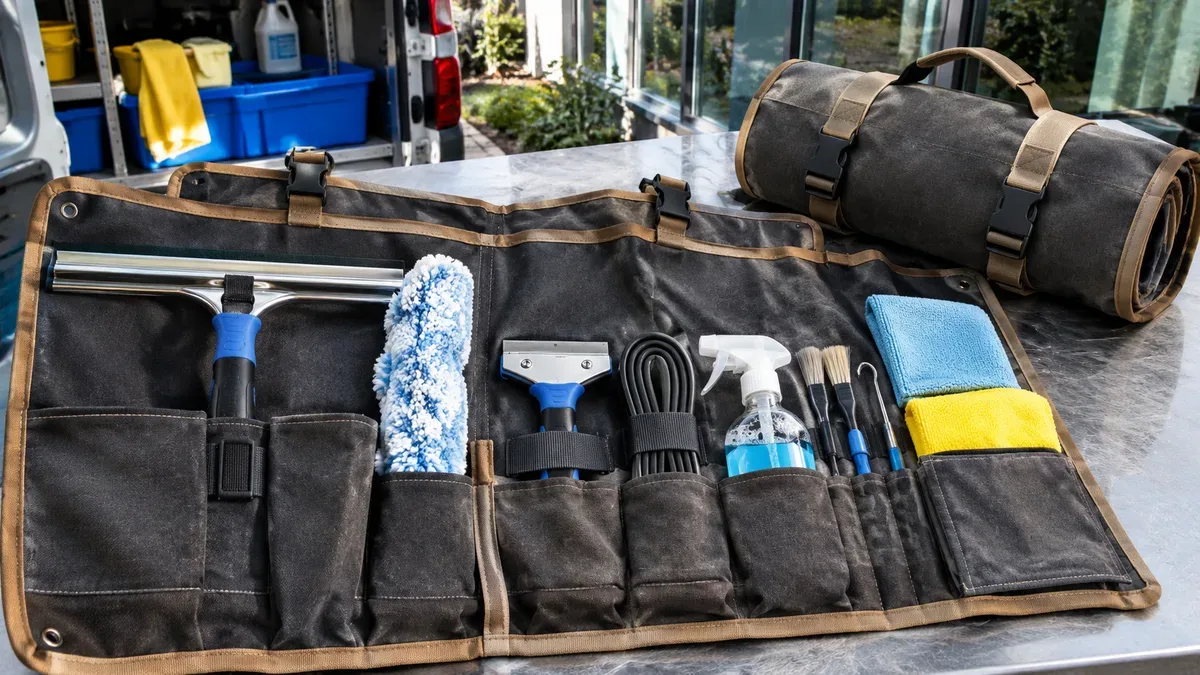
When a squeegee, scraper, washer or cloth goes missing, even a smooth cleaning job can quickly slow down. Loose equipment may become damaged, hard to find, contaminated with chemicals or awkward to transport between properties. A glass cleaning tool roll organiser keeps essential equipment visible, protected and ready to use. This guide compares sizes, materials, compartments, portability and durability for professional and domestic cleaning work.
What Is a Glass Cleaning Tool Roll Organiser?
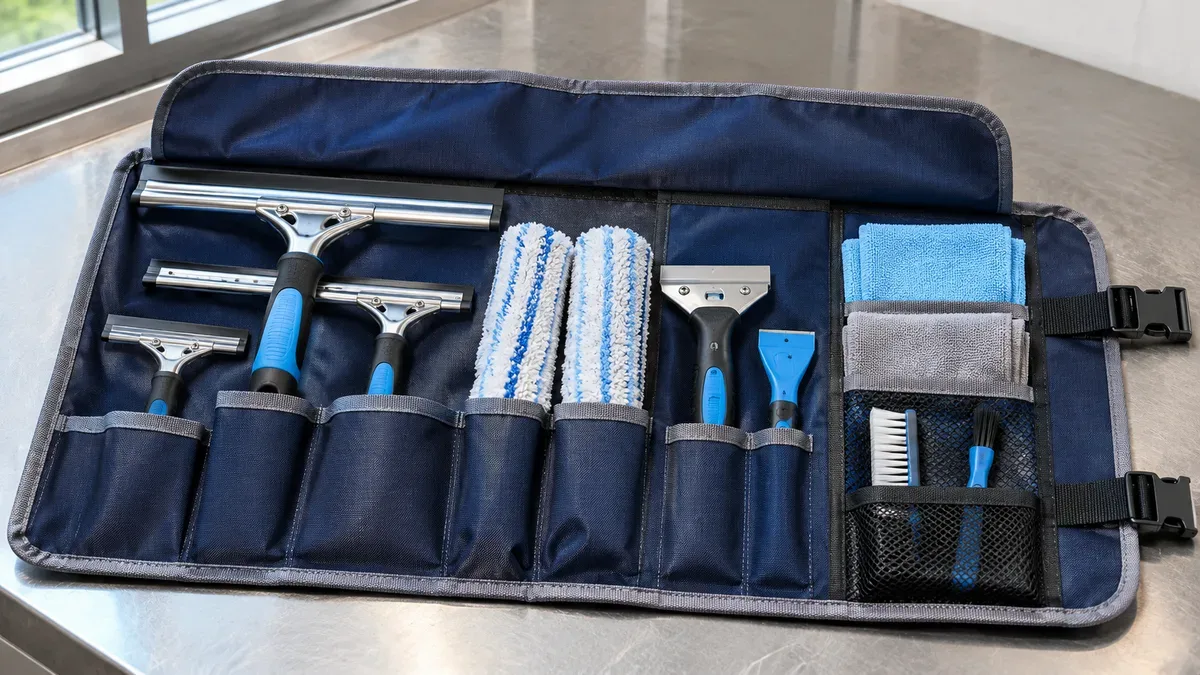
A glass cleaning tool roll organiser is a fabric or synthetic storage system designed for window-cleaning equipment. It usually includes dedicated pockets, elastic loops, open sleeves and zipped compartments. When the organiser is full, you can roll it closed and secure it with straps, buckles or hook-and-loop fasteners.
Its main purpose is simple: keep tools protected, visible, organised and ready to transport. Instead of searching through a deep bucket, you can identify each item quickly. Therefore, the organiser supports a more consistent setup before every residential, commercial or facilities-cleaning job.
However, a tool roll differs from several other storage options. A general tool roll may suit hand tools, but it may not fit squeegee channels, washer sleeves or wet microfibre cloths. Meanwhile, a window cleaner tool bag offers more depth, while a roll usually gives better visibility and compact storage.
A bucket-on-a-belt system keeps frequently used tools close to your body during work. It does not usually provide enough protection for transporting a complete collection of equipment. In contrast, a cleaning caddy offers open access and larger capacity, but it can become bulky on stairs or between properties.
Who Can Use One?
Professional window cleaners can use a roll organiser for daily residential rounds and commercial contracts. Janitorial teams may assign one organiser to each worker or cleaning station. Facilities staff can keep a compact selection of glass-care tools ready for maintenance call-outs.
Additionally, mobile cleaners can benefit from a lightweight design that fits inside a vehicle or trolley. DIY users may prefer a smaller model for mirrors, shower screens and occasional window cleaning. The best choice depends on how many tools you carry and how often you move between jobs.
Why Does the Roll-Up Format Matter?
A roll-up design combines compact storage with quick access. When open, the contents remain visible across one surface. When closed, the organiser takes up less space inside a vehicle, cupboard or larger cleaning bag.
For example, a cleaner might place two squeegees in vertical sleeves, a scraper in a guarded pocket and cloths in an open compartment. After the job, the organiser rolls around those tools and secures them together. Therefore, the format works particularly well for cleaners who need mobility without sacrificing order.
Glass Cleaning Tool Roll Organiser Benefits for Professional Work
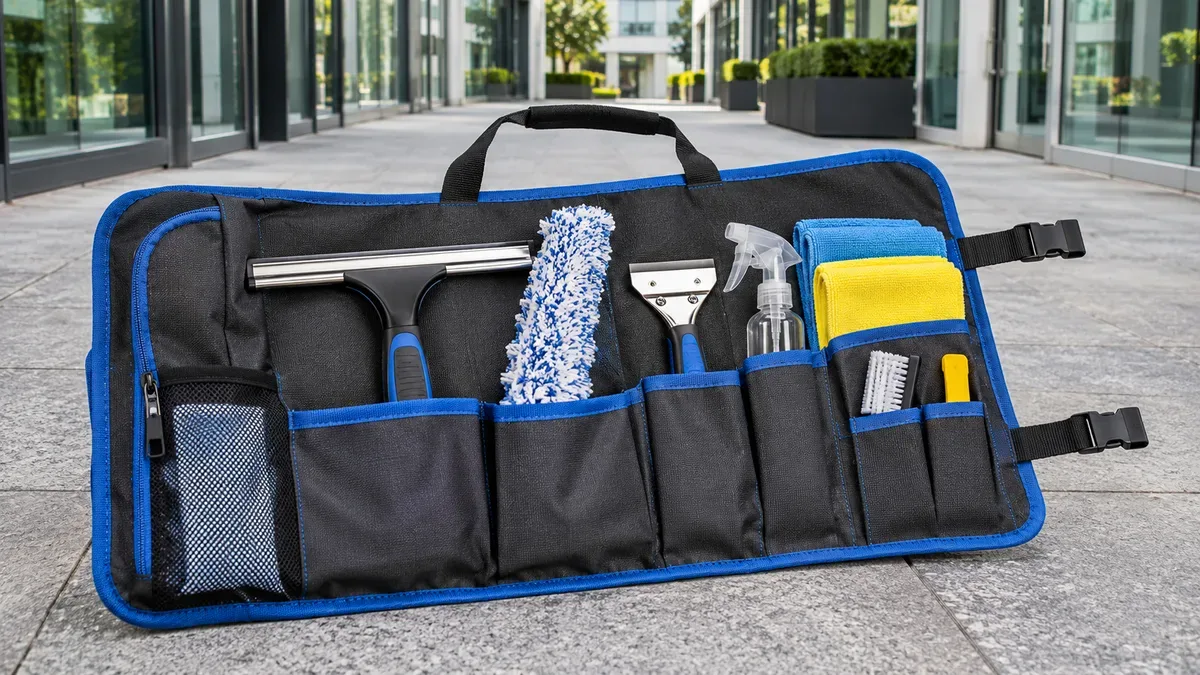
Professional cleaners often repeat the same workflow across several properties. A dedicated organiser supports that routine by giving every tool a consistent location. As a result, you spend less time searching through bags, buckets or vehicle storage areas.
Improved Organisation and Faster Access
Place frequently used equipment near the front or outer edge of the roll. Squeegees, washer sleeves, scrapers and microfibre cloths should remain easy to reach. Less frequently used spares can sit inside zipped pockets or deeper compartments.
Moreover, a consistent layout makes packing easier at the end of a shift. You can quickly notice whether a scraper, channel or cloth remains at the previous property. This simple visual check can reduce misplaced equipment between jobs.
Better Portability Between Jobs
Portability depends on more than the organiser’s weight. Look for padded handles, adjustable shoulder straps, belt attachments or trolley-compatible webbing. These features can make a noticeable difference when you carry equipment through apartment buildings or commercial sites.
Meanwhile, a compact roll can fit beside buckets, extension poles and cleaning chemicals inside a vehicle. A shoulder strap may suit longer walks, while a handle works well for short transfers. Therefore, choose carrying options that match your normal route between the vehicle and work area.
Reduced Equipment Damage
Sharp scrapers and loose blades can damage cloths, rubber channels or synthetic pockets. Dedicated guarded sections help separate these items from softer equipment. Similarly, separate wet sleeves from dry towels to reduce moisture transfer and unpleasant odours.
Metal channels can also scratch other tools when they move freely inside a bag. A structured organiser limits that movement during transport. However, you should still secure sharp edges and remove loose blades before closing the roll.
More Efficient Workflows
A repeatable packing system helps cleaners prepare faster for residential, commercial and high-rise work. For example, you might always store replacement rubber in the same zipped pocket. You might also keep daily-use squeegees in the outer sleeves for immediate access.
Additionally, separating wet tools, dry cloths and spare parts supports a cleaner pack-down routine. You can empty, dry and inspect each section without unpacking every item. This approach becomes especially useful when completing several jobs in one day.
Professional Presentation and Lower Costs
Neat equipment creates a more organised impression when customers see your setup. It also makes it easier to demonstrate a careful working process. Although presentation should never replace cleaning quality, tidy equipment can support customer confidence.
Most importantly, protecting tools can reduce avoidable replacement costs. A dedicated organiser may help prevent crushed channels, damaged cloths, lost blades and unnecessary chemical exposure. The savings depend on construction quality and how consistently you maintain the organiser.
What Tools Can Be Stored in a Window Cleaning Tool Roll?
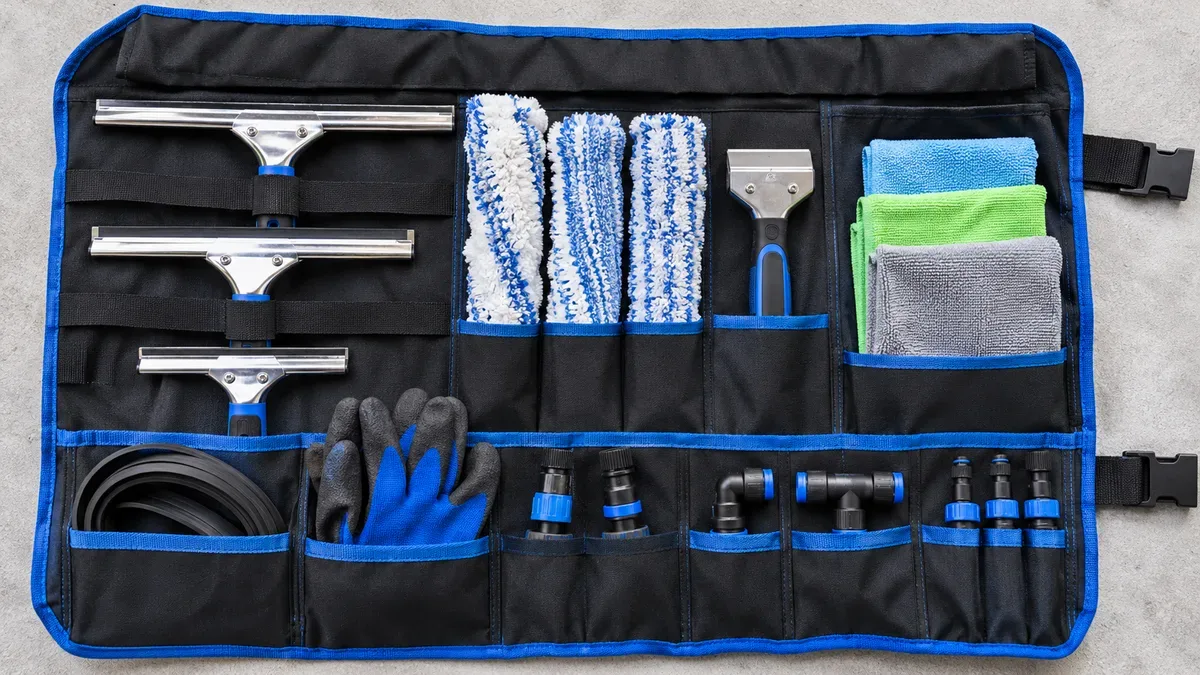
A window cleaning tool roll can store the smaller equipment used during regular glass-care work. However, capacity varies greatly between designs. Check the pocket dimensions before buying, especially if you use long handles or wide channels.
Core Glass-Cleaning Tools
Most suitable organisers can hold squeegees, replacement channels, washer sleeves, T-bars, scrapers and razor holders. Vertical sleeves work well for handles, while wider compartments can hold channels and washer tools. A protected pocket should hold scrapers and razor-related equipment separately.
For example, store a daily-use squeegee in an external sleeve. Place replacement channels in a longer internal pocket. Then keep the scraper inside a reinforced section with a covered edge or secure closure.
Detailing Supplies and Consumables
Small detailing tools often disappear inside deep cleaning bags. A roll organiser can give microfibre cloths, lint-free towels, glass-safe brushes, corner tools and polishing pads their own spaces. Open sleeves allow wet items to breathe, while zipped pockets protect dry supplies.
You can also carry replacement rubber, scraper blades, clips, small bottles, gloves and protective covers. However, keep sharp spares inside a closed compartment. Loose blades should never share an open pocket with cloths or your hands.
Water-Fed Pole Accessories
Some larger organisers can hold compact water-fed pole accessories. These may include hose fittings, brush parts, jets, connectors, clamps and small maintenance items. Therefore, they can complement a water-fed setup without replacing the main pole bag or equipment case.
Before purchasing, measure each accessory and check the pocket depth. Small connectors can fall from oversized sleeves during transport. Elastic loops or zipped compartments may provide better control for these lightweight parts.
Safety and Support Items
Depending on the layout, you may store work gloves, protective eyewear, small first-aid supplies and warning accessories. Keep these items clean and separate from used cloths or sharp tools. Additionally, avoid placing anything inside the organiser that could leak or react with its material.
Concentrated cleaning products require suitable sealed containers. A tool roll should not replace a chemical storage system. For general chemical handling guidance, consult Safe Work Australia’s chemical safety information.
What Should Stay Outside the Roll?
Extension poles, buckets and bulky water-fed equipment usually need separate storage. Large brushes may also require a dedicated tube, case or vehicle compartment. Forcing oversized items into a roll can strain stitching and prevent the organiser from closing safely.
A practical packing layout might separate equipment into four groups:
- Wet tools: washer sleeves, damp cloths and rinsed detailing tools in ventilated sleeves.
- Sharp tools: scrapers, blades and razor holders inside guarded compartments.
- Dry cloths: lint-free towels and polishing pads in clean, closed pockets.
- Spare parts: rubber, clips, jets, connectors and gloves inside zipped storage.
Essential Design Features to Compare Before Buying
The right organiser should suit your tools, transport routine and working conditions. Compare the design as a complete system rather than focusing only on pocket count. A high number of compartments does not help if they are too narrow or difficult to access.
Compartments and Layout
Look for dedicated spaces for squeegees, scrapers, cloths, spare rubber, bottles and small accessories. Open sleeves offer fast access, while zipped pockets protect small parts. Additionally, vertical slots can prevent long handles from shifting during transport.
Consider whether the layout matches your actual routine. If you use one squeegee repeatedly, keep it near the outside edge. If you carry many spares, choose a design with secure compartments rather than several shallow loops.
Size and Capacity
Match capacity to the number, length and bulk of your tools during a normal shift. A compact roll may suit essential equipment, but it can become uncomfortable when overloaded. Conversely, a large organiser may waste space if you carry only four or five items.
Measure your longest squeegee, T-bar and replacement channel before buying. Also check handle thickness, because narrow loops may not accept wider grips. Therefore, product dimensions matter more than general labels such as small, medium or large.
Closures and Durability
Roll straps, buckles, hook-and-loop fasteners, zips and snap closures each have advantages. Straps and buckles can handle repeated opening, while zips offer better protection for small parts. Hook-and-loop closures provide quick access but may collect lint over time.
Assess reinforced stitching, strong webbing, bar-tacked stress points and protected edges. Quality hardware should feel secure without adding excessive weight. However, durability also depends on how you load, clean and dry the organiser.
Portability and Comfort
Check for padded handles, adjustable shoulder straps, belt loops and trolley straps. A balanced organiser should remain stable when carried. It should not swing heavily, snag on doorways or press sharp tools against your body.
Meanwhile, compatibility with cleaning carts can make larger jobs easier. Some cleaners prefer a roll inside a trolley, while others carry it separately. Choose the attachment method that suits your regular site access and transport distance.
Material Performance and Maintenance
Prioritise waterproof or water-resistant materials that tolerate ordinary moisture and cleaning conditions. Chemical-resistant synthetic fabrics may offer easier wiping and better protection from splashes. Lightweight materials reduce carrying strain, but very thin fabric may tear under heavy use.
Also compare washable surfaces, replacement parts, repair options, warranty length and supplier support. A longer warranty does not guarantee better construction, but it may indicate clearer after-sales support. Ask whether the organiser can be repaired instead of replaced when one strap fails.
Buyer Comparison Table
| Storage option | Capacity | Portability | Tool access | Wet-tool handling | Protection | Best use |
|---|---|---|---|---|---|---|
| Tool roll organiser | Low to medium | Excellent | Very quick when open | Good with ventilated sleeves | Good for smaller tools | Mobile window-cleaning kits |
| Traditional tool bag | Medium to high | Good | Can require searching | Limited without separation | Moderate | Mixed equipment and larger tools |
| Bucket | Medium | Good for short moves | Quick for open tools | Suitable for wet items | Low for sharp tools | On-site water and active cleaning |
| Belt pouch | Low | Excellent during work | Immediate | Limited | Low to moderate | Frequently used hand tools |
| Cleaning caddy | Medium to high | Moderate | Good open access | Moderate | Moderate | Indoor cleaning stations |
Choosing the Right Size and Layout for Your Workflow
Compact organisers suit DIY users, small residential jobs and cleaners carrying only essential tools. They usually fit one or two squeegees, a washer, scraper, cloths and small spares. Therefore, they work well for mirrors, shower screens and occasional glass maintenance.
Medium organisers suit regular window-cleaning rounds with multiple squeegees, washers, scrapers and cloths. They offer more separation without becoming difficult to carry. This size often suits cleaners who complete several standard residential jobs daily.
Large organisers can support professional teams, commercial contracts and workflows requiring more spares. They may accommodate water-fed pole accessories, extra channels and maintenance items. However, increased capacity can encourage overpacking and create unnecessary carrying weight.
Measure Before You Buy
Measure tool length, handle thickness and channel width before choosing a model. Pay particular attention to long squeegees, T-bars and replacement channels. Product photographs can make pockets look larger than they are.
Additionally, consider the closed size inside your vehicle or cleaning trolley. An organiser that fits the tools may still be inconvenient if it blocks other equipment. Leave enough room for closures to fasten without forcing the material.
Build the Layout Around Your Routine
Use vertical slots for handles, zipped pockets for small parts and open sleeves for wet tools. Keep frequently used items near the front or outer edge. Secure sharp equipment separately, then group spares by type.
For example, place daily squeegees on one side and washers on the other. Keep dry cloths in a clean internal pocket. Store replacement rubber, clips and connectors together in a zipped section.
Meanwhile, ask whether one large organiser or two smaller organisers would work better. Two rolls can separate wet equipment from dry supplies. They can also divide everyday tools from specialist water-fed accessories.
Do not overload the organiser beyond its practical capacity. Excessive weight can strain stitching, reduce portability and make carrying uncomfortable. A smaller, well-organised roll often works better than a large bag packed without a clear system.
Use, Cleaning and Maintenance Tips for Longer Service Life
Empty the organiser after each shift. Remove debris, loose blades, used cloths and wet sleeves before storing it. This simple habit helps you find missing tools and prevents moisture from remaining inside closed compartments.
Rinse or wipe surfaces according to the material manufacturer’s instructions. Use a mild cleaner that will not weaken coatings, fabric or stitching. Avoid aggressive chemicals unless the supplier confirms compatibility.
Allow the organiser and wet tools to dry fully before rolling or closing them. Moisture trapped inside can create odours, mildew and corrosion on metal components. Therefore, open the roll in a ventilated area after wet work.
Inspect the Organiser Regularly
Check seams, straps, closures, pockets and sharp-tool guards during routine maintenance. Look for fraying webbing, loose stitching, stretched loops and damaged zips. Early repairs may prevent a scraper or channel from falling out during transport.
Store the organiser in a dry, ventilated location away from prolonged heat and direct sunlight. Keep it away from aggressive chemicals that could damage synthetic coatings. Also avoid placing heavy equipment on top of the closed roll.
Know When to Replace It
Replace the organiser when compartments tear, closures fail or sharp tools no longer remain secure. A damaged pocket can expose other equipment to scratches or loose blades. Similarly, failed straps may create a drop hazard on stairs or busy sites.
Domestic users can follow the same principles with a smaller compact organiser. Homeowners may store a squeegee, washer, scraper, microfibre cloths and mirror-care supplies together. This approach keeps occasional glass, shower-screen and mirror maintenance simple.
Conclusion
A glass cleaning tool roll organiser can improve tool access, portability, protection and workflow consistency. The best option depends on your tool sizes, storage capacity, material quality, compartment layout and transport routine. Consider the conditions of each cleaning job before choosing the largest available model.
Choose an organiser that fits your everyday tools and separates wet equipment from sharp items safely. Compare construction, reviews, warranty, maintenance requirements and price before buying. For additional product and accessory information, visit Sweet Puff Australia and explore the available collections.