Wondering whether a perforated Swiss-style chamber can deliver smoother filtration than a traditional water pipe? The Swiss percolator water pipe design uses carefully arranged openings to split smoke or vapour into smaller bubbles. However, buyers often struggle to compare Swiss, honeycomb, tree, inline, and showerhead percolators. This guide explains airflow, cooling, cleaning, sizing, quality markers, safety, and buying considerations for Australian adults.
What Is a Swiss Percolator Water Pipe Design?
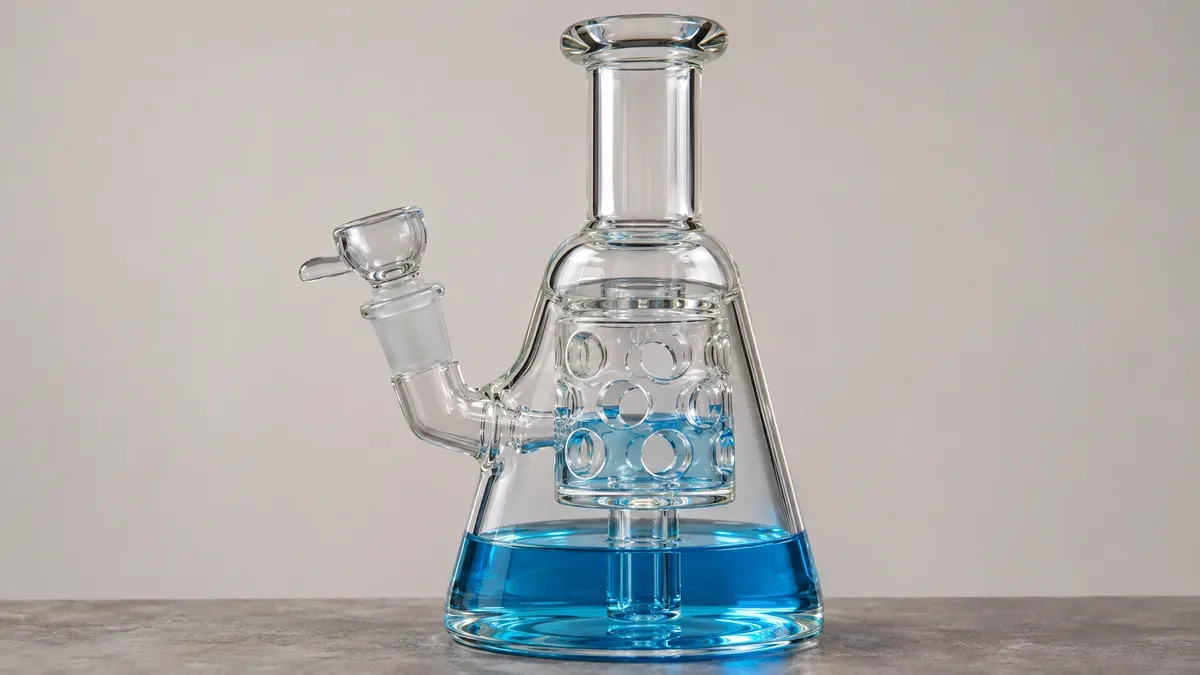
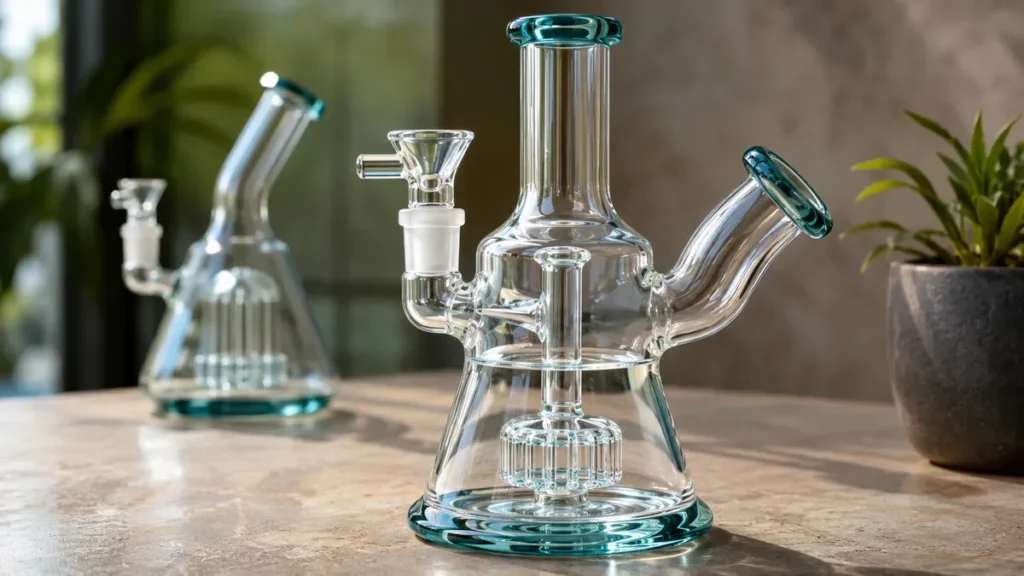
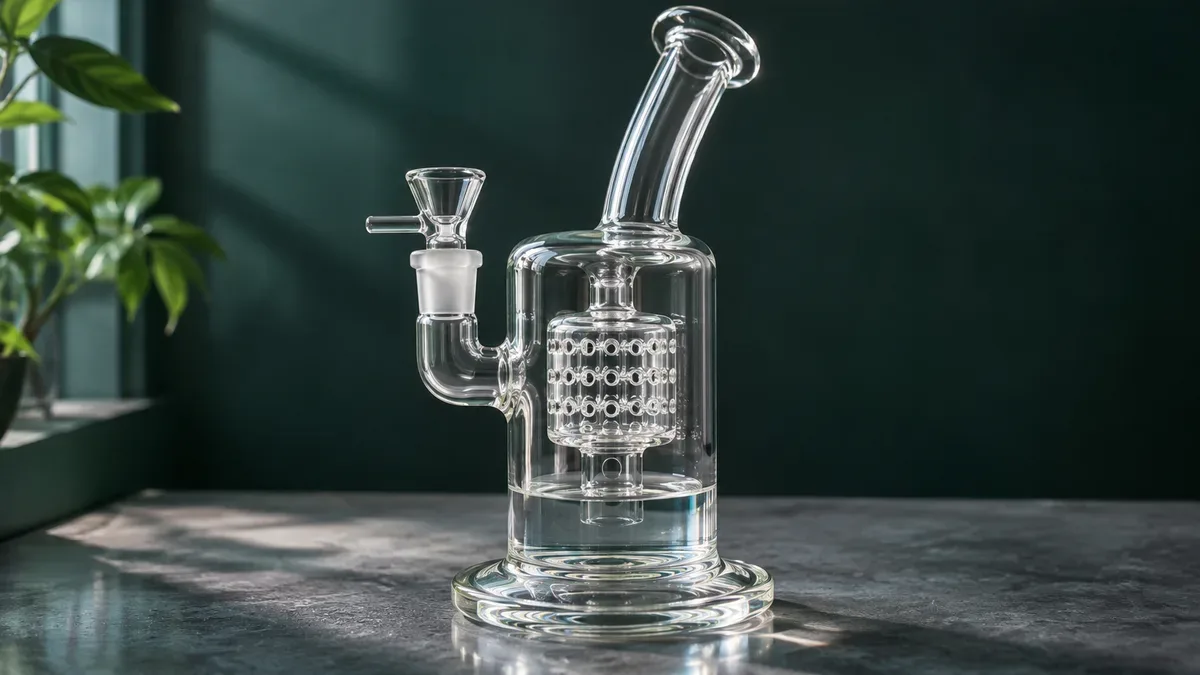
A Swiss percolator water pipe features a perforated glass chamber inspired by the holes in Swiss cheese. Smoke or vapour passes through these openings before travelling through the water. As a result, the stream breaks into many smaller bubbles during each draw.
The name comes from the chamber’s distinctive appearance. Instead of using only a single slit or branching arm, the design often displays several circular or irregular openings across the glass. Therefore, the chamber becomes both a functional filter and a visible design feature.
Common Swiss Percolator Variations
Swiss percolators appear in several configurations. A single-chamber model keeps the airflow path relatively simple. Meanwhile, a multi-chamber design sends smoke through additional water sections for more diffusion.
- Single-chamber Swiss perc: Offers a direct layout with fewer components to clean.
- Multi-chamber Swiss perc: Adds another filtration stage and often increases overall size.
- Swiss recycler: Uses recycling water movement to maintain repeated circulation.
- Swiss perc with inline perc: Combines a perforated chamber with horizontal slits.
- Swiss perc with matrix or showerhead filtration: Adds another bubble-producing section.
Specifically, the openings aim to divide the smoke stream into smaller bubbles. Smaller bubbles create more contact between smoke, water, and surrounding air. This process can cool the smoke and reduce some perceived harshness.
However, a Swiss percolator does not guarantee a particular experience. Hole size, water depth, glass quality, chamber shape, and draw technique all affect performance. The design appeals to glassware enthusiasts, collectors, reviewers, and adults comparing filtration styles before purchase.
For a broader selection of glass designs and smoking accessories, explore Sweet Puff Australia’s product categories. Always check the intended use and local rules before buying or using glassware.
How Swiss Perc Diffusion, Cooling, and Airflow Work
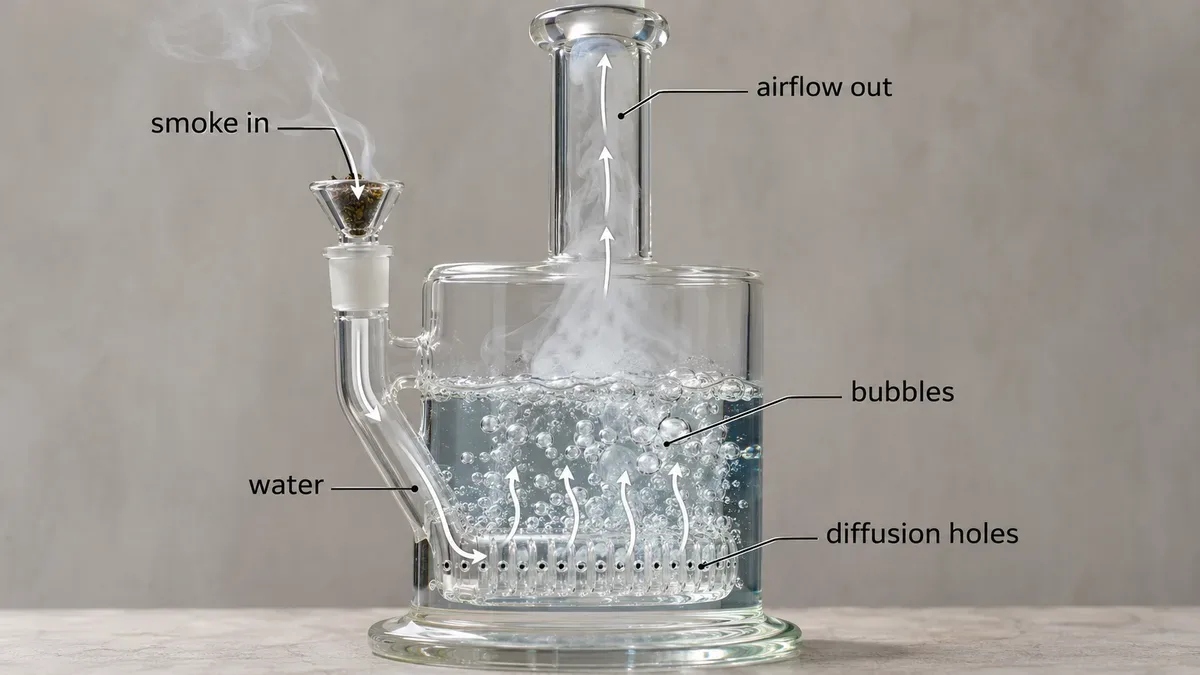
Smoke or vapour usually begins at the bowl before moving through the downstem. The downstem directs the stream into the water-filled Swiss percolator chamber. From there, the openings break the stream into bubbles.
In fact, the bubbles increase contact with the surrounding water. That contact can cool the smoke and make the draw feel less abrasive. However, water filtration does not remove every harmful compound from smoke or vapour.
Hole size plays an important role. Larger holes usually allow a more open path, while smaller openings can create finer bubbles. Additionally, a high hole count can increase diffusion but may also increase resistance.
Chamber geometry matters just as much. A broad chamber may give bubbles more room to expand. Conversely, a narrow chamber can concentrate the flow and create a tighter draw.
Why Water Level Changes the Draw
Water depth affects both filtration and airflow. Too little water may leave some openings uncovered, reducing bubble production. Too much water can make the draw feel restricted and encourage splashback.
Therefore, begin with a small amount of clean water. Add more gradually until the relevant openings sit just below the surface. Gentle test draws help you find a balance between bubbling, comfort, and water carryover.
More diffusion does not automatically create a better experience. Dense perforation may require stronger inhalation, especially when the chamber contains several filtration stages. Meanwhile, aggressive drawing can pull water towards the mouthpiece.
Several other parts influence airflow. These include the chamber size, downstem angle, joint diameter, mouthpiece shape, and total water volume. A wide joint and simple path may feel more open than a narrow, multi-stage setup.
As a result, two Swiss percolators with similar hole patterns may perform differently. One may feel smooth and open, while another may feel tight and bubbly. The quality of the glasswork and the accuracy of the water level often explain the difference.
Do Swiss percolators provide smoother and cooler filtration? They can, especially when the openings, chamber, and water level work together. However, the result depends on design quality, maintenance, draw technique, and personal preference.
Swiss Percolator Advantages and Potential Drawbacks
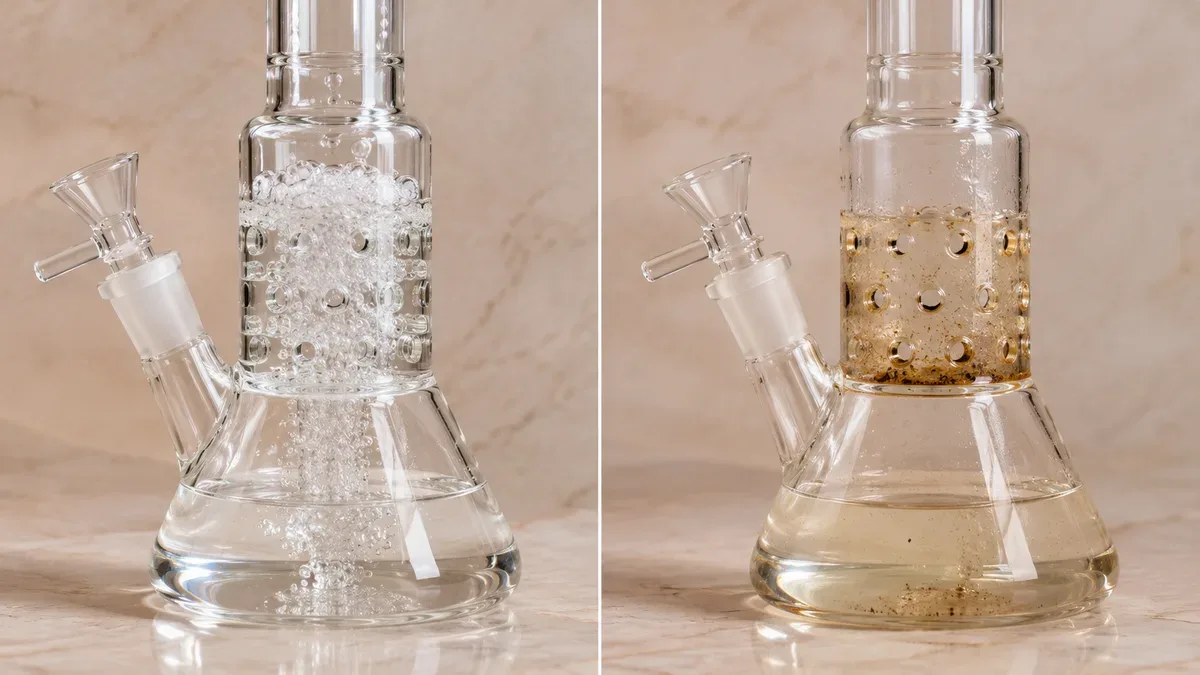
A well-made Swiss cheese water pipe design offers several appealing qualities. Its perforated chamber creates visible bubbling and adds a distinctive look to the piece. Additionally, the water can cool the smoke and reduce some perceived harshness.
- Effective bubble diffusion through multiple openings.
- Cooling from increased smoke-to-water contact.
- Distinctive visual appeal for design-focused buyers.
- Potentially balanced airflow with efficient chamber geometry.
- Strong collector interest because each design can look different.
Moreover, a balanced chamber can combine filtration with an engaging visual experience. The downstem directs the stream into the chamber, while the openings spread the bubbles across the water. This layout can feel more dynamic than a basic single-slit diffuser.
However, Swiss percolators also create practical challenges. Small openings can collect residue, particularly when the piece remains dirty for long periods. Therefore, owners usually need more regular cleaning than they would with a simple straight-tube design.
- Splashback when the water level sits too high.
- Water carryover during strong or rapid draws.
- Residue buildup inside difficult-to-reach openings.
- Higher cleaning demands than simpler percolators.
- Fragile glass sections and additional breakage points.
- Restricted airflow in overly dense designs.
Additional chambers can increase filtration, but they also increase drag and maintenance time. Similarly, combined percolators may contain more delicate welds and narrow passages. As a result, they require careful handling and safe storage.
Most importantly, smoother filtration does not make smoking or vaping harmless. Water does not remove all risks associated with inhaling smoke or heated substances. For reliable health information, read the healthdirect information about cannabis risks.
Swiss Percolator Versus Honeycomb, Tree, Inline, and Showerhead Percolators
Each percolator style creates bubbles differently. Therefore, the best option depends on your preferred draw, cleaning tolerance, portability, and budget. No single design suits every adult buyer.
| Percolator type | Diffusion style | Typical airflow | Cleaning and durability | Visual character |
|---|---|---|---|---|
| Swiss | Perforated chamber creates broad bubble diffusion | Moderate to high resistance, depending on holes | Moderate to high cleaning demand | Distinctive, sculptural, and design-focused |
| Honeycomb | Many tiny holes create extremely fine bubbles | Often tighter because of dense perforation | Harder to unclog and clean thoroughly | Flat, technical, and highly patterned |
| Tree | Branching arms provide several diffusion paths | Balanced, but arms may restrict flow | Delicate arms can collect residue | Detailed and intricate |
| Inline | Horizontal slits diffuse smoke directly | Often open and relatively direct | Usually simpler to rinse | Minimal and functional |
| Showerhead | Downward or radial openings spread bubbles | Generally balanced | Moderate maintenance with fewer delicate parts | Compact and practical |
| Matrix | Multiple small openings create broad bubbling | Moderate to restricted | Can require careful rinsing | Dense and modern |
A honeycomb percolator may suit buyers who prioritise fine bubbling. However, the dense surface can create more resistance and make clog prevention difficult. A tree percolator offers several diffusion paths, although its arms need careful handling.
Meanwhile, an inline percolator often provides a direct airflow path. Its horizontal slits may feel open, depending on the model and water level. Showerhead designs can provide balanced bubbling with a relatively straightforward structure.
Swiss percolators sit between functional and decorative design. They can deliver versatile diffusion, but their chambers may demand more patience during cleaning. Therefore, choose based on smoothness, draw openness, portability, maintenance, and price.
How to Choose the Best Swiss Percolator Water Pipe
Start by matching the pipe size to your intended use. Compact pieces suit portability and easier storage. Medium designs often balance stability, water volume, and everyday handling.
Larger pieces may provide more water capacity and a stable base. However, they need more storage space and can become heavier or more fragile. Therefore, size should reflect your room, transport needs, and cleaning routine.
Assess Glass Quality and Construction
Borosilicate glass remains a popular material because it handles temperature changes better than ordinary glass. Thickness also matters, especially around the base, joints, and percolator chamber. However, thicker glass still requires careful handling.
- Look for even glass without visible ripples or thin spots.
- Check for clean, consistent welds around joints and chambers.
- Choose a stable base that does not wobble easily.
- Inspect the mouthpiece for comfort and smooth finishing.
- Confirm that the chambers sit straight and align correctly.
- Check that the airflow path remains unobstructed.
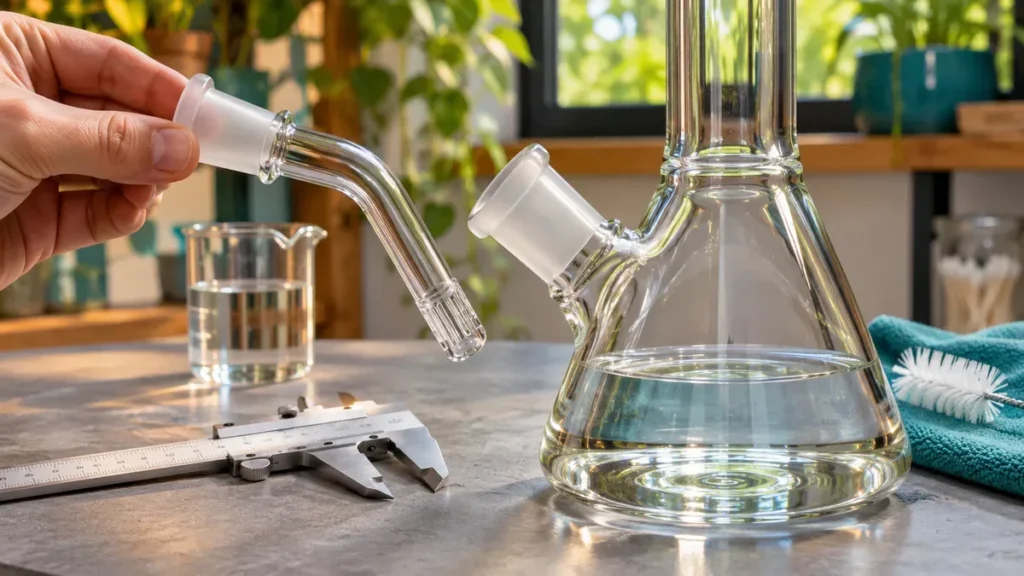
Additionally, consider the joint diameter and downstem configuration. A compatible joint makes it easier to replace bowls, adapters, or other parts. Replacement-part availability can protect your investment if a small component breaks.
Match Complexity With Maintenance
A beginner may prefer a simple single-chamber Swiss design. It usually has fewer passages, fewer delicate sections, and a lower cleaning burden. More experienced buyers may enjoy multi-chamber or combined percolator layouts.
However, chamber complexity often increases draw resistance, cleaning time, and breakage risk. Ice-pinch features may provide extra cooling space, while splash guards can help manage water movement. Reclaim compatibility may also matter for buyers who want easier residue collection.
Consider the bowl size, removable parts, mouthpiece shape, and base width. A comfortable mouthpiece can make a noticeable difference during regular use. Meanwhile, a broad base can reduce accidental tipping on a stable surface.
Buyer Checklist and Pricing Tiers
- Intended use and preferred piece size.
- Portability and available storage space.
- Preferred diffusion strength and airflow.
- Cleaning access and replacement-part availability.
- Glass thickness, base stability, and weld quality.
- Budget, warranty, seller reputation, and return policy.
Entry-level models generally focus on simpler construction and accessible pricing. Mid-range pieces may offer thicker glass, cleaner welds, and more refined airflow. Premium handcrafted designs can command higher prices because of labour, complexity, and brand reputation.
Nevertheless, price alone does not prove quality. Poor signs include uneven glass, stress points, unstable bases, rough joints, misaligned chambers, and inconsistent welds. Specifically, ask the seller about damaged deliveries, returns, warranty coverage, and compatible replacement parts.
Browse Sweet Puff Australia’s shop to compare available glassware and accessories. You can also review listed product brands when brand-specific construction or warranty information matters.
Setup, Water Levels, Cleaning, Safety, and Final Buying Advice
Begin setup with a small amount of clean water. Add enough to cover the relevant percolator openings without allowing bubbling water to reach the mouthpiece. Therefore, test the level gradually rather than filling the chamber immediately.
Use gentle draws while checking the bubbling pattern. If the draw feels tight or water rises too high, remove a small amount. Meanwhile, if the openings remain dry, add water in small increments.
Keep the pipe upright during use and avoid forceful inhalation. Strong draws can increase splashback and pull water through the mouthpiece. Additionally, inspect the glass before every use for cracks, chips, or loose components.
Cleaning and Storage
Empty used water promptly after each session. Rinse the pipe with warm water, then use a suitable glass-safe cleaning solution. Soft brushes and pipe cleaners can help reach accessible openings without scratching the glass.
Rinse thoroughly after cleaning and allow the piece to dry fully. Frequent rinsing prevents residue from hardening inside perforated chambers. Moreover, avoid leaving standing water inside the pipe for extended periods.
- Store the piece on a stable, level surface.
- Keep it away from table edges, heaters, and direct heat.
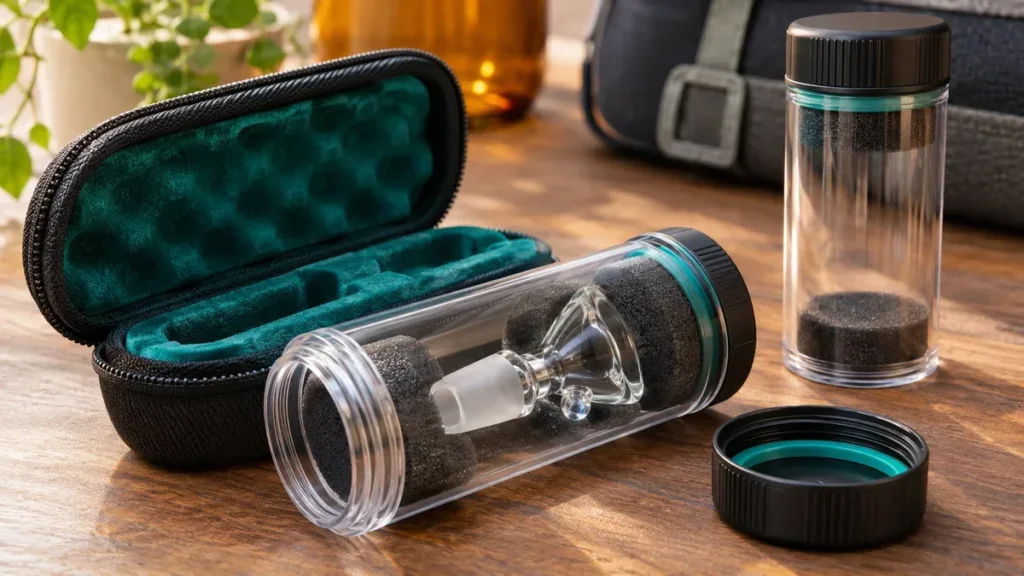
- Use protective padding when transporting it.
- Keep accessories organised and check their compatibility.
- Do not use glassware with visible cracks or chips.
Useful accessories may include compatible bowls, adapters, reclaim catchers, ash catchers, cleaning plugs, soft brushes, and protective cases. However, every added component can change airflow, water movement, or draw resistance.
Use glassware only where lawful and follow local age restrictions. Never drive or operate equipment while impaired. Australian rules vary, and the Alcohol and Drug Foundation explains drug-driving risks clearly.
Swiss percolator designs suit adults who value distinctive glasswork, visible bubbling, and balanced diffusion. However, an inline or showerhead model may suit buyers who want simpler cleaning and more open airflow.
Similarly, a honeycomb design may appeal to buyers seeking very fine diffusion. A simpler piece can also offer easier storage, lower breakage risk, and fewer maintenance demands. For additional buying information, visit the Sweet Puff Australia blog.
Conclusion
Swiss percolator water pipes use a perforated chamber to create bubble diffusion, cooling, and water contact. Their performance depends on hole design, water level, chamber geometry, airflow, craftsmanship, and maintenance.
They suit buyers who value distinctive design and engaging filtration. However, simpler inline, showerhead, or honeycomb percolators may suit different priorities, including open airflow, portability, or easier cleaning.
Before buying, compare chamber design, airflow, glass quality, cleaning access, warranty, and total price. Finally, choose a legally compliant piece from a reputable seller and keep it stored safely.
Sweet Puff Australia brings together glass water pipes, accessories, and design-focused products for adults comparing different options. Explore the available collections and product information before making your choice.