
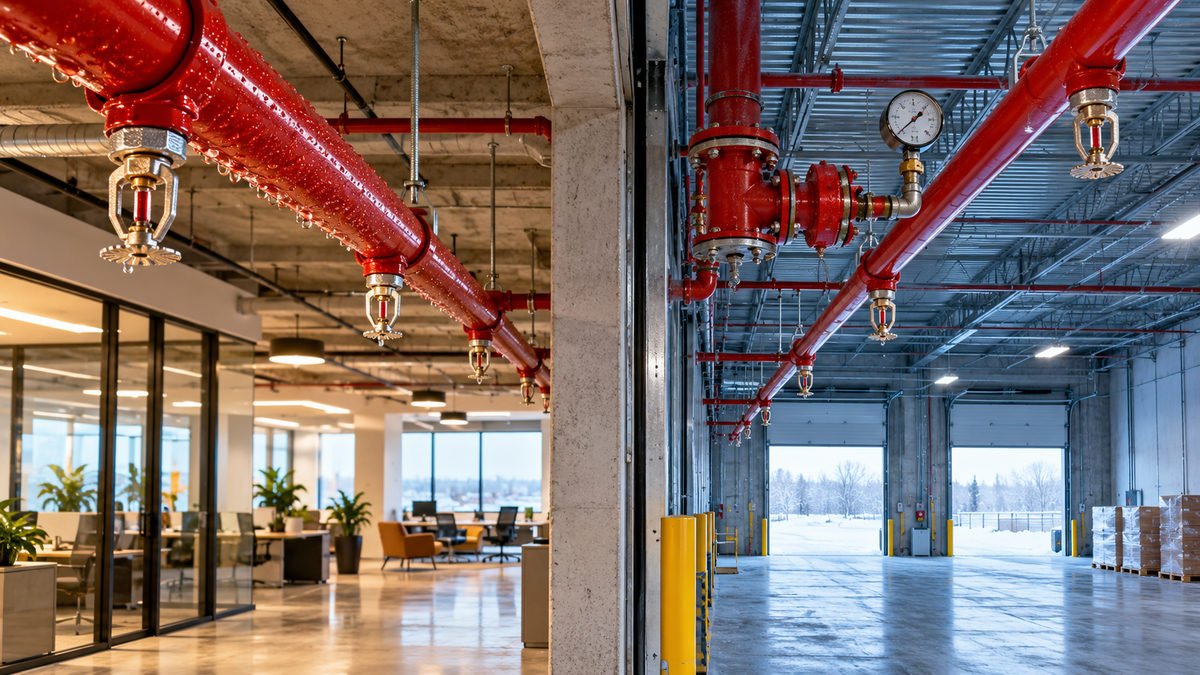
Choosing the wrong fire sprinkler system can increase installation costs, delay fire response, or create freeze-related failures. When comparing water pipes vs dry pipes, property owners must consider climate, building use, hazard level, and budget. Wet pipe systems suit heated spaces and offer fast response. Dry pipe systems protect areas where freezing temperatures could damage water-filled piping.
Therefore, the right choice depends on more than the purchase price. This guide compares operation, response time, maintenance, water damage risks, applications, costs, and code considerations before you select a system.
1. Water Pipes vs Dry Pipes: What Is the Difference?
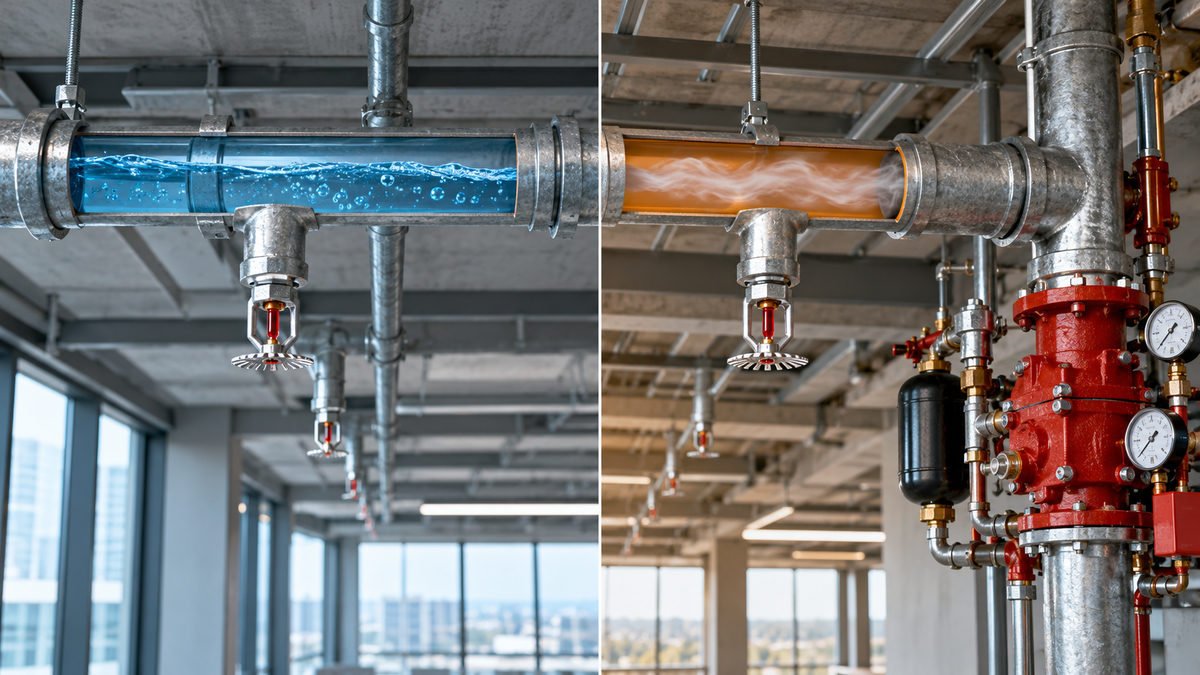
Water pipes, commonly called wet pipe sprinkler systems, contain water under pressure at all times. Each pipe connects to automatic sprinkler heads positioned throughout the protected area. For general plumbing pipes, see our water pipes Australia guide.
During normal conditions, water remains ready behind every sprinkler head. When heat reaches a sprinkler’s activation temperature, that individual head opens and releases water immediately.
In contrast, a dry pipe sprinkler system contains pressurised air or nitrogen instead of water. A dry pipe alarm valve holds the water supply outside the piping network.
When the system operates, heat opens a sprinkler head first. Escaping air reduces pressure inside the pipes, allowing the alarm valve to open. Water then enters the piping and travels towards the activated sprinkler.
Both systems use several important components. These typically include sprinkler heads, alarm valves, supervisory devices, water supplies, pressure controls, and monitoring equipment.
- Wet pipe systems: Usually use waterflow switches, alarm valves, gauges, and supervised control valves.
- Dry pipe systems: Add compressors, nitrogen equipment, air maintenance devices, dry valves, and low-pressure alarms.
- Both systems: Require suitable pipework, correctly rated sprinkler heads, reliable water supplies, and compliant monitoring.
Importantly, neither system normally opens every sprinkler head at once. Heat activates individual sprinklers near the fire, helping control or suppress flames in the affected area.
However, a larger fire may activate several heads. The final number depends on fire growth, sprinkler spacing, ceiling height, storage arrangements, and the system’s design criteria.
Key selection factors include building temperature, occupancy, hazard classification, ceiling height, water supply, response time, installation costs, and local fire requirements.
Wet Pipe System Basics
A wet pipe system remains filled with water, making its design relatively simple. It works best where temperatures stay safely above freezing throughout the protected space.
These systems suit many offices, shops, apartments, schools, hospitals, warehouses, and other heated commercial buildings.
Dry Pipe System Basics
A dry pipe system keeps water outside the sprinkler piping until activation. This arrangement protects pipework from freezing in selected cold or semi-exposed areas.
Nevertheless, dry systems require more controls and careful pressure management. They also need additional testing because the valve must operate correctly before water reaches the fire.
For general sprinkler information, property owners can consult the National Fire Protection Association’s sprinkler resources.
2. How Wet Pipe and Dry Pipe Sprinkler Systems Work
Wet Pipe System Operation
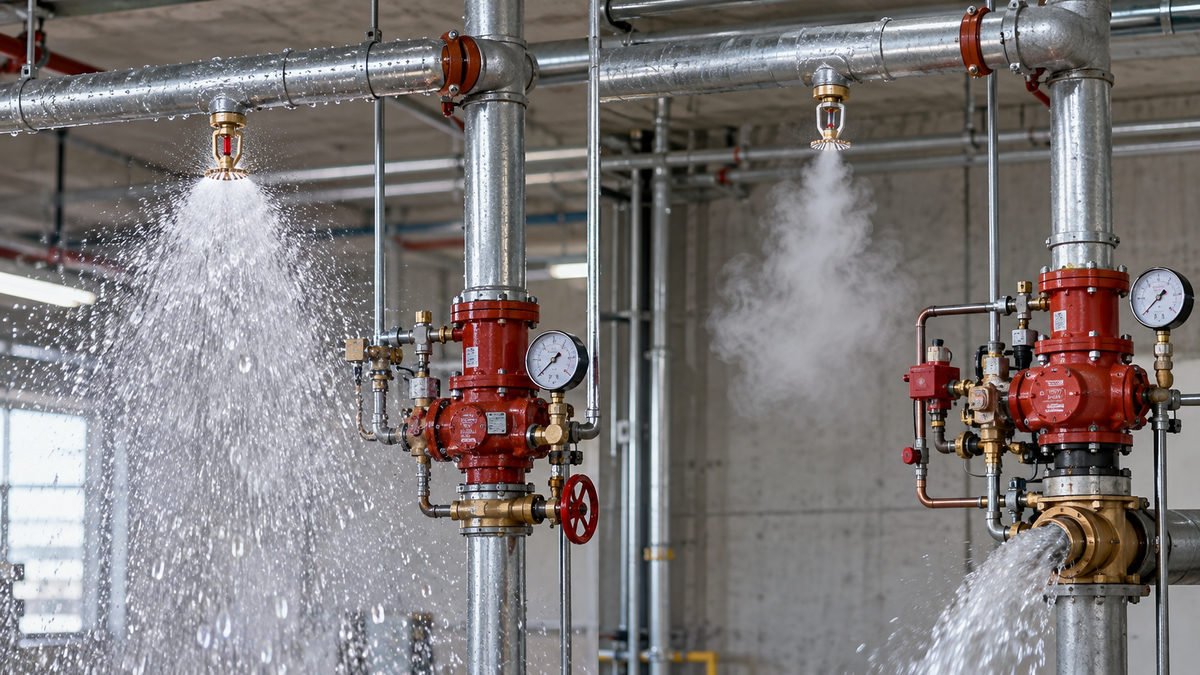
A wet pipe system activates when heat raises an individual sprinkler head to its temperature rating. The glass bulb or fusible element then releases the sprinkler seal. Sprinkler mains still depend on correct pipe sizing.
Immediately, pressurised water flows through the open sprinkler. The sprinkler head distributes water across its designed coverage area, helping control the fire below.
Meanwhile, water movement activates a waterflow switch, alarm valve, or connected supervisory device. The building fire alarm system can then notify occupants and emergency responders.
Because water already sits inside the piping, wet systems usually provide the fastest sprinkler water delivery. This speed can make an important difference during the early growth of a fire.
However, the sprinkler does not activate because smoke reaches it. Heat must reach the sprinkler head’s rated temperature before discharge begins.
Dry Pipe System Operation
A dry pipe system begins with heat activating one or more sprinkler heads. The open head allows pressurised air or nitrogen to escape from the piping.
As air pressure falls, the differential pressure across the dry pipe alarm valve changes. The valve then opens and allows water into the sprinkler network.
Water must travel through the piping before it reaches the open sprinkler head. Therefore, dry pipe systems generally deliver water more slowly than wet pipe systems.
Air compressors maintain the required pressure during normal conditions. Nitrogen generators may reduce oxygen exposure inside the pipes and help manage corrosion.
Air maintenance devices control pressure changes and limit unnecessary compressor cycling. Low-pressure supervisory alarms alert building staff when system pressure falls outside its normal range.
Therefore, dry systems need more operating controls than wet systems. Technicians must check the compressor, air pressure, valve condition, drains, alarms, and water delivery.
Importantly, only heat-activated sprinkler heads normally open. The entire system does not discharge water simply because one sprinkler activates.
3. Wet Pipe vs Dry Pipe Sprinkler System: Benefits and Limitations
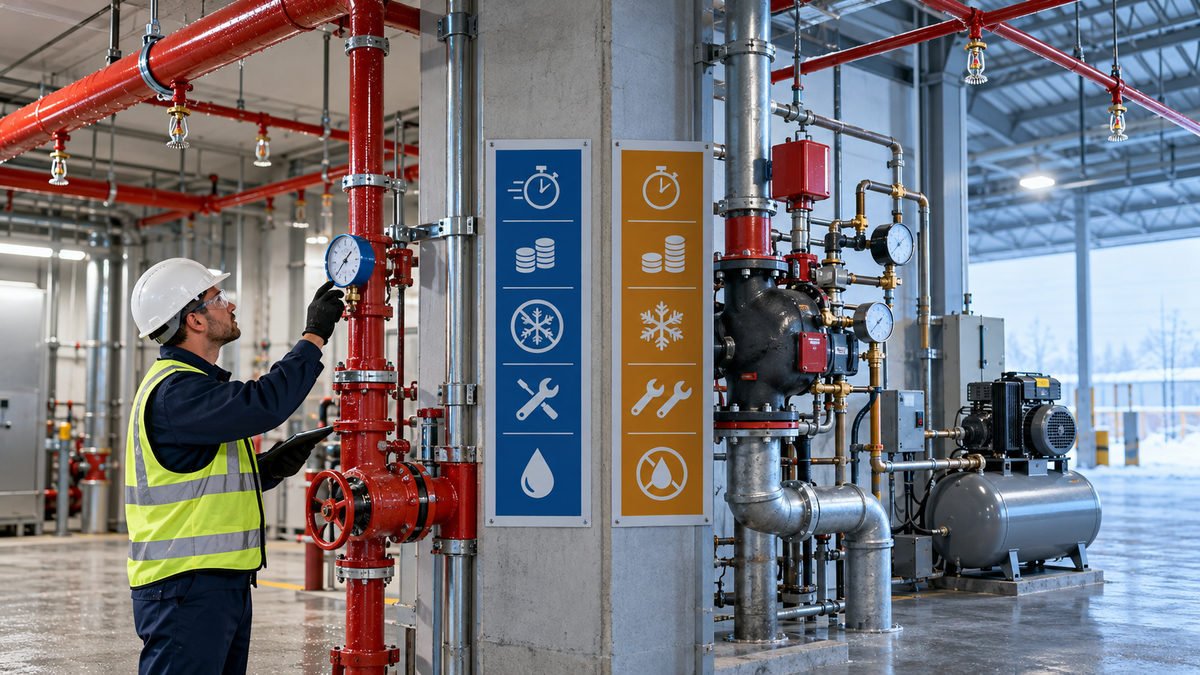
Wet Pipe Sprinkler Advantages
Wet pipe systems offer a simple design with fewer components. Consequently, installation often requires less specialised equipment and fewer control arrangements.
Water remains available at every sprinkler head. As a result, the system usually provides fast discharge after a fire activates a sprinkler.
Wet systems also tend to cost less to install. Routine inspections often feel more straightforward because the system does not rely on compressors or dry valve air pressure.
Additionally, many fire protection contractors service wet systems regularly. This broad availability can simplify maintenance, repairs, spare parts, and future modifications.
Wet pipe systems commonly protect:
- Heated houses and apartment buildings.
- Offices, retail stores, and schools.
- Hospitals and healthcare facilities.
- Commercial buildings and temperature-controlled warehouses.
Wet Pipe Sprinkler Limitations
The main limitation involves freezing. Water-filled pipes can freeze in unheated attics, loading docks, exterior areas, parking structures, garages, and cold storage spaces.
Frozen water can split pipework, damage valves, and prevent sprinklers from operating. Even a small break may create significant water damage after temperatures rise.
Wet systems can also experience concealed leaks, accidental discharge, corrosion, or damage from impact. Therefore, reliable heating and approved freeze protection remain essential.
Dry Pipe Sprinkler Advantages
Dry pipe systems suit locations where temperatures may fall below freezing. They protect unheated or partly exposed spaces without storing water inside the sprinkler piping.
Common applications include warehouses, parking garages, vehicle storage buildings, loading bays, industrial facilities, aircraft hangars, and cold climates.
Air or nitrogen inside the pipes reduces the immediate risk of frozen water within the protected network. However, the surrounding building still needs proper temperature monitoring.
Dry Pipe Sprinkler Limitations
Dry pipe systems usually cost more to install. They require specialised valves, compressors, air controls, supervisory alarms, and additional engineering.
Water delivery also takes longer because the system must release air, open the dry valve, fill the pipework, and reach the sprinkler head.
Furthermore, dry systems need more service attention. Air leaks, low-pressure alarms, compressor failure, valve trips, internal corrosion, and trapped water can affect reliability.
Dry systems reduce freeze risk, but they do not eliminate water damage. They also cannot remove every corrosion concern, especially where moisture collects at low points.
4. Applications, Climate, Cost, and Maintenance Comparison
Suitable Building Environments
Wet pipe systems usually suit buildings with stable indoor temperatures. Heated homes, offices, shops, apartments, schools, and hospitals often benefit from their simplicity. See the pipe materials and durability comparison for corrosion data.
Dry pipe systems suit spaces exposed to outdoor conditions or unreliable heating. Examples include unheated warehouses, parking garages, loading areas, garages, cold rooms, and aircraft hangars.
However, temperature represents only one design factor. Insulation, ceiling height, storage height, occupancy, commodity classification, and fire hazard also affect the decision.
Installation and Ownership Costs
Wet pipe systems generally cost less to install because they use simpler valves, fewer controls, and less specialised equipment.
Dry pipe systems cost more because they require compressors, air or nitrogen controls, dry valves, additional pressure devices, and specialist design work.
Long-term costs also matter. Consider utilities, inspections, replacement parts, repairs, corrosion management, testing, downtime, and emergency call-outs.
Therefore, a cheaper installation may not provide the lowest ownership cost. A site-specific assessment should compare the complete lifecycle rather than the initial quotation alone.
Water Damage and Reliability
Both systems can release substantial water when a sprinkler activates. Dry pipe systems mainly reduce freeze-related failures in cold spaces.
False activation can result from damaged sprinkler heads, heat sources, mechanical impact, or system faults. Pressure loss can also trigger alarms or impair system readiness.
Proper design, testing, temperature monitoring, and approved components often matter more than system type alone. Regular maintenance helps identify problems before an emergency occurs.
Inspection and Maintenance Checklist
Qualified professionals should inspect, test, and maintain sprinkler systems according to applicable standards and local requirements. Routine visual checks should include:
- Control valves, gauges, alarms, and supervisory equipment.
- Sprinkler heads, pipework, fittings, and visible corrosion.
- Heating equipment, insulation, and freeze-prone areas.
- Water supplies, access routes, signage, and control rooms.
Dry systems require additional checks for compressor operation, air pressure, nitrogen quality, low-point drains, auxiliary drains, and dry valve condition.
Technicians should also check for trapped water inside dry piping. Water pockets can freeze and create internal damage during cold weather.
Wet systems need water supply checks, valve supervision, leak inspections, corrosion reviews, freeze protection, and waterflow alarm testing.
5. Wet Pipe, Dry Pipe, Preaction, and Other Fire Sprinkler System Types
Wet and dry systems are not the only available sprinkler options. Preaction systems combine sprinkler piping with a separate detection system.
Generally, a detection device must activate before water enters the preaction piping. In some designs, the sprinkler head must also open before discharge occurs.
Consequently, preaction systems can reduce the chance of accidental water release. They may suit data centres, museums, archives, laboratories, and other water-sensitive spaces.
Deluge systems work differently. They use open sprinkler heads or nozzles, allowing water to discharge across an entire protected zone after detection.
Deluge systems suit specialised high-hazard applications where fire may spread rapidly. They require careful hydraulic design and a reliable detection arrangement.
Antifreeze sprinkler systems may protect limited cold areas where regulations permit them. However, the solution concentration must remain within approved limits.
Technicians must also confirm chemical compatibility, system approval, pipe materials, and local design requirements. Incorrect antifreeze mixtures can create safety and compliance problems.
System selection should consider fire risk, expected fire growth, water sensitivity, freezing conditions, response time, and building use.
- Wet pipe: Best for heated spaces requiring simple, fast, and economical protection.
- Dry pipe: Best for areas exposed to freezing temperatures.
- Preaction: Best for sensitive spaces where accidental discharge requires additional control.
- Deluge: Best for specialised hazards requiring widespread water discharge.
- Antifreeze: Best only for approved limited cold areas with suitable design controls.
Licensed fire protection professionals should evaluate alternatives. Purchase price alone cannot account for response time, maintenance, insurance, code compliance, or potential losses.
Local building codes, the authority having jurisdiction, insurance requirements, and applicable sprinkler standards may restrict available options.
In Australia, designers may also need to consider relevant Australian Standards and local fire authority requirements. The final design should satisfy every applicable rule.
6. How to Choose the Right Sprinkler System for Your Property
Choose a wet pipe system when the entire protected area remains reliably heated. This option suits owners prioritising fast response, simpler maintenance, and lower installation costs. Check the Australian water pipe laws before installing.
Choose a dry pipe system when parts of the building may fall below freezing. It can protect unheated, semi-exposed, outdoor, or poorly insulated areas.
Homeowners should assess heated living areas, garages, attics, local climate, water supply, and residential fire requirements.
Offices, shops, apartments, and schools commonly suit wet systems when temperature conditions remain stable. However, car parks, loading zones, and external areas may need separate protection.
Warehouses, parking structures, garages, and industrial buildings require closer review. Storage height, commodity classification, ceiling design, temperature exposure, and fire hazard can change the system requirements.
Local building codes, the authority having jurisdiction, insurance conditions, and applicable sprinkler standards may determine the permitted system.
Before choosing, property owners should complete this checklist:
- Obtain a site-specific fire protection assessment.
- Verify the available water supply and pressure.
- Identify unheated, exposed, or freeze-prone spaces.
- Review occupancy, storage arrangements, and hazard classification.
- Compare installation costs with long-term ownership costs.
- Confirm inspection access and maintenance requirements.
- Hire a licensed installer familiar with local regulations.
Most importantly, final system design must reflect the property’s actual conditions. A generic comparison cannot replace hydraulic calculations, temperature checks, code review, and professional engineering.
Conclusion
Wet pipe systems usually provide the fastest response, simplest design, lower installation cost, and easiest maintenance in heated buildings.
Dry pipe systems provide freeze protection for unheated or semi-exposed spaces. However, they require more equipment, higher investment, additional maintenance, and allowance for delayed water delivery.
Climate, occupancy, hazard classification, building layout, water supply, code requirements, and lifecycle costs should guide the final decision.
Schedule a site-specific assessment with a licensed fire protection professional. They can compare wet pipe, dry pipe, preaction, or other compliant options for your property.
Sweet Puff Australia provides information about water pipes, glass designs, and smoking accessories for adult customers. Explore Sweet Puff Australia to view its broader range and available product information.





