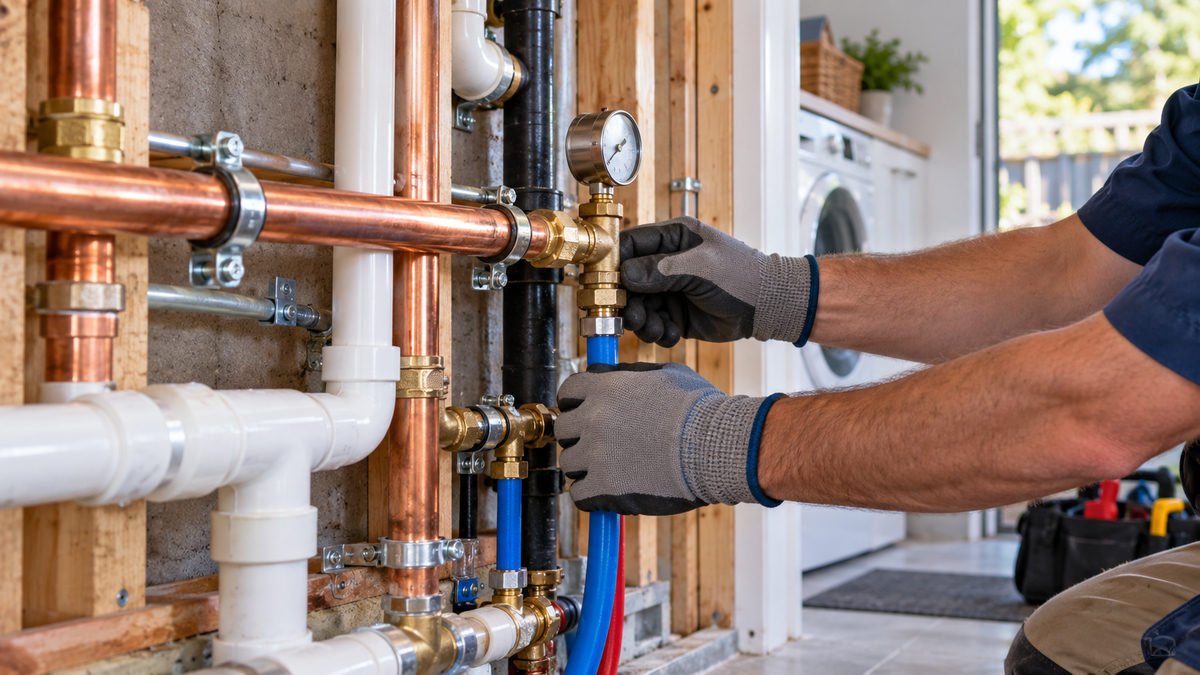
A leaking pipe, low water pressure or sudden burst can turn into an expensive household problem within minutes. This water pipes Australia guide helps homeowners identify pipe materials, compare replacement options and understand basic plumbing requirements. You will also learn about pipe sizes, expected lifespans, repair costs, maintenance and emergency safety. Most importantly, you will know when to call a licensed plumber.
Water Pipes Australia Guide: Choosing the Right Material
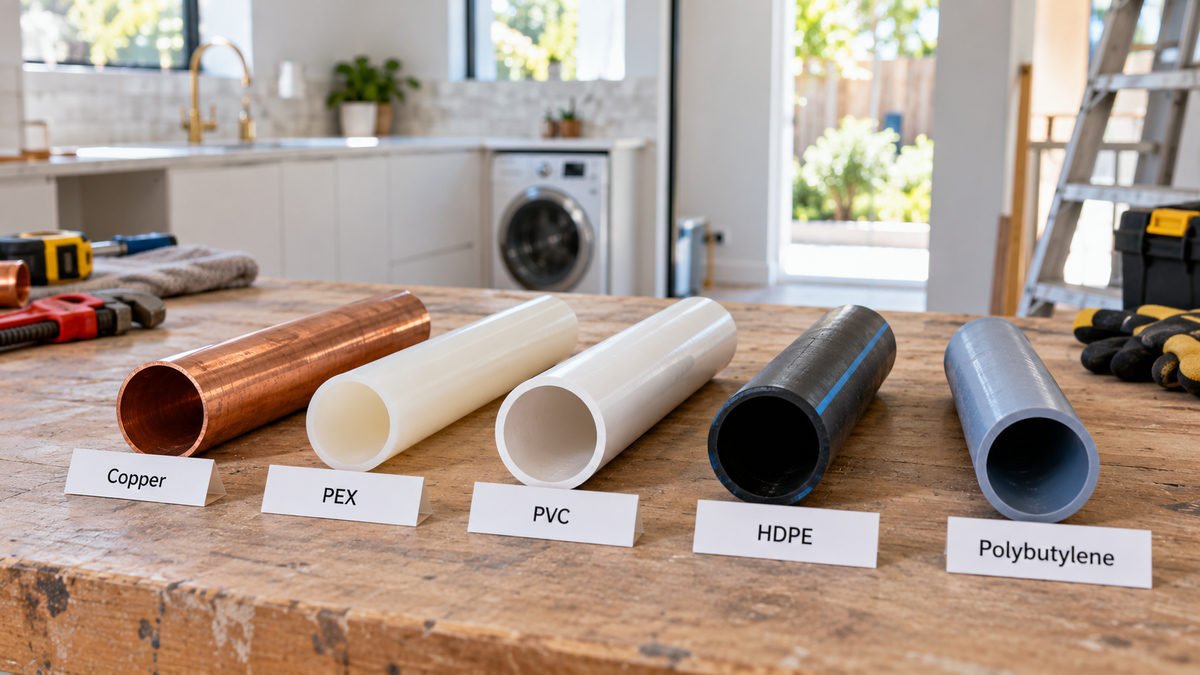
Choosing a pipe is not simply a matter of picking the cheapest option. The right material depends on water temperature, pressure, location, access, soil conditions and local requirements. Additionally, drinking water systems need approved, lead-free components suitable for human consumption. See our pipe materials and durability comparison.
Common Water Pipe Materials
Copper remains popular for exposed indoor plumbing and hot water services. It handles heat well, resists impact and can provide a long service life when water conditions remain suitable. However, aggressive water chemistry may cause corrosion, pinhole leaks or green staining.
PEX is a flexible plastic pipe used widely for domestic water supply. It can run through walls and floors with fewer joints, which helps reduce installation time and potential leak points. However, direct sunlight can damage PEX, so exposed sections need protection.
PVC suits many cold-water, drainage and non-heated applications. It is lightweight, affordable and resistant to many forms of corrosion. Therefore, you must check the product rating before using PVC for drinking water or pressure applications.
HDPE offers flexibility and strength for many underground water services. It can tolerate ground movement better than some rigid materials. Meanwhile, installers must use compatible fittings and follow the manufacturer’s joining instructions.
Polybutylene appears in some older Australian homes. Ageing pipes can become brittle, while fittings may crack or leak. As a result, owners often consider replacement instead of repeated repairs.
Comparing Pipe Materials
| Material | Durability | Cost | Flexibility | Hot-water suitability | Typical installation |
|---|---|---|---|---|---|
| Copper | High when water chemistry suits | Higher | Low | Generally suitable when correctly specified | Soldering or approved mechanical fittings |
| PEX | Good when protected from sunlight | Moderate | High | Suitable products are available | Crimp, clamp or press fittings |
| PVC | Good for suitable applications | Low to moderate | Moderate | Usually limited for heated water | Solvent welding or approved fittings |
| HDPE | High underground performance | Moderate | High | Depends on product rating | Butt fusion, electrofusion or mechanical fittings |
| Polybutylene | Variable in older systems | Replacement cost varies | Moderate | Depends on age and product condition | Older fittings and joining systems |
Drinking water pipes must use products approved for potable water. Therefore, avoid unknown plastic pipe, unmarked fittings and components containing unsafe levels of lead. A licensed plumber can check product markings, compatibility and certification before installation.
Choosing the Best Pipe for Your Project
- Choose copper for durable, exposed indoor work and many heated water applications.
- Choose PEX for flexible renovations, tight spaces and long runs with fewer joints.
- Choose PVC for approved cold-water applications where its rating matches the system.
- Choose HDPE for many underground services and locations affected by ground movement.
- Treat old polybutylene systems as a potential replacement priority.
However, no single pipe material suits every home. Water temperature, pressure, access, budget, expected lifespan and local rules should guide the final decision. For example, PEX may simplify a bathroom renovation, while copper may suit an exposed plant-room connection.
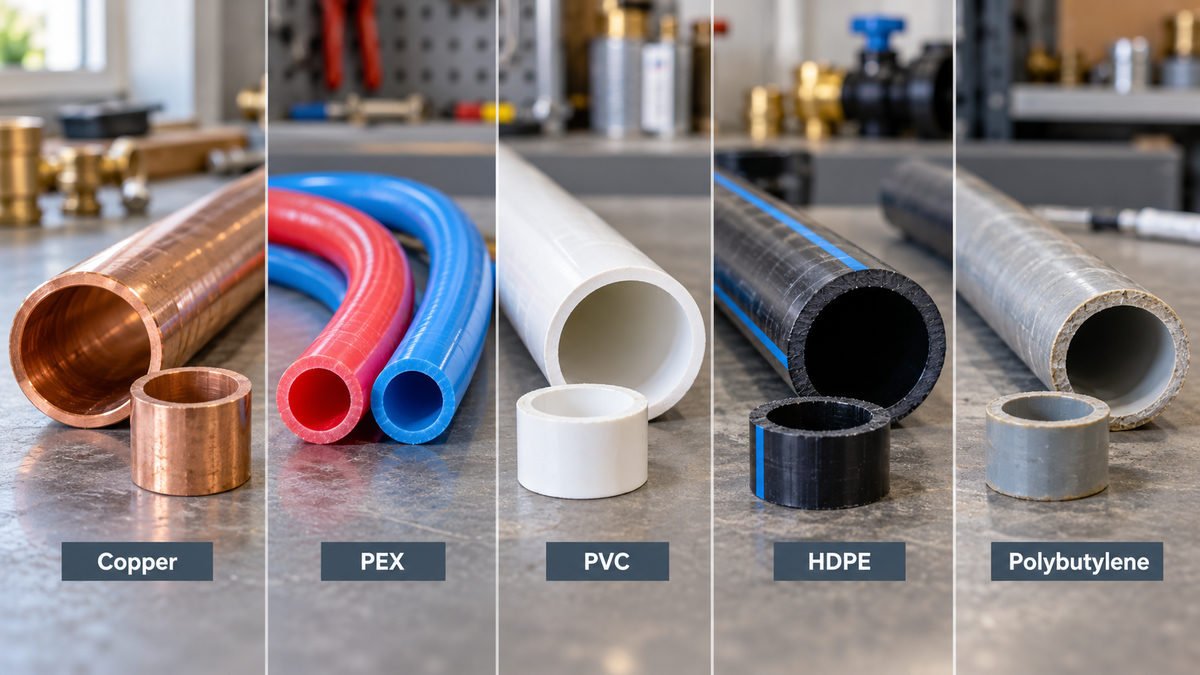
PEX vs Copper Pipes, PVC and Polybutylene Explained
Copper Pipes
Copper offers excellent heat tolerance, good strength and a long service life when installed correctly. It also resists physical damage better than many flexible plastics. However, copper costs more in materials and labour, especially where installers must cut, join and support numerous sections.
Furthermore, copper can corrode in some water conditions. Low pH, high mineral content, poor earthing or unsuitable flow conditions may increase the risk. A plumber can investigate water chemistry and inspect exposed joints before recommending extensive replacement.
PEX Pipes
PEX bends around corners and often needs fewer joints than rigid pipe. Therefore, it can reduce disruption during renovations and make difficult routes easier to install. It also resists many forms of scale and corrosion.
However, PEX needs protection from ultraviolet light, sharp edges, excessive heat and physical damage. Fittings must match the pipe system, and installers must respect bend limits and support spacing. Incorrect fittings can cause leaks even when the pipe itself remains sound.
PVC and HDPE Pipes
PVC commonly suits cold-water, drainage and other approved applications. HDPE offers more flexibility, making it useful for many underground runs. In contrast, PVC remains more rigid and may need careful support around bends and movement points.
Always check the exact product rating. A pipe designed for drainage may not suit pressurised drinking water. Similarly, an underground product may not suit heated water or exposed sunlight.
Polybutylene Pipes
Older polybutylene pipes may appear grey or blue and can occur in walls, ceilings or under floors. With age, the material may become brittle, especially when exposed to heat, chlorine or changing pressure. Fittings can also fail before the pipe visibly deteriorates.
As a result, repeated leaks may justify repiping rather than another local repair. A professional inspection can identify the material without unnecessary disturbance.
Is Copper Better Than PEX?
Copper is not automatically better than PEX. Instead, compare durability, access, water conditions, repairability and budget. Copper may suit exposed areas with high impact risk, while PEX may suit concealed renovation work with limited access.
You can often identify pipes by colour, surface appearance, markings, location and connection method. Copper looks metallic, PEX usually appears coloured or translucent, and PVC often has printed markings. However, visual identification is not conclusive, especially in old or painted installations.
Australian Water Pipe Standards and Plumbing Regulations

Water pipe installation must follow Australian plumbing requirements, approved product rules and local water authority conditions. These requirements protect drinking water, prevent contamination and help ensure that systems remain safe under pressure. For the legal detail, read our Australian water pipe laws overview.
AS/NZS 3500 is the main plumbing and drainage standards series used across Australia and New Zealand. It covers design, installation and performance requirements for water services, heated water, sanitary plumbing and drainage.
Standards can change, and adoption may differ between jurisdictions. Therefore, check the current requirements before work begins. You can review the AS/NZS 3500 plumbing standards overview for useful background.
The National Construction Code, state or territory plumbing laws, local council conditions and water authority rules may also apply. Additionally, certain plumbing products require WaterMark certification before installation. Look for the WaterMark symbol and confirm the product in the official database where required.
Regulated plumbing work commonly requires a licensed plumber. Requirements vary between states and territories, so homeowners should confirm local rules with the relevant regulator, council, water authority or licensed professional.
- Unapproved fittings may fail or contaminate drinking water.
- Incorrect pipe sizing can cause poor flow and pressure loss.
- Cross-connections can allow non-drinking water into a potable supply.
- Poor backflow protection can create serious health risks.
- Non-compliant work may create insurance, resale and repair problems.
Pipe Sizes, Water Pressure, Insulation and Installation Planning
Pipe size affects flow rate and pressure loss. A small pipe may supply one basin comfortably, yet struggle when two showers, a washing machine and a garden tap run together. Learn how to choose a pipe size for your home.
Plumbers consider fixture numbers, pipe length, elevation, incoming pressure, required flow, material and local rules. Longer runs usually create more friction loss. Higher buildings may also need careful pressure planning because elevation reduces available pressure.
Indoor pipes need protection from impact, heat and movement. Outdoor pipes need protection from sunlight, vehicles, gardening tools and temperature changes. Underground pipes need suitable bedding, cover, warning tape and protection from ground movement or tree roots.
Hot water pipes should generally receive suitable insulation. Insulation reduces heat loss, improves energy efficiency and helps maintain water temperature. It can also reduce burn risks where people may contact heated pipework.
Low water pressure can result from several causes. For example, restrictions, leaks, blocked tap aerators, faulty pressure regulators or inadequate supply infrastructure may all reduce flow. Therefore, check simple visible causes first, then arrange professional testing if the problem continues.
Plan pipe routes before closing walls, floors or landscaping. Include accessible isolation valves, inspection points and sensible service routes. Most importantly, consider how a future plumber will reach joints, valves and appliances without major demolition.
Water Pipe Lifespan, Leaks, Repairs and Replacement Costs
Pipe lifespan is a range, not a guarantee. Installation quality, water chemistry, pressure, sunlight, soil, movement and maintenance all affect service life. A well-installed pipe in a suitable environment may last far longer than one exposed to heat, vibration or aggressive water. Before replacing pipes, compare water pipe specifications.
- Corroded copper may develop pinhole leaks or green deposits.
- PEX can leak after physical damage or poor fitting installation.
- PVC may crack after impact, movement or unsuitable exposure.
- Underground connections may fail because of movement or corrosion.
- Polybutylene fittings may deteriorate and leak with age.
Warning signs include damp patches, mould, stained walls, unexplained water bills and reduced pressure. Additionally, discoloured water, ticking noises, hissing sounds or warm flooring may signal a hidden problem.
Repair or Replace?
A local repair may suit one accessible leak on an otherwise healthy system. However, repeated failures, brittle pipe, widespread corrosion or ageing polybutylene may justify complete replacement.
Repiping can also make sense when walls are already open during a renovation. The best choice depends on leak frequency, access, pipe condition, future plans and the cost of reinstating damaged surfaces.
Understanding Repair and Replacement Costs
Water pipe costs vary widely across Australia. Accessibility, material, excavation, wall repairs, floor repairs, permits, emergency call-outs and property size all affect the final price.
Underground repairs may require locating services, digging, shoring, testing and landscaping. Concealed indoor leaks may require cabinetry removal, tile work, plaster repairs and repainting. Therefore, the pipe repair itself may represent only part of the total project.
Ask licensed plumbers for itemised quotes. Confirm whether the quote includes testing, disposal, access work, reinstatement, pressure checks, compliance documents and GST. Avoid choosing solely on the lowest initial price.
Inspection and Replacement Checklist
- Identify accessible pipe materials and record visible markings.
- Photograph exposed sections, joints, valves and damaged areas.
- Record symptoms, dates, water bills and pressure changes.
- Locate and test the main shut-off valve carefully.
- Inspect exposed joints for corrosion, movement or staining.
- Ask a licensed plumber to test pressure and plan access.
Water Pipe Maintenance, Burst Pipe Response and Safety
During a burst pipe, turn off the main water supply immediately. Then move people away from electrical risks, contain the water with towels or buckets and open taps carefully to relieve pressure.
Do not enter flooded areas near power points, appliances or damaged wiring. Instead, isolate electricity only when you can do so safely. Most importantly, call a licensed plumber for the failed pipe and arrange urgent water damage assessment.
Call a plumber immediately for major leaks, concealed leaks, contaminated water, suspected sewer cross-connections or persistent low pressure. Professional help is also essential for damaged underground pipes, mains supply work and regulated installations.
Occupants can usually locate the stop tap, check visible leaks and clean tap aerators. However, pipe alterations, heated water work, backflow devices and permanent repairs should follow local licensing requirements.
- Inspect exposed pipes, valves and connections regularly.
- Monitor water bills for unexplained increases.
- Repair dripping taps and leaking toilet connections promptly.
- Protect outdoor plastic pipes from direct sunlight.
- Maintain insulation around suitable hot water pipework.
- Use service-location information before digging.
- Test shut-off valves occasionally so they remain usable.
Colder Australian regions may experience freezing conditions in exposed sections. Insulate vulnerable pipes, protect outdoor fittings and act quickly after extreme temperatures. If an exposed pipe freezes or bursts, shut off the supply and seek professional advice.
Older plumbing also deserves careful attention. Polybutylene may deteriorate, while legacy components may create lead-related concerns. Do not disturb suspect materials unnecessarily. Instead, arrange a professional assessment and request safe replacement advice.
Before choosing a replacement, check the material, application, drinking-water approval, pressure rating, access, expected lifespan and budget. Finally, confirm compliance and professional installation requirements for your state or territory.
Conclusion
Copper, PEX, PVC, HDPE and polybutylene each offer different strengths and limitations. The right choice depends on water temperature, pressure, location, access, expected lifespan, budget and compliance with Australian requirements.
Early leak detection, proper insulation and professional installation can prevent expensive damage. Inspect accessible pipes, record leaks or pressure problems, and contact a licensed Australian plumber for a compliant assessment and itemised repair or replacement quote.
Sweet Puff Australia also provides information about water pipes and related accessories. Visit the Sweet Puff Australia website to explore its available collections and product information.