A pocket lighter, cigar torch, candle lighter, and rechargeable arc lighter may all create heat, but they work differently. Choosing the wrong design can mean weak flames, poor wind resistance, difficult refilling, wasted money, or unsafe use. This guide offers types of lighters explained for beginners. You will learn how fuels, ignition systems, flames, safety features, and intended uses affect your choice.
Types of Lighters Explained: How Lighters Work
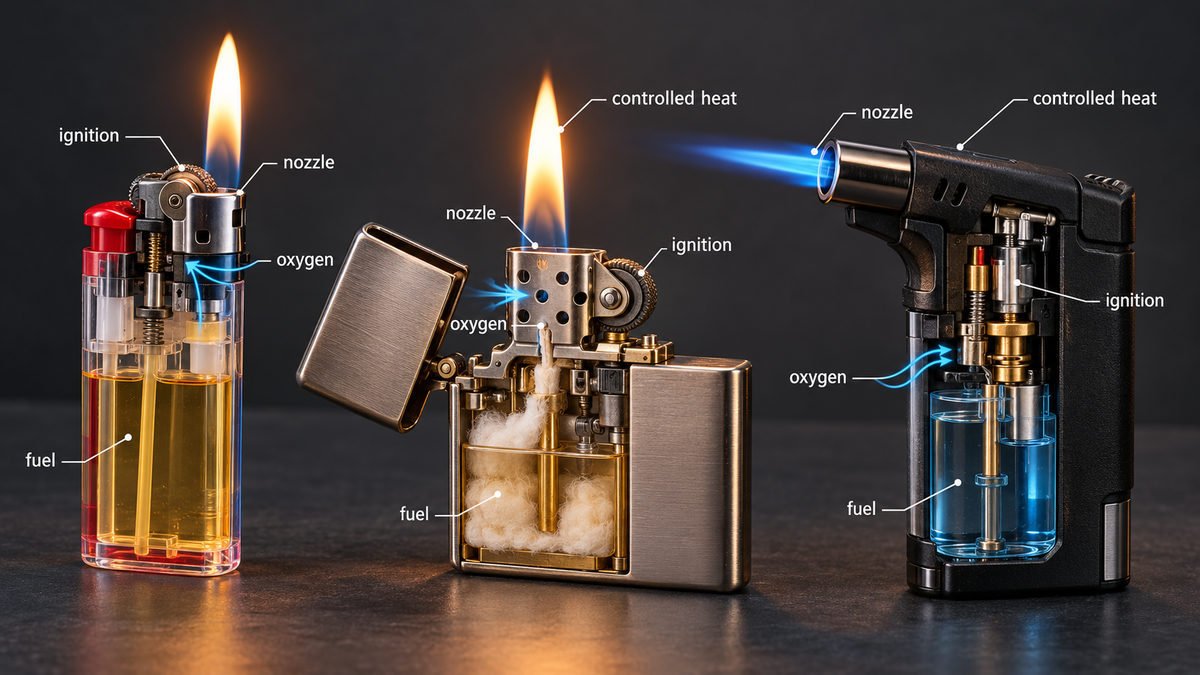
A lighter needs four basic elements: fuel, oxygen, ignition, and controlled heat. Fuel provides energy, while oxygen helps the fuel burn. The ignition system creates the first spark or hot point. Then, the flame continues until you release the button, close the lid, or remove the fuel source.
The Basic Lighter System
Most traditional lighters store fuel inside a small container. When you press a button or turn a wheel, the device releases fuel through a valve or wick. At the same time, the ignition system creates a spark. The spark lights the fuel and produces a steady flame.
However, flame performance depends on more than fuel alone. Fuel pressure, airflow, nozzle design, and flame height all affect reliability. For instance, a narrow nozzle creates a concentrated flame, while a wider opening produces a softer flame.
Main Fuel Sources
Butane is common in disposable, refillable, and torch lighters. It stores as a liquid under pressure, then becomes gas when released. Liquid lighter fuel, often used in wick-style designs, soaks into absorbent material before producing vapour for burning.
Electric lighters use stored battery power instead of liquid or gas. Arc and plasma models create a small electrical discharge between electrodes. Therefore, they need charging rather than fuel refills. You can learn more about lighter construction and operation through this lighter reference guide.
Common Ignition Systems
- Flint wheels: A rotating wheel scrapes a flint and creates sparks.
- Piezoelectric ignition: Pressing a button compresses a crystal and creates an electrical spark.
- Push-button ignition: A button opens the fuel valve and activates the spark system.
- Electric arcs: Battery power creates a hot arc between two electrodes.
Importantly, ignition method and flame type are different features. A piezoelectric lighter can create either a soft flame or a torch flame. Similarly, a flint wheel can ignite a wick or pressurised butane, depending on the design.
The main categories include disposable, refillable, soft flame, torch, windproof, electric, plasma, and utility lighters. Each category suits different tasks, weather conditions, budgets, and maintenance preferences.
The Main Lighter Types and Their Pros and Cons
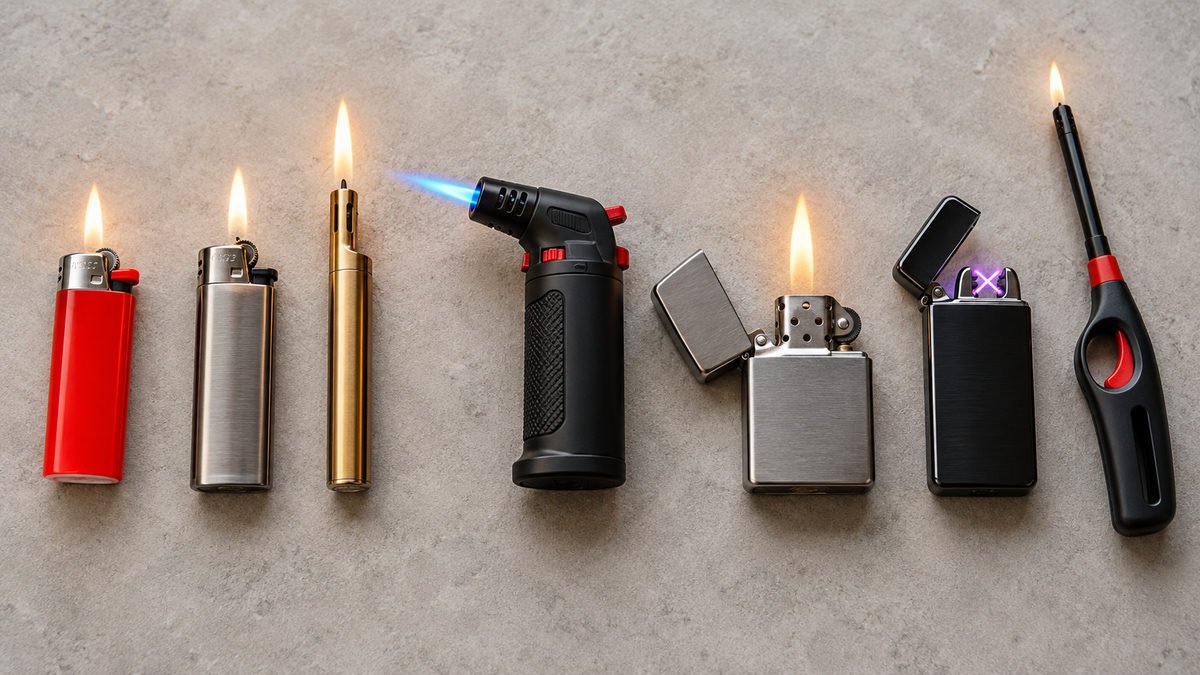
The best lighter depends on how often you use it and where you use it. A cheap disposable model may suit occasional indoor lighting. Meanwhile, a refillable torch can offer better value for regular outdoor or cigar use.
Disposable Lighters
Disposable lighters usually cost less and require no maintenance. They are compact, easy to carry, and widely available. However, their fuel supply eventually runs out, and most designs cannot accept a safe refill.
Therefore, disposables work well for occasional use, travel preparation, or keeping as a backup. Their main disadvantages include limited lifespan, less durable construction, and repeated material waste.
Refillable Lighters
Refillable lighters use either butane or liquid lighter fuel. They often cost more initially, but regular users can save money over time. Additionally, metal bodies and replaceable parts can extend their working life.
Refillable designs need more care than disposable models. You may need to replace flints, clean burners, adjust flames, or refill fuel safely. Never refill a warm lighter or work near an open flame.
Soft Flame Lighters
Soft flame lighters produce a gentle yellow or blue flame. They suit cigarettes, candles, paper, and general indoor lighting. However, the flame usually offers less precision and weaker wind resistance.
Soft flames also spread heat across a broader area. As a result, they can work well for gentle lighting tasks. They may struggle when you need fast ignition outdoors or concentrated heat.
Torch Lighters
Torch lighters produce a narrow blue flame with higher heat and better precision. They can light cigars, camp stoves, and outdoor materials more quickly. However, they often use fuel faster and may damage delicate surfaces.
The concentrated flame can scorch paper, wood, or tobacco when held too closely. Therefore, use short bursts and keep the flame moving when working with sensitive materials.
Windproof, Electric, and Plasma Lighters
Wind-resistant lighters use shields, focused flames, or specialised airflow. Waterproof designs may add sealed cases, protective covers, or water-resistant switches. However, wind resistance does not guarantee complete waterproofing.
Electric, plasma, and arc lighters use rechargeable batteries. They have low ongoing fuel costs and avoid leaking liquid fuel. Nevertheless, charging becomes essential, and heavy wind or rain can interrupt the arc.
| Lighter type | Fuel or power | Ignition | Best use | Main advantage | Main drawback |
|---|---|---|---|---|---|
| Disposable | Butane | Flint or piezo | Occasional indoor lighting | Low upfront cost | Limited lifespan |
| Refillable soft flame | Butane or liquid fuel | Flint or piezo | Regular everyday use | Long-term value | Needs maintenance |
| Torch | Butane | Piezo or electronic | Cigars and outdoor tasks | Focused, hot flame | Higher fuel use |
| Arc or plasma | Rechargeable battery | Electric arc | Rechargeable everyday use | No liquid fuel | Needs charging |
| Utility | Butane or electricity | Trigger or button | Candles, grills, and fireplaces | Long reach | Less pocket-friendly |
Soft Flame, Torch, Plasma, and Arc Lighters Compared
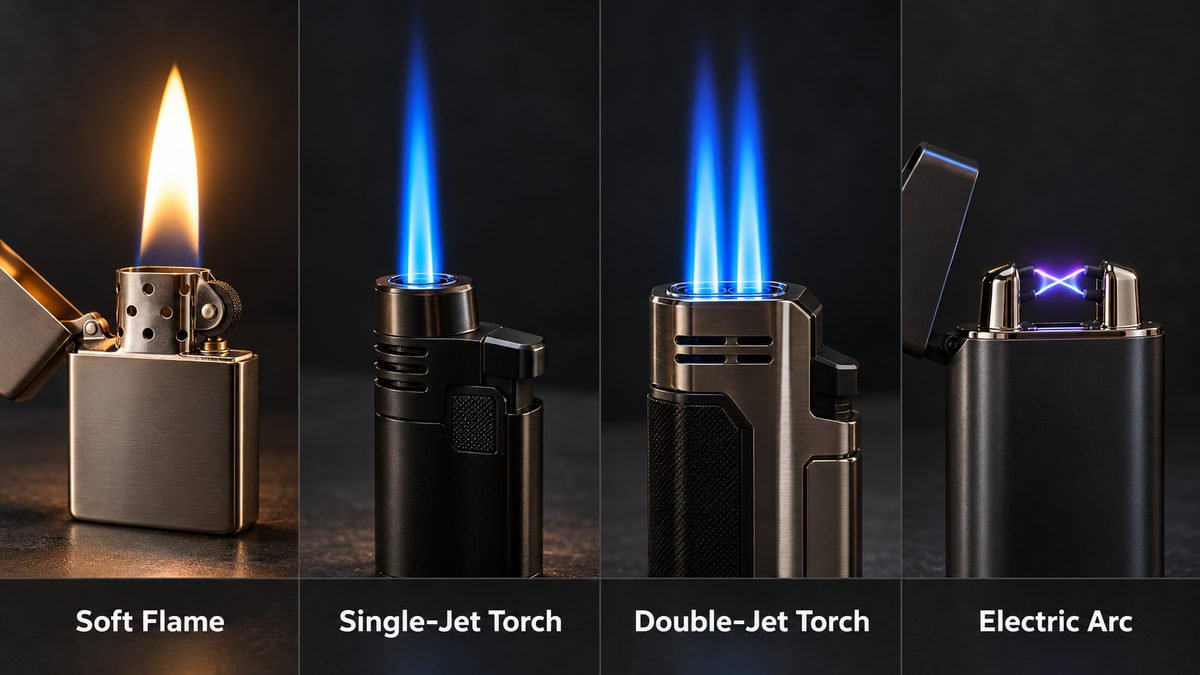
Soft flame and torch lighters differ mainly in shape, heat, precision, and wind performance. A soft flame looks broader and usually burns yellow or pale blue. A torch flame forms a narrow blue jet that concentrates heat in one small area.
Soft flames generally suit cigarettes, candles, and everyday indoor lighting. They make less noise and often use fuel slowly. However, even a light breeze can disturb the flame.
In contrast, torch lighters deliver faster, more precise heat. They suit cigars, camping tasks, and outdoor lighting. The flame may produce a noticeable rushing sound. It also consumes fuel more quickly than many soft flame models.
Plasma or arc lighters create an electrical arc between metal electrodes. The arc can ignite paper, candle wicks, and similar materials without burning liquid fuel. Additionally, rechargeable batteries remove the need for disposable gas cartridges.
Are Electric Lighters Safe?
Electric lighters can be safe when you follow the manufacturer’s instructions. Their arc still creates intense heat and electrical sparks. Keep the electrodes away from skin, clothing, fuel vapours, and flammable surfaces.
Moreover, charge the device with the supplied cable or an approved replacement. Keep it dry and stop using it if the battery, casing, or charging port becomes damaged. Child access also matters, because an electric arc can cause burns.
Not every torch lighter is fully windproof. Many models resist ordinary breezes, but strong gusts can still interrupt ignition. Similarly, plasma lighters may fail in rain, heavy moisture, extreme wind, or when debris blocks the electrodes.
Flame temperature and contact area affect different materials. A cigar needs controlled heat across the tobacco edge. A candle needs a gentle point of heat. Cooking materials may require a longer flame or greater reach, rather than the hottest flame available.
Specialized Lighters for Cigars, Pipes, Candles, and Outdoor Use
Different tasks benefit from different lighter shapes. A pocket lighter may work well for quick indoor use. However, deep candle jars, fireplaces, grills, and camp stoves need more reach and better hand protection. Pipe lighters suit all types of smoking pipes.
Cigarette and Cigar Lighters
Compact soft flame lighters remain popular for cigarettes because they are small and simple. They provide enough heat for quick lighting without producing an unnecessarily concentrated flame. Therefore, they suit routine indoor or sheltered outdoor use.
Cigar lighters usually use single-, double-, or triple-jet torch flames. A single jet offers more control, while multiple jets cover a wider area. However, more jets can consume fuel faster and create excessive heat.
Keep the flame slightly away from the tobacco and rotate the cigar slowly. This approach helps distribute heat evenly. Avoid holding a powerful torch in one place, because it can scorch the wrapper or create uneven burning.
Pipe Lighters
Pipe lighters often feature angled or side flames. This layout helps direct heat into the bowl while keeping your fingers away from the tobacco. Some designs use lower-temperature flames to reduce damage to the pipe.
Additionally, an angled flame can make relighting easier in a deep or narrow bowl. Choose a model with a stable flame and comfortable grip. A short, harsh torch may work poorly for delicate pipe materials.
Candle, Fireplace, BBQ, and Utility Lighters
Candle lighters usually feature a long neck and trigger mechanism. The extra length keeps your hand away from a deep jar and rising heat. Many models also include a safety lock or trigger guard.
Utility lighters may support candles, barbecues, fireplaces, workshops, and outdoor tasks. They often have sturdier bodies and stronger safety controls. In contrast, a candle lighter may focus mainly on household reach and easy storage.
A long-reach lighter is safer for grills, fireplaces, and camp stoves. It reduces the need to place your hand near hot surfaces or trapped vapour. Nevertheless, keep the long neck away from clothing, hair, and combustible materials.
Camping and Emergency Lighters
Camping lighters need reliable ignition in wind, damp air, and uneven conditions. A torch or wind-resistant liquid-fuel model may perform well outdoors. Sealed electric models can also help, but moisture and charging access remain important limitations.
For windy conditions, choose a protected torch or purpose-built wind-resistant lighter. For wet conditions, look for a sealed design with a protective cap. No lighter performs perfectly in every storm, so carry a backup when fire is essential.
Fuel, Lifespan, Refilling, and Environmental Differences
Refined butane powers many pocket and torch lighters. Liquid lighter fuel suits wick-style designs, including some classic metal models. Rechargeable lighters store electricity in a battery and create heat through an arc or heating element. See the cost comparison in refillable vs disposable lighters.
Which Lighters Are Refillable?
- Refillable butane lighters accept a compatible butane canister.
- Liquid-fuel lighters accept approved lighter fuel for their wick and reservoir.
- Arc and plasma lighters recharge through a suitable USB cable.
- Some utility lighters use replaceable fuel cartridges or refillable tanks.
To refill a butane lighter, first let it cool completely. Move outdoors or into a well-ventilated space, then use the correct fuel nozzle. Keep the lighter away from flames, sparks, and electrical ignition sources during refilling.
After filling, allow the lighter to settle before ignition. Check for unusual hissing, strong fuel odour, or visible leaks. If anything seems wrong, stop using the lighter and follow the manufacturer’s safety instructions.
Lifespan and Long-Term Value
A disposable lighter may last days, weeks, or months, depending on use and fuel volume. A rechargeable model may offer many lighting cycles before its battery loses capacity. Storage conditions, ignition frequency, build quality, and battery size all affect lifespan.
Refillable designs usually cost more at first. However, they can offer lower lifetime costs and less repeated disposal. Disposable models remain convenient, while refillable models may provide better durability and repair options.
Environmental impact depends on the complete product life cycle. Refillable designs can reduce repeated waste, but fuel production, packaging, batteries, and eventual recycling still matter. Therefore, choose durable products and dispose of them responsibly.
Safe Storage and Disposal
Keep fuel in approved containers away from heat, flames, children, pets, and poorly ventilated areas. Do not leave fuel canisters in a hot vehicle. Follow local Australian disposal guidance for empty lighters, fuel containers, and rechargeable devices.
Never puncture, burn, or place a partly full fuel canister in ordinary rubbish. Take damaged batteries and electronic lighters to an appropriate recycling service. Store unused lighters where children cannot reach them.
How to Choose the Right Lighter Safely
Start with the task rather than the appearance. Indoor lighting, cigarettes, cigars, pipes, candles, barbecues, fireplaces, camping, and emergency kits all need different features. Read our lighter safety and storage tips.
- Disposable: Choose one for occasional, basic lighting and low upfront cost.
- Refillable soft flame: Choose one for regular everyday use and long-term value.
- Torch: Choose one for cigars, camping, and precise outdoor lighting.
- Long-reach utility: Choose one for candles, grills, fireplaces, and camp stoves.
- Rechargeable plasma: Choose one when electric operation and charging suit your routine.
Next, consider weather, fuel access, and portability. A torch offers better wind resistance, but it may use more fuel. An arc lighter avoids liquid fuel, yet it needs charging and dislikes rain.
Also compare fuel capacity, battery life, size, weight, and replacement parts. A small pocket lighter travels easily. A larger utility model offers better reach and hand protection.
Finally, check safety features before buying. Keep flames away from skin, clothing, fuel vapours, and flammable surfaces. Never leave a lighter unattended, allow hot parts to cool, and use child-resistant features correctly.
So, which lighter is best? The answer depends on your intended use, weather conditions, fuel availability, safety needs, and budget. The right choice balances convenience with reliable performance and responsible handling.
Conclusion
Lighters differ by fuel source, ignition system, flame style, weather resistance, refillability, and intended use. Disposable models offer convenience, while refillable lighters provide long-term value. Soft flames suit everyday tasks, torch lighters deliver heat and precision, utility models improve reach, and plasma lighters offer rechargeable electric operation.
Safe storage, refilling, transport, use, and disposal matter regardless of the design. Start with the task, then compare flame type, fuel availability, weather resistance, lifespan, safety features, and budget.
For more information about smoking accessories and related product categories, explore the product categories at Sweet Puff Australia. You can also browse the Sweet Puff Australia shop and learn more through the Sweet Puff Australia blog.
Sweet Puff Australia brings together smoking accessories and helpful product information for adult customers. Explore the website to compare available collections and choose accessories that suit your preferences.