
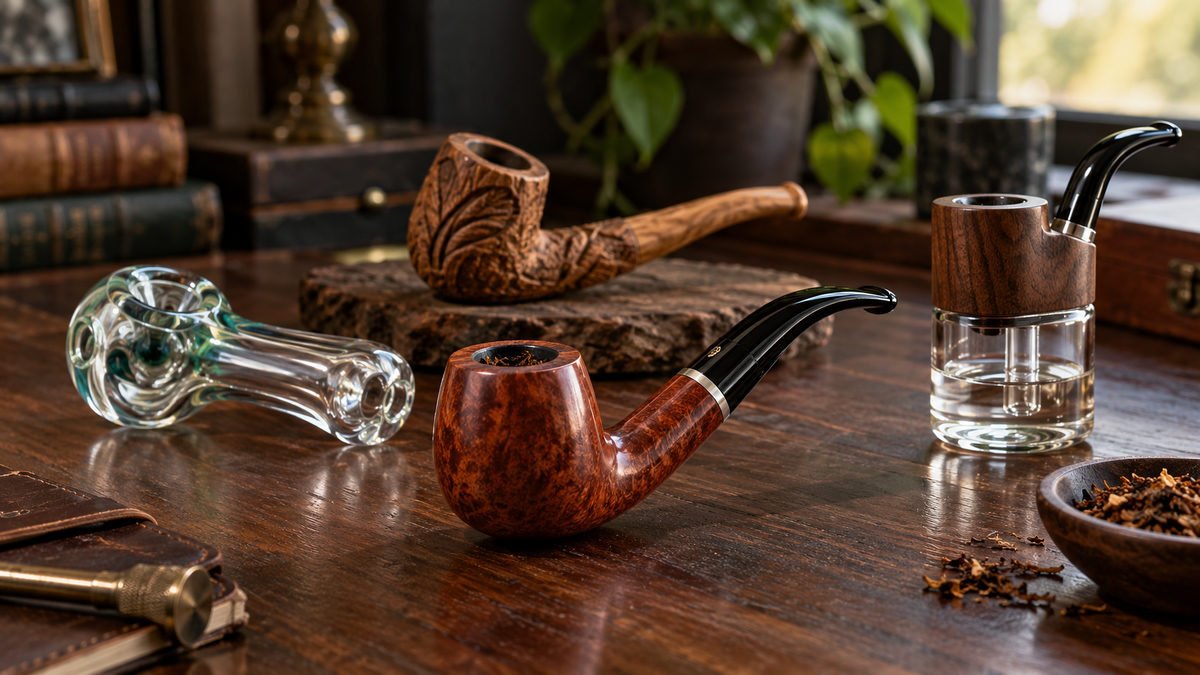
Choosing a smoking pipe can feel confusing when options range from compact one-hitters to traditional briar pipes and water-filtered bongs. Beginners often wonder how materials, bowl sizes, airflow, portability, cleaning, and local laws affect the experience. This guide explains the types of smoking pipes explained in simple terms, so you can compare designs, maintenance needs, advantages, drawbacks, and suitable legal uses.
Types of Smoking Pipes Explained: Basic Parts and Designs
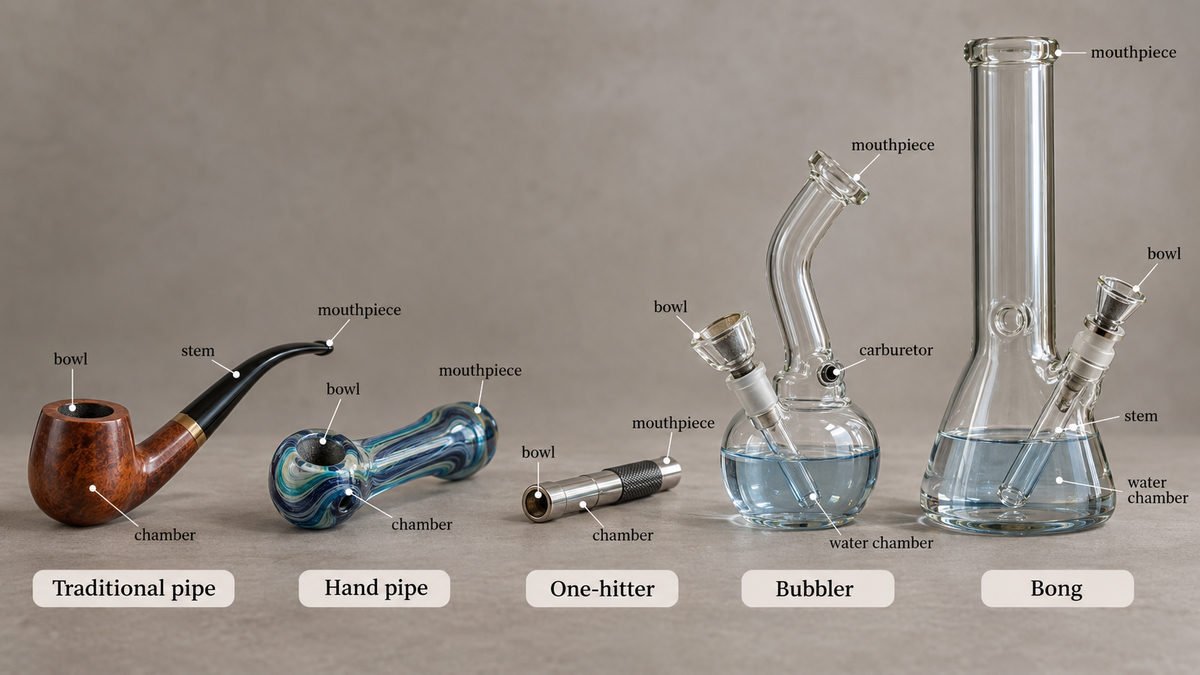
A smoking pipe holds material in a bowl or chamber. When lit, smoke travels through an airway, stem, or water chamber before reaching the mouthpiece. The design controls how much smoke the pipe holds and how easily it travels.
Main Parts of a Smoking Pipe
The bowl holds the material, while the chamber provides the space where burning occurs. The stem connects the bowl to the mouthpiece. Meanwhile, the mouthpiece directs smoke towards the user.
Some hand pipes include a carburetor, often called a carb. This small opening lets air enter the pipe. Covering and releasing it changes airflow and clears smoke from the chamber.
Water pipes add another part called a water chamber. Smoke passes through water before reaching the mouthpiece. Therefore, water pipes usually create a cooler and more moisturised draw than dry pipes.
Dry Pipes and Water-Filtered Pipes
Dry pipes use no water. Spoon pipes, one-hitters, chillums, and many traditional tobacco pipes belong to this category. They usually offer simple operation, easy storage, and fewer parts to maintain.
Water-filtered pipes include bongs and bubblers. They use water to cool smoke and catch some particles. However, water filtration does not remove the health risks associated with smoking.
Common Pipe Designs
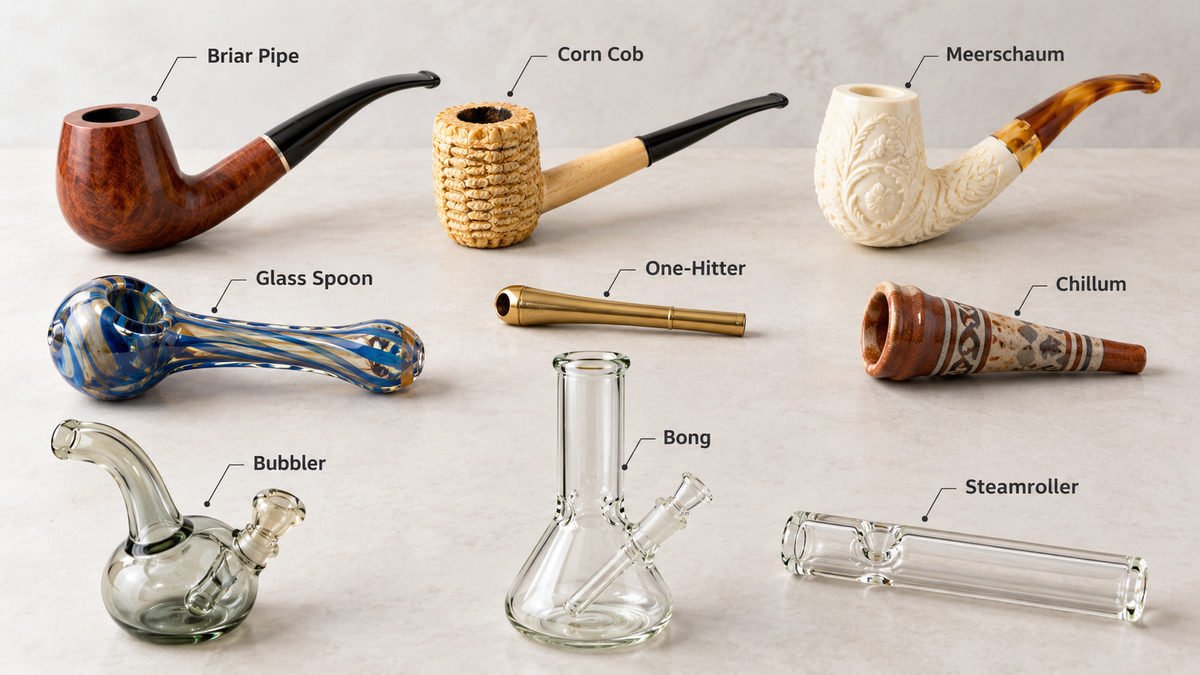
- Traditional tobacco pipes: Usually feature a bowl, long stem, and curved or straight shape.
- Hand pipes: Compact dry pipes designed for direct use without a water chamber.
- Water pipes: Larger designs that pass smoke through water.
- Bubblers: Smaller water pipes that combine portability with water filtration.
- One-hitters: Narrow pipes designed for small amounts and quick use.
- Chillums: Straight, tube-shaped pipes with a simple internal chamber.
- Spoon pipes: Compact hand pipes shaped like a spoon.
- Steamrollers: Dry pipes with a large chamber and strong airflow.
A tobacco pipe usually has a deeper bowl and longer stem. It often supports slower sessions and traditional tobacco use. In contrast, a hand pipe usually has a shorter airway and a compact shape.
Modern portable pipes may use glass, metal, ceramic, or wood. Vaporiser pipes work differently because they heat material or liquid instead of relying on the same combustion process. Bowl size, chamber depth, stem length, and airflow all affect heat, capacity, draw resistance, and portability.
Common Smoking Pipe Types and How They Compare
Traditional Tobacco Pipes
Briar pipes come from dense tree growth around the roots of certain shrubs. They handle heat well and often develop character through regular use. Corn cob pipes offer a lighter and cheaper starting point. Two popular designs are compared in spoon pipe vs chillum pipe.
Meerschaum pipes use a pale mineral material. They usually provide a neutral flavour and striking carved designs. However, meerschaum can chip or crack when dropped.
Clay pipes provide clean flavour and strong heat resistance. They can feel fragile and become hot during use. Other wooden pipes may use materials such as cherry, maple, or pear wood.
Hand Pipes
Spoon pipes are popular because they feel familiar and remain compact. Glass versions often show the smoke path clearly. Metal pipes offer better impact resistance, while ceramic pipes provide decorative shapes and solid weight.
One-hitters suit people who want a very small pipe. Chillums use a straight design with few moving parts. Therefore, both styles pack easily and clean quickly, although they provide little cooling.
Water Pipes
Bongs usually have a larger base, water chamber, downstem, and mouthpiece. Smoke bubbles through water before reaching the user. This process can cool and moisturise the smoke.
Bubblers use the same basic idea in a smaller body. They suit people who want water filtration without carrying a large bong. Steamrollers remain dry pipes, but their large chambers can produce a strong, open draw.
The difference between a bong, bubbler, and hand pipe is straightforward. A bong is generally larger and less portable. A bubbler is a compact water pipe, while a hand pipe usually uses no water.
Dry Pipes Compared With Water Pipes
| Feature | Dry pipes | Water pipes |
|---|---|---|
| Cooling | Limited cooling through the pipe material | Water can cool and moisturise smoke |
| Portability | Usually compact and easy to carry | Small bubblers travel well; larger bongs need care |
| Cleaning | Fewer parts and simpler maintenance | Water chambers need regular rinsing and brushing |
| Breakage risk | Depends on material and construction | Glass water pipes can have several fragile parts |
| Airflow | Often direct and simple | Water movement changes the draw |
Vaporiser pipes heat material or vapour instead of burning it in the same way as traditional pipes. They may use batteries, heating chambers, or electronic controls. However, device instructions, local laws, and health guidance still matter.
For beginners, simple hand pipes and one-hitters are easy to understand. Experienced users may prefer larger bowls, water filtration, traditional shapes, or adjustable airflow. Portability, durability, flavour, and cleaning time often determine the best category.
Smoking Pipe Materials: Briar, Glass, Wood, and More
Briar and Other Woods
Briar remains popular because it handles heat and offers a traditional appearance. Its natural material may influence flavour over time. However, briar needs regular cleaning and rest periods between sessions. See the trade-offs in glass pipes vs metal pipes.
Wooden pipes vary widely in density, finish, and heat resistance. They can feel warm and comfortable in the hand. However, excess moisture, aggressive cleaning, or repeated overheating may damage the bowl.
Corn Cob, Meerschaum, and Clay
Corn cob pipes are affordable, lightweight, and beginner-friendly. They can provide an inexpensive way to learn basic pipe care. However, they generally have a shorter lifespan than well-maintained briar.
Meerschaum offers neutral flavour and strong visual appeal. It does not require the same seasoning process as briar. However, its fragile surface needs careful handling and a protected storage place.
Clay pipes also provide a relatively neutral flavour. They manage heat well but can become hot and break easily. Therefore, clay suits careful users who value traditional design over impact resistance.
Glass, Ceramic, and Metal
Glass offers a clean taste and makes residue easy to inspect. It does not absorb flavour like porous materials. However, glass can shatter when dropped, especially around thin stems or joints.
Ceramic pipes often combine decorative designs with useful weight. They resist some impacts better than thin glass. Nevertheless, sharp drops can still cause chips, cracks, or broken mouthpieces.
Metal pipes provide excellent durability and simple storage. They can retain heat and may affect flavour. In addition, metal parts require inspection for corrosion, loose fittings, or sharp edges.
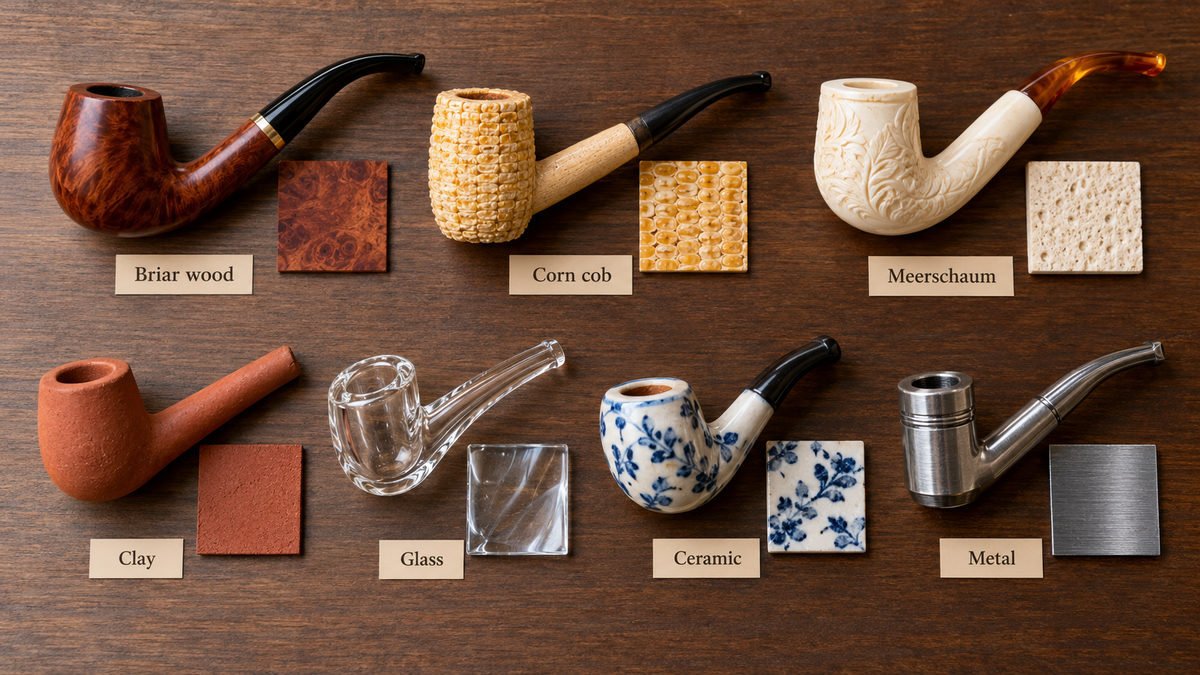
Smoking pipes are commonly made from briar, corn cob, meerschaum, clay, glass, ceramic, metal, and other woods. Material affects heat, flavour, airflow, durability, weight, and cleaning requirements.
| Material | Typical cost | Durability | Portability | Flavour neutrality | Cleaning difficulty |
|---|---|---|---|---|---|
| Corn cob | Low | Low to moderate | High | Moderate | Easy |
| Glass | Low to high | Low to moderate | Moderate | High | Easy to moderate |
| Briar | Moderate to high | High with care | Moderate | Moderate | Moderate |
| Meerschaum | Moderate to high | Low | Moderate | High | Moderate |
| Ceramic | Low to moderate | Moderate | Moderate | High | Easy to moderate |
| Metal | Low to moderate | High | High | Low to moderate | Easy |
Pipe Shapes, Bowl Size, Filtration, and User Experience
Traditional tobacco pipes come in several familiar shapes. A billiard has a straight bowl and stem. A bent pipe curves gently, while an apple has a rounded bowl. For water filtration in a small piece, look at bubbler pipes.
A Dublin pipe has a bowl that narrows towards the bottom. A churchwarden has a very long stem. Therefore, shape affects balance, cooling, comfort, storage, and appearance.
Bowl size determines how much material the pipe can hold. A small bowl suits shorter sessions and uses less material. Meanwhile, a larger bowl supports longer sessions but may create more heat.
Chamber width affects airflow and loading space. A deeper chamber may hold more material, while a wider chamber can spread heat differently. Narrow chambers may also require more frequent cleaning.
Short stems make pipes compact and easy to store. However, they provide less distance for smoke to cool. Longer stems can create a cooler draw, but they need more storage space and careful handling.
A carburetor controls airflow through a small side opening. Covering the opening limits fresh air. Releasing it allows air to clear the chamber more quickly.
Many people ask which smoking pipe provides the smoothest experience. Water filtration may cool and moisturise smoke, especially in a well-maintained bubbler or bong. However, smoother smoke does not mean safer smoking.
Personal draw technique, pipe material, smoke temperature, bowl size, and filtration all affect comfort. Additionally, health risks remain regardless of whether the pipe uses water. For reliable health information, consult Healthdirect’s smoking guidance.
Portable pipes suit travel, compact storage, and simple setups. Larger pipes often provide more stability and easier access for cleaning. However, they can attract attention, require more storage space, and break more easily.
How to Choose the Best Smoking Pipe for Your Needs
Best Smoking Pipe for Beginners
A corn cob pipe offers low cost and a simple learning curve. A basic glass hand pipe makes residue easy to inspect and usually provides neutral flavour. One-hitters work well for small amounts and short sessions. For durability, compare silicone pipes vs glass pipes.
A straightforward briar pipe suits beginners who prefer traditional tobacco designs. However, briar requires more care and patience. Choose it when you enjoy the ritual of cleaning, resting, and storing a pipe correctly.
Best for Portability
One-hitters, chillums, and compact hand pipes usually offer the easiest transport. They have fewer parts and fit into small protective cases. Small bubblers provide filtration but need extra care because of their water chamber.
Best for Flavour and Tradition
Briar provides a classic experience and develops character with regular care. Meerschaum offers a more neutral flavour and detailed appearance. Clay can also provide clean flavour, but it needs careful handling.
Best for Durability and Easy Cleaning
Metal pipes usually handle drops better than glass or ceramic. Glass remains easy to inspect and clean, but it needs protective storage. Corn cob pipes cost less to replace, while briar rewards careful long-term maintenance.
Before choosing, consider your legal intended use, budget, preferred material, lifestyle, desired capacity, and cleaning tolerance. Adults in Australia should also check applicable state and territory rules before buying, carrying, or using any pipe.
- Low cost: Consider corn cob, basic metal, or simple glass designs.
- Neutral flavour: Consider glass, meerschaum, clay, or ceramic.
- Water filtration: Consider a bubbler or bong with a stable base.
- Compact storage: Consider a one-hitter, chillum, or small hand pipe.
- Long sessions: Consider a larger bowl or traditional briar pipe.
- Traditional design: Consider briar, meerschaum, clay, or other wood.
Useful accessories include pipe cleaners, screens, tampers, cleaning solutions, storage cases, protective pouches, and ashtrays. However, accessories vary by design. Screens and tampers may not suit every pipe, especially narrow chillums or specific water-pipe parts.
Cleaning, Maintenance, Safety, and Legal Considerations
Routine Maintenance
Allow the bowl to cool before handling or cleaning it. Empty ash and residue regularly. Additionally, check the airway for blockages and store the pipe in a dry, protected place. Follow our guide on how to clean a glass pipe.
Glass pipes usually need rinsing, brushing, and careful drying. Water-pipe chambers also need fresh water and regular residue removal. Briar and wood pipes need pipe cleaners and gentler treatment.
Meerschaum and clay require careful handling because they can chip or crack. Ceramic pipes need inspection around thin areas. Metal pipes should be checked for corrosion, sharp edges, and loose fittings.
Glass pipes are generally easier to inspect and soak than wooden pipes. Wood and briar require gentler cleaning and more regular attention. Clean a pipe whenever residue, odour, restricted airflow, or moisture becomes noticeable.
Safety and Legal Checks
Never leave combustion unattended. Use heat-resistant surfaces and handle hot bowls carefully. Keep smoking pipes away from children, pets, flammable items, and poorly ventilated rooms.
Smoking carries health risks, and water filtration does not make smoking safe. Therefore, consult qualified health guidance if you have concerns about smoke exposure or respiratory symptoms.
Laws vary by location, substance, and intended use. Adults should verify local rules covering ownership, use, transport, sale, and age restrictions before purchasing or carrying a pipe.
- Remove residue and empty ash after cooling.
- Check airflow before the next use.
- Replace dirty water and clean chambers regularly.
- Store pipes somewhere dry and protected.
- Inspect for cracks, loose fittings, blocked airways, or damaged mouthpieces.
- Do not use a pipe with an unstable base or sharp broken edge.
Conclusion
Smoking pipes differ mainly by design, material, filtration, size, portability, flavour, durability, and maintenance. Beginners often prefer simple corn cob, glass hand pipe, or one-hitter designs. Experienced users may favour briar, meerschaum, bubblers, or larger water pipes.
The right choice depends on legal intended use, budget, desired experience, and willingness to clean the pipe. Use these comparison points to narrow your options, check local laws and health guidance, and choose a legal pipe category that matches your preferences.
Sweet Puff Australia brings together water pipes, glass designs, pipes, and related accessories for adults exploring different product categories. Visit the Sweet Puff Australia website, or browse the available product categories for more information.






Comment (1)
[…] Silicone often suits beginners who want affordability, easy transport, and low breakage risk. It handles everyday mistakes better and usually requires less protective storage. Additionally, many silicone designs have simple shapes and accessible cleaning points. Compare every style in types of smoking pipes explained. […]