

Is your bong cloudy, smelly, or harder to use than it used to be? Learning how to clean a glass bong helps remove resin, tar, stale water, ash, and stubborn buildup. Regular cleaning can improve flavour, airflow, filtration, and hygiene. This practical guide explains how to clean every part safely, including the bowl, downstem, percolator, joints, and mouthpiece.
Why Regular Glass Bong Cleaning Matters
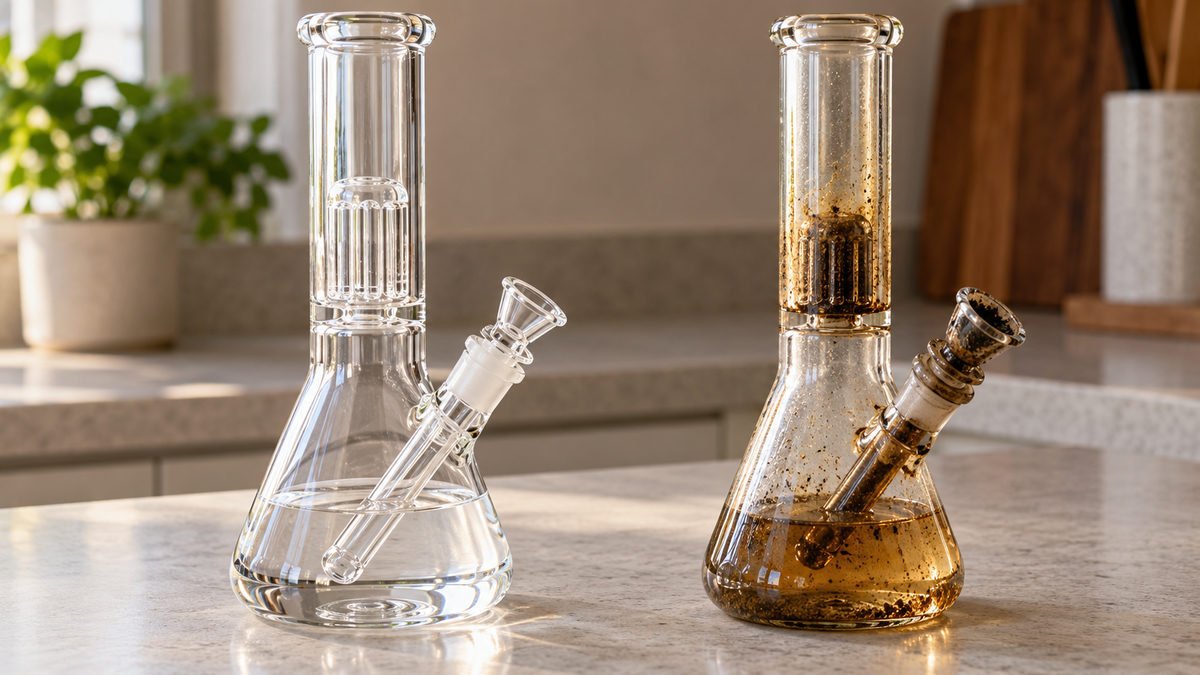
Every session leaves behind small amounts of ash, resin, tar, and plant material. Over time, these deposits cling to the chamber, downstem, bowl, and percolator. Meanwhile, old bong water can turn cloudy and develop an unpleasant smell. Pair deep cleans with a simple maintenance checklist.
Regular cleaning helps your glass bong work as intended. Clear glass makes it easier to inspect the water level, while an open downstem supports smoother airflow. Additionally, clean water can help preserve the intended flavour of your chosen material.
What Builds Up Inside a Bong?
Resin often collects around the bowl and downstem first. Ash can settle inside the base, while sticky tar may coat narrow openings and percolator slits. Therefore, a piece that looks only slightly dirty can still have significant internal buildup.
Old water also creates a stale environment inside the chamber. It may contribute to unpleasant odours and contamination when you leave it sitting for too long. For that reason, empty the water after each session whenever possible.
Signs Your Bong Needs Cleaning
Look for these common warning signs before your next session:
- Cloudy or dull-looking glass.
- Dark resin around the bowl or joints.
- Restricted airflow when you draw.
- A blocked or slow-draining downstem.
- A lingering stale or sour smell.
- Water that looks brown, murky, or unusually dirty.
- Sticky residue around the mouthpiece.
Moreover, frequent cleaning makes future maintenance faster. Use cannabis only where legal, follow Australian state or territory laws, and meet all applicable age requirements. Always follow safe-use rules and keep cleaning products away from children and pets.
Supplies for the Best Way to Clean a Glass Bong

The best way to clean a glass bong usually combines isopropyl alcohol and coarse salt. Isopropyl alcohol helps dissolve sticky resin, while coarse salt provides gentle scrubbing action. Together, they can loosen residue without requiring harsh tools.
Gather your supplies before starting. Having everything ready reduces the chance of dropping wet glass or leaving cleaning solution inside a chamber.
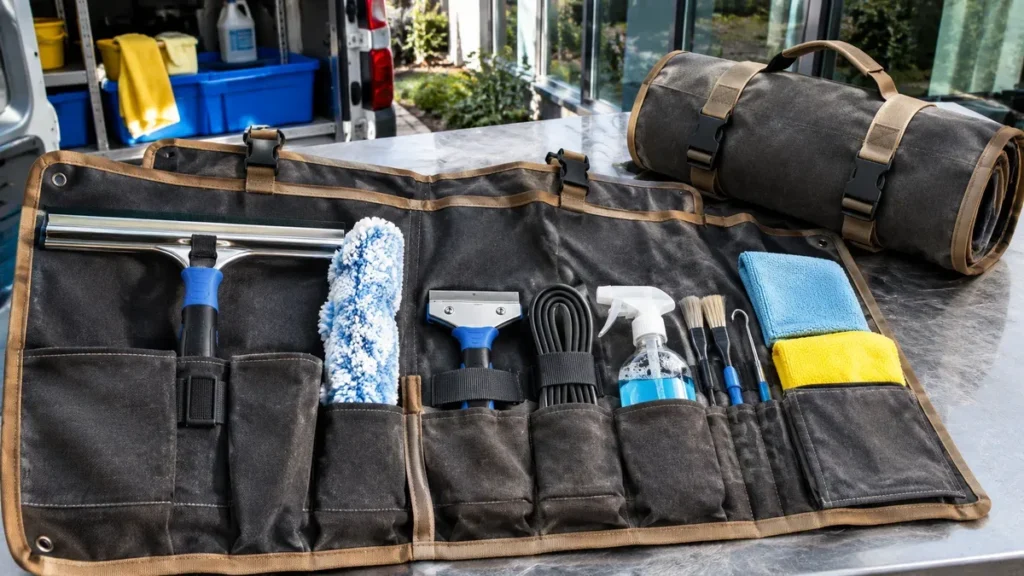
- Isopropyl alcohol, preferably a high-strength rubbing alcohol.
- Coarse salt, such as rock salt or chunky cooking salt.
- Warm water, never boiling water.
- Rubber or chemical-resistant gloves.
- Paper towels or clean lint-free cloths.
- A soft bottle brush or bong cleaning brush.
- Cotton swabs for joints and small openings.
- Pipe cleaners or flexible downstem brushes.
- Sealable plastic bags or containers for removable parts.
Choose a brush that fits comfortably inside the chamber. A bottle brush works well for larger bases, while a flexible brush helps clean narrow downstems. Additionally, cotton swabs can remove soft residue around the bowl joint without forcing anything into the glass.
Commercial bong cleaning solutions can also work well. However, read the product label carefully and follow its recommended soaking time, dilution instructions, and rinsing process. You can explore smoking accessories and cleaning supplies if you prefer purpose-made products.
Work in a well-ventilated space because isopropyl alcohol produces strong vapours. Keep it away from flames, sparks, hot surfaces, and smoking materials. The CDC’s safety information for isopropyl alcohol also identifies it as a highly flammable liquid.
How to Clean a Glass Bong: Step-by-Step Method

Set aside enough time for careful cleaning, especially when the bong contains thick resin. Rushing can cause cracks, spills, or missed residue. Follow these steps in order.
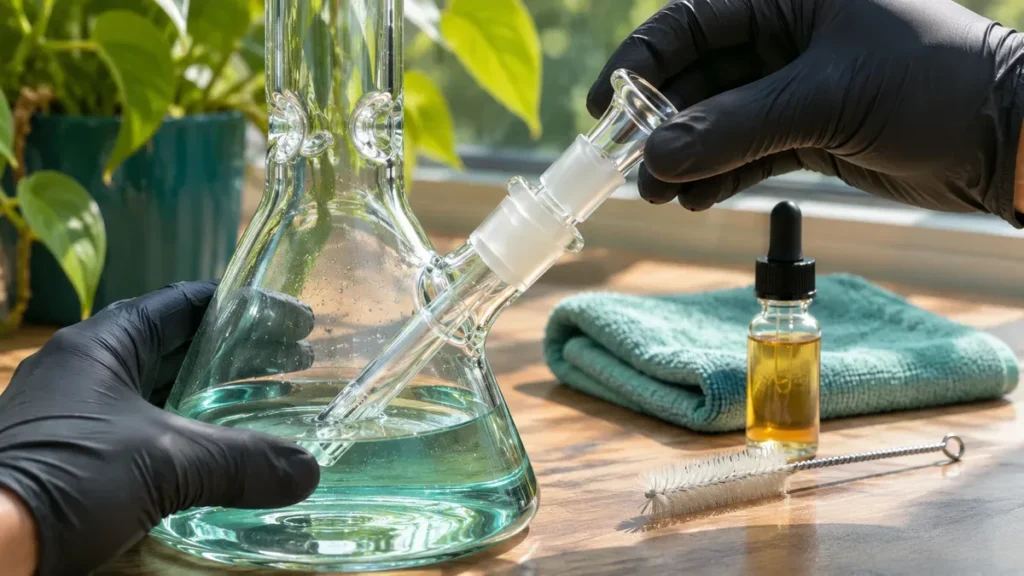
- Prepare a safe workspace. Work near an open window or use good ventilation. Put on gloves and place the bong on a stable, padded surface. A folded towel can protect the glass from hard benches.
- Empty the old bong water. Pour the water into a suitable drain or waste container. Avoid splashing resin-heavy water onto walls, floors, fabrics, or painted surfaces because it can leave stains and odours.
- Disassemble the bong. Remove the bowl, downstem, ash catcher, mouthpiece attachments, and other removable pieces. Handle each component gently, especially if it has a narrow joint or delicate percolator.
- Rinse with warm water. Run warm water through the bong and removable parts. This step loosens loose ash and soft residue before the main cleaning treatment. Never use boiling water or expose cold glass to sudden heat.
- Add alcohol and salt. Pour enough isopropyl alcohol into the main chamber to cover the dirty areas. Add several tablespoons of coarse salt, depending on the chamber size.
- Cover the openings. Use rubber stoppers, your gloved hands, or suitable plugs to seal the mouthpiece and joint openings. Keep a firm grip without squeezing the glass too tightly.
- Shake gently. Slowly swirl the bong so the salt and alcohol reach the walls, base, and internal surfaces. Avoid violent shaking because glass joints and percolators can crack under sudden pressure.
- Allow the solution to soak. Light buildup may need 15 to 30 minutes. Heavy resin may require several hours or repeated treatment. For stubborn deposits, refresh the solution instead of applying excessive force.
- Scrub carefully. Use a soft bottle brush or bong brush on reachable areas. Apply gentle pressure and avoid scraping the glass with hard or sharp objects. Rotate the bong slowly so the brush reaches different sections.
- Clean the joints. Use cotton swabs or a soft pipe cleaner around the bowl joint and downstem opening. Do not force a tool into a narrow glass passage.
- Pour out the used solution. Empty the alcohol and salt mixture carefully into a suitable waste container. Avoid pouring resin-heavy liquid onto porous surfaces or areas where children and pets may reach it.
- Rinse several times. Rinse the bong with warm water until the salt disappears. Continue rinsing the mouthpiece, joints, base, and percolator openings.
- Inspect the glass. Hold the bong under good light and check the chamber, joints, and percolator. Repeat the soak if you still see resin, cloudiness, or dark marks.
- Remove all cleaning residue. Continue rinsing until you detect no alcohol smell, salt grains, slippery film, or cleaning solution. This final step matters before using the bong again.
Additionally, never use boiling water during this process. Sudden temperature changes can stress glass and cause cracking, particularly around thick joints or thin percolator sections. Warm water provides enough softening action without creating unnecessary thermal shock.
How to Clean a Bong Bowl, Downstem, and Percolator
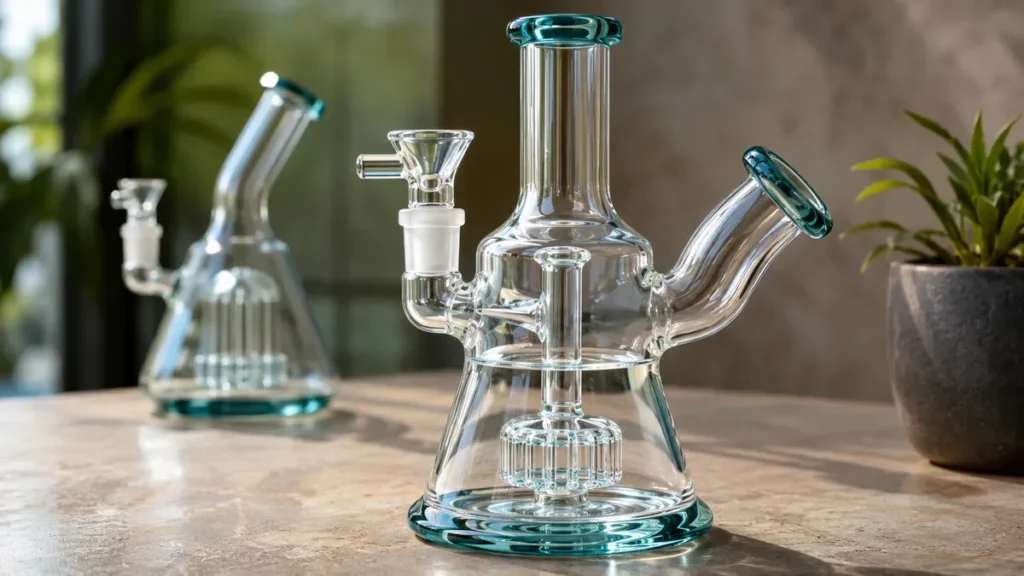
Small parts often hold the most concentrated residue. Cleaning them separately lets the alcohol reach narrow passages more effectively. It also reduces the chance of spreading dirty water through the main chamber. See how glass bong percolators work so you can clean them without damage.
Cleaning the Bong Bowl
Place the bowl inside a sealable bag or small container. Add enough isopropyl alcohol to cover the resin, then add a small amount of coarse salt when extra scrubbing power helps.
Seal the bag and let the bowl soak. Afterward, gently move it through the solution before using cotton swabs or a small soft brush. Rinse the bowl with warm water until no alcohol smell or loose residue remains.
Cleaning a Bong Downstem
To learn how to clean bong downstems safely, place the downstem in a sealed bag with alcohol and coarse salt. Soak it for at least 30 minutes when buildup looks heavy.
Next, rinse the downstem and use a flexible brush through the opening. Work slowly through both ends, but never force the brush against a blockage. If the downstem remains blocked, soak it longer and repeat the process.
Cleaning Percolators and Small Openings
Percolators contain small holes and slits that can trap resin. Pour a modest amount of cleaning solution into the chamber, then circulate it gently through the internal pathways.
Use repeated warm-water rinses rather than poking through fragile holes. Metal picks, sharp tools, steel wool, and excessive pressure can scratch or crack glass. Furthermore, a soft flexible brush works better for joints and openings.
Clean the mouthpiece and ash catcher separately. These parts can collect saliva residue, tar, stale water film, and odour. Soak them briefly, scrub with a soft brush, and rinse thoroughly.
When learning how to clean glass bong bowls, remember that patience matters more than force. Several gentle cleaning cycles are safer than one aggressive attempt. Replace any component that has visible cracks, chips, or sharp edges.
How to Clean a Bong Without Alcohol
Vinegar-based solutions, baking soda, and commercial alcohol-free products can help when you prefer another method. However, these options may work more slowly against thick resin. Expect longer soaking times, extra brushing, or multiple cleaning cycles. For cloudy glass, learn how to remove water stains.
Using White Vinegar
Mix warm water with white vinegar in a suitable container. Use enough liquid to cover removable parts, then allow them to soak for several hours when residue or odour remains.
Scrub gently with a soft brush and rinse the parts several times. You can circulate the solution through the main chamber, but avoid sudden temperature changes. Rinse until the vinegar smell disappears completely.
Using Baking Soda
Baking soda can help reduce odours and loosen mild residue. Sprinkle a small amount into a damp chamber, add warm water, and swirl gently before brushing.
However, baking soda usually struggles with thick, sticky resin. Vinegar and baking soda also react together, creating fizz rather than a stronger solvent. Therefore, do not rely on combining them for heavy buildup.
Commercial bong cleaning solutions provide another alcohol-free option. Follow the label instructions carefully and never mix products. Avoid bleach, ammonia, paint solvents, drain cleaners, and other harsh chemicals.
Rinsing, Drying, Storing, and Preventing Bong Buildup
Rinsing determines whether the bong is truly clean. Use several warm-water rinses and check every chamber, slit, joint, and opening. A clean bong should have no alcohol smell, gritty salt, slippery film, or visible cleaning residue. Once dry, here is how to store glass bongs safely.
After rinsing, separate the removable parts and place everything upside down on a clean towel. Let the glass air-dry in a protected area away from edges, busy walkways, children, and pets. Do not use direct heat to speed up drying.
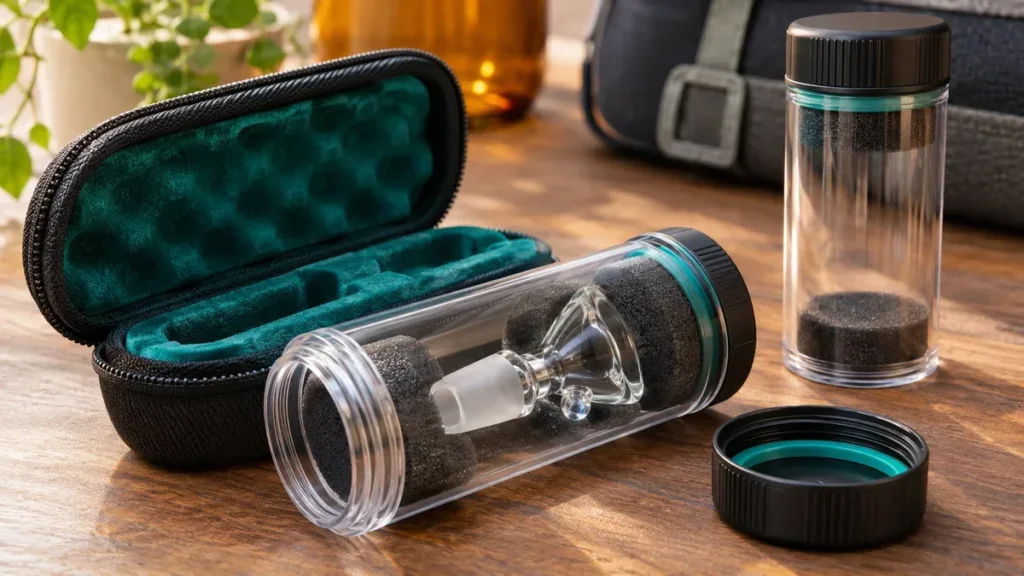
Store a dry bong upright or inside a padded case. Keep it away from heaters, sunny windows, unstable shelves, and areas where it can get knocked over. If you are comparing different glass water pipe designs, consider how easily each shape can be cleaned and stored.
A Practical Cleaning Schedule
- After every use: Empty the bong and replace the water.
- Frequently: Rinse the chamber and mouthpiece with warm water.
- Weekly: Perform a deeper clean if you use the bong often.
- Before storage: Clean and dry the piece completely.
- Before reuse: Inspect stored glass for dust, residue, chips, or cracks.
Fresh water helps prevent stale odours and cloudy glass. Additionally, emptying the bong after each session stops resin-heavy water from sitting inside the base. Avoid overfilling because excess water can reach the mouthpiece or leave residue in the wrong places.
If a smell remains, repeat the soak and clean the mouthpiece separately. For cloudy glass, use warm water and several gentle cleaning cycles. Stubborn resin often needs a longer soak rather than harder scrubbing.
For residue inside a percolator, circulate the solution slowly and rinse each opening repeatedly. If a blockage remains in the downstem, use a flexible brush and another soak. Never force sharp tools through the glass.
You can also browse the Sweet Puff Australia blog for more accessory care and product guidance. Choosing a design with accessible joints and removable parts can make regular cleaning much easier.
Conclusion
The most effective way to clean a glass bong starts with disassembly and a warm-water rinse. Isopropyl alcohol helps dissolve resin, while coarse salt provides gentle abrasion. Soft brushes, patient soaking, careful scrubbing, and thorough rinsing protect the glass and remove stubborn buildup.
Vinegar and commercial bong cleaning solutions can provide alcohol-free alternatives. However, every method requires a complete final rinse before use. Clean your bong before the next session, replace the water regularly, and set a deep-cleaning routine that matches how often you use it.
Sweet Puff Australia brings together glass water pipes, smoking accessories, and practical product information for adult customers. Explore the Sweet Puff Australia website to learn more about available collections and accessory care.

Comment (1)
[…] solution that helps dissolve resin and other buildup. Our cleaning guide shows how to clean the downstem and bowl […]