
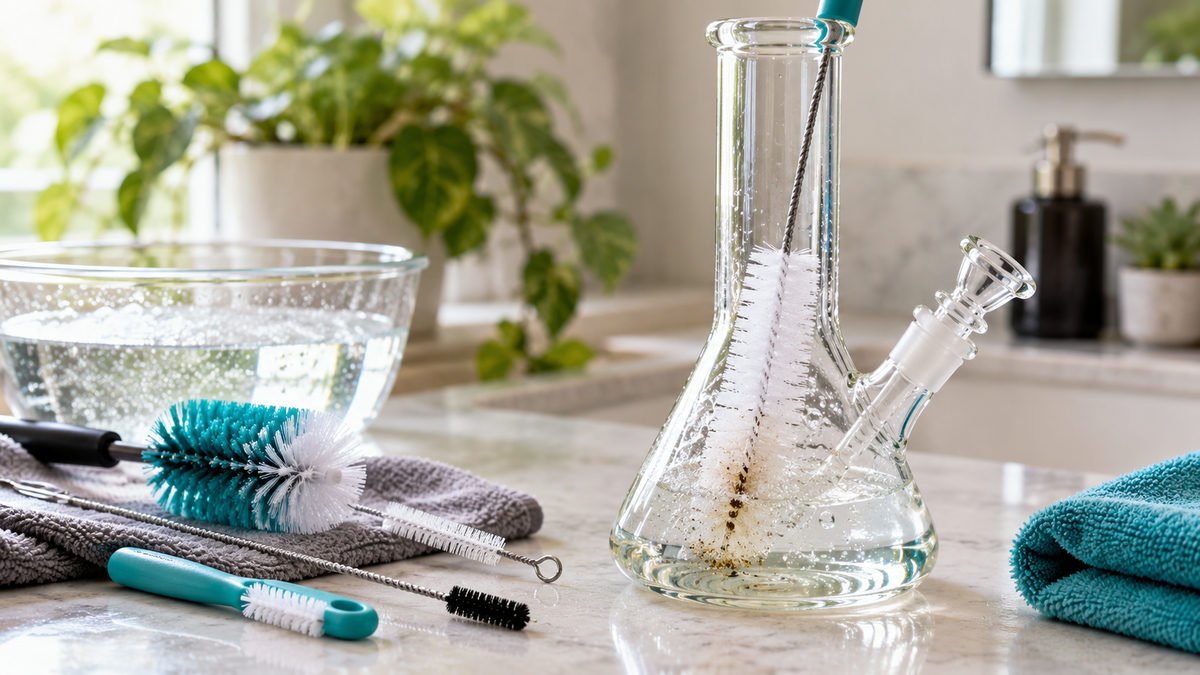
A clean bong delivers smoother airflow, better flavour, and a more enjoyable session. However, the wrong brush can leave resin behind or damage the surface. Many bong owners struggle with narrow downstems, tall chambers, percolators, and bowls when residue hardens.
This bong cleaning brushes guide explains how to choose suitable tools, clean each component safely, and maintain a reusable brush kit. You will also learn how to match brush shapes and materials with glass, silicone, acrylic, and ceramic bongs.
Why Regular Bong Cleaning Matters

Residue builds up quickly when ash, resin, and old water remain inside a bong. Therefore, regular cleaning helps reduce unpleasant smells, stale water, and unwanted buildup around the mouthpiece.
Clean glass also supports better airflow. For example, resin inside a downstem can narrow the passage and make each draw feel restricted. Meanwhile, clogged percolator holes can reduce bubbling and change how the bong functions.
Flavour can suffer as well. Old water and hardened residue may add stale notes that mask the natural taste of your chosen material. Additionally, dirty surfaces make it harder to notice cracks, chips, or damaged seals.
Routine Cleaning Versus Deep Cleaning
A quick rinse often handles light residue after occasional use. However, a deep clean becomes necessary when airflow declines, water looks cloudy, or the bong develops a persistent odour.
Use this simple schedule as a starting point:
- After each use: Empty the water and rinse the bong with warm water.
- Every few sessions: Brush accessible surfaces and replace the water.
- Weekly: Complete a solution soak and detailed brush clean.
- Immediately: Deep clean when resin restricts airflow or affects flavour.
Your cleaning frequency should reflect your usage. A bong used daily usually needs more attention than one used occasionally. For further accessory ideas, explore the Sweet Puff Australia shop.
Bong Cleaning Brushes Guide: Types, Shapes, and Materials
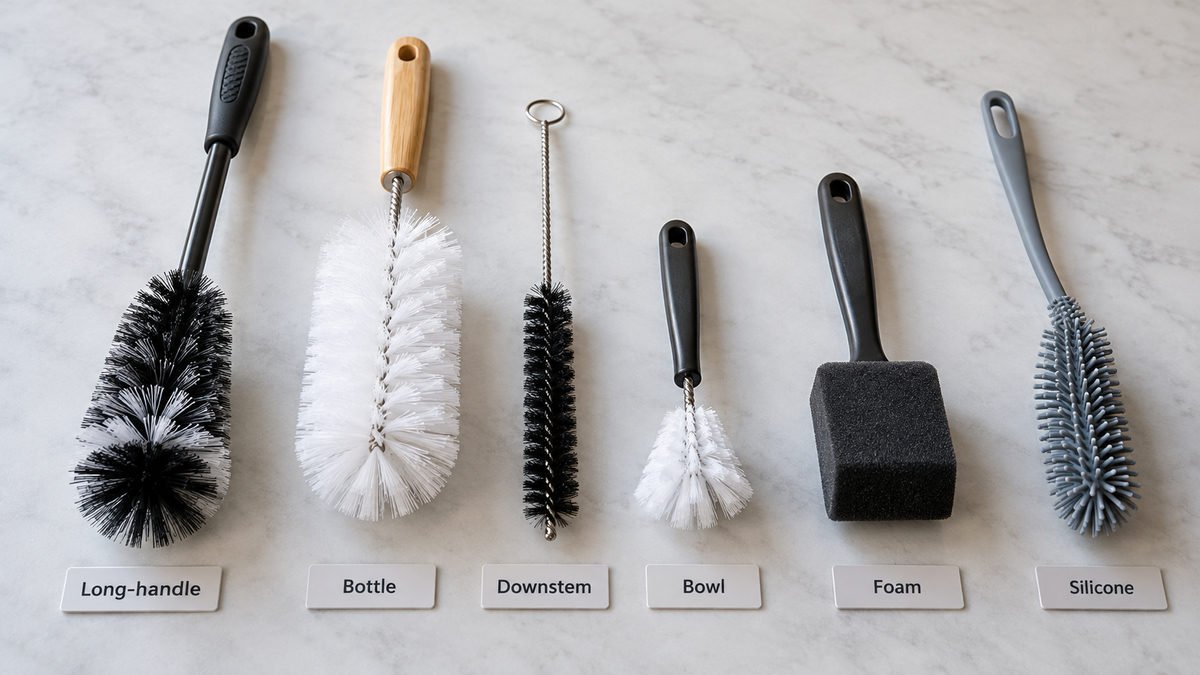
The best cleaning kit usually includes several brushes. Each tool reaches a different part of the bong, so one large brush rarely handles every cleaning task effectively.
Long-Handle Cleaning Brushes
Long-handle brushes reach the bottom of tall chambers, bases, and narrow necks. Choose a handle that extends beyond the deepest point without forcing your hand against the glass.
Additionally, a long handle gives you better control during circular scrubbing. A soft nylon or silicone head can loosen residue while reducing the risk of scratches.
Bottle Brushes
Wide bottle brushes work well on broad chamber walls and straight interiors. They provide more surface contact, which helps remove light film across large areas.
In contrast, narrow bottle brushes suit slim necks, curved interiors, and smaller water pipes. A tapered head can reach changing diameters without becoming wedged inside the chamber.
Downstem Cleaning Brushes
Downstems need slim, flexible brushes that fit through the opening without force. A brush that feels tight can damage the downstem or push residue deeper inside.
Therefore, select a brush with flexible nylon, silicone, or foam bristles. A bendable stem also helps follow curves around diffuser slits and small internal openings.
Bong Bowl and Small Pipe Brushes
Small bowl brushes clean slides, joints, bowls, and narrow openings. Their compact heads reach corners that larger brushes cannot access.
Pipe cleaners can support detailed work around carb holes and small passages. However, they work best as supplementary tools rather than replacements for a proper brush kit.
Flexible and Foam Brushes
Flexible brushes suit curved surfaces and delicate percolators. Foam heads can wipe residue from smooth areas without aggressive bristles.
Meanwhile, flexible tools can move around internal structures with less pressure. Always use controlled movements, especially around glass percolators and thin decorative sections.
Comparing Brush Materials
| Material | Best Use | Main Benefit | Important Caution |
|---|---|---|---|
| Nylon | Glass, ceramic, and general cleaning | Durable and available in different stiffness levels | Avoid very stiff bristles on delicate finishes |
| Silicone | Glass, silicone, and curved areas | Flexible and surface-friendly | May need extra passes on hardened resin |
| Foam | Smooth chambers and light residue | Gentle wiping action | Can wear faster with heavy buildup |
| Metal | Durable accessories only | Firm action against stubborn residue | Can scratch glass and damage finishes |
Metal brushes generally suit heavy-duty accessories rather than delicate glass. In fact, scratches can weaken glass surfaces and increase breakage risk. Use safe glassware handling guidance when choosing cleaning pressure and tools.
Reusable bong brushes become more practical when you clean regularly. Disposable pipe cleaners remain useful for small passages, but they rarely replace long-handled and shaped brushes.
How to Choose the Right Bong Cleaning Brush

Start by measuring the bong’s height, opening diameter, and narrowest internal passage. Therefore, you can choose tools that reach difficult areas without becoming stuck. Match the brush width to your bong bowl size.
Match Brush Length and Width
A tall bong needs extra reach, especially when the base sits below a narrow neck. Select a handle that reaches the bottom comfortably while leaving enough room for controlled movement.
Brush width matters just as much. The head should contact the surface without wedging inside the chamber. A slightly smaller brush usually provides safer movement than an oversized head.
Choose the Right Shape and Flexibility
Angled heads suit corners, joints, and curved bases. Cylindrical heads work well inside chambers, while tapered heads adapt to changing widths.
For percolators, choose flexible or bendable designs. Additionally, a slim foam or silicone head can move around internal structures with less risk of impact.
Consider Bristle Stiffness
Soft or medium nylon and silicone suit most glass bongs. Firmer tools may help with durable acrylic accessories, but they require careful pressure.
Never rely on stiffness alone to remove stubborn resin. Instead, soak the residue first and let the cleaning solution loosen it naturally.
Check Material Compatibility
- Glass: Use soft nylon, silicone, or foam, avoiding metal and sudden temperature changes.
- Silicone: Choose flexible brushes and confirm the cleaning solution suits silicone.
- Acrylic: Use non-abrasive tools and manufacturer-approved cleaners.
- Ceramic: Select soft brushes and handle glazed or decorative areas carefully.
A practical starter kit includes a long-handle brush, narrow bottle brush, downstem brush, bowl brush, pipe cleaners, and cleaning plugs. You can compare suitable accessories through Sweet Puff Australia’s product categories.
Buying Checklist
- Does the brush reach the bong’s deepest chamber?
- Does the head fit the narrowest opening safely?
- Are the bristles suitable for the bong’s material?
- Does the handle provide a secure, comfortable grip?
- Can you rinse and dry the brush thoroughly?
- Is storage simple and ventilated?
- Can you replace the brush when it wears out?
How to Clean a Bong With a Brush: Step-by-Step Method
Set aside enough time for the solution to loosen residue. Rushing the process often leads to excessive pressure, missed areas, or damaged components. For the full routine, see how to clean a glass bong.
- Empty the bong. Remove the bowl and downstem first. Dispose of old water safely, then place small parts somewhere secure.
- Rinse with warm water. Use warm, not boiling, water to soften loose residue. Sudden heat can create thermal shock and crack glass.
- Add a suitable cleaning solution. Use a specialised bong cleaner or isopropyl alcohol where appropriate. Always follow the product label and material guidance.
- Plug the openings. Fit cleaning plugs or cover openings securely. This helps the solution reach more surfaces during gentle movement.
- Shake carefully. Swirl the solution instead of using violent force. Let it sit when resin feels hardened or heavily layered.
- Brush the chamber. Use a correctly sized nylon, silicone, or foam brush. Clean the base, walls, neck, and accessible corners.
- Clean the downstem. Insert a narrow brush gently. Move it back and forth without forcing it through tight passages.
- Clean the bowl and slide. Use a small bowl brush for the opening, joint, and inner surfaces. Pipe cleaners can help with tiny holes.
- Work around the percolator. Use flexible brushes or pipe cleaners around diffuser slits. Apply light pressure and avoid striking internal glass.
- Rinse thoroughly. Rinse every component until no cleaner, odour, or loose resin remains. Continue rinsing longer than you think necessary.
- Air-dry completely. Place parts on a clean towel or drying rack. Reassemble only after every component feels fully dry.
- Inspect and repeat. Check the chamber, downstem, bowl, and percolator. Repeat targeted brushing if small patches remain.
Adjusting the Method for Different Buildup
Light buildup usually needs warm water, a short soak, and gentle brushing. However, stubborn resin may require several solution treatments and longer soaking periods.
Do not scrape aggressively when residue refuses to move. Instead, refresh the solution, wait longer, and use controlled brush pressure. This approach protects the surface while improving cleaning results.
Cleaning Glass, Silicone, Acrylic, and Ceramic Bongs Safely
Glass Bong Cleaning
Glass responds well to soft nylon, silicone, and foam brushes. However, sudden temperature changes can cause cracking, especially when the bong feels cold. Each of these bong materials needs a slightly different approach.
Avoid boiling water, abrasive metal, and excessive force. Also, inspect the glass before cleaning because existing chips or cracks can worsen during handling.
Silicone Bong Cleaning
Flexible brushes work well inside silicone bends, folds, and curved sections. Therefore, they can reach areas that rigid brushes often miss.
Always confirm that the cleaning product suits silicone. Rinse thoroughly because silicone can retain odours when cleaner remains inside folds or textured areas.
Acrylic Bong Cleaning
Acrylic needs non-abrasive tools and compatible solutions. Strong solvents may cloud, weaken, or discolour some plastic surfaces.
Therefore, follow the manufacturer’s instructions before using alcohol-based products. When uncertain, use warm water and a mild, approved cleaner.
Ceramic Bong Cleaning
Use soft brushes around ceramic interiors, glazed surfaces, joints, and decorative details. Handle ceramic carefully because heavy impacts can chip the finish.
For stubborn resin, soak the affected part first. Then, use controlled brush pressure instead of scraping with hard tools.
Cleaning Your Brushes
Rinse each brush thoroughly after use. When appropriate, wash it with mild soap, then rinse again until no soap remains.
Additionally, let brushes dry fully in a ventilated place. Replace any brush that develops a persistent odour, damaged bristles, or a loose head.
Empty bong water after every use to prevent residue from hardening. A quick maintenance rinse also reduces the work required during weekly cleaning.
Bong Maintenance Mistakes, Cleaning Frequency, and FAQs
Common Cleaning Mistakes
- Using boiling water on cold glass.
- Ignoring the downstem and bowl joint.
- Forcing an oversized brush into a narrow opening.
- Using abrasive metal on glass or decorative surfaces.
- Leaving dirty water and resin inside for extended periods.
- Failing to rinse cleaner completely.
- Storing brushes while they remain damp.
How Often Should You Clean a Bong?
Rinse the bong after every use and change the water regularly. Brush the main chamber every few sessions, then complete a deep clean weekly. Hard bristles can damage glass; learn how to prevent glass bong scratches.
However, clean sooner when airflow declines, flavour changes, water becomes cloudy, or resin appears around the joint. Usage level and bong design should guide your schedule.
Frequently Asked Questions
What is the best brush for cleaning a bong? A long-handle nylon or silicone brush suits most chambers. Add a narrow downstem brush and small bowl brush for detailed cleaning.
What size brush should I use? Choose a head that contacts the surface without becoming wedged. Measure the narrowest opening before buying.
Can a bottle brush work? Yes. Wide bottle brushes suit broad chambers, while narrow bottle brushes work better inside slim necks and curved sections.
What reaches the bottom of a tall bong? A long-handle brush with a flexible or angled head usually provides the best reach and control.
Can brushes remove stubborn resin? Yes, especially after soaking. Let the solution loosen resin first, then brush with steady pressure.
Should I use nylon, silicone, or metal bristles? Nylon and silicone suit most glass bongs. Metal should generally stay away from delicate glass because it can scratch the surface.
What cleaning solution works with a brush? Use a specialised bong cleaner or a suitable isopropyl alcohol solution. Always follow product instructions and material compatibility guidance.
Are reusable brushes better than disposable tools? Reusable brushes offer better reach and control for regular cleaning. Disposable pipe cleaners remain useful for small passages and quick touch-ups.
How should I sanitise a bong brush? Rinse it thoroughly, wash with mild soap when suitable, rinse again, and air-dry completely.
Match the Kit to Your Bong
- Small bong: Choose a narrow bottle brush, downstem brush, and bowl brush.
- Medium bong: Add a medium long-handle brush for the chamber and base.
- Tall bong: Select extra reach, a flexible head, and a narrow neck brush.
- Percolated bong: Include flexible brushes, pipe cleaners, and cleaning plugs.
Conclusion
The best bong cleaning setup combines the correct brush size, soft surface-safe bristles, a suitable cleaning solution, and consistent maintenance. Long-handle, narrow, flexible, and bowl-specific brushes make it easier to clean chambers, downstems, percolators, and accessories safely.
Sweet Puff Australia brings together water pipes, glass designs, and smoking accessories for adult customers. Explore the Sweet Puff Australia website for product categories and accessory options.
Choose a bong cleaning brush kit suited to your bong’s height, openings, and material. Then schedule routine cleaning before resin buildup affects airflow or flavour.






Comment (1)
[…] Different bong components collect water stains in different places. Therefore, clean each part separately where possible. This approach improves contact and reduces the need for force. Narrow sections need dedicated bong cleaning brushes. […]