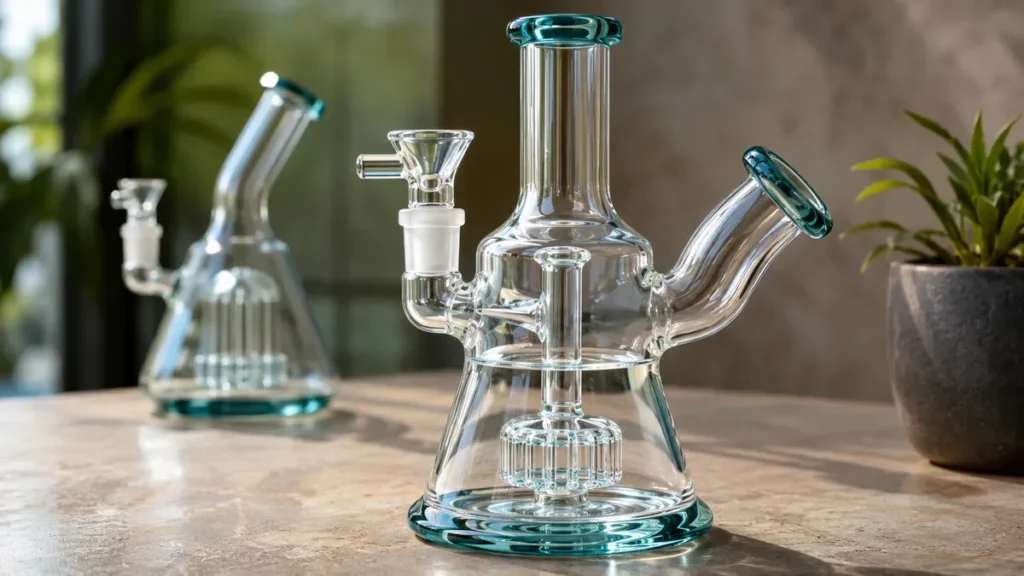
Can you tell whether a glass piece is genuinely handcrafted, expertly finished, and built to last? Learning how to identify quality glass craftsmanship helps you avoid serious defects, misleading labels, and mass-produced pieces sold at premium prices. You do not need a laboratory to inspect glass effectively. Instead, use a professional framework covering clarity, thickness, finishing, technique, authenticity, durability, and value before buying.
How to Identify Quality Glass Craftsmanship at a Glance

Quality glass begins with suitable material and controlled production. Look for structural integrity, clear proportions, consistent colour, smooth finishing, and evidence of skilled making. The piece should also suit its intended purpose, whether that involves drinking, lighting, display, collecting, or use as a smoking accessory.
However, terms such as “handmade”, “studio-made”, and “hand-finished” do not mean the same thing. Handmade glass may receive most of its form through direct work by an artist. Hand-finished glass may begin as a factory-made blank before receiving polishing, engraving, or decoration.
Understand the Production Language
Studio-made usually describes work produced in a small workshop or independent studio. Mass-produced glass relies on repeated moulds, automated forming, and standardised finishing. Some factory pieces imitate artisan effects through simulated bubbles, uneven colours, or artificial tool marks.
Therefore, inspect the object rather than trusting the product description alone. Hold it towards a plain background and rotate it slowly. Check the silhouette, then examine the base, rim, corners, transitions, and any decorative elements.
- Look for a balanced and intentional silhouette.
- Check the piece against directional light.
- Feel accessible edges for roughness or sharpness.
- Inspect the base for level contact.
- Search for mould seams and manufacturing lines.
Intentional variation should support the design. A handblown vessel may show gentle differences in wall thickness or colour movement. In contrast, a sharp lip, unstable base, deep scratch, or distorted join indicates careless production.
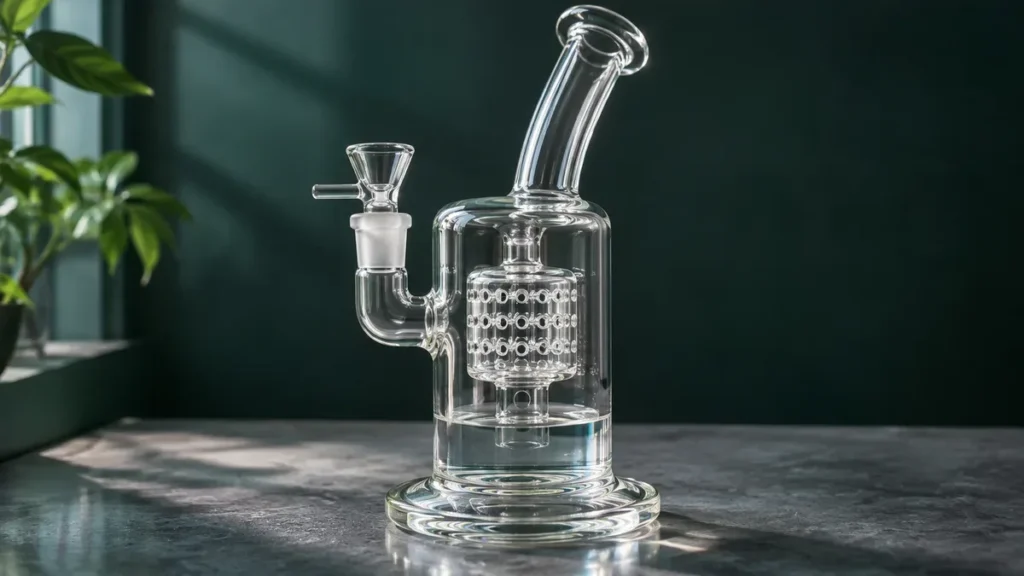
Most importantly, judge the glass according to its intended use. Decorative sculpture can tolerate more irregularity than drinkware. Architectural panels require different checks from collectible glass or a borosilicate water pipe. Professional inspection means recognising variation without excusing unsafe construction.
Inspect Glass Clarity, Colour, Thickness, Weight, and Balance

Start with clarity by viewing the piece against a pale, uncluttered background. Directional light can reveal haze, streaks, internal contamination, and inconsistent transparency. Clear glass should usually appear clean and coherent, although certain techniques deliberately create texture or opacity. See how wall thickness affects strength in thick vs thin glass bongs.
Additionally, examine coloured glass for even pigment distribution. Strong craftsmanship creates controlled colour depth, layered transitions, and consistent opacity. Cloudy patches, unexplained tint changes, and random dark areas may indicate contamination, poor mixing, or uneven heating.
Assess Thickness Without Relying on Weight
Weight alone cannot prove quality. Thick soda-lime glass may feel heavier than thin borosilicate glass, while lead-free crystal can feel dense because of its composition. Inspect the rim, walls, corners, base, and transitions instead.
Look for sudden changes in thickness that do not support the design. Thin areas around handles, stems, or corners may create weak points. Meanwhile, an overly heavy base can make a piece stable, but it may also indicate inefficient construction.
Appropriate weight depends on the material, dimensions, manufacturing method, and intended application. A small drinking glass should feel comfortable and stable. A large decorative object needs enough mass for reliable balance without becoming unnecessarily difficult to handle.
Compare Common Glass Types
| Glass type | Typical characteristics | Common applications |
|---|---|---|
| Soda-lime glass | Versatile, affordable, and suitable for many everyday products | Drinkware, jars, decorative pieces, and general household glass |
| Borosilicate glass | Good thermal resistance and a relatively light feel | Laboratory items, heat-exposed pieces, and specialist accessories |
| Crystal | Often offers greater brilliance, density, and sound | Decorative objects, stemware, and luxury presentation pieces |
| Lead-free crystal | Designed to provide brilliance without added lead | Contemporary drinkware and decorative glass |
Notably, thermal resistance varies between products. Borosilicate glass often handles temperature changes better than ordinary soda-lime glass. However, no glass should face sudden extreme temperature changes unless the maker specifically approves that use.
Finally, test balance on a flat surface. Watch for wobble, uneven feet, tipping, or an unstable centre of gravity. Symmetry often reveals production control, while intentional asymmetry should still feel deliberate, stable, and structurally sound.
Examine Rims, Edges, Seams, Joints, Handles, and Bases
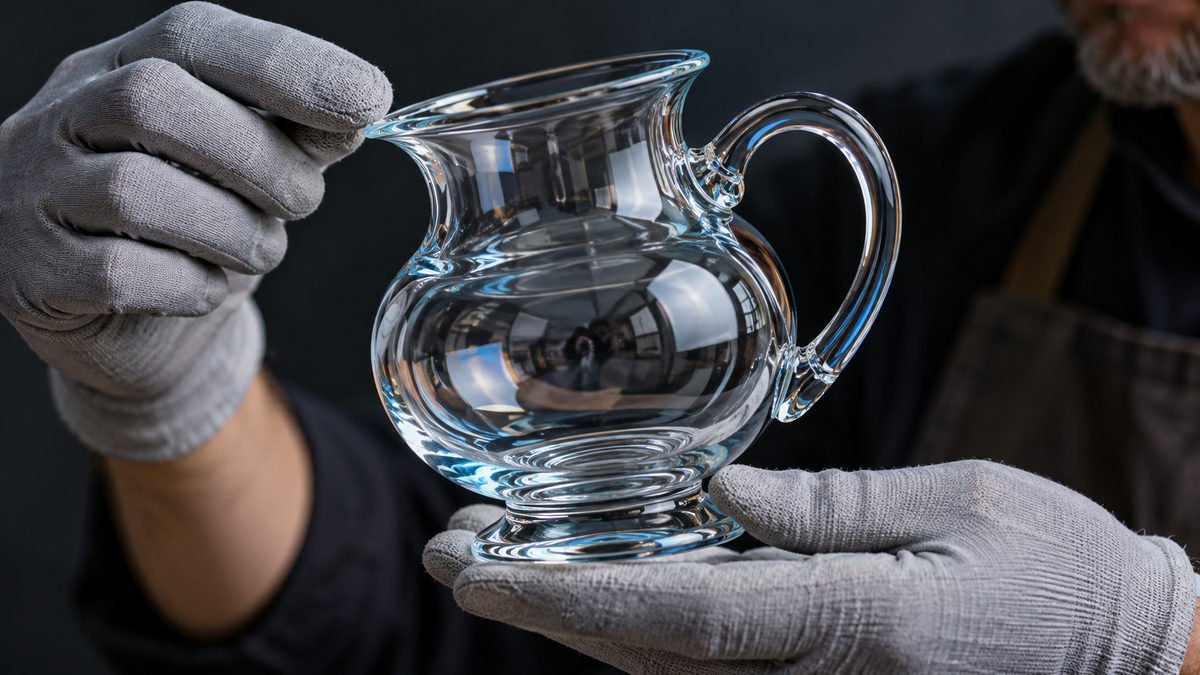
Rims deserve close attention because they meet the hand or mouth during normal use. A well-finished rim feels smooth, even, and comfortable. It should not contain a sharp lip, chip, wave, burr, or unfinished cutting mark. Apply these checks when you inspect a glass bong before buying.
Run a clean fingertip carefully along accessible edges. Do not force contact with delicate or visibly damaged areas. Roughness, micro-chips, abrupt transitions, and small catches can reveal incomplete grinding or polishing.
Read Seams and Manufacturing Lines
Some moulded glass contains subtle seams, and their presence does not automatically indicate poor quality. However, prominent, sharp, misaligned, or badly finished seams deserve caution. A strong manufacturer normally positions and softens seams where they do not interfere with comfort or strength.
Inspect handles, stems, applied elements, and joints next. Attachments should integrate naturally with the main form. Look for clean transitions, suitable proportions, and sufficient material around connection points.
Stress lines around a handle or stem can indicate poor attachment or thermal shock during production. Furthermore, a decorative element should not pull the object off balance. Weak attachments often become more obvious after repeated handling.
Check Bases and Surface Treatments
A good base sits level and provides stable contact. Its edges should feel polished or appropriately softened. The underside should also minimise scratching, especially when the piece rests on timber, stone, or glass furniture.
- Check for a level base and secure footing.
- Look for chips, star fractures, scratches, and stress lines.
- Inspect polished surfaces for cloudy patches or uneven sheen.
- Confirm that engraved areas have clean, controlled lines.
- Check sandblasted textures for consistent coverage.
Different finishes should show different evidence. Fire-polished surfaces usually appear rounded and softened. Ground glass can retain a controlled matte texture. Engraved work should display deliberate lines, while fused and slumped glass should show coherent joins and controlled shaping.
For functional glassware, also confirm rim comfort, stem alignment, handle security, base stability, dishwasher suitability, and heat-use limitations. These details matter more than decorative complexity when the piece faces daily handling.
Recognise Handmade Glass Techniques and Acceptable Imperfections
Each glassmaking technique leaves distinctive visual and tactile evidence. Blowing can create gentle movement in the walls. Casting may produce a more solid profile, while fusing and slumping often reveal layered edges or softened contours.
Flameworking can leave precise applied details and localised heat effects. Engraving creates controlled grooves or frosted lines. Cold-working includes cutting, grinding, polishing, and shaping after the glass cools.
Separate Character From Defects
Handblown glass may show subtle variation in wall thickness, shape, colour movement, controlled bubbles, or tool marks. These features can demonstrate direct artistic control rather than poor quality.
However, skilled makers control variation instead of allowing random faults. Minor asymmetry should support the form. Layered colour shifts should appear intentional, and small bubbles should suit the composition.
- Acceptable: minor asymmetry that remains stable and deliberate.
- Acceptable: controlled bubbles placed within the design.
- Acceptable: gentle colour movement and layered transitions.
- Unacceptable: cracks, sharp edges, and structural weakness.
- Unacceptable: trapped debris or severe distortion.
Bubbles require careful interpretation. Consider their size, placement, frequency, and effect on strength. A few evenly positioned bubbles may form part of a deliberate design. Numerous random bubbles can suggest poor heating, insufficient control, or unsuitable material.
Additionally, trapped debris differs from an intentional inclusion. Debris may appear dark, angular, or unrelated to the surrounding pattern. It can also create stress concentrations inside the glass.
Look for Evidence of Technical Control
Uneven heating may create distorted joins, ripples, or localised weakness. Devitrification can produce a dull, crystalline, or scaly surface where the glass loses its intended finish. Inconsistent polishing may leave alternating glossy and cloudy areas.
Decorative relief, cane work, inclusions, and layered elements should align with precision. Repeated lines should maintain consistent spacing. Applied details should sit securely without visible tearing, stretching, or weak attachment points.
Factory-made glass can imitate artisan effects through repeated moulds and identical imperfections. Compare several pieces when possible. If every “handmade” item has the same bubble pattern, seam position, and uneven mark, the effect may come from a mould.
Product descriptions also provide clues. Genuine studio work usually explains the technique, dimensions, variation, and care requirements. Vague claims such as “handmade style” deserve more questions before purchase.
Verify Authenticity, Materials, Maker Marks, and Value
A signature or maker mark can support attribution, but it cannot prove quality by itself. Marks may be copied, applied after production, or associated with an unauthorised seller. Treat them as one part of a wider evidence trail.
Therefore, review certificates, provenance, studio records, edition numbers, artist biographies, and gallery representation. Transparent sellers should explain where the piece came from and how they obtained it.
Check whether the listing identifies the material, dimensions, manufacturing method, care instructions, heat limitations, and country or studio of origin. Missing information does not always prove fraud. However, vague details make accurate value assessment difficult.
Ask Technical Questions
For valuable work, contact the artist, studio, or supplier directly. Ask about annealing, intended application, food safety, repairability, and quality-control standards. Annealing matters because controlled cooling reduces internal stress in many glassmaking processes.
- Which glass type did the maker use?
- Was the piece blown, cast, fused, slumped, or moulded?
- What heat and cleaning limitations apply?
- Can the studio repair damage or replace components?
- What documentation supports the attribution?
Price should reflect labour, material cost, rarity, scale, finishing complexity, studio reputation, edition size, and design originality. A high price does not guarantee quality. Conversely, an unusually low price may signal factory production, copied design, weak documentation, or inferior finishing.
When comparing crystal with ordinary glass, consider brilliance, density, clarity, sound, composition claims, and manufacturer documentation. No single test proves crystal content or authenticity. In particular, sound and sparkle can support an assessment, but they should not replace reliable material information.
Before buying custom, architectural, collectible, or high-value artisan glass, request written specifications. Confirm measurements, tolerances, installation requirements, insurance, delivery protection, and responsibility for defects. Clear documentation protects both the buyer and the maker.
Use a Practical Buying and Care Checklist
Before purchasing, inspect the piece systematically. A checklist prevents attractive colour or decoration from distracting you from structural problems. Combine this with our list of what to check before buying a bong.
- Clarity, colour consistency, and transparency
- Wall thickness, weight, balance, and proportions
- Rim comfort, edge smoothness, seams, and mould lines
- Handle, stem, applied detail, and joint security
- Base stability and protection against scratching
- Surface finish, engraving, texture, and visible defects
- Material, technique, care instructions, and intended use
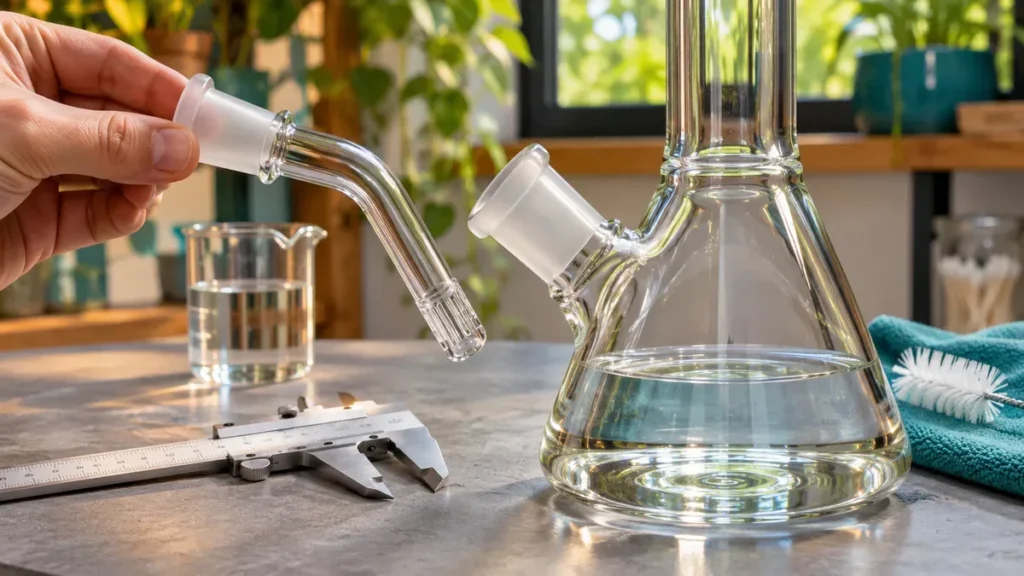
For online listings, request high-resolution photographs from several angles. Ask for close-ups of the rim, base, maker mark, seams, and any decorative joins. Measurements should include height, width, diameter, and relevant opening sizes.
Additionally, read customer reviews for comments about packaging, accuracy, damage, and seller communication. Do not rely on reviews alone. The seller’s response to detailed questions often reveals more than polished product photography.
Confirm Delivery and Care Requirements
Review the return policy before paying. Check damage-in-transit coverage, custom-order terms, insurance, packaging standards, and repair or replacement options. Custom work may have different cancellation rights from ready-made stock.
Match the glass to its environment. Consider thermal shock, impact exposure, moisture, direct sunlight, food contact, vibration, and architectural load requirements. A decorative piece may suit a shelf but fail in a high-traffic area.
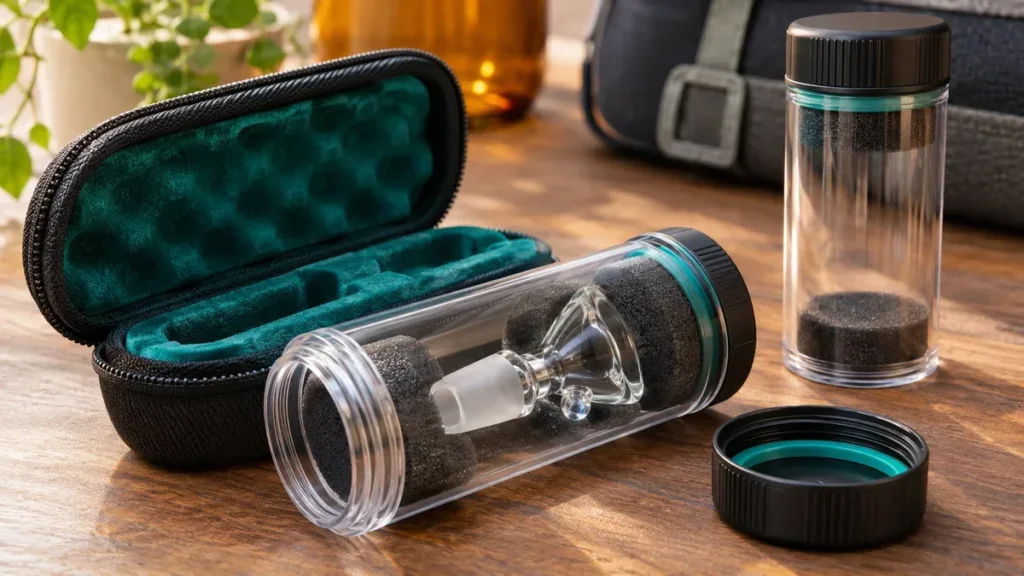
Use appropriate cleaning methods and avoid sudden temperature changes. Protect polished surfaces from abrasive cleaners, metal contact, and gritty dust. Store delicate pieces securely, with enough space to prevent knocks.
Follow maker-specific instructions whenever available. Dishwasher use, boiling water, direct flame, solvents, and strong cleaning agents can damage glass unexpectedly. If instructions conflict with general advice, ask the maker for clarification.
Professional assessment makes sense for antique, signed, architectural, or visibly damaged glass. An experienced conservator, appraiser, or glass specialist can assess repairs, stress, provenance, and construction more reliably than a casual visual inspection.
Most importantly, buy when the material, construction, finish, provenance, seller transparency, and price align with the intended use. Photograph the piece immediately after delivery, including its packaging and every surface. This record helps with insurance, returns, and damage claims.
Conclusion
High-quality glass craftsmanship combines suitable materials, controlled variation, consistent thickness, stable proportions, smooth finishing, secure joins, clear provenance, and honest product information. Minor handmade irregularities can add character when they support the design.
However, cracks, sharp edges, severe distortion, poor seams, unstable bases, and unexplained defects should raise concerns. Use the inspection checklist before purchasing, ask the maker or supplier detailed questions, and request extra photographs or documentation for online purchases.
Sweet Puff Australia brings together glass designs and smoking accessories for adults who want clearer product information. Explore the Sweet Puff Australia website to review available collections and product details before making an informed choice.