

Choosing between a thick glass bong and a thin glass bong can change how stable, portable, durable, and enjoyable your setup feels every day. Many shoppers assume thicker glass always performs better. Others choose thin glass for its lower price and lighter weight.
However, glass thickness tells only part of the story. This guide compares durability, flavour, portability, stability, cleaning, pricing, and construction quality. Therefore, you can choose the best glass bong for your budget, space, and lifestyle.
Thick Glass vs Thin Glass Bongs: What Is the Difference?

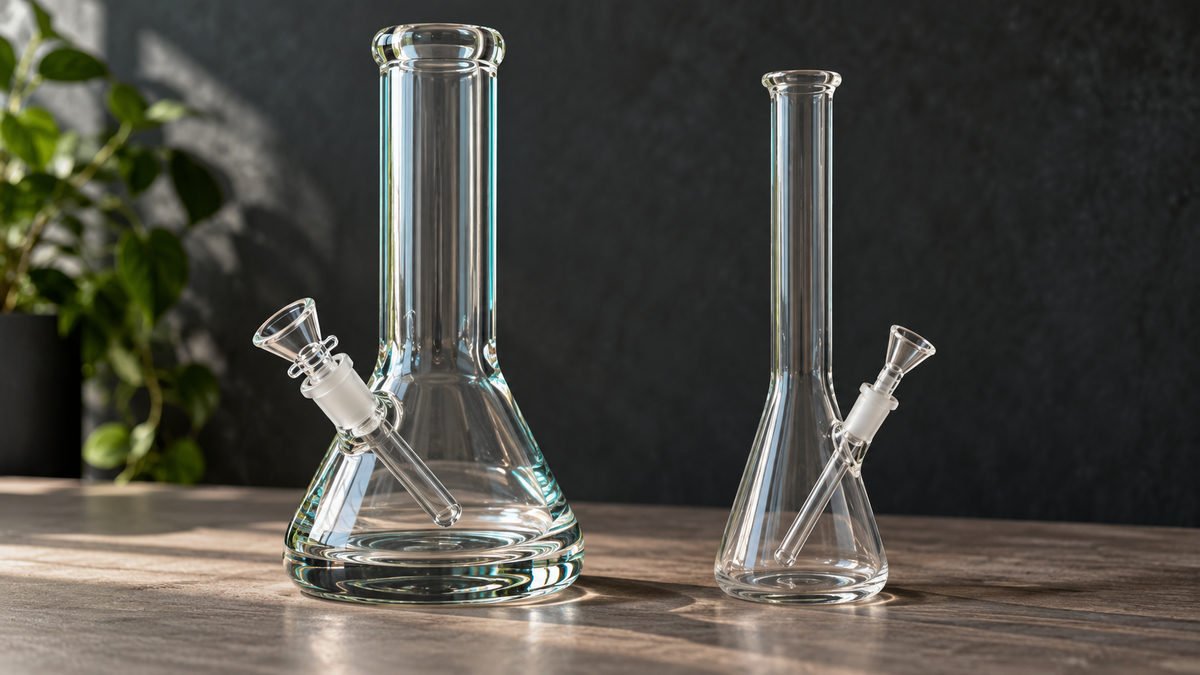
Thick glass bongs usually have heavier walls, stronger bases, and a more substantial feel. They often suit home setups because they stay steadier during use and feel more reassuring in the hand.
In contrast, thin glass bongs use slimmer walls and weigh less. They often cost less and remain easier to carry between rooms or locations. However, their lighter construction may require more careful handling.
There is no universal thickness standard for every bong. Manufacturers may use different glass grades, wall measurements, joint designs, and forming methods. Therefore, two bongs with similar dimensions may offer very different levels of quality.
Borosilicate glass remains a popular choice because it handles heat changes better than ordinary glass. According to SCHOTT’s borosilicate glass information, this material offers strong thermal resistance and chemical durability.
However, thickness is only one part of construction quality. Joint precision, weld smoothness, glass uniformity, base design, and percolator construction also affect performance and reliability.
When comparing thick glass vs thin glass bongs, focus on these main factors:
- Durability and impact resistance
- Stability during use and storage
- Airflow, filtration, and flavour
- Portability and transport safety
- Cleaning requirements
- Upfront price and long-term value
A thick bong with poor joints may perform worse than a thinner piece with careful construction. Similarly, a simple bong may offer better everyday value than a heavy piece with difficult-to-clean features.
Durability, Stability, and Everyday Handling Compared
Durability and impact resistance
Thicker walls can provide greater resistance to minor knocks, accidental bumps, and regular handling. The extra material may help the bong tolerate small impacts that could chip thinner glass. Stability also depends on the bong base shape.
However, no glass bong is unbreakable. A thick base can still crack after hitting a hard floor. A strong tube can still fail if a joint receives uneven pressure.
Thin glass bongs usually need more careful handling. Drops, pressure around the downstem, and sudden temperature changes can create chips or hairline cracks. These problems may appear around joints, bases, and narrow necks.
Additionally, thin glass often feels less forgiving during cleaning. Twisting a tight accessory or placing the bong against a hard sink edge can create dangerous pressure points.
For daily users, a well-made thick glass bong may offer better long-term value. Frequent handling, regular water changes, and repeated cleaning create more opportunities for accidental damage.
Nevertheless, quality matters more than weight alone. A thick bong with uneven glass or weak welds can still fail earlier than a carefully made thin borosilicate model.
Stability and storage
A heavier base and greater overall weight can reduce tipping during use. The bong may feel more secure on a flat table, shelf, or dedicated storage surface.
Meanwhile, base diameter also affects stability. A wide, balanced base can support a lightweight bong better than a narrow base supporting a heavier design.
The centre of gravity matters as well. A tall bong with a narrow neck may tip more easily than a shorter piece with a broad base. Water level can also affect balance and handling.
Therefore, inspect the entire shape before judging stability by glass thickness. Look at the base width, chamber profile, neck angle, height, and accessory position.
The trade-off is simple. Thick glass usually feels safer and steadier at home. However, its extra weight can make storage, shelf placement, and moving the bong more difficult.
Are thick glass bongs more durable? Generally, yes, when they use quality borosilicate glass, strong joints, and a stable base. However, poor construction can still cause failure, regardless of wall thickness.
| Feature | Thick glass bong | Thin glass bong |
|---|---|---|
| Impact resistance | Usually better for minor bumps | More vulnerable to chips and cracks |
| Stability | Often heavier and steadier | Depends strongly on base design |
| Handling | Feels solid and substantial | Feels light and easier to move |
| Storage | Needs more secure shelf space | Fits smaller storage areas |
Does Glass Thickness Affect Cooling, Filtration, or Flavor?
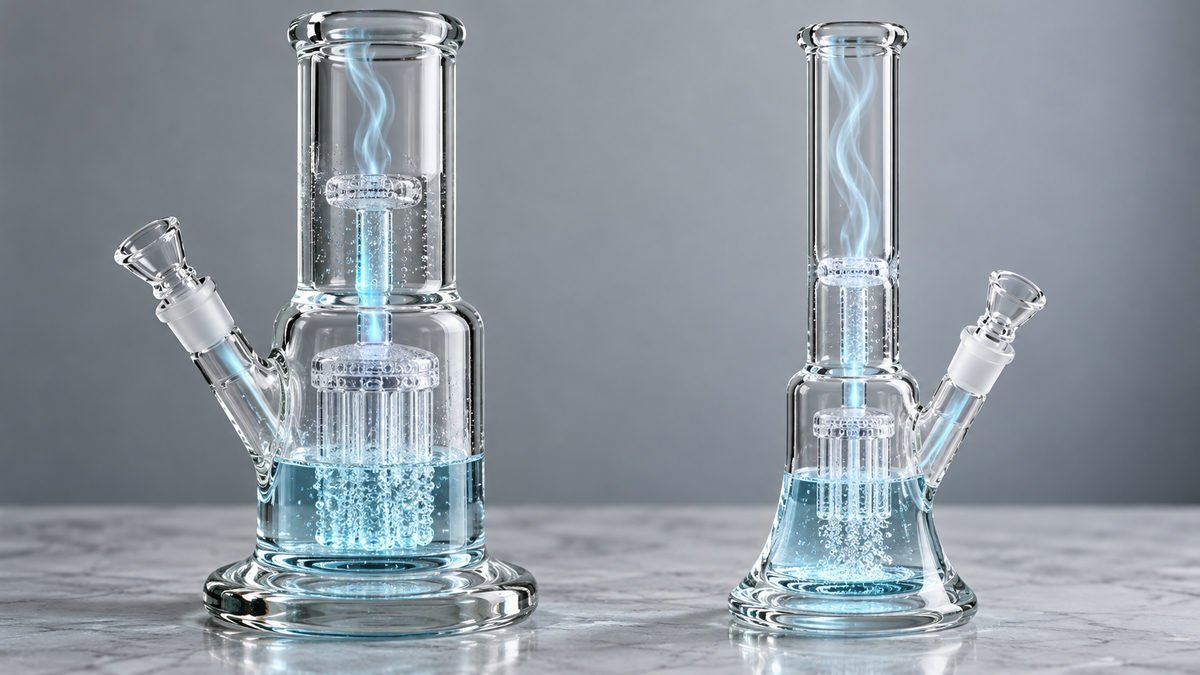
Glass thickness alone usually has little direct effect on cooling, filtration, airflow, or flavour. The design inside the bong generally influences the experience more than the wall measurement.
For example, water volume, downstem length, chamber size, diffuser style, and percolator type can change how air moves through the piece. These features often matter more than whether the walls feel heavy.
Thicker glass may retain heat differently, but most users notice airflow and filtration design first. A well-designed thin bong can feel smoother than a bulky bong with poor diffusion.
Additionally, clean glass preserves flavour better than dirty glass. Resin, ash, stale water, and blocked passages can affect taste in any bong, regardless of thickness.
Joint precision also matters. Airtight seals, smooth welds, and correctly fitted downstems help maintain consistent airflow. Loose joints may create leaks, while rough internal edges can increase draw resistance.
Some buyers believe thicker glass automatically produces stronger or smoother hits. However, thickness does not create extra filtration. The water path and percolator design perform that job.
Do thin glass bongs provide better flavour or performance? They can perform just as well when their design and construction match a thicker model. Some users may also prefer their lighter handling and simpler shape.
Therefore, compare the filtration system and airflow before choosing based on weight. If flavour matters most, prioritise clean glass, airtight joints, and a design that remains easy to maintain.
Portability, Use Cases, and the Pros and Cons of Each Type
Advantages and disadvantages of thick glass bongs
Thick glass bongs suit frequent home use because they feel stable and substantial. Their heavier construction can provide better resistance to everyday bumps and accidental contact.
They may also offer a more premium feel. Collectors and regular users often appreciate clean welds, balanced proportions, detailed percolators, and distinctive craftsmanship.
- Better stability on a flat surface
- Stronger everyday construction
- More substantial handling and display appeal
- Good suitability for regular home use
However, thick glass comes with practical disadvantages. A heavier piece takes more effort to move and needs stronger, more secure storage. It may also cost more to ship or replace.
- Higher weight and larger storage demands
- Less convenient for regular transport
- Potentially higher shipping costs
- Greater replacement cost after serious damage
Advantages and disadvantages of thin glass bongs
Thin glass bongs appeal to shoppers who want a lighter setup or lower upfront cost. Their reduced weight makes them easier to carry between rooms and store in compact spaces.
They can also suit occasional users who do not need a large home setup. A simple, lightweight design may provide practical performance without taking over a shelf or cabinet.
- Lower purchase price in many cases
- Lightweight and easier to handle
- More convenient for compact storage
- Suitable for occasional use
However, thin glass needs more careful handling. Impacts may cause damage more easily, especially around joints, bases, and narrow neck sections.
- Greater vulnerability to drops and knocks
- More delicate joints on some models
- Reduced stability in narrow designs
- Potentially shorter service life with rough handling
Which type is easier to transport? Thin glass is generally more portable because it weighs less. However, a compact thick-glass bong with a protective case may travel more safely than an unprotected thin model.
If you transport thin glass, use secure padding and a hard-sided case. Keep accessories separate, prevent movement inside the case, and handle the piece carefully during loading.
Daily home users should usually consider thick glass first. Beginners may also appreciate its stability, provided the design remains simple and easy to clean.
Meanwhile, thin glass suits portability, occasional use, and lower upfront spending. Collectors and premium buyers may prioritise craftsmanship, unusual designs, and display quality over weight.
Price, Construction Quality, and Buying Criteria
Is a thick glass bong worth the higher price?
A higher price may reflect more glass, stronger construction, skilled welds, better percolators, and tighter quality control. It may also reflect design work, finishing details, and brand reputation. Learn how to identify quality glass craftsmanship.
However, thickness alone does not justify a premium price. An inexpensive thick bong may offer less value than a thinner borosilicate bong with precise joints and a stable base.
Therefore, compare the purchase price with replacement risk. A cheaper bong may cost more over time if it breaks easily or uses difficult-to-replace components.
On the other hand, an expensive design may not suit your routine. Complex percolation, unusual joints, and oversized chambers can increase maintenance without adding practical value for every user.
Practical checklist before buying
Start by checking the material. The product listing should clearly identify borosilicate glass rather than using vague terms such as “premium glass” or “quality glass”.
Next, inspect the overall shape and centre of gravity. A stable bong should sit securely without leaning or placing excessive weight on one side.
- Base width and stability
- Chamber shape and height
- Neck angle and balance
- Joint size and precision
- Downstem fit and replacement options
Consider the percolator carefully. Simple designs are often easier to clean and less expensive to replace. More complex designs may provide extra filtration, but they also add narrow passages and maintenance demands.
Additionally, check accessory compatibility before purchasing. Common bowl sizes and downstem measurements make future replacements easier to find.
- Replacement bowls
- Downstems
- Ash catchers
- Ice pinchers
- Reclaim accessories
For a broader selection, you can browse glass bongs and smoking accessories or explore the available product categories.
Use bong size and glass thickness together. Beginners often benefit from a compact, stable bong with a simple chamber. Regular home users may prefer a heavier, thicker setup with durable joints.
Most importantly, do not assume the heaviest bong offers the best value. Choose the construction quality, design, and maintenance level that match your actual routine.
Cleaning, Breakage Prevention, and the Best Choice for You
Thick glass bongs are not automatically easier to clean. Cleaning difficulty depends more on percolator complexity, chamber access, and the number of narrow internal passages. Whatever you choose, learn how to prevent glass bong scratches.
A simple thick bong may clean easily, while an intricate thin bong may also remain manageable. Meanwhile, multi-percolator pieces can require more time regardless of their wall thickness.
Regular cleaning helps prevent residue buildup, stale odours, blocked airflow, and difficult deposits. It also makes chips, cracks, and joint problems easier to notice.
To reduce breakage risk, place the bong on a stable surface away from table edges. Avoid sudden temperature changes, such as adding very hot water to cold glass.
- Hold the bong by sturdy sections
- Never force tight accessories into place
- Keep the base away from hard sink edges
- Check joints and welds during cleaning
- Stop using pieces with chips or hairline cracks
Store the bong empty and upright when possible. Keep it away from pets, children, direct sunlight, crowded shelves, and areas where it could fall.
Water handling also matters. Use an appropriate water level, empty the chamber before moving the bong, and avoid carrying it with loose accessories attached.
Which bong is better for daily use? A well-made thick borosilicate bong usually suits frequent home use because it offers stronger stability and better resistance to everyday handling.
However, a quality thin bong can work well for careful occasional users. Its lighter weight may make storage and movement much easier.
Which bong is best for beginners? Prioritise a stable base, simple design, moderate height, easy cleaning, and common joint sizes. Reliable replacement-part availability matters more than maximum thickness.
Choose thick glass for durability and stability. Choose thin glass for portability and budget. In both cases, judge the material, joints, base, design, and cleaning requirements together.
Conclusion
Thick glass bongs generally offer better stability, impact resistance, and long-term value for daily home use. Thin glass bongs remain lighter, more portable, and often more affordable.
Neither thickness guarantees better flavour or filtration. Borosilicate glass, airtight joints, base design, percolation, airflow, and cleaning access matter just as much.
Before choosing, compare thickness, base stability, joint quality, design simplicity, accessory compatibility, and intended use. You can also explore Sweet Puff Australia for water pipes, glass designs, and related accessories.
Ultimately, the best bong is the one that fits your space, budget, handling habits, and maintenance routine. A balanced, well-made design will usually provide better value than the thickest option available.






Comments (3)
[…] Best general-purpose choice: Borosilicate glass suits flavour-focused buyers who value visual inspection, broad availability, and refined construction. Glass itself varies too; see thick glass vs thin glass bongs. […]
[…] techniques deliberately create texture or opacity. See how wall thickness affects strength in thick vs thin glass […]
[…] Flavour often separates glass and silicone most clearly. Glass usually provides the most neutral surface, so the material adds little noticeable character. Silicone may hold previous odours when residue remains inside the body. If durability worries you, consider thick glass bongs. […]