
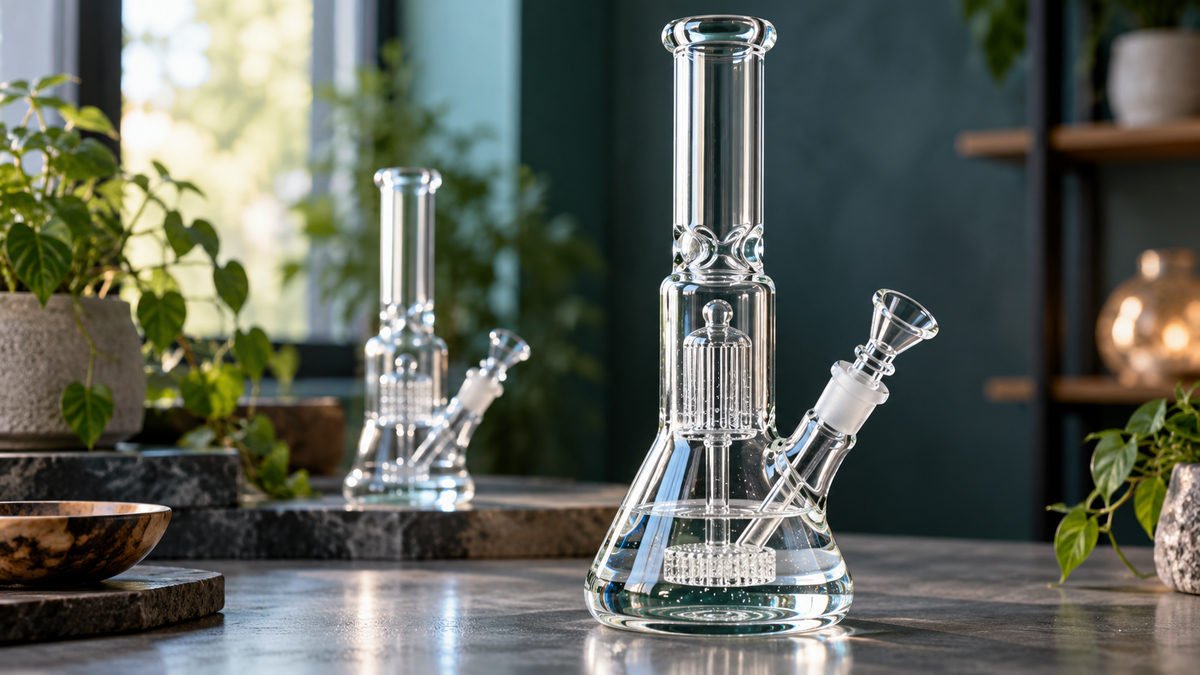
Why do quality water bongs often use borosilicate glass instead of ordinary glass, acrylic, silicone or ceramic? The answer becomes clearer once you understand heat resistance, flavour neutrality and thermal shock. These borosilicate glass bongs explained principles help adults compare durability, filtration, cleaning, design and value before buying.
Borosilicate glass does not make every bong unbreakable or automatically superior. However, it gives manufacturers a reliable material for bowls, downstems, percolators and chambers. Construction quality, wall thickness, joints and overall design still determine everyday performance.
Borosilicate Glass Bongs Explained: What the Material Is

Borosilicate glass contains silica and boron oxide, also called boric oxide. That boron changes the glass structure and reduces its thermal expansion compared with standard soda-lime glass. As a result, borosilicate handles temperature changes with less internal stress.
For example, laboratory flasks commonly use borosilicate because they face heating, cooling and chemical exposure. The same qualities benefit water bongs, especially around bowls and joints. You can read more about the material’s composition and uses in this borosilicate glass reference.
Why heat resistance matters
Borosilicate glass offers strong thermal shock resistance, but it remains glass. It can still crack from a drop, manufacturing flaw, uneven heating or sudden temperature change. Therefore, treat the phrase “heat resistant” differently from “heatproof”.
Compared with soda-lime glass, borosilicate usually expands less when heated. That lower expansion helps reduce stress when a bowl becomes hot during normal use. However, direct flame should remain limited to the intended bowl area.
Clarity, flavour and chemical stability
Quality borosilicate glass stays clear and resists many chemicals used during routine cleaning. It also adds little flavour of its own, which helps preserve the character of the material being used. Acrylic and silicone can feel different because they may retain odours or develop surface wear.
Additionally, borosilicate’s smooth surface makes residue easier to see. That visibility encourages regular cleaning because dark buildup becomes obvious. A clean chamber also makes bubbles, water movement and percolator function easier to inspect.
Why construction still matters
The material alone cannot guarantee a durable bong. A thin, poorly finished borosilicate piece may fail sooner than a carefully made model with reinforced joints and a stable base. Therefore, inspect the entire design rather than trusting the material label alone.
- Check the wall thickness and base strength.
- Look for clean, even joints without sharp stress points.
- Confirm that the downstem and bowl fit securely.
- Choose replacement parts that remain easy to source.
Borosilicate Glass vs Regular Glass, Acrylic, Silicone, and Ceramic

Borosilicate and soda-lime glass can look almost identical at first glance. However, borosilicate generally offers better thermal shock resistance, stronger chemical stability and consistent clarity. Soda-lime glass remains widely available and often costs less. See how all options rank in our bong materials comparison.
| Material | Main strengths | Common trade-offs |
|---|---|---|
| Borosilicate glass | Heat resistance, clarity, neutral flavour and clean visual function | Can still shatter and often costs more |
| Soda-lime glass | Lower cost and wide availability | More sensitive to thermal shock |
| Acrylic | Lightweight, affordable and impact resistant | Can scratch, cloud and feel less premium |
| Silicone | Flexible, portable and resistant to drops | May retain odours and offer less rigid airflow |
| Ceramic | Distinctive styling, weight and opaque appearance | Heavy, less transparent and vulnerable to chips |
Acrylic suits beginners who prioritise low cost and drop resistance. Nevertheless, it may provide less flavour neutrality and can show scratches after repeated cleaning. It also hides water quality and residue more easily than clear glass.
Silicone works well for travel because it bends and tolerates knocks. However, flexible walls can feel less precise during handling and storage. Some silicone products may also hold odours, particularly when cleaning becomes inconsistent.
Ceramic offers artistic shapes and a solid feel. In contrast, its opaque body prevents easy inspection of water levels and internal residue. Ceramic can survive some impacts better than thin glass, but chips and hairline cracks still require attention.
Are borosilicate glass bongs better than regular glass? Generally, they provide better thermal performance, clearer viewing and more neutral flavour. However, neither material makes a bong immune to breakage, careless handling or sudden temperature changes.
- For beginners: choose a simple borosilicate, acrylic or silicone model with easy maintenance.
- For frequent travellers: consider silicone or a compact bubbler with protective storage.
- For home users: borosilicate offers strong clarity, stability and visual function.
- For flavour-focused shoppers: clean borosilicate glass usually provides the most neutral experience.
How Bong Filtration and Cooling Work
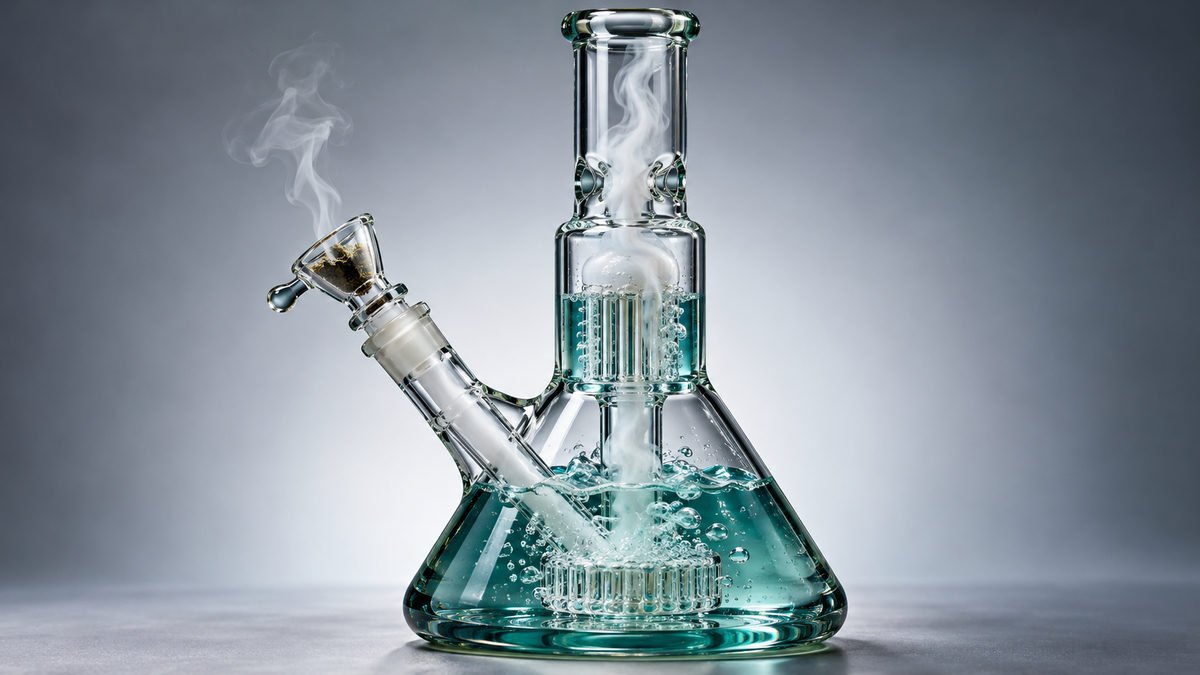
A water bong pulls smoke through a water chamber before it reaches the mouthpiece. The water cools the smoke and traps some particulate matter. However, filtration does not remove every harmful compound or make inhalation risk-free.
Understanding the basic parts
The bowl holds the material and connects to the downstem. The downstem carries smoke below the waterline, where bubbles form. The base supports the bong, while the mouthpiece directs the cooled smoke towards the user.
Water level affects airflow, cooling and splashback. Too little water may reduce bubbling and cooling. Too much water can increase drag or send water towards the mouthpiece.
Diffusion and percolators
Diffusion breaks smoke into bubbles, increasing contact between smoke and water. Smaller bubbles may cool smoke more effectively because they create greater surface area. However, more diffusion can also increase drag, noise and cleaning effort.
Common percolator designs include showerhead, honeycomb, tree, inline and matrix styles. A showerhead spreads airflow through multiple openings. Honeycomb discs create many small bubbles, while tree and matrix designs add more internal pathways.
- Showerhead: balanced diffusion and relatively straightforward cleaning.
- Honeycomb: intense bubbling with more openings that can collect residue.
- Tree: multiple arms increase diffusion but require careful cleaning.
- Inline: horizontal slits provide direct airflow and visual bubbling.
- Matrix: dense diffusion with potentially higher drag and maintenance needs.
Ice catchers add space for ice above the water chamber. They can cool smoke further without replacing water filtration. Nevertheless, melting ice may increase water movement, splashback or clogging in certain designs.
Recyclers and repeated water movement
Recycler bongs circulate water through separate chambers and connected pathways. That repeated movement can improve cooling and filtration while creating an impressive visual function. However, extra tubing and joints make cleaning, storage and repair more demanding.
A smoother hit can feel more comfortable, but it does not automatically mean safer inhalation. Therefore, avoid treating water filtration as complete protection. Adults should also consider ventilation, local laws and the broader risks associated with inhaling smoke.
Types of Borosilicate Glass Bongs and How to Choose One
Beaker bongs use a wide lower chamber that provides stability and room for water. Their broad base helps reduce accidental tipping on a level surface. Additionally, the larger chamber can support comfortable cooling without requiring a complicated percolator. Browse every style in types of glass bongs explained.
Straight-tube bongs use a slimmer vertical profile. They usually offer direct airflow, a smaller footprint and easier access during cleaning. However, their narrow base may provide less stability than a broad beaker design.
Choosing by size and purpose
Bubblers provide water filtration in a compact format. They suit users who want easier storage and short-distance portability. However, smaller chambers usually offer less water capacity and less space for advanced diffusion.
Recycler bongs and scientific glass designs suit experienced users who value complex airflow, modular parts or visual function. These designs can deliver refined diffusion, but they often require more careful cleaning. Therefore, match complexity with your willingness to maintain it.
Bong size affects more than appearance. Larger models may provide more water capacity and cooling, while smaller pieces create less storage demand. Meanwhile, larger chambers can produce more noise, require more cleaning solution and become harder to transport safely.
Glass thickness and joint quality
Thicker glass can improve impact tolerance and make a bong feel more substantial. Reinforced bases and thicker joint areas can also protect high-stress points. However, even a thick glass bong can break when dropped onto tiles, concrete or stone.
Pay close attention to the joint size and angle. Ground-glass connections should fit cleanly without excessive force. Removable downstems make cleaning easier, while standard bowl fittings can simplify future replacement.
- Choose a stable base that matches your storage space.
- Confirm the bowl and downstem fit without wobbling.
- Look for smooth welds and even glass thickness.
- Check whether replacement bowls and downstems are available.
- Consider cleaning access before choosing multiple percolators.
For beginners, a medium-sized beaker or straight-tube bong usually offers the best balance. Look for a simple downstem, moderate water chamber and accessible joints. Limited percolation can reduce drag and make maintenance less frustrating.
Experienced shoppers can compare draw resistance, diffusion level, chamber volume and splashback control. They should also inspect how easily a brush can reach each pathway. A visually complex bong may perform well, yet poor cleaning access can reduce its long-term value.
Durability, Thermal Shock, Safety, and Expected Lifespan
Borosilicate bong durability depends on more than thermal expansion. Wall thickness, base stability, joint construction, weld quality and manufacturing consistency all influence lifespan. Therefore, evaluate the complete piece before focusing on its material label.
Most breakage comes from ordinary accidents rather than normal heat exposure. A knocked-over base, hard tabletop or over-tightened joint can create a failure point. Pressure on removable parts may also damage thin downstems or delicate percolator arms.
Understanding thermal shock
Thermal shock occurs when different parts of the glass change temperature too quickly. For example, adding very hot water to cold glass can create uneven expansion. Exposing heated glass to cold liquid can produce similar stress fractures.
Always let the bong reach room temperature before changing water. Use warm, rather than boiling, water during routine rinsing. In contrast, borosilicate handles typical use temperatures better than ordinary glass, but it still needs careful treatment.
Is borosilicate glass safer?
Borosilicate offers useful material safety qualities, including chemical stability and flavour neutrality. However, those qualities do not remove the risks of inhaling smoke or using unregulated substances. Smoother cooling can make inhalation feel easier without making it harmless.
Adults should use these accessories responsibly and maintain adequate ventilation. Keep glass away from children and pets, and store it where knocks are unlikely. Most importantly, check current federal, state and territory requirements before buying or possessing related equipment.
Australian drug laws can vary between jurisdictions, and equipment may fall under different rules. Review the Australian Government guidance on drug laws before making assumptions about local requirements.
A well-made borosilicate bong may remain usable for years with careful handling. However, frequency of use, cleaning habits, storage conditions and accidental impacts all affect its lifespan. Inspect it regularly for chips, cracks, loose joints or unusual stress marks.
Cleaning, Maintenance, Storage, and Buying Checklist
Start cleaning by emptying used water as soon as practical. Rinse the bong with warm water, then apply a suitable glass-cleaning solution. Soak removable parts separately and use non-abrasive brushes or pipe cleaners. Before paying, learn how to inspect glass bong quality.
After cleaning, rinse every component thoroughly. Inspect joints, openings and percolator pathways for trapped residue. Finally, let all parts dry completely before reassembly to reduce moisture and odour buildup.
Water changes and routine care
Fresh water helps reduce residue, odour, microbial buildup and unpleasant flavour. Change the water after each session when possible, especially if the bong sits unused. Regular rinsing also prevents residue from hardening inside narrow pathways.
Avoid boiling-water shocks, abrasive tools and excessive force around thin glass. Additionally, do not twist tight joints aggressively or pull on delicate percolator arms. Small maintenance habits can prevent expensive repairs later.
Storage and transport
Store the bong upright on a stable, dedicated shelf. Use a padded case for transport, and separate removable bowls and downstems. Protect the mouthpiece, joints and base from contact with hard objects.
Before buying, compare the following points:
- Verified borosilicate material and consistent glass thickness.
- A stable base with a sensible centre of gravity.
- Clean joints, secure fittings and suitable replacement parts.
- Percolator design matched to your preferred drag and diffusion.
- Cleaning access around chambers, arms and openings.
- Size, storage requirements and intended frequency of use.
- Price compared with construction quality, not decoration alone.
Beginners usually benefit from a medium-sized bong with simple filtration. A compact bubbler suits portability, while a recycler or advanced percolator suits experienced users. Choose a thick model when durability matters, but remember that thickness alone does not guarantee quality.
For a broader selection of water pipes and related accessories, explore the available product categories. You can also compare current options through the Sweet Puff Australia shop.
Conclusion
Borosilicate glass remains popular because it combines thermal resistance, clarity, chemical stability and flavour neutrality. However, performance also depends on thickness, joints, base stability, filtration and cleaning access. Beaker and straight-tube models suit many beginners, while bubblers, recyclers and complex percolators serve more specialised preferences.
Use the buying checklist to compare material quality, stability, filtration, maintenance and intended use. Most importantly, choose a design that matches your experience, storage space and local requirements. Sweet Puff Australia brings together water pipes, glass designs and accessories for adults comparing practical options. Explore the Sweet Puff Australia website for more product information.





