
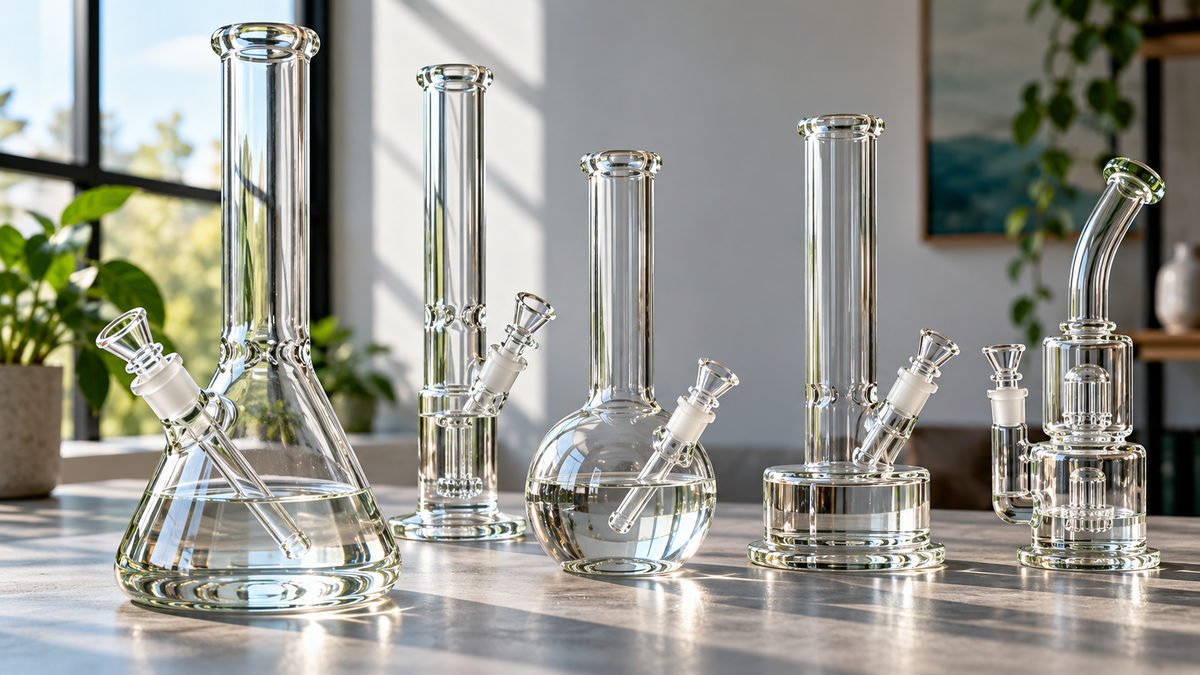
Does a wide beaker base really provide a better experience than a compact straight tube? The answer depends on your space, cleaning habits, and preferred airflow. With glass bong base shapes compared side by side, stability, water capacity, diffusion, splashback, and storage become much easier to understand. This guide breaks down the main designs for adult buyers in Australia, including beginners choosing their first glass water pipe.
Glass Bong Base Shapes Compared: What Changes?
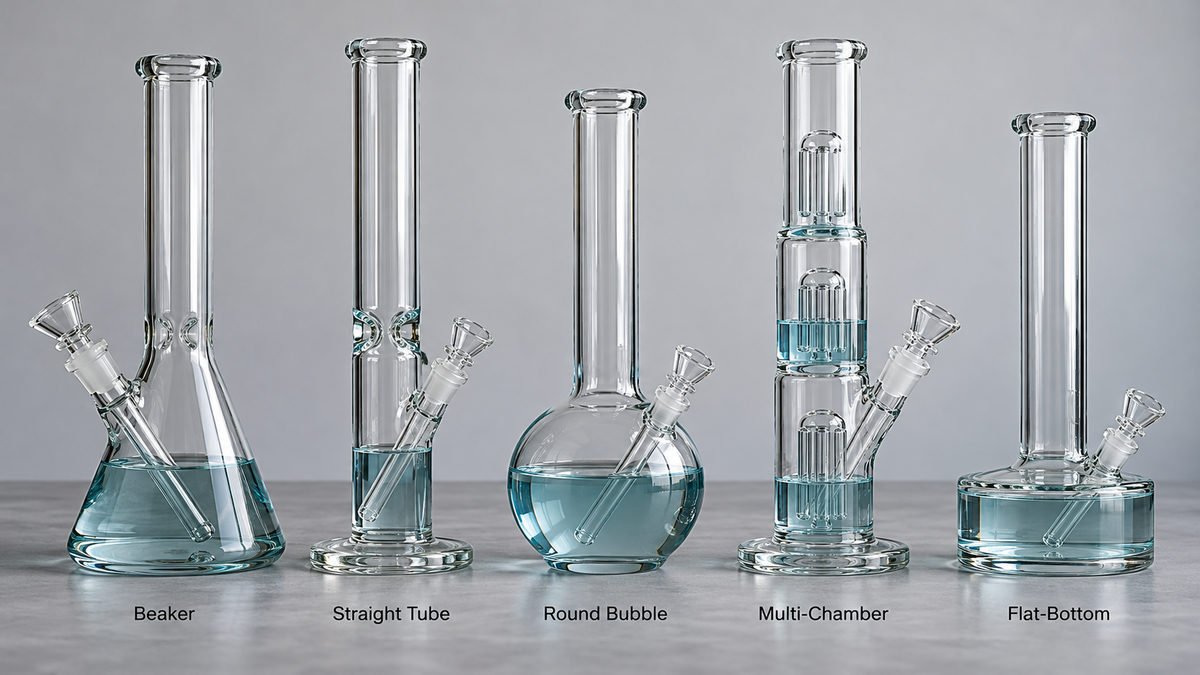
The base controls more than a bong’s appearance. It determines the footprint, centre of gravity, and resistance to accidental tipping. Therefore, two bongs with similar heights can feel completely different on a shelf or table.
The Main Base Designs
Common options include beaker bases, straight tubes, round bubble bases, multi-chamber designs, and compact flat-bottom bases. Each shape changes how much water the piece holds and how easily you can reach internal surfaces during cleaning.
- Beaker bases: Wide, angled chambers that favour stability and higher water capacity.
- Straight tubes: Narrow cylindrical designs with direct airflow and simple storage.
- Round bubble bases: Rounded chambers offering balanced weight distribution and moderate capacity.
- Multi-chamber bases: Advanced designs that add filtration stages and more internal pathways.
- Compact flat-bottom bases: Space-saving shapes designed for desks, shelves, and smaller rooms.
However, base shape alone does not decide performance. Downstem length, water level, percolator design, joint size, glass quality, and user technique matter just as much.
Base geometry still affects the complete experience. A larger chamber may provide more water contact, while a narrow tube can offer a more direct airflow path. Additionally, the shape influences splashback, storage height, cleaning access, and transport weight.
For example, a wide base may feel secure when filled, but it can become heavy when moved. In contrast, a straight tube saves space but usually needs more careful placement. Understanding these trade-offs helps you compare available glass water pipe categories more confidently.
Beaker Bongs: Wide Footprints and Higher Water Capacity
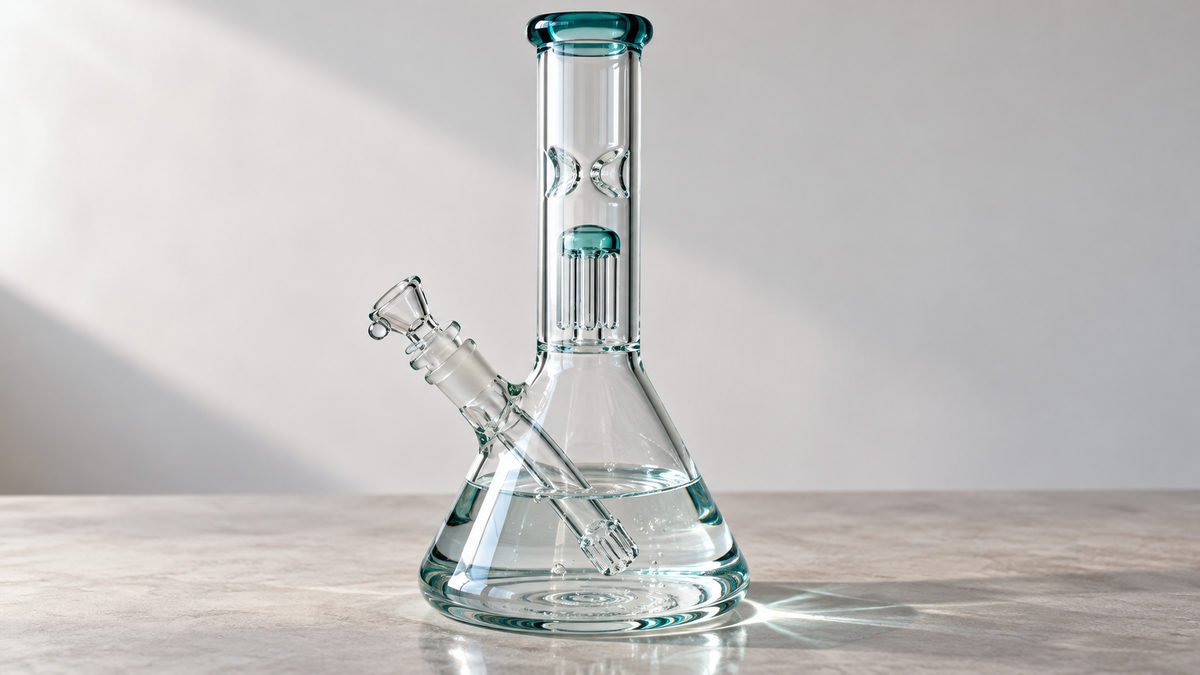
A beaker bong uses a broad lower chamber, angled sides, and a narrower neck. The shape resembles laboratory glassware, with the widest section sitting close to the surface. As a result, beakers usually offer a stable footprint. Our head-to-head beaker vs straight tube comparison goes further.
Why Buyers Choose Beaker Bases
The broad base spreads weight across a larger area. Therefore, a beaker often resists tipping better than a tall, narrow straight tube. Its wider chamber also allows more water, which can increase cooling and filtration when the water level suits the downstem.
- Strong balance on a suitable, level surface.
- Higher water capacity than many narrow designs.
- Flexible water levels for different downstem lengths.
- Compatibility with ice catchers and many percolators.
- More room for larger glass components.
Moreover, the angled transition can create a comfortable visual balance between the base and neck. Many buyers also appreciate the extra room for ice above the water line. However, more water creates more weight and may make the setup awkward to move.
Potential Drawbacks
Beaker bongs can need more storage space than straight tubes. The angled chamber may also make residue harder to reach, especially when the opening is narrow. Additionally, overfilling can increase splashback through the mouthpiece.
Size matters greatly. A larger beaker may hold more water, but it also becomes heavier and harder to clean. Downstem length must match the chamber, while glass thickness and base width influence everyday handling.
Are beakers more durable than straight tubes? Not automatically. Their wider base may reduce tipping, which can prevent some accidents. However, durability mainly depends on borosilicate glass, wall thickness, joint quality, base reinforcement, and careful handling.
For adults prioritising balance and water capacity, a moderate-sized beaker offers a practical compromise. You can compare different designs through the Sweet Puff Australia shop while checking dimensions and construction details.
Straight Tube Bongs: Simple Airflow and Compact Storage
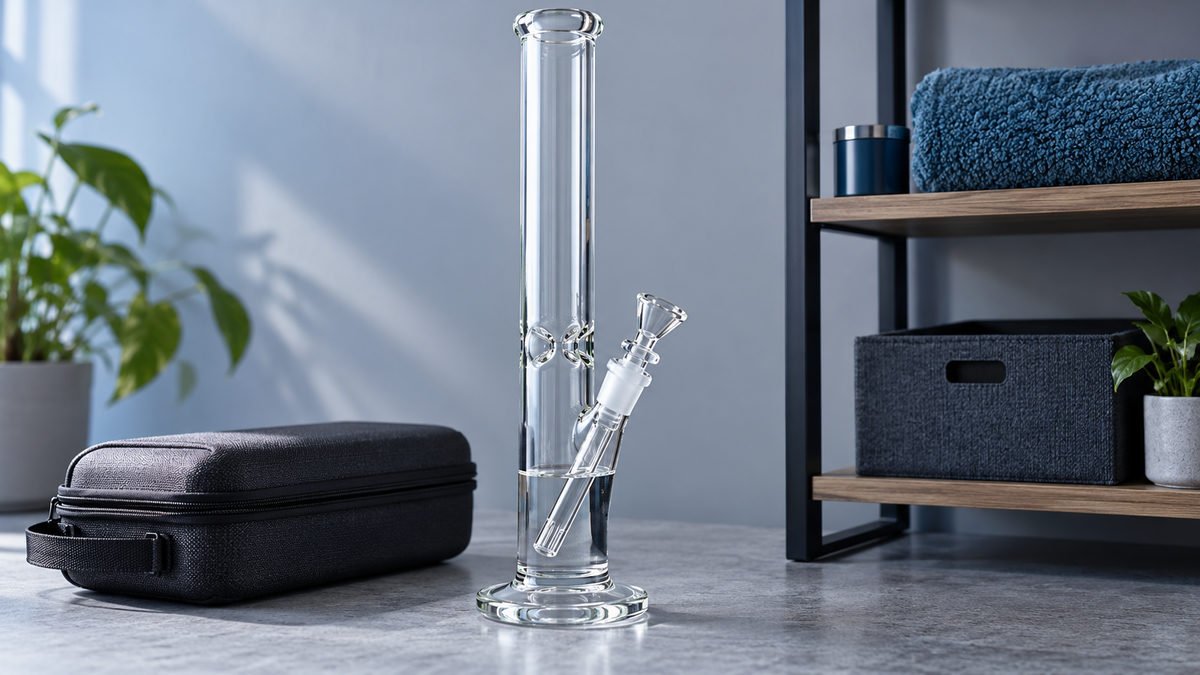
A straight tube uses a vertical cylindrical body with a narrow footprint. Its construction usually follows a simple path from the bowl and downstem to the water chamber and mouthpiece. Consequently, the airflow often feels direct and predictable.
Advantages of Straight Tubes
Straight tubes suit buyers who value uncomplicated storage and quick maintenance. Their internal shape usually provides easier access for rinsing and cleaning. Moreover, the narrow profile fits smaller shelves, cupboards, and display areas.
- Compact storage in rooms with limited space.
- Simple cleaning with fewer internal transitions.
- Predictable water levels and straightforward setup.
- Lightweight handling compared with larger bases.
- Often lower prices than complex designs.
However, the narrow footprint creates a higher tipping risk. A straight tube may also hold less water, leaving less flexibility when adjusting filtration. Small changes in water level can produce noticeable differences in splashback or airflow.
Some users prefer the open, direct sensation of a straight tube. Nevertheless, smoothness depends more on diffusion, downstem design, percolation, and correct water levels than on height alone.
Who Should Consider One?
Straight tubes work well for buyers with limited storage. They also suit experienced adults who prefer simple airflow and fewer parts. Meanwhile, their lighter weight can make them more practical for careful transport between suitable locations.
Choose a stable surface and keep the piece away from crowded edges. Additionally, avoid placing accessories or loose items where they could knock the tube. A simple design still needs thoughtful handling because the narrow base offers less margin for mistakes.
If easy maintenance matters most, a modest straight tube often provides a sensible starting point. It avoids unnecessary complexity while leaving room to upgrade the downstem or add compatible accessories later.
Round, Bubble, Multi-Chamber, and Flat-Bottom Bases
Round and bubble-style bases use curved chambers to distribute weight more evenly. They often provide moderate water capacity without the larger footprint of a full beaker. As a result, they can offer balanced everyday performance. Learn more about single chamber vs multi chamber bongs.
Rounded chambers also create accessible surfaces for cleaning. However, their curved profile still needs a stable, level position. A round base may roll or shift if placed on an uneven shelf.
Advanced and Compact Alternatives
Multi-chamber and recycler-style designs add extra pathways for water movement and diffusion. These designs can create more visual movement and cooling potential. Nevertheless, they also introduce additional joints, internal surfaces, weight, and cleaning requirements.
Compact flat-bottom designs focus on placement and storage. Their broader underside can sit securely on a desk or shelf, while their reduced height helps smaller rooms. Therefore, they suit buyers who want easy placement without a large footprint.
- Round bases: Balanced weight distribution with moderate capacity.
- Bubble bases: Curved styling and comfortable everyday proportions.
- Multi-chamber bases: More filtration pathways and advanced visual design.
- Flat-bottom bases: Compact storage and dependable placement.
Unusual shapes can also change airflow resistance and water recycling. They may require specific downstems, joints, or percolators. Therefore, always check compatibility before buying replacement components.
These designs suit different priorities rather than one universal winner. A round base may offer a good middle ground, while a recycler suits experienced buyers willing to accept more maintenance.
Stability, Smoothness, Splashback, and Percolator Compatibility
Stability depends on the complete centre of gravity, not only the base width. Height, water weight, joint placement, glass thickness, and accessory weight all influence balance. Therefore, assess the complete setup rather than the empty bong alone. See how glass bong percolators work in each base style.
Wider beaker, round, and flat-bottom bases generally offer better balance than tall narrow straight tubes. However, a heavy upper section can still make any design unstable. Place every glass piece on a level surface away from edges.
More water can increase contact time and cooling potential. Yet, more water does not automatically create smoother hits. Downstem diffusion, percolator design, water level, and airflow resistance usually make a greater difference.
Percolators and Water Movement
Ice catchers add cooling space above the water line. Showerhead percolators create multiple small streams, while tree percolators divide airflow through several arms. Each option can increase diffusion, but extra parts may increase drag and cleaning time.
Multi-chamber designs may recycle water between sections. This can create active water movement and a distinctive draw. However, the additional pathways require careful cleaning and more attention to compatible components.
Splashback usually comes from excessive water, forceful inhalation, poor downstem placement, or blocked airflow. Therefore, use the recommended water level and test gradually. Ice, splash guards, and correctly positioned downstems may also help.
Straight tubes often feel more direct because their airflow path is simple. Larger chambers and heavier diffusion can feel smoother, but they may create more resistance. The best choice depends on whether you value an open draw or stronger filtration.
For general background on how water pipes use water and airflow, see this overview of bong construction and function. Remember that water filtration does not remove every harmful substance from smoke.
Cleaning, Maintenance, Durability, and Everyday Practicality
Straight tubes and simple round bases are usually easiest to clean. Their internal paths remain accessible, and fewer chambers mean fewer residue points. Beakers may need extra rinsing around angled transitions. Our guide to cleaning a glass bong works for every shape.
Multi-chamber pieces demand the most patience. Their pathways can trap residue, while narrow openings make inspection difficult. Therefore, buyers should consider cleaning time before choosing an elaborate design.
Practical Maintenance Habits
- Empty used water regularly rather than leaving it standing.
- Rinse with warm water before residue becomes difficult to remove.
- Use a suitable glass-cleaning solution as directed.
- Clean joints and removable parts carefully.
- Dry every component thoroughly before storage.
Wider openings can simplify access, but large chambers may require more cleaning solution. Additionally, removable downstems need careful handling because their joints can chip if forced.
Durability depends on more than shape. Borosilicate glass, wall thickness, reinforced joints, thick bases, secure downstem fittings, and well-made removable parts all matter. A reputable retailer should provide clear construction details.
Storage also affects longevity. Use a stable shelf, avoid crowded surfaces, and keep removable parts protected. For transport, choose a compact design and separate delicate components where possible.
Always follow the product instructions and handle glass carefully. Adults should also check local Australian laws and use water pipes only for lawful purposes. Responsible storage matters around children, pets, and anyone who could accidentally knock the piece over.
How to Choose the Best Bong Base Shape for Your Needs
Beginners usually benefit from a simple design with moderate height and clear operating requirements. A straight tube offers easy cleaning and direct airflow. Meanwhile, a moderate beaker provides more stability and water capacity without excessive complexity. For every other style, see types of glass bongs explained.
Look for clear water markings, an easy-clean opening, a secure joint, and uncomplicated percolation. Avoid choosing the most elaborate design before understanding how water levels and airflow affect the experience.
Match the Shape to Your Priorities
- Choose a beaker for stability, higher capacity, and flexible cooling.
- Choose a straight tube for simplicity, direct airflow, and compact storage.
- Choose a round base for balanced everyday use and moderate maintenance.
- Choose a flat-bottom design for desks, small rooms, and easy placement.
- Choose a multi-chamber design for advanced diffusion and visual movement.
Experienced buyers may appreciate recycler-style or multi-chamber designs. However, these options require more cleaning and careful handling. Therefore, prioritise maintenance realistically rather than choosing complexity for appearance alone.
Buyer Checklist
- Where will you store and use the piece?
- Do you prefer direct airflow or stronger diffusion?
- How important is resistance to tipping?
- How much cleaning time can you manage?
- Does the price match the materials and construction?
- What glass thickness and base reinforcement does it have?
- Does the joint fit your preferred downstem or percolator?
- Will the height and width suit your available storage?
Most importantly, inspect the full design rather than judging the base alone. Glass thickness, joint quality, downstem placement, percolation, and water level remain equally important.
Sweet Puff Australia brings together water pipes, glass designs, and accessories for adults comparing practical options. Explore the Sweet Puff Australia website for available collections and product information.
Conclusion
The best glass bong base shape depends on your balance between stability, water capacity, airflow, diffusion, splashback control, cleaning, portability, and storage. Beaker and wider bases usually provide stronger balance. Straight tubes offer simplicity and compact storage, while round bases provide versatile everyday performance.
Multi-chamber designs suit experienced buyers seeking advanced diffusion and visual movement. However, glass thickness, joint quality, downstem design, percolation, and water level remain just as important as the base shape.
Compare available glass bong designs using the buyer checklist. Prioritise features that match your routine, then choose a stable, well-built option from a reputable seller that supports responsible use and easy maintenance.






Comments (3)
[…] Thicker walls can provide greater resistance to minor knocks, accidental bumps, and regular handling. The extra material may help the bong tolerate small impacts that could chip thinner glass. Stability also depends on the bong base shape. […]
[…] parts. Therefore, avoid narrow ledges where a small bump could send the piece over the edge. A wide bong base shape makes a piece far less likely to […]
[…] At first glance, both designs may look similar. However, their shapes create different handling and airflow experiences. Understanding the structure makes the buying decision much easier. See other designs in glass bong base shapes compared. […]