
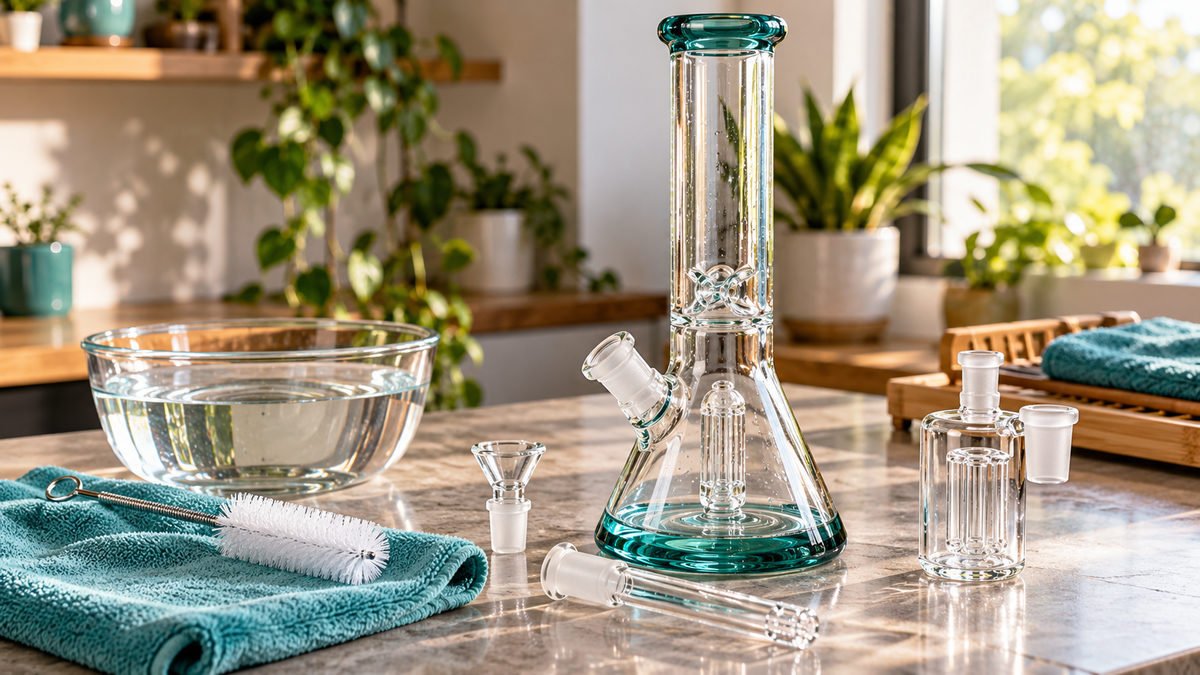
Does your glass bong smell stale, pull slowly, or show cloudy water after only a few sessions? A practical glass bong maintenance checklist helps you clean, inspect, store, and protect your equipment. Used water, ash, resin, clogs, loose joints, and hidden cracks can reduce airflow and affect flavour. Therefore, regular care supports better hygiene, odour control, performance, and glass longevity.
Why Glass Bong Maintenance Matters
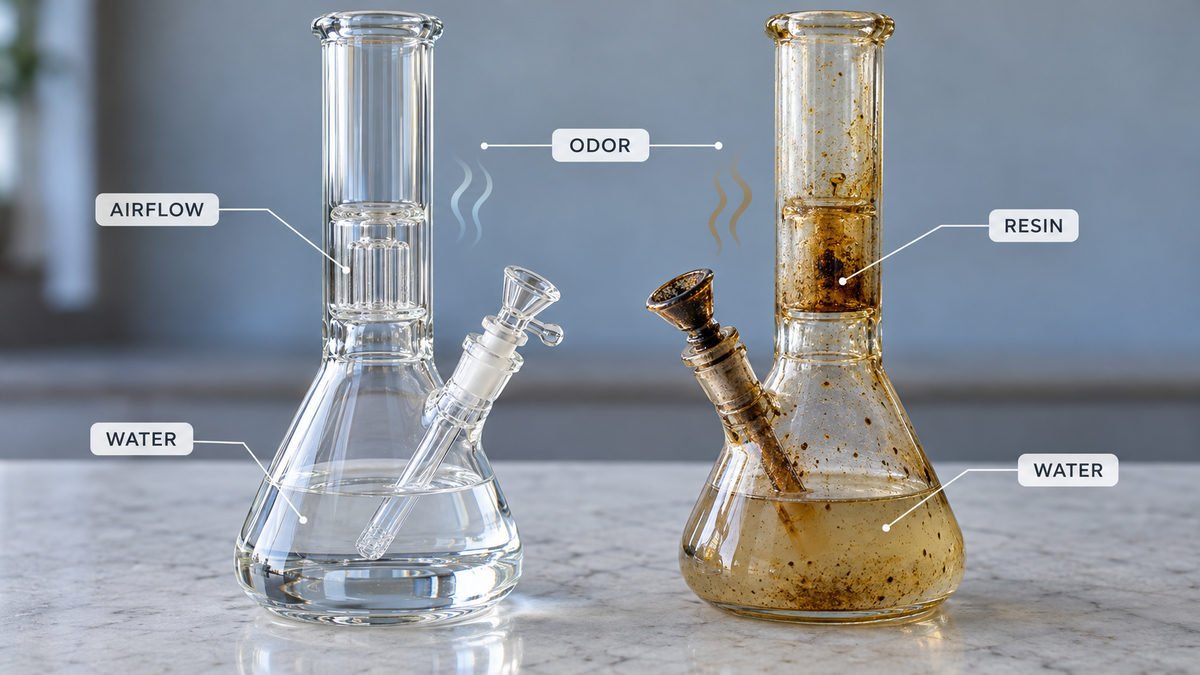
Clean glass makes each session easier to inspect and maintain. Fresh water also helps prevent old residue from sitting inside the chamber. Moreover, regular rinsing reduces sticky buildup around the bowl, downstem, mouthpiece, and joints.
Over time, resin can narrow openings and change the way water bubbles. As a result, the draw may feel restricted or uneven. Dirty water can also create unpleasant odours, cloudy marks, and residue that becomes harder to remove later.
Warning Signs That Need Attention
Small changes often signal that your bong needs cleaning or inspection. Specifically, watch for these common warning signs:
- Cloudy, dark, or stale-smelling bong water.
- Slower airflow or a tighter draw.
- Different bubbling from the percolator.
- Sticky resin around joints and openings.
- Unpleasant odours after rinsing.
- Loose bowls, downstems, or ash catchers.
- A base that rocks or feels unstable.
- Leaks around seals, grommets, or connection points.
Additionally, inspect the glass whenever airflow changes suddenly. A blocked opening may only need cleaning, while a crack requires immediate replacement. Never continue using glass with a sharp chip, leaking joint, or structural weakness.
Choose the Right Maintenance Rhythm
Quick session-based care keeps residue from drying inside the bong. Weekly maintenance targets the bowl, downstem, mouthpiece, and joint areas. Meanwhile, monthly deep cleaning reaches percolators, ash catchers, narrow passages, and stubborn resin.
Daily users may need to clean more often than occasional users. Shared equipment also needs more frequent hygiene checks. Furthermore, cleaning and use should follow local laws, age requirements, and responsible-use practices.
Australian rules differ between states and territories. Healthdirect explains that cannabis laws vary, and driving under its effects remains illegal across Australia. Read the Healthdirect cannabis information before making decisions about use.
Glass Bong Maintenance Checklist: After Every Session
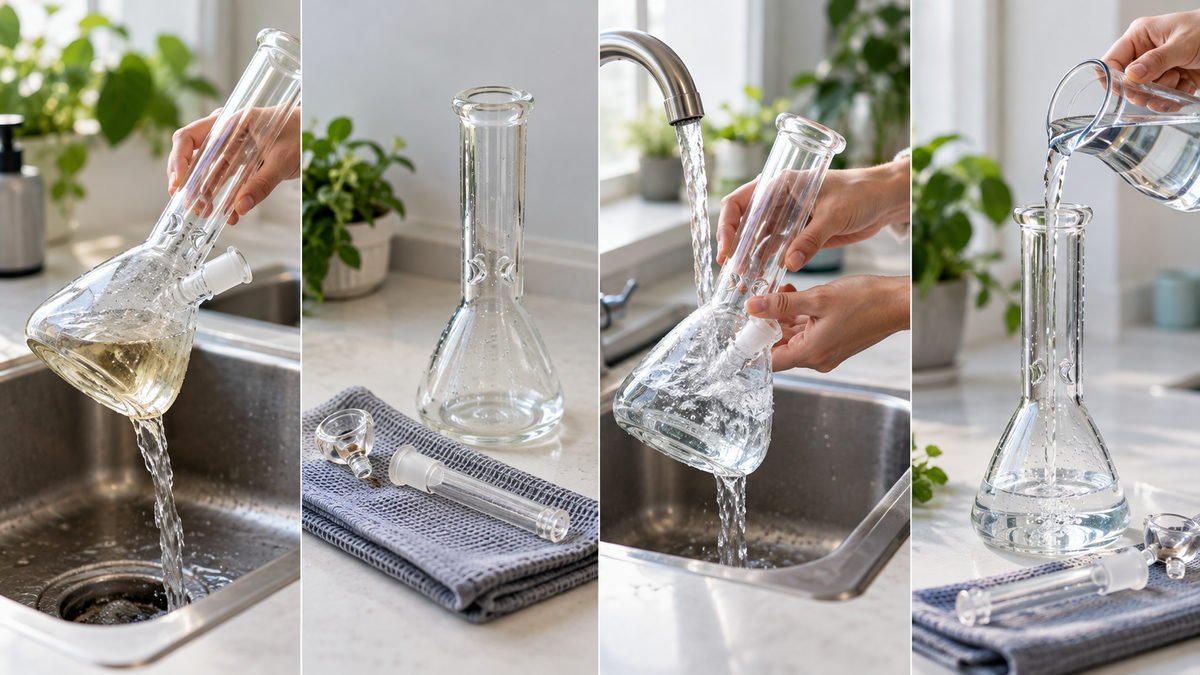
After-session care takes only a few minutes, yet it prevents many difficult cleaning jobs. Start once the glass feels safe to handle. Hot glass can crack when it meets cooler water or a cold surface. For a full deep clean, follow how to clean a glass bong.
- Empty the used water promptly. Do not leave smoky water sitting inside the chamber. Residue and moisture create stronger odours when they remain for hours.
- Rinse the chamber with warm water. Use warm, not boiling, water to loosen loose ash and debris. Swirl gently, then pour the water away safely.
- Remove the bowl and downstem carefully. Handle each part by its thicker section. Avoid twisting narrow glass connections or pulling at an angle.
- Rinse removable parts separately. Wait until the glass feels cool enough to touch. Then rinse the bowl, downstem, and ash catcher with warm water.
- Clear loose debris gently. Use a soft brush, cotton swab, or suitable cleaning tool. Never force a tool through a delicate opening.
- Wipe the mouthpiece and exterior. A clean, lint-free cloth removes moisture and fingerprints. Avoid sharing mouthpieces without suitable hygiene precautions.
- Add fresh, clean water. Fill the chamber to the correct level before the next session. Avoid overfilling, which can send water towards the mouthpiece.
- Check each connection. Confirm that the bowl, downstem, joints, and ash catcher sit correctly. Never force or twist parts into position.
Loading habits also affect maintenance. Avoid overpacking the bowl because loose material can enter the downstem. Additionally, keep material away from air holes and remove loose ash before it travels into the chamber.
For example, a small amount of ash can collect inside a downstem after one session. A quick rinse removes it before moisture turns the residue into sticky resin. Therefore, simple care now can prevent a long soak later.
Keep cleaning products away from children, pets, food, and preparation areas. Store the bong empty if you will not use it again soon. Most importantly, let every part dry fully before placing it in storage.
Weekly Cleaning for the Bowl, Downstem, and Joints
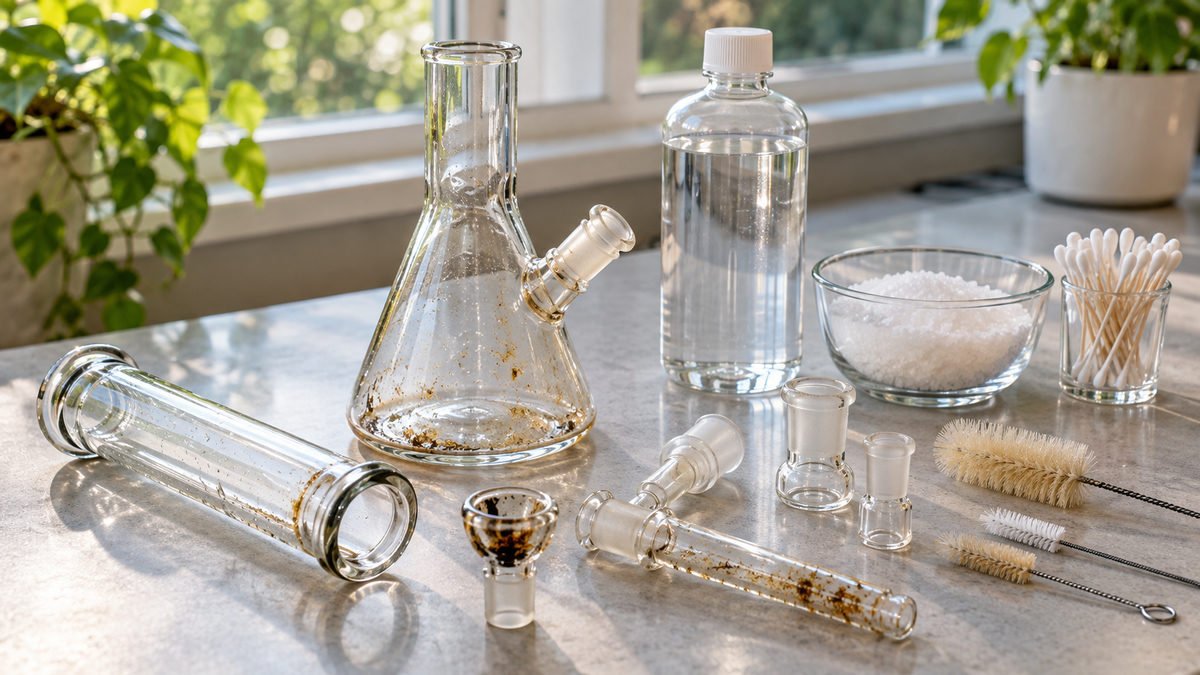
Weekly cleaning suits many regular users, but your schedule should match your habits. Daily use, heavy resin, or shared equipment may require cleaning every few days. Occasional users should still clean the bong before long-term storage. Keep a set of cleaning brushes for the bowl and joints.
Clean the Bowl Separately
Remove the bowl and rinse it under warm water first. This step clears loose ash before you tackle sticky residue. Next, soak the bowl in a suitable glass-cleaning solution or clean it with a soft brush.
Pay close attention to the bowl’s interior and air holes. Resin often gathers around the rim and blocks small openings. Use a cotton swab or purpose-made tool without scraping forcefully against the glass.
Clear the Downstem and Joints
The downstem needs careful handling because its opening can be narrow and fragile. Run warm water through it, then use a soft brush designed for small glass parts. Never force a rigid object through the passage.
Clean the mouthpiece, joint areas, grommets, and removable accessories as well. Cotton swabs work well around corners where residue collects. Meanwhile, soft brushes can loosen buildup without damaging smooth glass surfaces.
Choose a Suitable Cleaning Solution
A purpose-made glass bong cleaner can simplify weekly maintenance. Alternatively, many users clean glass with isopropyl alcohol and coarse salt. Use alcohol only in a well-ventilated area, away from flames, sparks, heat, children, and pets.
Coarse salt provides gentle abrasion while the liquid dissolves oily resin. However, avoid excessive shaking, especially when multiple glass parts share one container. Parts can collide, chip, or crack during aggressive movement.
Use short, controlled movements instead. Rotate the bong gently so the solution reaches the chamber walls. For narrow parts, allow the solution to soak rather than pushing tools through blocked openings.
Rinse and Inspect Before Reassembly
Rinse every component repeatedly with warm water. Continue until no alcohol, salt, cleaner, or loosened residue remains. In fact, a final rinse matters because leftover cleaner can create odours and irritation.
Before reassembly, check for sticky resin, blocked openings, damaged seals, and loose fittings. Also compare the airflow with the usual draw. If the airflow remains restricted, inspect the downstem and percolator again.
Let each part dry before putting the bong together. A damp joint can make the fit feel unusual or unstable. Therefore, reassemble only when the glass and accessories feel clean, dry, and secure.
Monthly Deep Cleaning for Resin, Percolators, and Ash Catchers
A monthly deep clean helps when quick rinses no longer restore the bong’s performance. Persistent odour, dark ash catcher water, stubborn resin, and blocked percolator holes all signal deeper buildup. Monthly is also the time to remove water stains.
Follow a Controlled Deep-Cleaning Process
- Remove every detachable accessory. Take out the bowl, downstem, ash catcher, and other removable glass. Photograph complicated setups before cleaning, so every part returns correctly.
- Pre-rinse each component. Use warm water to remove loose ash and debris. This reduces the amount of residue your cleaning solution must dissolve.
- Clean the main chamber. Use a glass-safe solution, isopropyl alcohol with coarse salt where suitable, or a manufacturer-approved product.
- Clean the bowl and downstem separately. Focus on air holes, narrow passages, and joint openings. Allow stuck residue to soften before brushing.
- Reach every percolator chamber. Let the solution travel through the internal pathways. Gently rotate or swirl instead of shaking aggressively.
- Maintain the ash catcher. Empty dirty water, rinse trapped ash, and clean connection points before residue hardens.
Percolators need patience because their internal pathways can hide buildup. Add enough solution to reach each chamber, then move the piece slowly. Additionally, repeat short soaks when one attempt does not remove the residue.
Remove Stubborn Resin Safely
Stubborn resin usually responds better to repeated short soaks than one aggressive cleaning session. Use soft brushes, cotton swabs, and purpose-made glass tools for remaining deposits. Avoid metal scraping because it can scratch or chip the glass.
Do not trap volatile cleaning liquids inside a tightly sealed container. Pressure can build as vapours expand. Never heat alcohol or glass cleaner, and keep all cleaning liquids away from open flames and ignition sources.
For strong bong water residue, repeat the rinse after the main cleaning stage. Then rinse again until the water runs clear and no cleaner smell remains. Complete drying, fresh water, and clean storage also help remove lingering odours.
Inspect each percolator hole after cleaning. A single blocked opening can change bubbling and reduce airflow. If you cannot clear a passage safely, replace the accessory rather than forcing a sharp object inside.
Rinsing, Drying, Inspection, and Damage Prevention
Rinsing completes the cleaning process. Run warm water through every component until it looks clear. Moreover, check that no alcohol, salt, cleaner, or loosened resin remains inside hidden chambers. Use the same steps to inspect glass bong quality for cracks.
Place each part on a soft, stable towel or drying rack. Where appropriate, position openings downward so water can drain. Do not reassemble or use the bong while moisture, cleaner, or alcohol remains inside.
Never pour boiling water onto cool glass. Rapid temperature changes can cause thermal shock, cracks, or sudden breakage. Therefore, use moderate warm water and allow the glass to adjust gradually.
Avoid harsh chemicals, abrasive powders, metal scrapers, open flames, direct high heat, and forceful twisting. These methods can damage both the glass and its seals. Instead, use gentle pressure and purpose-made cleaning tools.
Complete a Glass Safety Check
- Inspect the main chamber, base, neck, and mouthpiece.
- Check the bowl, downstem, percolator, and ash catcher.
- Look for cracks, chips, weak points, blocked openings, or sharp edges.
- Check gaskets and seals for flattening, brittleness, tears, or poor fit.
- Confirm that every connection feels stable without excessive force.
Replace worn gaskets instead of forcing an unstable connection. Similarly, replace a loose downstem if it no longer sits securely. A small fitting problem can become a larger breakage risk during use.
Stop using any piece with a crack, sharp chip, structural weakness, leaking joint, unstable base, or damaged component. Glass can fail without much warning once a weak point develops. When uncertain, choose replacement over repair.
Safe Storage, Maintenance Schedule, and Replacement Guide
A simple schedule keeps maintenance easy to remember. Save or print this routine beside your cleaning supplies. Learn how to store glass bongs safely.
- After every session: Empty the water, rinse the chamber, clean loose debris, and add fresh water.
- Weekly: Clean the bowl, downstem, mouthpiece, joints, grommets, and removable accessories.
- Monthly: Deep clean percolators, ash catchers, narrow passages, and stubborn residue.
Store the bong empty, clean, fully dry, and separated from loose accessories. Use a padded, upright location away from pets, children, heat, direct sunlight, and crowded shelves.
For transport, use a fitted padded case and secure removable parts separately. Never carry water inside the bong. Additionally, place the glass on soft surfaces and keep it away from unstable edges.
Handle the base and neck gently, especially when moving larger pieces. Never force stuck parts apart. Instead, soften residue with an appropriate soak and seek a safe replacement when necessary.
Replace bowls, downstems, gaskets, screens, and mouthpiece accessories when they crack, chip, warp, become brittle, clog beyond safe cleaning, or stop fitting securely.
Use fresh water for every session and rinse infrequently used equipment before storage. Before reuse, perform an odour check and inspect the glass under good lighting.
For additional equipment options, browse glass water pipe categories or visit the Sweet Puff Australia shop. Sweet Puff Australia brings together water pipes, glass designs, and accessories for adults who want to compare available options carefully. Explore the Sweet Puff Australia website for product information and collection details.
Use equipment only where legal and according to local requirements. Never drive while impaired, and store cleaning products safely. Most importantly, stop using damaged glass immediately.
Conclusion
Regular water changes, quick rinses, weekly part cleaning, monthly deep cleaning, complete drying, careful inspection, and padded storage protect your bong. These habits support cleaner airflow, better hygiene, improved flavour, odour control, and longer glass life.
Save or print this glass bong maintenance checklist and follow the session-based schedule. Replace any cracked, chipped, leaking, or unstable component before using the equipment again.






Comment (1)
[…] Replace bong water after each use, or at least daily when the pipe receives regular use. Fresh water reduces odours, residue, bacteria, and the moisture conditions that support mould. Stay on top of it with a glass bong maintenance checklist. […]