
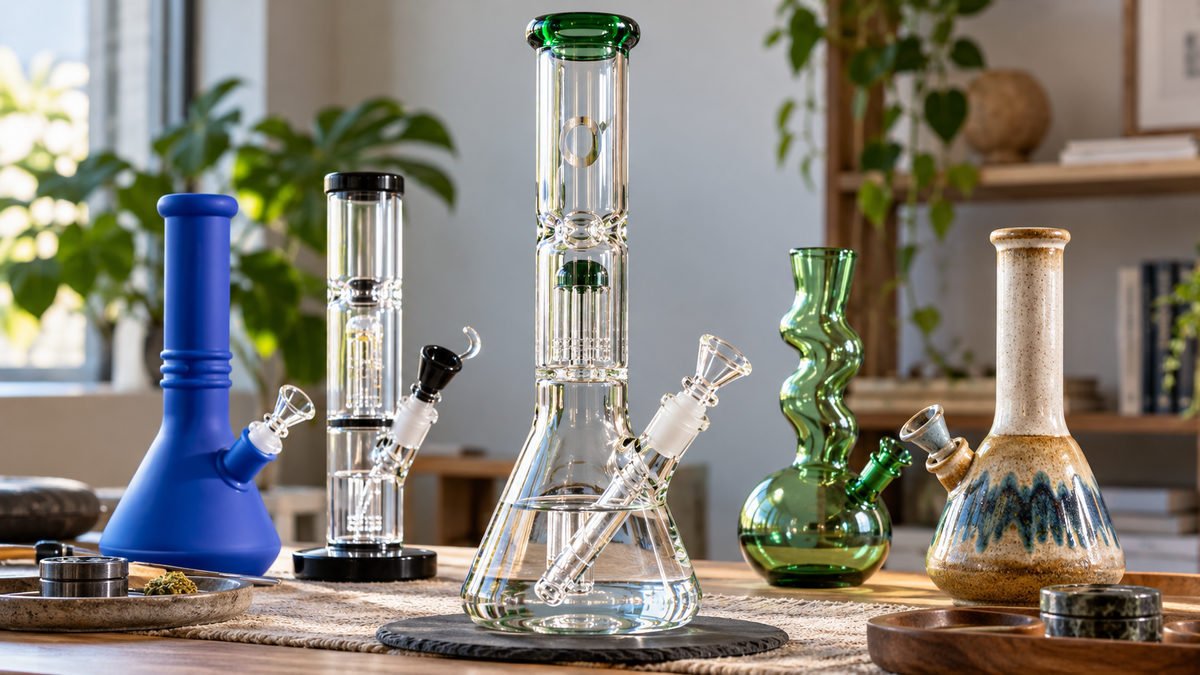
Choosing between a compact silicone bong, a large glass beaker, and a multi-percolator design can feel confusing. Therefore, this bong features and specifications guide explains the details that matter beyond appearance or height. You will compare materials, chamber sizes, percolators, airflow, stability, compatibility, cleaning needs, and responsible adult-use considerations. Most importantly, you will learn how to match specifications with your space, budget, experience, and maintenance preferences.
Bong Features and Specifications Guide: How the Main Components Work

A bong is a water pipe that moves smoke through water before it reaches the mouthpiece. The bowl holds the material, while the downstem directs smoke into the water chamber. Additionally, the neck carries filtered smoke towards the mouthpiece. Our guide to glass water pipe anatomy labels every part.
A simplified diagram showing the bowl, downstem, water chamber, percolator, neck, mouthpiece, and base.
Bowl
Downstem
Water chamber
Percolator
Neck
Mouthpiece
Base
How filtration and airflow work
When air moves through the bowl and downstem, smoke enters the water chamber. The water cools the smoke and captures some larger particles. However, water filtration does not make smoke harmless, and it does not remove every harmful compound.
Water level affects both filtration and draw resistance. Too little water can reduce bubbling and cooling, while too much water can cause splashback. Therefore, buyers should follow the product’s recommended water level and keep the mouthpiece clear.
Specifications worth comparing
- Height: Measures the overall size and affects storage, handling, and smoke volume.
- Chamber volume: Indicates how much air and water the main chamber can hold.
- Joint size: Common sizes include 10 mm, 14 mm, and 18 mm, but always confirm measurements.
- Bowl size: Determines loading capacity and can influence airflow.
- Downstem type: Fixed and removable designs offer different cleaning and replacement options.
- Mouthpiece diameter: Influences comfort, splash control, and the amount of air entering the pathway.
- Base stability: A wide footprint and low centre of gravity reduce tipping risk.
Shape also changes the internal pathway. A straight tube often provides a direct path with less visual complexity. In contrast, a beaker base holds more water and usually offers a broader, more stable footprint. Meanwhile, longer pathways and added percolators can increase diffusion, but they may also increase drag and cleaning demands.
Bong Materials Compared: Glass, Silicone, Acrylic, and Ceramic

Material affects flavour neutrality, heat resistance, durability, weight, appearance, and maintenance. For many buyers, borosilicate glass offers the clearest balance between performance and precision. Nevertheless, silicone, acrylic, and ceramic can suit different storage and handling requirements. See our bong materials comparison guide for a side-by-side table.
Borosilicate glass
Borosilicate glass resists thermal shock better than ordinary glass. It also provides a neutral surface that does not normally add noticeable taste or odour. Additionally, clear glass lets you inspect water levels, residue, bubbles, and joint alignment.
Glass supports accurate manufacturing, clean edges, and standardised joint dimensions. Therefore, replacement bowls, downstems, adapters, and seals often remain easier to find. The main drawback involves impact risk, especially during transport, cleaning, or sudden temperature changes.
Silicone
Silicone bongs suit buyers who prioritise flexibility and impact resistance. They can handle bags, drawers, and travel conditions better than most glass designs. However, silicone may retain odours or flavours more readily, especially when residue remains inside the material.
Quality varies considerably between products. Look for food-grade or heat-resistant silicone claims from a reputable retailer. Furthermore, avoid placing silicone near direct heat, flames, or hot surfaces that exceed its stated tolerance.
Acrylic and ceramic
Acrylic bongs usually offer low prices and strong impact resistance. However, acrylic can scratch, cloud, or discolour over time. It may also respond poorly to excessive heat, harsh cleaners, or rough handling during maintenance.
Ceramic designs often focus on artistic shapes, heavier construction, and decorative glazing. They can retain heat differently from glass and feel stable on a flat surface. Nevertheless, poor glaze quality can trap residue, while narrow openings make internal cleaning difficult.
| Material | Durability | Portability | Cleaning | Cost | Flavour neutrality | Ideal buyer |
|---|---|---|---|---|---|---|
| Borosilicate glass | Good, but impact-sensitive | Moderate | Usually straightforward | Medium to high | Excellent | Buyers wanting visibility and precision |
| Silicone | Very good against impacts | Excellent | Depends on material and openings | Low to medium | Moderate | Portable or accident-prone setups |
| Acrylic | Good against impacts | Good | Easy, but scratches matter | Low | Moderate | Budget-focused buyers |
| Ceramic | Heavy, but can chip or crack | Low | Can be difficult | Medium | Good when well glazed | Design-focused home users |
Bong Shapes, Sizes, and Filtration Designs

Shape determines how a bong stands, stores water, handles airflow, and fits a room. Straight-tube designs use a simple vertical pathway. Beaker and round-base designs widen near the bottom, creating more stability and water capacity. Compare single vs multi chamber bongs to see how chambers change filtration.
Common bong shapes
- Straight tube: Direct, compact, and often easy to clean.
- Beaker: Broad base, greater stability, and more chamber volume.
- Round base: Compact footprint with a rounded water chamber.
- Recycler: Connected pathways circulate water through multiple chambers.
- Portable bong: Smaller body, lighter weight, and easier storage.
Large bongs can provide more room for water and longer smoke pathways. However, greater height does not automatically mean better performance. Chamber volume, water depth, percolator design, and draw resistance often matter more than the measurement from base to mouthpiece.
Choosing the right size
Small bongs suit limited storage, occasional home use, and portable setups. Medium models usually balance stability, filtration, cleaning, and everyday handling. Large models may suit shared home use, but they demand more storage space and careful transport.
Beginners often benefit from moderate height, a stable base, and a simple internal pathway. Experienced buyers may prefer larger chambers, advanced percolation, or modular accessories. Nevertheless, more complex designs require more frequent cleaning and careful inspection.
Downstems, joints, and bowls
Fixed downstems usually reduce loose parts and can improve structural simplicity. Removable downstems improve cleaning access and make replacement easier. Therefore, check the downstem joint, length, diffuser style, and replacement availability before purchasing.
Joint size determines compatibility with bowls, adapters, ash catchers, and replacement downstems. Common sizes include 10 mm, 14 mm, and 18 mm, although product listings can vary. Always confirm whether the joint is male or female before adding accessories.
Bowl size affects loading capacity and airflow. A larger bowl may suit group sessions, while a smaller bowl can support more controlled personal use. Additionally, the bowl should fit securely without wobbling, leaking, or restricting the downstem opening.
Base width and centre of gravity deserve equal attention. A tall bong with a narrow base may tip more easily than a shorter beaker. Meanwhile, water depth influences splash risk, so buyers should look for a mouthpiece height that leaves comfortable clearance above the water.
Percolators, Ice Catchers, and Advanced Bong Features
A percolator breaks incoming smoke into smaller bubbles. This increases contact between smoke and water, which can improve cooling and diffusion. However, diffusion also depends on water level, pathway design, airflow, and the cleanliness of each opening. Learn how glass bong percolators diffuse and cool smoke.
Percolator types
| Percolator | Diffusion | Draw resistance | Cleaning difficulty | Ideal use |
|---|---|---|---|---|
| Tree | High | Medium to high | High | Buyers wanting multiple diffusion arms |
| Honeycomb | Very high | Medium to high | High | Fine bubbling and smooth airflow |
| Showerhead | Medium to high | Low to medium | Moderate | Balanced filtration and maintenance |
| Inline | Medium to high | Medium | Moderate | Compact horizontal diffusion |
| Matrix | High | Medium to high | High | Advanced buyers seeking broad bubbling |
More percolators do not always produce a better experience. Each additional chamber can increase drag, water management, residue buildup, and cleaning time. Therefore, match filtration complexity with your preferred draw feel and maintenance routine.
Ice catchers and accessories
An ice catcher holds ice above the water chamber. The ice can cool the pathway, but it remains an optional feature rather than an essential specification. Use only suitable ice pieces, and avoid overfilling the neck or blocking airflow.
Splash guards reduce water movement towards the mouthpiece. Carb holes alter airflow when the design includes them. Ash catchers add another filtration and residue-catching stage, while adapters support different bowls or attachments.
Reclaim features create a collection area for condensed residue. Removable components simplify access, but every seal becomes another inspection point. In recycler designs, water travels through connected chambers and returns to the main pathway. This recycling action can create smooth circulation, although it also makes cleaning more involved.
| Priority | Useful features |
|---|---|
| Cooling | Ice catcher, moderate water depth, showerhead percolator |
| Smooth airflow | Inline or matrix percolator, wider mouthpiece, balanced water level |
| Easy cleaning | Wide openings, removable downstem, fewer chambers |
| Low maintenance | Simple straight tube, fixed diffuser, standard joints |
| Portability | Compact body, silicone construction, secure removable parts |
How to Choose a Bong for Your Needs and Budget
Start with your practical requirements rather than the most impressive-looking feature. Consider experience level, intended legal use, available space, budget, portability, cleaning preferences, and desired airflow. Additionally, decide whether you prefer simple maintenance or advanced filtration.
Beginner-friendly specifications
New buyers often benefit from moderate height, a stable base, and an accessible water chamber. A simple downstem reduces potential cleaning problems. Standard joint sizes also make bowls and replacement parts easier to source.
Limited percolation can make the first purchase easier to understand. Look for even construction, smooth edges, secure attachments, reliable seals, and a mouthpiece that feels comfortable. Moreover, check whether the retailer lists spare parts and care guidance.
Advanced buying considerations
Advanced buyers can compare precision joints, multi-stage filtration, recycler geometry, and draw resistance. Modularity matters when you plan to change bowls, downstems, adapters, or ash catchers. Therefore, verify dimensions rather than relying on product photographs.
| Type | Performance | Storage | Transport | Maintenance |
|---|---|---|---|---|
| Large home bong | High chamber capacity and filtration potential | Needs dedicated space | Least convenient | Often demanding |
| Medium everyday model | Balanced airflow and stability | Moderate requirements | Reasonably manageable | Usually practical |
| Portable bong | Compact airflow and smaller chamber | Easy to store | Most convenient | Varies by material |
For a bong buying guide Australia shoppers should consider retailer compliance, product quality, shipping restrictions, and local laws. Australian drug laws vary between federal, state, and territory systems. Therefore, review the Australian Government drug laws information before purchasing or using any related product.
- Height and storage requirements
- Material and heat resistance
- Chamber shape and water capacity
- Percolator type and cleaning access
- Joint size and bowl compatibility
- Bowl size and intended session format
- Downstem design and replacement availability
- Ice catcher and splash-control features
- Base width and overall stability
- Warranty, seals, and spare parts
For broader product comparisons, explore the available water pipe and accessory range or review relevant product categories. Furthermore, compare construction details carefully, because a reliable seal often matters more than decorative complexity.
Bong Maintenance, Cleaning, Storage, and Safety
Cleaning frequency depends on use frequency, water replacement, visible residue, odour, and airflow changes. A daily user may need regular rinsing and frequent deep cleaning. Meanwhile, occasional users should still replace old water and inspect residue before storage. Here is how to store glass bongs safely between sessions.
Practical maintenance routine
- Replace the water regularly and avoid leaving stale water inside.
- Disassemble removable bowls, downstems, and accessories carefully.
- Remove residue using a suitable cleaning method recommended for the material.
- Rinse every component thoroughly and inspect openings for blockages.
- Allow parts to dry completely before reassembly or storage.
Wide openings, removable downstems, accessible percolators, and fewer internal chambers make cleaning easier. Glass needs careful handling around sinks and hard surfaces. Silicone resists impacts, while acrylic can scratch and ceramic can chip during sudden temperature changes.
Store the bong upright on a stable, level surface away from edges. Keep it away from children, pets, dust, direct heat, and crowded storage areas. Additionally, use protective packaging during transport and never force tight joints apart.
Responsible adult use includes ventilation, heat awareness, hygiene, and compliance with applicable local laws. Smoking carries health risks, and water filtration does not remove all harmful substances. For health information, consult the Australian Government smoking and tobacco guidance.
Conclusion
The best bong depends on the balance between material, size, shape, filtration, airflow, stability, compatibility, durability, and cleaning requirements. Height alone does not determine performance. Similarly, advanced percolators help only when their draw characteristics and maintenance demands suit the buyer.
Use the specification checklist to compare suitable models, verify local laws and retailer compliance, and choose a well-built bong. Match the design with your experience, storage space, budget, and maintenance preferences.
Sweet Puff Australia brings together water pipes, glass designs, and related accessories for adult shoppers exploring different specifications. Visit the Sweet Puff Australia website for product categories, buying resources, and further details.





