
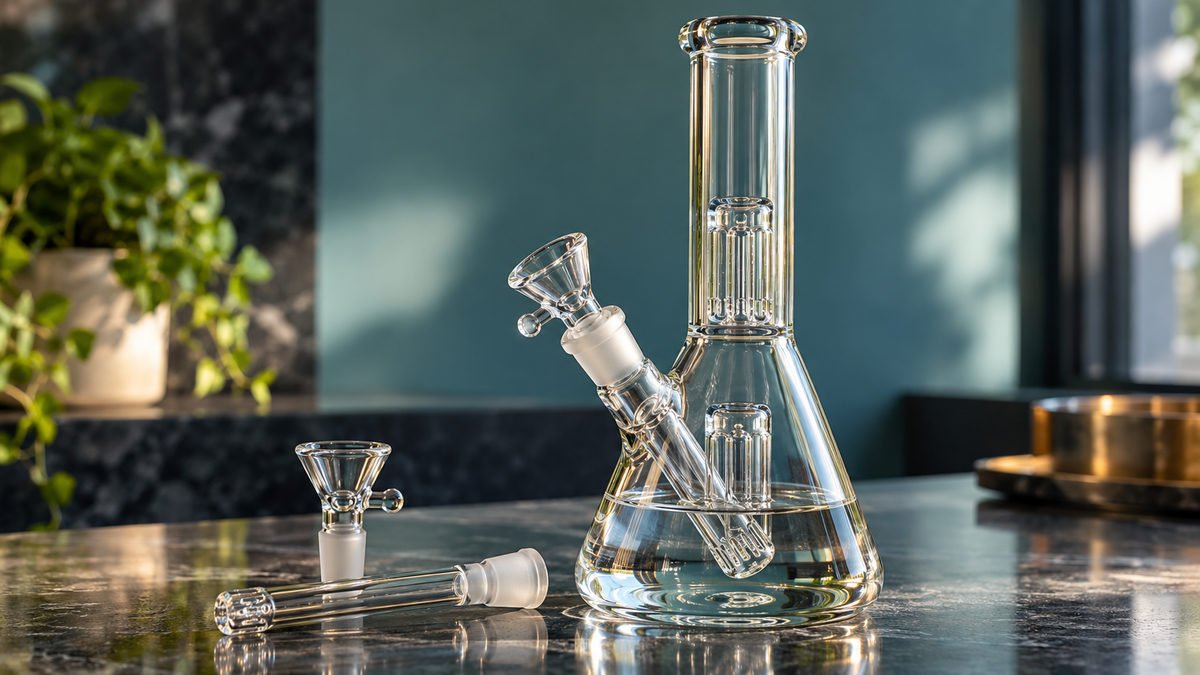
Ever wondered why a glass water pipe has so many parts? The answer begins with airflow, cooling, and water movement. Understanding glass water pipe anatomy helps beginners identify components, match accessories, set water levels, and spot problems such as clogs, leaks, or splashback. This guide explains each part from the base upwards. It also covers compatibility, cleaning, inspection, and responsible handling.
1. Glass Water Pipe Anatomy: A Complete Parts Overview
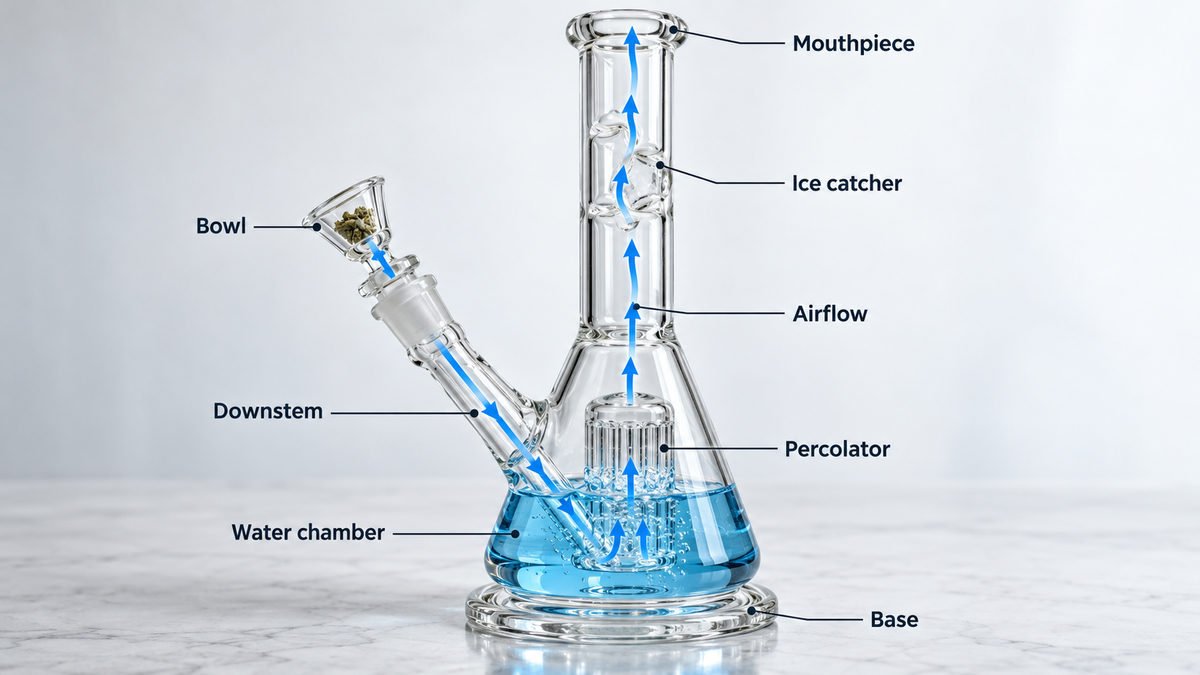
A glass water pipe is a glass smoking device that draws smoke or vapour through water. The water can cool the draw and capture some particulate matter. However, it does not remove every harmful substance or make inhalation risk-free. Bubblers share many of these parts; compare with glass bubbler anatomy.
        Mouthpiece
            ↑
     Upper chamber
            ↑
      Water bubbles
            ↑
 Water chamber ── Percolator
            ↑
        Downstem
            ↑
      Bowl piece
            ↑
 Material and heat
From the base to the mouthpiece
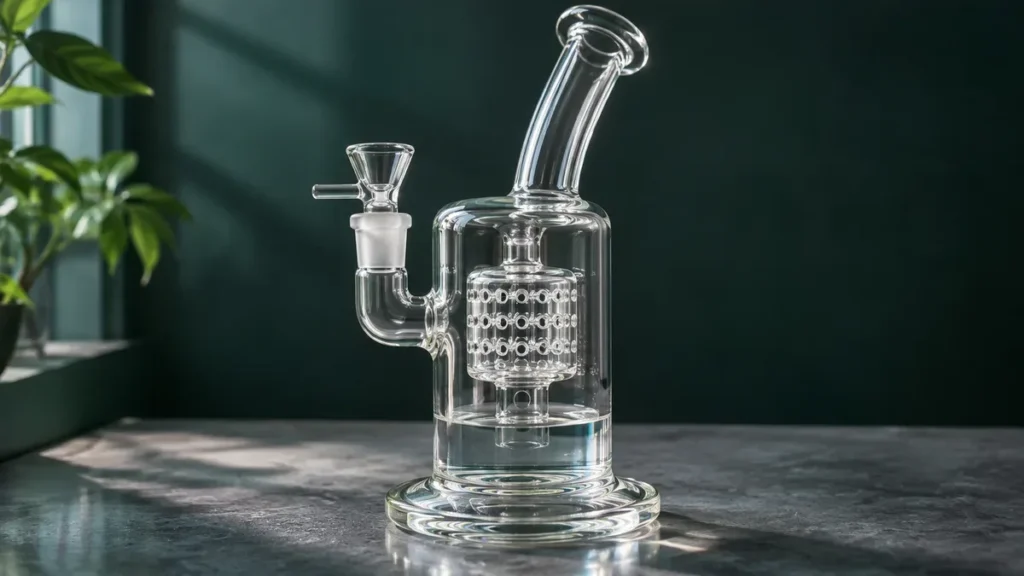
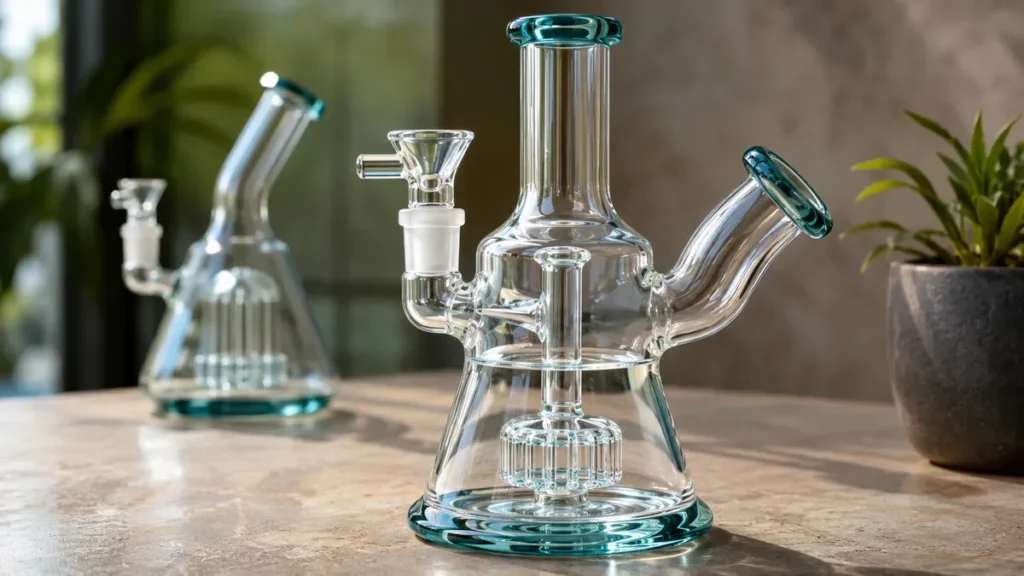
The base supports the pipe and may use a beaker, round, or straight-tube shape. The water chamber holds water and provides space for bubbling. A downstem carries smoke from the bowl into that chamber.
Above the chamber, a percolator may divide smoke into smaller bubbles. The joint connects removable parts, while the bowl piece holds the material. Finally, the mouthpiece provides the opening for the draw.
Some models also include a carb hole, which controls fresh air intake. An ice catcher supports optional ice placement above the waterline. These features may sit inside the glass permanently or attach as removable accessories.
Built-in features and removable accessories
Fixed downstems, built-in percolators, and fused ice catchers form part of the main glass body. They usually offer fewer loose seals, but cleaning access may be limited. Removable bowls, downstems, ash catchers, and adapters offer easier replacement and cleaning.
However, glass needs careful handling. Hot surfaces can burn skin, while broken edges can cut fingers or lips. Keep the pipe upright, use it only where lawful, and inspect it before every use.
2. How a Glass Water Pipe Works: Airflow, Water and Filtration
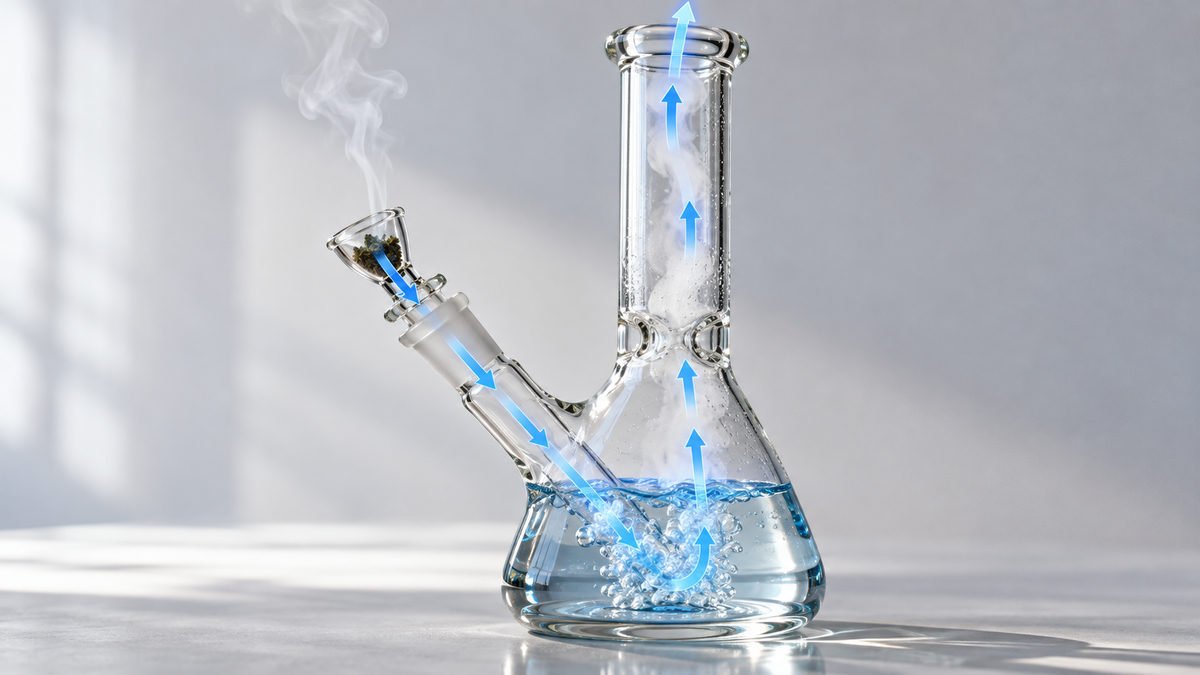
When you inhale through the mouthpiece, the chamber pressure drops. That negative pressure pulls air through the bowl and downstem. Smoke or vapour then travels beneath the water before rising through the chamber. Learn how glass bong percolators add extra diffusion.
As the smoke passes through water, bubbles increase contact between the two materials. This action can cool the draw and trap some ash or particulate matter. Nevertheless, water provides basic cooling and partial filtration only.
Airflow from bowl to mouthpiece
The bowl supplies the starting point for airflow. The slide joint holds the bowl or slide in place, while the downstem directs the draw below the waterline. After bubbling, the smoke moves through the upper chamber and exits through the mouthpiece.
Meanwhile, the carb hole introduces fresh air when uncovered. Covering it limits extra air and directs more airflow through the bowl and water. Uncovering it helps clear the remaining chamber contents after the draw.
Tube diameter also affects the experience. A wider tube may allow greater airflow, while a narrower tube can feel more concentrated. Chamber shape, mouthpiece height, and water depth further change draw resistance and splash control.
Common airflow problems
- Weak bubbling: Check for a low water level, clogged downstem, or blocked percolator.
- Restricted draw: Inspect resin buildup, narrow openings, and incorrectly fitted accessories.
- Excessive splashback: Reduce the water level slightly and inhale more gently.
- Water in the mouthpiece: Lower the water level and check for forceful pulling or tipping.
Adjust water gradually, adding only a small amount at a time. Keep the pipe upright on a stable surface during every adjustment. Correct water should cover the downstem openings or percolator slits without flooding the upper chamber.
3. Core Glass Water Pipe Parts Explained
Bowl piece and slide joint
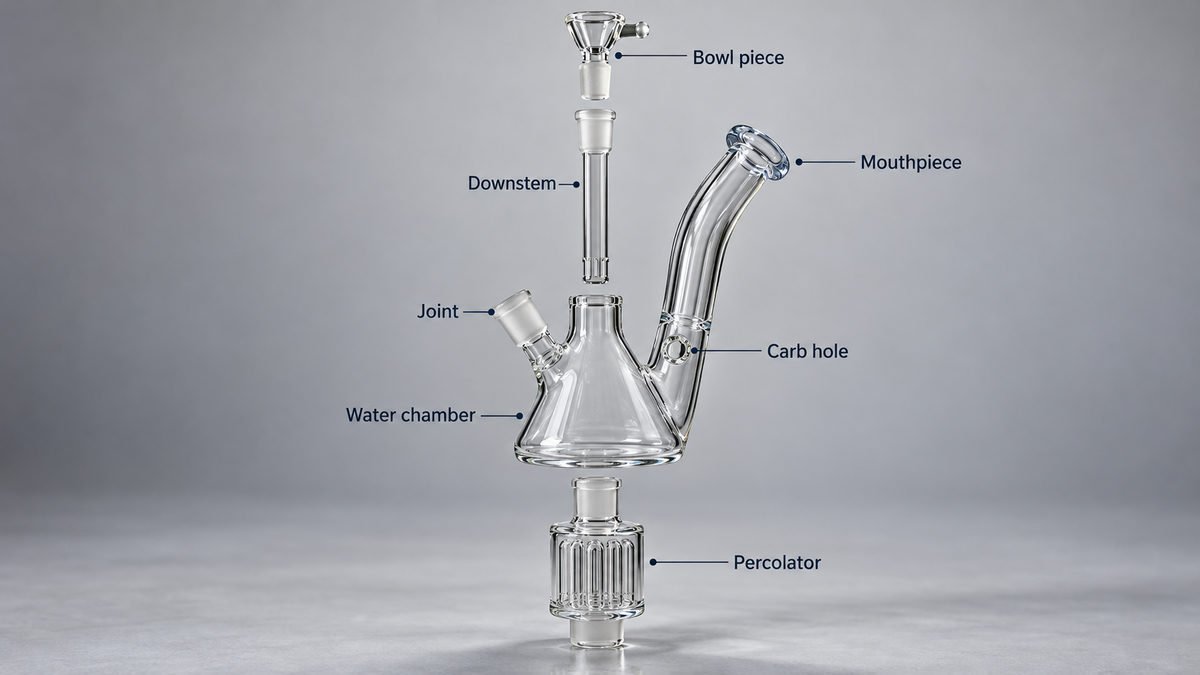
The bowl piece holds the material and connects to the pipe through a slide joint. Common shapes include funnel bowls, cone bowls, slide bowls, and built-in bowls. Removable bowls make cleaning and replacement easier.
A slide joint also helps clear the chamber. After the material finishes, removing the slide can allow fresh air to enter quickly. Always let hot glass cool before handling or removing it.
Downstem designs
The downstem carries smoke from the bowl into the water. A standard downstem uses a simple open end, while a slitted design divides the flow through several openings. Showerhead and diffuser downstems create more bubbles through multiple outlets.
Fixed downstems fuse directly into the glass body. They can offer durability and fewer removable seals, but they require more careful cleaning. Removable downstems provide better access, replacement options, and easier troubleshooting.
However, removable parts can wobble if the joint fits poorly. They may also develop leaks when seals become worn or accessories do not match. Check the joint size before ordering a replacement downstem.
Water chamber and percolator
The water chamber controls the available water volume and bubbling space. A larger chamber may hold more water, but it can also increase cleaning time. Deeper water can improve cooling, although excessive depth often causes splashback or a harder draw.
A percolator creates diffusion by breaking smoke into bubbles. Smaller bubbles provide more contact with water, but intricate designs may collect residue faster. Therefore, performance depends on design, water level, cleanliness, and inhalation speed.
- Tree percolators: Use several branching arms and slits.
- Honeycomb percolators: Use many small holes for widespread bubbling.
- Showerhead percolators: Direct smoke through a wide perforated outlet.
- Inline percolators: Use a horizontal tube with slits or holes.
- Matrix percolators: Combine multiple diffusion openings in a compact chamber.
- Recycler systems: Move water between chambers for repeated circulation.
Mouthpiece, carb hole and splash control
The mouthpiece affects comfort through its height, diameter, lip shape, and angle. A flared opening can feel comfortable, while a narrow opening may increase draw speed. A longer neck can help separate the mouth from splashback.
The carb hole controls additional air intake. Some pipes place it on the side of the chamber, while others rely on lifting the bowl. Both systems help clear the chamber after the main draw.
4. Design Variations, Joint Sizes and Component Compatibility
Glass water pipes come in several layouts. Straight tubes use a compact, direct airflow path. Beaker bases offer a wider footprint, greater stability, and more water capacity. Most pieces use one of two standards; compare 14mm vs 18mm bong joints.
| Design | Typical characteristics |
|---|---|
| Straight tube | Compact shape, direct airflow, smaller footprint |
| Beaker base | Stable base, larger chamber, higher water capacity |
| Round base | Balanced support with a rounded lower chamber |
| Bubbler | Smaller body, shorter path, easier portability |
| Recycler | Water circulation between chambers and repeated filtration |
| Multi-chamber pipe | Several chambers, more diffusion, added cleaning demands |
Bongs, bubblers and dab rigs
A bong usually has a larger chamber and a longer smoke path. A bubbler uses a smaller body and often combines portability with basic water cooling. A dab rig typically uses a joint and heated surface designed for concentrates rather than a traditional bowl.
These categories can overlap in appearance. Therefore, check the bowl type, joint configuration, chamber layout, and heating requirements before choosing accessories. Only use parts designed for the intended setup.
Joint sizes and accessory matching
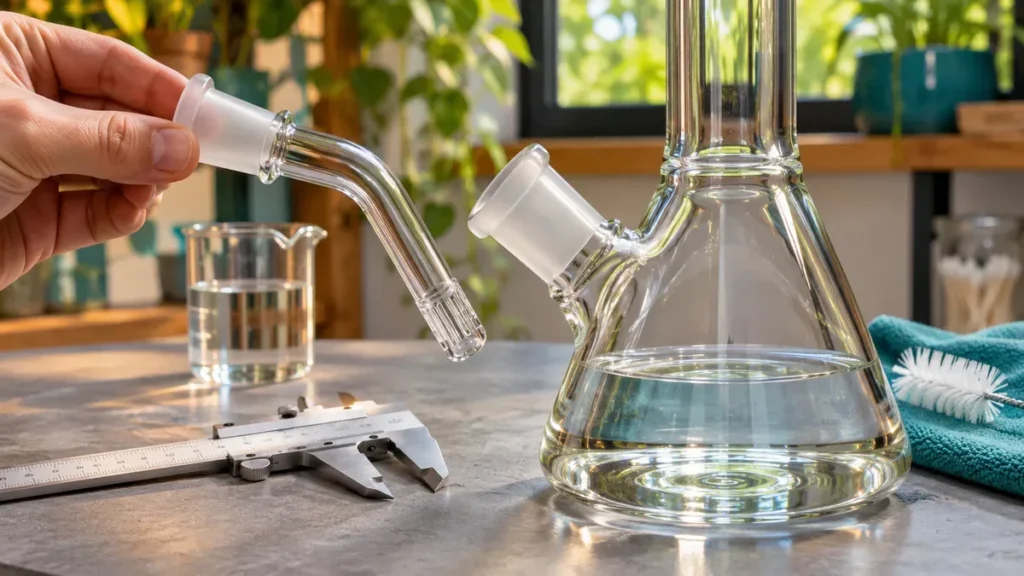
Common joint diameters include 10 mm, 14 mm, and 18 mm. The joint diameter must match the bowl, downstem, ash catcher, or adapter. Even a small mismatch can create a loose seal, poor airflow, or leakage.
Joint types may be male or female. A male joint fits into a female opening, while a female joint receives a male accessory. Adapters can bridge different sizes or joint types, but every connection still needs a secure, even seal.
To check compatibility, measure the joint diameter and confirm the accessory orientation. Then inspect whether the part sits straight without rocking. Avoid forcing glass into place because pressure can create chips or stress lines.
Choosing and inspecting a design
Larger chambers may provide more space for water and diffusion. However, they often increase draw resistance, weight, and cleaning effort. Multiple percolators can create smoother bubbling, yet they may clog faster and require more careful water control.
- Look for even glass thickness and smooth openings.
- Check that welds and fused attachments appear clean and consistent.
- Choose a stable base that does not rock on a flat surface.
- Inspect joints for round, even edges without chips.
- Check that the mouthpiece and attachments align comfortably.
5. Water Levels, Cleaning and Glass Water Pipe Maintenance
The correct water level usually covers the downstem openings or percolator slits. Start with a small amount, then test bubbling with the pipe upright. Add water gradually until the openings sit below the surface. In hot regions, follow our glass water pipe care tips for Australian climates.
Dry bubbling can indicate too little water. Gurgling, harsh airflow, splashback, or water reaching the mouthpiece usually indicates too much water or an overly forceful draw. Tilted pipes can also pull water into the mouthpiece.
Safe cleaning sequence
- Empty the old water and remove all loose components.
- Rinse each glass part with warm water.
- Apply a suitable glass cleaning solution.
- Agitate carefully using gentle movement or soft tools.
- Rinse every part thoroughly until no cleaner remains.
- Allow the pieces to dry fully before reassembly.
Clean the bowl separately because residue often collects inside its small openings. Remove a detachable downstem and clean both ends with a soft brush or pipe cleaner. For percolator paths, use a purpose-made glass cleaner and gentle agitation.
Additionally, rinse the water chamber thoroughly and wipe the mouthpiece with a clean cotton swab. Soft brushes, cotton swabs, pipe cleaners, and purpose-made glass products can help reach narrow areas. Avoid abrasive tools that may scratch the glass.
Thermal shock and chemical safety
Glass can crack when its temperature changes suddenly. Never pour boiling water onto cold glass, and avoid placing hot glass on cold or wet surfaces. Let the pipe cool naturally before cleaning.
Do not leave harsh chemical residue inside the chamber. Rinse repeatedly with clean water and allow every part to dry. Avoid sealing the pipe while damp because trapped moisture encourages stale odours and residue buildup.
Routine maintenance and troubleshooting
- Change stale water regularly and remove residue before it hardens.
- Inspect seals, joints, and downstem openings for buildup.
- Clear clogs early with suitable soft tools.
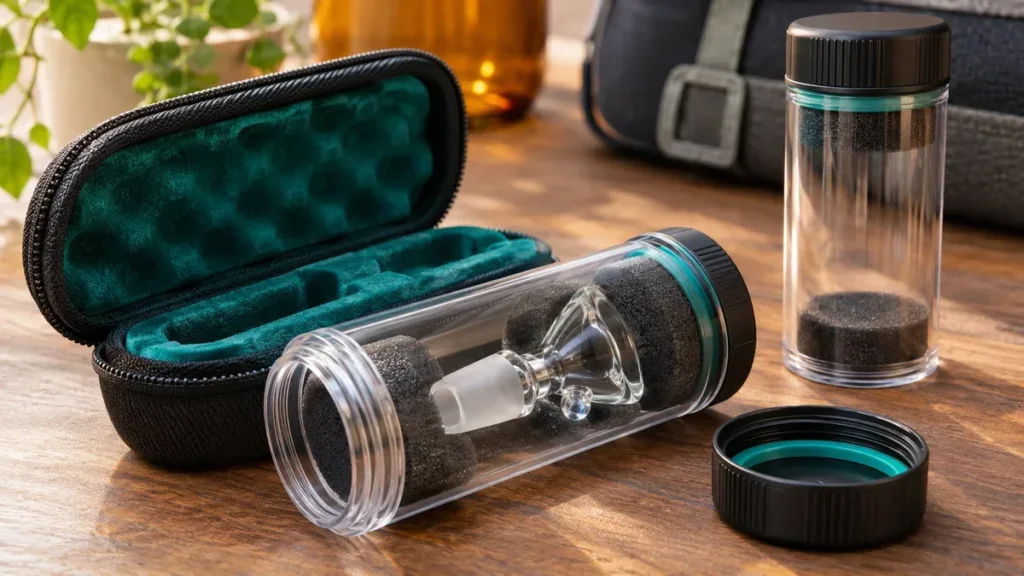
- Store the pipe upright in a protected location.
- Keep removable parts together to prevent mismatched fittings.
Poor bubbling usually comes from low water, residue, or a blocked diffuser. A clogged downstem needs gentle cleaning rather than sharp objects. Leaks often indicate a chipped joint, loose accessory, or damaged seal.
Loose joints should not receive excessive force. Cracked glass, sharp edges, and unstable attachments require replacement rather than continued use. If water pulls into the mouthpiece, lower the level and reduce inhalation speed.
6. Inspection Checklist, Glossary and Beginner FAQs
Glass and seal inspection checklist
- Look for cracks, chips, stress lines, and thin weak points.
- Check fused attachments and welds for gaps or rough breaks.
- Confirm that the base sits flat without rocking.
- Ensure joints fit securely without excessive wobbling.
- Perform a careful water-only leak test before use.
Replace damaged components when cracks or sharp edges appear. Glass repairs may fail under heat, pressure, or repeated handling. Never treat a damaged joint as safe simply because it still holds water. For local slang, see our guide to Australian bong terminology.
Useful glossary
- Bowl piece: Removable chamber that holds smoking material.
- Carb hole: Opening that introduces fresh air.
- Downstem: Tube that directs smoke into water.
- Diffuser downstem: Downstem with multiple outlets for bubbling.
- Joint: Connection point between glass components.
- Mouthpiece: Opening used to draw air from the pipe.
- Percolator: Diffusion feature that breaks smoke into bubbles.
- Recycler: System that circulates water between chambers.
- Slide: Removable bowl and joint assembly.
- Water chamber: Section that holds water for cooling.
- Ice catcher: Glass shelf that supports optional ice.
Beginner FAQs
What does a downstem do? It carries smoke below the waterline and helps create bubbles.
What is an ice catcher? It supports ice above the water. However, it does not replace correct water levels or careful handling.
Are fixed downstems easier to maintain? They can reduce loose seals, but removable downstems usually provide better cleaning access.
Why is bubbling weak? Check the water level, downstem openings, percolator, and possible residue buildup.
How do I know the water level is correct? The openings should sit below the water, with comfortable airflow and no splashback.
Water cooling does not make inhalation harmless. The Australian Government explains that smoking through pipes or waterpipes still exposes people to harmful chemicals. Read its guidance on smoking safety for more information.
Conclusion
A glass water pipe works as an integrated system. The bowl holds material, the downstem directs smoke into the water chamber, and diffusion features create bubbles. The mouthpiece then delivers the cooled draw through a controlled airflow path.
Understanding glass water pipe anatomy helps you match joint sizes, adjust water levels, compare designs, and clean each component properly. Use the labelled anatomy checklist to identify your pipe’s parts, confirm the water level, and inspect every glass connection before cleaning or replacing accessories.
For more information about available glass designs and accessories, explore Sweet Puff Australia. You can also browse the product categories or visit the online shop to compare suitable options.

Comment (1)
[…] water chamber. Additionally, the neck carries filtered smoke towards the mouthpiece. Our guide to glass water pipe anatomy labels every […]