
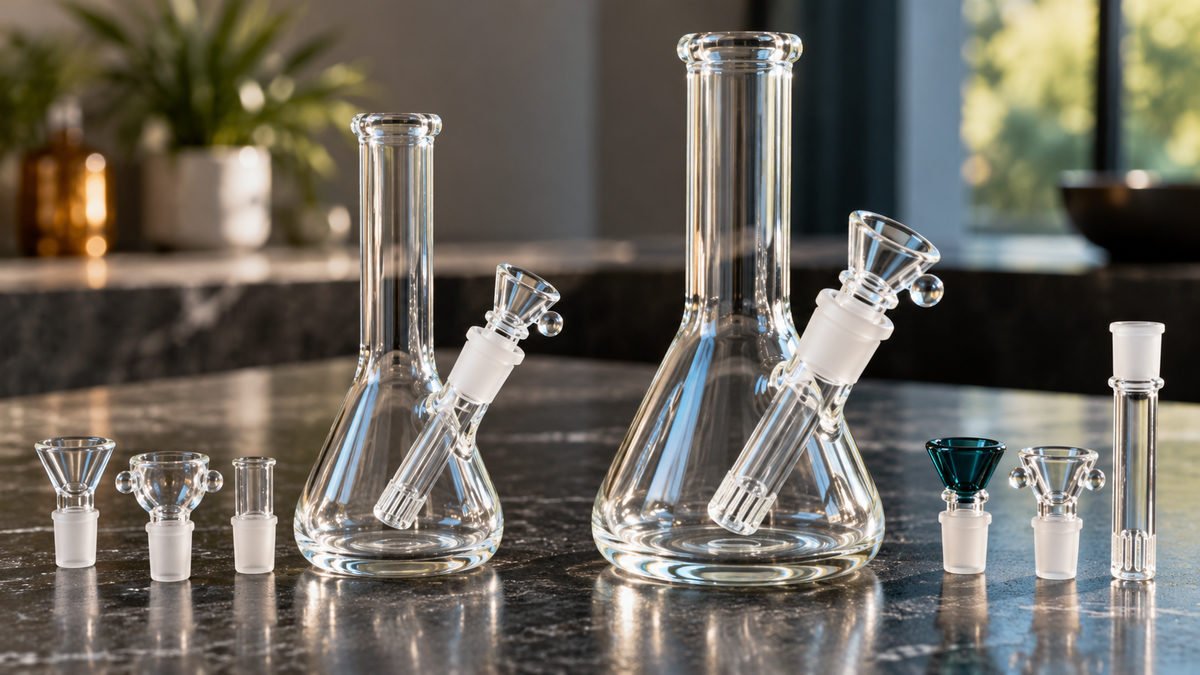
Ever bought a bowl or downstem that looked right, then discovered it would not fit? Understanding 14mm vs 18mm bong joints helps prevent that frustrating mistake. Both sizes offer useful benefits, but they suit different bong designs, airflow preferences, and accessory setups.
This guide compares 14mm and 18mm bong joints across airflow, hit size, cooling, durability, cleaning, and compatibility. You will also learn how to check your bong before buying replacement glass or accessories.
14mm vs 18mm Bong Joints: What Is the Difference?
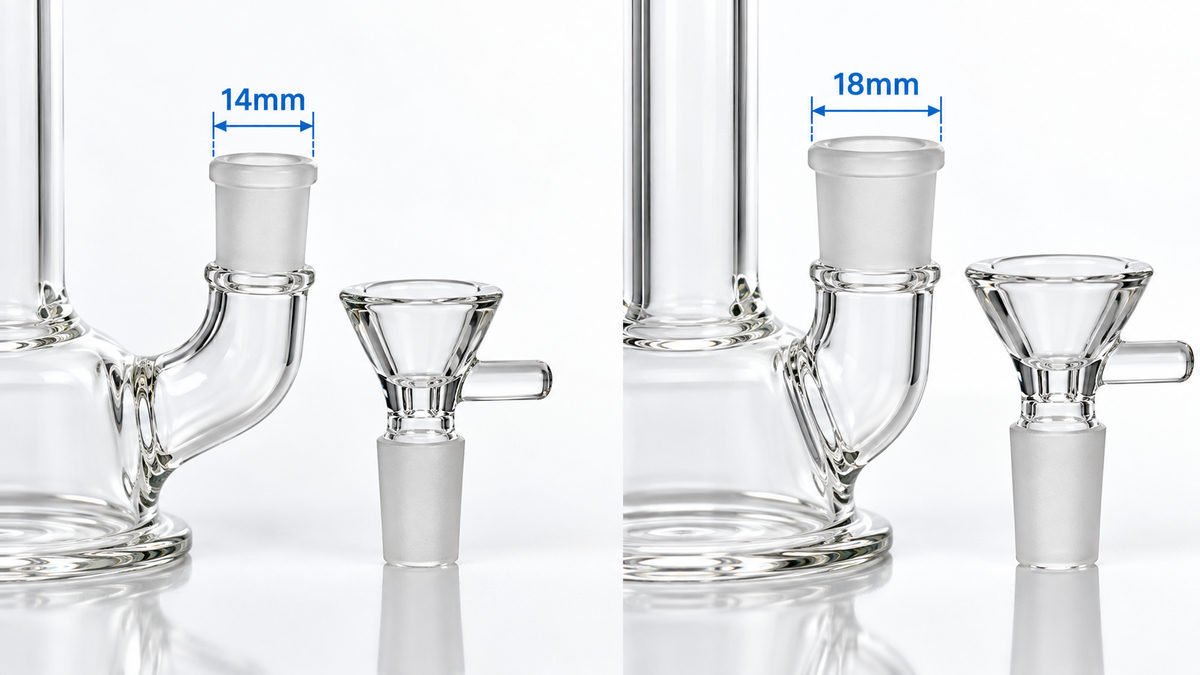
A 14mm or 18mm bong joint refers to a standard connection size. The measurement describes the approximate diameter of the joint or accessory connection. It does not describe the bong’s overall height, chamber volume, or capacity. Joint size decides which bong bowl sizes will fit.
Therefore, a tall bong can use a 14mm joint, while a compact bong can sometimes use an 18mm joint. However, manufacturers usually match larger joints with larger glass designs. The complete bong setup matters more than the joint size alone.
Understanding Male and Female Bong Joints
A female bong joint has an opening that accepts a male bowl, downstem, banger, or adapter. Meanwhile, a male joint has a glass end that fits into a female opening. You must match both the size and the joint type before buying an accessory.
For example, a 14mm female bong joint needs a 14mm male bowl or downstem. An 18mm female joint needs an 18mm male component. Two male joints cannot connect directly, and two female joints also need an adapter.
Why Joint Size Matters
Joint size affects how much air can pass through the connection. It also determines which bowls, ash catchers, reclaimers, and downstems fit your bong. Additionally, the joint influences the size and weight of compatible accessories.
Still, joint size does not decide everything about the experience. Bong height, percolator design, water level, chamber size, bowl capacity, and inhalation technique also influence airflow and hit volume.
14mm vs 18mm Bong Joint Comparison Table
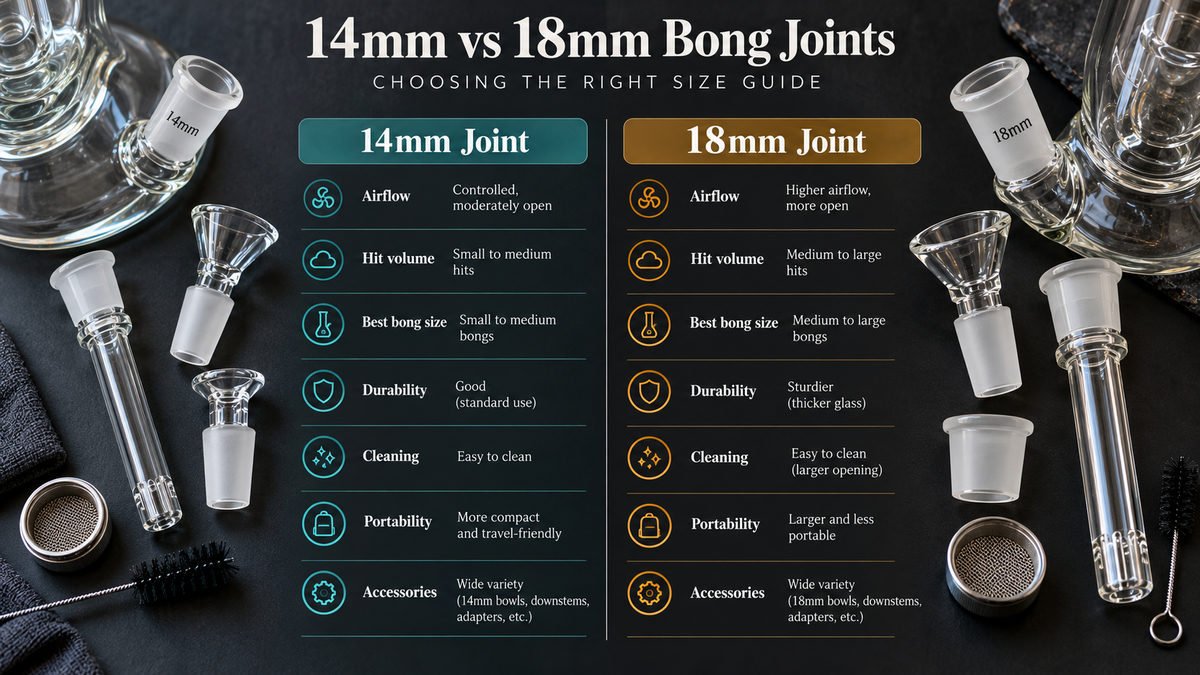
| Feature | 14mm Joint | 18mm Joint |
|---|---|---|
| Airflow potential | Controlled and moderately open | Higher potential airflow |
| Typical hit volume | Small to medium | Medium to large |
| Best bong size | Small and medium bongs | Medium and large bongs |
| Durability | Strong when well made, but slimmer | Often more robust around the connection |
| Accessory availability | Very broad selection | Broad, but fewer compact options |
| Cleaning | Easy, though buildup appears sooner | Easy access, but larger parts need more cleaning |
| Portability | Lighter and easier to carry | Usually heavier and larger |
| Beginner-friendliness | Simple and efficient | Better for experienced users |
Generally, 14mm joints suit compact glass bongs and controlled sessions. In contrast, 18mm joints support a more open draw and larger accessory sizes. The best choice depends on how the entire bong moves air.
For instance, a small bong with an efficient percolator may feel smoother than a large bong with an 18mm joint. Similarly, a 14mm bong with a wide chamber can still produce substantial hits. Joint size influences potential, but it does not independently determine intensity.
Additionally, water volume and percolation affect cooling more than the joint diameter alone. A longer vapour path can cool the draw, while extra filtration can increase resistance. Therefore, consider joint size as one part of the complete design.
14mm Bong Joints: Advantages and Drawbacks
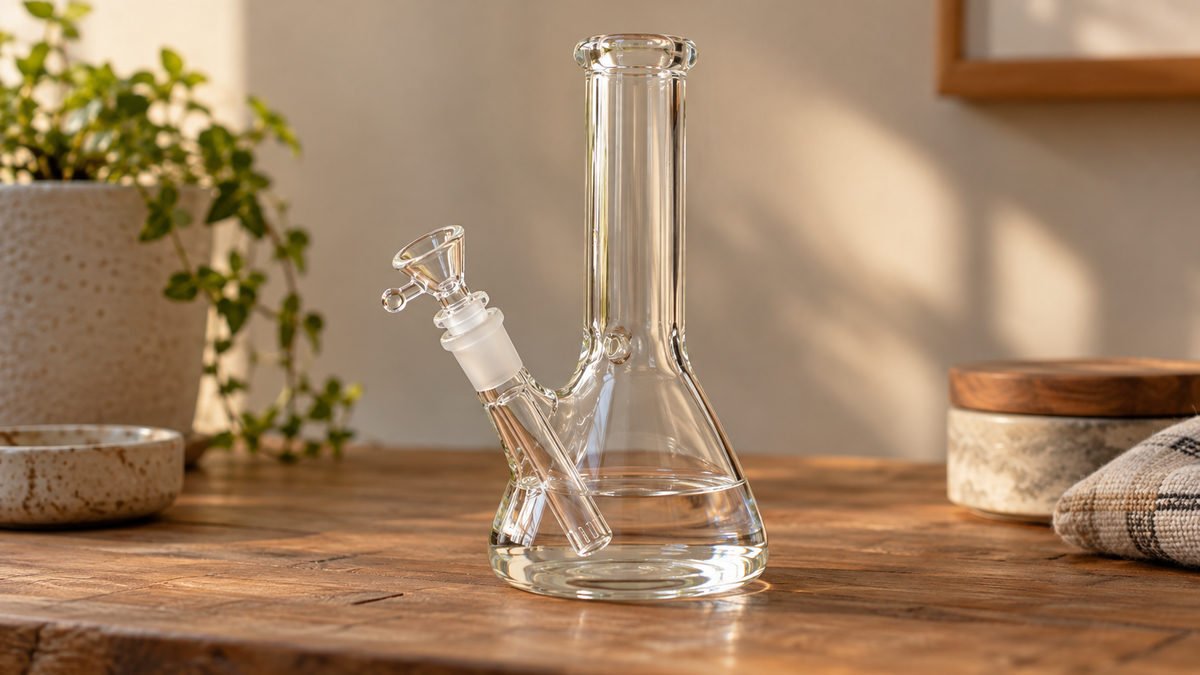
Many users choose 14mm joints because they offer a practical balance. Their compact size works well with small and medium bongs. Moreover, 14mm bowls often provide enough capacity for efficient, controlled sessions. Matching downstem sizes matters as much as the joint itself.
- Compact connections suit smaller glass designs.
- Lower weight makes the bong easier to handle.
- Small bowls can help reduce material waste.
- Replacement bowls and accessories are widely available.
- Smaller components usually cost less to replace.
Furthermore, 14mm fittings work well for users who prefer a slightly more controlled draw. The narrower connection can create a little more resistance. Some people find that resistance easier to manage, especially with compact chambers.
However, 14mm joints may restrict airflow compared with a similar bong using an 18mm joint. The difference depends on the downstem, percolator, chamber, and bowl design. Therefore, do not assume every 14mm bong will feel tight.
Smaller bowls can also require more frequent refilling during longer sessions. Additionally, resin buildup may feel more noticeable inside a narrower opening. Regular cleaning helps maintain airflow and makes the joint easier to inspect.
Finally, the slimmer glass around some 14mm connections may feel less robust. That does not make every 14mm bong fragile. Glass thickness, joint construction, annealing, and careful handling matter more than size alone.
18mm Bong Joints: Advantages and Drawbacks
An 18mm joint gives a bong a larger connection point. As a result, it can support more airflow and a more open draw. This design often suits larger bongs, desktop setups, and users who prefer bigger bowls.
- Higher airflow potential can create a more open draw.
- Larger bowls can hold more dry herb.
- Wider connections may offer stronger proportions.
- Large bong designs can benefit from increased airflow.
- Bigger accessories can feel stable on substantial glass.
Moreover, an 18mm setup can suit high-volume sessions where a small bowl feels limiting. The larger connection may also complement a large chamber or multi-stage percolator. However, the bong still needs balanced airflow throughout its design.
There are practical trade-offs. Larger bowls may encourage faster material consumption, especially during repeated sessions. The accessories can also weigh more and place additional leverage on the joint.
Additionally, 18mm bongs and accessories may use more glass and take up more storage space. Compact replacement parts can be less common than 14mm equivalents. Therefore, check availability before committing to a less familiar setup.
Cleaning larger components can also require more solution and rinsing. The wider opening improves access, but sizeable bowls, ash catchers, and percolators may hold more residue. Careful maintenance keeps the connection clear and reduces stress during removal.
Airflow, Hit Size, Cooling, Flavor, and Durability
Airflow is one of the biggest reasons users compare 14mm and 18mm joints. An 18mm connection can allow more air through when the rest of the bong matches its size. Meanwhile, a 14mm joint may feel more controlled and slightly more resistant.
However, the connection does not work alone. A narrow downstem, small bowl opening, or restrictive percolator can limit an 18mm bong. Similarly, a well-designed 14mm bong can deliver a surprisingly open draw.
Hit volume follows a similar pattern. An 18mm bowl often holds more material, which creates greater potential volume. However, chamber size, water level, percolation, and inhalation speed have a stronger practical effect.
Cooling also depends on the complete vapour path. Longer bongs, larger water chambers, and multiple percolators can cool the draw more effectively. Additionally, excessive water can increase resistance without necessarily improving the experience.
Flavor depends on cleanliness, filtration, vapour path length, and the material used. A smaller 14mm setup may provide a shorter path and a direct profile. In contrast, an 18mm bong with more filtration may produce a softer but less direct draw.
Durability depends on build quality rather than joint size alone. An 18mm joint may have sturdier proportions, but thick glass does not make a bong unbreakable. Both sizes need careful handling, stable storage, and gentle accessory removal.
Regular cleaning also protects the connection. Resin can make bowls and downstems stick, encouraging users to twist or force them. Instead, loosen buildup gradually and support the glass close to the joint.
For borosilicate glass, sudden temperature changes can still create stress. The United States Pharmacopeia explains borosilicate glass properties, including its resistance to thermal shock. Handle all glass carefully, regardless of the joint diameter.
Bong Joint Compatibility: Bowls, Downstems, Adapters, and Accessories
Compatibility starts with two details: size and joint type. A 14mm male bowl will not fit directly into an 18mm female bong joint. Likewise, an 18mm male downstem will not fit a 14mm opening without an appropriate adapter. Mixing sizes is possible with glass bong adapters.
This applies to more than bowls. Ash catchers, reclaimers, quartz bangers, drop-down adapters, and other glass accessories must match the same connection requirements. Therefore, always check the product specifications before ordering.
- Bowls: Match the male size to the bong’s female joint.
- Downstems: Confirm size, length, and joint orientation.
- Ash catchers: Check both connection sizes and angle.
- Reclaimers: Confirm whether the fitting uses male or female glass.
- Bangers: Match the joint size and angle to the rig.
- Adapters: Use them when two compatible pieces have different sizes.
A 14mm to 18mm adapter allows a 14mm bong to accept an 18mm accessory. Conversely, an 18mm to 14mm adapter lets a larger bong use a smaller accessory. The adapter must still match the bong’s joint gender.
However, adapters add height and another glass connection. They can change the centre of gravity, create an extra cleaning point, and increase the risk of accidental knocks. Choose an adapter when it solves a genuine compatibility problem.
Downstem dimensions require extra attention. Measure the joint size, insertion depth, overall downstem length, and whether the bong uses a removable or fixed design. A correctly sized downstem can still fail if it reaches too far or sits too high.
Before buying, inspect the original component or product listing. Look for terms such as “14mm female joint”, “18mm male bowl”, or “18mm downstem”. If the listing lacks measurements, contact the seller before placing an order.
For more glass options and replacement accessories, browse the Sweet Puff Australia shop. You can also review the broader product categories when comparing compatible glassware.
Which Bong Joint Size Should You Choose?
Choose a 14mm joint if you want a compact, efficient, and straightforward setup. It suits beginners, smaller bongs, portable storage, and controlled draw resistance. Additionally, 14mm accessories are easy to find across many common glassware ranges. Once you know your size, browse our bong accessories guide.
A 14mm setup also works well when you prefer smaller bowls and measured sessions. It usually weighs less and takes up less space. Therefore, it can make daily cleaning, storage, and handling simpler.
Choose an 18mm joint if you prefer stronger airflow and larger bowls. This size suits experienced users, large bongs, desktop setups, and higher-volume sessions. Moreover, the open draw can complement a spacious chamber and substantial percolation.
However, do not choose 18mm simply because it sounds more powerful. A poorly matched bong may feel harsh, waste material, or become awkward to handle. The complete design should support the connection size.
Practical Buying Checklist
- Check the bong’s exact joint size.
- Identify whether the joint is male or female.
- Measure the downstem length and orientation.
- Consider bong height and chamber volume.
- Decide whether you prefer controlled or open airflow.
- Choose between dry herb and concentrate accessories.
- Check bowl capacity and replacement availability.
- Confirm ash catcher, reclaimer, and adapter compatibility.
- Consider cleaning access around the joint and percolator.
- Decide whether an adapter may change height or stability.
Most importantly, buy the joint size that matches your existing glass. If you already own accessories, check those measurements first. This approach prevents wasted money and avoids forcing incompatible parts together.
Sweet Puff Australia brings together water pipes, glass designs, and smoking accessories for adult customers. Explore the Sweet Puff Australia website for available collections and product information.
Conclusion
A 14mm joint usually suits compact bongs, beginners, efficient sessions, and broad accessory selection. An 18mm joint better matches larger bongs, higher airflow, bigger bowls, and users who prefer an open draw. Neither size is automatically better for every setup.
Before buying, check your bong’s joint size, gender, downstem dimensions, and accessory requirements. Then choose a compatible 14mm or 18mm bowl, adapter, downstem, or replacement part. A well-matched setup will perform more reliably and remain easier to maintain.





