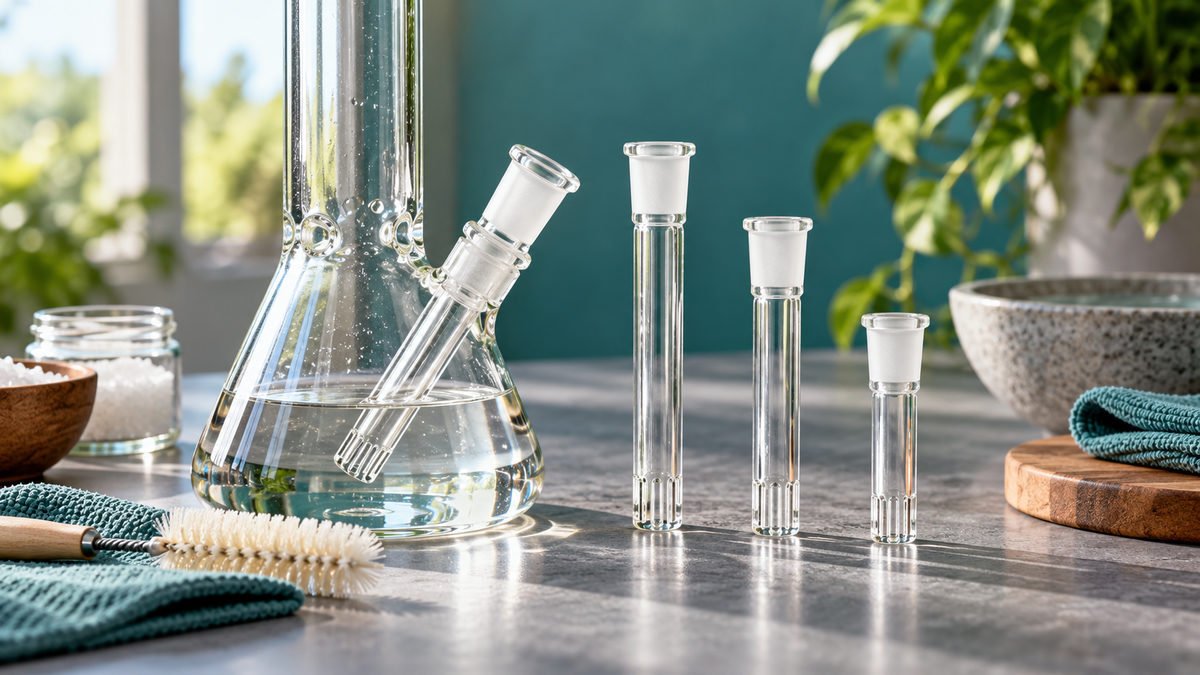
A downstem only a few millimetres too large or long can cause leaks, weak bubbling, or uncomfortable splashback. Bong downstem sizes explained clearly can save you from buying the wrong replacement part. Many owners confuse joint diameter with downstem length. Others overlook male and female compatibility or trust a 10mm, 14mm, or 18mm label alone. This guide shows how to measure your bong, choose the right downstem, adjust the water level, and maintain reliable airflow.
Bong Downstem Sizes Explained: The Basics
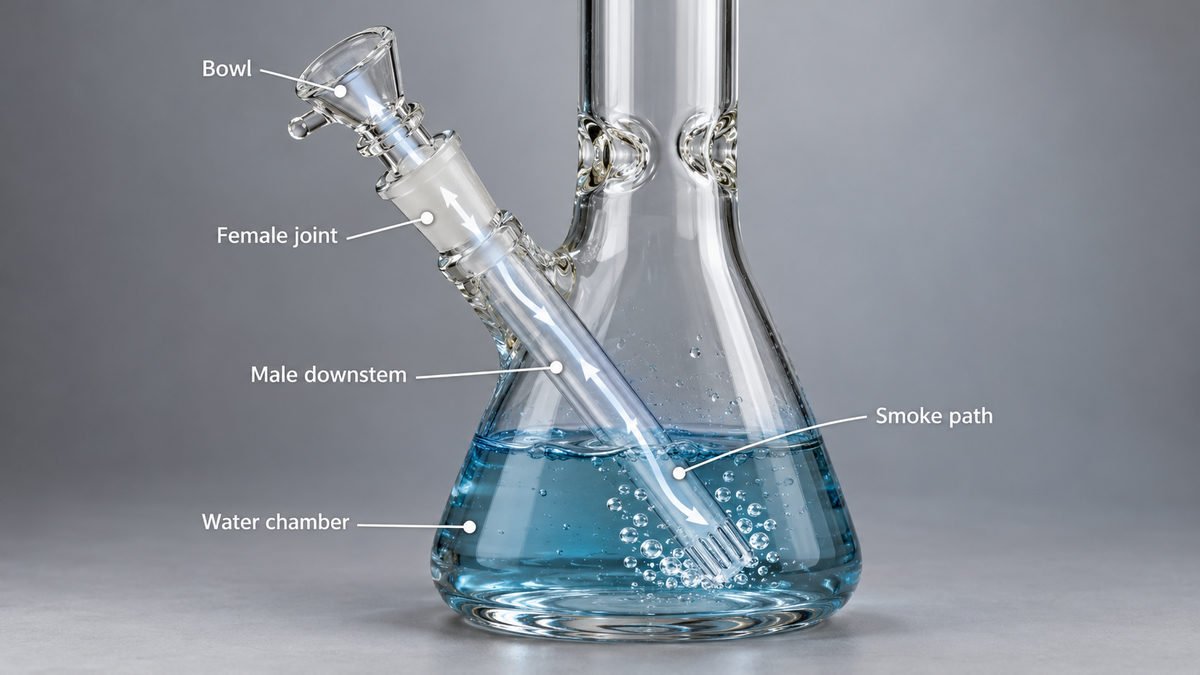
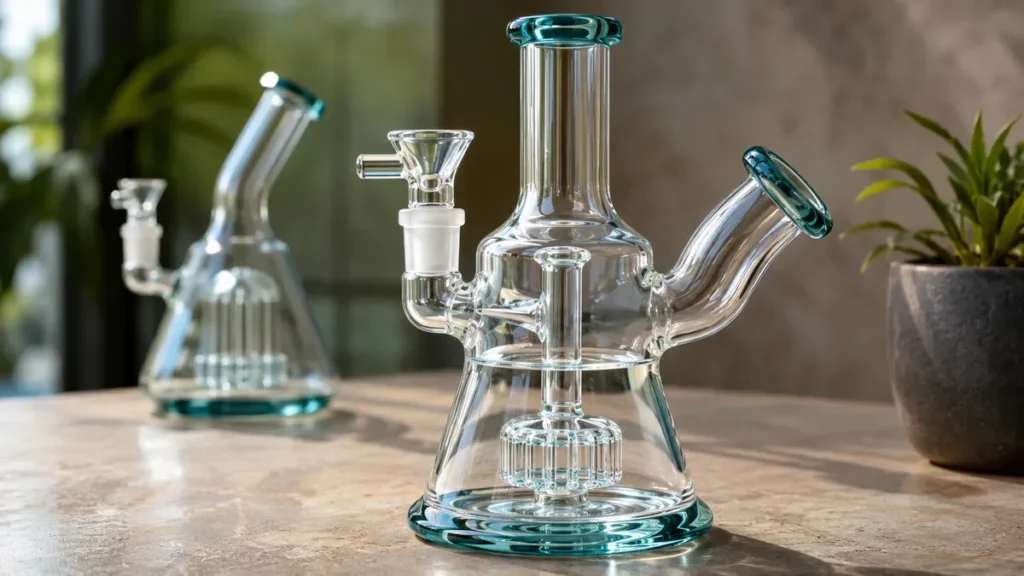
A bong downstem is the tube that carries smoke from the bowl into the water chamber. The smoke travels through the tube and enters the water through its lower opening. As a result, the water cools the smoke and helps filter particles before inhalation.

How a Downstem Works
The bowl holds the material, while the downstem connects that bowl to the bong’s water chamber. When you draw through the mouthpiece, air pulls smoke downwards and through the water. The resulting bubbles increase contact between the smoke and water.
However, bubbling only works properly when the downstem reaches the water. A tube sitting above the waterline produces little diffusion. A tube placed too deeply may restrict airflow or pull water towards the mouthpiece.
Joint Diameter and Downstem Length
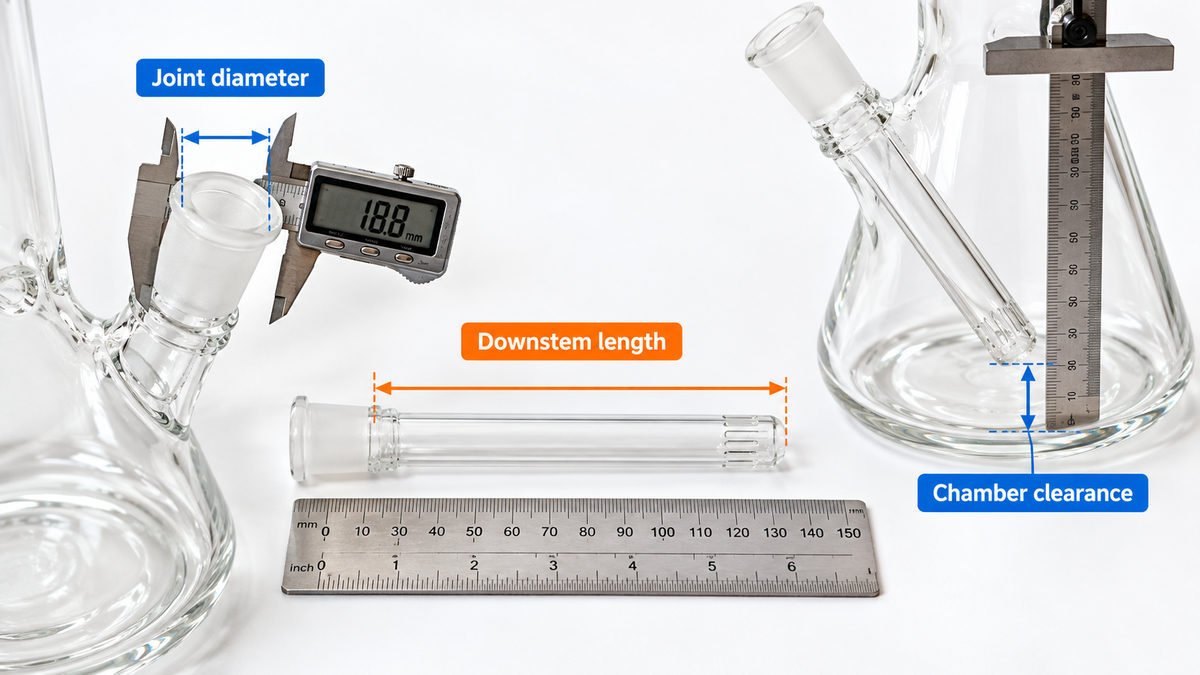
Two measurements matter when choosing a bong downstem: joint diameter and tube length. Joint diameter describes the width of the glass connection, commonly 10mm, 14mm, or 18mm.
Downstem length describes how far the tube extends into the water chamber. Therefore, an 18mm downstem can be shorter than a 10mm downstem. These measurements describe different parts of the design.
- Female bong joint: The opening built into the bong.
- Male downstem: The part that inserts into the female bong joint.
- Bowl or slide: The removable piece that holds the material.
- Removable downstem: A separate tube that you can clean or replace.
- Fixed downstem: A permanently attached tube built into the bong.
Fit, length, diffusion, water level, and cleanliness all affect performance. Additionally, a clean and correctly sized downstem usually provides smoother bubbling and more consistent airflow.
Standard Bong Downstem Sizes and Compatibility Chart

Most bong downstems use one of three common joint diameters. The correct option depends on the bong’s female joint, not the downstem’s appearance. Always measure the bong before ordering a replacement. Learn the difference between 14mm vs 18mm bong joints.
10mm Downstems
A 10mm downstem commonly suits compact or low-profile bongs. These designs often pair with smaller bowls and narrower glass joints. They can work well in smaller chambers where space and portability matter.
However, a narrower joint does not automatically mean weaker performance. Diffuser design, tube length, water depth, and cleanliness also influence bubbling and airflow.
14mm Downstems
A 14mm downstem is one of the most widely used middle-size options. Many standard glass bongs use 14mm joints and matching bowls. Consequently, 14mm replacement parts are often easier to find.
Additionally, 14mm designs offer a practical balance between compact size and comfortable airflow. They suit many everyday bong shapes, provided the length matches the chamber.
18mm Downstems
An 18mm downstem generally suits larger bongs with wider joints and bowls. The larger connection can support a broader airflow path. Nevertheless, it still requires the correct length and chamber clearance.
Remember that 18mm describes diameter only. It does not tell you whether the downstem measures three inches, five inches, or longer.
| Joint diameter | Typical bong use | Matching bowl size | Airflow considerations | Compatibility notes |
|---|---|---|---|---|
| 10mm | Compact and low-profile bongs | 10mm bowl | Narrower airflow path | Must match a 10mm female joint |
| 14mm | Standard everyday bongs | 14mm bowl | Balanced airflow | Common replacement size |
| 18mm | Larger bongs and chambers | 18mm bowl | Wider airflow potential | Requires an 18mm female joint |
Therefore, the downstem joint must match the bong joint. The bowl must also match the downstem opening unless you use a suitable adapter. A 14mm bong bowl cannot automatically fit every 14mm-looking glass piece.
How to Measure a Bong Downstem Correctly
Accurate measurements prevent most replacement mistakes. Before ordering, inspect the bong carefully and record each measurement in millimetres or inches.
Step 1: Identify the Downstem Design
First, determine whether the bong uses a removable or fixed downstem. A removable downstem usually slides through a female joint and can lift out gently. A fixed downstem forms part of the bong and cannot come out without damaging the glass.
Meanwhile, removable designs often include a visible outer joint or small glass rim. That rim helps position the tube but does not represent the downstem’s usable length.
Step 2: Measure the Bong Joint
Use a ruler or digital caliper to measure the inner diameter of the female bong joint. Check whether the opening measures approximately 10mm, 14mm, or 18mm.
Specifically, measure the opening itself rather than the outside edge of the glass. A thick glass wall can make the joint look larger than its actual internal size.
Step 3: Measure the Existing Downstem
Remove the downstem gently, if the design allows it. Measure from the lower edge of the glass joint to the end of the tube. Exclude the joint rim, decorative lip, or any outer flange.
For example, an existing tube may measure five inches from the lower joint edge to the diffuser opening. Record that length separately from the 14mm joint diameter.
Step 4: Check the Joint Style
Confirm that the replacement uses a male joint that inserts into the bong’s female joint. Then check the opposite end where the bowl connects. Some downstems accept a male bowl, while other designs use a different connection style.
Additionally, inspect the glass for chips, uneven edges, or distortion. A replacement may have the correct measurements but still fail if the bong joint has damage.
Step 5: Measure Chamber Placement
Measure the distance from the bong joint to the bottom and side walls of the water chamber. The downstem needs enough room to sit below the waterline without touching the glass.
A bong with a 14mm female joint and a five-inch downstem usually needs a 14mm replacement of similar length. However, confirm the chamber depth before assuming the same length will fit perfectly.
- Measure the female joint opening.
- Measure the existing downstem length.
- Check the bowl connection size.
- Record the distance to the chamber bottom.
- Compare everything with manufacturer specifications.
Most importantly, rely on exact measurements rather than product photographs. General size names can hide differences in joint style, tube length, or diffuser placement.
Choosing the Right Downstem Length, Design, and Bowl
Downstem length affects how deeply the diffuser openings sit in the water. A longer tube can create more water contact, while a shorter tube may provide less diffusion. Your downstem must match one of the standard bong bowl sizes.
However, longer does not always mean better. The opening should sit slightly below the water surface while leaving clearance from the chamber bottom and side walls.
When a Downstem Is Too Long
A downstem that reaches too far can touch the chamber bottom. This contact may restrict airflow, create excessive bubbling, or make installation difficult.
Furthermore, deep placement can pull water towards the mouthpiece during a strong draw. It may also increase splashback, especially when the chamber contains too much water.
When a Downstem Is Too Short
A short downstem may leave its diffuser openings above the waterline. As a result, bubbling becomes weak or disappears entirely.
Less water contact can also produce hotter smoke and reduced filtration. Therefore, check the waterline and tube length together rather than judging length alone.
Comparing Downstem Designs
- Open-ended: A simple tube that creates basic bubbling.
- Diffused: Uses small openings to divide smoke into multiple bubbles.
- Slitted: Uses narrow cuts for finer bubbling and broader water contact.
- Showerhead: Splits smoke through a wider diffuser section.
- Multi-hole: Uses several openings to spread bubbling across the chamber.
In contrast, simpler open-ended designs can be easier to clean and less likely to clog. More complex diffusers may provide finer bubbling but need regular maintenance.
Removable Versus Fixed Downstems
Removable downstems are easier to clean, inspect, and replace. They also let you experiment with different lengths or diffuser styles when the bong supports compatible parts.
Fixed downstems generally offer a clean built-in appearance. However, damage or permanent blockage may require replacing the entire bong instead of one small component.
Matching the Bowl
A 14mm bowl normally connects to a matching 14mm bong joint or downstem opening. Likewise, an 18mm bowl suits an 18mm connection. A 10mm bowl may work with a smaller bong or a suitable reducer adapter.
Therefore, choose the exact joint diameter first. Then select the length, diffuser design, and bowl connection that suit the chamber.
The best downstem for a bong combines correct diameter, suitable length, enough clearance, and appropriate diffusion. Appearance matters, but fit should guide the final decision.
Adapters, Installation, Water Level, and Troubleshooting
Installing a Replacement Downstem
Start by removing the old downstem carefully. Inspect the bong joint for chips, resin, or trapped glass fragments before inserting anything new. See our guide to glass bong adapters for mismatched parts.
- Clean the bong joint and replacement part.
- Lightly wet the glass with clean water.
- Insert the replacement gently and evenly.
- Attach the matching bowl without forcing it.
- Check that the tube does not touch the chamber walls.
Never twist aggressively or force tight glass. Instead, stop immediately if the part feels stuck or misaligned.
Can a 14mm Downstem Fit an 18mm Bong?
A 14mm downstem will not fit directly into an 18mm bong joint. A properly sized reducer or adapter may bridge the difference, but it can add height and affect stability.
Additionally, adapters may change the airflow path or move the bowl further from the bong. Exact-size parts usually provide the simplest and most stable result.
Setting the Water Level
Add water until the diffuser openings sit just below the surface. Then take a gentle test draw and watch the bubbling pattern.
If bubbling feels weak, add a small amount of water. If water reaches the mouthpiece, lower the level and test again. Small adjustments often make a noticeable difference.
Common Problems and Solutions
- Leaks: Check for a mismatched joint, chipped glass, loose fit, or damaged seal.
- Poor bubbling: Look for blockages, a short tube, incorrect seating, or openings above the waterline.
- Restricted airflow: Inspect resin buildup, excessive water, a narrow tube, or an incompatible bowl.
- Splashback: Lower the water level, check the downstem depth, and use slower draws.
Meanwhile, a better-fitting diffuser may reduce splashback when the chamber design allows enough clearance. Always adjust one factor at a time, so you can identify the cause.
Cleaning, Maintenance, and Replacement Advice
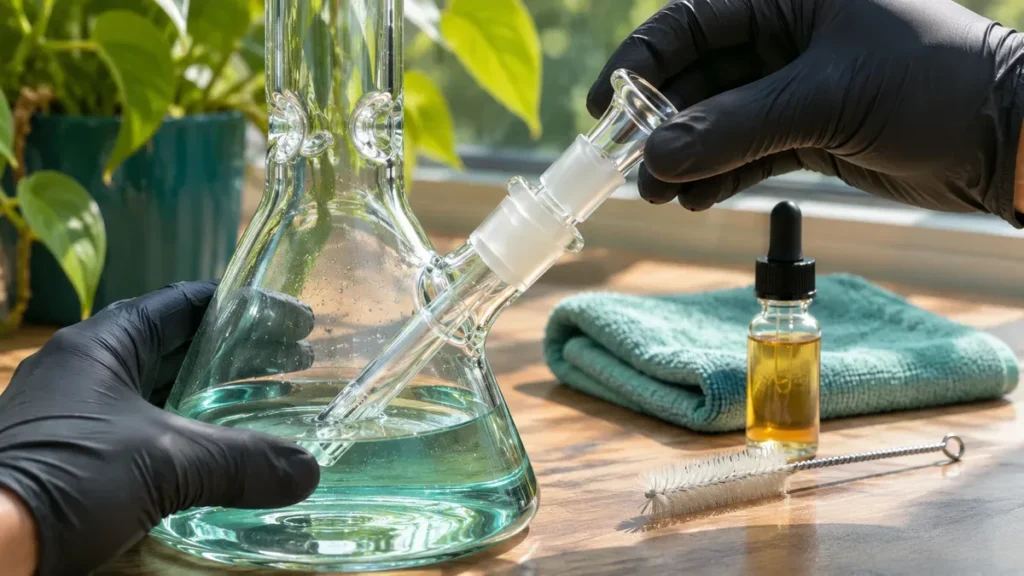
Remove the downstem whenever possible before cleaning. Soak it with an appropriate glass-cleaning solution that helps dissolve resin and other buildup. Our cleaning guide shows how to clean the downstem and bowl properly.
Additionally, rinse the part thoroughly and allow it to dry before reinstalling. A clean diffuser produces more consistent bubbling and helps maintain open airflow.
Never force stuck glass or use metal tools inside the joint. Sharp tools can chip the glass and create weak points. Furthermore, avoid exposing hot glass to sudden temperature changes.
Reduced bubbling, unpleasant taste, restricted airflow, visible cracks, and persistent leaks can signal a maintenance problem. Clean the part first when buildup seems likely.
There is no fixed replacement schedule. Replace a downstem when it becomes cracked, chipped, permanently blocked, poorly fitting, or unable to perform properly after cleaning.
- Confirm the bong joint diameter.
- Measure the downstem length.
- Check the bowl connection.
- Allow enough chamber clearance.
- Choose a suitable diffuser design.
- Review the manufacturer’s measurements and return policy.
Conclusion
The correct bong downstem depends on two separate measurements: joint diameter and tube length. Match the 10mm, 14mm, or 18mm joint, then confirm male and female compatibility.
Next, choose a suitable length with proper chamber clearance. Set the water level just above the diffuser openings, and adjust gradually to reduce splashback.
Regular cleaning and careful inspection help maintain airflow, bubbling, and filtration. Therefore, measure your bong joint and existing downstem before ordering.
Finally, compare those measurements with the replacement part’s specifications and compatibility notes. That simple check can prevent leaks, poor bubbling, and an expensive return.