
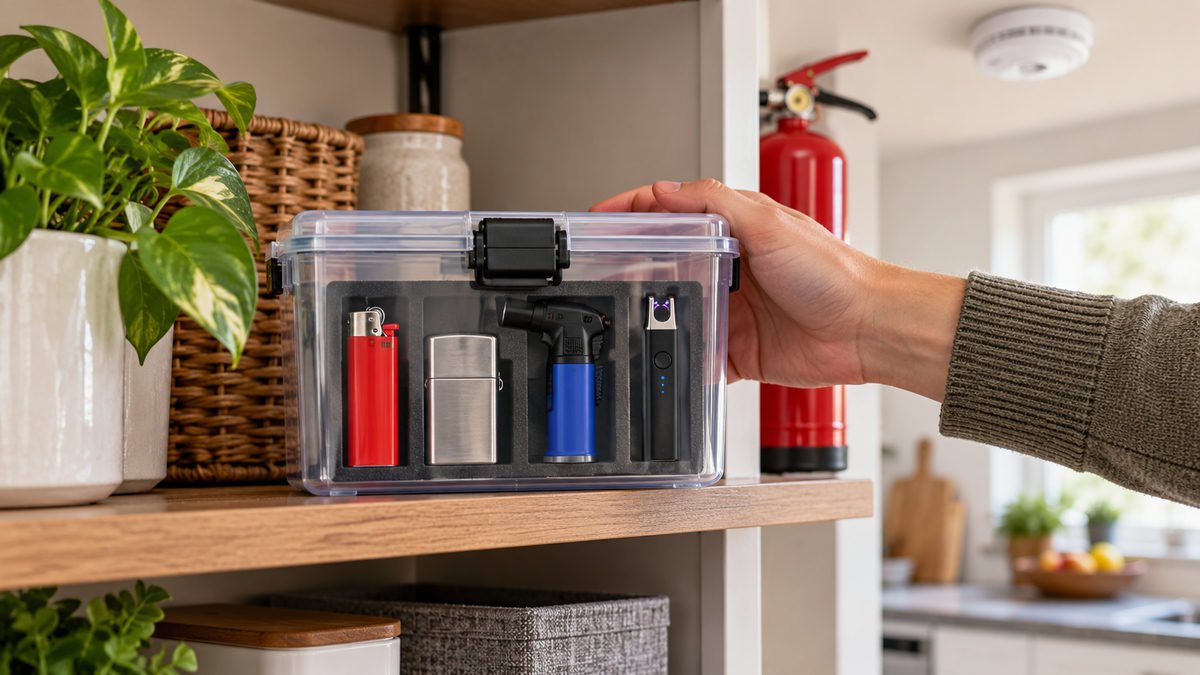
A lighter may be small, but one forgotten near a stove, in a hot car, or within a child’s reach can become a serious fire hazard. Many people also feel unsure about storing disposable, refillable, torch, utility, or electric lighters. Others miss the warning signs of leaks or dispose of old fuel containers incorrectly. These lighter safety and storage tips explain safer storage, handling, transport, inspection, disposal, and emergency responses.
Why Lighter Fire Safety Requires Careful Handling
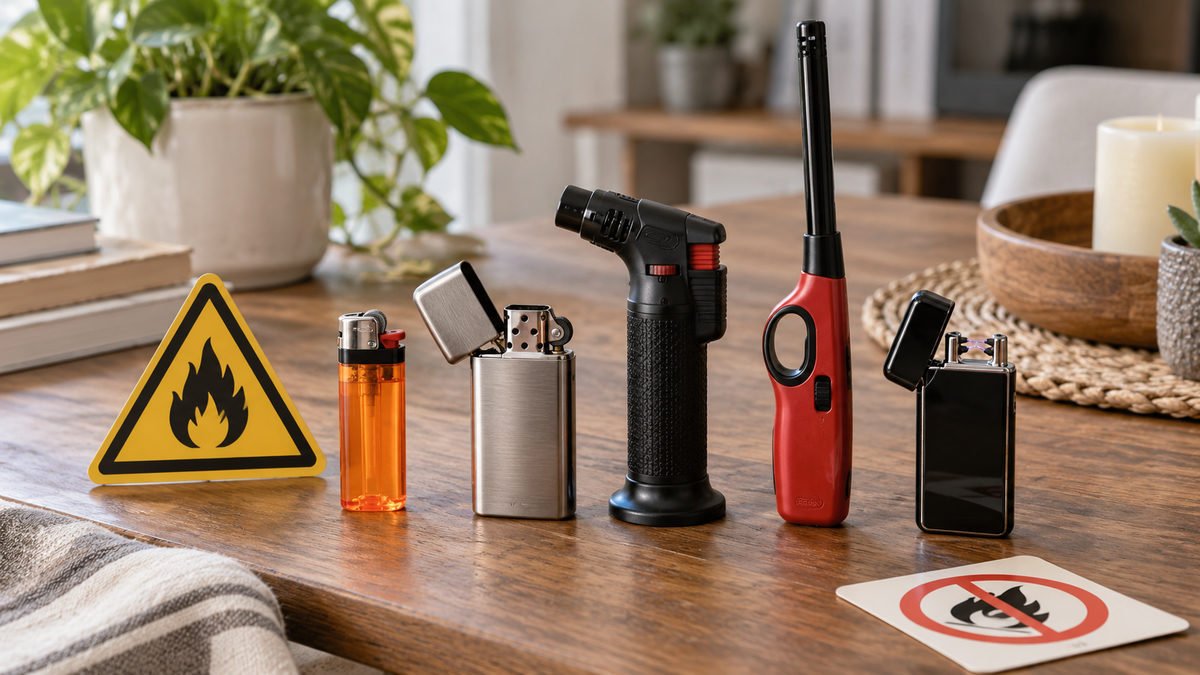
A lighter contains an ignition source and, in many cases, flammable fuel. That fuel can ignite when it meets a flame, spark, hot surface, or accidental activation. Even a small flame can ignite paper, clothing, curtains, furniture, aerosols, or vapours from solvents. Different designs carry different risks; see types of lighters explained.
Different lighters create different risks
Disposable lighters usually contain a limited amount of fuel. However, their plastic bodies can melt, crack, or deform when exposed to heat. Refillable lighters contain fuel systems, valves, seals, and hinges that require regular inspection.
Torch lighters produce a hotter, more concentrated flame than standard lighters. Therefore, they can ignite nearby materials quickly and cause deeper burns. Utility lighters often have longer handles, but that design does not make them safe to leave unattended.
Electric lighters do not use an open fuel flame. Nevertheless, they contain batteries and electrical components that can short-circuit, overheat, or activate accidentally. Keep them dry and follow the charging instructions supplied with the product.
Heat increases pressure inside fuel containers
Heat can increase pressure inside a lighter or refill can. As a result, fuel may escape through a valve, damaged seal, crack, or loose cap. In severe cases, the container may rupture or release fuel suddenly.
Never assume a lighter is safe because it looks intact. Follow the manufacturer’s temperature limits and keep every lighter away from direct sunlight, heaters, hot engines, and enclosed spaces. Child-resistant features reduce risk, but they do not make lighters childproof.
In Australia, the ACCC cigarette lighter safety guide warns that faulty lighters can leak, spit flames, ignite unexpectedly, or explode. Most importantly, treat every lighter as a potentially dangerous ignition device.
The basic prevention routine
After using a lighter, extinguish the flame completely and let the lighter cool. Next, inspect it for damage, unusual smells, or loose parts. Finally, store it securely away from heat, children, pets, and combustible materials.
Lighter Safety and Storage Tips for Home, Children, and Pets
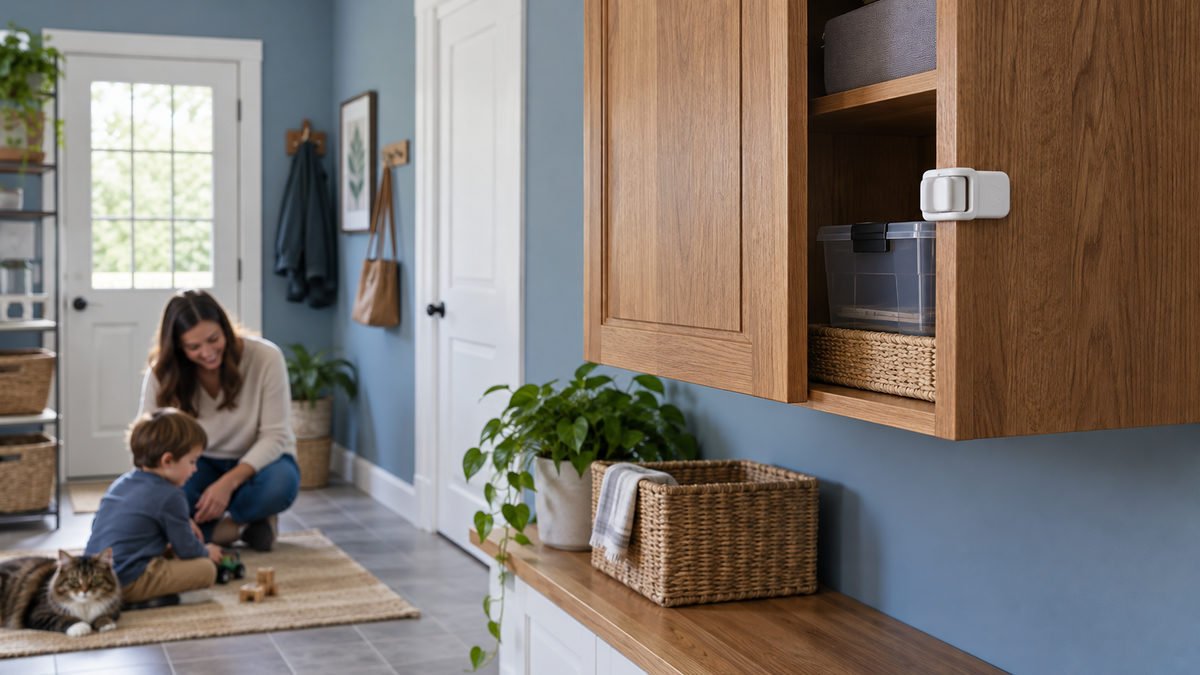
The safest storage location is cool, dry, secure, and well ventilated. Choose an area away from direct sunlight, flames, sparks, electrical equipment, and other heat sources. A high, locked cabinet usually provides better protection than an open shelf.
A drawer can work only when it sits high and closes securely. However, avoid low drawers that children or pets can open. Never leave lighters on kitchen benches, bedside tables, sofas, coffee tables, or near the edge of furniture.
Keep lighters away from stoves, ovens, heaters, fireplaces, radiators, windows, and hot appliances. Additionally, avoid placing them beside chargers, power boards, lamps, or equipment that produces heat during operation.
Protect children and pets
Store lighters out of both sight and reach. Children may imitate adults, investigate colourful objects, or discover how a safety mechanism works. Pets can also knock a lighter onto a hot surface or chew through protective packaging.
Teach children that lighters are tools for responsible adults, not toys. However, education should support secure storage rather than replace it. Even an older child may act impulsively during play or an emergency.
Never rely only on a child-resistant mechanism. These features reduce accidental activation, but they cannot prevent every child from operating a lighter. Replace novelty or toy-like lighters immediately, especially if they attract children’s attention.
Avoid unsafe combinations
Do not store lighters with keys, tools, batteries, aerosols, cleaning products, or other combustible materials. Sharp objects can damage a lighter, while loose items may press an ignition button inside a bag or drawer.
A dedicated storage container can help, provided it does not trap excessive heat. The container must also suit the manufacturer’s instructions. Never place a leaking lighter inside a sealed container, because escaping fuel may accumulate inside.
Keep working smoke alarms throughout the home. Also, place a suitable fire extinguisher where adults can reach it quickly. Fire and Rescue NSW recommends secure storage away from children, working alarms, and a rehearsed escape plan.
How to Store Disposable, Refillable, Torch, and Electric Lighters
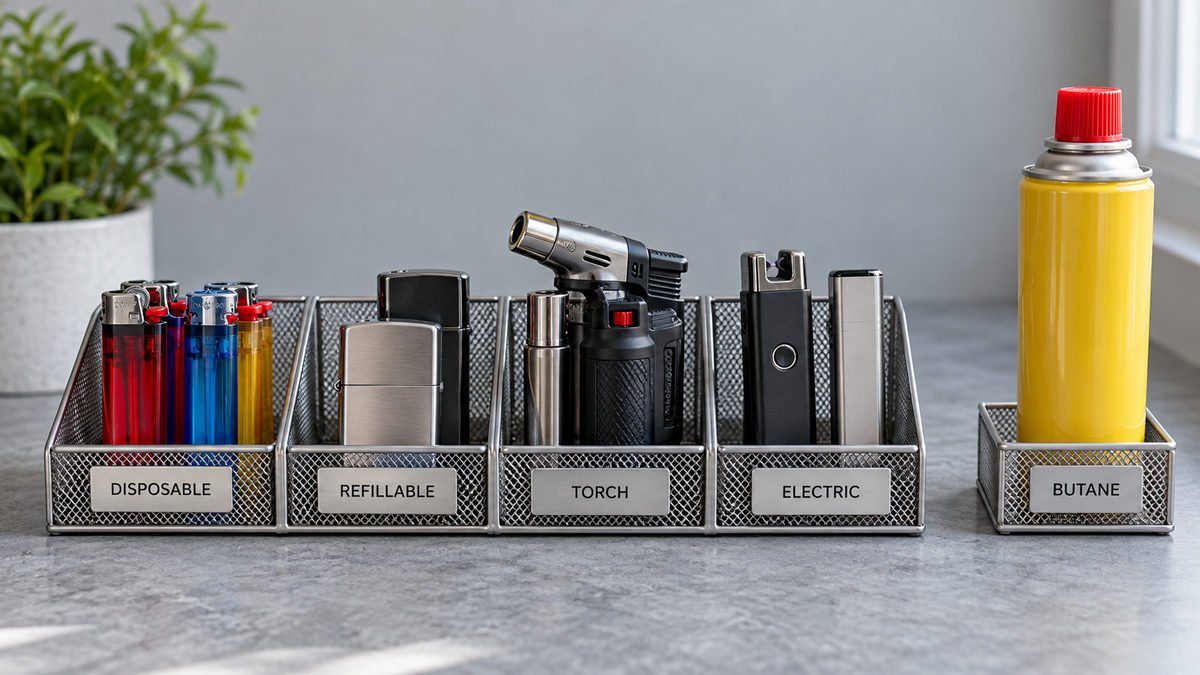
Each lighter type needs slightly different care. Therefore, read the label or manual before choosing a storage method. Manufacturer instructions take priority when they specify a temperature range, orientation, charging method, or fuel requirement. Read our comparison of refillable vs disposable lighters.
Disposable and refillable lighters
Store disposable lighters upright when practical. Protect them from crushing, abrasion, moisture, sunlight, and accidental activation. A damaged plastic body, loose wheel, or faulty button means the lighter should not remain in regular use.
Let refillable lighters cool before storing them. Close or secure the fuel control, and inspect the valve, seals, cap, hinge, and ignition mechanism. A loose cap or damaged seal can allow fuel to escape without obvious warning.
Keep lighter fluid separate from the lighter itself. Store the fluid away from flames, sparks, electrical switches, heat, and incompatible chemicals. Never use a household jar, drink bottle, or food container for lighter fuel.
Torch and utility lighters
Treat torch lighters as high-temperature devices. Prevent accidental trigger activation and keep them away from combustible surfaces. Their powerful flame can ignite paper, fabric, packaging, and vapours almost instantly.
Utility lighters need the same care, even when their long handles seem safer. The extended design only creates distance between your hand and the flame. It does not prevent accidental ignition or unsafe storage.
Electric lighters and refill cans
Keep electric lighters dry and protect their charging ports from dust and moisture. Prevent accidental activation inside bags, drawers, or pockets. Additionally, use only the recommended charging cable and power source.
Keep butane refill cans upright and follow the storage conditions printed on the label. Never puncture, burn, crush, heat, or modify a canister. Do not store refill cans beside a heater, hot water system, barbecue, or direct window sunlight.
Never refill a lighter near a flame, spark, lit cigarette, electrical switch, or poorly ventilated area. Move outdoors or to a location that the manufacturer specifically permits. Allow the lighter to settle before testing it, and keep your face away from the valve.
Prevent Accidental Ignition, Heat Damage, and Lighter Leaks
Inspect every lighter before use and storage. Look for cracks, dents, loose parts, damaged valves, broken caps, faulty ignition buttons, and unusual fuel odours. A lighter that feels different may already have a mechanical or fuel problem.
Warning signs include hissing sounds, frost, wet spots, strong fuel smells, or visible bubbling. A sudden change in flame height can also indicate a blocked jet, damaged valve, or unstable fuel flow.
What to do if a lighter leaks
If you suspect a leak, move away from flames, sparks, cigarettes, switches, motors, and electrical equipment. Avoid creating ignition sources nearby, including turning equipment on or off.
Do not test the leak with a flame. Never puncture the lighter, attempt an unsafe repair, or place the leaking item inside a sealed container. If safe, isolate it in a well-ventilated location away from people and ignition sources.
Contact your local council or hazardous-waste service for disposal instructions. If fuel release is significant, evacuate the area and contact emergency services. Fuel vapour can travel and ignite away from the original leak.
Keep flames away from combustible materials
Keep every flame away from clothing, hair, skin, paper, furniture, aerosols, petrol, solvents, and other flammable materials. Tie back long hair and remove loose sleeves before lighting anything.
Never use a lighter while holding flammable material. Also, avoid placing a lit lighter on a bench, floor, chair, or other surface. A small flame can spread when the lighter falls or rolls.
If a lighter accidentally ignites
If safe, place the burning lighter on a non-combustible surface. Move away immediately and warn everyone nearby. Use an appropriate extinguisher only when the fire remains small and you have been trained to use it.
Leave at once if the fire spreads, produces heavy smoke, involves fuel containers, or cannot be controlled safely. Call Triple Zero (000) from a safe location. Never return inside for a lighter, fuel can, phone, or personal item.
How to Transport Lighters in Cars, Bags, Packages, and Airplanes
Hot vehicles create serious lighter risks. Direct sunlight, dashboards, glove compartments, and enclosed cabins can reach dangerous temperatures. Therefore, never leave a lighter in a parked car, boot, glove compartment, or beside heat-generating equipment. Moving house? Our guide to packing glass bongs for moving covers fragile gear too.
For short vehicle transport, prevent movement and accidental activation. Keep the lighter away from sunlight, hot surfaces, passengers, sharp objects, and combustible materials. Remove it from the vehicle as soon as you arrive.
Carrying lighters in bags and pockets
When carrying a lighter, use a protective position that prevents the ignition mechanism from being pressed. Keep it away from keys, tools, coins, blades, chargers, and other sharp objects.
Do not carry a leaking, damaged, or unusually warm lighter. Additionally, avoid placing several loose lighters together. Movement can cause abrasion, accidental activation, or damage to valves and caps.
Shipping and air travel
Check current carrier rules before shipping or mailing any lighter. Fuel-filled lighters, butane cans, and lighter fluid may be restricted or prohibited. Never assume ordinary postal packaging makes a fuel product safe to send.
For air travel, check the airline, airport, and national aviation rules before departure. Do not assume a lighter is permitted in carry-on or checked luggage. Rules may differ for disposable lighters, torch lighters, electric lighters, and fuel containers.
Never pack loose butane refill cans or lighter fluid without confirming hazardous-material requirements. Contact the carrier directly when rules are unclear, particularly for torch lighters, fuel containers, or international travel.
Lighter Disposal, Emergency Readiness, and a Safety Checklist
An empty lighter may still contain residual fuel. Therefore, do not automatically place it in recycling or regular household waste. Damaged lighters, lighter fluid, and butane refill cans may require special handling.
Contact your local council, waste service, hazardous-material service, or fire-safety authority for disposal instructions. Never burn, crush, puncture, dismantle, refill, or place fuel containers in a fire or waste compactor.
Quick lighter safety checklist
- Extinguish the flame completely after use.
- Let the lighter cool before storing it.
- Inspect the body, valve, cap, button, and seals.
- Keep lighters and fuel away from heat, flames, sparks, and sunlight.
- Store fuel separately in the approved position.
- Keep lighters out of children’s and pets’ reach and sight.
- Prevent movement and accidental activation during transport.
- Follow local disposal instructions for damaged or empty products.
Common mistakes include leaving lighters in cars, storing them near stoves, and keeping them beside aerosols or batteries. Other dangerous mistakes include testing leaks with flames and relying only on child-resistant mechanisms.
Maintain working smoke alarms and test them regularly. Keep a suitable extinguisher accessible, clear all exits, and practise a household escape plan. Everyone at home should know when to leave and how to call Triple Zero (000).
Call emergency services for uncontrolled ignition, spreading fire, heavy smoke, significant fuel release, serious burns, or suspected exposure to fuel vapours. Move away first, then seek help from a safe location.
Conclusion
Safe lighter storage means keeping lighters and fuel away from heat, flames, sparks, children, pets, and combustible materials. Inspect each item for damage, transport it carefully, and use appropriate local disposal channels.
Inspect every lighter and fuel container in your home today. Move unsafe items into secure, cool storage, then check the manufacturer’s instructions and local disposal rules before using, transporting, or discarding them.
For readers exploring smoking accessories, Sweet Puff Australia provides product information and collection details. Always handle any lighter or accessory responsibly, and keep fire safety ahead of convenience.






Comment (1)
[…] Electric lighters avoid open fuel but still contain batteries and hot electrical arcs. Follow our lighter safety and storage tips when […]