

Should you buy a cheap disposable lighter or invest in a refillable model that can last for years? The answer depends on more than the purchase price. Fuel costs, durability, safety, maintenance, environmental impact and intended use all affect value. This guide compares refillable vs disposable lighters for smoking accessories, candles, grilling, camping, travel and everyday tasks.
Refillable vs Disposable Lighters: How They Differ
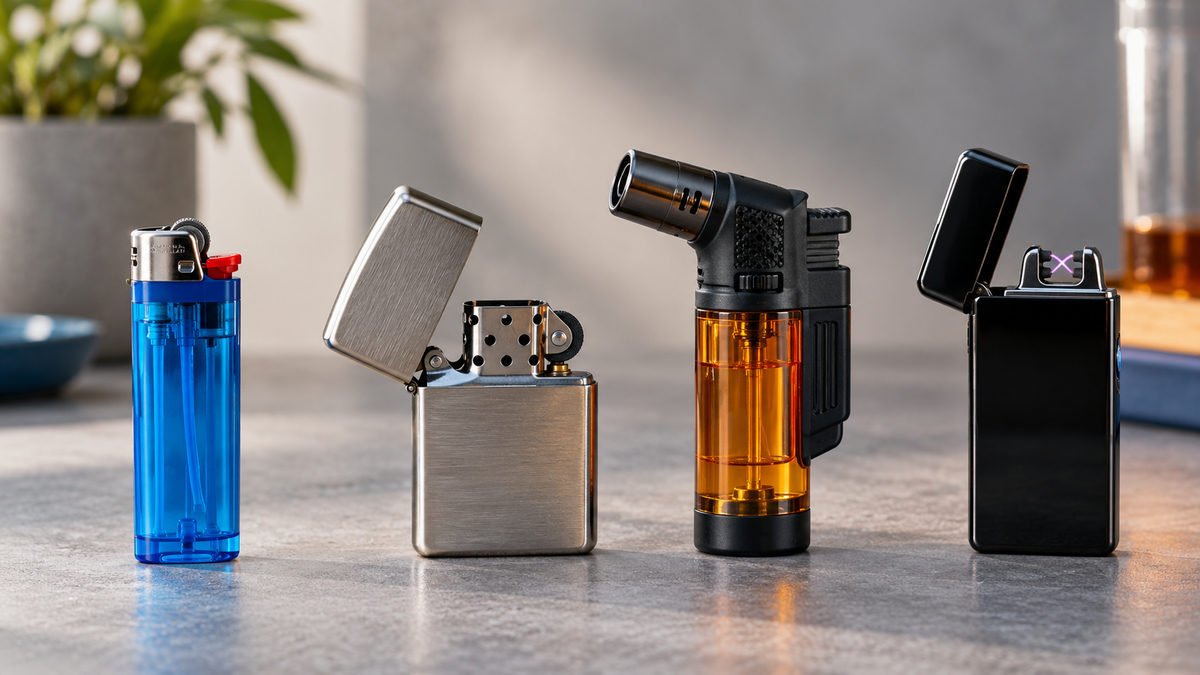
Refillable lighters hold fuel or power for repeated use. Common types include butane refill lighters, liquid-fuel models and rechargeable electric lighters. Therefore, users can extend their lifespan by adding fuel, replacing parts or recharging the battery. For every style, see types of lighters explained.
Disposable lighters usually contain a sealed fuel chamber. Once the fuel runs out, users discard the complete lighter. Some models cost very little, feel lightweight and require almost no maintenance, making them popular for occasional use.
| Feature | Refillable lighter | Disposable lighter |
|---|---|---|
| Purchase price | Usually higher | Usually lower |
| Fuel source | Butane, lighter fluid or electricity | Pre-filled butane or similar fuel |
| Lifespan | Months to many years | Until the fuel runs out |
| Maintenance | Refilling, cleaning or charging | Minimal maintenance |
| Portability | Often heavier, especially metal models | Lightweight and easy to replace |
| Waste | Less frequent disposal | More complete lighters enter waste streams |
| Wind resistance | Depends on the flame or arc design | Depends on the flame or arc design |
| Best uses | Frequent use, outdoor tasks and long-term value | Occasional use and maximum simplicity |
Ignition systems and fuel types
Flint-wheel lighters create sparks when a rough wheel strikes a flint. Piezoelectric lighters produce a spark through pressure, while electric lighters use a battery to create an arc or plasma beam.
Butane lighters produce either a soft yellow flame or a hotter blue torch flame. Liquid-fuel lighters use absorbent material and a wick. Rechargeable models use electricity instead of fuel, although they still need careful battery charging.
In contrast, windproof performance does not depend simply on whether a lighter is refillable or disposable. A disposable torch lighter can resist wind better than a basic refillable flame. Likewise, an electric arc can work well outdoors but struggles in heavy rain.
Cost, Lifespan, and Overall Value
Upfront and long-term costs
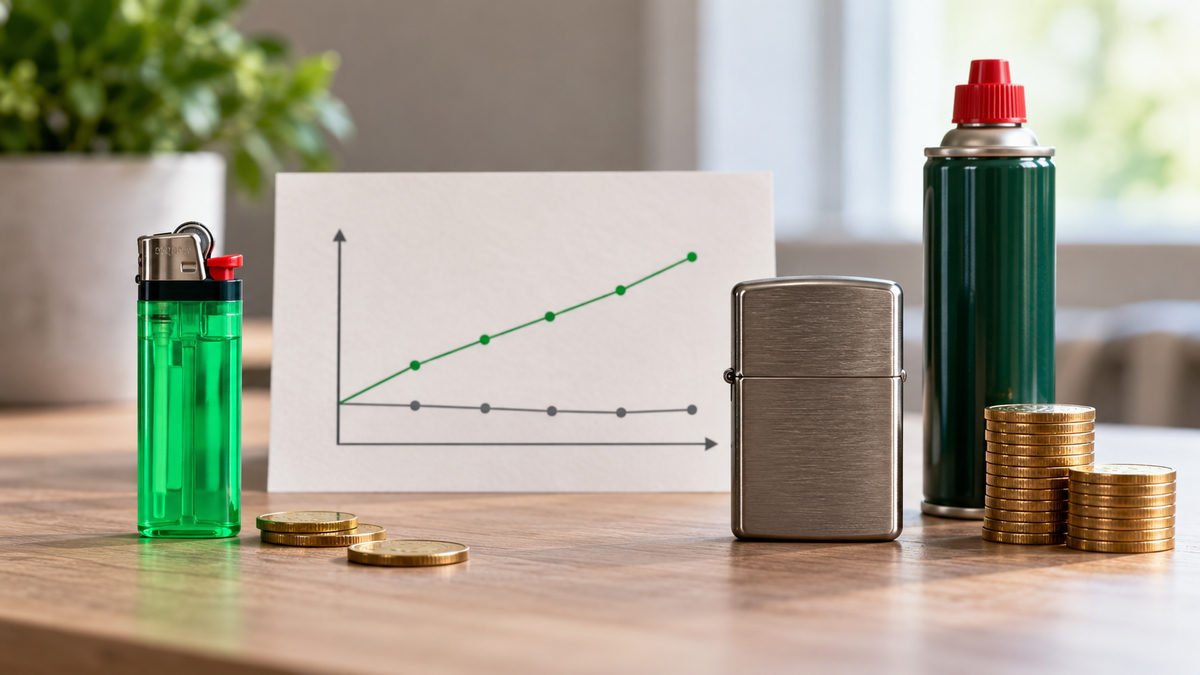
A disposable lighter usually offers the lowest entry price. That low price suits someone who lights candles occasionally or wants a simple spare for a drawer. However, frequent users may buy several disposable lighters each year.
A refillable lighter costs more initially, especially when it uses a metal body, torch burner or rechargeable battery. Nevertheless, one reliable model can reduce repeated purchases over time. The break-even point depends on the lighter’s price, fuel use and refill cost.
Butane refill canisters often last through many refills, although the exact number depends on lighter size and flame settings. A small flame uses less fuel, while a torch flame consumes fuel quickly. Therefore, users should compare refill prices with their typical purchase frequency.
- Occasional users may prefer a disposable lighter because the initial cost stays low.
- Daily users may reach the break-even point sooner with a refillable model.
- Heavy outdoor users should include fuel, replacement parts and charging equipment.
- Electric users should consider battery life and the cost of replacing the lighter.
For example, replacing a cheap lighter every few weeks can become more expensive than maintaining one quality refillable model. Meanwhile, someone who uses a lighter twice each month may never recover a higher purchase price.
Durability and lifespan
How long does a refillable lighter last? A basic butane lighter may work for several months or years, depending on build quality and care. Premium metal models can last longer when users replace flints, seals, wicks or burner components.
Liquid-fuel lighters often need occasional wick trimming and cleaning. Torch lighters may require burner care and reliable seals. Electric lighters avoid fuel components but depend on battery health, charging ports and protection from moisture.
A disposable lighter typically lasts until its fuel runs out. Frequency matters most. Someone using it once daily may get weeks or months, while frequent users may empty it much sooner. Heat, sunlight and poor storage can also affect fuel pressure and reliability.
However, not every refillable lighter delivers good long-term value. Poor-quality models may leak, fail to ignite or need replacement parts that cost more than expected. Therefore, check construction, warranty information, safety features and replacement-part availability.
A refillable lighter is usually worth buying when you prioritise durability, reliability and lower waste. It offers better value when you use it regularly and accept basic maintenance. Conversely, disposable models remain practical for low-frequency use.
Convenience, Maintenance, and Everyday Reliability
Convenience and portability
Disposable lighters offer grab-and-go convenience. They arrive fuelled, weigh very little and usually fit easily into a pocket, drawer or camping kit. Therefore, they suit occasional users who do not want to plan refills or charging.
Refillable lighters need more preparation. Butane models require compatible fuel, while liquid-fuel models need the correct fluid and occasional wick care. Electric models need a charged battery and, sometimes, a USB cable.
Travel also changes the decision. Airlines and transport operators apply strict rules to lighters, lighter fluid, butane and spare batteries. In Australia, check current guidance from the Civil Aviation Safety Authority before flying.
Metal refillable lighters often feel more substantial than plastic disposable models. That extra weight can improve grip and durability, but it may feel inconvenient during hiking or travel. Meanwhile, long-neck models add useful reach for candles, fireplaces and grills.
Maintenance and real-world reliability
Do refillable lighters require more maintenance? Usually, yes. Users may need to clean the burner, refill the fuel, replace flints, trim wicks, inspect seals or charge the battery. However, these tasks are usually simple when performed according to instructions.
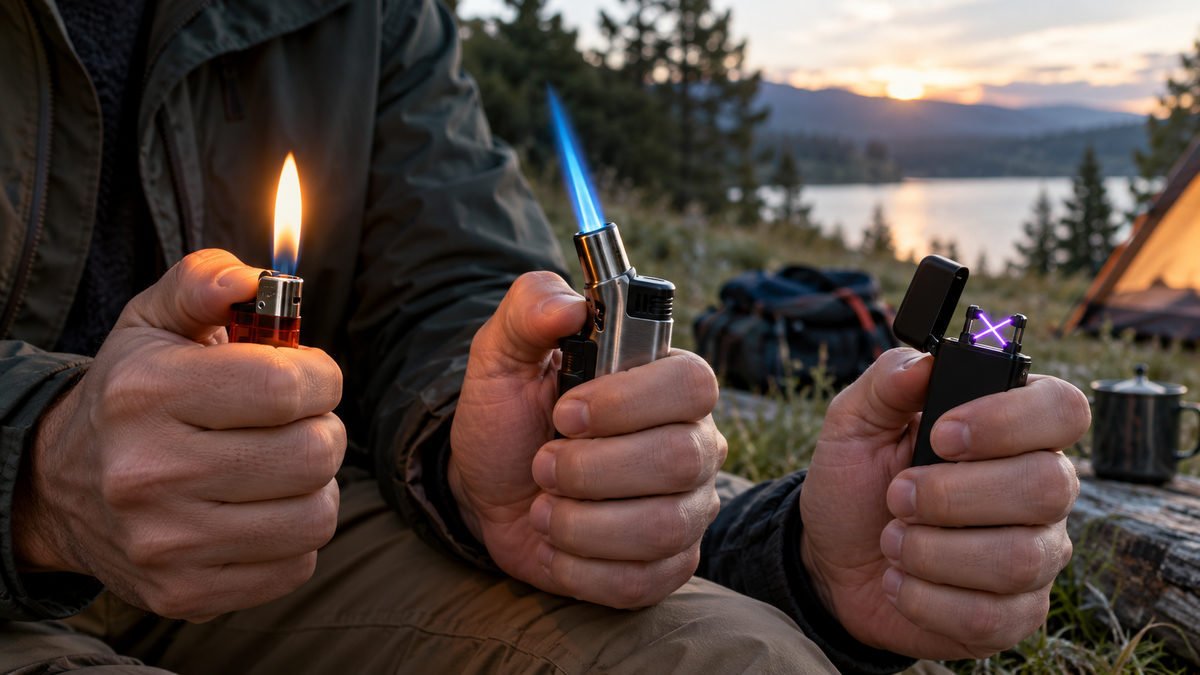
Standard flames work well indoors but can blow out outdoors. Torch flames perform better in wind because their narrow blue flame burns with greater force. Electric arcs can resist ordinary wind, although water, dampness and poor battery charge limit performance.
Cold temperatures can reduce butane pressure and make ignition difficult. High altitude may also affect flame behaviour. Furthermore, humidity and rain can interfere with sparks, burners and electric arcs.
For everyday use, choose a model with a dependable ignition system and a visible fuel window. Protective caps help prevent accidental operation. Child-resistant mechanisms, controlled flame adjustment and automatic shutoff features add useful protection.
A disposable lighter may still prove more convenient during an occasional emergency. It requires no stored fuel bottle, charging cable or replacement parts. Therefore, keeping one compliant, safely stored spare can make sense for infrequent household tasks.
Environmental Impact and Disposable Lighter Alternatives
Waste and resource use
Every disposable lighter contains plastic, metal, an ignition mechanism and a fuel chamber. Repeated purchases create more waste than using one refillable lighter for several years. Therefore, reusable designs can reduce material disposal when users maintain them properly.
However, refillable lighters still have an environmental impact. Manufacturing metal bodies, batteries, burners and replacement components requires energy and raw materials. Fuel production, packaging and transport also add emissions.
Rechargeable electric lighters avoid disposable fuel chambers but contain batteries and electronic parts. Matches use renewable-looking materials, yet they remain single-use and can create ash waste. Long-neck candle lighters provide useful reach but still need fuel or charging.
Lower waste does not mean zero environmental impact. The most practical option usually combines long service life, careful maintenance, responsible fuel use and correct disposal. Buying a durable model and keeping it for years often matters more than choosing a category based on appearance.
Recycling and responsible disposal
Are disposable lighters recyclable? Some components may be recyclable, but residual fuel makes collection and processing unsafe. Never place a partly filled lighter in household recycling unless local authorities specifically accept it.
Users should never puncture, burn, crush or dismantle a lighter. Instead, follow local council guidance for hazardous household waste. The Australian Competition and Consumer Commission lighter safety guide provides useful safety information.
Empty butane canisters and lighter-fluid containers may also need special disposal. Keep them away from heat, flames and children until you confirm the correct local drop-off option. Never assume an apparently empty container contains no vapour.
For lower-waste alternatives, consider:
- A refillable butane lighter for regular flame-based use.
- A rechargeable electric lighter for fuel-free indoor tasks.
- Matches for occasional, simple ignition.
- A windproof long-neck lighter for candles, fireplaces and grills.
Safety, Refilling, and Fuel Handling
Which lighter is safer?
Every lighter creates risks involving flames, hot surfaces, fuel vapour or accidental ignition. Refillable models add another concern because users store and transfer fuel themselves. Electric lighters avoid open fuel but still contain batteries and hot electrical arcs. Follow our lighter safety and storage tips when refilling.
Child-resistant mechanisms help prevent young children from operating lighters. Safety locks, protective caps, flame adjustment controls and automatic shutoff features can reduce accidental ignition. Nevertheless, no feature replaces careful storage and supervision.
Store lighters away from heat, direct sunlight, ignition sources, children and pets. Do not leave them inside hot vehicles or near cooking equipment. Additionally, keep fuel containers upright in a cool, ventilated location.
How to refill a butane lighter
Always follow the manufacturer’s instructions and use compatible fuel. A general process includes these steps:
- Allow the lighter to cool completely.
- Turn the flame adjustment to its lowest setting.
- Work outdoors or in a well-ventilated area.
- Turn the lighter upside down.
- Press the compatible butane nozzle firmly into the refill valve.
- Stop when the reservoir reaches the recommended level.
- Wait several minutes before attempting ignition.
Use the correct fuel and inspect the valve before refilling. Avoid overfilling, open flames and smoking during the process. If you smell fuel or hear hissing after refilling, move away from ignition sources and stop using the lighter.
Liquid-fuel lighters need different care. Add only the recommended fluid to the absorbent material, avoid soaking the outer casing and allow excess vapour to dissipate. Keep the wick trimmed and replace damaged absorbent material when instructions permit.
Electric lighters do not use fuel, but they still require safe USB charging. Keep charging ports dry, avoid damaged cables and stop using a swollen or overheating battery. Protect the lighter from rain unless the manufacturer confirms water resistance.
Which Lighter Is Best for Your Needs?
Everyday and personal use
Frequent users usually benefit from a refillable lighter. It offers better durability, lower long-term operating costs and less repeated waste. A dependable standard flame suits many household tasks and personal accessories. If you mainly light a pipe, see our guide to types of smoking pipes.
Occasional users may prefer a disposable lighter. It keeps upfront costs low and requires almost no maintenance. However, choose a compliant child-resistant model and store it responsibly.
Candle and grill lighters need extra reach, control and hand protection. A long-neck refillable lighter keeps fingers away from the flame. Standard cigarette-style lighters offer portability, while torch models suit windier conditions.
Travel and outdoor use
Camping often favours a windproof torch lighter or electric arc lighter. Torch flames work well for outdoor ignition, while electric arcs avoid liquid fuel. However, cold weather can reduce butane pressure, and electric models need a charged battery.
Carry backup matches or another approved ignition method for important outdoor tasks. Store the lighter in a waterproof pouch, away from fuel leaks and excessive heat. Also, check local transport restrictions before travelling with lighters or fuel.
- Choose disposable for occasional use, low cost and maximum simplicity.
- Choose refillable for frequent use, durability and long-term value.
- Choose rechargeable electric for fuel-free indoor use.
- Choose torch designs for wind, camping and outdoor ignition.
- Choose long-neck models for candles, fireplaces and grills.
Sweet Puff Australia brings together water pipes, glass designs and smoking accessories for adult customers. Explore the Sweet Puff Australia website for product categories and helpful accessory information.
Conclusion
Refillable lighters generally offer better long-term value, durability and waste reduction for frequent users. Disposable lighters remain inexpensive, lightweight and convenient for occasional use. Rechargeable electric lighters provide another reusable option, although charging and weather limitations still matter.
Choose based on how often you use a lighter, where you use it and how much maintenance you accept. Consider cost, safety, reliability, fuel handling and sustainability before making your decision. The best lighter is the one that suits your routine and remains safe to store and use.





