

What do Australians call a bong? You might hear billy, cone, water pipe, or even bubbler. The right term often depends on region, age, social setting, and whether people discuss cannabis, tobacco, or smoking accessories.
This guide explains bong terminology in Australia in clear, everyday language. You will learn common names, pronunciation, regional differences, device terms, and the legal context surrounding these products.
1. Bong Terminology in Australia: The Most Common Terms
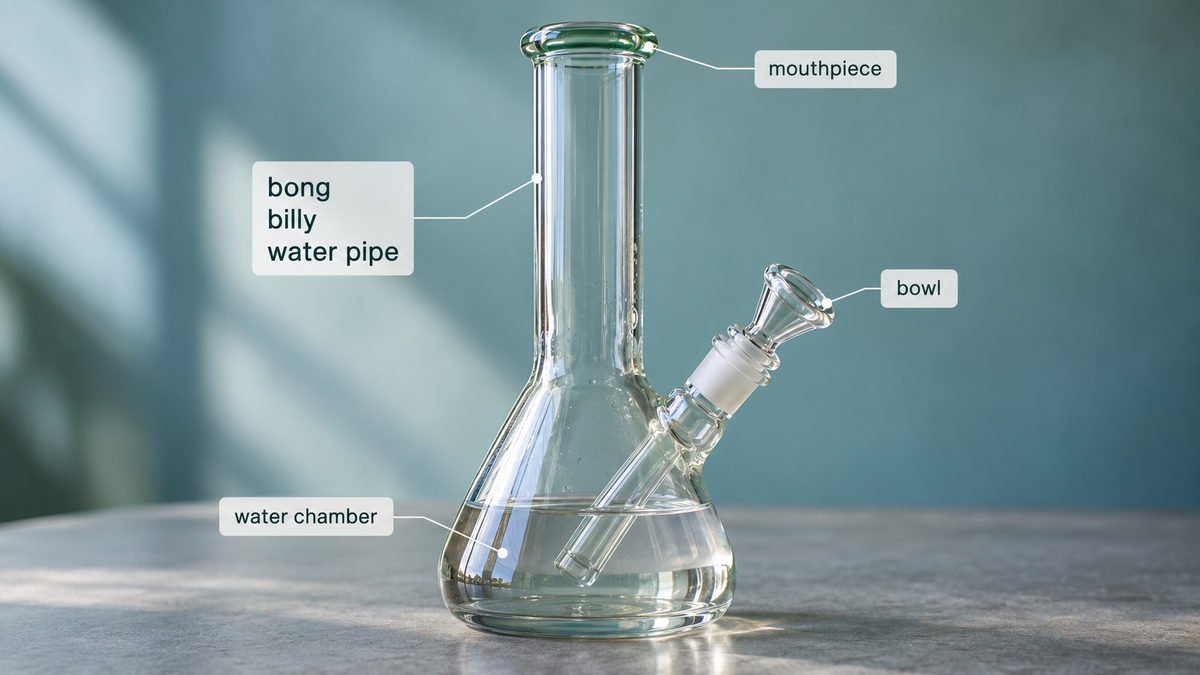
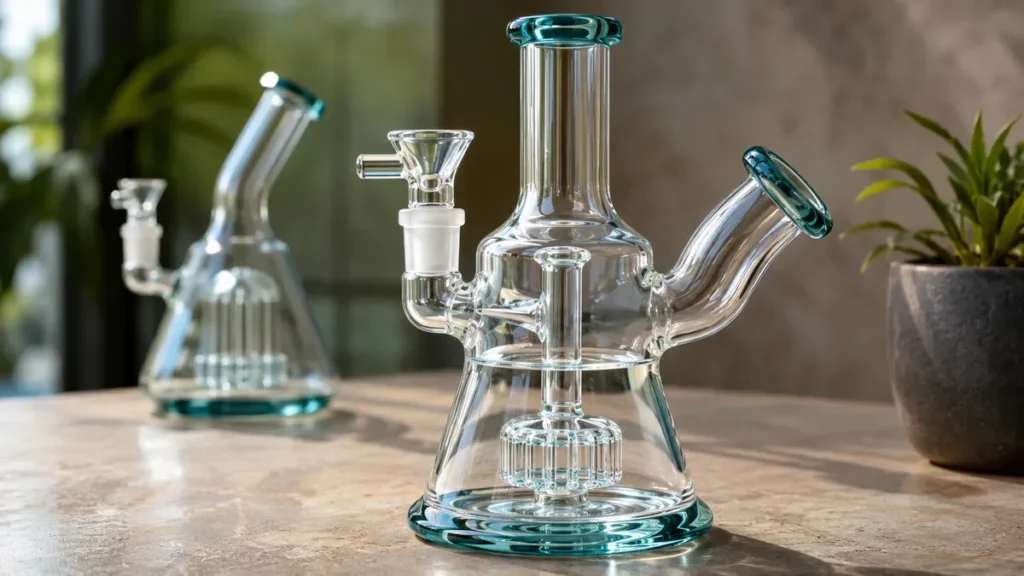
In Australia, bong usually means a water-filtering smoking device. The device typically includes a water chamber, a bowl area, and a tube or mouthpiece. However, people may choose different names depending on their audience. For a labelled breakdown, see the parts of a glass water pipe.
Bong, billy, and water pipe
Billy is a widely recognised Australian slang term for a bong. It has a distinctly local feel, although not every Australian uses it. Some people understand “billy” immediately, while others prefer the more familiar international term “bong”.
Water pipe sounds more neutral and formal. Retailers, health organisations, educators, and legal documents may use it instead of slang. The term can also describe several designs, rather than one specific shape.
Pronunciation is straightforward:
- Billy: “BIL-ee”
- Bong: “BONG”
- Water pipe: “WAW-ter pype”
For example, someone might say, “He called it a billy, but the product listing described it as a water pipe.” Both phrases can refer to similar equipment, but they create different impressions.
Why context changes the word
Everyday conversation often favours short slang terms. Meanwhile, product descriptions may use broader wording for clarity, legal reasons, or retail presentation. Online communities can also use terms differently from newspapers, health websites, or shop listings.
Therefore, “billy” does not always identify one exact design. It often acts as a familiar nickname. “Water pipe” usually sounds more descriptive, while “bong” remains the most widely understood general term.
2. Billy, Bong, Water Pipe, Bubbler, and Related Devices

The words bong and billy often overlap. In casual Australian speech, either word may describe a water-filtering smoking device. However, “billy” carries a stronger Australian slang association. Still confused? Read our guide to bubbler vs bong differences.
Comparing the main device names
Water pipe works as an umbrella term. It may include compact glass designs, larger pieces, and products marketed for legal herbal materials. Retailers sometimes use this wording because it sounds neutral and describes the basic design.
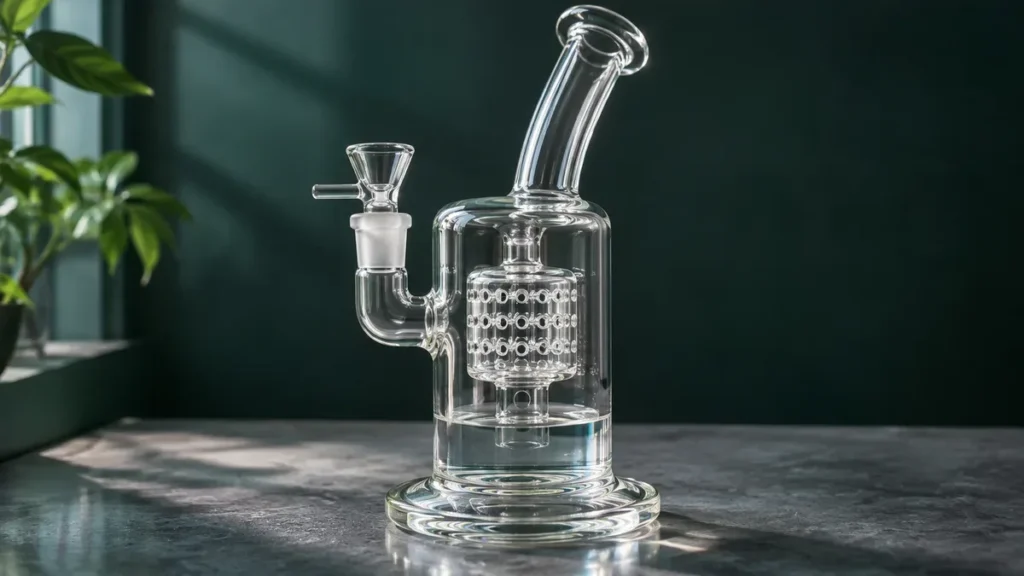
Bubbler usually means a smaller water-filtering device. It combines features of a traditional dry pipe and a bong. Bubblers often have a smaller water chamber and a more compact shape, although designs vary between manufacturers.
A dry pipe generally does not use a water chamber. It filters smoke through the pipe’s passage rather than through water. Therefore, calling every pipe a bong creates confusion, especially when discussing product categories.
| Term | Typical meaning | Common impression |
|---|---|---|
| Bong | A water-filtering smoking device | Common and widely understood |
| Billy | Australian slang for a bong | Informal and distinctly Australian |
| Water pipe | A broad term for water-filtering designs | Neutral, retail, or formal |
| Bubbler | A smaller pipe with water filtration | Compact and product-focused |
| Dry pipe | A pipe without a water chamber | Traditional pipe terminology |
Size and portability also influence product wording. A compact piece may appear under “bubbler”, while a larger model may appear under “water pipe” or “glass bong”. Nevertheless, names do not guarantee identical designs.
Additionally, sellers may choose different labels for marketing, legal, or search visibility reasons. Local usage can remain loose, so asking for clarification is sensible when the design matters.
3. Cone, Cone Piece, Bowl, Stem, Chamber, and Downstem

Australian bong terminology includes several words for individual parts. These terms can sound confusing because one word may describe a component, a portion of material, or an action. Cone pieces come in standard bong bowl sizes.
Cone and cone piece
A cone piece is the small bowl-shaped component found in many Australian water-pipe designs. It holds the smoking material before it enters the main airflow path. Some product descriptions call this part a bowl instead.
A cone can mean the material placed inside the cone piece. It can also refer to the bowl area itself, depending on the speaker. For example, “pass the cone piece” refers to the component, while “there is a cone ready” may refer to the prepared portion.
In casual speech, “cone” can even describe an action or an invitation. The meaning depends heavily on the surrounding sentence. Therefore, visitors should avoid assuming that every use of “cone” refers to the same object.
Bowl, stem, chamber, and downstem
Bowl is an international term that often overlaps with cone piece. It appears frequently in product descriptions influenced by American English. Some Australians understand both words, while others strongly prefer “cone piece”.
The stem or downstem describes the tube connecting the bowl area with the water chamber. Design details vary, so these terms do not always describe identical parts. Some devices use removable stems, while others build the passage into the main body.
The chamber is the section that holds water and smoke before inhalation. It provides the central space in a water-filtering design. However, chamber shape, size, and construction vary considerably between products.
- “The cone piece is glass.” This describes a removable component.
- “The cone is packed.” This usually describes the portion inside the component.
- “That bong has a long downstem.” This describes part of the device design.
- “The product has a large chamber.” This describes the water-holding section.
These words can also appear in discussions about tobacco, legal herbal products, or general smoking accessories. Context matters because cannabis-related slang can carry different meanings from neutral product language.
4. Regional, Historical, and Cultural Roots of Australian Bong Slang
Australian cannabis slang developed through local speech, youth culture, music, counterculture, migration, and contact with British and American English. As a result, no single dictionary explains every word used across the country.
Why “billy” sounds especially Australian
“Billy” has a strong Australian identity because it resembles other local nicknames and informal terms. Many Australians recognise it as a slang name for a bong, even when they personally use “bong” instead.
However, recognition does not mean universal use. A younger speaker in one city may prefer “bong”, while an older speaker in another community may use “billy”. Regional differences also appear across New South Wales, Victoria, Queensland, Western Australia, South Australia, Tasmania, the Northern Territory, and the Australian Capital Territory.
These differences remain fluid rather than fixed by official borders. Friends, families, workplaces, music scenes, and online communities often shape vocabulary more strongly than state boundaries.
Media, music, and international influence
Comedy, music, popular culture, and online forums have helped spread bong-related vocabulary. They have also created stereotypes. A word may sound humorous in one setting, dated in another, or stigmatising when used by an outsider.
Australian English overlaps with British and American terminology, but familiarity varies. “Bong” is widely recognised internationally. “Bowl” appears often in American-influenced speech, while “cone piece” feels more familiar in Australian product discussions.
Meanwhile, “water pipe” can sound more technical or neutral. “Bubbler” may be understood by people familiar with specialist retail language, but not by every casual speaker.
Therefore, avoid presenting one slang word as universal across Australia. The safest approach involves listening to the setting, considering the audience, and asking politely when meaning remains unclear.
5. How to Use Australian Bong Terms Respectfully and Clearly
Clear language depends on the audience. A casual conversation between friends may use “billy” or “cone”. A retail listing, workplace discussion, classroom, or public statement usually needs more neutral wording.
| Term | Pronunciation | Plain-English meaning | Formality | Example usage |
|---|---|---|---|---|
| Bong | BONG | Water-filtering smoking device | Common | “The product is described as a glass bong.” |
| Billy | BIL-ee | Australian slang for a bong | Informal | “Some Australians call it a billy.” |
| Water pipe | WAW-ter pype | Neutral term for water-filtering equipment | Neutral | “The shop lists it as a water pipe.” |
| Cone piece | KOHN pees | Bowl-shaped component | Informal to technical | “The cone piece is sold separately.” |
| Cone | KOHN | Component, portion, or slang reference | Informal | “The meaning depends on the sentence.” |
| Bubbler | BUB-ler | Compact water-filtering pipe | Retail or casual | “That small design is called a bubbler.” |
Terms linked with illegal drug use can carry stigma. They may also feel inappropriate when speaking with children, customers, officials, colleagues, or unfamiliar audiences. In those situations, “water pipe”, “smoking device”, or the exact product name usually provides greater clarity.
Context makes the difference
“Cone” can mean a component, a portion, or a slang reference. Similarly, “billy” may identify a device or act as a broader nickname. Context gives each word its practical meaning.
- Casual conversation: “Some people call a bong a billy.”
- Retail listing: “This water pipe features a glass chamber.”
- Media reporting: “Police reported a suspected smoking device.”
- Language-learning discussion: “Billy is an Australian slang term.”
Visitors should listen before copying local slang. Additionally, asking “What does that mean here?” sounds more respectful than guessing. This approach works particularly well when regional or generational differences affect the conversation.
For product terminology and neutral descriptions, explore smoking accessories available through Sweet Puff Australia. Product labels can help you compare names without assuming every term describes the same design.
6. Legal Context, Responsible Language, and Frequently Asked Questions
Laws concerning bongs, cannabis, and smoking equipment vary between Australian states and territories. Rules may address possession, sale, supply, manufacture, display, intended use, product labelling, or surrounding circumstances. Read our guide to buying glass bongs in Australia for retailer and legal tips.
For example, some jurisdictions treat equipment differently when authorities believe it relates to an illegal drug offence. Therefore, a product’s appearance alone may not answer every legal question. Check the relevant government source before relying on general information.
The Australian Government explains that drug laws include both federal and state or territory rules. You can review the official Australian drug laws guidance for links to each jurisdiction.
What do Australians call a bong?
Australians commonly say bong, billy, or water pipe. The preferred word depends on the speaker, setting, age group, and product description.
What does billy mean in Australia?
“Billy” commonly means an informal Australian name for a bong. However, familiarity varies between communities, and some people use the word less often than “bong”.
Is a billy the same as a bong?
Often, yes, in everyday speech. However, the terms do not guarantee identical designs. “Billy” usually describes slang usage, while “bong” more directly identifies a general device category.
Are bongs legal to own in Australia?
The answer depends on the jurisdiction, circumstances, labelling, intended use, and current law. Possession, sale, supply, or manufacture may receive different treatment. Verify the rules through the relevant state or territory government or legal service.
Which Australian slang terms should visitors understand?
Start with billy, cone, cone piece, water pipe, and bubbler. Treat each term as informal or context-dependent rather than universally defined.
This guide provides language information, not legal advice or encouragement to use illegal drugs. If your question concerns possession, sale, supply, or use, seek current local advice before acting.
Conclusion
Australian bong terminology includes overlapping terms such as bong, billy, water pipe, bubbler, cone, and cone piece. Meanings can change with region, generation, setting, and device design.
Use the terminology table as a quick reference, then choose neutral language when clarity matters. Finally, verify current local laws through an official Australian government or legal information source before discussing possession or use.
Sweet Puff Australia brings together information and product collections for adults exploring water pipes, glass designs, pipes, and smoking accessories. Always review product details and local requirements before making decisions.


Comment (1)
[…] Bong size means more than overall height. It also includes chamber volume, base width, joint size, bowl size, water capacity, and the distance between the water and mouthpiece. Additionally, glass thickness can affect weight, durability, and handling. Two bongs with similar heights can feel completely different during everyday use. New to the lingo? See our guide to bong terminology in Australia. […]