
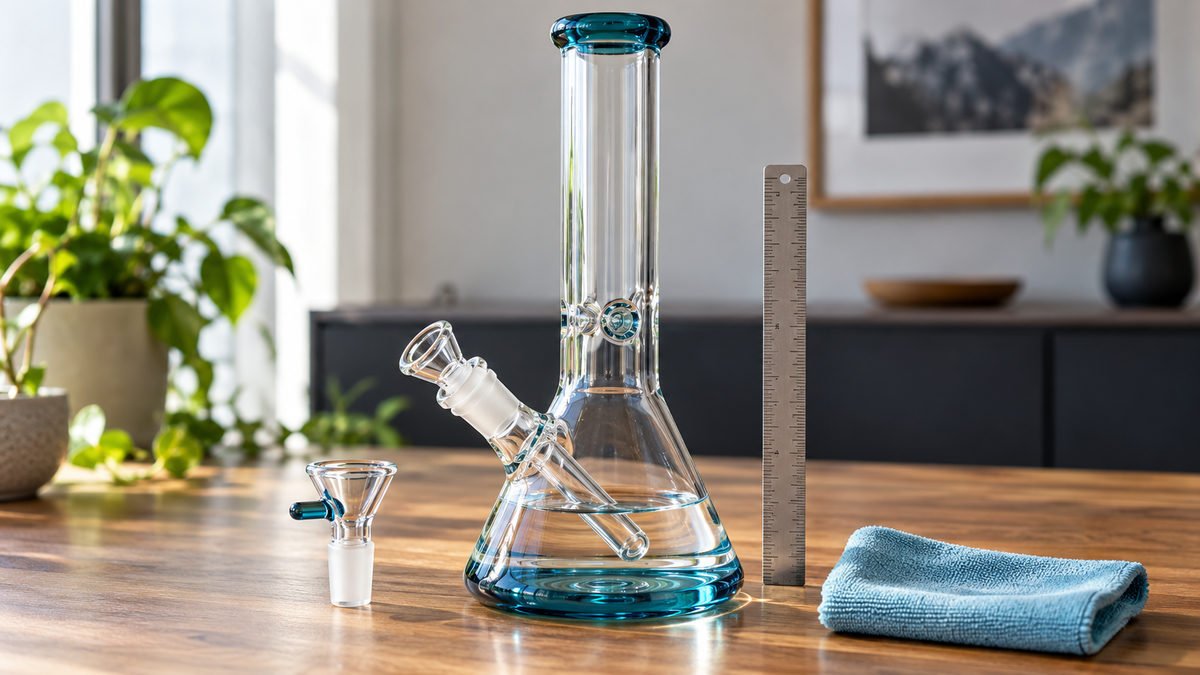
Buying your first bong can feel simple until the impressive-looking model arrives with poor airflow, awkward cleaning, or a fragile base. Knowing what to check before buying a bong helps you avoid cracks, incompatible parts, and unnecessary costs. Appearance and size matter, but so do materials, stability, filtration, maintenance, price, and local purchasing rules. This guide helps adults compare water pipes confidently and choose a durable setup for their space, experience, budget, and cleaning habits.
What to Check Before Buying a Bong: Start With Your Needs

Before comparing designs, decide how you expect to use the bong. Consider your experience level, preferred draw style, available storage space, and how often you plan to use it. A compact model may suit occasional home use, while a larger setup may require a dedicated shelf and more careful handling. Our Australian bong buying guide covers budgets and retailers in more depth.

Match the bong to your routine
Think about portability, discreet storage, odour control, and household safety. A shorter bong generally stores more easily, while a taller design can require more water and careful placement. Therefore, buyers with limited space should measure their shelf, cupboard, or storage case before ordering.
Set a realistic budget before browsing. Include replacement bowls, downstems, cleaning supplies, protective storage, shipping, and possible breakage costs. A model that seems affordable may cost more if it uses proprietary parts or lacks readily available replacements.
Use size as a practical guide
Compact bongs usually offer easier storage and lighter handling. However, their smaller water chambers may provide less room for filtration and can feel less forgiving during use. Medium models often balance stability, water capacity, comfort, and storage for many buyers.
Large bongs can provide stronger visual appeal and greater water capacity. Nevertheless, larger is not automatically better. Taller pieces usually weigh more, need more water, create stronger airflow, and present a greater breakage risk if knocked over.
- Compact: easier to store, carry, and clean, but often has a smaller chamber.
- Medium: a practical balance between comfort, filtration, stability, and maintenance.
- Large: greater capacity and presence, but more weight, water, storage needs, and handling risk.
Before ordering, watch for unclear measurements, vague material descriptions, missing joint specifications, and limited product photos. Additionally, check whether the listing shows the base, mouthpiece, downstem, bowl, and connection points clearly. If essential details remain missing, choose a better-documented product.
Choosing the Best Bong Material for Beginners
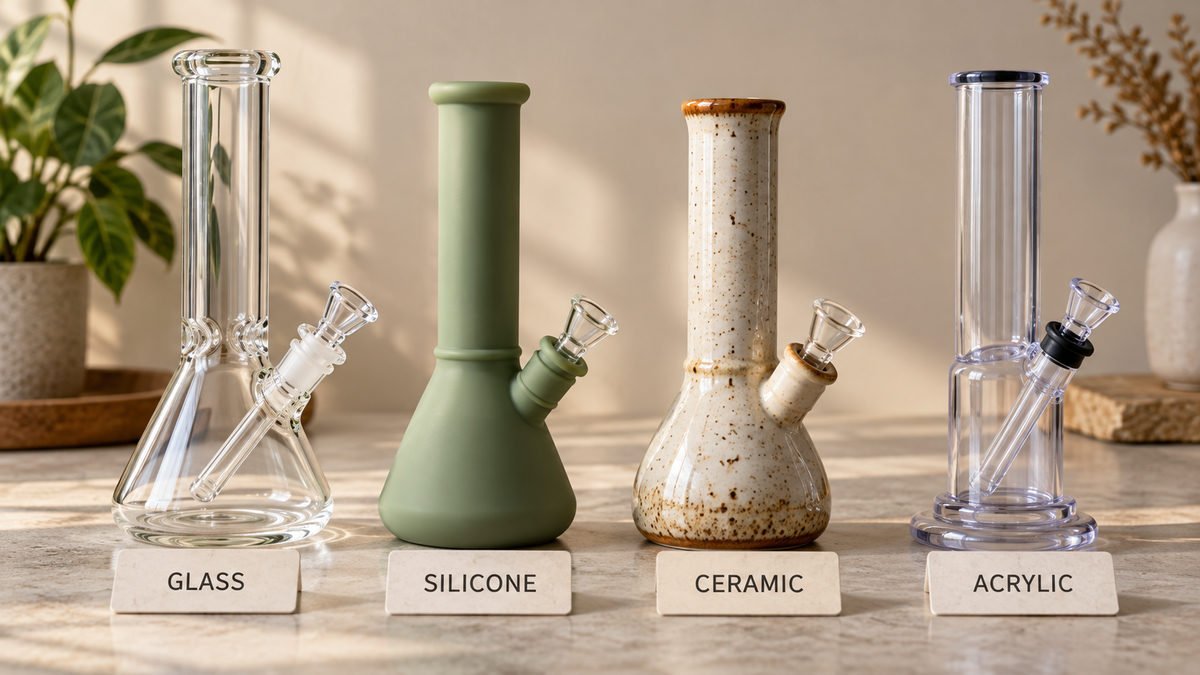
Material affects durability, flavour neutrality, heat resistance, appearance, weight, and cleaning. The best choice depends on where you will store the bong, how carefully you handle it, and how much maintenance you accept. No material offers every advantage. Most beginners start by weighing up glass vs silicone bongs.
Compare common bong materials
| Material | Main strengths | Common drawbacks |
|---|---|---|
| Borosilicate glass | Clear, neutral, heat-resistant, replaceable parts | Can break when dropped or knocked over |
| Silicone | Flexible, lightweight, travel-friendly | May retain odours and feel less rigid |
| Ceramic | Artistic, heavy, visually distinctive | Harder to inspect and clean thoroughly |
| Acrylic | Low cost, lightweight, impact-resistant | Can scratch, retain odours, or suffer from heat exposure |
Borosilicate glass often suits beginners who want clear visibility and neutral flavour. You can see water levels, residue, joints, and hidden buildup more easily. Moreover, many glass bongs use standard bowls and downstems, making replacement parts easier to find.
Silicone works well for buyers who prioritise flexibility and portability. It can tolerate knocks better than glass and suits travel or temporary storage. However, silicone may feel less stable, look less refined, and retain odours if cleaning becomes inconsistent.
Ceramic bongs offer artistic shapes, substantial weight, and strong visual character. Their weight can improve stability on a table. Nevertheless, ceramic may hide residue, contain uneven internal passages, or develop damage that remains difficult to inspect.
Acrylic bongs can suit strict budgets and buyers who worry about accidental impacts. However, check the material around heat-exposed areas, inspect the bowl and downstem quality, and look for scratches. Poor-quality acrylic can retain odours and may not provide the same long-term experience as well-made glass.
Choose material by lifestyle
- Choose glass for clear inspection, neutral flavour, and easier replacement parts.
- Choose silicone for portability, flexibility, and lower breakage concerns.
- Choose ceramic for distinctive designs, weight, and decorative appeal.
- Choose acrylic for lower upfront cost and impact resistance.
Therefore, borosilicate glass remains a straightforward starting point for many home users. Buyers who travel often may prefer silicone, while collectors may value ceramic artwork. The important step involves matching the material to your handling habits and maintenance routine.
Compare Bong Designs, Filtration, and Comfort Features
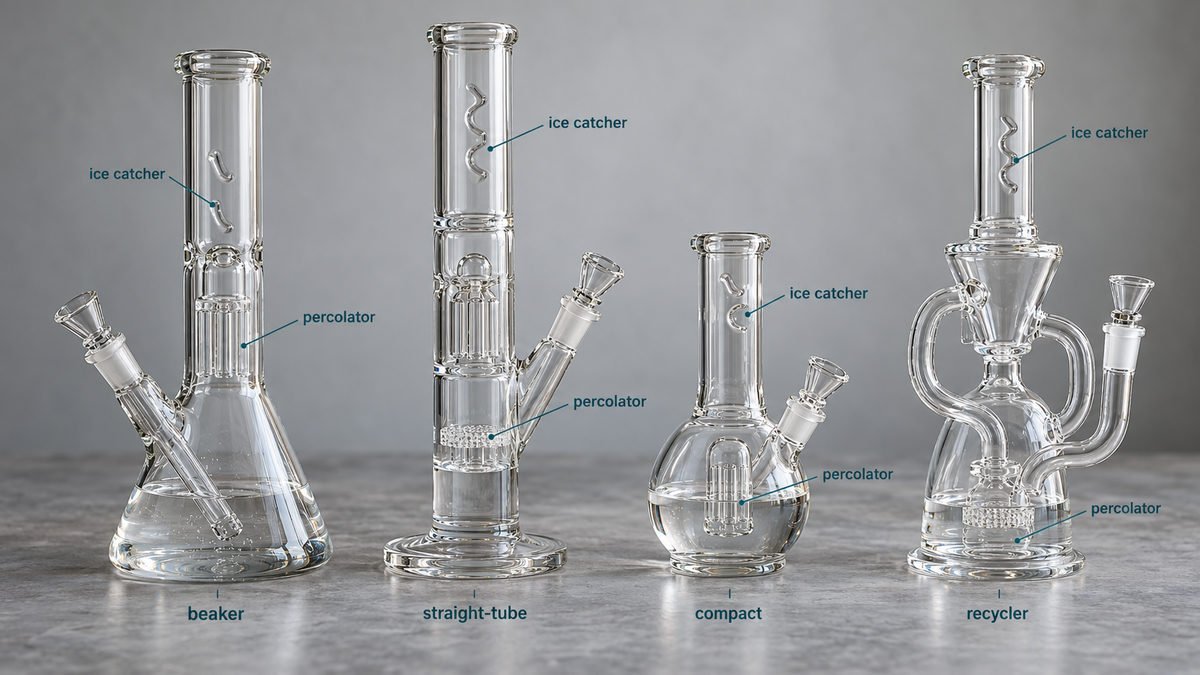
Design changes how a bong sits, draws, filters, stores, and cleans. Start by comparing the main shape, then consider filtration features. More components can change airflow and comfort, but they also create additional areas for residue.
Beaker and straight-tube designs
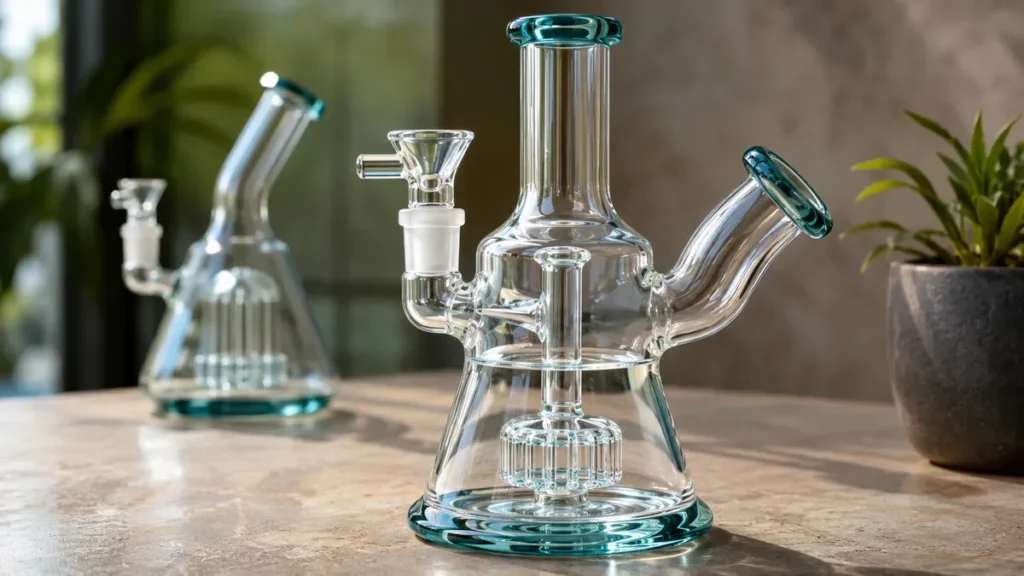
Beaker bongs have a wider base that usually improves stability and provides more water capacity. Their broader footprint can reduce tipping risk on a suitable surface. However, they may take more room inside a cupboard or storage case.
Straight-tube bongs typically use a narrower footprint and a simple chamber. They can store easily and offer a direct draw. In contrast, their taller shape may feel less stable, especially when the base is narrow or the bong contains substantial water.
Compact bongs suit buyers who prioritise portability and discreet storage. Recyclers circulate water through additional pathways, which may create a different draw experience. However, complex circulation does not guarantee better comfort, and intricate pathways often take longer to clean.
Understand filtration and percolators
A percolator breaks airflow into smaller bubbles through water. This process can increase water contact and change the feel of the draw. Nevertheless, filtration depends on the whole design, including chamber size, water level, openings, and airflow.
- Tree percolators: use branching arms and may create multiple bubbling paths.
- Honeycomb percolators: use many small openings and can add substantial bubbling.
- Showerhead percolators: direct airflow through openings beneath the water.
- Inline percolators: use a horizontal tube with slits or openings.
- Matrix percolators: use a patterned structure with many airflow channels.
These types can affect drag, bubbling, and cleaning effort. Therefore, avoid assuming that the most elaborate percolator automatically offers the best option. Beginners often benefit from a design that feels comfortable and remains easy to maintain.
Ice catchers can hold ice above the water chamber, while splash guards help reduce water reaching the mouthpiece. These features may improve comfort for some users. However, each extra ledge or opening can create another cleaning point.
Check mouthpiece comfort, chamber size, draw resistance, and airflow before buying. A design that looks impressive may feel awkward if the mouthpiece sits too high or the draw requires excessive effort. Choose practical comfort over visual complexity.
Inspect Build Quality, Stability, and Part Compatibility
Build quality matters more than a single specification. Thick glass can still break if the base is unstable, the joints are poorly formed, or the shape creates a weak point. Therefore, inspect the complete structure rather than relying only on advertised thickness. Learn to spot quality glass craftsmanship before you buy.
Check joints and finishing
Look for clean joints, even welds, smooth mouthpiece edges, secure seals, and a well-fitted downstem. Avoid visible chips, sharp edges, cloudy patches, uneven glass, or stressed connection points. Additionally, product photos should show enough detail to judge workmanship.
Glass thickness can provide useful context, but it does not guarantee durability. Shape, base design, manufacturing quality, handling, and storage all influence breakage risk. A well-balanced medium bong may last longer than a poorly designed oversized model.
Assess stability and replacement parts
Choose a base with a wide footprint and a balanced centre of gravity. The bong should sit securely without rocking when empty. Furthermore, check whether the mouthpiece, downstem, and bowl create an uneven top-heavy shape.
Verify the downstem specifications before buying. Check the joint size, joint gender, length, removable or fixed design, and replacement availability. A downstem that does not match the bong can make the setup unusable or force an expensive modification.
- Confirm bowl size and slide fit.
- Check airflow openings and downstem placement.
- Inspect handle placement on larger models.
- Ensure the bowl removes easily for cleaning.
- Confirm replacement bowls and downstems remain available.
Also check compatibility with adapters, ash catchers, cleaning brushes, storage cases, and protective mats. Avoid visually complex bongs with fragile protrusions or proprietary parts. Unclear measurements create unnecessary risk, especially when purchasing online.
Evaluate Cleaning, Maintenance, Price, and Long-Term Value
Cleaning should influence your choice before you place an order. Accessible chambers, removable downstems, fewer narrow passages, and detachable percolators usually simplify maintenance. In contrast, intricate designs can trap residue where ordinary brushes cannot reach.
Plan a realistic maintenance routine
Change the water regularly and rinse the bong after use. Remove visible residue before it hardens inside joints, percolators, or downstems. Meanwhile, handle glass parts carefully because sudden knocks and temperature changes can cause damage.
Cleaning frequency depends on use rather than a fixed calendar. Frequent use, visible residue, unpleasant odour, reduced airflow, and cloudy water all indicate that cleaning is overdue. Occasional users may clean less often, but they should still empty and rinse standing water.
- A suitable cleaning solution.
- A narrow cleaning brush.
- Replacement bowls and downstems.
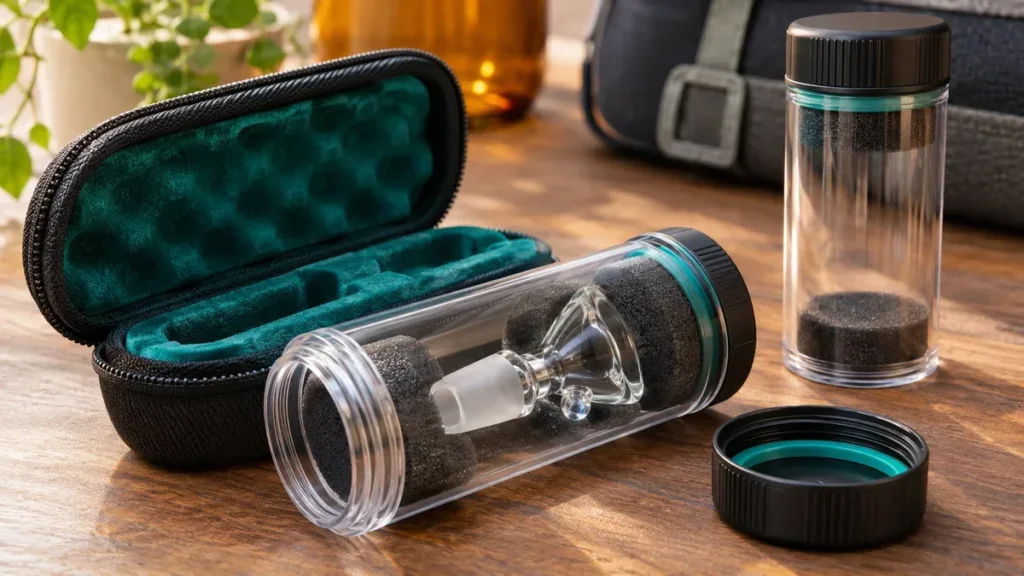
- A protective storage case.
- A non-slip protective mat.
When comparing prices, consider material, craftsmanship, filtration, included accessories, warranty support, and replacement parts. A higher price may make sense for strong construction, standard fittings, reliable packaging, and long-term support.
However, buyers sometimes pay mainly for decoration, branding, or unnecessary complexity. Compare the total ownership cost instead of focusing only on the initial price. A simple, well-made bong can offer better value than an elaborate model with expensive proprietary parts.
Shop Safely and Avoid Common Bong-Buying Mistakes
Choose a reputable retailer with clear specifications, secure packaging, customer support, and transparent returns. Before purchasing, read the breakage policy and confirm how quickly you must report delivery damage. Verified customer feedback can reveal recurring problems with packaging or part fit. Avoid the most common bong buying mistakes with this quick list.
Rules vary between Australian states and territories, so check age restrictions, local laws, retailer policies, and responsible-use requirements. Buyers should also understand the difference between accessory sales and laws governing controlled substances. For current information about medicinal cannabis regulation, consult the Therapeutic Goods Administration medicinal cannabis hub.
Additionally, check warranty coverage, replacement-part availability, shipping protection, and the retailer’s process for damaged goods. Listings that omit dimensions, material grade, joint size, bowl details, or cleaning guidance deserve caution. If the seller cannot answer basic questions, consider another retailer.
Common mistakes to avoid
- Choosing height over comfort and stability.
- Buying poor-quality materials because the price looks attractive.
- Selecting excessive filtration without considering cleaning.
- Ignoring joint size, gender, or replacement compatibility.
- Buying a narrow or top-heavy base for a busy household.
- Assuming thick glass alone guarantees durability.
Use this pre-purchase checklist before ordering:
- Intended use, experience level, and storage location.
- Material, size, design, filtration, and mouthpiece comfort.
- Base stability, glass thickness, joints, welds, and visible flaws.
- Downstem, bowl, adapter, and replacement-part compatibility.
- Cleaning access, maintenance effort, and accessory costs.
- Total price, shipping protection, warranty, and retailer reputation.
- Age requirements, local rules, and responsible purchasing obligations.
Finally, apply one simple decision test. The bong should feel comfortable to use, stable to store, straightforward to maintain, and supported by accessible replacement parts. If any answer is uncertain, pause before buying.
Conclusion
The best bong is not necessarily the largest, most expensive, or most complex model. Instead, choose a material, size, design, filtration system, base, and joint setup that match your actual needs. Easy cleaning, available replacement parts, secure packaging, and a reputable retailer can matter more than decoration.
Use this pre-purchase checklist to compare suitable models, verify local requirements, and choose a well-made bong before placing an order. You can also explore Sweet Puff Australia’s shop and browse its product categories for available accessories and water pipe options.
Sweet Puff Australia brings together water pipes, glass designs, and smoking accessories for adult customers. Review product details carefully, compare practical features, and select a setup that suits your space, budget, and maintenance preferences.


Comment (1)
[…] Before purchasing, inspect the piece systematically. A checklist prevents attractive colour or decoration from distracting you from structural problems. Combine this with our list of what to check before buying a bong. […]