A single grain of trapped debris or a careless tap against a benchtop can leave permanent marks on pristine glass. Learning how to prevent glass bong scratches starts with reducing friction, impact, and sudden temperature changes. Glass bongs are durable, yet they remain vulnerable to scratches, chips, cracks, and cloudy buildup. Therefore, safer cleaning, handling, storage, and transport habits help protect both appearance and structural integrity.
How to Prevent Glass Bong Scratches: Common Causes

Glass scratches often begin with ordinary cleaning mistakes. Abrasive brushes, metal tools, rough sponges, and dry scrubbing can drag hard particles across the surface. Moreover, forceful pressure can damage joints, percolators, and narrow openings. A gentle process usually protects the glass more effectively than extra effort.

Debris Can Act Like Sandpaper
Ash, sand, resin flakes, and dust can become trapped inside the chamber. When you scrub or shake the bong, those particles move across the glass. As a result, even a soft cloth may scratch the surface if it carries gritty residue. Always loosen and rinse away debris before applying friction.
Glass-on-glass contact creates another common risk. A bowl, downstem, ash catcher, or attachment can tap against the main chamber during cleaning or storage. Additionally, a small chip around a joint may grow when you repeatedly force the attachment into place. Keep removable pieces separate whenever possible.
Hard Surfaces and Mineral Deposits
Rough countertops, hard sinks, unpadded shelves, and metal tools can leave marks during routine handling. Meanwhile, placing a wet bong on stone, tile, timber, or metal may allow it to slide. A folded towel or silicone mat creates a simple protective barrier underneath.
Hard water deposits can also look like scratches. White spots, cloudy rings, and rough patches may come from mineral buildup rather than damaged glass. Therefore, clean the surface gently before deciding that a mark is permanent. Never scrape mineral deposits with a blade or pick.
Distinguishing Marks from Structural Damage
Superficial scratches usually appear as fine lines that do not catch your fingernail. Residue may feel sticky, while mineral deposits often look white or cloudy. In contrast, chips create sharp edges, and structural cracks may form spreading lines through the glass.
Handling also affects long-term safety. Wet hands can lose grip, while excessive pressure can stress thin sections or joints. Furthermore, hot glass can crack when exposed to cold water. Understanding these differences helps you choose cleaning and handling methods with less risk.
How to Clean a Glass Bong Safely Without Scratching It

Safe cleaning begins before water touches the glass. Prepare a clear workspace with enough room for the bong, accessories, towels, and cleaning supplies. Therefore, you can focus on each part without knocking anything into the chamber. Rushing often creates more damage than residue ever would.
Prepare a Padded Workspace
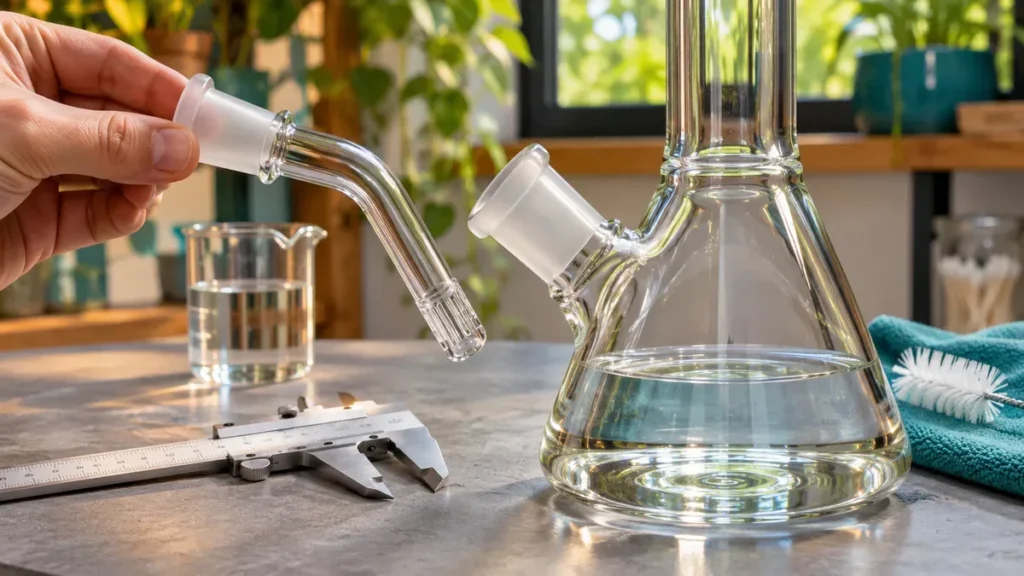
Place the bong on a folded towel, silicone mat, or other soft, level surface. Remove the bowl and downstem carefully, using a slow, straight movement. Avoid twisting hard attachments because sideways pressure can chip the joint. Additionally, keep each loose piece away from the main bong.
A soft workspace also protects the bong if you need to set it down quickly. Keep the sink nearby, but avoid balancing the bong directly on a hard basin. For larger designs, use both hands while moving the piece. This approach reduces slips, knocks, and sudden drops.
Rinse Before You Brush
Start with lukewarm water to loosen loose ash, particles, and residue. Let the water flow through the chamber before wiping or brushing anything. As a result, you remove grit that could otherwise grind into the glass. Never begin with dry scrubbing on a dirty surface.
Warm water can soften sticky buildup, but avoid extreme temperatures. Do not pour boiling water into cold glass or rinse hot glass under cold water. Sudden temperature changes can create thermal shock and cause cracks. Instead, allow the bong to reach room temperature first.
Choose Gentle Cleaning Supplies
Clean microfiber cloths are generally safe when they feel soft and contain no trapped grit. Soft nylon brushes, silicone brushes, cotton swabs, and soft bottle brushes also work well. However, choose a brush that fits the opening without forcing it through. A tight brush can press against joints and narrow sections.
Use a non-abrasive cleaning solution suitable for glass. Isopropyl alcohol can help dissolve resin, but use it carefully in a well-ventilated area. Keep it away from flames, hot surfaces, sparks, and other ignition sources. Always follow the product label and rinse the bong thoroughly afterwards.
Use a Low-Friction Cleaning Process
Soak the bong first whenever residue has dried or hardened. Then rotate the cleaning solution gently through the chamber instead of shaking aggressively. Light brush passes should follow the shape of the glass. Therefore, the solution does most of the work while your tools provide limited assistance.
Do not force a brush through a narrow opening. Likewise, avoid hitting the bong against a bench to dislodge buildup. Repeat the soak and rinse cycle when necessary. Several gentle passes are safer than one aggressive attempt.
After cleaning, rinse every section thoroughly with lukewarm water. Check the mouthpiece, joints, base, percolators, and inner chamber under bright light. Additionally, look for leftover solution, cloudy patches, and sharp edges. Dry the bong with a clean microfiber towel or let it air-dry on a padded surface.
Avoid abrasive cleaning agents, scouring powders, rough kitchen sponges, and metal picks. These materials can create fine scratches that collect residue later. In fact, a clean, soft cloth is often more useful than a harsh tool. Replace any cloth that feels gritty or contains dried particles.
Salt, Brushes, and Cleaning Tools: What Is Safe?

Salt can help loosen stubborn residue through gentle agitation. However, coarse crystals create avoidable friction and may become trapped around joints or percolators. Therefore, salt should support soaking rather than replace it. Use the least abrasive method that removes the buildup. Our bong cleaning brushes guide lists the safest bristle types.
Using Salt Carefully
If you use salt, choose a fine, clean variety and add enough liquid. Move the solution slowly instead of shaking the bong forcefully. The liquid helps carry residue away while reducing direct contact between crystals and glass. Rinse every area completely after cleaning.
Coarse salt may damage the finish when debris remains inside the chamber. It can also collect in small openings and encourage extra scrubbing later. As a result, aggressive salt cleaning can create more problems than it solves. A longer soak often provides a safer alternative.
Can Brushes Scratch Glass?
Soft brushes usually pose little risk when they remain clean and fit correctly. Nevertheless, stiff, metal, or heavily worn brushes can damage glass, especially when debris is present. A brush with bent wires may scrape joints and leave marks inside narrow areas.
Choose soft nylon or silicone brushes for the chamber, downstem, and mouthpiece. Select a size that moves freely without excessive pressure. Additionally, wash brushes after use and replace them when bristles become hard, bent, or dirty. Worn tools can transfer grit back onto clean glass.
Safer and Riskier Cleaning Materials
| Safer option | Higher-risk option | Why it matters |
|---|---|---|
| Clean microfiber cloth | Dirty or rough cloth | Trapped grit can scratch during wiping. |
| Soft nylon brush | Wire brush | Metal bristles can mark joints and chambers. |
| Silicone brush | Razor blade or metal pick | Hard edges can chip or score the glass. |
| Fine salt with liquid | Coarse salt with forceful shaking | Large crystals increase friction and impact. |
| Non-abrasive glass cleaner | Scouring powder | Powders can create cloudy scratches. |
Remove stubborn residue without scraping whenever possible. Use a longer soak, repeated rinsing, gentle brush passes, and cotton swabs for small areas. Hard water deposits need dissolving or gentle treatment, not sharp tools. Meanwhile, inspect the glass after each cleaning cycle.
Storage and Transport Tips to Protect a Glass Bong
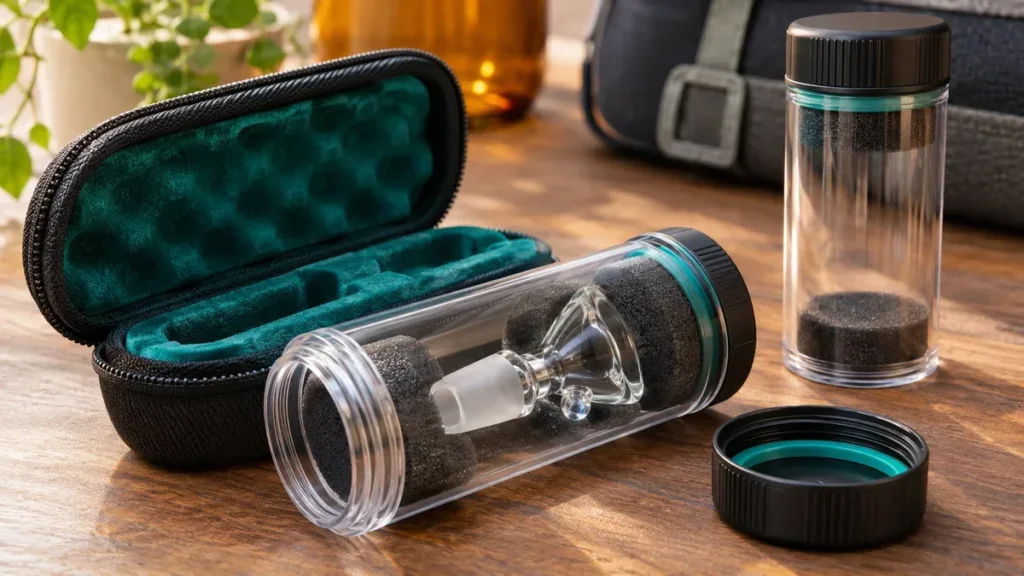
Good storage prevents many scratches before they happen. Keep the bong upright on a stable, padded, level surface. Additionally, choose a quiet location away from edges, pets, children, and high-traffic areas. A designated storage space offers better protection than a bare countertop or crowded shelf. Padded cases and other bong storage accessories prevent contact damage.
Separate the Accessories
Store the bowl, downstem, ash catcher, and other attachments separately. Glass-on-glass contact can create chips when pieces shift or fall together. Keeping the bowl and downstem attached may also add leverage to the joints. Therefore, separation reduces both impact and stress.
Use small padded sleeves or separate compartments for delicate parts. Do not place a lighter, grinder, torch, or metal tool beside unprotected glass. Even a short movement can make hard objects strike the chamber. A little organisation prevents expensive damage.
Choose Protective Transport
For regular transport, use a padded bong case or hard-sided container with fitted compartments. A well-fitted case reduces movement, contact, and impact during travel. However, no case removes every risk. Inspect the padding regularly for compression, grit, or damaged seams.
For short-distance carrying, wrap the bong in soft towels or bubble wrap. Cushion the glass without allowing accessories or hard objects to press directly against it. Furthermore, prevent movement inside the container by filling empty spaces with soft material. Avoid packing the bong tightly against sharp corners.
Carry the bong with two hands, supporting the base and main chamber. Keep the glass away from doorframes, vehicle interiors, steps, and other hard surfaces. Empty the water before transport to reduce weight and movement. Never carry a wet bong by its mouthpiece or a small attachment.
- Empty the water completely.
- Remove the bowl, downstem, and ash catcher.
- Cushion joints and delicate sections.
- Secure the container so it cannot slide.
- Inspect the glass after arrival.
Glass Bong Handling Habits That Prevent Long-Term Damage
Use both hands when moving a large or water-filled bong. Keep your fingers dry and maintain a firm grip around the base and main chamber. Meanwhile, avoid lifting from the mouthpiece, neck, or removable joint. These areas may not support the full weight safely. If you are rough on glass, thick glass bongs are more forgiving.
Never place a wet bong directly on wood, stone, tile, or metal. Water can make the base slide, while hard surfaces increase impact if it tips. Therefore, use a soft mat or folded towel underneath. Dry the outside before moving the bong across a room.
Keep keys, grinders, torches, metal tools, jewellery, and other hard objects away from the glass. These items can strike the bong when you reach across a crowded surface. Additionally, leave clear space around the base and mouthpiece. A tidy setup reduces accidental knocks.
Control Heat and Cleaning Pressure
Control water temperature during every cleaning session. Avoid boiling water in cold glass, and never rinse hot glass under cold water. Allow the bong to cool gradually before washing it. These simple habits reduce the chance of thermal stress.
Clean regularly so thick residue does not require aggressive brushing later. Rinse after use when practical, then complete a deeper clean when buildup appears. As a result, you can use lighter pressure and softer tools. Regular care usually takes less effort than restoring neglected glass.
Inspect the mouthpiece, base, joints, percolators, and other high-contact areas. Watch for cloudy rings, sharp edges, chips, spreading lines, or leaking joints. Common mistakes include shaking too aggressively and cleaning over a hard sink. Forcing attachments apart can also weaken the glass around a joint.
Replace worn brushes before bristles become stiff or misshapen. Discard dirty cloths that may contain ash, sand, or dried residue. Moreover, keep cleaning supplies in a sealed container so they remain clean between uses. Immediate rinsing, careful drying, and designated storage help keep a bong looking new.
Existing Scratches, Safety Checks, and Frequently Asked Questions
Inspect small marks under bright, direct light after cleaning the surface. A clean glass surface makes it easier to distinguish residue, mineral deposits, scratches, chips, and cracks. In contrast, cloudy buildup may disappear after gentle treatment. Never assume every line represents permanent damage.
Superficial scratches may mainly affect appearance. However, cracks, sharp chips, spreading lines, leaking joints, and weakened bases can make glass unsafe to use. Stop using the bong if you see damage around the mouthpiece, base, joints, or stressed areas. For valuable or unusual glass, seek professional assessment.
How often should you clean a bong?
Rinse the bong after use when practical, especially when ash or residue remains inside. Perform a deeper clean whenever you notice odour, cloudiness, sticky buildup, or restricted airflow. Therefore, cleaning frequency depends on use and residue rather than a fixed calendar. Frequent light cleaning can prevent forceful scrubbing later.
Can a bong case prevent scratches and chips?
A properly fitted, padded case can greatly reduce contact and impact during storage or transport. It cannot eliminate every risk, especially if the case shifts or contains hard objects. Use separate compartments and inspect the padding regularly. Never rely on a case with loose, damaged, or compressed protection.
Can coarse salt damage bong glass?
Coarse salt may increase friction, particularly when debris remains trapped inside. Forceful shaking can make the crystals strike the chamber, joints, or percolators. Use fine salt with plenty of liquid only when needed. Gentle soaking remains the safer first choice.
Which cleaning tools are safest?
Clean microfiber cloths, soft nylon brushes, silicone brushes, cotton swabs, and non-abrasive solutions are suitable options. Avoid metal picks, razor blades, wire brushes, scouring pads, and rough sponges. Additionally, replace tools when they become dirty, worn, or stiff.
Do small scratches make a bong unsafe?
Appearance-only marks differ from cracks and chips. A shallow scratch may not affect function, while uncertain damage deserves caution. Stop using the bong if the mark catches your fingernail, spreads, leaks, or creates a sharp edge. When structural integrity seems uncertain, replacement is the safest decision.
For broader glass-handling guidance, the Occupational Safety and Health Administration’s glass safety guidance notes that chipped, cracked, and sharp-edged glass can create hazards. This principle applies whenever you inspect damaged glassware. If in doubt, prioritise safety over appearance or convenience.
Conclusion
Preventing glass bong scratches depends on reducing friction, removing loose debris before cleaning, and using soft tools. Avoid sudden temperature changes, separate accessories, and store the bong on a padded surface. Scratches should be distinguished from chips and structural cracks, which may require replacement or professional assessment.
The most important rule is simple: loosen residue and remove debris before applying friction. Inspect your bong today, replace abrasive cleaning tools, and set up a padded storage or transport system before your next cleaning session.
Sweet Puff Australia brings together water pipes, glass designs, and accessories for adult customers exploring practical care and storage options. Browse the online shop to review available collections and choose accessories that support safer handling.