
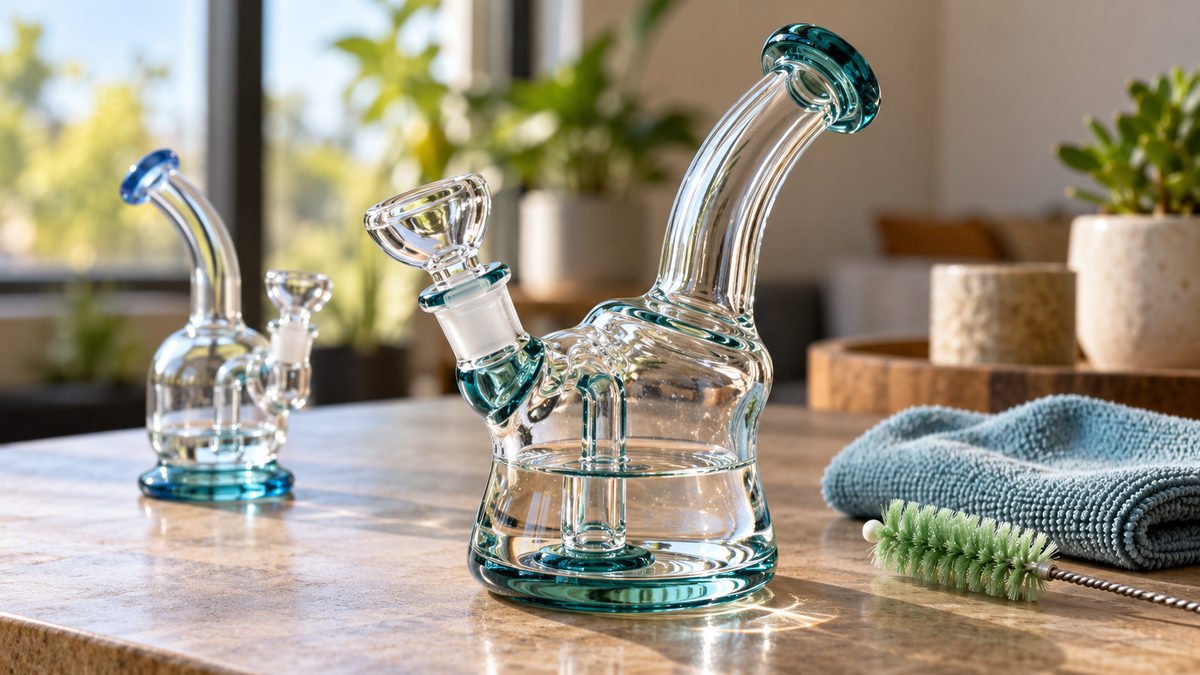
Want the water-filtered feel of a larger water pipe without carrying a bulky setup? This bubbler pipes guide explains how bubblers work, which styles and materials suit different needs, and how to use and clean one responsibly. Beginners often find water levels, airflow, cleaning methods, and legal considerations confusing. Therefore, this guide covers the key differences, buying decisions, maintenance steps, and safety basics for legal personal use in Australia.
Bubbler Pipes Guide: What They Are and How They Work
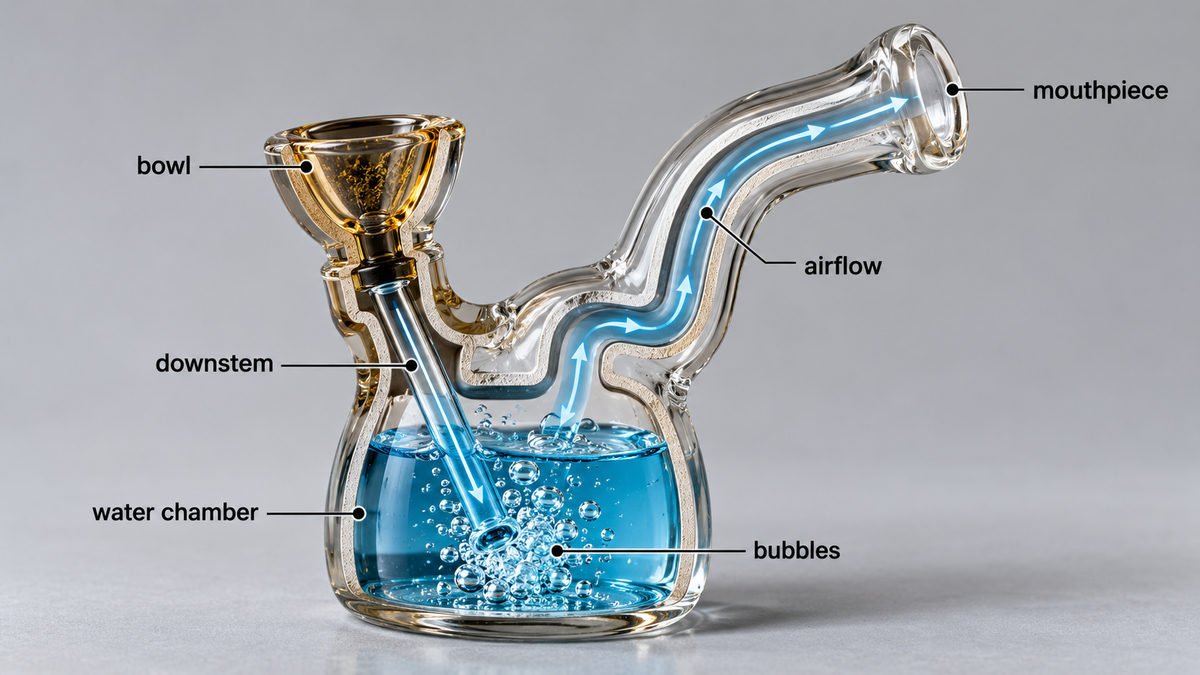
A bubbler pipe is a compact, handheld pipe with a bowl and small water chamber. It combines the simple shape of a traditional pipe with bubbling water. As a result, it offers a middle ground between a dry pipe and a larger water pipe. See every part labelled in glass bubbler anatomy explained.
Most bubblers include several basic parts. The mouthpiece is where you draw air, while the bowl holds the material. The water chamber contains fresh water, and the downstem guides smoke or vapour into that chamber. Some designs also include an air hole and a percolator.
When you draw through the mouthpiece, smoke or vapour moves from the bowl into the downstem. It then passes through the water, creating bubbles. Additionally, the water can cool the smoke and trap some larger particles before the air reaches you.
However, water filtration has clear limits. Cooler smoke may feel smoother, but water does not make inhaled substances harmless. For balanced information about smoking-related risks, read the Australian Government’s smoking and tobacco guidance.
Main bubbler pipe components
- Mouthpiece: The opening used to draw air through the bubbler.
- Bowl: The small chamber that holds the chosen material.
- Water chamber: The section that holds water for bubbling and cooling.
- Downstem: The passage that carries smoke or vapour into the water.
- Air hole: An opening that helps control airflow on some models.
- Percolator: An optional diffuser that breaks smoke into smaller bubbles.
Chamber size affects the amount of water and air inside the bubbler. Meanwhile, water level affects bubbling, splashback, and draw comfort. A percolator can increase diffusion, although it may also make airflow feel tighter.
The bowl may sit directly inside the body or attach as a removable piece. Removable bowls can make cleaning and replacement easier. Built-in bowls usually create a compact shape, but they may offer less access during maintenance.
Bubbler vs Bong vs Pipe: Key Differences
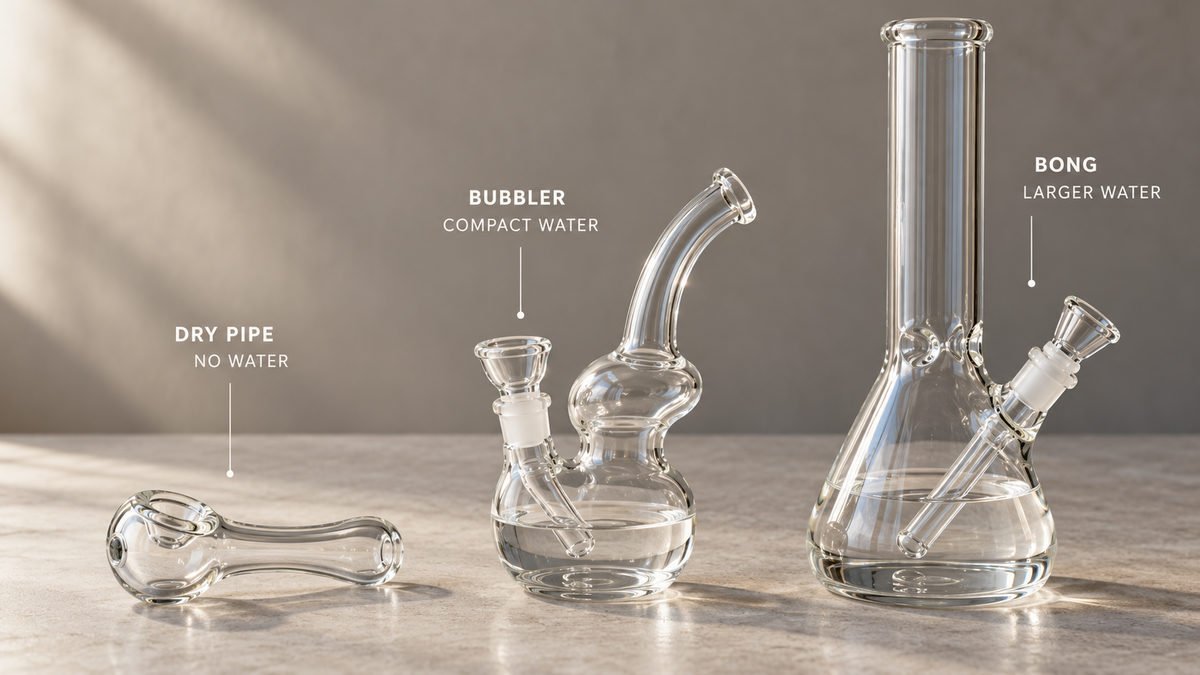
A bubbler sits between a traditional dry pipe and a bong. It includes water filtration, yet it remains small enough for short trips and simple storage. Bongs usually provide larger chambers, stronger cooling, and more room for additional filtration parts. Read our full breakdown of bubbler vs bong differences.
However, a larger bong often needs more water, cleaning, and storage space. Its taller shape may also feel less stable during transport. In contrast, bubblers usually offer better portability but less chamber capacity and less filtration.
A dry pipe contains no water chamber. Therefore, it is normally lighter, easier to clean, and simpler to use. It may also preserve flavour more directly, although the smoke can feel warmer and less filtered.
| Feature | Bubbler | Bong | Traditional pipe |
|---|---|---|---|
| Filtration | Small water chamber | Larger water chamber | No water filtration |
| Portability | Good for careful transport | Moderate to low | Usually excellent |
| Durability | Depends on shape and material | Often vulnerable when tall | Usually simple and compact |
| Maintenance | Regular water and chamber cleaning | More parts and water to clean | Usually the easiest |
| Ideal user | Someone wanting a compact water pipe | Someone prioritising cooling and capacity | Someone wanting simplicity |
For example, a bubbler may suit someone who wants smoother airflow without carrying a tall glass bong. Nevertheless, it still needs careful handling because water, glass, odour, and local rules affect practical portability.
Types and Materials of Bubbler Pipes
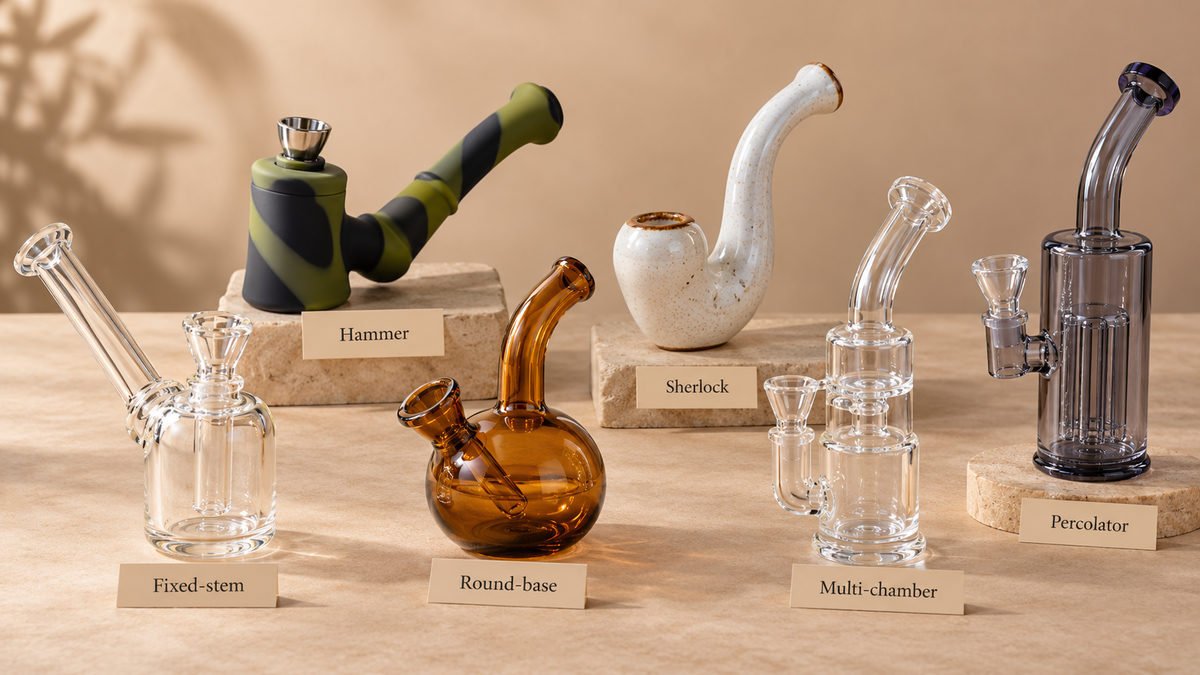
Bubbler designs vary widely, even when they use similar parts. Fixed-stem, hammer, round-base, Sherlock, multi-chamber, and percolator bubblers each offer different handling and cleaning experiences.
Common bubbler styles
- Fixed-stem bubblers: These use a built-in downstem and often have a straightforward shape.
- Hammer bubblers: Their side profile can provide a comfortable grip and lower centre of gravity.
- Round-base bubblers: A wider base can improve stability on a flat surface.
- Sherlock bubblers: Their curved necks offer a familiar pipe-like appearance and grip.
- Multi-chamber bubblers: Separate chambers can increase cooling but add cleaning work.
- Percolator bubblers: Diffusion parts create more bubbles and may change draw resistance.
Round-base models often suit people who value stability between uses. Hammer designs can feel secure in the hand, although their shape may need more room in storage. Meanwhile, Sherlock designs appeal to people who prefer a curved, traditional pipe appearance.
Multi-chamber and percolator models can produce more visible bubbling. However, extra pathways may collect residue faster. They can also restrict airflow if the openings become blocked.
Choosing a bubbler material
Borosilicate glass offers good heat resistance, clear visibility, and clean flavour. You can see the water level and residue easily. However, glass can crack or break after impact.
Silicone is flexible, lightweight, and more resistant to accidental drops. It can suit travel or shared storage situations. Nevertheless, silicone may retain odours more readily, and some users prefer glass for a cleaner flavour.
Ceramic bubblers often feel solid and distinctive. They can retain heat and hide residue, which may make water-level checks less convenient. Their weight may improve stability, but dropped ceramic can still chip or break.
Acrylic models are usually lightweight and affordable. They may handle knocks better than glass, although scratching and odour retention can affect long-term maintenance.
Therefore, glass bubblers are not automatically better than silicone bubblers. Choose glass for visibility and flavour, or silicone for flexibility and impact resistance. Additionally, compare ceramic and acrylic when weight, appearance, and budget matter most.
How to Use a Bubbler Safely
Start by inspecting the bubbler before use. Check for cracks, loose parts, blocked openings, and damaged seals. Additionally, place it on a stable, heat-resistant surface away from children, pets, curtains, and clutter.
Add fresh water gradually through the appropriate opening. The water should cover the lower opening or percolator, while leaving a safe gap below the mouthpiece. Then test the draw gently without heating anything.
Watch the bubbles during this test. If water rises toward your mouth, pour out a small amount. If bubbling barely reaches the water, add a little more. Every design has a slightly different ideal level.
Simple preparation and use steps
- Confirm the bubbler is clean, intact, and stable.
- Add fresh water to the recommended level.
- Load the bowl without overfilling it.
- Keep loose material away from the downstem opening.
- Apply heat carefully and draw slowly.
- Stop if water splashes or reaches the mouthpiece.
- Allow the bubbler to cool before emptying or cleaning.
Avoid forceful inhalation because it can pull water into the mouthpiece. Gentle drawing usually provides better airflow control. Furthermore, an overloaded bowl may restrict airflow or push loose material into the water path.
Clean, fresh water gives the best basic experience. Filtered or distilled water may reduce mineral marks and unpleasant tastes in areas with hard water. However, replace the water regularly because stale water can develop odour and residue.
After use, empty the chamber once the bubbler cools. Rinse it promptly when practical, then place it somewhere secure while it dries. Never handle hot glass suddenly or place it against a cold surface.
Use good ventilation and avoid sharing mouthpieces without cleaning them first. Most importantly, use only where permitted, follow age restrictions, and check current Australian laws for your location and intended use.
How to Clean and Maintain a Bubbler Pipe
Regular cleaning protects flavour, airflow, hygiene, and odour control. It also prevents resin and mineral buildup from narrowing the downstem. Therefore, a quick rinse after use can reduce the need for difficult deep cleaning later. Step-by-step instructions: how to clean a bubbler pipe.
Begin by emptying the old water and rinsing the bubbler with warm water. Add a suitable cleaning solution recommended for the material. Then cover the openings and agitate gently, allowing the solution to reach the chamber and downstem.
Use cotton swabs, pipe cleaners, or small brushes around the bowl and hard-to-reach openings. Purpose-made cleaning tools can help with removable bowls and narrow passages. However, avoid forcing tools into delicate glass or ceramic parts.
For stubborn residue, repeat the process rather than using aggressive household chemicals. Follow the product instructions carefully, especially with silicone, acrylic, painted surfaces, and glued seals. Never combine cleaning chemicals unless the label specifically permits it.
How often should you clean a bubbler?
Replace the water frequently and rinse the chamber whenever practical. Perform a deeper clean when airflow becomes restricted, taste changes, odour develops, or visible residue increases. Heavy use may require deeper cleaning more often.
- Replace old water.
- Inspect the body for cracks.
- Clear the bowl and downstem openings.
- Clean the bowl and mouthpiece.
- Rinse away cleaning residue.
- Dry every section fully.
- Store the bubbler securely.
Allow the bubbler to drain completely before storage. Trapped moisture can create unpleasant smells and contamination. Additionally, use a padded case or protected cupboard to reduce accidental breakage.
Bubbler Pipe Troubleshooting, Accessories, and Safety
Gurgling, clogged sounds, or weak bubbling usually indicate excess water, blocked airflow, residue, or material inside the downstem. First, empty some water and test the draw again. Then inspect the bowl, downstem, and air hole. Pick a reliable flame from our guide to types of lighters.
If water reaches the mouthpiece, reduce the water level and draw more gently. If the bubbler leaks, check removable parts and seals. A persistent leak may indicate a damaged joint or cracked body.
An unpleasant taste often comes from stale water, residue, or cleaning solution left behind. Rinse thoroughly and allow the bubbler to dry. Meanwhile, poor stability usually improves with a wider base and a level surface.
Useful accessories include screens, replacement bowls, cleaning brushes, protective cases, mouthpiece covers, and compatible ash catchers. Replace a part when glass cracks, a seal fails, or airflow remains blocked after careful cleaning.
Keep bubblers away from hot surfaces, open flames, children, and pets. Broken glass needs careful disposal, and contaminated water should never contact food or drinking containers. Water filtration also does not remove every health risk.
Bubbler Pipe Buying Guide and Frequently Asked Questions
Beginners should prioritise stability, comfortable handling, visible water levels, accessible openings, and simple airflow. A sturdy borosilicate glass model may suit home use, while silicone may suit people concerned about drops. Still deciding? Compare all types of smoking pipes.
Consider the bowl size, chamber capacity, cleaning access, replacement parts, storage needs, and budget. A percolator can provide smoother bubbling, but it adds cleaning effort and may restrict the draw.
- Material and heat resistance
- Style and overall size
- Base stability
- Water capacity and splashback risk
- Bowl access and replacement options
- Cleaning difficulty
- Storage and transport protection
- Seller quality and product information
Are bubbler pipes portable and discreet?
Many bubblers are portable because they fit inside a small case or cupboard. However, water can spill, glass can break, and odour can remain. Local rules also affect where you may carry or use one.
Are bubbler pipes legal to own and use?
Laws vary by Australian state, territory, council, and intended use. Therefore, check current local regulations before buying, carrying, or using a bubbler. Do not assume that legal ownership permits every type of use.
What water should you use?
Fresh tap water usually works. Filtered or distilled water may reduce mineral buildup and improve taste. Replace it frequently, regardless of the water type.
Are glass bubblers better than silicone?
Glass provides visibility and a clean flavour, while silicone offers flexibility and impact resistance. The better choice depends on your handling habits, storage, and cleaning preferences.
What should beginners choose?
A stable, easy-to-clean bubbler with simple airflow usually makes the best starting point. Maximum percolation and decorative complexity can wait until you understand your preferences.
Sweet Puff Australia brings together water pipes, glass designs, and smoking accessories for adults exploring different formats. Visit the Sweet Puff Australia website, or browse the online shop and product categories for more information.
Conclusion
Bubbler pipes combine the compact shape of a traditional pipe with a small water chamber for cooling and bubbling. The right choice depends on material, stability, airflow, portability, cleaning needs, budget, and local laws.
Regular rinsing, careful water levels, safe handling, and responsible use help maintain performance. Use the buying and maintenance checklists to compare suitable bubblers, verify your local laws, and choose a stable, easy-to-clean model for legal personal use.





