
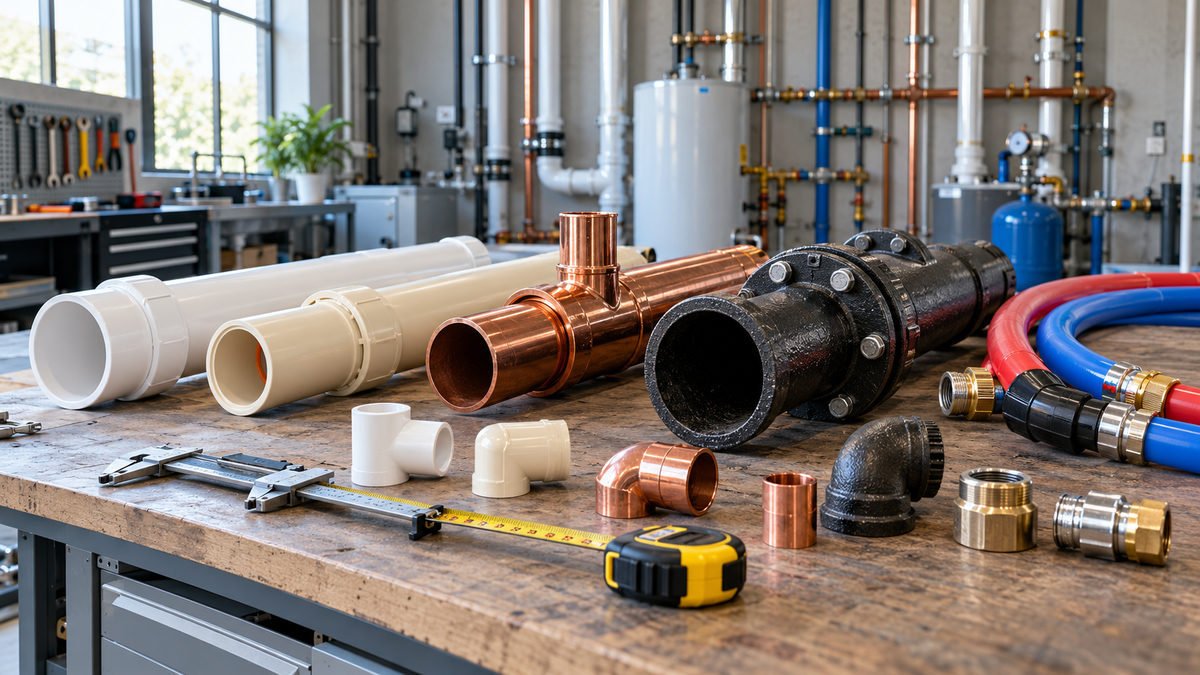
Choosing a water pipe by price alone can cause leaks, pressure problems, corrosion and costly replacement work. Learning how to compare water pipe specifications helps homeowners, plumbers, contractors, engineers, facility managers and buyers make safer decisions. You must compare materials, dimensions, pressure ratings, temperature limits, certifications, installation needs and lifetime costs. This guide explains each step for cold water, hot water, underground, commercial and industrial applications.
1. How to Compare Water Pipe Specifications: Start With the Application

Start by defining exactly where the pipe will operate. A residential drinking-water system has different requirements from an underground service line or industrial process system. For fire services, compare water pipes vs dry pipes.
Define the Project Conditions
First, identify the water type, operating temperature and expected pressure. Additionally, consider sunlight exposure, soil conditions, available space, water chemistry and the risk of impact or movement.
- Residential cold-water plumbing
- Commercial building supply lines
- Underground property connections
- Hot-water distribution systems
- Industrial water or process services
For example, a flexible pipe may suit a narrow residential renovation. However, a buried commercial line may need stronger joints, external-load resistance and specialised installation equipment.
Build a Specification Framework
Record the key details before comparing products. This prevents a low price or attractive outside diameter from influencing the decision too early.
- Material and intended application
- Nominal size, outside diameter and inside diameter
- Wall thickness, schedule or SDR
- Maximum working pressure
- Continuous and peak temperature rating
- Connection method and fitting compatibility
- Potable-water certification and applicable standards
- Purchase, installation and maintenance costs
Product specifications describe the pipe itself. Meanwhile, project specifications describe the required performance for a particular building or system.
Plumbing codes establish legal requirements, while manufacturer instructions explain correct handling, joining, support and testing. Therefore, a pipe can meet one requirement but still fail the complete installation.
Specification comparisons affect safety, flow performance, compliance, maintenance and service life. Most importantly, they help you avoid selecting a pipe based only on purchase price or outside diameter.
2. Compare Water Pipe Materials and Their Performance
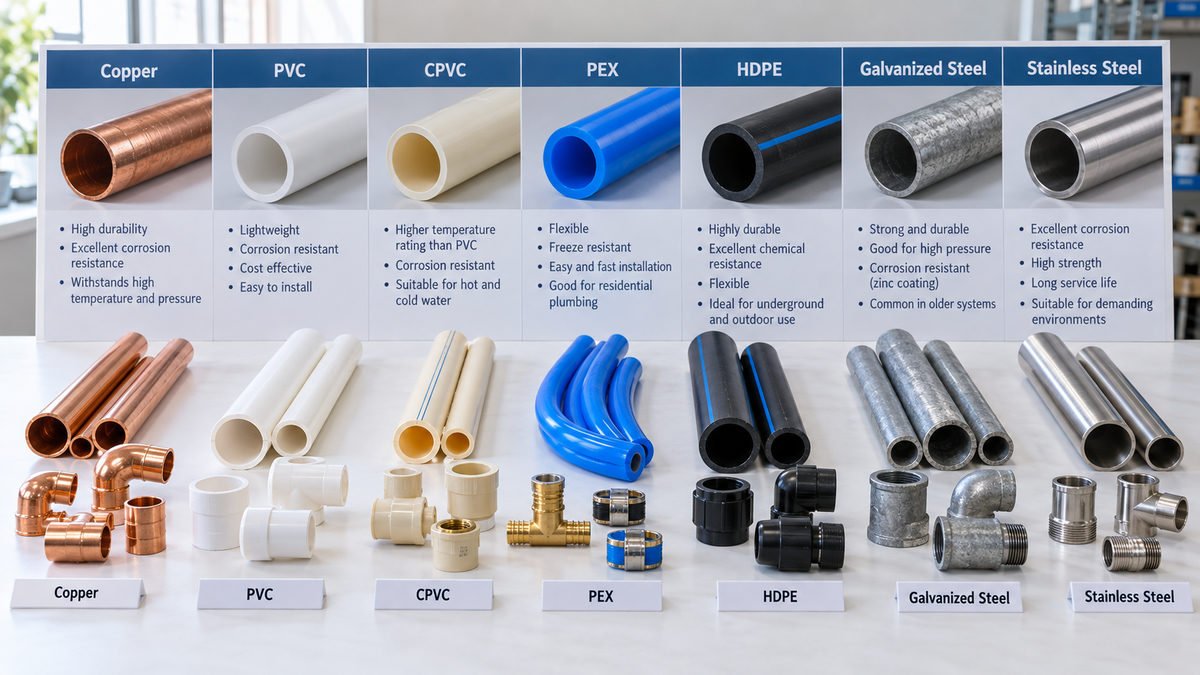
Each pipe material offers different strengths, limitations and installation requirements. Therefore, compare materials against the actual temperature, pressure, water chemistry and environment. Our pipe materials and durability comparison goes deeper.
Copper Pipes
Copper provides strong heat tolerance, compact fittings and long service in many plumbing systems. It suits hot and cold water, particularly where installers value rigid pipework and neat routing.
However, copper costs more and weighs more than many plastic alternatives. Acidic water, high chlorides, poor installation practices and galvanic contact can also increase corrosion risks.
Installers commonly use soldered, press-fit or compression connections. Press systems can reduce installation time, although they require compatible tools and correctly prepared pipe ends.
PVC and CPVC Pipes
PVC offers low cost, light weight and strong resistance to many corrosion problems. It commonly suits cold-water services, drainage applications and underground work where local rules permit its use.
Solvent-welded joints create continuous connections, but installers must follow curing times and surface-preparation instructions. Additionally, standard PVC has temperature limitations and may become unsuitable for hot water.
CPVC handles both hot and cold water more effectively than standard PVC. It also resists many chemicals, although thermal expansion and local code approval still require careful checking.
PEX Pipes
PEX provides flexibility, fast installation and good resistance to freezing-related expansion. Installers may use crimp, clamp or press connections, depending on the approved fitting system.
It can reduce wall openings and connection points during renovations. Furthermore, flexible pipe often produces less water noise than rigid metal systems.
However, PEX needs protection from direct ultraviolet exposure. It also requires the correct bend radius, compatible fittings and reliable access to replacement components.
HDPE, Steel and Stainless Steel
HDPE suits underground water lines because it combines flexibility, impact resistance and long continuous runs. Butt fusion and electrofusion can create strong joints, but they require specialised equipment and trained operators.
Galvanised steel provides strength and impact resistance, yet corrosion may develop internally or externally over time. It also weighs more, takes longer to install and may restrict flow as deposits accumulate.
Stainless steel offers excellent strength and corrosion resistance in demanding environments. Nevertheless, its material and installation costs can exceed those of copper or plastic systems.
Compare every material across flow capacity, noise, thermal expansion, insulation needs, handling, repairability and expected service life. In contrast, no material ranks first for every project.
The best choice depends on water chemistry, temperature, pressure, soil, sunlight, code requirements and installation method. Therefore, treat material selection as a performance decision rather than a simple price comparison.
3. Compare Pipe Size, Flow Capacity, Pressure, and Strength Ratings
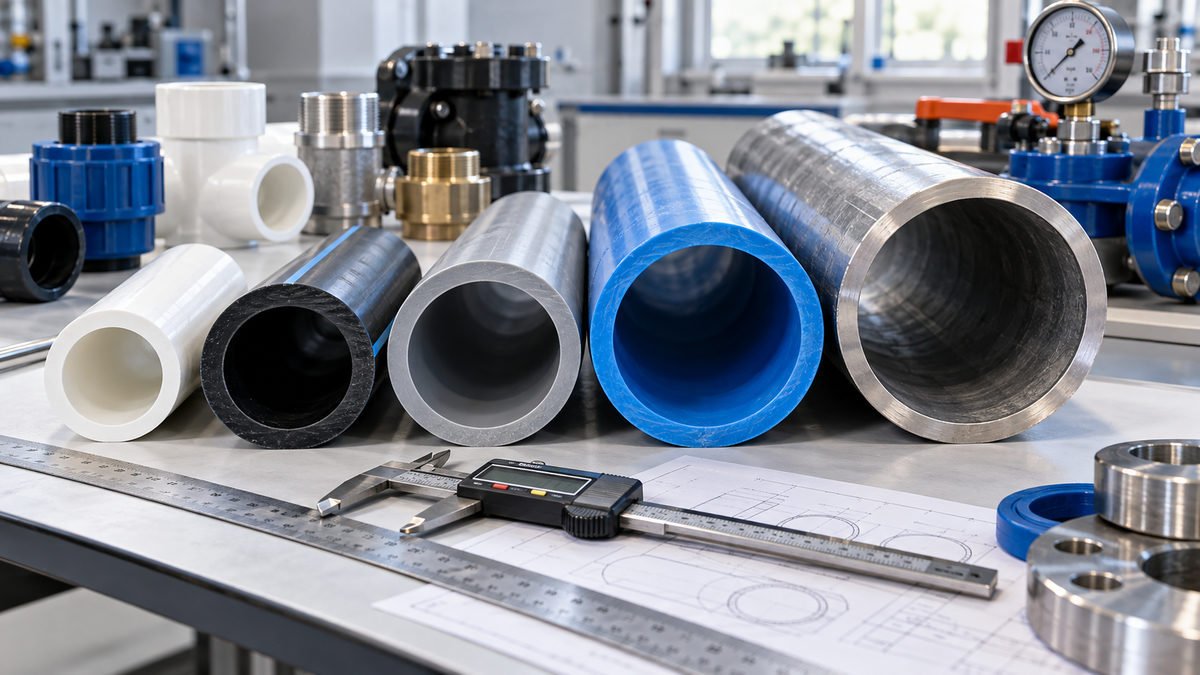
Pipe sizing often causes confusion because nominal size does not equal an exact physical measurement. Instead, it acts as a standard designation linked to a family of dimensions. Learn how to choose a pipe size step by step.
Nominal Size and Actual Dimensions
Two pipes with the same nominal size can have different outside diameters, wall thicknesses and inside diameters. Therefore, always check the manufacturer’s dimensional table.
Outside diameter matters for clamps, sleeves, supports and fittings. Meanwhile, inside diameter controls available flow area and strongly affects friction loss.
A thicker wall can improve pressure capacity. However, it also reduces the internal opening when the outside diameter remains unchanged.
Flow Capacity and Hydraulic Performance
Larger internal diameters generally allow greater flow at lower velocity. However, fittings, valves, bends, elevation changes and pipe length also affect pressure loss.
For example, a long run with several elbows may perform poorly despite using a pipe with a large nominal size. Conversely, an oversized pipe may cost more without improving the system enough.
Use manufacturer flow charts, friction-loss tables, hydraulic calculations and local plumbing design rules. Additionally, consider the required flow rate at the most demanding outlet.
Residential systems may use established sizing methods. Commercial, high-rise and industrial systems often require detailed hydraulic design, pump calculations and pressure-zone planning.
Pressure Ratings and Safety Margins
Maximum operating pressure describes the pressure the pipe can handle during normal service. Burst pressure represents a failure threshold and should never become a design target.
Test pressure applies during controlled commissioning checks. Working pressure must include a suitable safety margin for pressure surges, water hammer and operating cycles.
Temperature can reduce the allowable pressure for many plastic pipes. Additionally, joint type, pipe support, sunlight, chemical exposure and installation damage can affect real performance.
Schedule and SDR Ratings
Pipe schedule describes wall thickness within several common dimensional systems. The same nominal size may have different inside diameters across different schedules.
SDR means the outside-diameter-to-wall-thickness relationship. A lower SDR generally indicates a thicker wall and greater pressure capacity.
However, schedule and SDR are not interchangeable rating systems. Compare products within compatible standards, and confirm the manufacturer’s pressure table for the intended temperature.
Also check whether the rating applies to the pipe, the fittings or the complete joint. Most importantly, select a system that meets design pressure with an appropriate margin.
4. Evaluate Temperature, Corrosion Resistance, and Potable-Water Safety
Temperature ratings must reflect normal operation, occasional spikes and unusual conditions. Cold-water pipe may still face heat from plant rooms, sunlight or nearby hot services. Make sure it meets Australian water pipe laws.
Hot, Chilled and Specialised Water Systems
Hot-water systems require separate ratings for continuous temperature and peak temperature. Copper, CPVC, PEX and stainless steel can all suit hot water, depending on the product specification.
Pressure derating becomes important as temperature rises. Therefore, never use a cold-water pressure rating for a hot-water application without checking the manufacturer’s data.
Chilled-water systems may need insulation, vapour control and protection against condensation. Boiler-related and industrial systems may require higher temperature ratings and specialised metals or engineered plastics.
Freeze-thaw exposure also needs attention. Flexible materials may tolerate movement better, but no pipe system should rely on freezing as normal operating behaviour.
Corrosion and Chemical Compatibility
Acidic or alkaline water, chlorides, dissolved minerals and stagnant water can affect service life. Soil chemistry can also corrode buried metallic pipes from the outside.
Galvanic corrosion may occur when incompatible metals connect in a wet system. Use approved transition fittings and follow manufacturer instructions when combining materials.
Additionally, disinfectants, cleaning chemicals, oils, solvents and industrial fluids must be checked against compatibility data. A material that suits drinking water may not suit a chemical process.
Hard water can create scale and internal deposits. Over time, roughness and buildup reduce the effective flow area and increase friction loss.
Sunlight, Impact and Potable-Water Safety
Direct ultraviolet exposure can degrade some plastics. Use approved protective coverings, sleeving or installation locations when sunlight may reach the pipe.
Underground pipes also face soil movement, external loading, moisture and accidental impact. Meanwhile, exposed pipework may need protection from rodents, tools and construction activity.
For drinking water, select products intended for potable service. Check leaching requirements, material compatibility and relevant drinking-water approvals.
In Australia, WaterMark certification information helps confirm whether regulated plumbing products meet applicable requirements.
Also review relevant ASTM or ISO requirements, Australian Standards, NSF certification where applicable, local plumbing codes and manufacturer compliance documents.
5. Compare Pipe Connections, Installation Requirements, and Lifecycle Cost
The connection method affects labour, tools, training, inspection and long-term reliability. Therefore, compare the complete joining system rather than the pipe alone.
Connection Methods
- Soldering for compatible copper systems
- Crimp, clamp and press fittings for selected flexible pipes
- Solvent welding for compatible PVC and CPVC systems
- Compression and threaded joints for serviceable connections
- Butt fusion and electrofusion for HDPE systems
Press and clamp connections can reduce installation time. However, they depend on correct tools, fitting depth and inspection procedures.
Solvent welding requires clean surfaces, suitable cement and adequate curing time. Fusion joining can produce long, reliable runs, although equipment and operator training increase project costs.
Installation Conditions
Compare flexibility, bend radius, weight, handling and support spacing. Additionally, consider trench width, bedding, backfill, access and future maintenance.
Hot and chilled systems need expansion control and insulation. Pipe movement, vibration, water hammer and noise may require anchors, guides, loops or flexible connectors.
Fire-safety requirements can also affect material choice and installation methods. Check whether penetrations, insulation or protective systems require additional approval.
Calculate the Lifecycle Cost
Material cost includes pipe, fittings, valves, supports, insulation, coatings and specialty components. Labour cost includes cutting, joining, testing, trenching, lifting and equipment hire.
Then estimate maintenance, energy loss, leak repairs, replacement access, downtime and expected service life. A cheap pipe may become expensive when it needs specialised labour or frequent repairs.
Furthermore, difficult-to-source fittings can extend downtime during future repairs. Therefore, include local availability and installer familiarity in the final comparison.
6. Use a Water Pipe Comparison Checklist and Select the Best Option
Use a consistent checklist for every shortlisted product. This makes technical differences easier to identify and prevents missing an important compliance requirement. Read water pipe product descriptions with this checklist in hand.
Match the Material to the Application
- Residential plumbing: Compare PEX, copper, CPVC and PVC for hot-water needs, budget, noise, flexibility and local approval.
- Commercial buildings: Prioritise flow calculations, pressure control, code compliance, maintenance access and replacement availability.
- Underground lines: Evaluate HDPE, PVC, ductile iron or galvanised options against soil, loading, trenching and joining requirements.
- Hot-water systems: Confirm continuous and peak temperatures, pressure derating, insulation and fitting compatibility.
- Industrial systems: Verify chemical resistance, inspection requirements, specialised standards and maintenance procedures.
Complete a Product Comparison Table
| Comparison field | Product A | Product B | Product C |
|---|---|---|---|
| Material | |||
| Nominal size | |||
| Outside diameter | |||
| Inside diameter | |||
| Wall thickness | |||
| Schedule or SDR | |||
| Pressure rating | |||
| Temperature rating | |||
| Certifications | |||
| Connection method | |||
| Expected service life | |||
| Installed cost |
Follow a Reliable Selection Process
- Define the application, water conditions and installation environment.
- Shortlist materials with suitable temperature and chemical resistance.
- Confirm flow capacity, inside diameter and friction loss.
- Verify pressure ratings, temperature derating and safety margins.
- Check standards, WaterMark status and potable-water approvals.
- Compare tools, labour, fittings, maintenance and lifecycle costs.
- Obtain approval from a qualified plumbing professional where required.
Avoid comparing incompatible standards, ignoring water chemistry or using outside diameter as the only sizing reference. Additionally, do not overlook temperature derating, mixed-metal connections or certification checks.
The final decision rule is simple: choose the pipe that meets every technical and compliance requirement with a suitable safety margin. The lowest upfront price should never decide the system alone.
Sweet Puff Australia brings together water pipes, glass designs and smoking accessories for adult customers. Explore the Sweet Puff Australia website for product collections and further information.
Conclusion
The right water pipe depends on a balanced comparison of material, diameter, flow capacity, pressure, wall thickness, schedule or SDR and temperature rating. You must also assess corrosion resistance, potable-water certification, connection method, installation requirements, service life and total cost.
Use the comparison checklist to shortlist suitable products. Then confirm the final selection with the manufacturer, a qualified plumbing professional and applicable Australian codes before purchasing or installing the pipe.



Comment (1)
[…] Compare equivalent specifications side by side. Brand reputation and price matter, but neither proves that a pipe suits your installation. Use manufacturer data sheets, installation manuals, technical drawings, chemical-resistance charts, pressure tables, and certification documents. Use our checklist to compare water pipe specifications. […]