

A dirty glass pipe can quickly develop harsh odours, restricted airflow, and stubborn resin buildup. Many people wonder which cleaners are safe, how long to soak the glass, and how to clear narrow openings. This guide explains how to clean a glass pipe safely, using alcohol, coarse salt, or mild soap. You will also learn how to remove clogs, clean screens, avoid glass damage, and maintain better airflow between cleans.
Why Regular Glass Pipe Cleaning Matters
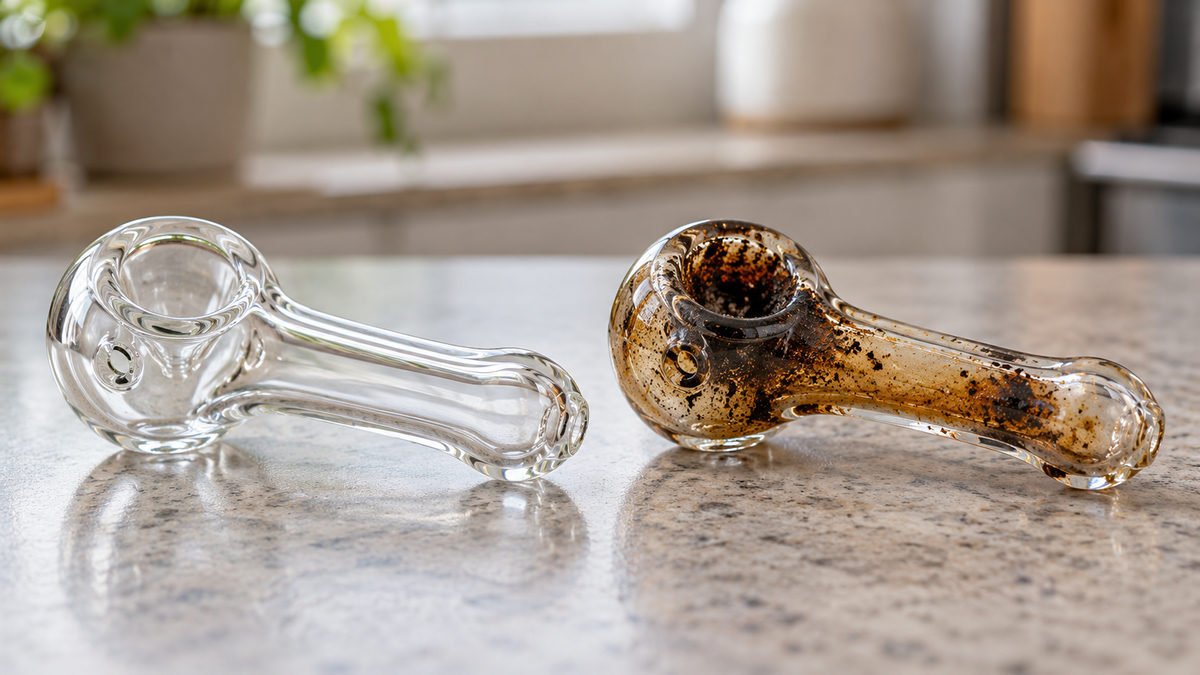
Regular cleaning removes resin, ash, moisture, and trapped residue from the bowl and internal passages. These materials can collect quickly, especially after frequent use or heavy sessions. Therefore, a simple cleaning routine helps keep the pipe more hygienic and easier to handle.
A cleaner glass pipe usually provides better airflow through the bowl, carb hole, and mouthpiece. Moreover, removing old residue can help produce a smoother experience and a more accurate taste. Fresh residue often creates harsh flavours that hide the natural character of the material being used.
Cleaning also helps reduce lingering odours around the pipe. Resin can make a room smell stale, even when the pipe appears mostly clean. Additionally, removing buildup helps preserve the glass appearance and may extend the pipe’s usable lifespan.
Signs Your Glass Pipe Needs Cleaning
Notably, your pipe does not need to look completely blocked before cleaning becomes worthwhile. Small deposits can harden inside narrow passages and become more difficult to remove later. Look for these common warning signs:
- Visible resin around the bowl or mouthpiece.
- A clogged or restricted carb hole.
- Reduced airflow while drawing.
- A strong or unpleasant smell.
- Cloudy glass or a sticky surface.
- A harsh, stale, or unusual taste.
- A screen covered with ash and resin.
After heavy use, clean the pipe as soon as it cools and becomes safe to handle. Frequent users may prefer a weekly clean to prevent thick deposits. Meanwhile, occasional users can clean the pipe whenever airflow, smell, or appearance noticeably worsens.
For more advice on choosing and caring for smoking accessories, explore the Sweet Puff Australia blog. Regular maintenance can make small glass designs easier to use and store.
Supplies and Safety Precautions Before You Start

Gather everything before you begin, so you do not need to handle wet glass unnecessarily. The most effective basic setup uses high-strength isopropyl alcohol and coarse salt. Specifically, choose 90% or higher isopropyl alcohol when available. The right cleaning brushes make narrow stems easy.
- 90% or higher isopropyl alcohol.
- One to two tablespoons of coarse salt.
- A sealable container or sturdy resealable bag.
- Disposable gloves.
- Cotton swabs.
- Soft pipe cleaners.
- Paper towels or a clean towel.
- Warm water.
- A wooden stick or plastic scraper.
Isopropyl alcohol helps dissolve sticky resin from glass surfaces. Coarse salt adds gentle, controlled friction when you shake or rotate the pipe. Together, they loosen residue without requiring aggressive scraping or sharp tools.
However, isopropyl alcohol is highly flammable and produces flammable vapour. The NIOSH chemical safety guide identifies it as a Class IB flammable liquid. Therefore, work in a well-ventilated area away from flames, sparks, cigarettes, heaters, and hot surfaces.
Wear disposable gloves when handling concentrated resin or alcohol. Keep the cleaning solution away from children, pets, food, and drink. Additionally, avoid splashing alcohol into your eyes or leaving an open container unattended.
Never mix isopropyl alcohol with bleach, ammonia, drain cleaner, hydrogen peroxide, or other household chemicals. Chemical mixtures can produce dangerous reactions or irritating vapours. Use one cleaning method at a time, then rinse the glass thoroughly.
Avoid harsh solvents, abrasive metal tools, boiling water, and sudden temperature changes. Glass can crack when it moves quickly between cold and hot conditions. Furthermore, metal tools can scratch the surface or apply dangerous pressure to thin sections.
Do not pour leftover alcohol-and-resin solution down the drain. Instead, check local hazardous-waste guidance or contact your council for disposal advice. Only allow evaporation where local rules, product instructions, and ventilation conditions clearly make that appropriate.
For related glass designs and accessories, you can browse the Sweet Puff Australia shop. Always confirm that a pipe has cooled completely before starting any cleaning process.
How to Clean a Glass Pipe Step by Step
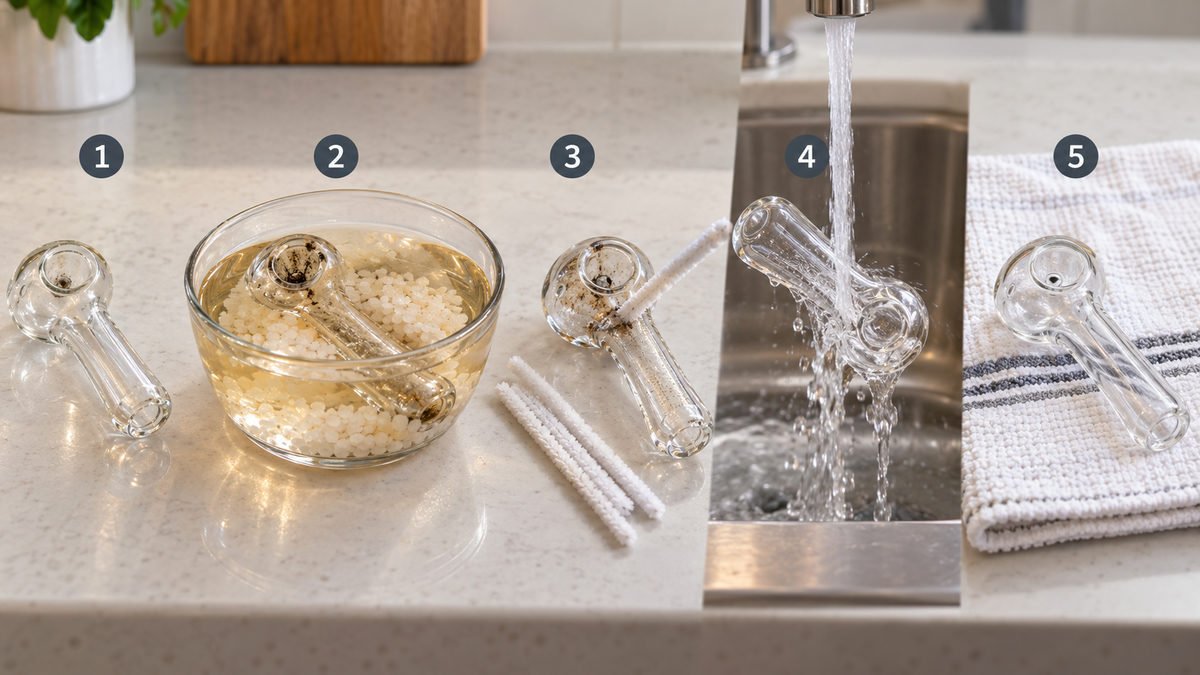
The easiest method is an alcohol-and-coarse-salt soak followed by gentle scrubbing and thorough rinsing. This approach works because alcohol dissolves sticky resin while salt helps lift softened residue. Follow these steps patiently, especially when cleaning a narrow or delicate pipe.
1. Empty the Pipe
Remove ash, loose debris, and any removable screen before adding liquid. Tap the pipe gently over a bin or paper towel. Do not strike the glass against a hard edge, because even sturdy glass can chip.
2. Rinse With Warm Water
Rinse the pipe briefly with warm water to loosen surface residue. Use warm tap water rather than boiling water or very hot water. Therefore, let a cold pipe warm gradually before placing it under running water.
3. Add Isopropyl Alcohol
Place the pipe inside a sealable container or strong resealable bag. Add enough isopropyl alcohol to cover the resin-coated areas. You do not need to fill the entire container if only the bowl or mouthpiece contains buildup.
4. Add Coarse Salt
Add one or two tablespoons of coarse salt to the alcohol. Seal the container securely before moving it. Additionally, place a towel around the container if the pipe has fragile extensions or thin glass sections.
5. Shake or Rotate Gently
Gently shake or rotate the container so the salt reaches the bowl, mouthpiece, and interior walls. Avoid violent shaking, which can cause the pipe to hit the container. Instead, use several slow movements to distribute the salt safely.
6. Allow the Pipe to Soak
Let the pipe soak for approximately 30 minutes to several hours. The right time depends on how much resin has collected and how hardened it feels. Especially dirty pipes may need an overnight soak if the container remains sealed and safely stored.
7. Scrub Narrow Openings
Remove the pipe carefully and use cotton swabs or soft pipe cleaners around the bowl, carb hole, and mouthpiece. For stubborn deposits, use a wooden stick or plastic scraper. Never use a metal object inside the glass.
Support the pipe with one hand while cleaning with the other. This reduces stress around joints, curves, and thin openings. Moreover, use gentle pressure rather than trying to force hardened resin away immediately.
8. Repeat When Necessary
Thick or hardened resin may need a second soak. Refresh the alcohol solution if it becomes cloudy or heavily contaminated. Several short cleaning cycles usually work better than one aggressive scraping session.
9. Rinse Thoroughly
Rinse the pipe under warm running water until the alcohol, salt, loosened resin, and smell disappear. Flush water through the bowl, carb hole, mouthpiece, and internal passages. Rinse from both directions when the design allows it.
10. Inspect and Air-Dry
Inspect the bowl, mouthpiece, carb hole, and internal passages under good lighting. Check for remaining particles, slickness, or cloudy patches. Finally, place the pipe on a clean towel and let it air-dry completely before use or storage.
Do not use the pipe while any alcohol smell remains. Even a small amount of trapped liquid needs time to evaporate fully. Most importantly, complete rinsing and drying protect both the glass and the person using it.
If you are comparing different pipe shapes or materials, visit the product categories page for available glass and accessory collections.
Cleaning Stubborn Resin, Clogs, Screens, and Narrow Openings
Stubborn resin usually needs more time, not more force. Repeat the alcohol soak with a fresh solution and allow hardened deposits to soften gradually. Therefore, avoid digging at dry resin when another short soak could loosen it safely. For heavy buildup, read how to remove residue from glass pipes.
When residue becomes soft, gently lift it with a wooden toothpick, bamboo tool, or plastic scraper. Support the glass close to the area you are cleaning. This helps reduce pressure on joints, curves, and narrow openings.
How to Unclog a Glass Pipe
To unclog a glass pipe, soak the blocked area until the resin feels softer. Then, work a soft pipe cleaner through the opening without forcing it. Meanwhile, rinse from both directions whenever the design provides access.
Clean the bowl with cotton swabs or a pipe cleaner after the resin has softened. Rotate the swab gently around the walls and base. Replace it when it becomes saturated, so you do not spread residue across clean glass.
For the carb hole, apply a small amount of alcohol with a cotton swab. Then, carefully clear the passage using a soft pipe cleaner. Avoid twisting aggressively, because the opening may have a thin glass edge.
Cleaning the Mouthpiece and Screen
Soak the mouthpiece fully if it contains visible buildup or a stale smell. Pass a pipe cleaner through the opening without forcing it around tight bends. Additionally, rinse the mouthpiece from the outside and inside before drying.
Remove pipe screens separately when possible. Soak them in alcohol, then brush away softened residue with a cotton swab. Replace screens that remain heavily clogged, damaged, sharp, or difficult to clean.
Never poke forcefully, twist metal objects inside the pipe, or heat the glass to loosen residue. Multiple short cleaning cycles are safer and more effective than aggressive scraping. In contrast, excessive force can turn a removable clog into a cracked pipe.
Alcohol-Free and Heat-Based Cleaning Options
An alcohol-free method can help with light residue, surface oils, and mild odours. Add warm water and a small amount of mild dish soap to a container. Then, soak the pipe and gently scrub it with cotton swabs or soft pipe cleaners. The same alcohol-free ideas work when you clean a glass bong.
Rinse the pipe repeatedly until no soap remains. Soap can leave a film inside narrow passages, especially when the pipe has complex curves. Therefore, keep rinsing until the water runs clear and the glass no longer feels slick.
Warm water and mild soap are generally less effective than isopropyl alcohol against thick resin. However, this method suits people with limited ventilation or no alcohol available. It also works well for light maintenance between deeper cleans.
Can You Boil a Glass Pipe?
It is best to avoid boiling a glass pipe. Uneven heating, trapped water, and contact with a hot surface can create thermal shock. As a result, the glass may crack suddenly or break while you handle it.
Hot tap water is safer than boiling water, provided you warm the pipe gradually. Never move the pipe directly from cold conditions into very hot water. Likewise, allow it to cool gradually before rinsing it again.
Do not microwave the pipe, place it in an oven, use a heat gun, or set it on a stove. These methods can create uneven temperatures and dangerous pressure. Choose warm water and mild soap when you need an alcohol-free option.
Rinsing, Drying, Troubleshooting, and Glass Pipe Maintenance
Flush every passage with warm water after cleaning. Inspect the pipe for slickness, visible particles, cloudy film, or remaining odour. No alcohol, salt, soap, or loosened resin should remain before you use the pipe again. Own a bubbler too? Here is how to clean a bubbler pipe.
Place the pipe upside down on a clean towel and let air move through the openings. Air-drying completely may take several hours for thicker designs. Moreover, drying prevents moisture from mixing with fresh residue during the next use.
Common Cleaning Problems
- Lingering odour: Repeat the rinse and clean hidden passages with a soft pipe cleaner. Then, allow the pipe to dry fully in fresh air.
- Cloudy glass: Rinse away mineral or soap film. If residue remains, repeat a brief alcohol soak and rinse thoroughly.
- Recurring clogs: Clean the bowl and carb hole more often. Also, check whether the screen looks damaged or oversaturated.
- Leftover residue: Repeat the soak instead of scraping aggressively. Avoid harsher chemicals, which can create additional safety concerns.
Preventive Maintenance
Empty ash after each use and wipe fresh buildup before it hardens. Avoid overpacking, because excess material can enter the carb hole and internal passages. Additionally, clean the screen regularly and store the pipe in a padded location.
A simple routine prevents most difficult clogs. Use this checklist after your next session:
- Empty ash and remove loose debris.
- Rinse briefly with warm water.
- Soak with isopropyl alcohol and coarse salt.
- Scrub gently with non-metal tools.
- Repeat the soak if buildup remains.
- Rinse every passage thoroughly.
- Inspect the bowl, carb hole, and mouthpiece.
- Air-dry completely.
- Dispose of cleaning waste responsibly.
Conclusion
The safest routine is simple: loosen residue with warm water, soak the pipe in isopropyl alcohol and coarse salt, and scrub gently with non-metal tools. Then, rinse every passage thoroughly and let the glass air-dry completely. Repeated light cleaning helps maintain airflow, taste, hygiene, and glass durability.
Sweet Puff Australia brings together water pipes, glass designs, and useful accessories for adult customers. Explore the Sweet Puff Australia website for more information about available collections and care-friendly designs.
Use the checklist after your next session. Clean your glass pipe as soon as you notice buildup, odour, or restricted airflow.





