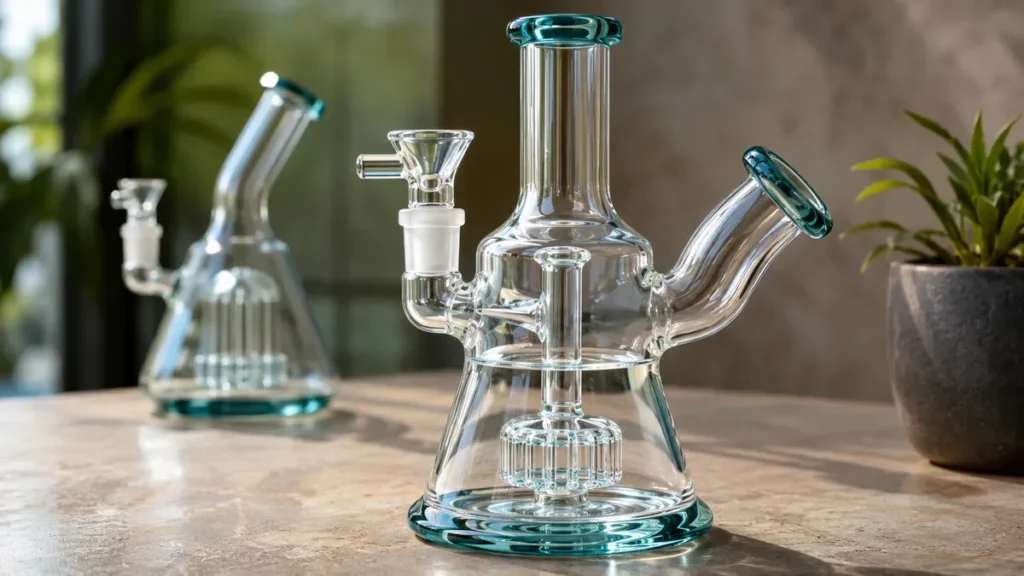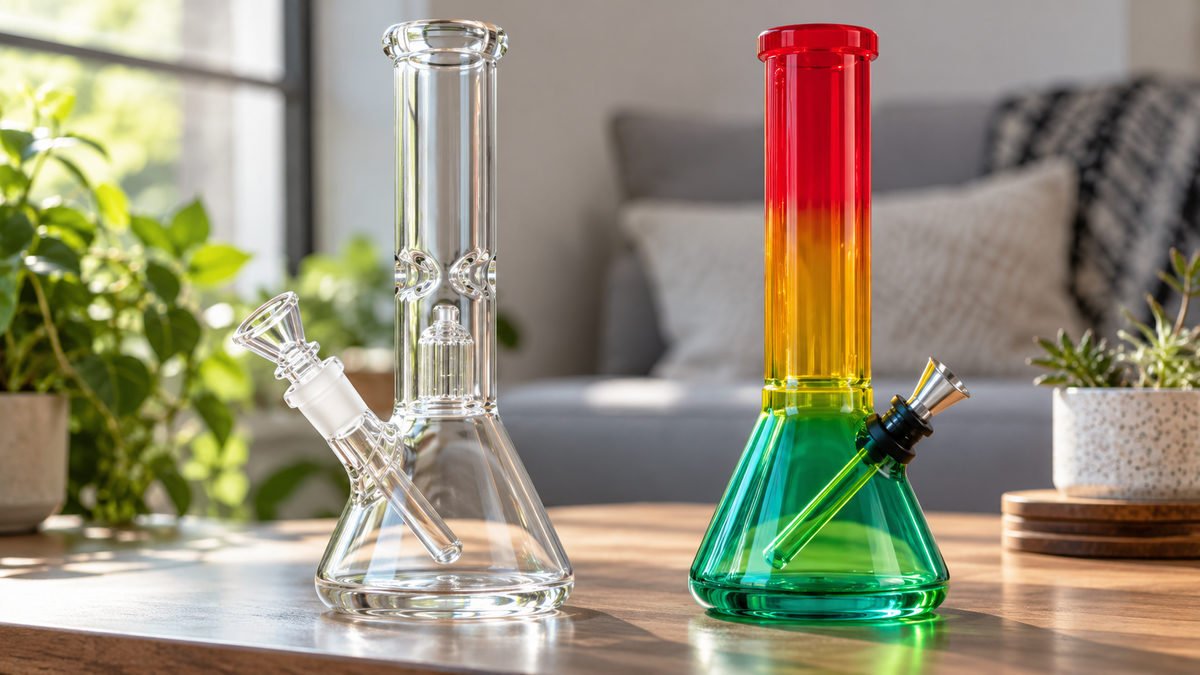
Choosing between glass vs acrylic bongs can affect every session, from flavour and smoothness to durability and cleaning. Beginners often wonder whether premium glass justifies the higher price. Meanwhile, budget-conscious buyers may prefer acrylic’s impact resistance and portability. This guide compares both materials across performance, safety, maintenance, cost, and long-term value. You will also find practical advice for choosing a bong that suits your routine in Australia.
Glass vs Acrylic Bongs: Key Differences at a Glance
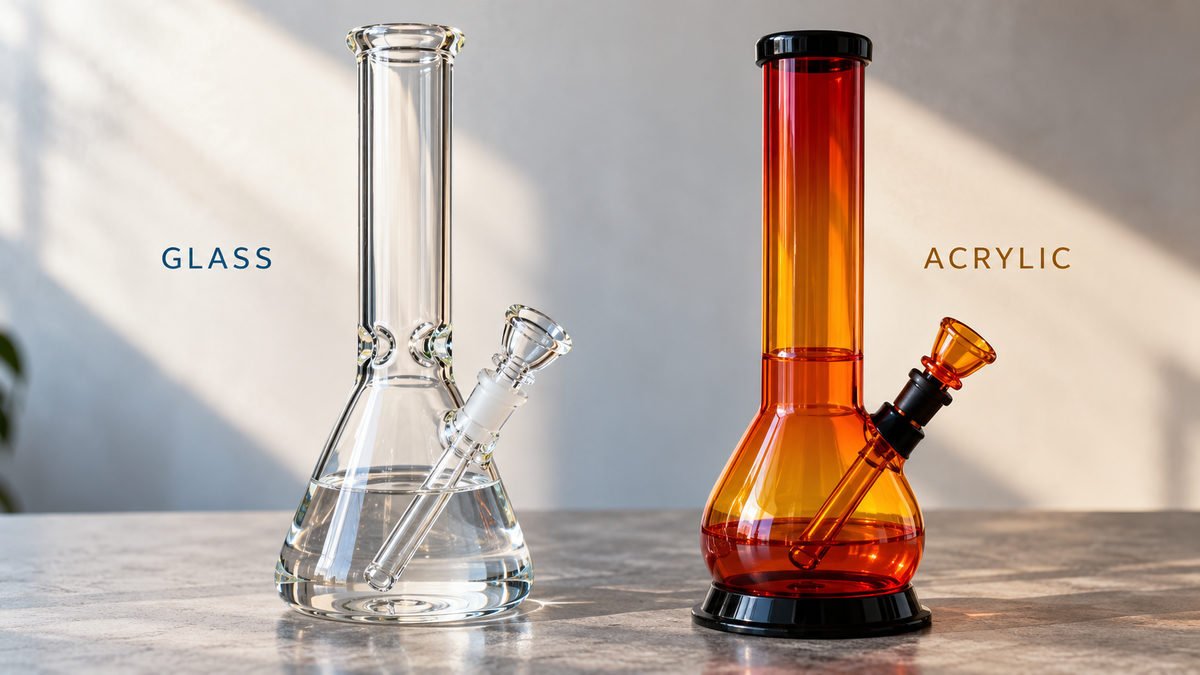
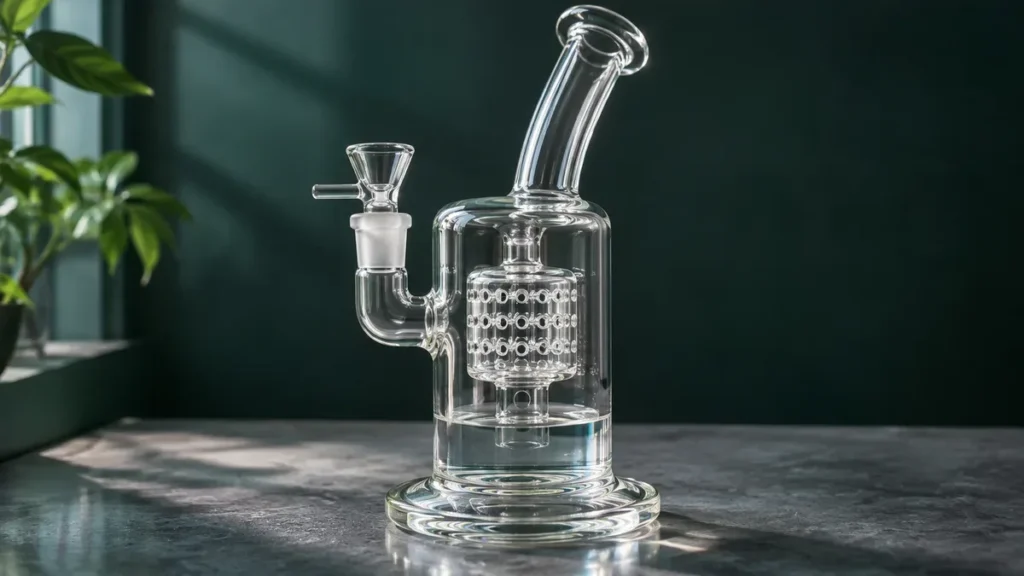
Glass bongs usually use heat-resistant borosilicate glass for the water chamber, neck, mouthpiece, downstem, and bowl. Their clear construction makes water levels and residue easy to inspect. Additionally, glass supports precise joints, removable parts, and complex percolators. See every option in our bong materials comparison guide.
Acrylic bongs use moulded plastic for the main body and often include a metal or glass bowl. Many models feature a fixed or removable downstem, a stable base, and a simple water chamber. Therefore, acrylic designs usually focus on affordability, impact resistance, and straightforward use.
| Feature | Glass bong | Acrylic bong |
|---|---|---|
| Durability | Can break after strong impacts | Resists drops better, but may crack or deform |
| Heat resistance | Excellent when made from suitable borosilicate glass | Limited around direct heat |
| Hit smoothness | Depends on water volume and filtration design | Also depends on chamber and downstem design |
| Flavour | Usually neutral and clean | May retain odours or flavours over time |
| Cleaning | Easy to inspect and rinse | Scratches may hold residue |
| Portability | Needs careful packing and protection | Better suited to travel and outdoor use |
| Appearance | Clear, colourful, artistic, and highly customisable | Available in bright colours and printed designs |
| Price | Usually higher, especially for advanced designs | Generally more affordable |
| Lifespan | Can last for years with careful handling | Can last several years with moderate heat and regular cleaning |
| Ideal user | Home users focused on flavour and filtration | Beginners, travellers, and budget-conscious buyers |
However, the material does not determine performance by itself. Water volume, chamber size, downstem placement, airflow, and percolators influence the experience more directly. For example, a basic glass beaker can feel less smooth than a well-designed acrylic bong with effective filtration.
Glass generally suits home setups, flavour-focused users, and buyers who appreciate visual detail. In contrast, acrylic works well for casual use, shared spaces, camping, and situations where accidental drops seem likely.
Durability, Heat Resistance, and Expected Lifespan
How each material handles everyday knocks
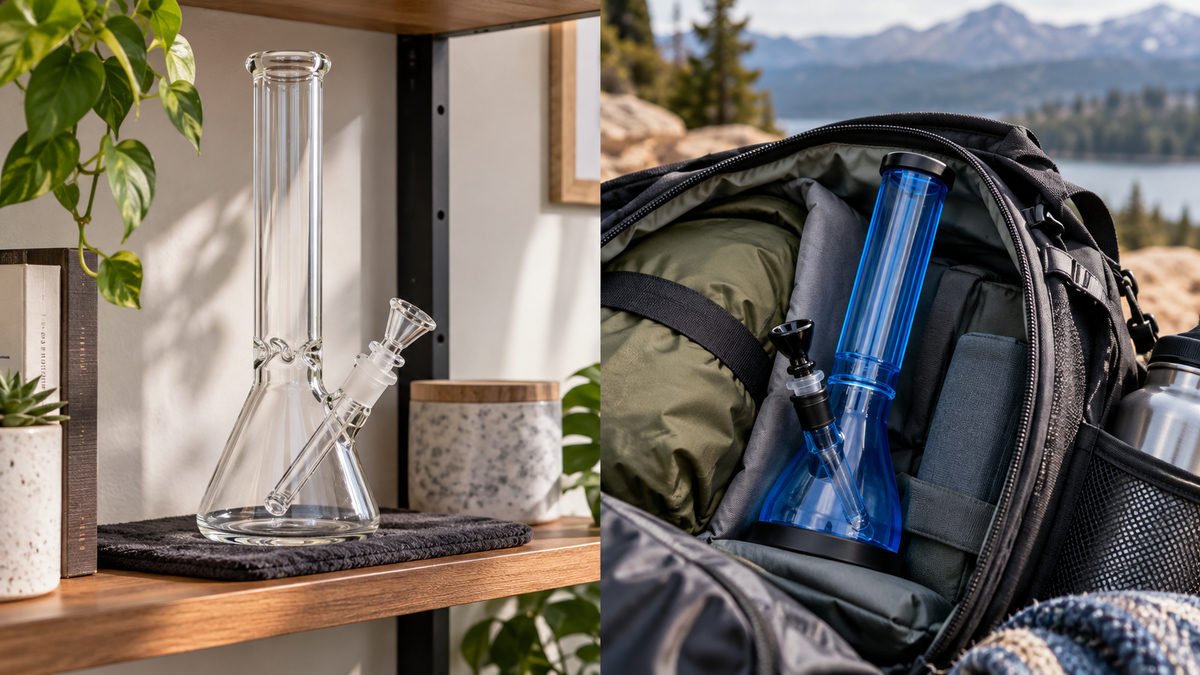
Glass offers excellent rigidity, but that strength has a clear limitation. A glass bong can chip, crack, or shatter when it hits a hard floor. Therefore, users should store it upright on a stable surface away from table edges.
Acrylic handles accidental drops more confidently because it bends slightly instead of shattering immediately. Additionally, its lighter weight makes transport less stressful. However, acrylic does not become indestructible simply because it survives a few knocks.
Strong impacts can still crack the body, damage threaded fittings, loosen joints, or break the bowl and downstem. Over time, deep scratches may also make the surface harder to clean. Meanwhile, rough transport can damage seals and small removable parts.
Heat resistance and safe use
Borosilicate glass remains popular because it tolerates normal temperature changes better than ordinary glass. This property lowers the risk of thermal shock when the bowl becomes hot during regular use. However, even quality glass can fail after extreme temperature changes or serious impact damage.
Acrylic has a much lower tolerance for direct heat. Never allow a flame to touch the acrylic body, mouthpiece, base, or nearby plastic fittings. Moreover, use compatible bowls, downstems, and accessories designed for the bong’s construction.
Excessive heat can warp acrylic, create unpleasant odours, discolour the surface, or weaken nearby joints. Therefore, inspect the bong before use and replace any component that looks melted, cracked, loose, or damaged.
Expected lifespan and replacement costs
Well-maintained glass can last for many years in a careful home environment. Its main weakness involves impact rather than ordinary use. Consequently, one accident may create a larger replacement cost than regular cleaning supplies.
Acrylic can also last several years, especially when users avoid excessive heat and abrasive cleaning. Nevertheless, heavy scratches, fading, odour retention, and brittle fittings may reduce its useful life. Entry-level acrylic models usually cost less to replace than quality glass pieces.
For example, a buyer who moves frequently may prefer acrylic because replacement anxiety stays lower. Conversely, someone who keeps one bong in a secure home position may value glass’s longer-lasting finish and neutral material.
Performance, Filtration, Smoothness, and Flavour Quality
What creates a smoother hit?
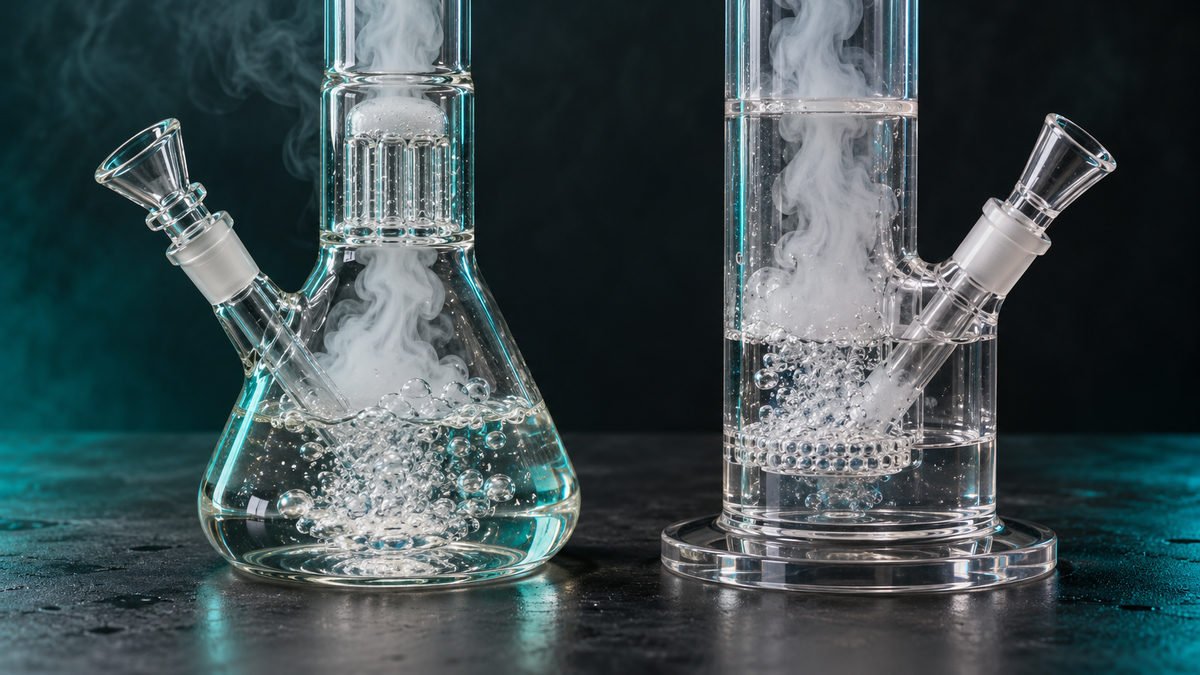
The smoothest bong material depends less on glass or acrylic than on filtration design. Water depth, chamber size, downstem length, percolator style, and airflow all change how smoke moves. Therefore, compare the whole design rather than judging material alone.
Glass water pipes often support more precise airflow because manufacturers can shape chambers and joints accurately. They also offer many percolator designs, including tree, honeycomb, showerhead, and inline styles. Additionally, clear glass lets you watch bubbles move through the water.
Acrylic bongs can still provide comfortable filtration with a suitable downstem and enough water capacity. Simple designs often create less drag and require fewer parts. However, lower-cost models may use basic airflow paths that deliver less filtration than advanced glass designs.
More percolation does not automatically mean a better experience. A complex setup can increase drag, water splash, and cleaning time. Meanwhile, a simple beaker or straight-tube bong may offer easier airflow and simpler maintenance.
Flavour neutrality and residue
Glass usually provides a clean, neutral surface for flavour. It does not typically absorb strong odours, and smooth walls allow residue to rinse away more easily. As a result, flavour-focused users often prefer glass.
Acrylic can work well when kept clean, but it may retain odours after repeated use. Scratches can trap residue, especially around the base, downstem opening, or internal corners. Furthermore, strong-smelling residue may influence later sessions if users delay cleaning.
So, do acrylic bongs affect smoke taste? They may feel less neutral than clean glass, particularly after heavy use or poor maintenance. However, the difference depends on the acrylic quality, cleaning routine, accessories, and material used near the heat source.
What water filtration can and cannot do
Water filtration cools smoke and adds moisture, which may make inhalation feel less harsh. Nevertheless, it does not remove every irritant or make smoke harmless. Users should understand that smoother smoke can still carry health risks.
For general information about water pipes and their history, readers can consult this overview of bongs and water pipes. Additionally, always follow Australian laws, age restrictions, and responsible-use guidance.
Cleaning, Maintenance, and Bong Safety
Which bong is easier to clean?
Smooth glass is generally easier to inspect because residue remains visible through the clear chamber. You can quickly identify cloudy water, buildup, and blocked openings. Therefore, glass often encourages more regular maintenance. Acrylic and glass both mark easily; here is how to prevent glass bong scratches.
Acrylic also benefits from prompt cleaning, but scratches can hide residue and odours. Avoid rough scouring pads, metal tools, and abrasive powders. These products may damage acrylic surfaces, seals, decals, and decorative coatings.
Practical cleaning steps
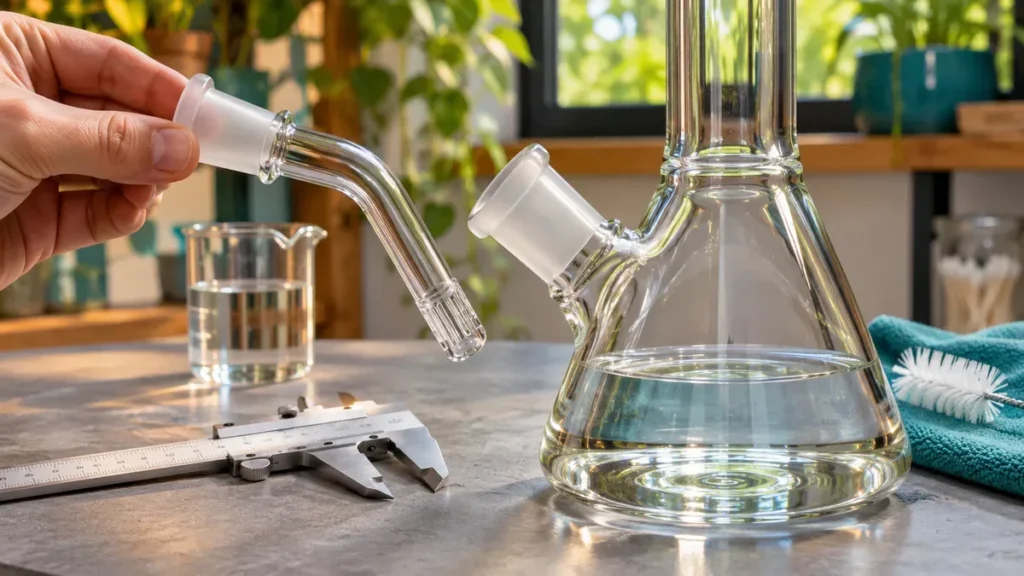
Start by emptying the water after use whenever practical. Then rinse the chamber with warm water and remove the bowl and downstem. Use a suitable cleaning solution, soak removable parts, and scrub gently with appropriate brushes.
- Change the water regularly, especially after frequent use.
- Soak removable parts separately when residue builds up.
- Rinse every component thoroughly before reassembly.
- Check joints, seals, and downstems for damage.
- Allow all parts to dry before storing the bong.
However, avoid harsh chemicals that may damage plastic, seals, coatings, or unknown accessories. Never combine cleaning chemicals. Additionally, follow the product instructions when a manufacturer recommends a specific cleaning method.
Safety during use and storage
Cracked glass creates sharp edges and should not remain in use. Similarly, overheated acrylic can warp or release unpleasant fumes. Stop using any bong with a damaged chamber, unstable base, loose joint, or visibly weakened fitting.
Keep hot bowls away from tables, fabrics, children, and pets. Let components cool before cleaning or packing them. Moreover, store the bong upright in a secure location away from direct sunlight and heavy objects.
Choose products made from clearly identified, heat-appropriate materials. Avoid unknown plastics, painted surfaces, or decorative finishes close to the bowl and heat source. Reliable construction matters more than an elaborate appearance.
Price, Portability, Appearance, and Long-Term Value
Comparing purchase prices
Acrylic bongs usually sit at the more affordable end of the market. Their moulded construction, simpler joints, and basic filtration help reduce manufacturing costs. Therefore, they can suit first-time buyers who want a practical starting point.
Glass bongs range from simple entry-level designs to elaborate pieces with multiple percolators. Prices rise with thicker borosilicate glass, precision joints, handwork, artistic details, and advanced filtration. In contrast, a basic glass beaker may remain reasonably accessible without unnecessary complexity.
Explore the Sweet Puff Australia shop to compare available water pipe styles and accessories. You can also review the broader product categories when narrowing down materials and designs.
Portability and appearance
Acrylic usually travels more easily because it resists accidental drops and weighs less than thick glass. It can suit camping, festivals, shared houses, and temporary setups. However, protect the bowl, downstem, and other removable fittings during transport.
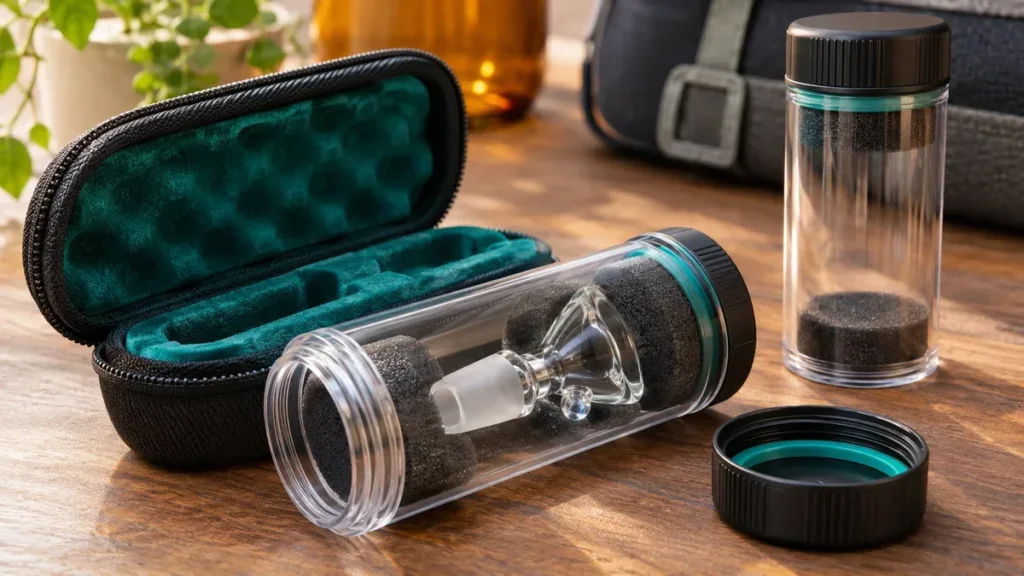
Glass requires more careful packing, preferably with padding and a protective case. Nevertheless, glass offers greater visual variety. Buyers can choose clear chambers, coloured accents, artistic shapes, detailed percolators, and distinctive hand-finished designs.
Acrylic models also offer bright colours, printed graphics, and bold shapes. Yet, glass makes water levels and residue easier to see. Some users value that transparency because it encourages better cleaning habits.
Calculating long-term value
The cheapest purchase price does not always equal the lowest total cost. Consider replacement bowls, downstems, cleaning supplies, protective cases, and the likelihood of accidental damage. Additionally, assess whether you plan to replace the bong after a short period.
Paying more for glass can make sense for frequent home users, flavour-focused buyers, and people who clean regularly. Its neutral surface, heat resistance, design variety, and advanced filtration options may improve long-term satisfaction.
Acrylic often provides better value for beginners, travellers, and buyers who prioritise impact resistance. It also suits anyone who feels uncomfortable carrying an expensive glass piece outdoors.
For more accessories and product information, visit the Sweet Puff Australia brand listings and compare construction details carefully. Focus on reliable materials and useful design features rather than appearance alone.
Which Bong Is Best for Beginners and Different Lifestyles?
A simple glass bong can suit beginners who prioritise flavour, easy inspection, straightforward cleaning, and a stable home setup. Choose a manageable chamber size with a sturdy base and uncomplicated downstem. Therefore, you can learn how water level and airflow affect performance. Also worth comparing: glass vs silicone bongs.
An acrylic bong may suit beginners who prioritise affordability, portability, and drop resistance. It can reduce replacement anxiety in shared spaces or busy households. However, users must still protect acrylic from direct heat and clean it regularly.
- Choose glass for home sessions, flavour neutrality, advanced filtration, and visual appeal.
- Choose acrylic for travel, outdoor use, festivals, shared spaces, and tighter budgets.
- Choose a simple design if you want easier cleaning and fewer replacement parts.
- Choose stronger filtration if airflow and cooling matter more than portability.
Are glass bongs worth the higher price? For many home users, yes. The premium can reflect better heat resistance, cleaner flavour, more precise construction, and a wider choice of filtration designs.
However, acrylic remains a sensible choice when practical durability matters most. Think about your budget, lifestyle, cleaning habits, experience level, transport needs, and likelihood of accidental drops. Most importantly, select safe materials and reliable construction in either category.
Conclusion
Glass bongs generally offer better flavour neutrality, heat resistance, visual appeal, and advanced filtration options. Acrylic bongs provide affordability, impact resistance, and convenient portability. Therefore, the best choice depends on your budget, lifestyle, cleaning routine, and performance priorities.
Compare reputable glass and acrylic models using the criteria in this guide. Choose a design suited to your routine, and prioritise safe materials, stable construction, and manageable maintenance. Follow local laws, age restrictions, and responsible-use practices before buying or using a bong.
Sweet Puff Australia brings together water pipes, glass designs, and smoking accessories for adult customers researching their options. Explore the Sweet Puff Australia website for product collections and further details before making your choice.