
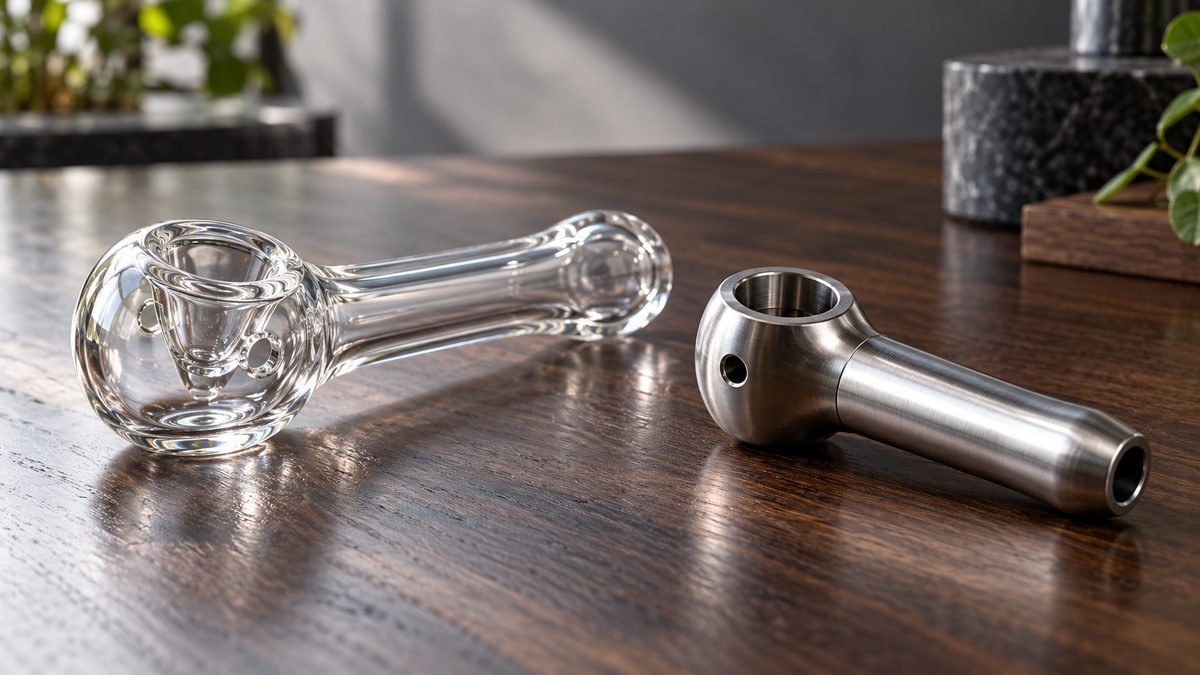
Choosing between glass pipes vs metal pipes can change flavour, comfort, maintenance, and everyday reliability. Beginners and experienced adults often wonder whether glass’s clean taste outweighs metal’s toughness. This guide compares both materials across flavour, durability, heat, cleaning, portability, safety, price, and design. You’ll find a practical answer for home use, travel, outdoor sessions, and different budgets.
Glass Pipes vs Metal Pipes: Key Differences at a Glance
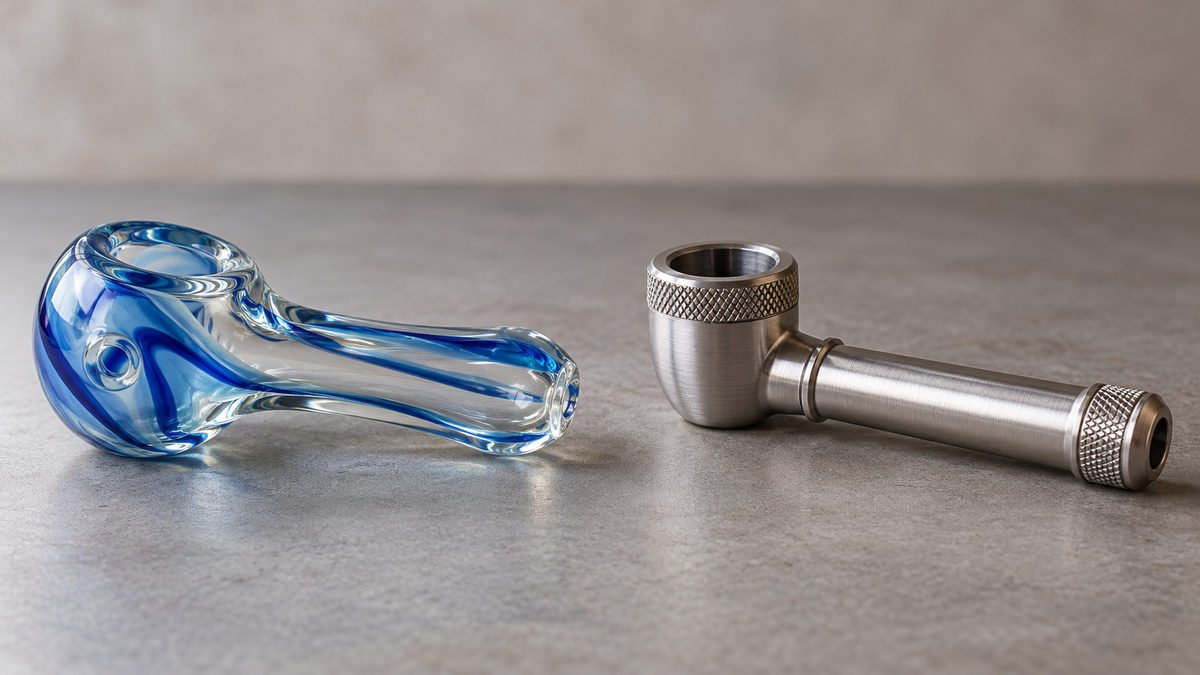
At first glance, glass and metal pipes may seem similar. However, their everyday performance can feel quite different. Glass usually suits flavour-focused users, while metal often suits people who need dependable portability. For other designs, see types of smoking pipes explained.
| Feature | Glass pipe | Metal pipe |
|---|---|---|
| Flavour | Generally neutral and clean | Can vary with alloy, coating, and residue |
| Durability | Strong during careful use, but breakable | Resists drops, dents, and rough handling |
| Cleaning | Smooth surfaces make residue easy to inspect | Threads, screens, and grooves may need extra work |
| Portability | Needs careful packing and protective storage | Usually compact and travel-friendly |
| Price | Ranges from affordable to highly artistic | Often affordable, especially in basic designs |
| Heat transfer | Usually slower, depending on thickness | Often transfers heat quickly |
| Appearance | Colours, shaping, glasswork, and visual detail | Minimalist finishes, engraving, and practical forms |
| Expected lifespan | Years with careful handling | Often longer under rough conditions |
Glass pipe overview
Glass smoking pipes remain popular because they usually preserve the intended flavour and aroma. Smooth glass also makes residue visible, which helps you decide when cleaning is necessary. Additionally, glass allows makers to create colourful patterns, sculpted shapes, and distinctive artistic details.
Many buyers choose borosilicate glass for its strength and resistance to sudden temperature changes. Nevertheless, even quality glass can crack after a hard impact or rapid thermal shock. Therefore, a protective case remains useful for storage and transport.
Metal pipe overview
Metal smoking pipes appeal to users who value toughness, low weight, and convenience. A compact metal pipe can sit in a bag or drawer without the same breakage concern as glass. Meanwhile, a simple design often costs less to replace after heavy use.
Metal quality matters greatly. Stainless steel, aluminium, brass, and titanium can behave differently under heat and cleaning. Furthermore, coatings, unknown alloys, and loose components may affect taste, comfort, and safety.
Ultimately, the best pipe material depends on your priorities. Construction quality, material grade, design, airflow, and maintenance can matter just as much as the basic material.
Flavor, Heat, and Safety: How Each Material Performs
Glass pipe flavour
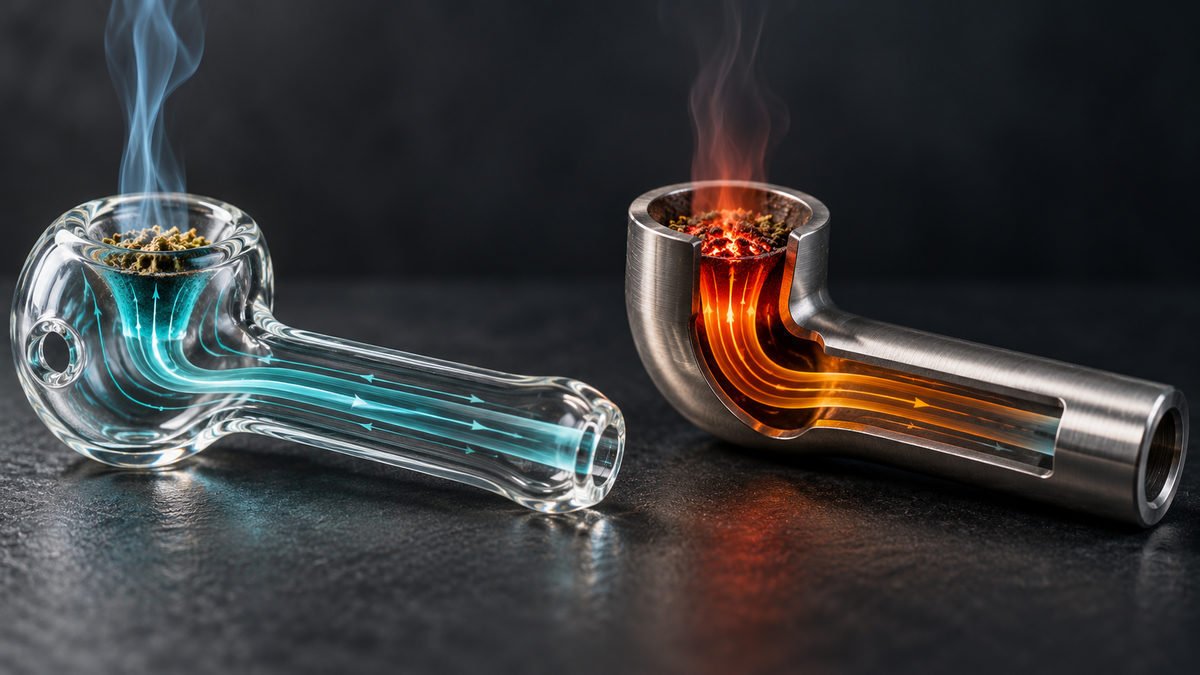
Glass is generally considered a neutral material for smoking pipes. It adds little noticeable flavour, especially when the surface remains clean. As a result, many flavour-sensitive users prefer glass for tasting the intended aroma more clearly. A third option is silicone; compare silicone pipes vs glass pipes.
However, material alone does not control flavour. Residue, airflow, screen design, bowl size, and burning temperature also influence the experience. For instance, a dirty glass pipe can taste harsher than a clean, well-designed metal pipe.
Moreover, thicker glass may provide a smoother feel because it does not transfer heat as quickly. Yet thick walls can retain heat for longer after use. Therefore, avoid touching the bowl or stem immediately after heating.
Metal pipe taste
Metal pipes can produce a neutral experience when they use suitable materials and remain clean. However, perceived taste may change when residue collects around threads, screens, or narrow openings. Poor-quality coatings can also create unwanted odours when exposed to heat.
Aluminium pipes are lightweight and often affordable. Nevertheless, buyers should check whether the surface includes a heat-stable, clearly disclosed finish. In contrast, untreated or well-specified metal offers more confidence than an unknown alloy with vague product details.
Heat behaviour and user comfort
Metal usually transfers heat quickly through the bowl and stem. This can create a hot mouthpiece or uncomfortable grip during longer use. Therefore, a metal pipe may benefit from a heat-resistant mouthpiece or a design that separates the bowl from the hand.
Glass often slows heat transfer, especially when the walls are thicker. However, glass can still become very hot near the bowl. Meanwhile, sudden temperature changes can stress the material and increase cracking risk.
Safety considerations
Neither material is automatically risk-free. Health Canada advises adults to choose well-made glass or ceramic accessories and notes that smoking still carries risks. You can read the Health Canada accessory guidance for general harm-reduction information.
Always avoid chipped or cracked glass, sharp edges, loose screens, and unstable components. Additionally, avoid unknown coatings, painted heating surfaces, and products that do not disclose their material. Most importantly, buy from reputable sellers that explain construction details clearly.
Durability, Portability, and Expected Lifespan

Glass pipe durability
Quality glass can handle normal home use surprisingly well. A sturdy pipe may last for years when you place it on stable surfaces and clean it carefully. However, one drop onto tile, concrete, or a hard benchtop can cause a crack or complete breakage. Learn how to spot quality glass craftsmanship.
Thermal shock creates another concern. For example, heating a cold pipe aggressively can place stress on the glass. Likewise, placing a hot pipe against a cold surface may cause sudden temperature changes.
For that reason, glass suits careful users who mainly smoke at home. A padded case can reduce risk during transport. Therefore, consider storage part of the purchase rather than an optional extra.
Metal pipe durability
Metal generally handles drops, knocks, and rough handling better than glass. A fall may leave a dent or scratch without making the pipe unusable. As a result, metal often suits camping, festivals, travel, and outdoor storage.
However, metal is not indestructible. Thin walls can bend, threaded parts can strip, and finishes can wear over time. Additionally, moisture may encourage corrosion on some metals, particularly when residue remains trapped inside.
A well-made metal pipe can remain functional after cosmetic damage. Yet a bent opening, loose screen, or damaged coating deserves immediate attention. Replace any component that affects safe handling or airflow.
Portability and lifespan
Metal pipes usually win for portability because they are compact and less fragile. You can carry one in a protective pouch without the same breakage risk. Meanwhile, glass pipes need more padding and careful placement inside a bag.
In careful home use, a quality glass pipe may last several years. Frequent travel shortens that expectation unless you use a hard protective case. Similarly, a metal pipe may last for years, although scratches, corrosion, and worn finishes can appear sooner.
Therefore, metal pipes are usually more durable in demanding environments. Glass offers excellent longevity when handled gently, while metal tolerates everyday accidents more effectively.
Cleaning and Maintenance: Which Pipe Is Easier to Keep Clean?
Glass cleaning
Glass is often easier to clean because its surface is smooth and nonporous. Residue remains visible, so you can identify buildup before it affects airflow. Suitable cleaning solutions, soaking, rinsing, and complete drying usually provide a straightforward routine. Here is how to clean a glass pipe safely.
Additionally, transparent glass makes blocked openings easy to inspect. You can see whether water, residue, or debris remains inside. However, avoid abrasive tools that may scratch the surface or damage delicate glasswork.
Metal cleaning
Metal pipes are reusable and cleanable, but their designs can create extra work. Threads, grooves, screens, hinges, and narrow channels may collect residue. Consequently, a basic metal pipe often proves easier to maintain than a highly detailed one.
Some metal finishes can react poorly to harsh chemicals. Therefore, follow the manufacturer’s cleaning advice and avoid substances that may strip coatings. Always rinse suitable parts thoroughly and allow them to dry before storage.
Simple maintenance habits
Regular cleaning prevents thick buildup and lingering odours. Moreover, replacing clogged screens helps maintain airflow and reduces the need for aggressive scrubbing. Inspect the bowl, mouthpiece, joints, and openings during each cleaning session.
- Clean the pipe before residue becomes difficult to remove.
- Replace damaged or blocked screens promptly.
- Allow every part to dry completely before storage.
- Keep the pipe away from moisture and extreme temperatures.
- Use a case for glass and a pouch for metal.
Overall, glass is usually easier to clean because buildup stays visible and accessible. Metal remains practical, but intricate designs may hold residue in places you cannot easily reach.
Price, Design, and Long-Term Value
Upfront cost
Basic glass and metal pipes can both fit a modest budget. However, price rises with size, craftsmanship, brand reputation, material grade, and added features. Artistic glasswork often costs more because each piece requires extra shaping and finishing.
Metal pipes may offer a lower replacement cost, especially in simple designs. Nevertheless, premium titanium or carefully machined stainless steel can cost more than basic glass. Therefore, compare construction quality instead of judging value by material alone.
Long-term value
A cheaper metal pipe may offer better practical value for frequent travel or outdoor use. It can survive drops that would destroy an inexpensive glass pipe. Meanwhile, a quality glass pipe may justify its price through flavour, craftsmanship, and easier residue inspection.
Consider how often you will use the pipe and where you will store it. A home user may value clean flavour and attractive design more than impact resistance. In contrast, a frequent traveller may prefer a replaceable metal option.
Appearance and customisation
Glass provides the widest choice of colours, shapes, patterns, and handmade details. Some designs feature sculpted sections, coloured accents, or distinctive artwork. Additionally, clear glass lets you monitor residue without opening the pipe.
Metal usually offers a cleaner, more minimalist appearance. Popular details include brushed finishes, engraving, interchangeable screens, and textured grips. However, decorative coatings deserve careful inspection before purchase.
Glass pipe versus aluminium pipe
Glass usually offers a more neutral flavour and stronger visual appeal. Aluminium weighs less and generally resists breakage better. However, aluminium transfers heat quickly, and buyers should confirm the material and coating quality.
Glass does not corrode like many metals, but it can shatter. Aluminium can dent, scratch, or lose its finish while remaining usable. Therefore, your choice depends on whether you prioritise taste and appearance or weight and impact resistance.
Buyer checklist
- Confirm the material and grade clearly.
- Check for stable construction and smooth edges.
- Choose a comfortable grip and usable bowl size.
- Inspect airflow, screens, and cleaning access.
- Avoid unknown coatings and vague product descriptions.
- Look for suitable storage or budget for a protective case.
You can browse relevant pipe and accessory categories when comparing different designs. Additionally, the Sweet Puff Australia shop provides a practical place to review available options.
Which Pipe Is Best for Beginners and Different Users?
Choose glass if you prioritise flavour
Choose a glass pipe if clean flavour, visual appeal, and easy residue inspection matter most. Glass also suits home users who can store the pipe safely. Furthermore, beginners may appreciate seeing when the pipe needs cleaning. Many beginners start with a spoon pipe.
Start with a simple shape that has an accessible bowl and clear airflow. Avoid delicate novelty designs until you understand how you handle and store the pipe. A straightforward piece usually makes cleaning and maintenance easier.
Choose metal if you prioritise durability
Choose a metal pipe if you want toughness, portability, and discreet storage. Metal suits outdoor users, frequent travellers, and anyone who worries about accidental drops. Additionally, its compact shape often fits easily inside a small protective pouch.
Look for smooth edges, stable components, and clearly disclosed materials. Avoid painted heating areas or products with loose parts. A practical metal design should feel solid without becoming excessively hot to hold.
Match the pipe to your experience
Beginners usually benefit from a simple, easy-to-clean design. Complex chambers, narrow channels, and removable parts can increase maintenance. Therefore, choose clarity and accessibility before decorative features.
Enthusiasts may prefer specialised shapes, interchangeable screens, artistic glasswork, or carefully machined metal. However, extra features only add value when they improve comfort or maintenance. Otherwise, they may create more places for residue to collect.
Neither material wins for every user. Glass is often the better taste-focused choice, while metal is usually better for demanding environments. In both cases, verified materials and sound construction matter more than marketing claims.
Are glass pipes safer than metal pipes? Not automatically. Safe handling depends on material disclosure, product quality, heat control, cleanliness, and replacing damaged parts. Most importantly, never use a cracked, chipped, sharply edged, or poorly manufactured pipe.
For home use, choose quality glass if flavour and craftsmanship matter most. For frequent travel, choose sturdy metal with a comfortable grip. If cleaning matters, select a design with open access and few hidden channels.
Budget-conscious buyers may prefer metal because accidental damage costs less to absorb. However, careful users may gain better long-term satisfaction from a quality glass pipe. You can also explore the broader Sweet Puff Australia blog for practical buying and care information.
Conclusion
Glass pipes generally offer cleaner flavour, visible craftsmanship, and straightforward cleaning. Metal pipes usually provide greater durability, portability, and resistance to accidental damage. Therefore, the best choice depends on your priorities, usage habits, budget, and maintenance expectations.
Choose glass for careful home use, flavour sensitivity, and artistic design. Choose metal for travel, outdoor use, discreet storage, and rougher conditions. Finally, compare reputable glass and metal pipe options using the buyer checklist before choosing your preferred balance of flavour, durability, portability, and value.
Sweet Puff Australia brings together water pipes, glass designs, pipes, and accessories for adult customers. Explore the available collections and product details to find a material that suits your everyday preferences.





