
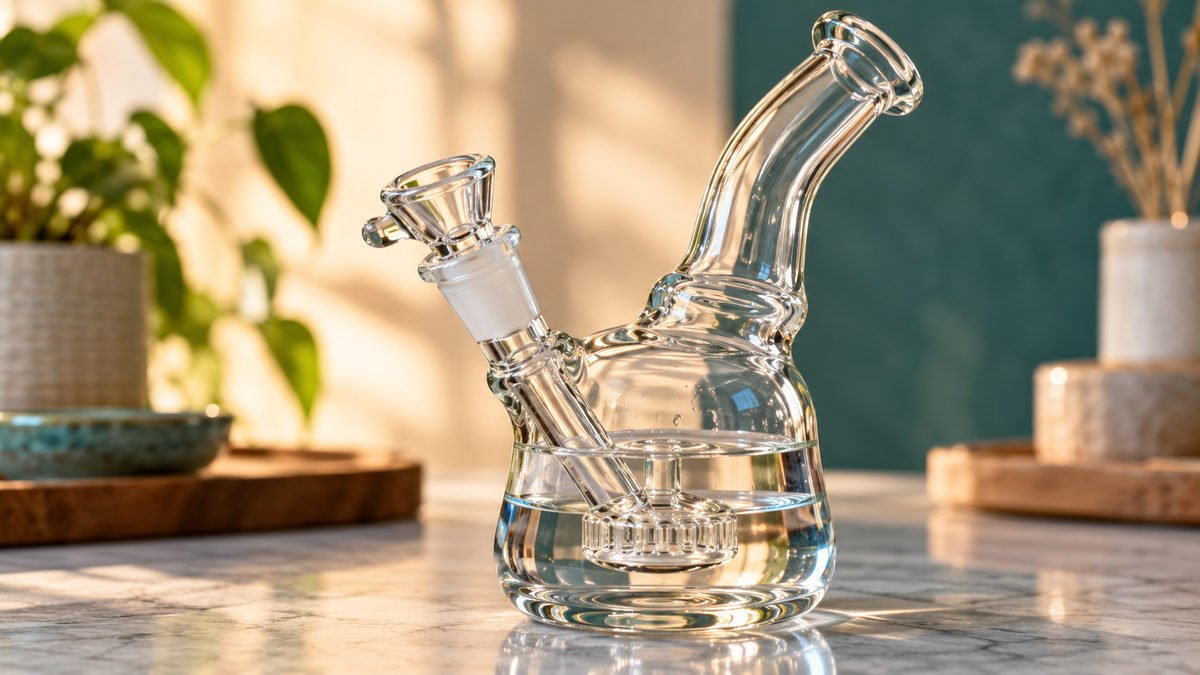
Ever wondered why a glass bubbler has a bowl, water chamber, and tiny openings? The answer becomes clear once you follow the smoke’s path. This glass bubbler anatomy explained guide covers each part, proper water levels, airflow, cleaning, troubleshooting, and safe handling for adult users.
Many beginners overlook water depth or airflow design. As a result, they may experience harsh draws, splashback, clogs, or accidental damage. Understanding the structure makes a bubbler easier to use, clean, and choose.
Glass Bubbler Anatomy Explained: What Is a Bubbler?

A glass bubbler is a compact smoking device that combines a hand pipe’s portability with water filtration. Unlike a simple dry pipe, it sends smoke through water before it reaches the mouthpiece. Therefore, the design can cool smoke and reduce some larger particles.
Bubblers vary widely between manufacturers. Some use a fixed stem, while others include removable downstems, percolators, or interchangeable bowls. Additionally, chamber size, glass thickness, joint style, and airflow openings can change the overall experience.
The basic airflow path usually follows this sequence:
- The bowl holds the dry material.
- The stem or downstem carries smoke into the water.
- The water chamber cools the smoke and creates bubbles.
- An optional percolator spreads smoke into smaller bubbles.
- The mouthpiece directs the cooled smoke towards the user.
- A carb hole controls airflow on designs that include one.
Most quality bubblers use scientific glass, especially borosilicate glass. This material handles repeated heat exposure better than ordinary glass. Moreover, clear glass lets you inspect water levels, residue, cracks, and blockages quickly.
However, no two bubbler designs work exactly alike. Some compact models combine the bowl and downstem into one moulded piece. Others omit a carb hole or use a built-in percolator beneath the water line.
A labelled diagram showing the bowl, joint, downstem, water chamber, percolator, carb hole, mouthpiece, and base.
Bowl
Joint
Downstem
Water chamber
Percolator
Mouthpiece
Carb hole
Base
Why Glass Works So Well
Borosilicate glass offers heat resistance, clarity, and a relatively neutral taste. Additionally, it does not absorb odours as easily as some porous materials. Still, glass can break when dropped or exposed to sudden temperature changes.
The Main Glass Bubbler Parts and Their Functions

Bowl
The bowl holds the dry material before heating. It connects directly to the airflow path through a joint, stem, or moulded glass section. Bowl size affects how much material fits and how quickly the draw feels restricted. Compare these parts with glass water pipe anatomy.
A smaller bowl often suits shorter sessions and easier cleaning. Meanwhile, a larger bowl may hold more material but can create more resistance when packed tightly. Always keep the load loose enough for air to pass through.
Stem or Downstem
The stem or downstem carries smoke from the bowl into the water chamber. Its lower end usually sits beneath the water surface, allowing smoke to bubble upwards. Specifically, the length and opening design influence diffusion and draw resistance.
Some bubblers use a removable downstem. Others mould the stem into the body, creating a fixed-stem design. Fixed stems reduce loose parts, while removable stems can make cleaning and replacement easier.
Water Chamber
The water chamber holds the water that cools smoke during a draw. It also creates resistance as air pushes through the liquid. Therefore, a larger chamber may offer more cooling, but it can make the bubbler heavier and less portable.
Water can capture some particulates and water-soluble compounds. However, it does not remove every irritant or make smoke harmless. For broader background, see this overview of water pipe filtration.
Percolator
A percolator breaks smoke into smaller bubbles before it reaches the mouthpiece. More bubbles create greater contact between smoke and water. However, extra diffusion can also increase resistance and make cleaning more demanding.
- Showerhead: spreads smoke through several openings.
- Honeycomb: uses many small holes for strong diffusion.
- Tree: sends smoke through several narrow branches.
- Inline: uses a horizontal tube with slits or openings.
- Fixed-stem: offers simpler airflow and easier maintenance.
Carb Hole
The carb hole controls air pressure inside the bubbler. Covering it keeps the airflow focused through the bowl and water. Releasing it allows fresh air into the chamber, helping clear remaining smoke.
Not every bubbler includes a carb hole. Some designs clear through the bowl opening or another removable component instead. Therefore, check the manufacturer’s layout before assuming a carb exists.
Mouthpiece
The mouthpiece directs cooled smoke towards the user. Its length, shape, and rim affect comfort, splashback, and how easily you can maintain a good seal. A smooth, rounded rim usually feels more comfortable during repeated use.
Base and Joint
The base supports the bubbler and reduces tipping. A wider base generally improves stability, especially on smooth surfaces. Meanwhile, the joint connects the bowl, downstem, or accessory to the main body.
Joint size affects compatibility with replacement parts. Therefore, check measurements before buying a new bowl or downstem. Manufacturers may also use “bubbler bowl” and “bubbler downstem” for similar integrated or removable components.
How Does a Glass Bubbler Work? Airflow and Filtration
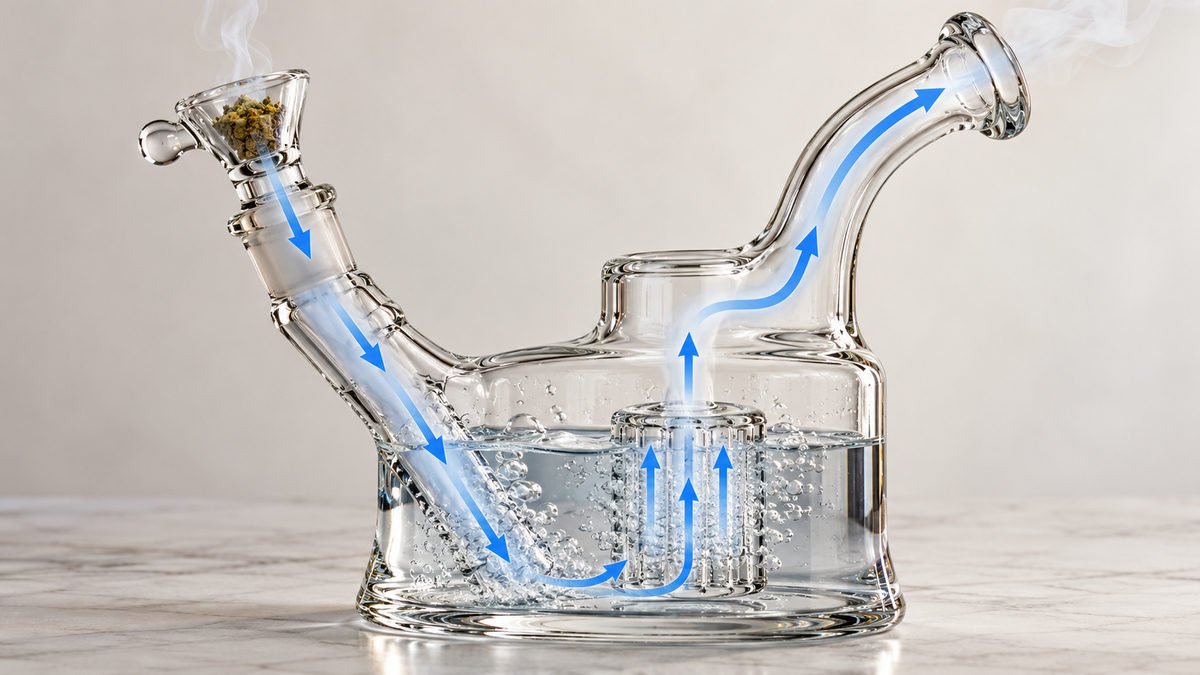
During use, heat creates smoke in the bowl. Inhalation then creates negative pressure inside the bubbler. This pressure pulls air through the bowl, down the stem, and beneath the water surface.
The smoke bubbles through the water before travelling through the chamber. If a percolator exists, it divides the smoke into smaller streams. Finally, the smoke moves through the upper chamber and exits through the mouthpiece.
More bubbling increases contact between smoke and water. As a result, the smoke may feel cooler and smoother than smoke from a dry pipe. However, water filtration remains incomplete and cannot remove every harmful substance.
What Changes the Airflow?
Glass bubbler airflow depends on several physical features. Water level, chamber shape, downstem length, percolator openings, and resin buildup all affect draw resistance.
- Too much water can restrict airflow and cause splashback.
- Too little water may reduce bubbling and cooling.
- A long downstem can increase water contact and resistance.
- Small percolator holes can clog more easily.
- Resin buildup can narrow passages and weaken airflow.
Covering the carb hole keeps the chamber under stronger negative pressure. Releasing it introduces fresh air, which helps clear the chamber. Therefore, use gentle, steady inhalation rather than pulling sharply.
Excessive bubbling may indicate too much water or an overly forceful draw. It can also reflect a highly diffused design. To prevent water entering your mouth, use the recommended level, keep the bubbler upright, and draw gently.
Importantly, water filtration does not eliminate all irritants or make smoke safe. Adults should understand the health risks associated with inhaling smoke. Always follow local laws and use only legal materials.
How to Use a Glass Bubbler Correctly
Start by inspecting the glass under good lighting. Look for cracks, chips, loose joints, or sharp edges. Additionally, confirm that the bowl and any removable stem fit securely before adding water.
Add clean water through the mouthpiece or designated opening. The downstem or percolator should sit below the surface. However, the water must remain low enough to prevent splashing into the mouthpiece.
Use a gradual fill-and-test method because each bubbler needs a different volume. Add a small amount, draw gently without heat, and watch the bubbling. Then adjust the level until bubbles form without splashback.
A Simple Beginner Sequence
- Place the bubbler on a stable, heat-resistant surface.
- Load the bowl loosely enough to maintain airflow.
- Cover the carb hole if the design includes one.
- Apply heat carefully while inhaling slowly.
- Watch the water movement and avoid forceful draws.
- Release the carb hole when you need to clear the chamber.
- Remove the heat source and allow the glass to cool.
Never pull hard enough to make water surge into the mouthpiece. Likewise, avoid holding intense heat against one spot for too long. Sudden, concentrated heat can stress glass and damage delicate bowl edges.
Meanwhile, use the bubbler in a ventilated area and keep it away from flammable items. Store it securely between uses. Most importantly, allow the glass to cool before moving, cleaning, or adding fresh water.
Common Problems and Quick Checks
- Weak airflow: check for resin, blocked holes, or an overpacked bowl.
- Excessive bubbling: reduce the water level or draw more slowly.
- Harsh smoke: check water level, heat control, and residue buildup.
- Water in the mouth: lower the water level and keep the bubbler upright.
- Loose base: use a stable surface and inspect for uneven damage.
Glass Bubbler Maintenance: Cleaning, Storage, and Care
Regular cleaning improves airflow, taste, appearance, and water chamber performance. Dirty water can also leave residue inside narrow passages. Therefore, replace stale water frequently and clean the glass before buildup becomes difficult. Follow our guide on how to clean a bubbler pipe.
Useful supplies include isopropyl alcohol, coarse salt, cotton swabs, pipe cleaners, narrow brushes, warm water, gloves, and a sealable container. Choose supplies that fit the bubbler’s openings without forcing them through delicate parts.
Cleaning Steps
- Empty the used water and dispose of it responsibly.
- Rinse the bubbler with warm, not boiling, water.
- Add a suitable cleaning solution and coarse salt.
- Plug the openings and shake gently.
- Use cotton swabs or narrow brushes on restricted passages.
- Rinse thoroughly until no cleaner or residue remains.
- Place the bubbler upside down and let it air-dry.
For removable bowls and downstems, clean each part separately. However, never force a stuck joint or twist thin glass aggressively. Soak stubborn pieces first, then use gentle movement and patience.
Percolators need extra care because their small holes can trap residue. Warm water and a suitable brush may help. Additionally, inspect every opening before reassembling the bubbler.
Store the clean bubbler upright in a padded case or secure shelf. Keep it away from children, pets, temperature extremes, and busy edges. Avoid boiling water, metal tools, abrasive handling, and sudden temperature changes.
Retire any bubbler with a structural crack, sharp chip, leaking joint, or unstable base. Repairs may not restore safe strength. Therefore, replacing damaged glass is safer than continuing to use it.
Bubbler vs Bong, Dry Pipe, and Dab Rig: Choosing the Right Design
A bubbler is a compact type of water pipe. Compared with a larger bong, it uses less water and offers better portability. However, larger bongs usually provide more chamber capacity, cooling, stability, and modular accessories. Read the full bubbler vs bong differences comparison.
| Design | Main advantage | Main trade-off |
|---|---|---|
| Glass bubbler | Portable water cooling | Smaller chamber and tighter cleaning access |
| Large water pipe | More capacity and modularity | Less portable and often heavier |
| Dry pipe | Simple, compact, and easy to maintain | No water cooling or bubbling |
| Dab rig | Designed for concentrates | Needs a banger and careful heat management |
Dry pipes offer simplicity and strong flavour clarity, but they do not cool smoke through water. In contrast, bubblers need fresh water and regular cleaning. Therefore, your choice depends on whether portability or simpler maintenance matters most.
Flower-focused bubblers use bowls for dry material. Dab rigs use bangers or similar heated surfaces for concentrates. These designs differ in heat requirements, airflow, cleaning routines, and intended materials.
When choosing a bubbler, examine the glass quality, wall thickness, base, mouthpiece, carb position, and cleaning access. Also check the joint size and replacement-part compatibility. A stable base and comfortable rim matter during everyday handling.
Thicker glass generally improves durability, but it adds weight. Larger chambers may improve cooling, yet they reduce portability. Meanwhile, simple fixed-stem bubblers often clean more easily than complex percolator designs.
Frequently Asked Questions
What is a glass bubbler? A glass bubbler is a compact hand pipe with a water chamber. It combines portable handling with bubbling and water cooling.
Is water required? Water is required for the filtration and bubbling function. Without water, the device may act more like a dry pipe, depending on its design.
How much water should I use? Add enough water to submerge the downstem or percolator openings. Stop before bubbling reaches the mouthpiece, then test with a gentle draw.
Does a bubbler need a percolator? No. A fixed stem can provide effective bubbling with fewer parts and easier maintenance. Percolators add diffusion but may increase resistance and cleaning time.
How often should I clean it? Replace water after each session and clean the glass regularly. Frequent users may need deeper cleaning several times each week.
Conclusion
A glass bubbler combines a hand pipe’s compact format with a water pipe’s cooling and filtration. Understanding the bowl, downstem, water chamber, percolator, carb hole, mouthpiece, base, and joint makes operation much easier.
Therefore, use the anatomy checklist and maintenance routine to inspect your current bubbler. Choose a durable, easy-to-clean design with the right water level and airflow for your experience.
Sweet Puff Australia brings together water pipes, glass designs, and smoking accessories for adult customers. Explore the Sweet Puff Australia website for available collections and product information.






Comment (1)
[…] A glass water pipe is a glass smoking device that draws smoke or vapour through water. The water can cool the draw and capture some particulate matter. However, it does not remove every harmful substance or make inhalation risk-free. Bubblers share many of these parts; compare with glass bubbler anatomy. […]