
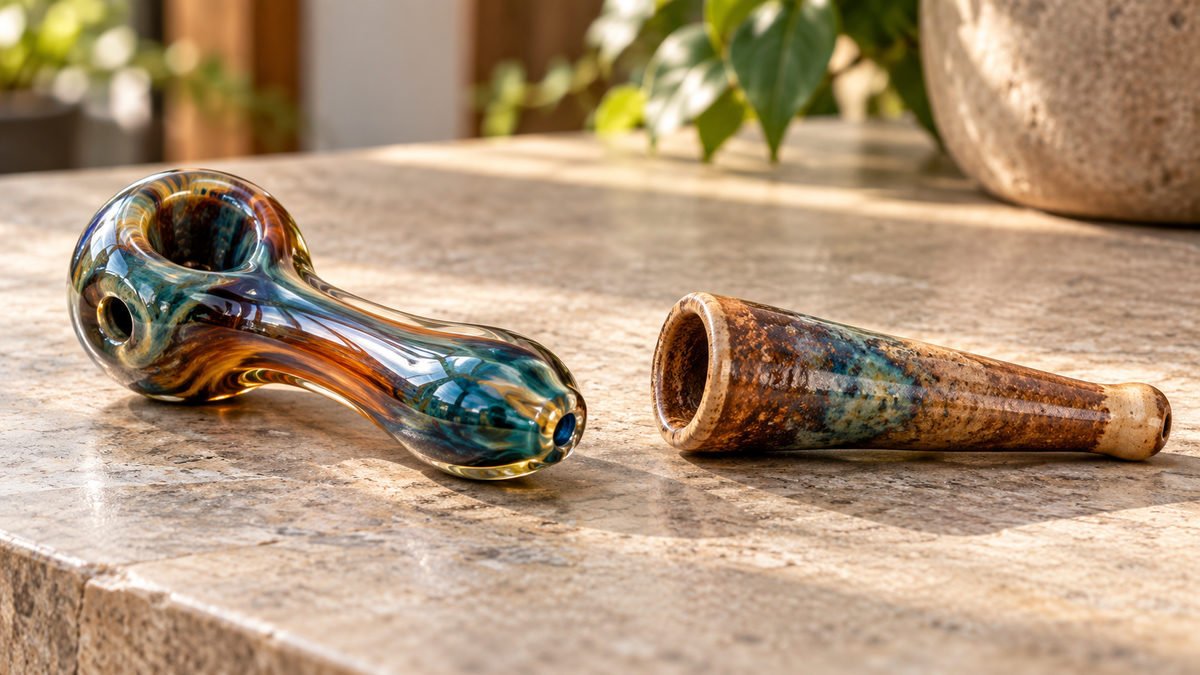
Choosing between a spoon pipe and a chillum can feel difficult when both offer compact ways to enjoy legal dry herbs. The spoon pipe vs chillum pipe choice affects airflow, comfort, bowl capacity, cleaning, durability, and portability. A poor match may create harsh draws, awkward handling, or extra maintenance. Therefore, this guide compares both designs side by side and explains which option suits beginners, experienced users, and glass pipe shoppers.
Spoon Pipe vs Chillum Pipe: Key Design Differences
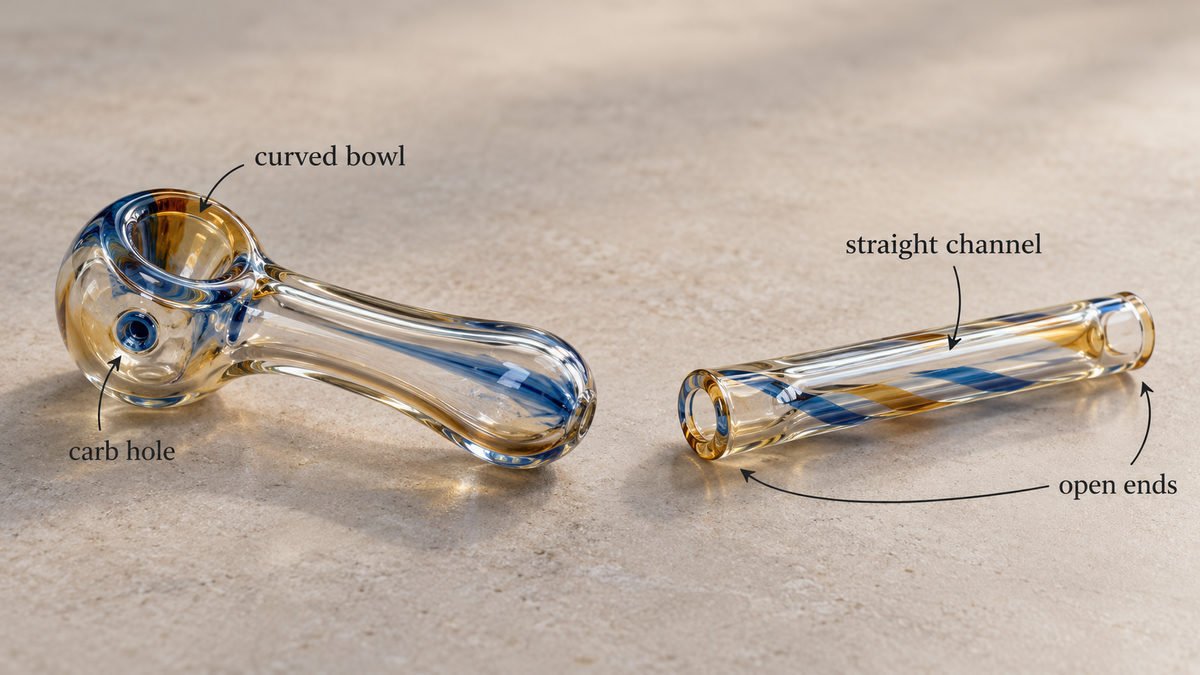
At first glance, both pipes look simple. However, their shapes create noticeably different handling and airflow experiences. Understanding the design helps you choose a piece that feels comfortable during regular use. Both are covered in our overview of types of smoking pipes.
How Spoon Pipes Work
A spoon pipe is a compact hand pipe with a bowl at one end and a mouthpiece at the other. Its body usually curves or angles slightly, creating the familiar spoon-like profile. Most models include a carburetor, often called a carb, for controlling airflow with a finger.
Moreover, the curved body gives your hand a natural place to rest. The bowl typically sits forward, while the mouthpiece points towards you. This arrangement can make the pipe easier to hold, pass, and control during a short solo session.
How Chillum Pipes Work
A chillum pipe uses a straight or slightly tapered tube. One end holds the bowl, while the opposite end acts as the mouthpiece. Some designs use a finger-covered opening or a removable filter to regulate airflow.
In contrast, a chillum usually has fewer contours and separate components. Its straight path directs smoke or vapour more directly towards the mouthpiece. As a result, the experience may feel immediate, though it can require more careful pacing.
When shopping, consider the bowl depth, glass thickness, airflow design, finish quality, and mouthpiece comfort. Also, think about your intended session length. A deep bowl may suit longer sessions, while a small chillum can work well for brief use.
- Spoon pipe: Curved body, forward bowl, mouthpiece, and commonly a carburetor.
- Chillum pipe: Straight body, bowl at one end, and a direct mouthpiece at the other.
- Main difference: Spoon pipes emphasise control and ergonomics, while chillums prioritise simplicity and compactness.
Airflow, Draw Smoothness, and Smoking Experience

Airflow shapes how a pipe feels from the first draw. A spoon pipe usually gives you more control because its carburetor lets you mix additional air into the draw. By covering or releasing the opening, you can adjust intensity and smoke volume.
Therefore, spoon pipes often feel more forgiving for new users. You can begin with gentle airflow and gradually adjust your technique. However, the carburetor only helps when you can reach it comfortably during use.
A chillum offers a straighter air path with fewer changes in direction. Some users prefer this direct draw because it feels immediate and uncomplicated. Meanwhile, others may find the draw more intense, especially when the bowl is packed tightly or heated too quickly.
Neither design automatically creates a smoother experience. Smoothness depends on bowl size, packing, heat control, draw speed, glass quality, and any built-in filtration. A poorly packed spoon pipe can feel harsh, while a well-made chillum can feel controlled with careful use.
Most basic hand pipes do not include water percolation. Consequently, they do not cool or filter a draw like a bubbler or water pipe. Shoppers who prioritise cooler, more filtered draws may prefer a compatible water-based design instead.
Heat transfer also matters. Thin glass can become hot around the bowl and mouthpiece, especially during repeated use. Thick borosilicate glass may manage heat better, although every piece still needs sensible handling and cooling time.
For instance, a user seeking quick, direct draws may favour a chillum. However, someone who wants to soften intensity through airflow changes may prefer a spoon pipe. Your draw speed and heat management often matter more than the shape alone.
Ease of Use, Beginner-Friendliness, and Safe Handling
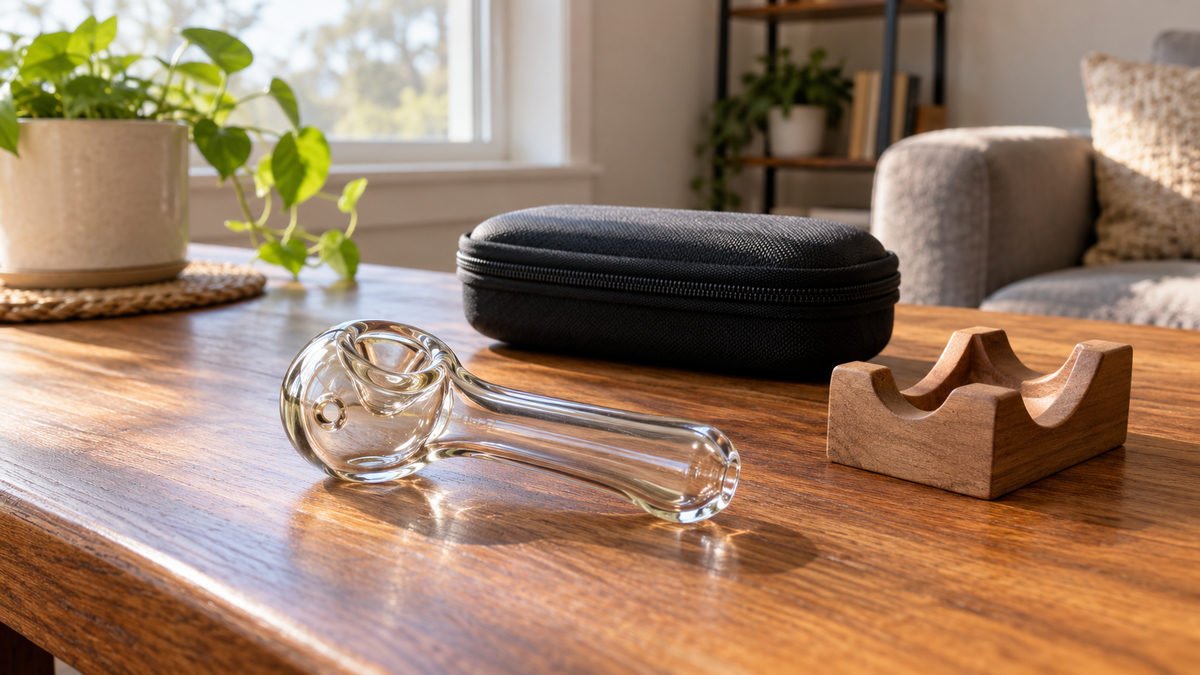
Both designs have a relatively simple learning curve. Nevertheless, spoon pipes often feel easier for beginners because the curved body supports the hand naturally. Their carburetor can also provide more immediate control over airflow and intensity. A refillable lighter is a good long-term companion for either pipe.
Chillums have fewer parts and a very straightforward structure. That simplicity appeals to users who dislike moving components or complicated features. However, the direct airflow may require slower draws and more careful heat management.
Using a Spoon Pipe
For legal dry herbs, place a small amount into the bowl according to the product instructions. Hold the pipe securely, use the carburetor as designed, and draw gently. Avoid overheating the bowl, as excessive heat can create discomfort and increase residue.
Additionally, start with a small amount rather than filling the bowl completely. This approach helps you learn the airflow and reduces the chance of an overly strong draw. It can also conserve material during practice.
Using a Chillum
Prepare the bowl according to the manufacturer’s instructions. Use the designated airflow opening or filter, then draw slowly while monitoring the heat. Because the air path is direct, careful pacing can make the experience more manageable.
Safe handling matters with either design. Use the pipe only where permitted, keep flames and heat sources away from skin and flammable materials, and let the glass cool before touching it.
- Use legal dry herbs only, and follow local rules.
- Begin with small amounts and gentle draws.
- Keep hot glass away from children, pets, fabrics, and loose paper.
- Never share mouthpieces without cleaning them first.
- Store used or heated pipes in a stable, heat-safe location.
Australian laws vary between federal, state, and territory jurisdictions. The Australian Government explains that drug laws can differ by location, while possession and use rules may carry serious penalties. Check the latest guidance from the Australian Government’s drug law information before buying, transporting, or using any smoking accessory.
Portability, Bowl Capacity, and Session Suitability
Both spoon pipes and chillums suit compact storage. However, a straight chillum may fit more easily into a narrow protective case or small storage pouch. A spoon pipe can take slightly more room because of its curved body and wider bowl area. Want water filtration? A bubbler pipe adds it in a compact form.
Discretion depends on more than shape. The pipe’s dimensions, thickness, accessories, and case design all influence portability. Therefore, check the listed measurements before assuming one style will travel better.
Where legally permitted, store a pipe in a padded case during transport. Odour-conscious storage can also help keep the surrounding area fresh. Meanwhile, always check the laws at your destination before carrying smoking accessories across borders or into restricted locations.
Bowl capacity varies widely across both categories. Spoon pipes often feature medium-sized bowls, although compact and deep options are available. Chillums range from tiny one-hitters to larger straight pipes designed for more material.
A smaller bowl supports short sessions and reduces the amount of material exposed to heat. It may also improve efficiency when you want a quick, solo use. In contrast, a deeper bowl can reduce reloads during a longer session.
However, larger bowls can create more heat buildup and require better pacing. A user who prefers fewer interruptions may enjoy a deeper spoon bowl. Someone seeking a compact, brief option may prefer a one-hitter-style chillum.
- Short solo sessions: Choose a small chillum or compact spoon pipe.
- Fewer reloads: Consider a deeper spoon bowl.
- Small storage spaces: Look for a slim chillum and fitted case.
- Regular transport: Prioritise protective padding and durable construction.
Cleaning, Materials, Durability, and Long-Term Value
Both pipe styles are relatively easy to clean because they are small. However, spoon pipes may collect residue around the carburetor, bowl, and curved sections. Straight chillums usually have fewer contours, which can make access simpler. Follow our guide on how to clean a glass pipe.
Allow the pipe to cool completely before cleaning. Remove loose residue carefully, then use a suitable pipe-cleaning solution according to its instructions. Rinse thoroughly and let the piece dry completely before using it again.
Additionally, clean according to your usage frequency and airflow changes. Waiting until the passage becomes heavily blocked can make cleaning harder. Regular maintenance also helps preserve flavour and keeps the draw more consistent.
Common Pipe Materials
Borosilicate glass remains popular because it handles heat better than ordinary glass. It can also provide a clean flavour and lets you inspect the pipe’s condition. Nevertheless, no glass pipe is unbreakable, even when it has thick walls.
Ceramic pipes can offer a solid feel and attractive finishes. They may retain heat differently from glass, so careful handling remains important. Metal pipes are often lightweight and durable, although some users prefer glass for a cleaner flavour.
Stone pipes can feel substantial and distinctive. However, they may weigh more and require attention to surface finish. Wood pipes offer a traditional appearance, though they need different maintenance and may absorb flavours over time.
- Borosilicate glass: Clear flavour, good heat resistance, and easy inspection.
- Ceramic: Solid feel, varied finishes, and different heat retention.
- Metal: Lightweight, practical, and generally resistant to breakage.
- Stone: Heavy, distinctive, and often highly durable.
- Wood: Traditional appearance, with more specialised maintenance.
Durability depends on glass thickness, mouthpiece design, finish quality, and construction. Joint-free pieces can have fewer connection points to damage. However, decorative elements, thin edges, and extended mouthpieces may create vulnerable areas.
A spoon pipe’s curved sections can protect the bowl when held correctly, but they may still chip if dropped. A chillum’s straight shape has fewer contours, yet its open ends can remain vulnerable. A padded case provides useful protection for either design.
Pricing varies widely. Basic pieces usually cost less, while handmade work, premium glass, thicker walls, artistic details, and included cases can raise the price. Therefore, compare construction and comfort rather than choosing by appearance alone.
For a practical overview of available pipe styles and accessories, browse Sweet Puff Australia’s product categories and compare materials, shapes, and intended uses.
Spoon Pipe and Chillum Advantages, Drawbacks, and Buying Guide
The best choice depends on how you value comfort, control, portability, and maintenance. The comparison below highlights the main differences between a spoon pipe and a chillum pipe. Choosing a material? See glass pipes vs metal pipes.
| Feature | Spoon Pipe | Chillum Pipe |
|---|---|---|
| Design | Curved or angled body with a forward bowl | Straight or slightly tapered tube |
| Airflow | Usually adjustable through a carburetor | Direct airflow with a finger opening or filter |
| Draw control | Generally easier to adjust | Depends more on pacing and packing |
| Bowl capacity | Often medium-sized, with varied options | Ranges from one-hitters to larger bowls |
| Ease of use | Approachable hand position and control | Simple structure with fewer parts |
| Cleaning | Easy, although residue may collect around curves | Often straightforward because of the straight passage |
| Portability | Compact, but sometimes wider | Very compact and easy to store |
| Durability | Depends on curves, thickness, and decorative details | Depends on wall thickness and exposed ends |
| Price | Ranges from basic to highly detailed | Often affordable, with premium options available |
| Ideal users | Beginners, comfort-focused users, and longer solo sessions | Minimalists, travellers, and quick solo sessions |
Spoon Pipe Advantages and Drawbacks
Spoon pipes offer an ergonomic shape, controllable airflow, and comfortable mouthpiece options. They also come in a broad range of bowl sizes and designs. Therefore, they suit beginners who want a forgiving first hand pipe.
However, curved areas can collect residue over time. Some spoon pipes also take more room than a straight chillum. Furthermore, highly decorative models may include fragile details that need extra care.
Chillum Pipe Advantages and Drawbacks
Chillums provide simple straight construction, direct draws, and minimal parts. They often store easily and can be quick to clean. As a result, they appeal to shoppers who prioritise compactness and uncomplicated maintenance.
On the other hand, chillums may offer less airflow control. Their direct draw can feel more intense, especially when users draw too quickly. They also provide fewer ergonomic holding options, so careful pacing matters.
What to Check Before Buying
- Choose a bowl depth that matches your usual session length.
- Check whether the carburetor sits within easy reach.
- Look for thick, even glass and smooth edges.
- Inspect the mouthpiece diameter for comfortable handling.
- Confirm that the pipe sits securely when placed down.
- Avoid fragile decorative elements if you travel often.
- Consider a protective case for storage and transport.
- Review local age, possession, retail, transport, and usage rules.
Choose a spoon pipe if you want control, comfort, moderate bowl capacity, and an approachable design. Select a chillum if you prefer minimalism, compact storage, direct airflow, and quick solo sessions.
For more options, explore the Sweet Puff Australia shop and review the available designs before deciding. You can also browse product brands when workmanship, finish, and construction standards matter to you.
Conclusion
Spoon pipes generally offer greater ergonomic comfort and airflow control. Chillums focus on a straight, compact design with a direct draw and minimal maintenance. Therefore, spoon pipes may suit beginners, longer solo sessions, and users who value adjustable airflow.
Meanwhile, chillums can appeal to shoppers seeking portability, simplicity, and fast cleaning. The right choice depends on your preferred balance of intensity, bowl capacity, durability, comfort, and discretion.
Compare well-made glass spoon pipes and chillums before buying. Check local laws, then choose a design with comfortable handling, suitable bowl capacity, reliable airflow, and durable construction.
Sweet Puff Australia brings together glass designs, smoking accessories, and helpful product categories for informed browsing. Visit the Sweet Puff Australia website to explore available collections and product information.





