A single bump, loose accessory, or hidden drop can turn valuable glass into sharp fragments. If you are wondering how to pack glass bongs for moving, start with preparation rather than bubble wrap. Glass bongs have narrow joints, heavy bases, delicate percolators, and awkward shapes. Poor packing can also cause leaks, odours, stains, and compliance problems. This step-by-step guide explains how to clean, dry, disassemble, wrap, box, transport, and unpack a glass bong safely.
1. How to Pack Glass Bongs for Moving: Prepare First
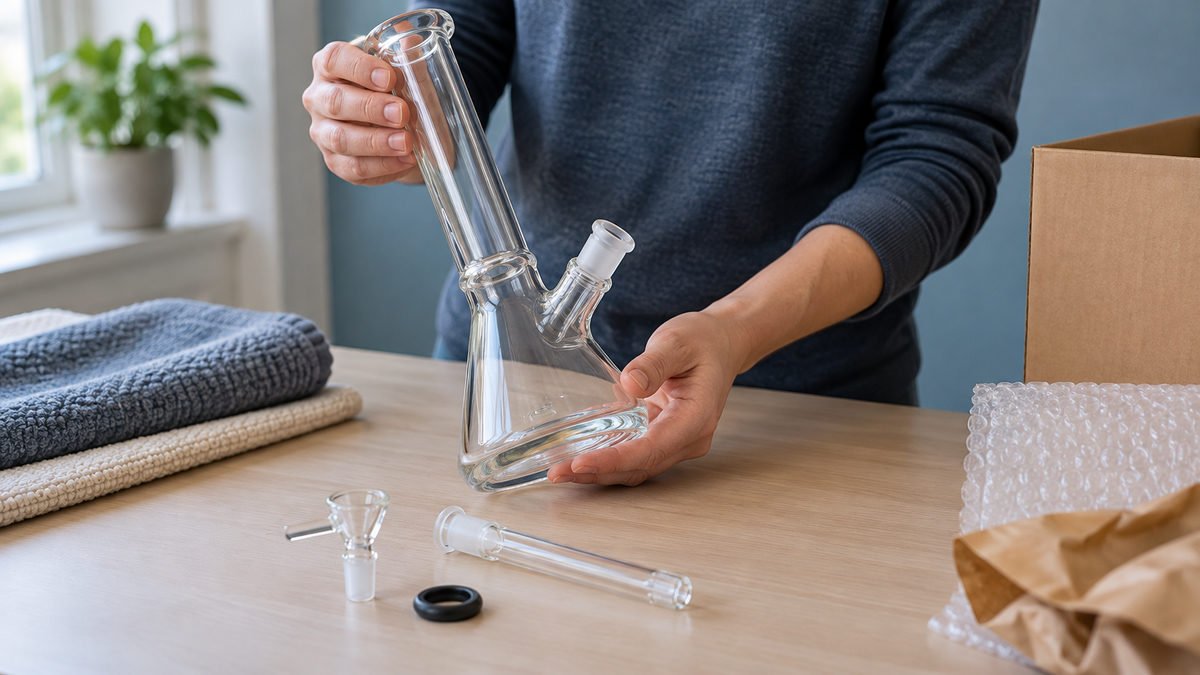
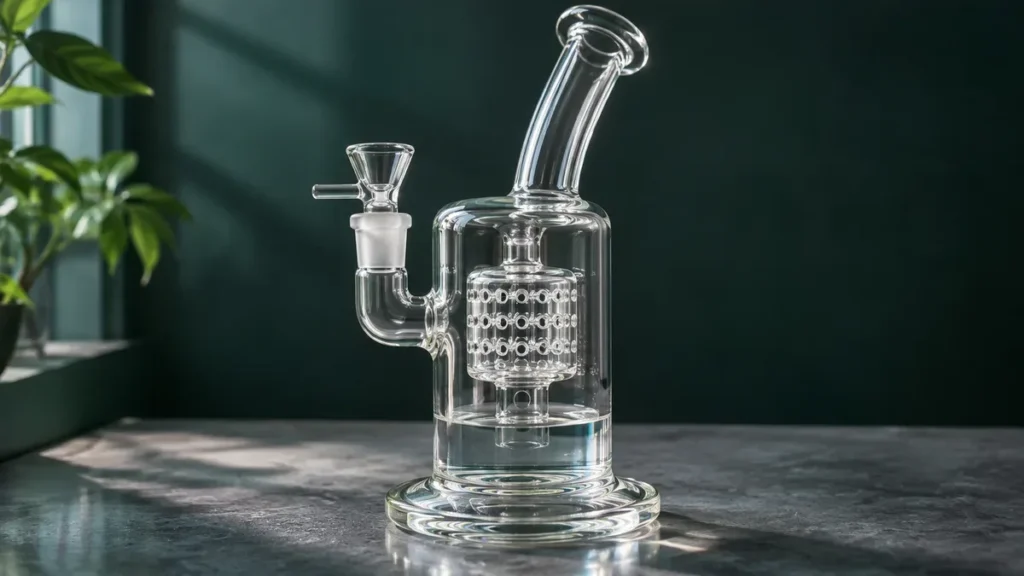
Glass bongs need specialised packing because their weight rarely sits evenly. A thick base can strain a narrow neck, while protruding joints remain exposed to knocks. Additionally, percolators and decorative sections may break even when the main chamber looks well protected. First, clean a glass bong thoroughly and dry it fully.
Empty and Clean the Bong
First, confirm that the bong contains no water, plant material, ash, or other residue. Leftover water can leak into the box, soften packing paper, create odours, and leave stains. Therefore, always prepare the bong as an empty piece of glassware before wrapping it.
Should you clean a bong before packing? In most cases, yes, where cleaning remains legal and practical. Rinse away residue thoroughly, then drain every chamber. Clean glass also makes chips, cracks, clouding, and weak joints easier to inspect before the move.
Remove the water carefully and drain hidden chambers by tilting the bong slowly. Then rinse suitable parts with clean water and shake them gently. Avoid aggressive movements around percolators, narrow necks, and fragile attachments.
Next, place the separate pieces on a clean, dry towel. Allow everything to air-dry completely before packing. Do not seal damp glass inside plastic, because trapped moisture can encourage odours and condensation during transport.
Inspect the Glass and Check the Rules
Before wrapping, inspect the base, neck, joints, mouthpiece, percolators, and removable attachments. Look for chips, hairline cracks, loose fittings, scratches, or signs of previous impact. Notably, a small crack can spread when padding presses against the damaged area.
Also check the rules that apply to your move. Australian cannabis and drug-paraphernalia laws vary between states and territories. For example, Queensland guidance identifies bongs and pipes as possible drug paraphernalia in certain circumstances.
Review relevant Australian drug law information before transport. Additionally, check local council rules, lease conditions, building policies, removalist terms, and destination restrictions.
2. Choose the Best Packing Materials for Glass Bongs
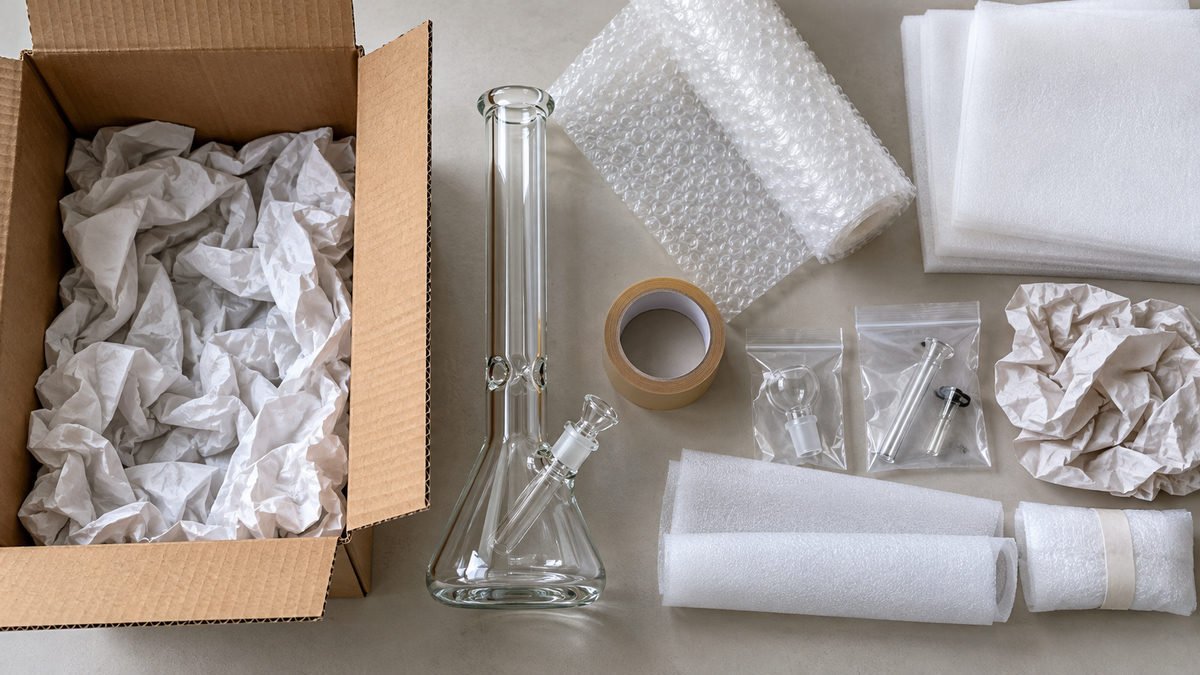
The right materials create a protective buffer around the glass. They also stop small accessories from colliding with the main chamber. Prepare everything before disassembly, so the exposed bong never sits unattended on a hard surface. Hard cases from our bong storage accessories guide make packing easier.
Glass Bong Packing Materials Checklist
- Rigid double-wall moving box
- Bubble wrap with medium or large bubbles
- Soft foam sheets or foam sleeves
- Clean packing paper
- Protective sleeves for joints and openings
- Zip bags for small accessories
- Strong packing tape
- Clear labels and a permanent marker
- Small padded containers or inner boxes
- Optional hard-sided storage case
Bubble wrap and foam provide impact cushioning around the bong. Foam works especially well against smooth surfaces, while bubble wrap adds flexible protection around irregular shapes. In contrast, packing paper mainly fills gaps and reduces surface scratches.
Use several layers of cushioning around the main chamber. However, avoid wrapping so tightly that pressure pushes against joints, percolators, or thin glass sections. The padding should protect the bong without bending or compressing its components.
Loose clothing alone does not provide reliable protection. Clothes compress quickly, leave gaps, and may allow glass parts to touch each other. Similarly, thin plastic bags can contain moisture or residue, but they cannot absorb impact.
Select the Right Box or Case
Choose a strong box that sits slightly larger than the fully wrapped bong. The box should leave room for cushioning on every side, but not enough space for the package to move freely. Additionally, avoid boxes with crushed corners, weak seams, or excessive previous wear.
A storage container or hard-sided case may suit valuable or unusually shaped pieces. This option adds crush resistance during long-distance transport. It also works well when the bong must travel with several fragile accessories.
Use separate padded pouches or small containers for bowls, downstems, ash catchers, clips, and decorative pieces. Therefore, each item receives protection instead of sharing one loose compartment.
Finally, avoid materials that create pressure points, shed fibres, trap moisture, or let components collide. Clean foam, fresh packing paper, and intact bubble wrap offer better control than improvised household materials.
3. Disassemble and Wrap the Bong and Its Removable Parts
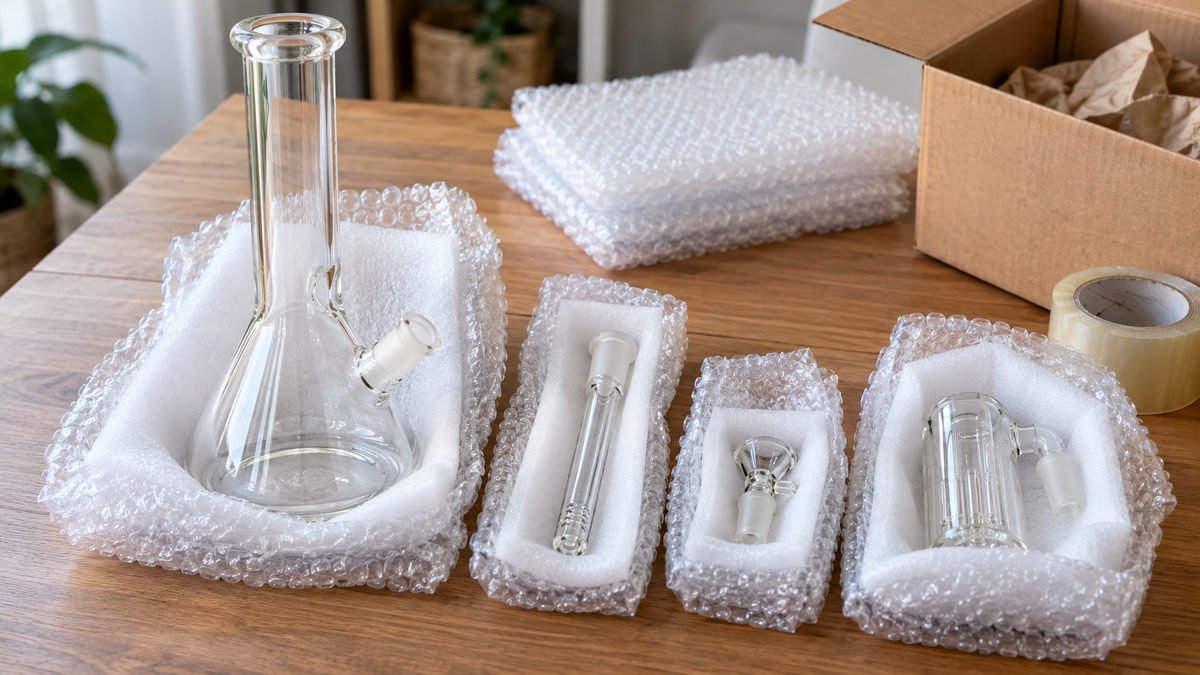
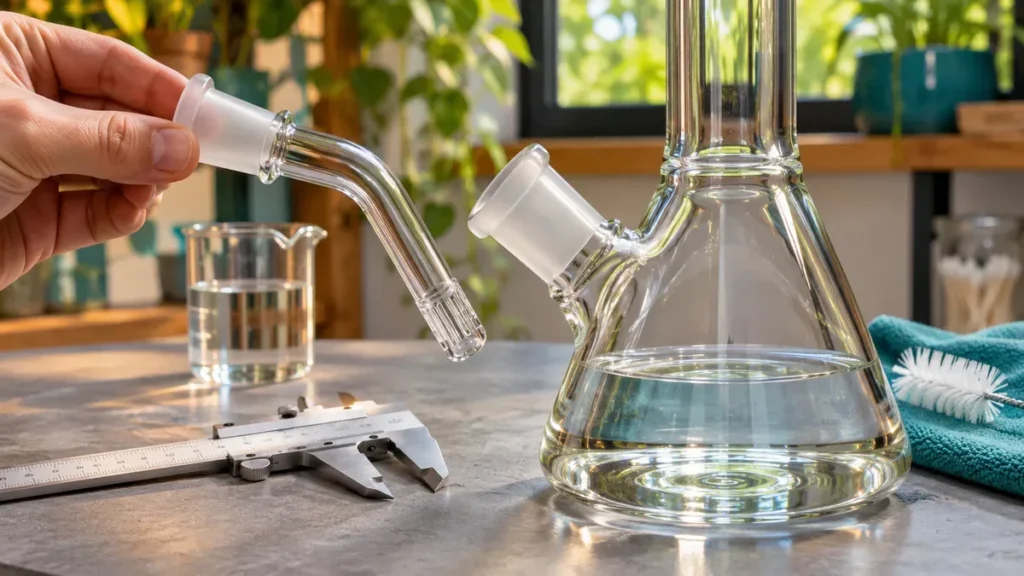
Disassembly reduces stress on joints and makes the package easier to cushion. Remove every detachable component that separates safely. Never force a stuck piece, because twisting can damage both the attachment and the main chamber. Know the parts of a glass water pipe before you take it apart.
Separate Every Removable Component
Remove the bowl, downstem, ash catcher, mouthpiece attachment, clips, glass feet, and decorative pieces. Keep similar accessories together, but do not let them touch without padding. Small glass parts can cause major damage when they strike the main chamber during transit.
Place each accessory on a clean towel as you remove it. Then check for moisture, residue, chips, and loose fragments. Additionally, label small bags clearly, so reassembly does not become a guessing game after the move.
Wrap the Main Glass Chamber
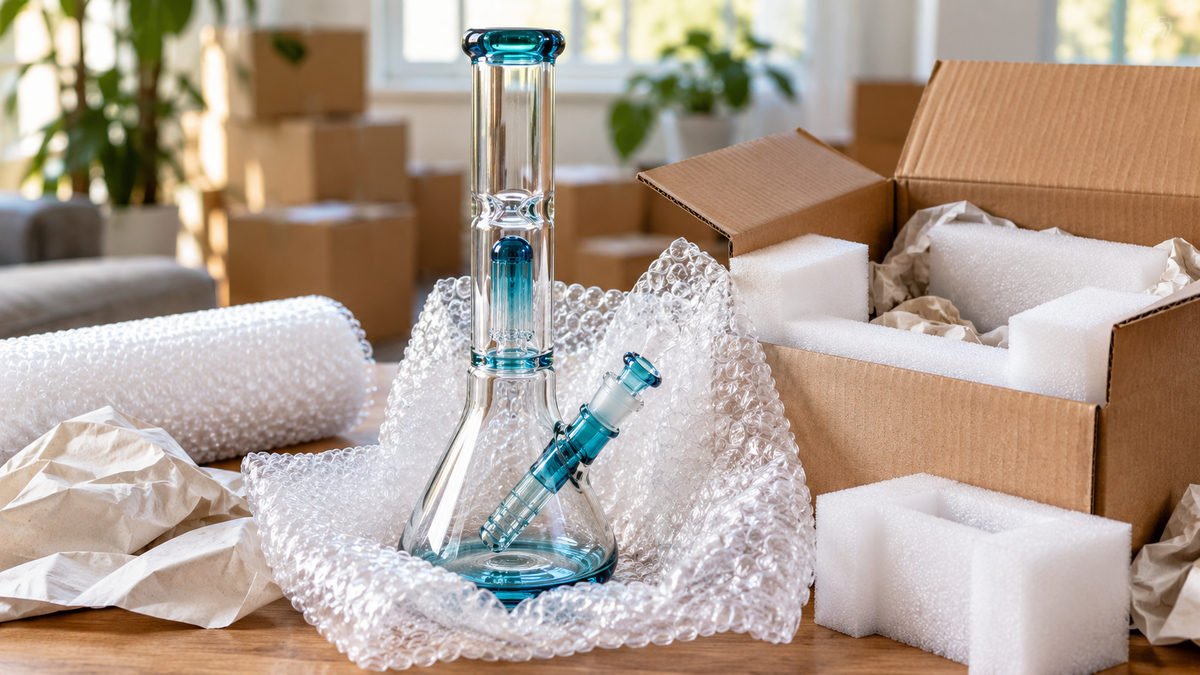
Begin with a soft foam sheet around the entire main chamber. Add bubble wrap over the foam, using several layers around the base, neck, mouthpiece, joints, and protruding sections.
Protect the heavy base especially well, because it can transfer force into the rest of the bong. Meanwhile, add extra cushioning around narrow necks and delicate percolators. Do not force foam or paper inside openings, tubes, or internal chambers.
Use protective sleeves around joints and openings where suitable. These sleeves should sit gently in place rather than compressing the glass. If a joint remains exposed, add a loose foam collar around it before applying the outer wrap.
Secure the wrapping with small pieces of tape applied to the outer material. Avoid sticking tape directly to glass, because residue can be difficult to remove. Furthermore, do not create hard tape ridges over fragile areas.
Wrap Accessories Individually
Wrap the downstem, bowl, ash catcher, and other removable glass parts separately. Use foam first, then bubble wrap, and place each item in its own padded bag or compartment.
For narrow pieces, add paper around the outside without pushing anything into the tube. Then place dividers between accessories inside a small inner box. As a result, the pieces cannot strike each other when the package moves.
Keep all accessories separate from the main bong. Do not place them inside the chamber unless the design and packaging specifically prevent movement. Loose components can shift into the bong and create concentrated impact points.
Complete one final inspection before boxing everything. Confirm that no water, condensation, residue, paper scraps, or loose debris remains. A dry, clean package offers better protection and reduces unpleasant surprises during unpacking.
4. Pack the Wrapped Bong in a Rigid Moving Box
Once every component has its own protection, prepare the box before placing anything inside. A cushioned base protects the bong from drops and vibration. It also prevents the heavy base from contacting cardboard directly.
Build a Cushioned Base
Line the bottom with crumpled packing paper, foam, or a fitted insert. Create an even layer rather than a single thick lump. Therefore, the wrapped bong rests on a stable cushion without leaning into one corner.
Position the bong upright when its shape and wrapping allow it. Upright packing can reduce stress on the neck and mouthpiece. However, use the safest orientation for the individual design if upright placement creates pressure on a fragile section.
Place the wrapped main chamber in the centre of the box. Add cushioning around the base, sides, top, joints, neck, and percolators. Leave no hard contact point between the glass and the cardboard walls.
Immobilise the Contents
Pack accessories inside separate padded sections or smaller inner boxes. Do not place bowls, downstems, or ash catchers loose beside the main chamber. Each piece should remain isolated throughout loading, transport, and unloading.
Fill empty spaces gradually with firm but compressible padding. Add paper or foam around one side, then check the position before filling another side. Continue until the bong remains centred without pressing tightly against the box.
Avoid overpacking the box or forcing the lid down. Excessive pressure can stress glass joints, narrow necks, and internal percolators. The top padding should touch the wrapped bong gently, without flattening the package.
Perform a gentle shake test before sealing the box. Carefully move the inner package a few centimetres and listen for rattling. If you feel movement or glass contact, open the package and add padding where needed.
Seal all seams and corners with strong packing tape. For especially fragile or valuable pieces, place the sealed inner box inside a second outer box. Add a fresh cushioning layer between the two boxes for improved crush resistance.
Use discreet labels such as “Fragile Glassware” or “This Side Up” where helpful. However, labels cannot replace internal protection. A box marked fragile still needs proper cushioning, immobilisation, and careful loading.
5. Transport a Packed Bong Safely During a Move
Transport conditions matter just as much as packing. A well-wrapped bong can still break if heavy furniture lands on the box. Plan where the package will sit before loading the vehicle. Packing lighters too? Read our lighter safety and storage tips.
Use a Personal Vehicle Carefully
Place the box on a flat surface, such as a stable boot floor. Secure it against sliding with soft luggage or a strap that does not crush the box. Keep heavy objects, tools, and loose equipment away from the package.
Keep the box upright whenever practical. Additionally, avoid placing it near doors, wheel arches, or areas that receive repeated knocks. Do not leave fragile glass inside a hot vehicle for extended periods.
Load a Moving Truck Safely
In a moving truck, position the box where other cargo cannot crush it. Keep it away from furniture edges, stacked appliances, and shifting boxes. Never place heavy cartons above the bong.
Use blankets, dividers, or cargo straps to prevent sliding. However, do not tighten straps directly over a fragile box. Secure the surrounding cargo instead, while leaving the glass package free from compression.
Extreme heat, freezing conditions, rain, and condensation can affect glass and packing materials. Sudden temperature changes may also create moisture inside sealed packaging. Therefore, keep the box dry and allow it to adjust gradually before opening.
For long-distance moves, inspect the box during safe stops. Look for crushed corners, water exposure, or signs of shifting. Avoid opening the package in public, restricted, or unauthorised locations.
Maintain Privacy and Check Restrictions
Use neutral outer packaging without unnecessary descriptions. Keep the item away from children, visitors, pets, and anyone who lacks permission to handle it. Privacy also reduces the chance of accidental damage during loading.
Can you pack a bong in a suitcase or storage container? A rigid, padded case is preferable to a soft suitcase with loose contents. If you use a suitcase, place the bong inside a hard-sided inner container first.
Before crossing state or territory borders, verify transport requirements and destination rules. Also check lease conditions, building policies, removalist restrictions, and applicable drug laws. The Australian Government explains that drug laws can vary between federal, state, and territory systems.
6. Common Packing Mistakes and Safe Unpacking
Most breakage occurs because small risks combine during transport. One loose accessory can strike a joint, while a damp package can weaken its own protection. Fortunately, a final checklist can catch many mistakes before the box leaves your home. After unpacking, here is how to store glass bongs safely.
Common Mistakes to Avoid
- Leaving the bong assembled during transport
- Packing glass while it remains wet
- Using loose clothing as the only cushioning
- Allowing bowls, downstems, or ash catchers to collide
- Choosing an oversized or damaged box
- Leaving empty space around the wrapped glass
- Skipping the gentle shake test
- Stacking heavy items above the package
- Relying on fragile labels without internal padding
- Using excessive tape while ignoring cushioning
Heavy items above the box can crush the neck or base. Likewise, fragile labels do not control how every person handles a package. Excess tape may strengthen seams, but it cannot absorb impact or stop movement inside.
Unpack the Bong Carefully
Open the box on a clear, stable surface with enough room for every component. Remove the top padding gradually, then lift out each inner container separately. Avoid using a knife near the wrapped glass or small accessories.
Inspect every piece under bright lighting. Look for chips, cracks, clouding, loose joints, damaged percolators, scuff marks, and signs of impact. Check concealed areas around the base, joints, and openings before reassembling anything.
Do not use a piece with a crack or compromised joint. Even a small defect can worsen under heat, pressure, or handling. If you discover concealed damage, photograph it and keep the pieces safely separated.
Most importantly, keep the accessories organised during unpacking. Match each labelled bag with its corresponding component. Then allow any packaging that feels damp to dry before storing it with the glass.
Save This Moving Checklist
- Clean residue away where legally and practically appropriate.
- Empty every chamber and rinse suitable parts.
- Allow all glass to air-dry completely.
- Inspect for chips, cracks, and loose attachments.
- Disassemble every removable component safely.
- Wrap the main chamber and each accessory separately.
- Use foam or bubble wrap for cushioning.
- Use packing paper to fill gaps and prevent scratches.
- Place the bong in a rigid, well-sized box.
- Keep accessories in padded inner sections.
- Fill empty spaces without compressing the glass.
- Perform a gentle shake test.
- Seal seams and corners with strong tape.
- Keep heavy items away from the box.
- Verify local laws, lease rules, and transport requirements.
Conclusion
A glass bong is safest when it is empty, clean, completely dry, disassembled, and individually wrapped. Generous cushioning protects joints, percolators, bases, necks, and removable accessories. Immobilising the package inside a rigid box then reduces damage during loading, transit, and unpacking.
Use the checklist before sealing your box, and inspect every piece carefully after arrival. Additionally, verify local laws, lease rules, building policies, and transport requirements before carrying cannabis-related glassware.
Sweet Puff Australia brings together water pipes, glass designs, and related accessories for adults exploring different glassware options. Browse the available collections and product information before planning your next purchase or storage solution.