A water pipe replacement can look simple until the wrong material, shallow trench, or missing approval causes leaks and costly rework. This Australian water pipe laws overview explains the main rules affecting plumbing work across Australia. Requirements can involve national codes, Australian Standards, state regulators, councils, builders, plumbers, and local water authorities. Therefore, always check the property location, pipe purpose, and connection type before work begins.
Australian Water Pipe Laws Overview: The Regulatory Framework
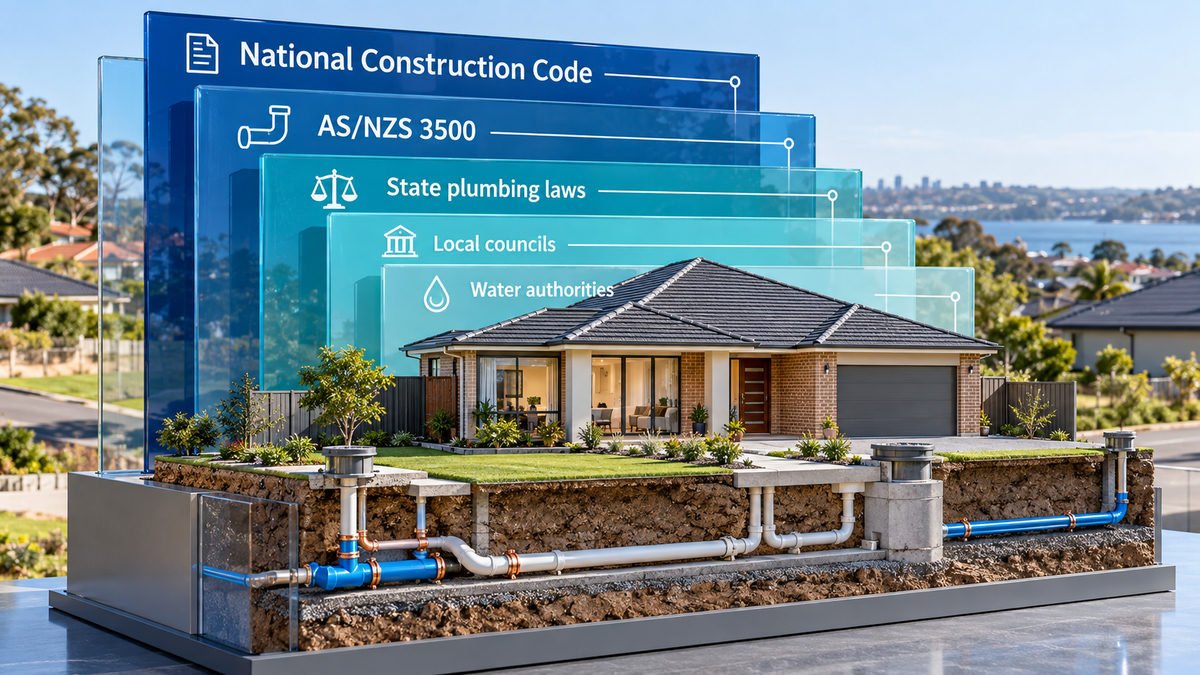
Australia does not use one simple national law for every water pipe project. Instead, several legal and technical layers work together. The National Construction Code, the Plumbing Code of Australia, Australian Standards, state legislation, council rules, and water authority specifications may all apply. For material and cost basics, see our water pipes Australia guide.
National codes and technical standards
The National Construction Code sets broad performance requirements for building work. Volume Three contains the Plumbing Code of Australia, which covers plumbing systems, water services, sanitation, safety, health protection, and installation outcomes.
However, the code does not remove the need to follow local laws. State and territory regulators enforce plumbing licensing, inspections, notices, certificates, and penalties. Additionally, water authorities can impose connection rules for mains, meters, service pipes, and backflow protection.
AS/NZS 3500 provides the central technical guidance for plumbing and drainage work. It addresses water supply design, pipe sizing, installation, testing, support, protection, maintenance, and commissioning. You can review national building information through the Australian Building Codes Board.
Local approvals and enforcement
Local requirements may involve a council, building surveyor, plumbing regulator, or water corporation. For example, a renovation may need a plumbing notice, inspection, service connection approval, or backflow registration.
Therefore, Australia has a common national framework, but enforcement remains largely state-based and local. A rule applying in Queensland may not apply in Victoria or New South Wales. Even neighbouring councils can use different forms, inspection processes, or connection specifications.
Do not rely on generic online advice when planning plumbing work. The correct answer depends on the property location, building class, pipe material, water type, connection point, and scope of work.
How AS/NZS 3500, Pipe Materials, and Water Types Affect Compliance

Choosing a pipe involves more than selecting copper or plastic. The complete system must suit the water type, operating pressure, temperature, location, fittings, and installation method. Consequently, a product can look suitable but still fail compliance requirements. Compare options in our pipe materials and durability comparison.
How AS/NZS 3500 guides installation
AS/NZS 3500 influences pipe layout, sizing, pressure, flow, joints, valves, supports, testing, and commissioning. It also helps determine how installers protect pipes from movement, impact, corrosion, heat, sunlight, and other site conditions.
For instance, an undersized pipe may reduce flow at several fixtures. Excessive pressure can damage appliances, create noise, or shorten fitting life. Therefore, plumbers consider pressure loss, simultaneous demand, pipe length, elevation changes, and available supply pressure.
Support spacing also matters. Unsupported pipe can sag, move, stress joints, or create water hammer. Meanwhile, hot water pipes need suitable insulation and allowances for thermal movement.
Potable and non-potable water systems
Drinking water systems require careful protection from contamination. Recycled water, rainwater, irrigation water, fire services, and process water must remain clearly separated from potable supplies.
Additionally, non-potable pipework may need colour coding, labels, warning signs, dedicated fittings, or physical separation. A cross-connection can allow contaminated water to enter a drinking water system.
Common non-potable risks include garden irrigation, swimming pools, chemical dosing, livestock areas, commercial cleaning, and recycled water installations. Each situation may require different protection and approval steps.
Approved materials and product certification
Common plumbing materials include copper, polyethylene, cross-linked polyethylene, PVC, and other certified systems. However, the material name alone does not prove compliance.
The product must suit its intended Australian plumbing application. Check certification, pressure ratings, temperature limits, chemical compatibility, jointing methods, and manufacturer instructions before installation.
For example, a pipe suitable for cold potable water may not suit hot water, buried conditions, fire services, or chemical exposure. Similarly, fittings from different systems may not connect safely without an approved transition fitting.
Never use non-rated pipe, unsuitable adhesives, or incompatible fittings simply because they appear cheaper. A small saving can lead to leaks behind walls, under slabs, or beneath landscaped areas.
Protection, efficiency, and special services
Installers must consider corrosion, impact, sunlight, heat, chemicals, ground movement, and freezing conditions where relevant. Buried pipes need suitable bedding and protection from sharp rocks or heavy loads.
Water efficiency rules can also affect fixtures, pressure control, flow rates, rainwater use, and water-saving systems. State-based requirements may apply to new homes, renovations, commercial buildings, or replacement fixtures.
Fire services and backflow arrangements may require specialist design. They can involve extra standards, authority approvals, registered devices, and testing beyond ordinary residential water supply work.
- Confirm the pipe is certified for its intended use.
- Check pressure, temperature, flow, and chemical limits.
- Use compatible fittings and approved joining methods.
- Protect exposed and buried pipe from foreseeable damage.
- Test the system before walls, floors, or trenches conceal it.
Licensed Plumbers, Permits, Inspections, and Water Authority Approvals
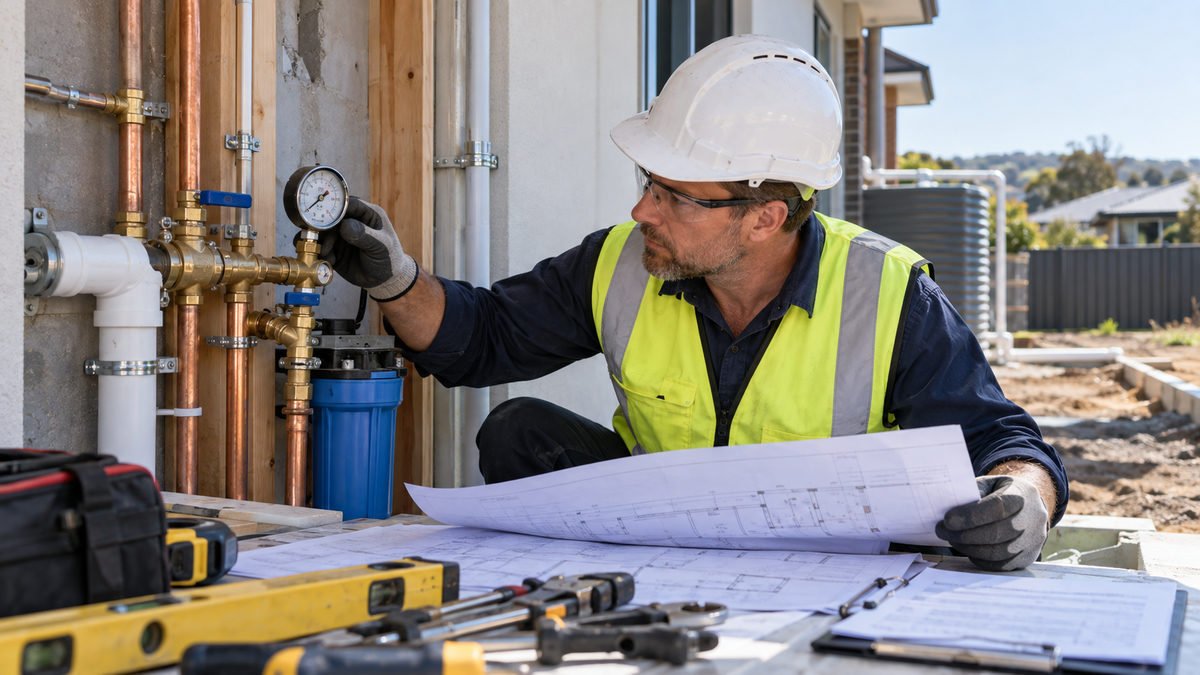
Water pipe installation, alteration, replacement, and connection commonly require a licensed plumber. This applies especially when work affects fixed plumbing, drinking water, sewer systems, or a public water supply.
When licensing and approvals matter
State and territory rules differ, but regulated plumbing work often includes installing, extending, repairing, removing, or connecting water pipes. In New South Wales, water plumbing includes work connected directly or indirectly with a water main.
For example, the NSW Government plumbing licensing guidance explains that plumbing work requires the correct licence or certificate. Other states use different regulators and licence structures.
Some projects may require a plumbing permit, building approval, council notification, water authority consent, inspection, or pre-approval. Thresholds differ by location and work type. Therefore, confirm the process before removing old pipework or opening a trench.
Not every minor repair follows the same process. Replacing tapware may receive different treatment from relocating fixtures, replacing concealed pipework, installing recycled water, or connecting to a water main.
Certificates and project records
Ask the plumber which records the project requires. Useful documents include a compliance certificate, inspection report, test results, invoice, plans, product information, photographs, permits, and authority approvals.
A certificate can identify the responsible plumber and confirm that the work meets applicable requirements. In some jurisdictions, the plumber must provide a certificate to the owner and lodge it with the relevant authority.
Keep these records with the property documents. They can support insurance claims, future repairs, rental compliance, property sales, refinancing, and dispute resolution.
Responsibilities and water connections
Homeowners must provide accurate information, arrange access, and retain documents. Landlords and property managers must respond to defects and meet rental obligations. Builders must coordinate licensed trades and approvals.
Plumbers must hold the correct licence, use suitable products, complete required testing, and provide mandatory certificates. Owners should verify licence details through the relevant state or territory authority.
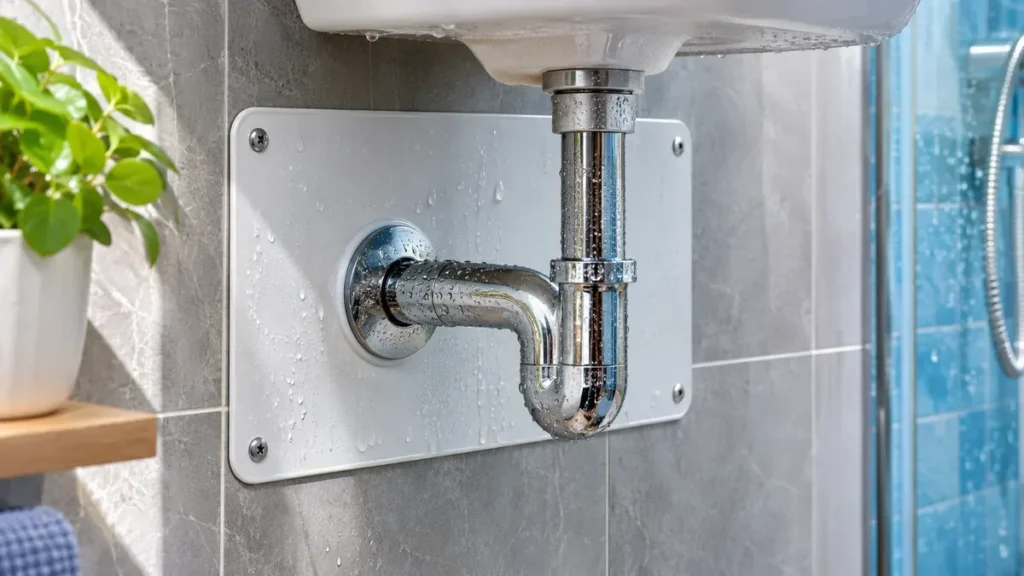
Water connection rules may cover service pipes, meter locations, boundary responsibilities, approved fittings, isolation valves, and the point where private pipework meets the water main.
Do not hire an unlicensed handyman for concealed pipework, renovations, or water main connections. Defective work can remain hidden until it causes water damage or fails an inspection.
Underground Water Pipes, Burial Depth, Clearances, and Backflow Prevention
Underground water pipe work creates risks that may disappear from view after backfilling. Incorrect depth, poor bedding, or missing separation can cause leaks, contamination, crushing, and expensive excavation.
Trenching and burial requirements
Before trenching, confirm the location of existing electricity, gas, telecommunications, sewer, and stormwater services. Unmarked services can create serious safety hazards and costly delays.
Pipe trenches need suitable bedding and protection from sharp stones. The installer may also need warning tape, location markers, protective sleeves, or additional support near driveways and vehicle areas.
There is no single burial depth that applies to every Australian property. Required cover depends on pipe type, location, ground conditions, traffic loads, landscaping, and local authority rules.
Therefore, confirm current dimensions in the applicable standards and authority specifications. Inspect the pipe before closing the trench, because correcting shallow or damaged pipe later may require complete excavation.
Separation from other services
Water pipes may need separation from sewer lines, stormwater, electrical conduits, gas, telecommunications, contaminated soil, and other services. The required clearance depends on the installation and local rules.
Poor separation can increase contamination risk and make future repairs difficult. Additionally, pipes crossing driveways or building areas may need extra protection from loading and movement.
Backflow prevention
Backflow prevention stops contaminated or non-potable water entering the public drinking water supply. A device may be required where a connection creates a medium or high hazard.
Common examples include irrigation systems, commercial premises, fire services, recycled water, swimming pools, chemical systems, and livestock areas. The local water authority may specify the device type, location, testing, and registration process.
Testable devices usually require commissioning tests, periodic testing, maintenance, and replacement when defective. For example, Water Corporation guidance requires certain boundary devices to remain accessible for testing and maintenance.
Backflow devices must not be buried or hidden where technicians cannot inspect them. They can also reduce downstream pressure and flow, so the system may need careful design.
Property Responsibilities, Lead Pipes, and Common Compliance Problems
Responsibility often changes at the boundary between public and private infrastructure. A water authority may control the main or part of the service connection, while the property owner controls pipework after the meter. When buying replacements, read water pipe product descriptions carefully.
Shared properties create extra complications. A body corporate, landlord, tenant, owner, or managing agent may each have different duties under the title documents, lease, contract, or local rules.
Older plumbing and legacy materials
Older properties may contain lead pipes, deteriorated galvanised steel, obsolete fittings, damaged copper, or unapproved legacy materials. These systems can leak, corrode, restrict flow, or create drinking water concerns.
However, old plumbing does not automatically answer whether replacement, testing, disclosure, or remediation is legally required. A licensed plumber should assess the material, condition, location, and intended use.
Frequent compliance failures
- Unlicensed plumbing or unsupervised work.
- Incorrect or uncertified pipe materials.
- Poor joints, missing supports, or incompatible fittings.
- Insufficient burial depth or inadequate trench bedding.
- No isolation valve or poor access for maintenance.
- Missing protection from impact, heat, sunlight, or corrosion.
- Cross-connections and absent backflow devices.
- Missing permits, inspection records, or compliance certificates.
If you discover non-compliant plumbing, stop unsafe work and isolate leaks where possible. Document the condition with photographs, but avoid disturbing concealed systems unnecessarily.
Next, arrange an assessment by a licensed plumber. Possible consequences include fines, rectification costs, water damage, contamination, failed inspections, insurance complications, tenancy disputes, reduced property value, and sale delays.
Repair responsibility depends on the defect location, ownership documents, water authority rules, contracts, and evidence showing who performed the work. Obtain written advice when responsibility remains disputed.
Water Pipe Compliance Checklist for Australian Properties
Use this checklist before starting a water pipe installation, replacement, renovation, or repair. Use our guide to compare water pipe specifications.
- Confirm the state or territory, council area, property type, and relevant water authority.
- Use a licensed plumber with the correct licence class for the proposed work.
- Verify the plumber’s licence details through the applicable licensing authority.
- Ask whether the work needs a permit, building approval, inspection, authority consent, or backflow registration.
- Confirm that pipes, fittings, valves, appliances, and protection systems suit the intended water type.
- Check pipe sizing, pressure, flow, support, insulation, trench depth, and service clearances.
- Arrange inspections before pipework becomes concealed.
- Keep the quote, scope, plans, product details, photographs, test results, permits, and final invoice.
- Obtain the required compliance certificate and authority documentation.
- Record ongoing maintenance, backflow testing, water efficiency, and warranty obligations.
Most importantly, do not assume a rule from another Australian state applies locally. If advice is unclear, obtain written guidance from the relevant regulator, council, or water authority.
Plumbing laws, technical requirements, approval thresholds, and authority specifications vary by location. They can also change over time. Always verify current official requirements and obtain project-specific advice from a licensed professional.
Conclusion
Australian water pipe compliance depends on national construction and plumbing codes, AS/NZS 3500, state and territory laws, local approvals, certified products, licensed workmanship, and water authority requirements.
The biggest risks involve unapproved materials, unlicensed workers, poor underground clearances, missing backflow protection, and incomplete records. Therefore, treat every concealed pipe project as important, even when the repair appears small.
Before starting work, contact a licensed plumber and confirm requirements with your state or territory regulator, council, and local water authority. Keep every permit, certificate, inspection record, and product document for future maintenance or property transactions.
Sweet Puff Australia also brings together information about water pipes, glass designs, and smoking accessories. Explore the Sweet Puff Australia website for its available collections and product details.