
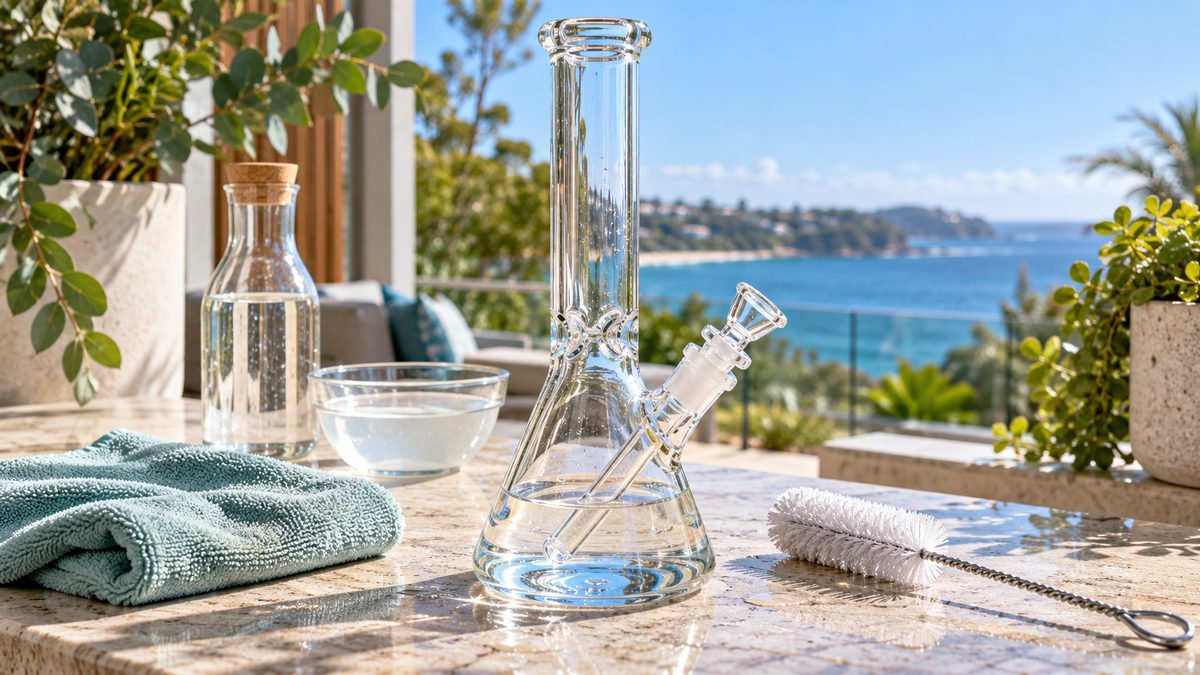
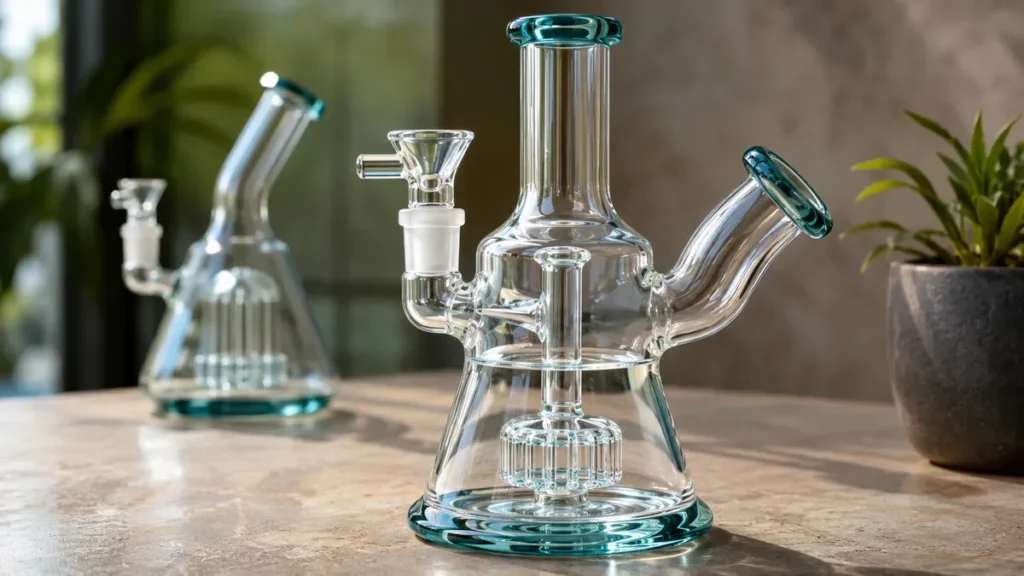
From scorching summer heat to salty coastal air, Australian weather can create hidden risks for glass water pipes. Dirty water, mineral buildup, humidity, dust, sudden temperature changes, and poor storage can cause odours, mould, stains, cracks, and breakage. This guide explains glass water pipe care in Australian climates, including safe cleaning, complete drying, heat protection, storage, transport, and regular inspections.
Why Glass Water Pipe Care in Australian Climates Matters

Australian conditions change significantly from one region to another. Dry inland air can fill a pipe with dust, while tropical humidity makes moisture harder to remove. Coastal homes also expose metal fittings and silicone seals to salty air.
Additionally, hard water can leave white or cloudy mineral deposits after evaporation. These marks may look similar to resin, but they need different cleaning methods. Therefore, identifying the buildup helps you protect the glass.
Old bong water creates another problem. It can collect ash, resin, saliva, bacteria, and organic particles. As a result, the water may develop strong odours and create conditions that support mould growth.
Direct sunlight can heat glass unevenly, especially near windows or on outdoor tables. Hot vehicles, heaters, ovens, and sun-warmed surfaces can also damage seals or fittings. Moreover, sudden movement between air conditioning and outdoor heat may stress the glass.
This stress is called thermal shock. Glass may crack when one area changes temperature faster than another. For example, pouring cold water into a hot pipe creates unnecessary strain.
Coastal salt air can leave deposits on metal components and encourage corrosion around fittings. Meanwhile, dusty areas require more frequent rinsing before deeper cleaning. Humid areas need especially thorough drying before storage.
Responsible care means handling every glass component gently. Work in a ventilated area, keep cleaning liquids away from flames, and inspect the pipe before use. Good hygiene and careful storage help reduce avoidable damage.
How to Clean a Glass Water Pipe Safely: Step-by-Step
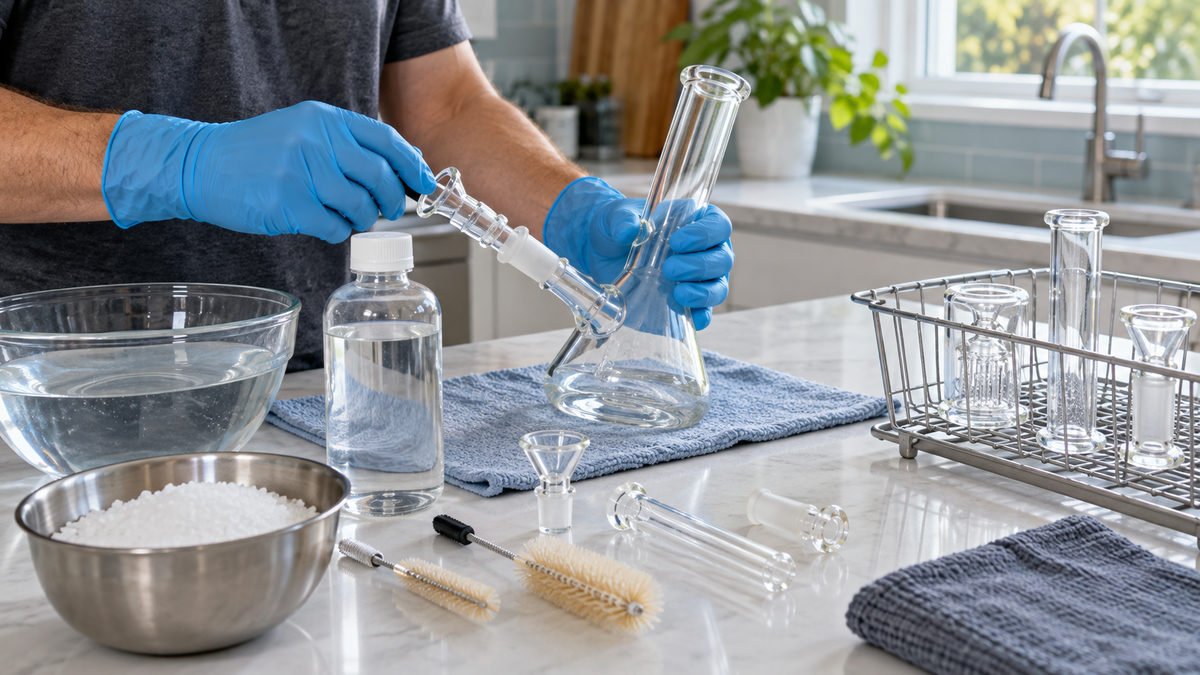
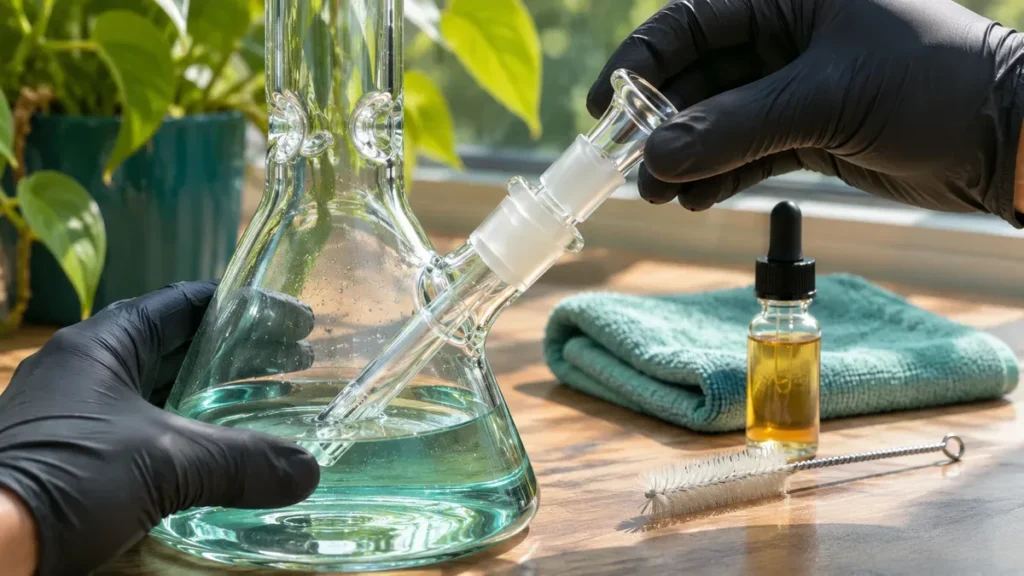
Regular cleaning keeps a glass water pipe fresher, easier to inspect, and less likely to develop stubborn residue. The safest method combines lukewarm water, isopropyl alcohol, coarse salt, soft brushes, and patience. For the basic method, see how to clean a glass bong.
- Prepare the workspace. Choose a stable, well-ventilated area away from children, pets, flames, sparks, and food. Gather disposable gloves, paper towels, coarse salt, suitable isopropyl alcohol, soft brushes, and clean water.
- Empty the old water. Pour the water away carefully and avoid splashing contaminated liquid onto nearby surfaces. Then, disassemble removable parts such as the bowl, downstem, mouthpiece, and seals.
- Rinse with lukewarm water. Rinse each glass component gently to loosen loose ash and residue. Avoid boiling water or extremely hot water because rapid heat changes may crack glass.
- Add cleaning materials. Place a suitable amount of isopropyl alcohol inside the chamber. Add coarse salt where appropriate. The salt provides gentle mechanical agitation, while the alcohol dissolves resin.
- Seal the openings. Cover openings securely with clean plugs, paper towel, or suitable accessories. Hold the pipe firmly and gently rotate or shake it. Never strike it against a bench, sink, or hard surface.
- Soak removable parts. Place heavily affected glass parts in a separate container with isopropyl alcohol when suitable. Keep the container away from flames, smoking, sparks, children, and pets.
- Clean narrow areas carefully. Use soft brushes, pipe cleaners designed for glass, or cotton swabs. Never use knives, metal picks, steel wool, or other abrasive tools that may scratch the glass.
- Rinse repeatedly. Use clean lukewarm water until the alcohol, salt, loosened resin, and odours disappear. Take extra care around downstem openings and internal chambers.
- Wash removable components. Bowls, mouthpieces, downstems, and seals receive direct contact with residue and moisture. Clean each part separately, checking for blockages or trapped debris.
- Dry everything completely. Place the pipe upside down or in a safe drain position. Allow airflow through the openings, then dry the exterior with a clean, lint-free towel.
Can you use isopropyl alcohol to clean a glass water pipe? Yes, isopropyl alcohol can help dissolve resin on suitable glass components. However, it remains highly flammable and may irritate the eyes, so follow the product label carefully.
Safe handling matters during every cleaning session. Wear gloves, keep the room ventilated, avoid open flames, and do not smoke while using alcohol. Safe Work Australia identifies isopropyl alcohol as a highly flammable liquid and vapour.
Never seal or store the pipe while moisture remains inside. Trapped water can create odours and encourage mould growth, especially in humid Queensland, Northern Territory, or northern Western Australia. Therefore, complete drying forms part of the cleaning process.
Dispose of used cleaning liquid responsibly and follow local waste guidance. Do not pour large quantities into unsuitable drains. If the pipe has a crack, sharp edge, or loose fitting, stop cleaning and inspect it before further handling.
Removing Resin, Hard-Water Stains, and Mineral Buildup
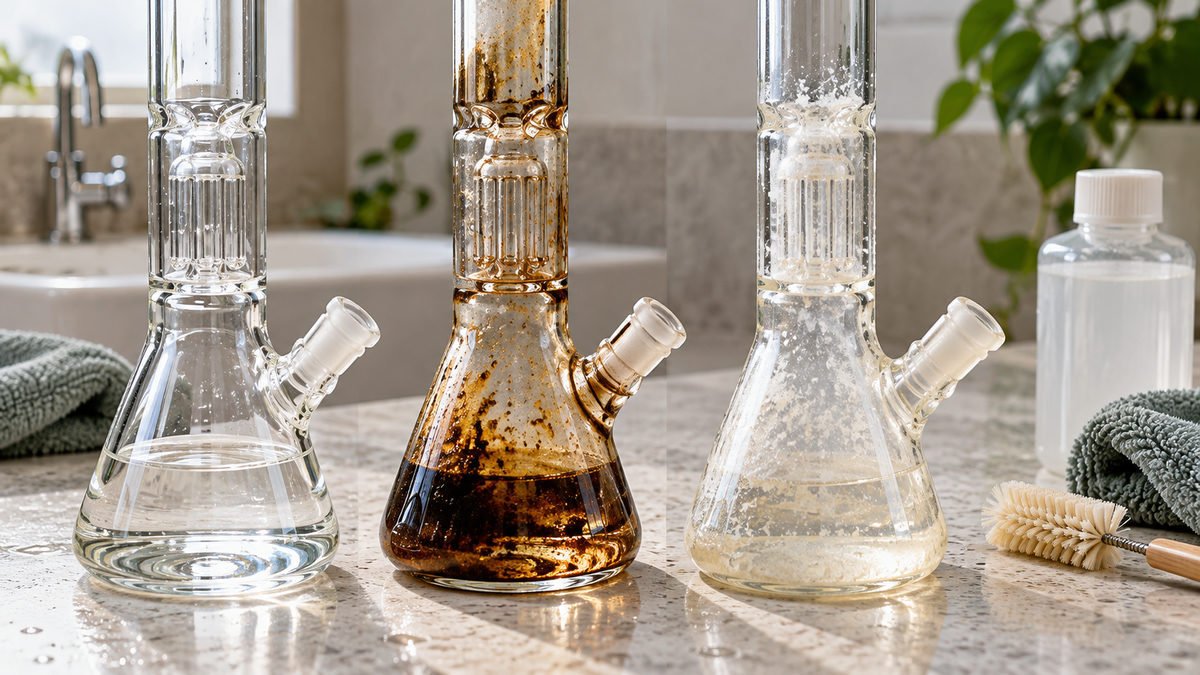
Resin usually appears as sticky brown, amber, or black residue. Hard-water deposits often look white, cloudy, or chalky. Evaporated droplets may leave rings or patches inside the chamber. Our guide to removing water stains from glass bongs covers vinegar methods.
Repeated isopropyl alcohol and coarse-salt cleaning can remove resin without scraping the glass. For stubborn areas, soak removable parts longer when suitable. Then repeat the gentle cleaning process instead of forcing residue away.
Sharp objects create weak points through tiny scratches. Knives, metal picks, steel wool, and abrasive pads can damage polished surfaces. Consequently, a soft brush remains safer than aggressive scraping.
Hard-water stains may respond better to a mild acidic solution designed for glass. Follow the product label, use suitable ventilation, and rinse the pipe thoroughly afterwards. Never mix cleaning chemicals together.
- Do not use bleach, drain cleaner, or caustic products.
- Avoid strong solvents that are not labelled suitable for glass.
- Do not combine acidic products with bleach or other cleaners.
- Keep cleaning chemicals away from children, pets, heat, and flames.
To prevent bong water stains, replace the water frequently and rinse the chamber after emptying it. Do not let droplets evaporate inside the pipe. Where practical, filtered water may reduce mineral deposits.
For example, a pipe used daily with hard tap water may develop cloudy marks faster than one rinsed after every session. Small maintenance steps prevent deposits from becoming difficult to remove.
Water Replacement, Hygiene, and Mould Prevention
Replace bong water after each use, or at least daily when the pipe receives regular use. Fresh water reduces odours, residue, bacteria, and the moisture conditions that support mould. Stay on top of it with a glass bong maintenance checklist.
A simple daily routine takes only a few minutes. Empty the old water, rinse the chamber, inspect for particles, and leave the openings uncovered while the pipe airs out.
Mouthpieces, bowls, downstems, and removable seals need separate attention. They collect saliva, ash, resin, and moisture more quickly than the main chamber. Additionally, seals can hold water around their edges.
For mould prevention, clean regularly and remove water before storage. Keep internal openings uncovered while drying. Most importantly, confirm that the chamber feels completely dry before placing the pipe into a case.
If mould or an unusual odour appears, stop using the pipe. Fully clean it with a glass-safe method, rinse thoroughly, and dry every component. Replace damaged or porous parts if they continue to hold odours.
How often should you clean a glass water pipe? Light rinsing suits daily use, while regular users should complete a deeper clean each week. Clean sooner whenever residue, cloudy water, or odour appears.
Increase cleaning frequency in humid, dusty, or heavily used environments. A dry inland home may need more dust removal, while a humid coastal home may need longer drying time.
Protecting Glass Water Pipes from Heat, Humidity, and Coastal Air
Hot Australian weather does not usually damage intact glass immediately. However, prolonged heat, direct sunlight, uneven heating, and thermal shock increase the chance of breakage. Borosilicate glass copes best with sudden temperature changes.
Keep the pipe away from direct sunlight, hot vehicles, heaters, ovens, and windowsills. Surfaces may become much hotter than the surrounding room during summer afternoons.
After heat exposure, let the pipe return gradually to room temperature. Do not rinse a hot pipe with cold water. Likewise, avoid moving it directly between strong air conditioning and outdoor heat.
Boiling water creates unnecessary risk in both hot and cold glass. Use lukewarm water instead, and allow the glass to adjust naturally. Sudden temperature changes can crack a glass water pipe through thermal shock.
Humid climates require extra airflow and careful storage. Replace water frequently, dry the pipe in an open position, and choose a dry room instead of a sealed damp container.
Dry and dusty regions create different challenges. Cover the pipe when not in use, keep it off floors and windowsills, and rinse away surface dust before deeper cleaning.
Coastal areas need extra care around metal fittings. Store the pipe indoors, wipe exterior components dry, and check for corrosion around joints, clips, and removable fittings.
Practical Summer Storage Routine
- Clean the pipe and removable parts thoroughly.
- Rinse everything with clean lukewarm water.
- Air-dry the internal chamber and components completely.
- Wrap each part loosely in soft, lint-free material.
- Place the pipe in a cool, shaded, temperature-stable location.
Do not wrap a damp pipe tightly because trapped moisture may create odours. Similarly, avoid storing it inside a car, shed, or unventilated outdoor cupboard during extreme heat.
Inspection, Storage, Transport, and Ongoing Maintenance
Inspect the pipe before every use when possible. Look for chips, hairline cracks, sharp edges, blocked openings, loose fittings, damaged seals, and an unstable base. Learn how to store glass bongs safely away from heat.
Stop using the pipe immediately if you find a crack, leak, sharp edge, or structural weakness. Tape and household glue cannot safely restore a stressed glass component.
Place damaged glass inside a rigid container and wrap it to prevent injury. Follow local waste or recycling guidance instead of placing loose shards directly into household rubbish.
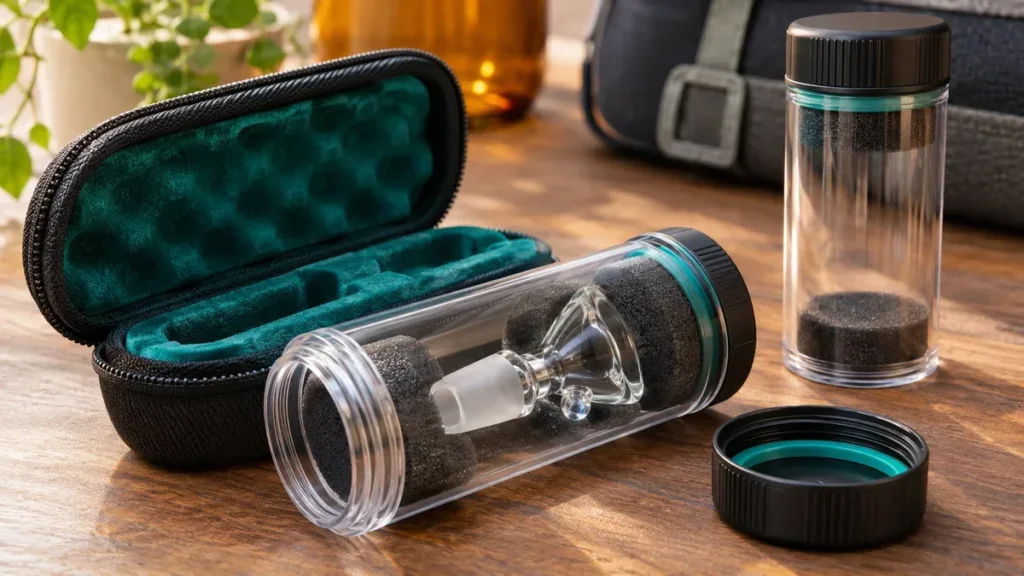
For safe storage, choose a padded, rigid, temperature-stable container. Keep the pipe upright where possible, and prevent contact with other hard objects.
Before transport, empty and dry the pipe completely. Remove detachable parts, wrap every piece separately, and secure everything inside a hard-sided case.
Never transport a water-filled pipe or leave it inside a parked car. Also, avoid placing an unprotected glass pipe in checked luggage or carrying it loose inside a bag.
Suggested Maintenance Schedule
- Daily: Replace the water, rinse the chamber, and leave the pipe open to dry.
- Weekly: Complete a deeper clean when the pipe receives regular use.
- Monthly: Inspect seals, fittings, openings, and the base for damage.
- Seasonally: Check storage before summer, wet weather, travel, or coastal stays.
Common mistakes include leaving dirty water inside, using boiling water, applying harsh chemicals, scraping with metal tools, and storing the pipe while damp.
Other avoidable risks include direct sunlight, sudden temperature changes, loose transport, and placing the pipe near hot appliances. Small habits often prevent expensive breakage.
For suitable glass accessories and related products, you can browse the Sweet Puff Australia shop or explore the wider product categories.
Sweet Puff Australia brings together water pipes, glass designs, and related accessories for adult customers. Visit the Sweet Puff Australia website for product information and collection details.
Conclusion
Reliable glass water pipe care in Australian climates depends on frequent water replacement, regular deep cleaning, and complete drying. Gentle handling also protects glass from scratches, thermal shock, and accidental breakage.
Keep the pipe shaded, dry, and away from sudden temperature changes. Inspect it often, especially before travel or seasonal weather changes. Stop using it immediately if cracks, chips, leaks, or structural damage appear.
Use this routine as your Australian climate checklist:
- Fresh, clean water.
- Regular rinsing and deep cleaning.
- Complete internal drying.
- Shade and stable temperatures.
- Dry indoor storage.
- Routine inspections.
- Padded, secure transport.
Follow the daily, weekly, monthly, and seasonal checklist to create a consistent cleaning and storage routine suited to your Australian climate.


Comment (1)
[…] When tap water evaporates, it leaves dissolved minerals behind. These minerals commonly include calcium, magnesium and other natural compounds. Therefore, hard water can create pale marks wherever moisture sits for long periods. Hard water is common in some regions; see glass water pipe care in Australian climates. […]