
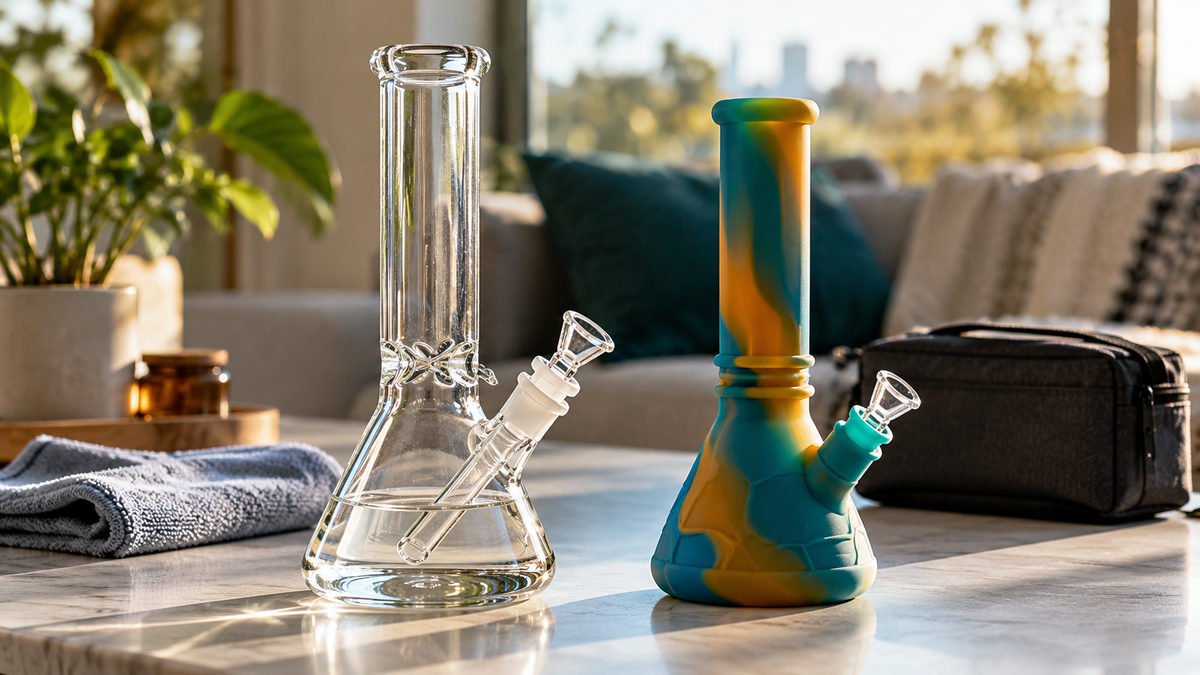
Choosing between a fragile glass bong and a flexible silicone bong can change your entire smoking experience. The right material affects flavour, smoothness, cleaning, portability, safety, and long-term value. In this guide, we compare glass vs silicone bongs to help Australian adults choose confidently. You will find practical advice for home use, travel, beginners, frequent users, and flavour-focused consumers.
Glass vs Silicone Bongs: Key Differences at a Glance
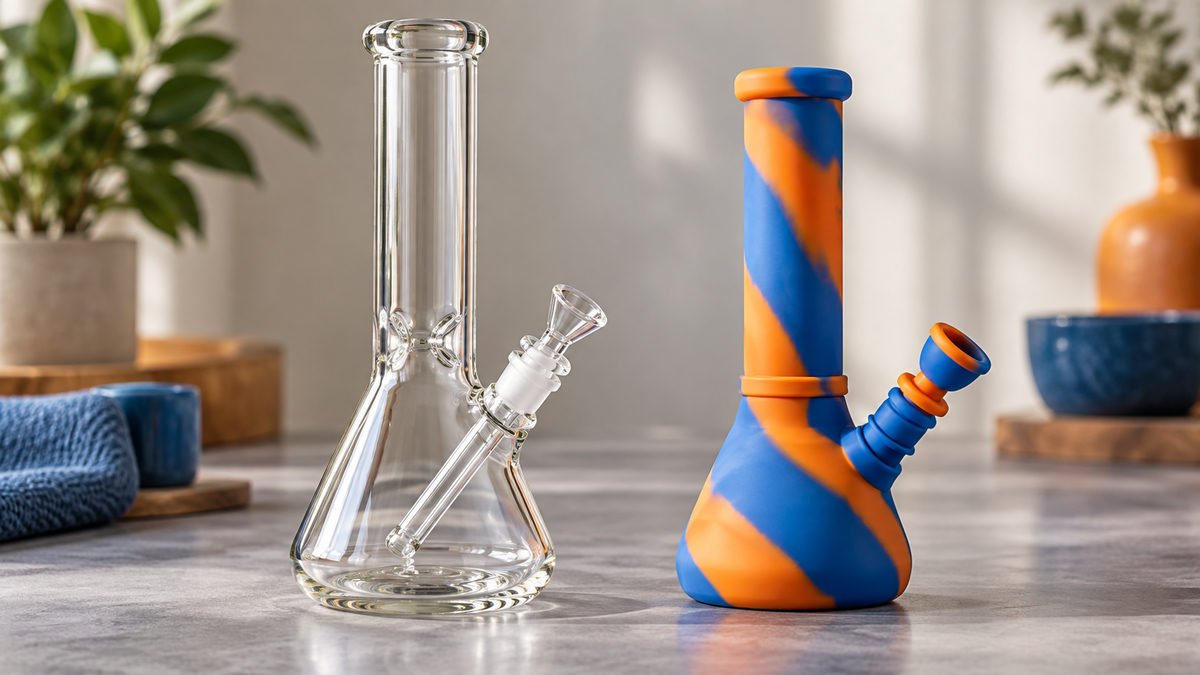
At first glance, glass and silicone bongs may seem similar. However, their materials create very different experiences during everyday use. Glass offers a refined appearance and neutral flavour, while silicone focuses on flexibility and impact resistance. Our materials comparison guide covers acrylic and ceramic too.
| Feature | Glass Bong | Silicone Bong |
|---|---|---|
| Flavour | Usually neutral and clean | May retain odours without regular cleaning |
| Smoothness | Excellent design options and filtration | Depends heavily on chamber design |
| Durability | Strong but vulnerable to impacts | Highly resistant to drops |
| Portability | Heavier and more fragile | Lightweight and travel-friendly |
| Price | Ranges from affordable to premium | Often more budget-friendly |
| Cleaning | Residue usually lifts easily | Folds and seams need extra attention |
| Odour retention | Generally low | Potentially higher |
| Appearance | Clear, polished, and highly varied | Colourful, practical, and less refined |
| Accessories | Broad compatibility with standard parts | Compatibility varies by model |
How the Materials Differ
Most quality glass bongs use borosilicate glass. This rigid material handles heat changes better than ordinary glass and usually keeps flavours neutral. You can learn more about its thermal properties through this borosilicate glass reference.
Silicone bongs use flexible, heat-resistant material. Therefore, they can bend, compress, and survive impacts that might shatter glass. However, quality varies greatly, so always check the product material and manufacturer information.
Which Material Suits Your Lifestyle?
- Home use: Glass usually provides better flavour, appearance, and filtration options.
- Travel: Silicone offers lighter weight and greater impact resistance.
- Beginners: Silicone can reduce breakage worries and replacement costs.
- Frequent users: Either material works, depending on cleaning habits and priorities.
- Flavour-focused consumers: Glass usually delivers the most neutral experience.
Therefore, neither material wins every category. Glass suits buyers who value flavour and refined home performance. Meanwhile, silicone suits people who prioritise durability, portability, and affordability.
Glass Bong Advantages and Disadvantages

Glass remains the traditional choice for many experienced users. Its rigid construction supports detailed designs, multiple filtration stages, and clear visibility inside the chamber. Additionally, glass does not usually add noticeable flavour during use.
Why Borosilicate Glass Is Popular
Borosilicate glass combines clarity with strong heat resistance. It also handles temperature changes better than standard glass when manufacturers form and anneal it properly. However, even borosilicate glass can crack under sudden temperature changes or impact.
For example, pouring very cold water into a hot bong may create unnecessary thermal stress. Therefore, allow the piece to cool before changing water or cleaning it. Gentle handling still matters, regardless of the glass quality.
Benefits of Glass Bongs
- Glass usually provides a clean and neutral flavour.
- Transparent chambers make water levels and residue easy to inspect.
- Percolators can offer advanced filtration and diffusion.
- Removable downstems make many models easier to customise.
- Glass supports precise shapes, artistic details, and premium finishes.
- Standard joints often support bowls, ash catchers, and replacement parts.
Moreover, glass lets you see how smoke moves through the water. This helps you understand the effect of different water levels and percolator designs. Experienced users often appreciate that control.
Glass can also support a smoother experience when the chamber and filtration system work well together. However, smoothness does not come from material alone. Water level, draw resistance, percolation, and inhalation technique matter just as much.
Drawbacks of Glass
The biggest weakness remains breakage. A glass bong can crack when dropped, knocked against a bench, or stored without protection. Consequently, it may suit a stable home setup better than camping or festival use.
Glass models can also weigh more than silicone alternatives. Intricate designs require careful handling and more frequent cleaning. Furthermore, replacement costs may become frustrating when a downstem, bowl, or joint breaks.
Regular maintenance helps protect your investment. Rinse the bong frequently, remove residue before it hardens, and store it upright in a secure location. A padded case can also reduce accidental damage.
Choose glass when you want maximum flavour, advanced filtration, visual clarity, and a refined home experience. It remains especially suitable for daily sessions where you can control storage and cleaning conditions.
Silicone Bong Advantages and Disadvantages

Silicone bongs appeal to buyers who want practical durability. Their flexible bodies can absorb impacts, fit into tight storage spaces, and handle everyday knocks. Additionally, many silicone models cost less than complex glass designs. The same trade-offs apply to silicone pipes vs glass pipes.
Why Silicone Works Well for Travel
A silicone bong can suit camping, festivals, road trips, and outdoor use. It will not shatter when packed beside other equipment or placed on uneven ground. Therefore, it creates less stress during transport.
Silicone also weighs less than many glass models. Some designs fold or compress slightly for easier storage. However, keep removable glass or metal components protected during travel.
For households with limited storage, silicone offers another advantage. You can place it in a drawer or travel case without worrying about fragile walls. This practical design suits beginners who are still developing careful handling habits.
Benefits of Silicone Bongs
- Flexible construction resists many drops and impacts.
- Lightweight bodies make carrying and storage easier.
- Lower prices can suit budget-conscious buyers.
- Bright colours and simple shapes offer a casual appearance.
- Many models work well for outdoor and travel situations.
However, buyers should choose food-grade, heat-resistant silicone from a reputable manufacturer. Avoid unknown materials, unclear specifications, or products with strong chemical smells. Material quality has a direct effect on safety, odour, and long-term performance.
Silicone Limitations and Safety Considerations
Silicone may retain odours more readily than glass. Residue can also collect in folds, seams, removable parts, or textured surfaces. Therefore, prompt cleaning matters more when you want to protect flavour.
Silicone should resist normal heat exposure when the product suits its intended use. However, heat-resistant does not mean flame-proof. Never place silicone directly against an open flame, hot stove, or other uncontrolled heat source.
Inspect the body and connections before each use. Replace damaged silicone, loose parts, warped components, or unstable bases. Additionally, follow the manufacturer’s cleaning and temperature instructions.
Silicone suits beginners, travellers, outdoor users, and people who prioritise durability over premium appearance. It can also work for daily use when the owner cleans it thoroughly and checks it regularly.
Flavour, Smoothness, Safety, and Durability Compared
Flavour often separates glass and silicone most clearly. Glass usually provides the most neutral surface, so the material adds little noticeable character. Silicone may hold previous odours when residue remains inside the body. If durability worries you, consider thick glass bongs.
For example, a silicone bong used with strong-smelling material may need deeper cleaning afterwards. Otherwise, the remaining scent can influence future sessions. Glass generally releases these odours more easily during routine cleaning.
What Creates a Smooth Experience?
Material alone does not determine smoothness. Water level, chamber size, percolator design, draw resistance, and inhalation technique all play important roles. Additionally, fresh water and clean parts improve the overall experience.
A well-designed silicone bong can feel smoother than a poorly designed glass bong. Conversely, an advanced glass piece may offer more diffusion and control. Therefore, compare the complete design rather than focusing only on the body material.
Heat and Impact Resistance
Glass handles regular heat well when made from quality borosilicate material. However, sudden temperature changes, scratches, and impacts can weaken it. Silicone absorbs impacts better, but direct flame can damage or deform it.
With careful use, a quality glass bong can last for many years. Silicone can also last for years when it remains free from cuts, heat damage, and severe residue buildup. Replacement timing depends on cleaning, storage, frequency, and component quality.
Environmental considerations also matter. A long-lasting bong creates less replacement waste, regardless of material. Broken glass can be difficult to repair, while silicone may remain usable after minor impacts but becomes harder to recycle locally.
Practical Safety Checks
- Inspect glass for cracks, chips, scratches, and weak joints.
- Check silicone for cuts, thinning areas, warping, and damaged seams.
- Make sure the base sits firmly on a stable surface.
- Confirm that bowls, downstems, and connectors fit securely.
- Keep all heat sources away from flammable materials and damaged parts.
Cleaning and Maintenance: Glass Bong vs Silicone Bong
Regular cleaning protects flavour, appearance, and performance. It also prevents residue from hardening inside narrow joints and downstems. Therefore, clean your bong before buildup becomes difficult to remove.
How to Clean a Glass Bong
Start by emptying the old water and removing detachable parts. Rinse the bong with warm water, then add a suitable cleaning solution recommended for glass accessories. Seal the openings and gently agitate the piece.
Use pipe cleaners or soft brushes for downstems and narrow areas. Avoid sharp tools that can scratch the glass or damage joints. Finally, rinse every part thoroughly until no cleaning residue remains.
Glass usually releases resin and residue more easily than silicone. Its smooth, non-porous surface gives buildup fewer places to settle. However, mineral deposits can still appear when users leave water inside for long periods.
How to Clean a Silicone Bong
Disassemble the silicone bong whenever the design allows it. Soak removable parts according to the product instructions, then scrub flexible surfaces with a soft brush. Pay close attention to folds, seams, and textured areas.
Odour removal may require repeated cleaning rather than one aggressive treatment. Therefore, avoid harsh chemicals, solvents, or extreme temperatures unless the manufacturer specifically approves them. Allow every component to dry completely before reassembly.
Regular rinsing helps prevent lingering smells and flavours. Additionally, inspect hidden areas where residue can collect. Clean water, dry storage, and prompt maintenance will extend the life of either material.
Price, Features, and Buying Guidance for Different Users
Silicone bongs often sit at the more affordable end of the market. Their simpler construction and flexible bodies can reduce manufacturing and replacement costs. However, advanced glass designs may cost more because of detailed shaping, percolators, and extra components. On a tight budget? Also compare glass vs acrylic bongs.
Consider Long-Term Value
The cheapest bong is not always the best value. Consider lifespan, cleaning effort, replacement risk, accessory compatibility, and performance. A durable silicone bong may save money during travel, while a quality glass bong may offer better long-term home enjoyment.
Additionally, replacement parts influence ownership costs. Glass models often support standard bowls and downstems, making repairs easier. Silicone models vary more, so check whether important components are available before buying.
Features Worth Checking
- A stable, wide base that resists tipping.
- A secure downstem with a reliable airtight connection.
- An ice catcher if you prefer cooler filtration.
- A percolator that suits your desired draw resistance.
- A removable bowl for easier cleaning and replacement.
- Simple chambers without difficult-to-reach residue traps.
- Strong joints and clearly stated material information.
Choose glass if flavour, visual appeal, advanced filtration, and home use matter most. It also suits buyers who enjoy inspecting water movement and maintaining a carefully stored piece.
Choose silicone if you prioritise portability, impact resistance, low cost, and outdoor use. It can also suit beginners who worry about accidental breakage or want a simpler first purchase.
Which Bong Suits Beginners?
Beginners should consider both budget and maintenance habits. Silicone may suit someone who travels often or expects occasional knocks. However, glass may suit someone who values flavour and can maintain a stable home setup.
For travel, a compact silicone bong usually offers the most practical balance. It packs easily, weighs less, and reduces breakage risk. Nevertheless, protect any glass attachments and follow local laws during transport.
Quick Decision Guide
- Choose glass: For flavour, home use, appearance, and advanced filtration.
- Choose silicone: For durability, travel, affordability, and beginner-friendly handling.
- Consider a hybrid: For buyers wanting a flexible body with glass or metal components.
Sweet Puff Australia brings together water pipes, glass designs, and smoking accessories for adult customers. Explore the Sweet Puff Australia website for product information and collection details. You can also browse the online shop or explore relevant product categories.
For broader browsing, the product brands directory can help you compare available makers. The Sweet Puff Australia blog also offers helpful guidance for choosing and caring for smoking accessories.
Conclusion
Glass bongs generally deliver the cleanest flavour, refined filtration, and widest design selection. Silicone bongs offer stronger impact resistance, easier portability, and lower replacement risk. Therefore, the best choice depends on your priorities rather than one universal winner.
Choose glass for home performance, neutral flavour, and a polished experience. Choose silicone for travel, affordability, outdoor use, and durable everyday handling. Before buying, compare compact glass and food-grade silicone models, check their materials and features, and match your choice to your budget, cleaning routine, and lifestyle.



Comment (1)
[…] Material affects durability, flavour neutrality, heat resistance, appearance, weight, and cleaning. The best choice depends on where you will store the bong, how carefully you handle it, and how much maintenance you accept. No material offers every advantage. Most beginners start by weighing up glass vs silicone bongs. […]