
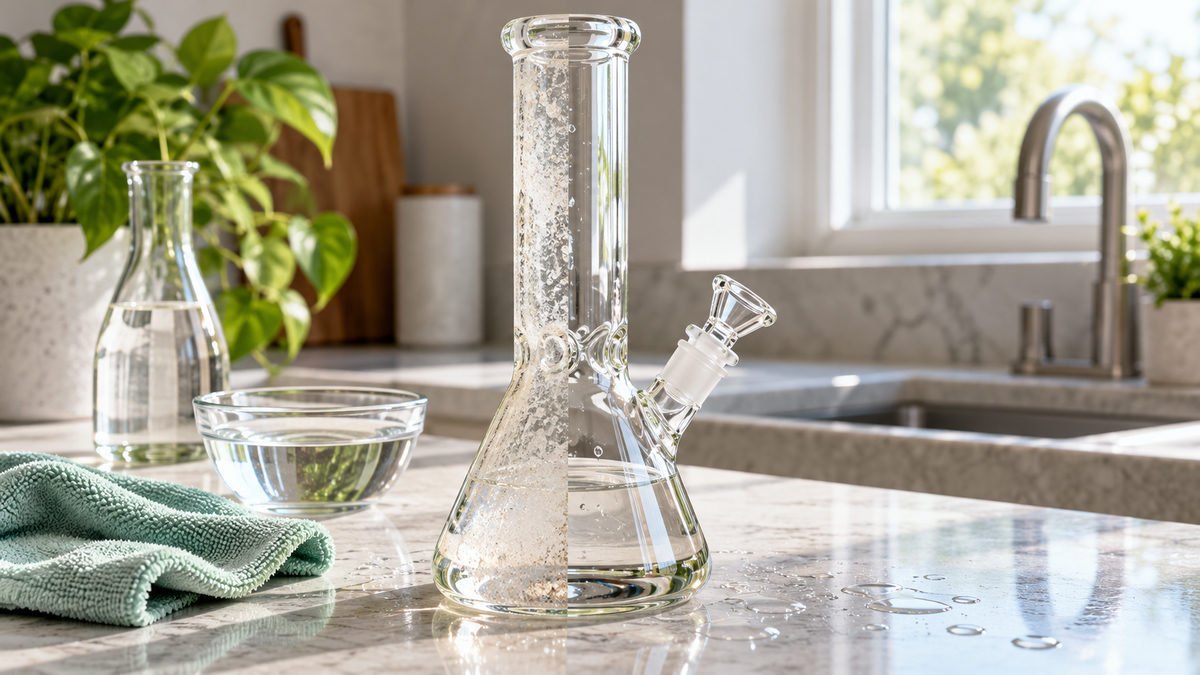
Cloudy glass, white mineral spots and stubborn rings can make a clean bong look permanently damaged. However, learning how to remove water stains from glass bongs can restore much of their clarity. Hard water deposits, resin and cleaning residue often look similar, yet each needs a different method. This guide explains safe vinegar soaking, gentle rinsing, component-by-component cleaning and simple prevention tips.
What Causes Water Stains and Cloudy Residue on Bong Glass?
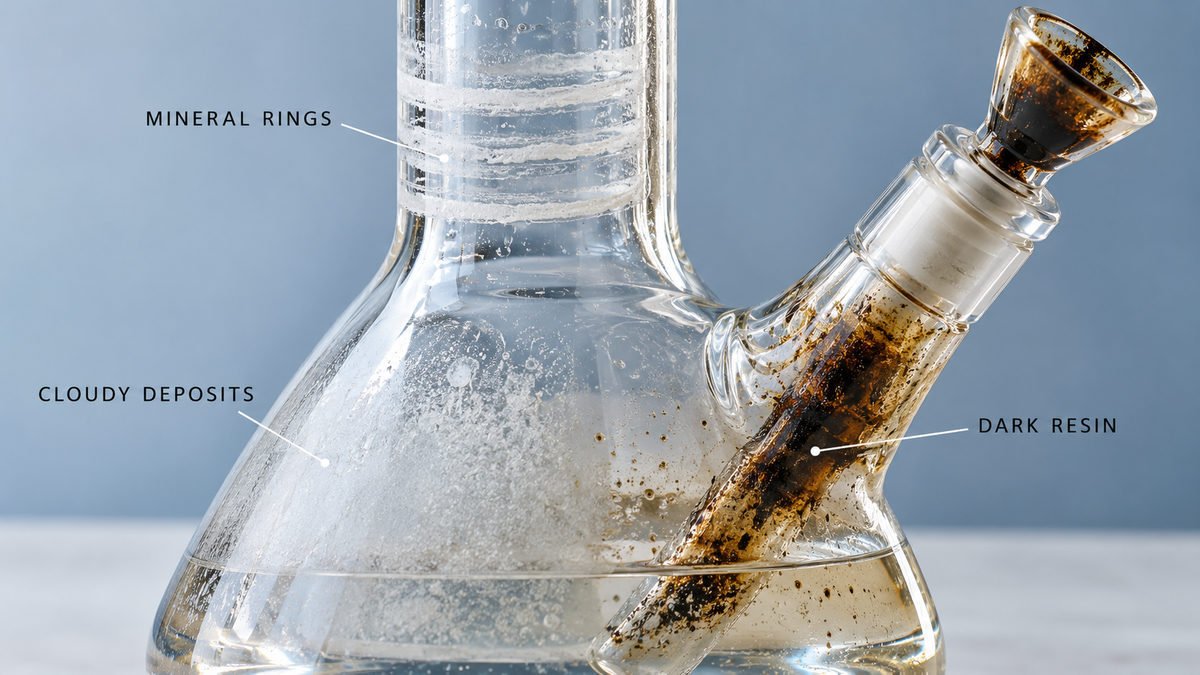
When tap water evaporates, it leaves dissolved minerals behind. These minerals commonly include calcium, magnesium and other natural compounds. Therefore, hard water can create pale marks wherever moisture sits for long periods. Hard water is common in some regions; see glass water pipe care in Australian climates.
According to the New York City Department of Environmental Protection, vinegar can help loosen hard water deposits on glass. The same principle applies to mineral rings inside a glass bong.
Water stains usually appear as white residue, cloudy patches, chalky rings or speckled deposits. You may notice them around the base, neck, downstem or percolator. Meanwhile, evaporated water can leave a thin film across large inner surfaces.
Water Stains Versus Resin and Other Residue
Mineral buildup often feels rough, powdery or chalky when you touch an accessible area. It may look white, pale grey or slightly yellow. In contrast, resin usually feels sticky and appears brown, amber or nearly black.
Ash and dust can float in old bong water, then settle around joints and chambers. Organic residue may also create a dull film. However, these materials usually loosen through rinsing or alcohol-based cleaning more easily than mineral scale.
Repeated exposure to mineral-rich water makes deposits thicker over time. As a result, a faint ring can become a stubborn crust. Therefore, empty and rinse the bong before cleaning so loose particles do not interfere with stain removal.
How to Remove Water Stains from Glass Bongs: Preparation and Safety
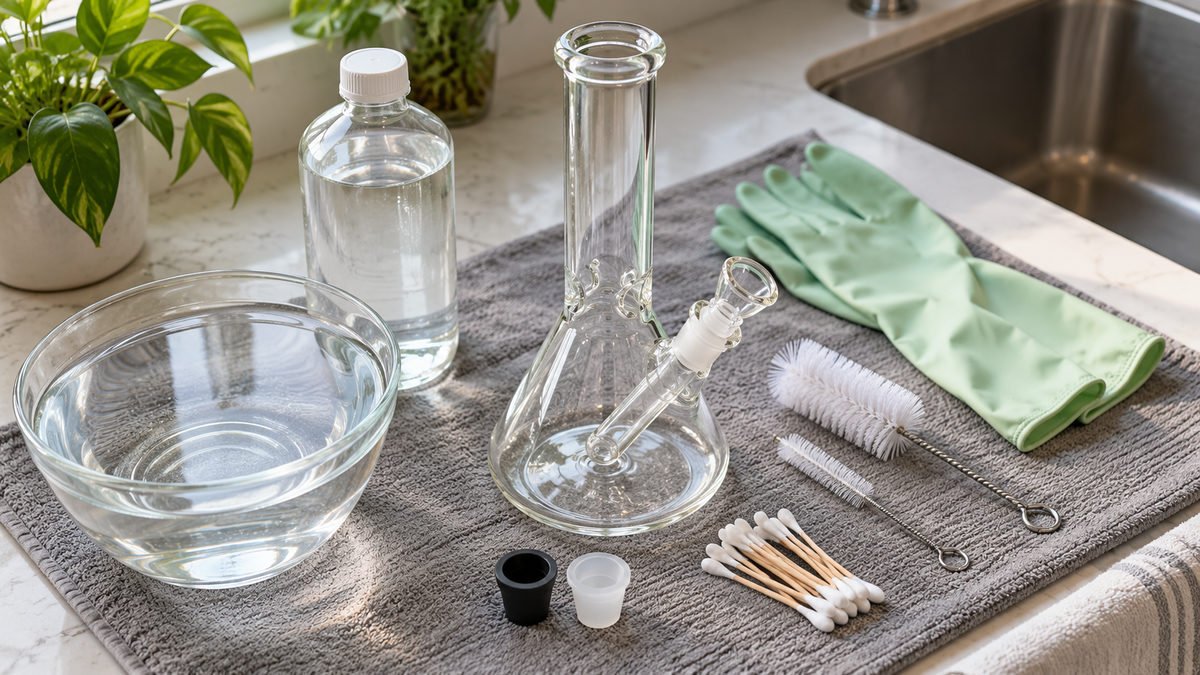
Safe preparation prevents cracked glass, chemical residue and unnecessary mess. First, choose a stable work surface near a sink. Then place a folded towel underneath the bong to reduce movement and protect the glass.
Gather the following supplies before you begin:
- Plain white vinegar.
- Warm or lukewarm water.
- Non-abrasive bottle brushes.
- Soft pipe cleaners and cotton swabs.
- Rubber stoppers or suitable plugs.
- Protective gloves.
- A clean, cushioned drying towel.
Work in a well-ventilated area, especially when old bong water contains strong odours. Additionally, wear gloves when handling resin, mineral deposits or cleaning solutions. Keep children and pets away from the cleaning area.
Inspect Every Glass Component First
Remove the bowl and downstem before cleaning the main chamber. Inspect each piece for chips, cracks, loose fittings or unusual stress marks. Do not soak damaged glass and expect it to remain safe.
Avoid bleach, ammonia, oven cleaner and harsh household products. These cleaners may leave harmful residue or react dangerously with other substances. Never combine vinegar with bleach, ammonia, alcohol or another cleaning product.
Also avoid steel wool, abrasive pads, rough brushes and sharp tools. These items can create fine scratches that trap residue later. Moreover, never expose cold glass suddenly to very hot water, because thermal shock can cause breakage.
Step-by-Step Vinegar Method for Removing Hard Water Stains
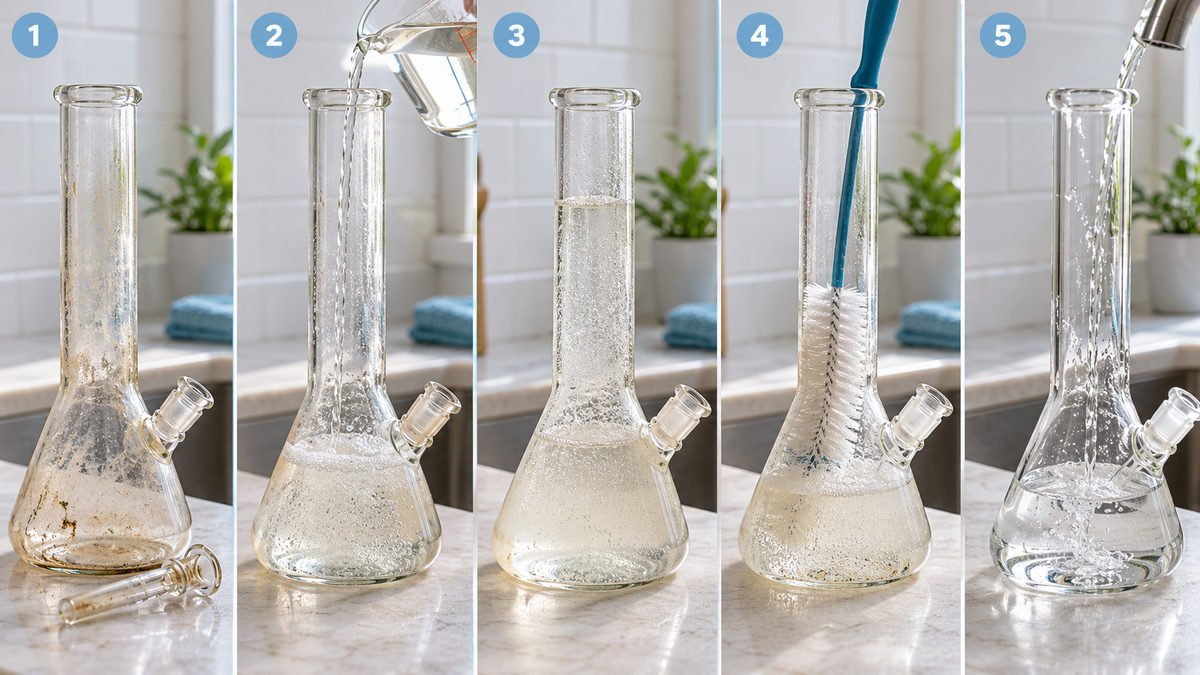
A diluted vinegar solution works well for many calcium-based water stains. The method uses contact time instead of force. Therefore, patience usually produces better results than aggressive scrubbing.
- Empty the bong completely. Dispose of old water safely, then rinse the bong with lukewarm water. This removes loose ash, dust and floating particles before the mineral treatment.
- Prepare the cleaning solution. Mix equal parts plain white vinegar and warm water in a clean container. For heavier mineral buildup, use a stronger vinegar mix after checking the glass and fittings carefully.
- Fill the main chamber. Pour enough solution into the bong to cover the stained areas. Do not overfill the chamber or allow liquid to spill into nearby surfaces.
- Seal the openings. Use clean rubber stoppers or suitable plugs to keep the solution against the glass. Then gently rotate the bong so the liquid reaches the waterline and inner walls.
- Treat removable parts separately. Fill the downstem and bowl with the same solution. Place them in a stable container so they cannot roll, collide or fall.
- Allow a controlled soak. Leave the vinegar solution for approximately 30 to 60 minutes. Check fragile parts periodically instead of leaving them unattended for extended periods.
- Move the solution gently. Rotate or swish the bong slowly. Avoid forceful shaking, especially when any removable glass piece remains inside the chamber.
- Brush accessible areas. Use a soft bottle brush, flexible pipe cleaner or cotton swab. Work gently around joints, openings and visible rings.
- Treat the percolator carefully. Fill the percolator until the solution reaches its internal chambers. Then use gentle movement to help the liquid pass through the holes.
- Rinse every piece thoroughly. Run lukewarm water through the bong, downstem, bowl and percolator. Continue until no vinegar smell, film or visible residue remains.
Why Vinegar Helps
Vinegar contains acetic acid, which can loosen many calcium and mineral deposits. As a result, chalky residue often softens during soaking. However, vinegar may not remove thick resin effectively.
Do not extend the soak indefinitely or increase the temperature sharply. Instead, repeat the process when necessary. Never mix vinegar with bleach, ammonia, alcohol or other cleaning products.
When Baking Soda or Isopropyl Alcohol Can Help
Baking soda can loosen light residue and reduce unpleasant odours. However, it is not the primary solution for dissolving hard water minerals. Vinegar usually works more directly on calcium-based deposits. Prefer gentler methods? Read about how to clean a glass bong without alcohol.
For an exterior spot or accessible area, mix a small amount of baking soda with water. Create a loose paste, then apply it with a soft cloth or non-abrasive brush. Use light pressure and rinse the area thoroughly afterwards.
Dry baking soda granules can act as an abrasive when shaken aggressively inside delicate glass. Therefore, avoid placing a large amount inside the bong. Gentle application works better than vigorous scrubbing.
Use Isopropyl Alcohol for Resin
Isopropyl alcohol works best on resin, oily residue and other organic buildup. It does not provide the same benefit for calcium or mineral stains. Therefore, treat mineral deposits first, then address resin separately.
After the vinegar treatment, rinse the bong completely. Next, apply a small amount of isopropyl alcohol to resin-covered areas or removable parts. Allow short contact time, then use a soft brush to loosen the residue.
Keep alcohol away from flames, sparks, hot surfaces, children and pets. Moreover, work with good ventilation. Rinse every component thoroughly before use, and check for any lingering odour or film.
Commercial bong cleaning solutions can offer a useful alternative. Choose a product clearly designed for glass and follow its instructions. Avoid improvised mixtures that may leave residue or damage rubber seals.
Cleaning the Base, Neck, Downstem, and Percolator
Different bong components collect water stains in different places. Therefore, clean each part separately where possible. This approach improves contact and reduces the need for force. Narrow sections need dedicated bong cleaning brushes.
Base and Neck
Fill the base only high enough to cover the stained areas. Then rotate the solution slowly around the inner walls. Avoid vigorous shaking, particularly when the bong contains removable parts.
For the neck, use a soft bottle brush or flexible non-abrasive tool. Guide it gently through wide openings and never force it through a narrow passage. A cotton swab can help with reachable rings near the mouthpiece.
Downstem and Bowl
Soak the downstem separately in diluted vinegar solution. Use a soft pipe cleaner to reach internal buildup, then rinse water through both openings. Never push a sharp object through the downstem.
Clean the bowl in its own container because resin often collects around the joint and airflow openings. Mineral residue may also form where water splashes during use. Treat the bowl gently, especially around thin edges.
Percolator Chambers
Percolators require extra patience because their internal chambers are difficult to reach. Fill them carefully, allow the solution to sit, then drain and refill several times. Gentle swirls can move vinegar through the small openings.
Do not shake a percolator bong forcefully when removable glass parts could collide. Instead, repeat the fill, drain and swirl process. Cotton swabs and soft detail brushes can help around accessible openings.
If stains remain, repeat the vinegar soak rather than increasing heat, pressure or chemical strength. Some marks may indicate permanent etching or glass damage. Never scrape those areas aggressively.
Rinsing, Drying, Troubleshooting, and Preventing New Stains
Rinsing matters as much as the cleaning step. Run lukewarm water through every component several times. Continue until you detect no vinegar, alcohol, baking soda, odour, film or visible cleaner. Prevent new marks with our glass bong maintenance checklist.
Inspect joints, percolator holes and internal chambers before reassembling the bong. Trapped residue can create an unpleasant taste or smell. Additionally, check that no loose particles remain inside the base or downstem.
Drain the bong fully, then place each part upside down on a clean, cushioned towel. Let the pieces air-dry completely before storing them. Avoid sealing or storing the bong while damp, because trapped moisture can encourage residue and odours.
What to Do When Stains Remain
If deposits remain after one treatment, repeat the mineral soak. A second gentle application often works better than aggressive scrubbing. You can also choose a commercial glass-safe bong cleaning solution and follow its product instructions.
Thick deposits may need professional replacement if they have etched the glass. Likewise, stains inside inaccessible percolator chambers may not be removable safely. In those cases, scraping can create more damage than improvement.
Prevent Water Rings and Cloudy Glass
Change bong water after every session or at least once daily. Fresh water helps reduce mineral rings, stale odours and bacterial buildup. Rinse the bong after use so residue does not dry onto the glass.
Use filtered or distilled water when practical, especially in areas with hard tap water. Distilled water contains fewer minerals that can form chalky deposits. However, regular rinsing still remains important.
Match your maintenance routine to how often you use the bong:
- After each use: Empty and rinse the bong.
- Daily: Replace the water and check for rings.
- Weekly: Perform a deeper clean for frequent use.
- When needed: Treat new mineral spots before they thicken.
Never use a household cleaner unless its label confirms suitability for glass items that may contact the mouth. When choosing new accessories, you can explore Sweet Puff Australia’s product categories and consider designs that are easier to rinse.
Conclusion
Water stains on glass bongs usually come from mineral deposits left behind by evaporated tap water. Resin needs a different cleaning approach. A warm vinegar solution, gentle tools, thorough rinsing and careful drying can remove most deposits without damaging the glass.
Therefore, avoid abrasives, boiling water, bleach, ammonia and unapproved household cleaners. Empty and rinse your bong today, treat mineral stains with a lukewarm vinegar solution, and change the water regularly to keep the glass clear.
For more care tips and glass accessory information, visit Sweet Puff Australia. A consistent cleaning routine helps protect your glass and makes future maintenance much easier.





