

Should you choose a compact single-chamber bong or a feature-rich multi-chamber design? The answer affects smoothness, flavour, airflow, cleaning, and daily convenience. In this guide to single chamber vs multi chamber bongs, you will compare filtration, price, portability, durability, and maintenance. You will also learn which glass bong suits beginners, experienced users, small spaces, and dedicated home setups.
Single Chamber vs Multi Chamber Bongs: How Each Design Works
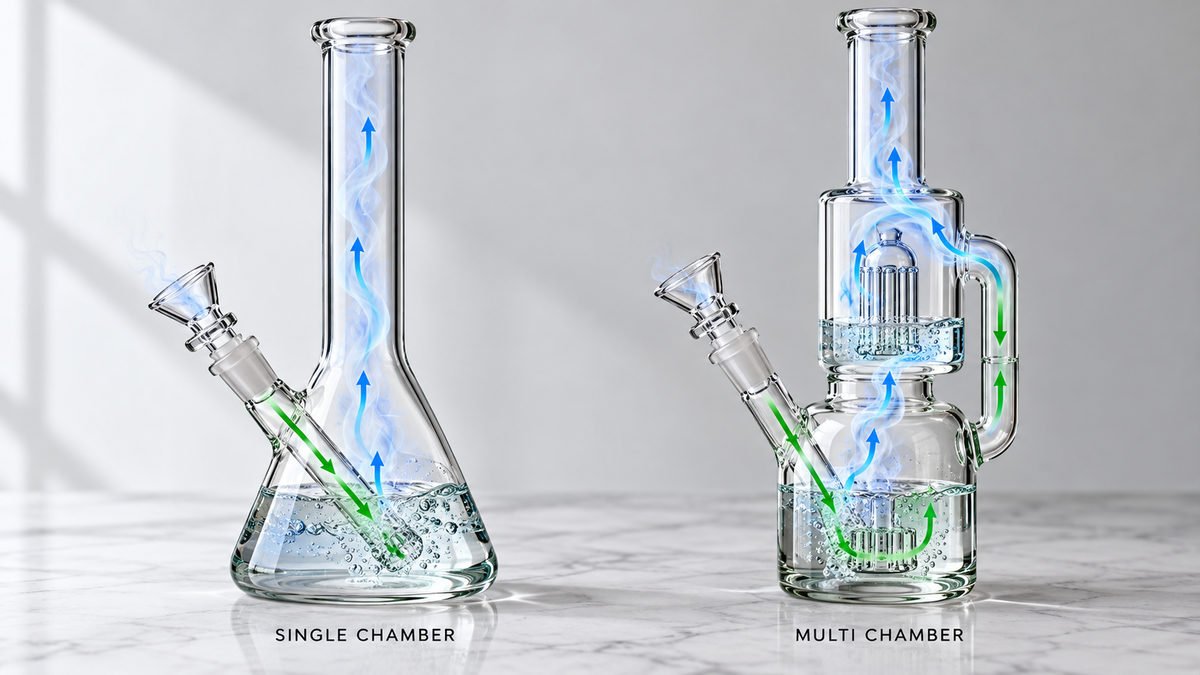
A single-chamber bong uses one main body to hold water and guide smoke. Its basic parts include the chamber, bowl, downstem, water reservoir, and mouthpiece. When you draw, smoke travels from the bowl through the downstem and bubbles through the water. Chamber count often pairs with different bong base shapes.
In simple terms, the water cools the smoke and catches some particles. The mouthpiece then directs the smoke towards you. Many single-chamber designs also include an ice catcher, which lets you add ice above the water line.
However, a multi-chamber bong adds another section to the smoke path. Separate chambers connect through tubes, openings, or built-in filtration pathways. Smoke usually passes through water in one chamber before moving into another chamber or percolator.
Each extra stage can create more bubbling and water contact. Therefore, multi-chamber bongs often look more complex and offer a more elaborate draw. They also contain more glass, joints, seals, and narrow passages.
How Smoke Moves Through Each Design
With a single chamber, smoke follows a fairly direct route. It moves from the bowl into the downstem, bubbles through the water, and rises into the main chamber. You then inhale through the mouthpiece.
With a multi-chamber design, smoke takes a longer route. It may bubble through the first chamber, travel through a connecting tube, and diffuse again in a second chamber. The exact route depends on the layout and percolator design.
It helps to separate the terms chamber and percolator. A chamber is a section of the bong that holds air, smoke, or water. A percolator is a filtration feature that breaks smoke into smaller bubbles.
Therefore, one chamber can still contain multiple filtration features. A single-chamber bong may include a diffuser downstem, honeycomb percolator, tree percolator, or ice catcher. Meanwhile, a multi-chamber bong may use simple downstems rather than several percolators.
Water Levels and Bong Parts
Water level matters in every design. Too little water may reduce bubbling, while too much water can cause splashback or restrict airflow. Always follow the product’s recommended fill line where one exists.
Downstem length also affects how deeply smoke enters the water. Larger bowls may hold more material, while smaller bowls can suit shorter sessions. However, these features do not guarantee better performance.
A larger or more complex bong does not automatically deliver a better experience. Construction quality, airflow, water level, percolator design, and personal preference matter just as much. Sometimes, a simple glass bong feels more enjoyable because it draws freely and cleans quickly.
Bong Filtration Comparison: Smoothness, Cooling, and Hit Strength
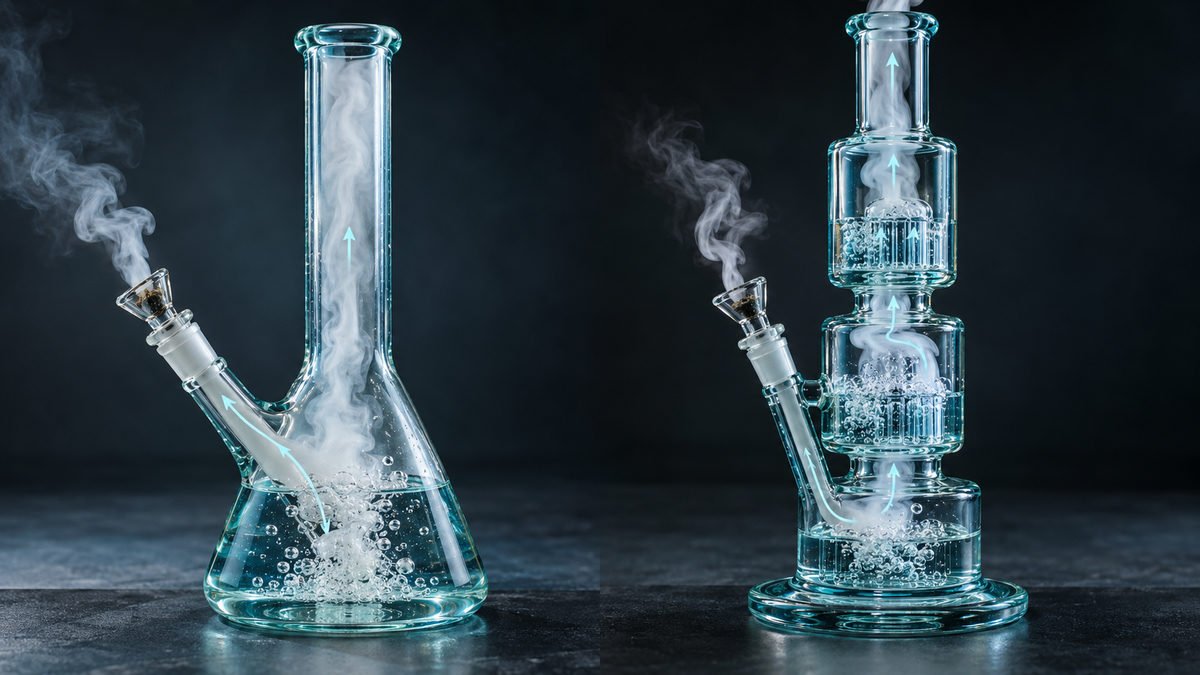
Bong water filtration works by forcing smoke through water before inhalation. The bubbling increases contact between smoke and water. According to this overview of bong design and function, the downstem guides smoke below the water surface before it bubbles upwards.
A single-chamber bong usually provides one main filtration stage. Its downstem may create a few large bubbles or many smaller bubbles, depending on its diffuser holes or slits. Smaller bubbles generally create more water contact.
Multi-chamber bongs can add several filtration stages. Smoke may pass through two water reservoirs, a built-in percolator, or both. As a result, the draw may feel cooler and softer when the design works efficiently.
What Percolators Actually Do
A percolator breaks smoke into smaller bubbles. This process increases water contact and spreads the smoke through the water. Common styles include honeycomb, showerhead, tree, inline, and matrix percolators.
However, more diffusion does not always mean a better draw. Every percolator creates some resistance. A bong with several restrictive sections may require a stronger pull than a simple downstem design.
Therefore, multi-chamber bongs often add more opportunities for diffusion rather than guaranteeing superior filtration. The result depends on the percolator size, chamber layout, water depth, joint diameter, and airflow path.
Smoothness, Flavour, and Hit Strength
Many users choose a multi-chamber bong for a cooler, softer draw. The extra bubbling can make a large draw feel less harsh. However, smoothness does not mean the smoke contains less material.
In fact, filtration can make it easier to inhale more than planned. A smoother sensation may encourage larger draws or quicker sessions. Therefore, use measured amounts and pay attention to how you feel.
Single-chamber bongs often provide stronger direct airflow. They can also preserve more flavour because smoke travels through fewer filtration stages. A clean diffuser downstem may still produce a smooth draw without excessive resistance.
Multi-chamber bongs may suit users who value cooling over maximum flavour. Meanwhile, single-chamber designs often suit people who prefer a more direct, open, and responsive draw.
- Choose single chamber filtration for direct airflow, stronger flavour, and a more noticeable hit.
- Choose multi-chamber filtration for additional diffusion, cooler sensations, and a softer draw.
- Choose a balanced percolator when you want cooling without excessive draw resistance.
Chamber count alone cannot determine smoothness. Percolator style, water level, glass quality, airflow, bowl size, and technique all influence the final experience.
Single Chamber and Multi Chamber Bongs for Beginners and Daily Use

Beginners often find single-chamber bongs easier to understand. There are fewer water levels, fewer hidden pathways, and fewer parts to troubleshoot. You can also see how the downstem works and adjust the water more easily.
Additionally, single-chamber designs usually cost less. Their simpler construction makes them easier to store, transport, and replace if damage occurs. A compact model can fit neatly inside a cupboard or small storage box.
Multi-chamber bongs may appeal to experienced users who enjoy custom airflow and added diffusion. They can also provide a distinctive visual design. However, the learning curve may feel steeper for someone unfamiliar with percolators.
Ease of Use and Daily Convenience
A single-chamber bong usually offers a more predictable draw. You can change the water level, swap the downstem, or replace the bowl without managing several connected sections.
Meanwhile, a multi-chamber bong may need more careful setup. Incorrect water levels can cause splashback, restricted airflow, or water travelling into connecting tubes. The extra glass also requires more space during use.
Daily users should consider their cleaning habits. If you rinse the bong after every session, either design can remain manageable. If cleaning happens less often, a multi-chamber bong may develop residue in difficult-to-reach pathways.
Session length also matters. A larger multi-chamber bong may suit longer sessions at home. However, a smaller single-chamber model often works better for quick, controlled use.
Portability, Stability, and Storage
Single-chamber bongs generally offer better portability. Their shorter height and simpler shape make them easier to move between rooms or store discreetly. Compact glass also creates fewer points that can catch on bags or shelves.
However, portability does not remove breakage risk. Always carry glass upright in protective padding. Empty the water before moving it, and keep removable parts in a separate pouch.
Multi-chamber bongs often need a permanent home setup. Their wider bases can provide stability, but their extra tubes and attachments increase the overall footprint. A crowded shelf can make accidental knocks more likely.
For small spaces, a compact single-chamber bong may prove more practical. For a dedicated home area, a stable multi-chamber base may offer a better fit.
- Simplicity: Choose a single chamber with a standard downstem.
- Smoothness: Choose a balanced percolator or multi-chamber design.
- Portability: Choose a compact single-chamber glass bong.
- Flavour: Choose direct airflow with moderate diffusion.
- Maximum filtration: Choose multiple diffusion stages, if cleaning is manageable.
Cleaning, Maintenance, and Durability Differences
Single-chamber bongs usually offer the easiest cleaning routine. They contain fewer hidden passages, connecting tubes, and internal percolators. Therefore, you can often rinse the main chamber more thoroughly. Multiple chambers benefit from a regular maintenance checklist.
Multi-chamber designs can collect residue inside narrow tubes and extra filtration sections. Rinsing may take longer, especially when the bong includes several percolators. Some areas may need soaking rather than simple running water.
A basic maintenance routine helps either design last longer. First, empty used water after each session. Then rinse the chamber with warm water before residue hardens.
Next, use a suitable glass cleaning solution according to its instructions. Soak removable parts separately when appropriate. Finally, remove residue from joints, bowls, and downstems before reassembling the bong.
- Change the water after every use for better freshness and easier cleaning.
- Rinse the bong promptly to reduce sticky buildup.
- Clean bowls and downstems regularly, especially after frequent use.
- Inspect joints and seals for cracks, chips, or poor connections.
Frequent users may need a deeper clean several times each week. Occasional users can often clean after each session and perform a deeper soak when buildup appears. Odour, cloudy water, and restricted airflow signal that cleaning should happen sooner.
Durability and Water Requirements
A simple bong usually has fewer connection points and narrow sections. That can reduce the number of vulnerable areas during handling. However, all glass can break when dropped, knocked, or exposed to sudden temperature changes.
Multi-chamber bongs may have more delicate tubes, unusual shapes, and internal structures. These features can increase impact risk. Store either design on a level surface away from edges, heat sources, children, and pets.
Use compatible bowls, downstems, and accessories. Avoid forcing joints together, and allow hot glass to cool before rinsing. This helps reduce thermal shock and extends the life of the piece.
Multi-chamber bongs do not always require more water. Water levels depend on chamber size, percolator style, and manufacturer guidance. Fill each section carefully, and stop before water reaches the connecting pathways.
Bong Price Comparison: Are Multi-Chamber Designs Worth It?
Price depends on more than chamber count. Glass thickness, craftsmanship, borosilicate quality, joint accuracy, percolators, ice catchers, and brand reputation all affect the final cost.
Multi-chamber bongs usually cost more because they require additional glasswork. Manufacturers must create connected sections, balanced airflow paths, and reliable joints. Extra percolators also increase material and production complexity.
The higher price may suit buyers who value cooler draws, advanced diffusion, or a distinctive home display piece. However, you should not pay more simply because a bong contains extra chambers.
A single-chamber bong often delivers better value for beginners and budget-conscious buyers. It can provide reliable water filtration with fewer parts to maintain. It also leaves more money for cleaning supplies or compatible accessories.
Long-Term Value
Consider the ownership costs before buying. A complex bong may need specialist downstems, replacement bowls, extra cleaning tools, and more storage space. Breakage can also cost more when several connected sections require replacement.
Meanwhile, a simple bong may use common joint sizes and widely available accessories. This can make repairs and upgrades easier. A sturdy, well-designed single-chamber piece may offer better long-term value than a fragile multi-chamber model.
| Feature | Single-chamber bong | Multi-chamber bong |
|---|---|---|
| Filtration | One main filtration stage | Multiple stages or pathways |
| Smoothness | Moderate to smooth, depending on diffusion | Often cooler and softer |
| Airflow | Usually more direct | May feel more restricted |
| Hit intensity | More immediate and noticeable | Often smoother, but not necessarily weaker |
| Maintenance | Generally easier | More time-consuming |
| Price | Usually more affordable | Usually more expensive |
| Portability | Better for compact storage | Better suited to a permanent setup |
| Durability | Fewer vulnerable connections | More delicate sections and joints |
| Ideal user | Beginners, flavour-focused users, and frequent cleaners | Experienced users seeking cooling and advanced diffusion |
Compare construction quality and functional design before counting chambers. A well-made single-chamber bong can outperform a poorly designed multi-chamber piece. The best choice should match your habits, budget, and available storage.
How to Choose the Best Bong for Your Priorities
Choose a single-chamber bong if you want affordability, portability, easier cleaning, and simple airflow. This design also suits beginners who want to understand water levels and draw resistance without extra complexity. Compare every key spec in our bong features and specifications guide.
Choose a multi-chamber bong if you prioritise cooling, additional diffusion, visual design, and a stable home setup. It can work well for experienced users who accept longer cleaning times and higher replacement costs.
Features Worth Comparing
Start with the airflow. A wide joint and open pathway may feel easier to use, while several percolators can create stronger resistance. Consider whether you prefer a fast, direct draw or a slower, more filtered pull.
Next, inspect the percolator style and chamber layout. Look for a design that leaves enough room for water without causing splashback. Also check the water capacity, bowl size, mouthpiece comfort, and base stability.
Glass thickness matters too. Thicker glass may provide better impact resistance, although no bong is unbreakable. Smooth joints and secure connections also indicate better construction quality.
Common Buying Questions
Which bong is more portable? A compact single-chamber bong usually wins. It takes up less room and contains fewer delicate attachments.
Which bong is easier to use? A single-chamber bong usually has the shorter learning curve. It also makes water-level adjustments more straightforward.
Which bong is best for daily use? The best option depends on your cleaning routine and preferred draw. Choose a single chamber for convenience, or multi-chamber filtration if you value cooling and maintain it regularly.
Your Decision Checklist
- What is your total budget, including cleaning supplies and replacement parts?
- How much storage space do you have available?
- How often will you clean the bong?
- Do you prefer stronger flavour or a cooler, softer draw?
- How frequently will you use the piece?
- Can you easily find compatible bowls, downstems, and seals?
- Will the bong stay in one location or move regularly?
Purchase and use smoking accessories only where legally permitted. Follow local age requirements and applicable Australian laws. Never drive or operate machinery while impaired.
Keep all glassware away from children and pets. Store it securely, empty the water before moving it, and inspect it regularly for chips or cracks.
For more options, explore Sweet Puff Australia’s shop or browse the available product categories. These pages can help you compare different glass designs and accessory types.
Conclusion
Single-chamber bongs generally offer simpler airflow, lower prices, easier cleaning, and better portability. Multi-chamber bongs can provide cooler, more diffused draws, but they often add size, maintenance, complexity, and breakage risk.
Chamber count matters, but percolator design, glass quality, airflow, water level, and user priorities matter just as much. Choose single chamber for simplicity and value. Choose multi chamber when enhanced cooling and advanced filtration justify the extra care.
Before buying, compare reputable glass bongs by filtration design, construction quality, maintenance needs, and intended use. Sweet Puff Australia brings together water pipes, glass designs, and smoking accessories for adult customers. Visit the Sweet Puff Australia website to explore available collections and product information.





