

Not sure whether your bong needs a new bowl, downstem, ash catcher, or cleaning tool? Choosing the wrong part can cause leaks, poor airflow, breakage, and unnecessary spending. This bong accessories guide explains essential parts, joint sizes, filtration upgrades, materials, cleaning, compatibility, safety, and practical buying tips for adults in Australia.
What Bong Accessories Do You Need?
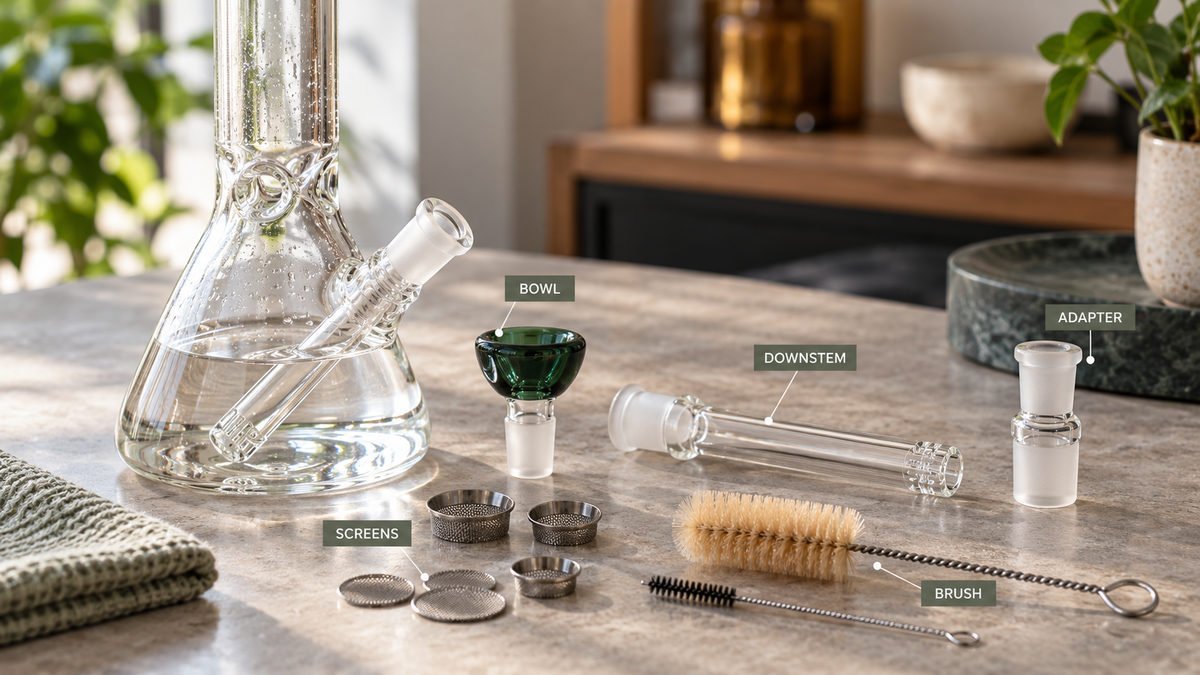
Bong accessories can make a setup easier to use, maintain, and store. A compatible bowl improves loading, while a suitable downstem controls airflow and water contact. Additionally, cleaning tools help prevent residue from restricting the passageway.
Some accessories replace worn components. Others add convenience, extra filtration, splash control, or personal preference. However, more parts do not always create a better setup. Every additional chamber or attachment can increase cleaning time and the chance of compatibility problems.
Essential Parts Versus Optional Upgrades
| Accessory | Typical role | Essential or optional? |
|---|---|---|
| Bong bowl | Holds the material being heated | Essential |
| Downstem | Connects the bowl to the water chamber | Essential on many designs |
| Mouthpiece | Provides the contact point for inhalation | Essential to the bong design |
| Grommets and seals | Create an airtight connection | Essential when required |
| Joint adapters | Connect accessories with different fittings | Optional |
| Ash catcher | Collects ash and adds filtration | Optional upgrade |
| Screens and clips | Help keep loose material in place | Useful extras |
For beginners, a practical bong accessory kit should include a compatible bowl, spare downstem, screens, soft cleaning brush, suitable cleaning solution, and a storage container. A spare seal or grommet also helps when the original becomes loose or brittle.
Moreover, replacement parts often make more sense than buying another bong. Replace a cracked bowl, damaged downstem, worn seal, or permanently blocked component when the main chamber remains stable and usable. A new bong becomes more sensible when the body has cracks, unstable joins, repeated leaks, or difficult-to-replace fittings.
Bong Accessories Guide: Joint Sizes and Compatibility

A bong joint is the connection point between the main body and an accessory. Joint size, gender, angle, and connection type all affect whether a part fits securely. Therefore, never choose an accessory based only on appearance or brand. Most parts follow one of two standards; compare 14mm vs 18mm bong joints.
Understanding 14mm and 18mm Bong Accessories
| Joint size | Typical use | How to identify it |
|---|---|---|
| 14mm | Compact bowls, smaller bongs, and lighter setups | Measure the internal or external joint diameter carefully |
| 18mm | Larger bowls, bigger chambers, and higher airflow setups | Usually visibly wider than a 14mm connection |
Measurements can vary slightly between products, so check the seller’s specifications before ordering. In practice, a 14mm accessory will not form a reliable seal in an 18mm joint without the correct adapter.
Downstems sit between the bowl and water chamber. They carry the smoke below the waterline, where bubbles increase contact with the water. However, a downstem that is too short may not reach the water properly. One that is too long may touch the base or restrict airflow.
How to Check Bowl Compatibility
First, confirm the joint diameter, such as 14mm or 18mm. Next, check whether the bong uses a male or female connection. Then confirm the joint angle, because a straight bowl may not suit a side joint designed for an angled accessory.
- Measure the joint diameter and compare it with the product specification.
- Confirm male or female connection type.
- Check the joint angle and accessory depth.
- Inspect the seal, grommet, and contact surfaces.
- Compare product photos with your existing bong.
- Read the return policy before purchasing.
Bong adapters can connect accessories with different joint sizes or connection types. Nevertheless, an adapter adds height and weight, so check stability before use. Compatibility depends on standardised dimensions, not the brand name alone.
Before buying, record the measurements, connection type, angle, and required depth. Save clear photos of the existing bong and compare them with the listing. Additionally, choose a seller that provides specifications and accepts returns for incorrectly sized parts.
Popular Bong Attachments for Filtration and Splash Control

An ash catcher sits between the bowl and bong body. It catches some ash before it enters the main chamber and may add another water-filtration stage. As a result, the bong can stay cleaner for longer, although the ash catcher itself needs regular cleaning.
Filtration Attachments Compared
| Attachment | Main purpose | Maintenance | Best suited to |
|---|---|---|---|
| Splash guard | Helps limit water droplets reaching the mouthpiece | Low to moderate | Users who experience splash |
| Reclaim collector | Collects residue from concentrate setups | Moderate | Compatible concentrate equipment |
| Ice catcher | Holds ice above the waterline | Moderate | Users seeking cooler-feeling airflow |
| Ash catcher | Catches ash and adds filtration | Moderate to high | Users wanting a cleaner main chamber |
| Percolator | Creates bubbles and increases water contact | Moderate to high | Users comfortable with detailed cleaning |
Ice catchers can make airflow feel cooler, but they add cleaning and handling requirements. Keep the water level controlled, and ensure ice cannot block the mouthpiece. A stable ice catcher also matters because loose ice can damage delicate glass.
Percolators create bubbles through small openings or chambers. This design increases water contact, but narrow pathways can collect residue quickly. Therefore, simple percolation often suits beginners better than a highly complex design.
To reduce water reaching the mouthpiece, use the correct water level and a suitable downstem. A splash guard can help, while a stable ice catcher provides another barrier. Avoid overfilling the chamber, especially when inhaling strongly.
Carb caps generally suit concentrate setups rather than standard dry-material bowls. Use one only when the bong or attachment specifically supports that connection. Otherwise, the cap may fit poorly, create an unstable setup, or serve no useful purpose.
For smoother filtration, pair a standard downstem with a simple ash catcher. For easier cleaning, choose a removable splash guard and wide openings. For reduced mess, use an ash catcher or reclaim collector only when its connection and purpose match your setup.
Choosing Safe, Durable Materials for Bong Parts
Material affects durability, heat resistance, taste, cleaning, and breakage risk. The right choice depends on the component and how you plan to store it. Additionally, avoid any product with unclear material information. Read more about glass bong adapters and their materials.
| Material | Strengths | Limitations |
|---|---|---|
| Borosilicate glass | Heat resistant, neutral taste, easy to inspect | Can still break from impact or thermal shock |
| Silicone | Flexible, light, and impact resistant | Quality varies and odours may linger |
| Ceramic | Solid feel and attractive finish | Can chip, crack, or hide residue |
| Metal | Durable and suitable for selected parts | May affect taste and become very hot |
| Plastic | Lightweight and inexpensive | Unknown plastics may soften or release unwanted compounds |
Borosilicate glass remains popular for bowls, downstems, and adapters because it handles temperature changes better than ordinary glass. However, it still needs careful handling. Avoid sudden temperature changes, hard knocks, and placing hot parts on cold or wet surfaces.
Silicone suits travel or situations where impact resistance matters. In contrast, low-quality silicone can retain odours and feel tacky. Ceramic can work well for selected bowls, while metal may suit durable accessories when the finish and intended use are clear.
Avoid unknown plastics, painted surfaces near heat, poorly finished metals, and components not designed for high temperatures. Common buying mistakes include incorrect joint size, incompatible angles, weak seals, loose clips, overly complex filtration, and thin glass.
- Confirm compatibility before comparing appearance.
- Choose a material suited to heat and cleaning.
- Consider whether the accessory solves a real problem.
- Check durability, replacement availability, and seller details.
- Set a total budget, including adapters and cleaning supplies.
How to Clean Bong Accessories and Maintain Them
Regular cleaning protects airflow and helps you spot damage early. Start by separating bowls, downstems, ash catchers, adapters, screens, and removable seals. Handle delicate glass over a soft towel, because a small knock can cause a crack. Small parts clean faster with the right bong cleaning brushes.
Useful Cleaning Tools
- Soft bottle brushes for chambers and wide openings.
- Pipe cleaners for narrow downstems and small passages.
- Cleaning plugs for sealing openings during soaking.
- Microfibre cloths for drying and polishing surfaces.
- A suitable cleaning solution recommended for the material.
- Protective gloves for handling residue and cleaning products.
First, empty loose residue into a suitable waste container. Next, rinse removable parts when the material and cleaning product allow it. Soak bowls, downstems, and ash catchers separately, then brush away buildup with gentle pressure.
After cleaning, rinse every part thoroughly. Residue from a cleaning solution should not remain inside the chamber or mouthpiece. Finally, dry each component completely before reassembling the bong.
Cleaning Frequency and Replacement Signs
Clean after heavy use or whenever you notice visible buildup, odour, restricted airflow, or cloudy water. Frequent users may need to clean several times each week. Lighter users can clean less often, provided they do not allow residue to harden.
Percolators and narrow downstems need extra attention because small openings clog easily. Use a soft brush or pipe cleaner instead of forcing a rigid object through delicate passages. Moreover, avoid aggressive scrubbing that could chip glass or damage a seal.
Replace cracked glass immediately. Also replace worn grommets, loose seals, damaged screens, and components that remain clogged after proper cleaning. A permanently degraded part can affect airflow and create an unstable connection.
Keep parts dry between uses and separate fragile glass from heavier accessories. Protect threaded connections from knocks and store small screens, clips, and seals in labelled containers. A padded storage case can reduce breakage during transport.
Best Bong Accessories by Experience Level and Safety Needs
A simple beginner setup should include a compatible bowl, standard downstem, screens, basic cleaning tools, and a spare seal or adapter. This combination covers everyday maintenance without adding unnecessary complexity. Do not forget bong storage accessories like padded cases.
Frequent users may prefer an ash catcher, spare bowl, replacement downstem, splash guard, reclaim collector, and dedicated cleaning tools. However, each attachment should solve a clear problem. Extra glass creates more surfaces to clean and more weight on the joint.
For easy maintenance, choose fewer chambers, removable parts, wide openings, simple percolation, and durable materials. These features make rinsing and brushing more straightforward. Additionally, replacement parts are easier to find for common designs.
When choosing smoother filtration, look for a stable downstem and sensible water capacity. Complex percolators can create more bubbles, but they may clog faster. Therefore, balance filtration with cleaning effort and long-term reliability.
Inspect glass before every use and keep the bong on a stable, level surface. Avoid unsafe materials, overheating, sudden temperature changes, and damaged components. Keep accessories away from children and pets.
Responsible use also means following Australian laws and applicable age restrictions. Do not share uncleaned mouthpieces, and clean contact surfaces properly between users. For health information about smoking risks, consult the Australian Government’s smoking guidance.
- Confirm the joint size and connection type.
- Check the angle, depth, and seal requirements.
- Choose a material suited to heat and maintenance.
- Match the accessory to its intended function.
- Consider cleaning effort and replacement availability.
- Review seller reliability, return terms, and total budget.
Sweet Puff Australia brings together water pipes, glass designs, and smoking accessories for adults exploring different setups. Visit the Sweet Puff Australia website, browse the online shop, or compare relevant product categories for more information.
Conclusion
The right bong accessories should match your bong’s joint size, connection type, angle, and seal. Start with compatible essential parts before adding upgrades for filtration, splash control, durability, cleaning, or storage.
Check your bong’s measurements, compare suitable accessories, and choose a practical starter kit with durable materials and easy-to-clean components. A careful purchase can improve convenience while reducing leaks, breakage, clutter, and unnecessary expense.





