
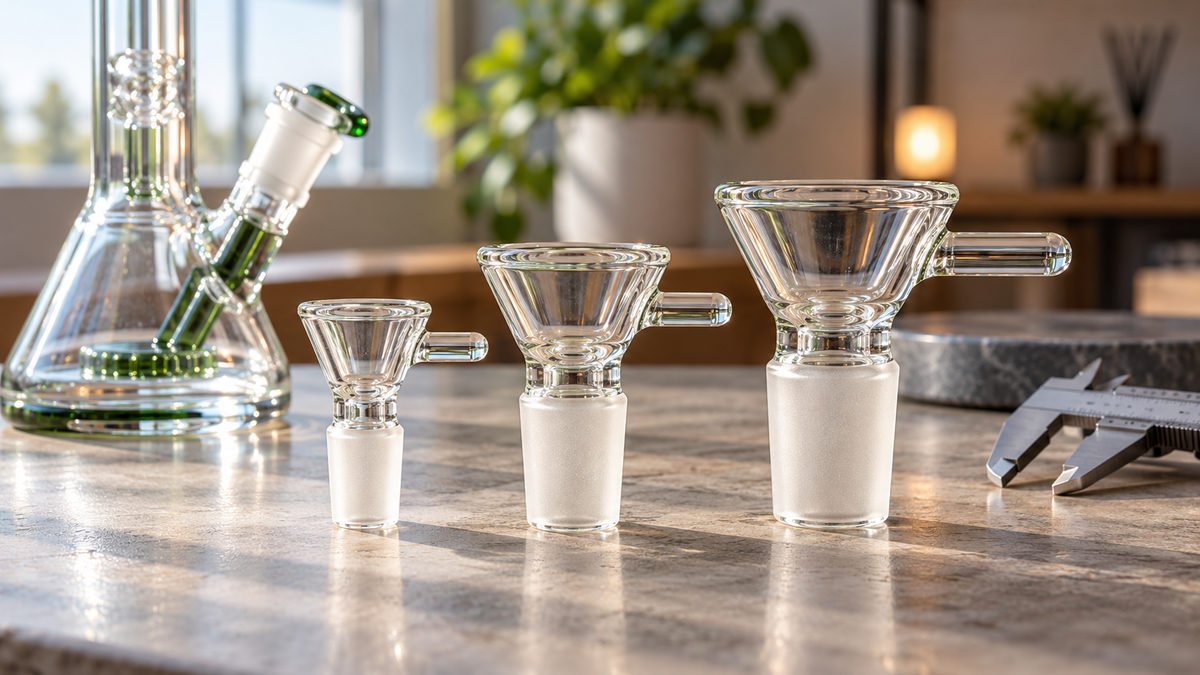
Ever bought a replacement bowl that looked right, then discovered it would not fit? Bong bowl sizes explained clearly can save you that frustration. The numbers 10mm, 14mm, and 18mm describe joint diameter, not necessarily bowl capacity. Therefore, you must also check the bowl’s gender, angle, depth, downstem clearance, and material before ordering.
Whether you are replacing a damaged bowl or comparing water pipe accessories, the right measurements matter. This guide explains compatibility, airflow, capacity, cleaning, and practical buying decisions for Australian adults.
What Bong Bowl Sizes Actually Mean
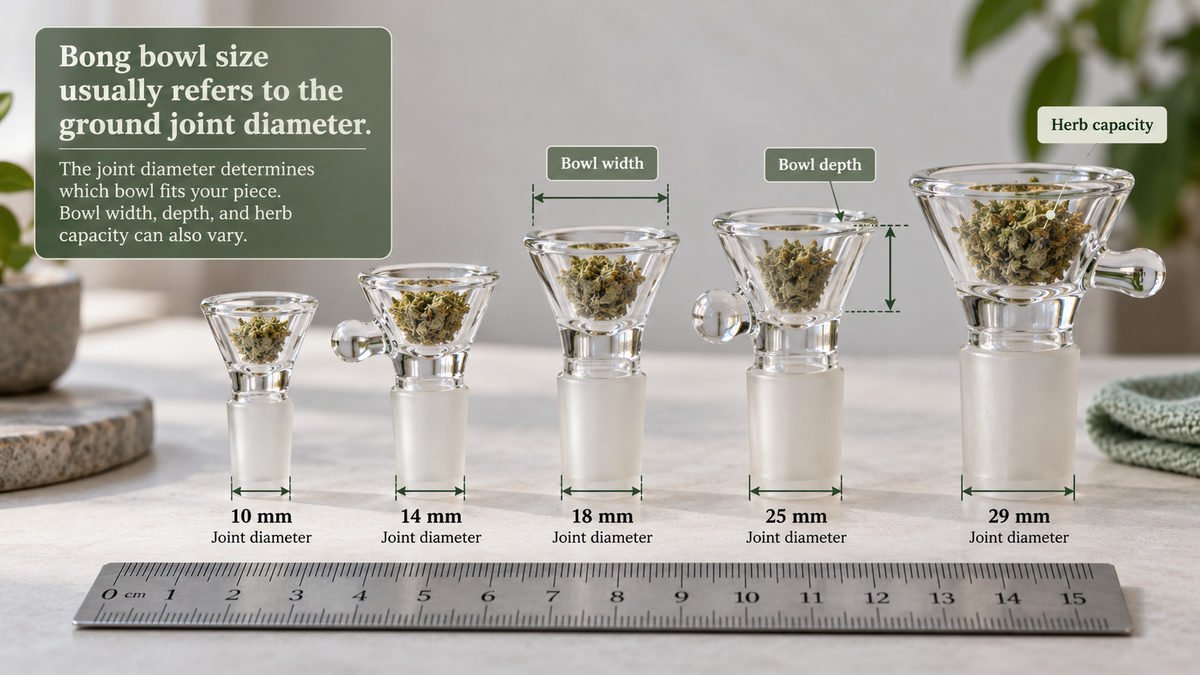
A bong bowl size usually refers to the diameter of its ground joint. The ground joint is the precision-finished glass connection between the bowl, downstem, or bong joint. Therefore, a 14mm bowl has a joint designed for a 14mm opening.
The three most common bong joint sizes are 10mm, 14mm, and 18mm. These measurements describe the connection size, rather than the bowl’s total width, height, or usable chamber.
For example, two 14mm bowls can have very different capacities. One might have a shallow cup for small portions, while another has a deeper chamber for longer sessions. Additionally, one may have a narrow opening, while another uses a wider, more open design.
Joint Size Versus Bowl Dimensions
Joint diameter, bowl width, bowl depth, overall height, and capacity all describe different features. Confusing these measurements often leads to the wrong replacement part.
- Joint diameter: The connection size, commonly 10mm, 14mm, or 18mm.
- Bowl width: The outside width of the bowl chamber.
- Bowl depth: The distance from the rim to the base.
- Overall height: The complete height of the bowl and joint.
- Capacity: The usable amount the bowl can hold.
Product listings may call the same measurement joint size, ground joint size, or bong bowl diameter. However, the advertised number normally describes the ground joint, not the bowl opening.
Male and Female Bong Bowls
A male bowl has a ground joint that fits inside a female bong joint. In contrast, a female bowl has an opening that receives a male joint, usually from a downstem or adapter.
Always check this configuration before buying. A bowl can have the correct 14mm diameter but still fail because it uses the wrong gender. You can explore available designs through the Sweet Puff Australia shop.
Bong Bowl Sizes Explained: 10mm, 14mm, and 18mm Compared
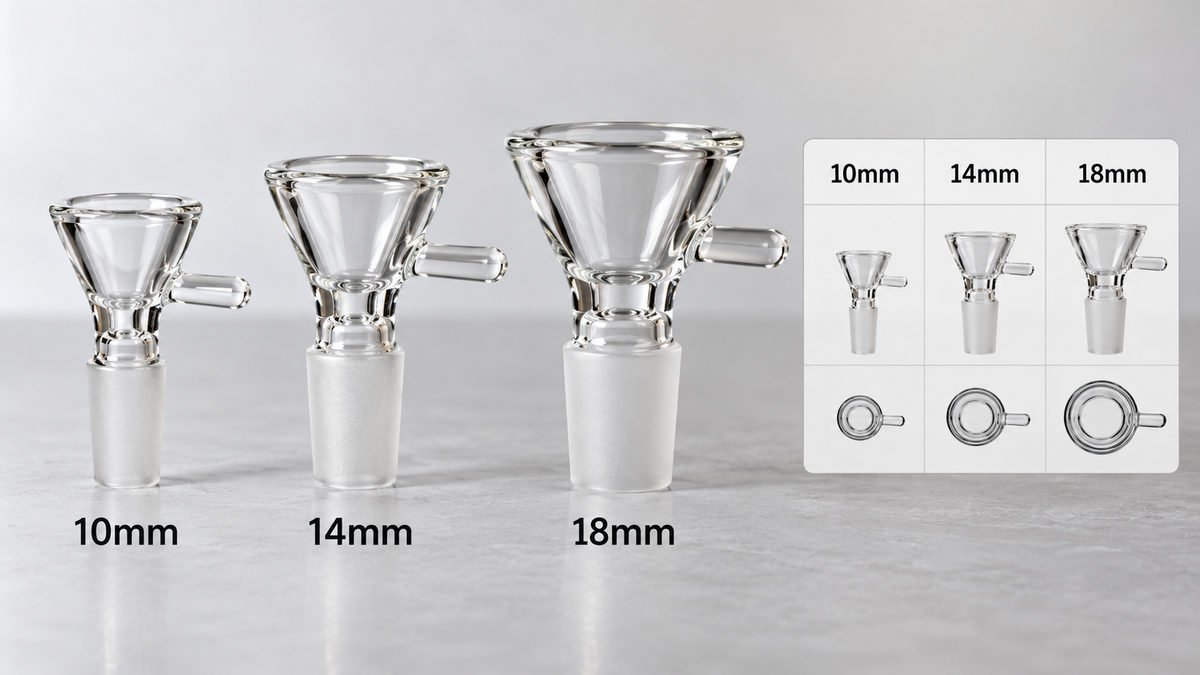
10mm Bong Bowls
10mm bong bowls suit compact glass bongs and smaller portable setups. Their reduced joint size supports a smaller overall profile, which can make the bong easier to store and transport. The two most common standards are compared in 14mm vs 18mm bong joints.
However, a 10mm opening may provide a tighter draw than a larger joint. The bowl usually holds less material, although its exact capacity depends on depth and shape.
Therefore, 10mm bowls often suit individual sessions, compact pieces, and users who prefer controlled portions. They can also work well when the bong itself has a narrow chamber and smaller downstem.
14mm Bong Bowls
14mm bowls are the most common all-purpose option. They offer a useful balance between airflow, capacity, portability, and accessory availability.
Additionally, many medium-sized bongs use 14mm joints. That makes replacement bowls, downstems, adapters, and compatible accessories easier to find.
A 14mm bowl can still be shallow, deep, narrow, or wide. Therefore, the number alone cannot tell you how much the bowl holds or how open the draw feels.
18mm Bong Bowls
18mm bowls use a larger joint and commonly suit larger bongs. Their wider connection can support greater airflow when the rest of the bong matches that design.
Many 18mm bowls also offer larger chambers. However, the joint size does not automatically guarantee a deep bowl or larger session.
These bowls often suit high-volume bongs, larger downstems, and shared sessions. They may feel less portable because the bowl and bong usually have a larger overall footprint.
| Size | Typical use | Airflow | Portability | Accessory availability |
|---|---|---|---|---|
| 10mm | Compact personal setups | Often tighter | High | Moderate |
| 14mm | Everyday, flexible use | Balanced | Good | Broad |
| 18mm | Large bongs and shared sessions | Potentially more open | Lower | Moderate |
In practice, a larger joint does not automatically create a bigger hit. Chamber size, downstem design, percolators, water level, bowl geometry, and user technique also influence performance.
How to Identify and Measure Your Bong Joint Size
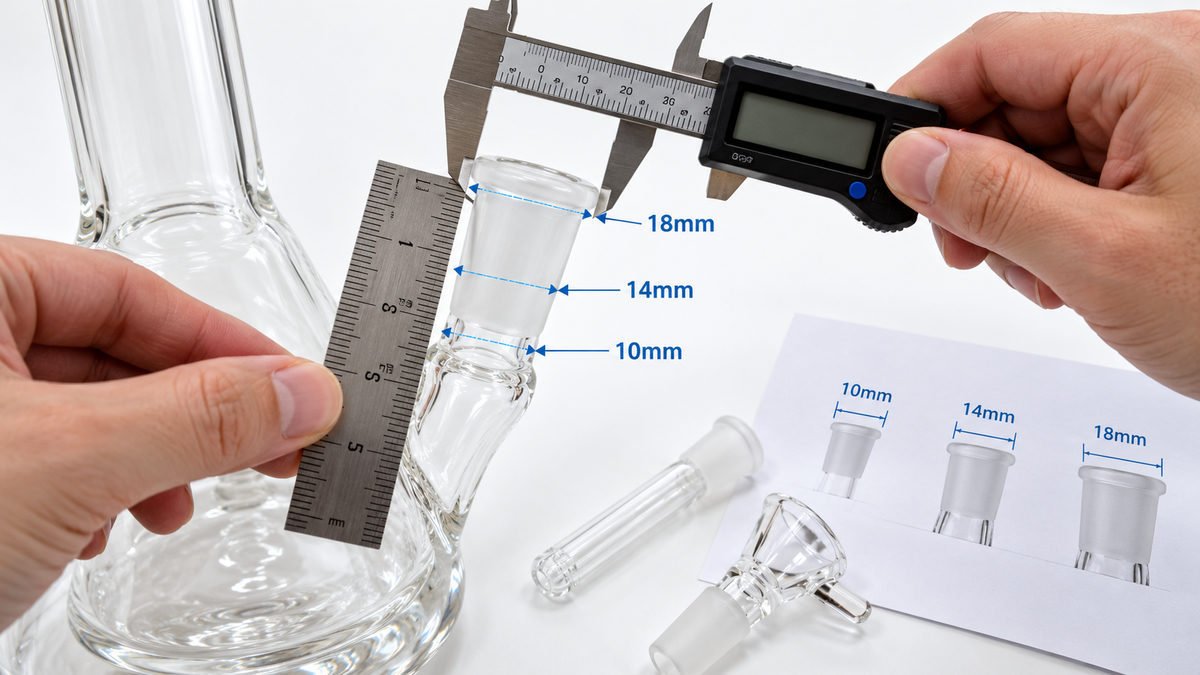
Check Existing Accessories
Start with the bowl or downstem already fitted to your bong. Many manufacturers mark the size on the packaging, product page, or accessory itself. The same method helps you measure a bong downstem.
Look for terms such as 10mm, 14mm, 18mm, ground joint, male joint, or female joint. Additionally, check the bong’s original specifications if you still have them.
If the existing bowl fits securely, matching its labelled size and configuration is usually the simplest option. Nevertheless, confirm the angle and downstem length before ordering a replacement.
Measure the Joint Carefully
Use a ruler for a quick estimate or digital calipers for greater accuracy. Measure the outside diameter of a female joint, or the inside diameter of a male joint.
Glass thickness can create small measurement differences. Therefore, a measurement close to 14mm may still correspond to a standard 14mm ground joint.
Do not measure only the bowl’s top opening. That opening may be much wider than the joint and cannot confirm compatibility.
Confirm the Configuration
Next, identify whether your bong accepts a male bowl directly or requires a female bowl. Check whether the bowl sits inside the bong joint or receives a separate male downstem.
Also inspect the joint angle. A straight bowl may not clear the bong body, ice catcher, or percolator if the original design uses an angled joint.
Bong bowl sizes are normally measured by ground joint diameter. However, compatibility depends on more than the diameter alone.
- Confirm the joint diameter.
- Match the male or female configuration.
- Check the downstem length and joint position.
- Verify the bowl angle and bong clearance.
- Consider glass thickness and overall weight.
- Review the seller’s return policy before ordering.
When uncertain, compare the replacement bowl’s technical drawing with your existing accessory. A few minutes of checking can prevent a loose, stuck, or unusable purchase.
Bong Bowl Capacity, Airflow, and Session Size
Bowl depth, width, hole design, and usable chamber volume determine capacity more than joint diameter. For instance, a shallow 14mm bowl may hold less than a deep 10mm bowl.
Small bowls suit solo sessions and controlled portions. They also allow quick changes between materials and usually produce less residue during short sessions.
Medium bowls offer more flexibility for everyday use. A carefully shaped 14mm bowl can balance portion control with enough capacity for a longer session.
Deep bowls suit larger bongs and shared sessions. However, they may encourage overpacking, increase cleaning needs, and create more ash buildup.
A larger bowl can hold more material, but it does not guarantee a larger hit. Hit size also depends on packing, airflow, combustion, water volume, and lung capacity.
Additionally, a wider opening may reduce draw restriction. Yet a deep bowl packed tightly can still feel difficult to pull through.
Bowl geometry also affects heat distribution and airflow through the material. A well-designed hole can improve air movement, while an oversized hole may allow material to fall into the downstem.
- Shallow 14mm bowl: Useful for personal sessions and controlled portions.
- Medium bowl: A flexible option for regular everyday use.
- Deep 18mm bowl: Better suited to larger bongs and longer shared sessions.
Compatibility, Adapters, Downstems, and Bowl Materials
Nominal bowl size does not tell the whole compatibility story. Downstem dimensions, joint angle, bong geometry, and percolator placement can all affect the final fit. A bong adapter lets you fit a different bowl size.
Reducers can connect a larger bong joint to a smaller bowl. Gender-changing adapters can also convert a male connection into a female connection, or the reverse.
However, adapters add height, weight, and another connection point. Check that the finished setup remains stable, sealed, and clear of the bong’s body.
Common Bowl Materials
Glass remains popular because it shows residue clearly and usually preserves a clean flavour profile. It also makes cleaning easier because you can see blocked holes and buildup.
However, glass can chip or break if dropped, knocked, or exposed to sudden temperature changes. Inspect the joint and rim before every use.
Ceramic bowls can feel sturdy and retain heat well. They may weigh more and require careful inspection for cracks or surface damage.
Quartz handles high temperatures and offers a clean-looking finish. Metal bowls are generally durable, but they may feel heavier and can influence flavour or heat behaviour.
Use heat-resistant handling, place the bong on a stable surface, and maintain good ventilation. Also follow applicable Australian laws, which vary by substance and location. The Australian Government drug laws guide provides current general information.
How to Choose, Clean, and Replace a Bong Bowl
Choosing the Best Size
A 14mm bowl is often a versatile starting point when the bong uses that joint size. It offers broad accessory availability and a balanced relationship between airflow and portability. A small cleaning brush reaches inside the bowl stem.
Choose 10mm for compact personal setups with a matching joint. Choose 18mm when the bong has a larger design and you prefer higher capacity options.
Most importantly, let the bong’s existing specifications determine the final size. Do not choose a bowl solely because its capacity looks convenient.
Pre-Purchase Checklist
- Joint size and ground joint diameter.
- Male or female configuration.
- Bowl depth and expected capacity.
- Joint angle and bong clearance.
- Downstem length and position.
- Material, weight, and heat resistance.
- Compatibility with the bong’s design.
- Return policy if the fit proves incorrect.
For more options, browse the wider product brands collection and compare designs carefully.
Cleaning and Maintenance
Clean the bowl regularly with an appropriate cleaning solution. Soak it as directed, rinse thoroughly, and remove residue from the bowl hole.
Additionally, let the bowl dry fully before storing it. Regular cleaning helps prevent buildup, clogging, odours, uneven airflow, and difficult bowl removal.
Replace the bowl if you notice cracks, chips, a loose fit, persistent clogging, damaged joint edges, poor airflow, or difficult cleaning.
Never force an incorrectly sized bowl into a joint. Avoid damaged glass, and remember that not every 14mm accessory suits every 14mm setup.
Bong Bowl Size FAQ
What are the most common bong bowl sizes?
The most common bong bowl joint sizes are 10mm, 14mm, and 18mm. These measurements describe the ground joint diameter.
What is the difference between 10mm, 14mm, and 18mm bong bowls?
10mm bowls suit compact setups and often provide lower capacity. 14mm bowls offer a balanced, widely supported option. 18mm bowls suit larger bongs and can support greater airflow or bowl capacity.
How do I know what size bowl fits my bong?
Match the joint diameter and male or female configuration first. Then confirm the downstem length, angle, clearance, and bong geometry.
Are bong bowl sizes measured by diameter or joint size?
The listed size generally refers to the ground joint diameter. It does not describe the bowl’s top opening or total capacity.
What is the difference between male and female bong bowls?
A male bowl has a joint that fits inside a female bong joint. A female bowl receives a male joint, such as a downstem or adapter.
Can I use an adapter to fit a different bowl size?
Reducers and gender-changing adapters can solve some size or configuration differences. However, they add height, weight, and another possible leak point.
Which bowl size is best for beginners, solo sessions, and group sessions?
For beginners, 14mm is often practical when the bong supports it. Choose 10mm for compact personal sessions and 18mm for larger bongs or longer shared sessions.
Can the wrong bowl size damage a bong or cause poor performance?
Yes. An incorrect bowl can wobble, leak air, become stuck, restrict airflow, destabilise the bong, or cause breakage.
Conclusion
The correct bong bowl depends first on joint diameter and male or female configuration. Next, consider bowl depth, capacity, airflow, material, downstem clearance, angle, and your preferred session size.
A 14mm bowl often provides the most flexibility, but your bong’s existing specifications should always decide the final choice. Measure the joint, confirm the configuration, and check clearance before purchasing.
Sweet Puff Australia brings together water pipes, glass designs, and accessories for adults comparing different setups. Visit the Sweet Puff Australia website for more product information and buying guidance.
Measure your bong joint, confirm the bowl configuration and downstem clearance, then use the checklist above. That approach helps you choose a bowl that fits securely and suits your preferred session.






Comment (1)
[…] Australian bong terminology includes several words for individual parts. These terms can sound confusing because one word may describe a component, a portion of material, or an action. Cone pieces come in standard bong bowl sizes. […]