A glass bong can look impressive in product photos, yet still hide weak joints, poor airflow, or an unstable base. Learning how to inspect glass bong quality helps you avoid thin walls, rough edges, hidden cracks, and unreliable components. Whether you shop in person or online, a careful inspection reveals much about durability and craftsmanship. Use this step-by-step guide to compare materials, construction, features, safety, seller information, and long-term value before buying.
How to Inspect Glass Bong Quality: Start With the Glass

The glass itself affects heat resistance, durability, clarity, and everyday performance. Therefore, start by identifying the material before judging decorative features or size. Borosilicate glass remains a commonly preferred option because it handles temperature changes better than ordinary glass.
Look for “borosilicate glass” in the product specifications, packaging, or manufacturer information. Additionally, reputable sellers usually state the material clearly rather than relying on vague phrases. Terms such as “premium glass” or “high-quality glass” mean little without a stated glass type.
Check the Glass Type and Thickness
Ask the seller for clarification when the material description sounds uncertain. A clear answer should identify the glass type and, ideally, explain the construction. However, avoid assuming that every product labelled borosilicate has identical craftsmanship.
Glass thickness also matters. Unusually thin walls may prove more vulnerable to knocks, pressure, and sudden temperature changes. Meanwhile, thicker glass can improve durability, although it often increases weight, price, and handling difficulty.
Weight offers a useful clue, but it does not prove quality by itself. A heavier bong may have thicker walls, a wider base, or extra features. Conversely, poor design can make a heavy piece awkward and unstable.
Inspect the Surface Carefully
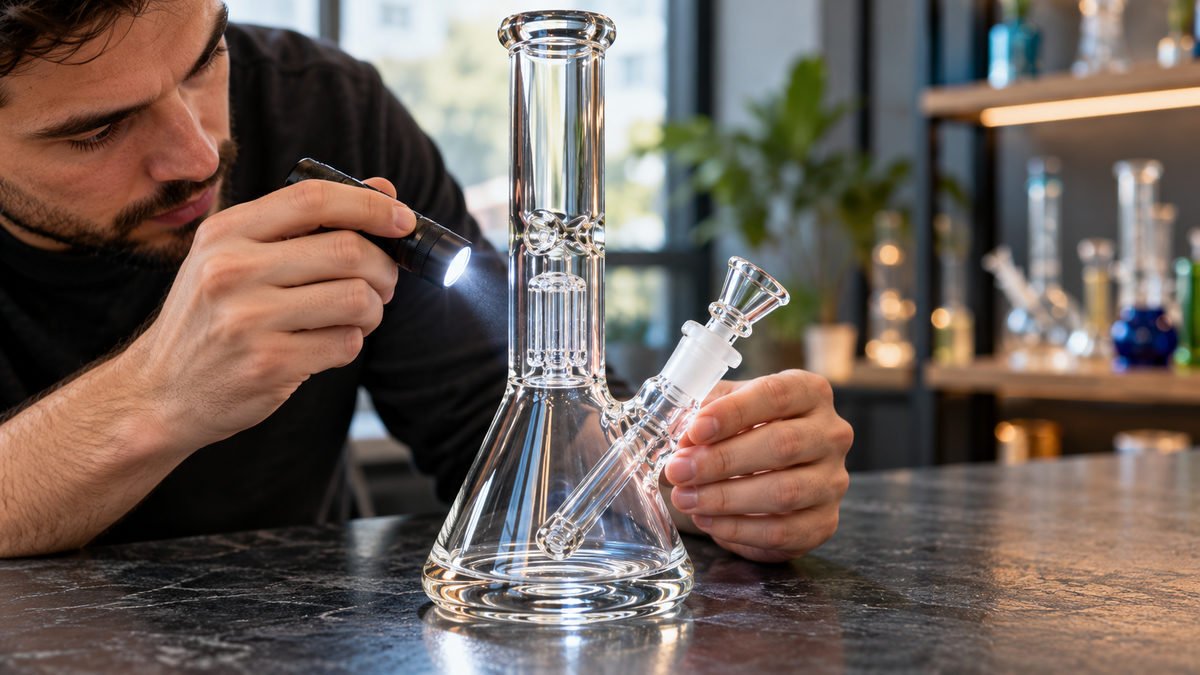
Hold the bong under bright, even lighting and rotate it slowly. Specifically, look for bubbles, scratches, cloudy areas, ripples, uneven walls, inclusions, and unusual colour changes. Small decorative details differ from defects that weaken the structure.
- Check whether the chamber walls look even from every angle.
- Look for cloudy patches that may indicate inconsistent production.
- Inspect clear glass for trapped debris or unusual inclusions.
- Compare both sides of the base and neck for symmetry.
For online purchases, study close-up photos rather than lifestyle images. Request additional images when the base, joints, mouthpiece, or welds remain hidden. As a result, you can judge construction before committing your money.
Check for Defects, Cracks, and Craftsmanship Problems
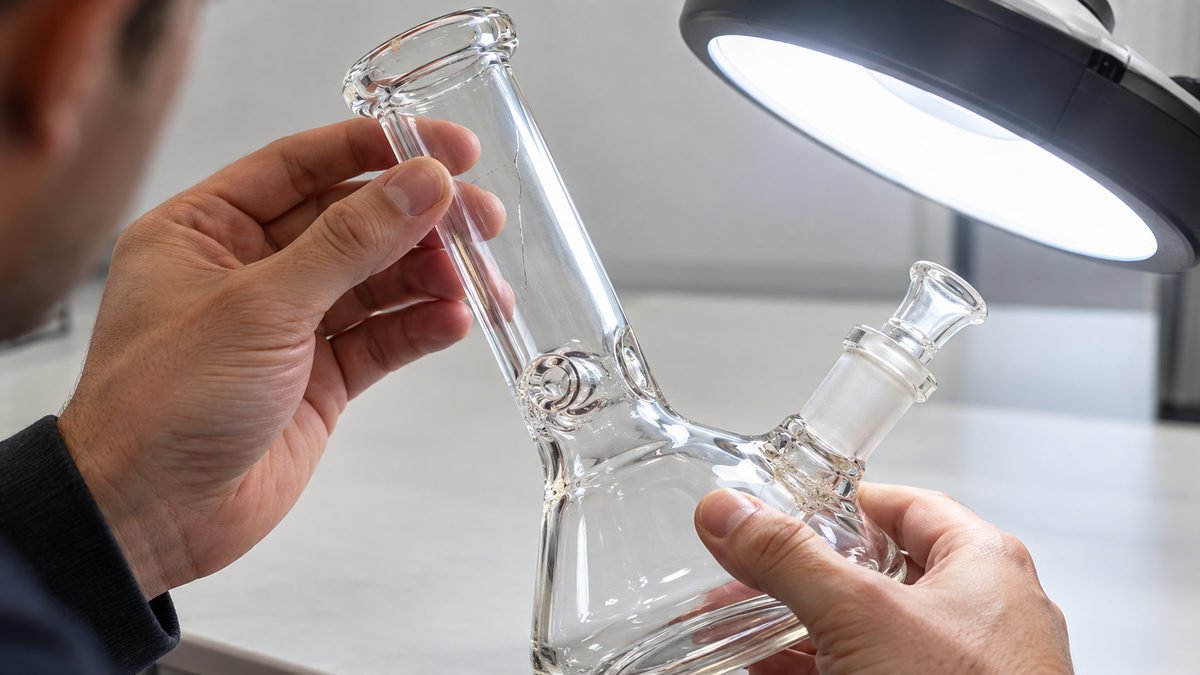
A detailed visual inspection can reveal problems that a quick glance misses. Therefore, examine the bong in bright light and rotate it slowly. Never buy or use glass with a visible crack, sharp chip, loose connection, or uncertain structural defect. Our guide to quality glass craftsmanship covers seams and rims in detail.
- Look for hairline cracks around the base, neck, joints, and chamber.
- Check every rim for chips, sharp points, and uncomfortable edges.
- Inspect for stress marks, discolouration, or lines near welds.
- Run your eyes across surfaces for dents, rough seams, or distortion.
- Confirm that openings remain round, smooth, and properly aligned.
The mouthpiece deserves special attention because it touches your lips. A quality rim should feel smooth, even, and comfortable. However, razor-sharp edges or rough finishing can cause injury and suggest rushed manufacturing.
Examine Welds and Connections
Inspect every point where the neck, chamber, base, joint, and accessories meet. Strong welds usually show smooth transitions, even symmetry, and clean joins. Additionally, they should not display visible gaps, rough ridges, or sudden changes in thickness.
Warning signs include a crooked neck, lopsided chamber, misaligned opening, rough seam, or excessive production residue. These issues can affect sealing, cleaning, airflow, and the bong’s lifespan. They may also make replacement components difficult to fit.
Manufacturing defects can create safety problems even when the bong looks attractive. For instance, a small chip may grow into a crack during cleaning or handling. Consequently, reject any piece that leaves you uncertain about its structural condition.
Evaluate Joints, Downstems, Bowls, and Airflow
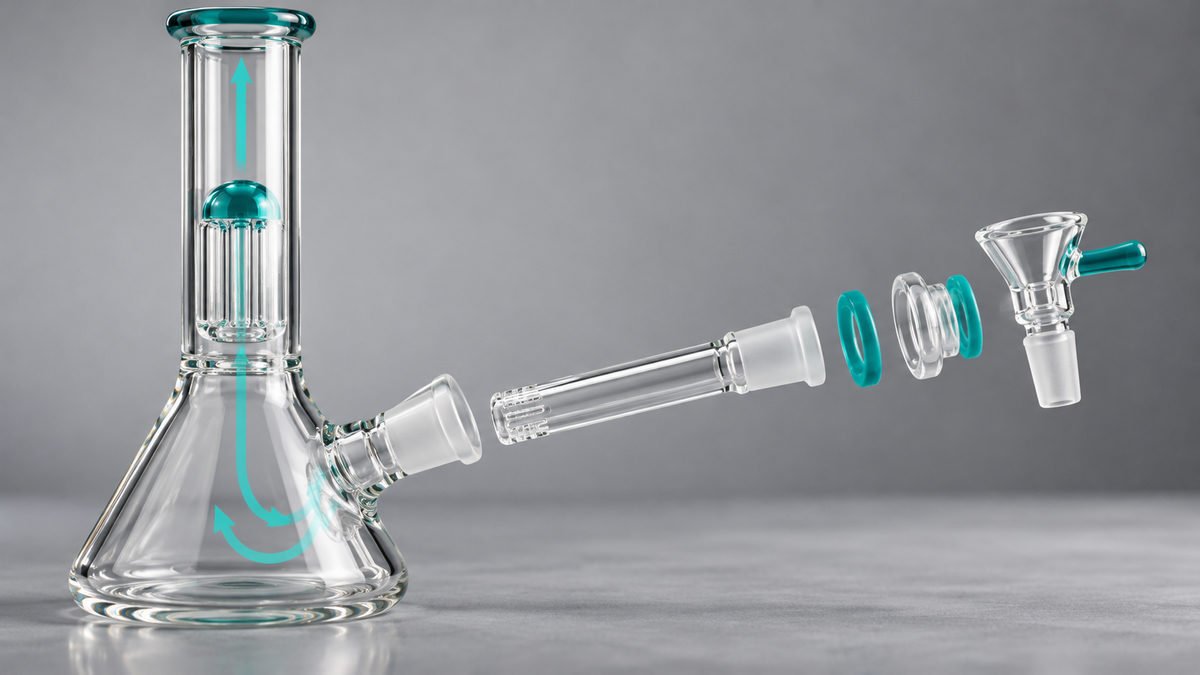
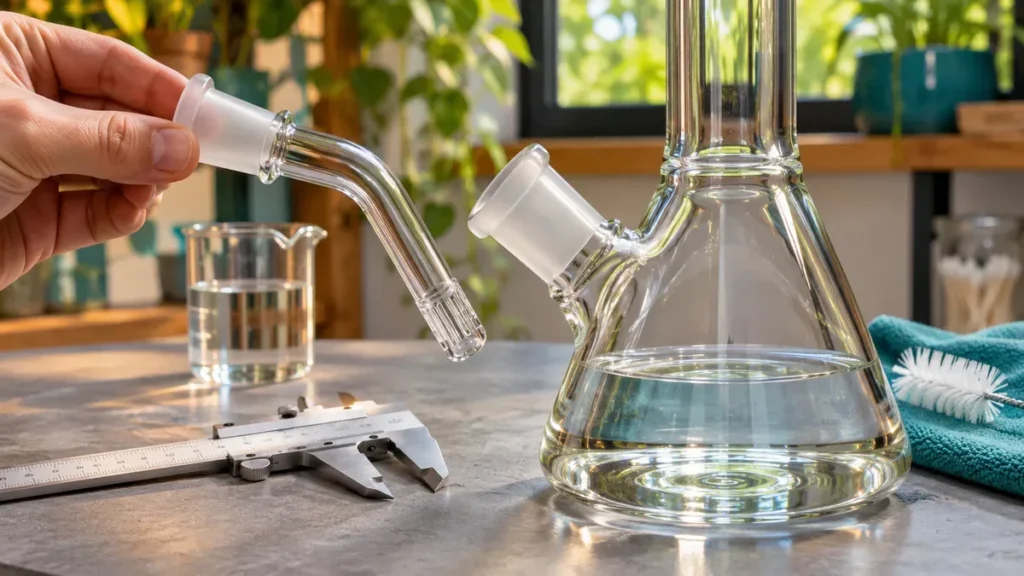
Joints connect the bong to the bowl, downstem, or other components. A high-quality joint should look round, evenly formed, smooth, and correctly aligned. It should also remain free from chips, gaps, rough edges, and visible distortion. If parts do not match, bong adapters can bridge the gap.
Place the bowl into the joint gently, without forcing it. A secure fit should not wobble, tilt, or feel excessively loose. Meanwhile, forced insertion may indicate poor sizing, uneven glass, or a damaged connection.
Inspect the Downstem and Removable Parts
Check whether the downstem sits straight and fits securely. Its edges should feel smooth, while its diffusion openings should remain clean and unobstructed. Additionally, the length should suit the chamber without pressing against the base.
Removable parts should come out for cleaning without feeling fragile. A component that sticks, twists, or requires excessive force may break during maintenance. Conversely, an extremely loose part may create leaks and inconsistent airflow.
For an unused, clean product, cover the appropriate opening and perform a gentle airflow test. You should feel a consistent seal and an unobstructed draw. Never test a new bong with unapproved substances or heat.
Assess Airflow and Splashback Risk
Excessive drag, whistling, leaks, loose seals, or inconsistent airflow can indicate design or manufacturing problems. However, some airflow resistance may come from the percolator design. Compare the expected performance with the product’s chamber size and features.
Chamber size, water level, downstem placement, and opening design all influence airflow. A larger chamber does not automatically provide a better experience or stronger construction. Therefore, prioritise balanced airflow over impressive dimensions.
Consider water movement and splashback risk as well. The mouthpiece should sit at a practical angle and height. Additionally, the water should remain controlled during a gentle draw instead of reaching the mouthpiece easily.
Assess Percolators, Ice Catchers, and Other Features
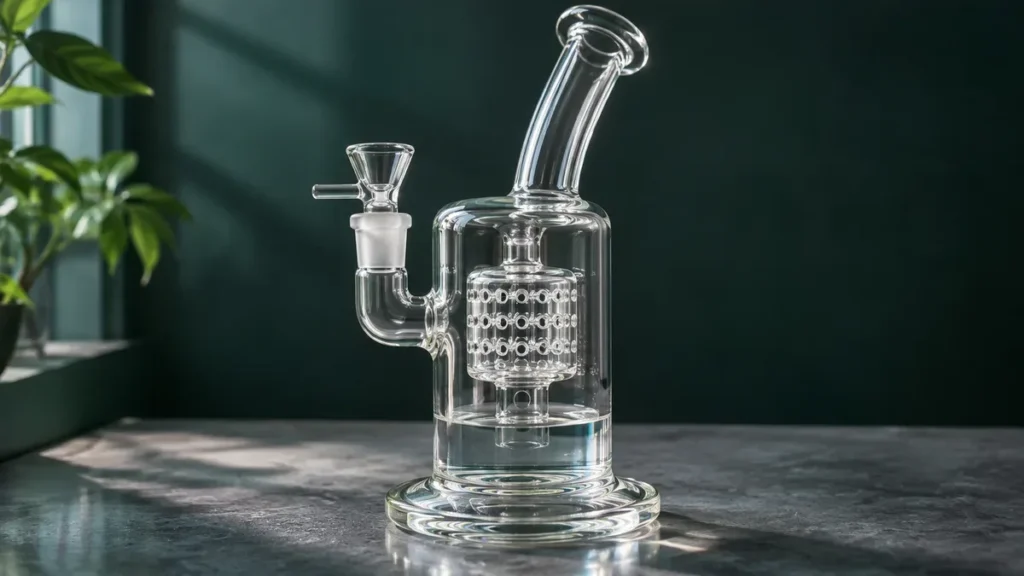
Percolators can improve diffusion, but they do not automatically prove superior bong quality. Their value depends on craftsmanship, airflow, cleaning access, and durability. Therefore, inspect the design rather than counting the number of chambers. Learn how percolators work so you can spot a poor one.
Look for symmetrical shapes, unobstructed openings, smooth welds, and sensible cleaning access. Small openings may clog more easily, especially when residue builds up. Meanwhile, complex internal paths can increase drag and make maintenance frustrating.
Compare Features by Practical Value
Common percolator designs differ in complexity, fragility, cleaning difficulty, and airflow resistance. A simple diffuser may provide easier maintenance and fewer breakable connection points. A more complex design may offer additional diffusion, but it often demands more careful cleaning.
A quality ice catcher should sit evenly, attach securely, and hold ice without sharp interior edges. Inspect the welds around the catcher for gaps, roughness, or visible stress. Additionally, confirm that the opening allows practical loading without forcing ice into place.
Diffused downstems, removable percolators, splash guards, and similar additions should improve usability. They should not exist only as decorative status symbols. For example, a removable diffuser may offer better cleaning access and easier replacement.
- Prioritise durable construction over decorative complexity.
- Choose features that support easy cleaning and replacement.
- Check whether extra chambers create fragile connection points.
- Avoid designs with hidden areas that trap residue.
Sometimes, a simpler bong with excellent construction offers better value than a complex piece made with thin glass. Therefore, pay more for dependable joints, stable balance, practical airflow, and replaceable components.
Test Base Stability, Balance, and Safety
Place the bong on a flat surface and check whether the base sits evenly. It should not rock, wobble, lean, or lift from one side. A broad, well-centred base generally reduces tipping risk and protects the glass from accidental impact. Compare stability across glass bong base shapes.
Next, assess the balance between the neck, chamber, and base. A tall bong can become top-heavy when the base is too narrow. Therefore, choose a proportionate design that feels stable during handling and storage.
Inspect the Base and Safety Details
Examine the base connection for smooth welds, even thickness, visible stress points, and distortion. A warped base may prevent stable placement and place extra pressure on the glass. Additionally, sharp edges or poor seals can create avoidable hazards.
Low-quality glass may present several safety concerns, including cracks, chips, unstable bases, and unknown materials. Heat resistance, clean construction, and careful handling all matter when using glass smoking accessories.
Adults should follow age restrictions, local laws, product warnings, and applicable regulations. Rules can differ between Australian states and territories. For general information about Australian tobacco and water-pipe terminology, review the Federal Register of Legislation.
Health advice also matters. Water does not remove all harmful chemicals from smoke, as explained by healthdirect. No glass bong is unbreakable, so store it securely and keep it away from children and pets.
Compare Handmade and Mass-Produced Glass Before Buying
Handmade glass can offer distinctive shapes, custom details, and individual craftsmanship. Factory-produced glass often provides more consistent dimensions, wider availability, and easier replacement. However, handmade does not automatically mean stronger, and mass-produced does not automatically mean inferior.
Finish quality depends on the maker, production controls, inspection process, and design. Therefore, compare the actual construction rather than relying on labels. A plain factory piece may outperform an artistic piece with weak joints or difficult cleaning access.
Research the Seller and Product Information
Review the seller’s reputation, warranty terms, return policy, and replacement-part availability. Customer feedback can reveal recurring problems with cracks, packaging, fit, or inaccurate descriptions. Additionally, check whether the seller explains what happens when an item arrives damaged.
For online purchases, inspect detailed photos of the base, joints, welds, mouthpiece, downstem, and percolator. Do not rely on lifestyle images that hide important construction details. Ask for extra photos or measurements when specifications remain unclear.
- Confirmed glass type and stated wall thickness.
- Accurate dimensions, weight, joint size, and included accessories.
- Clear cleaning requirements and replacement-part options.
- Practical information about packing, returns, and defects.
Be cautious when prices seem unusually low or material claims remain vague. Copied product images, inconsistent dimensions, no defect policy, and exaggerated durability promises also deserve attention. If a seller cannot answer basic construction questions, consider another option.
Before buying, use this concise checklist: confirmed glass type, defect-free surfaces, suitable thickness, smooth joints, secure bowl and downstem, stable base, usable airflow, practical features, reputable seller, and legal compliance.
Maintain Glass Bong Quality After Purchase
Regular cleaning helps preserve airflow, filtration performance, and appearance. Use products suitable for glass, then rinse carefully to remove residue. Additionally, avoid rough tools that may scratch surfaces or place pressure on thin areas. Keep it in shape with our glass bong maintenance checklist.
Check removable parts periodically for chips, loose fits, blocked openings, worn seals, and new stress marks. Handle the bong with two hands when appropriate, especially during cleaning or assembly. Avoid knocking glass components together while fitting them.
Store the bong on a stable, padded surface away from edges, heat sources, children, pets, and crowded areas. Sudden temperature changes can increase cracking risk. Similarly, harsh cleaning methods may weaken or damage the glass over time.
Replace damaged components instead of continuing to use cracked, chipped, unstable, or poorly sealing parts. Small problems can affect airflow and become more serious during handling. Therefore, regular maintenance protects both performance and long-term value.
Conclusion
Quality depends on more than thickness or weight. Look for verified borosilicate glass, smooth craftsmanship, strong welds, clean joints, secure components, balanced airflow, and a stable base. Practical features, clear specifications, and reliable seller policies also improve overall value.
Avoid cracks, chips, rough edges, crooked connections, unstable designs, vague material claims, and exaggerated promises. Use this inspection checklist before purchasing, compare seller policies, and choose the best-built option for your maintenance preferences.
Sweet Puff Australia brings together water pipes, glass designs, and smoking accessories for adult customers. Explore the Sweet Puff Australia website, or browse the online shop and available product categories for more product information.